FLEETING OFFERING

traces of the work

An offering is usually understood as an act of giving. But what is being offered, and whether there is an offering at all, can remain uncertain.

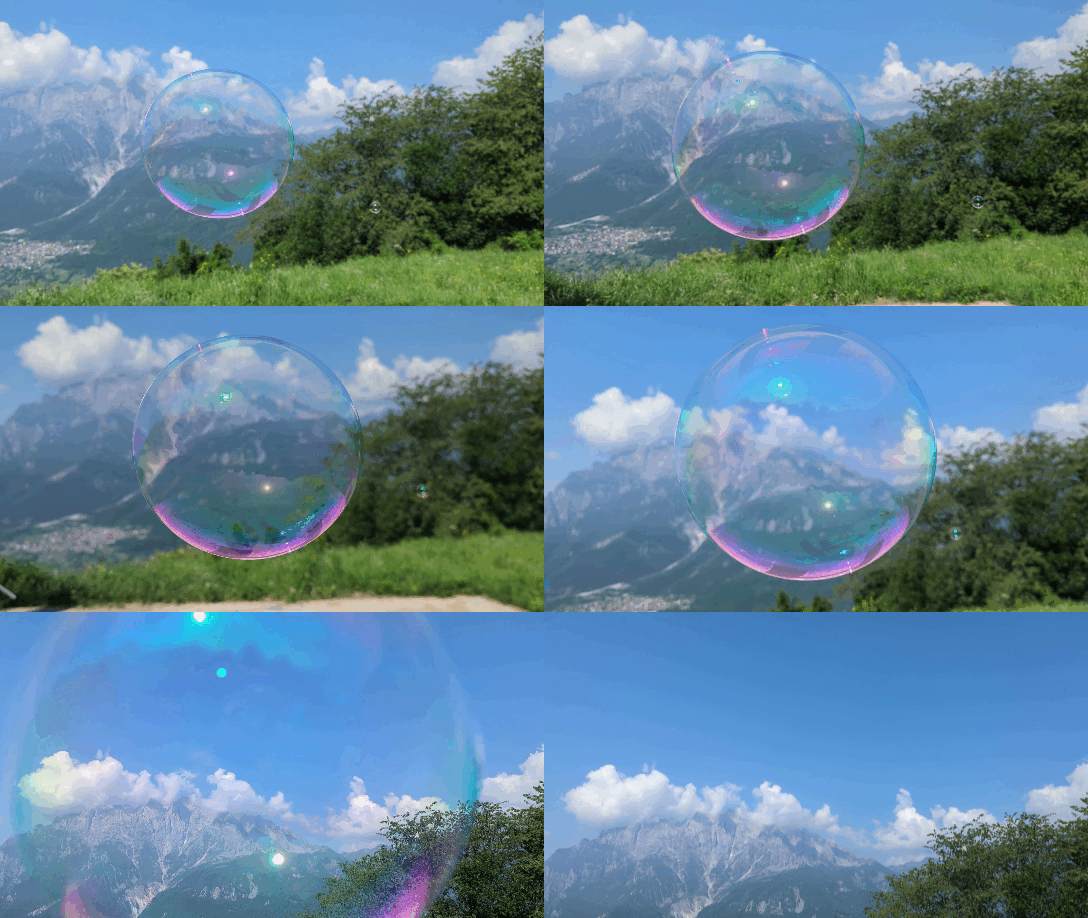
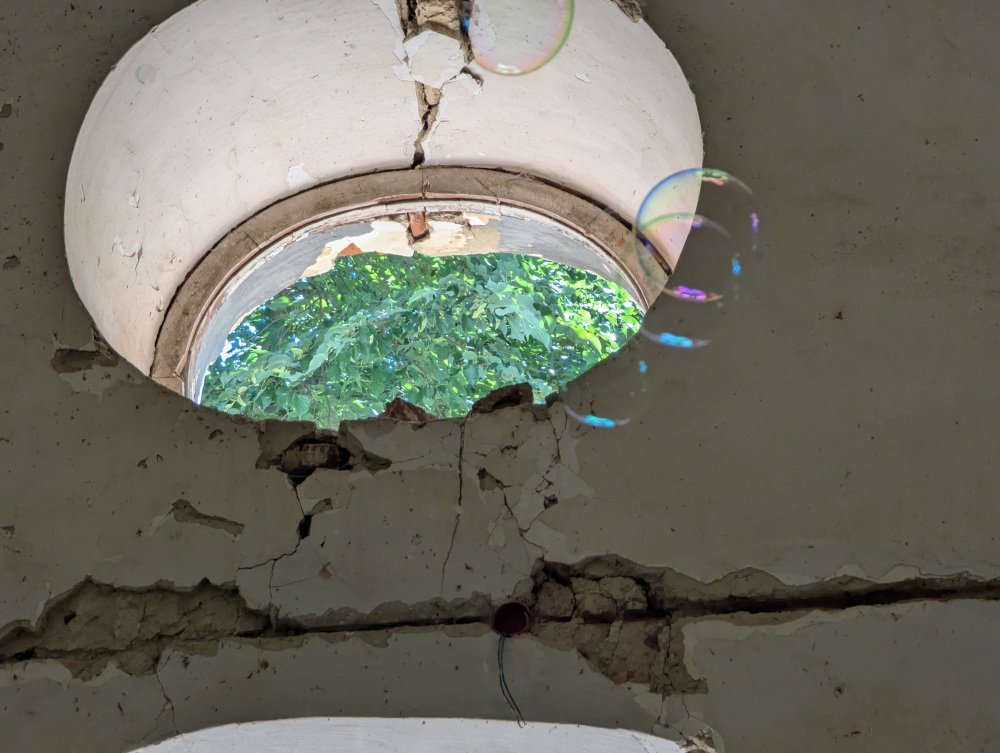
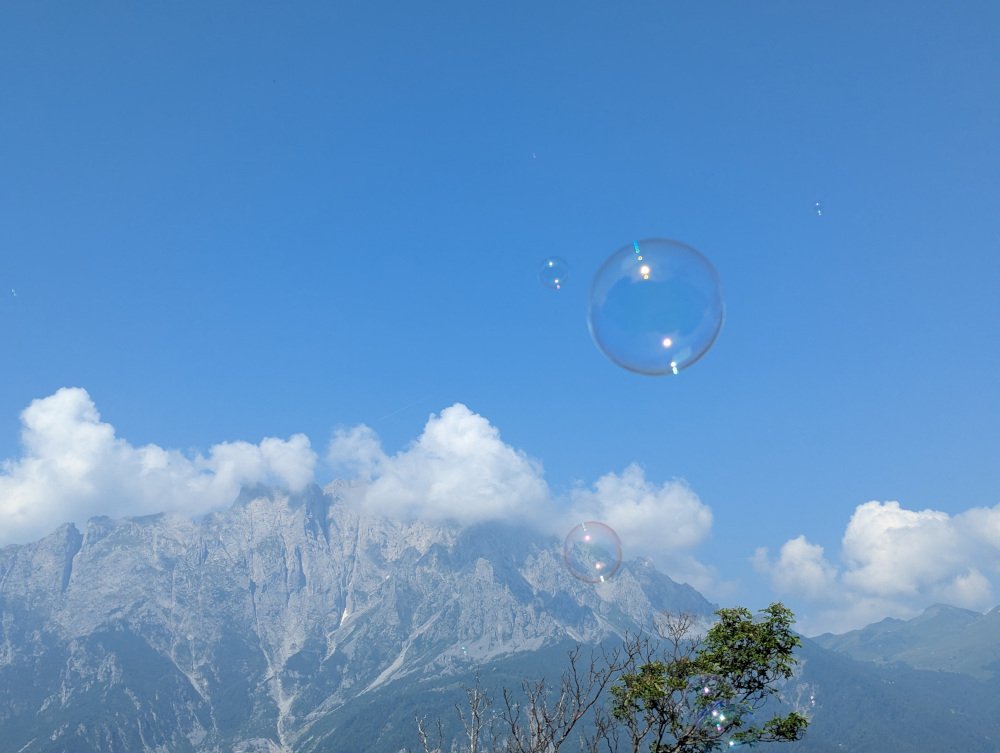
Fleeting Offering begins with soap bubbles released simultaneously. No individual bubble is designated in advance as the offering. I cannot say whether one, several, or none of them should be understood as the offering.

The bubbles disappear. No material evidence remains to settle the question. A photograph can record their release, but it cannot establish what, if anything, was offered, or whether it was received.

Can an offering exist without being identified? Can there be more than one?

The work does not answer these questions. It makes their uncertainty tangible.

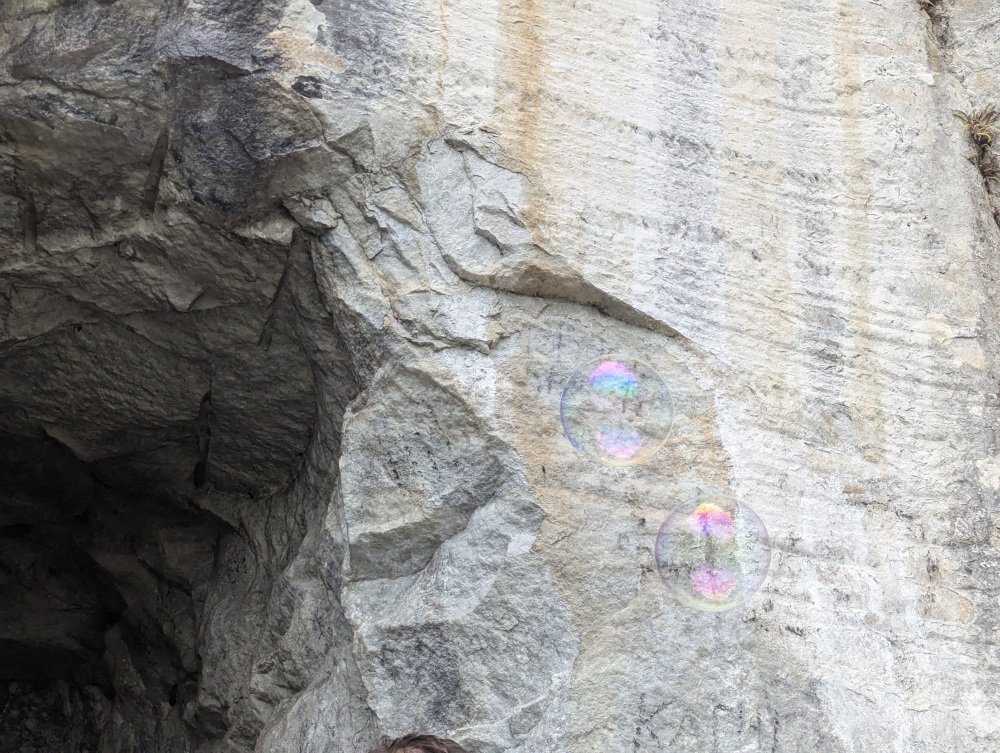
The work has been enacted in places that bear evidence of other human gestures: prehistoric rock engravings in Valcamonica and a Roman dedication carved into a quarry wall in Carinthia. These marks have endured, but they cannot tell us what became of the gestures they preserve.

Fleeting Offering places a fleeting action among traces that have survived. It leaves open the difference between releasing something, making an offering, and knowing whether it has been received.

The action took place. What, if anything, was offered remains unresolved.

Fleeting Offering began as a proposal for Ġgantija, the prehistoric megalithic temple on the island of Gozo, Malta.

On 5 June 2025, Marina Razheva sent curator Julia Sysalova a project in which a single soap bubble would appear once a minute among the ancient stones, then disappear without a trace. A concealed machine would produce the bubbles without physically disturbing the site. The proposal also drew on the contrast between the fleeting bubble and the stone spheres of unknown purpose found inside the temple.

The project was not realized in this form, but its central question remained: what can an offering be when nothing remains to identify it?

In later realizations, several soap bubbles are released simultaneously. Unlike the initial proposal for Ġgantija, the later action does not designate a single bubble as the offering. It remains unresolved whether one, several, or none of the bubbles should be understood as an offering. Once the bubbles disappear, photographic documentation can record the release but cannot settle what, if anything, was offered or whether it was received.

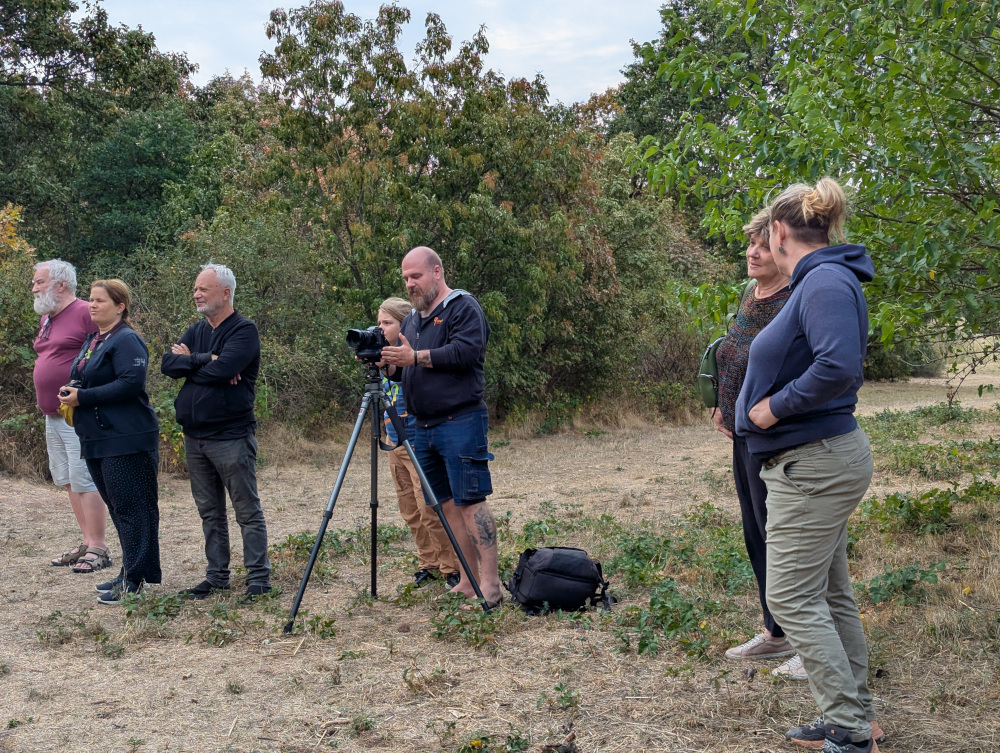
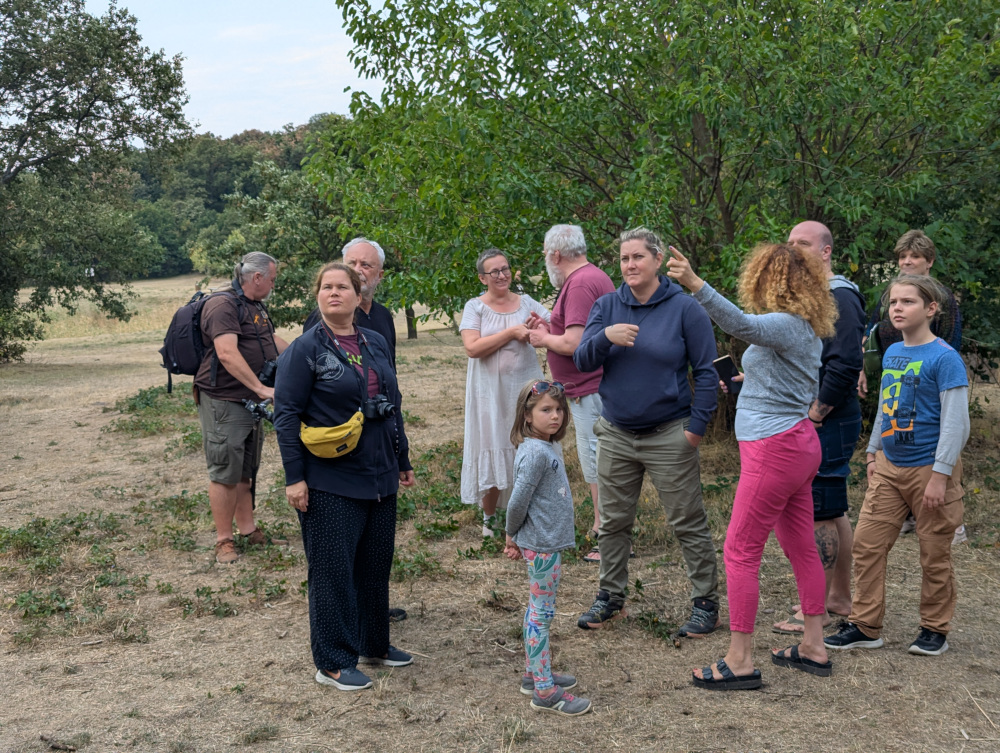
The work has since been enacted in Hungary, Austria and Italy, including places where earlier human gestures survive in stone: a Roman dedication carved into a quarry wall at Spitzelofen and prehistoric rock engravings in Valcamonica.

Fleeting Offering brings a gesture without identifiable material evidence into contact with traces that have endured. It leaves open the difference between making an offering and knowing whether it has been received.

Earlier Proposal

Ġgantija, Gozo, Malta

The proposal was not realized in this form. These sketches preserve an earlier conception of Fleeting Offering, distinct from its later realizations.
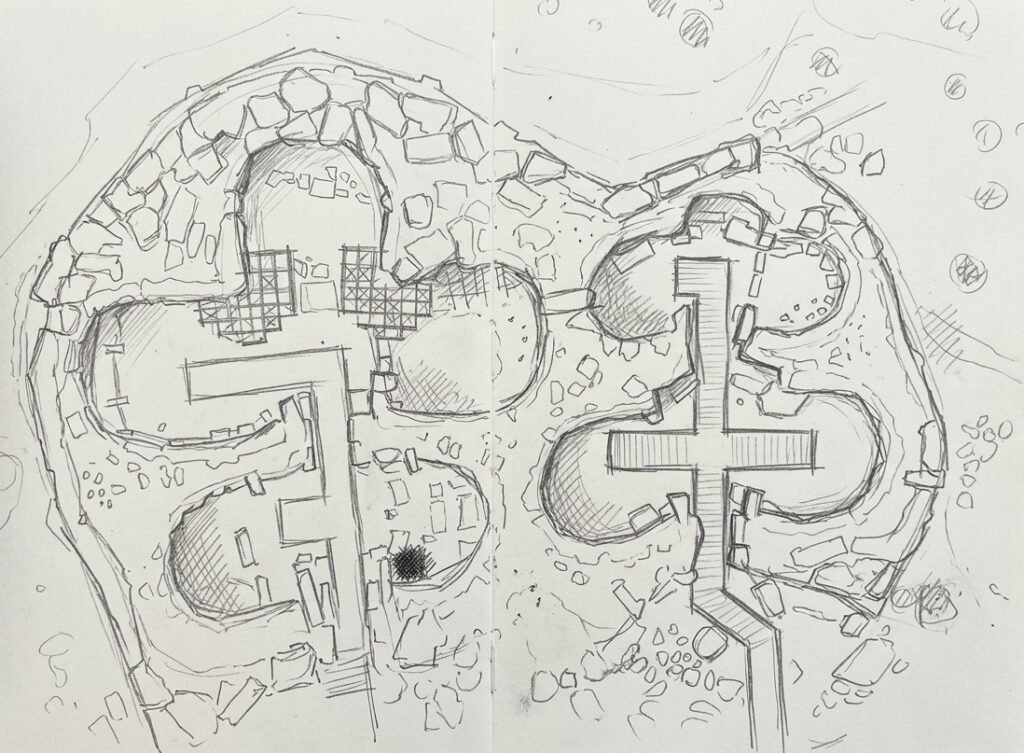
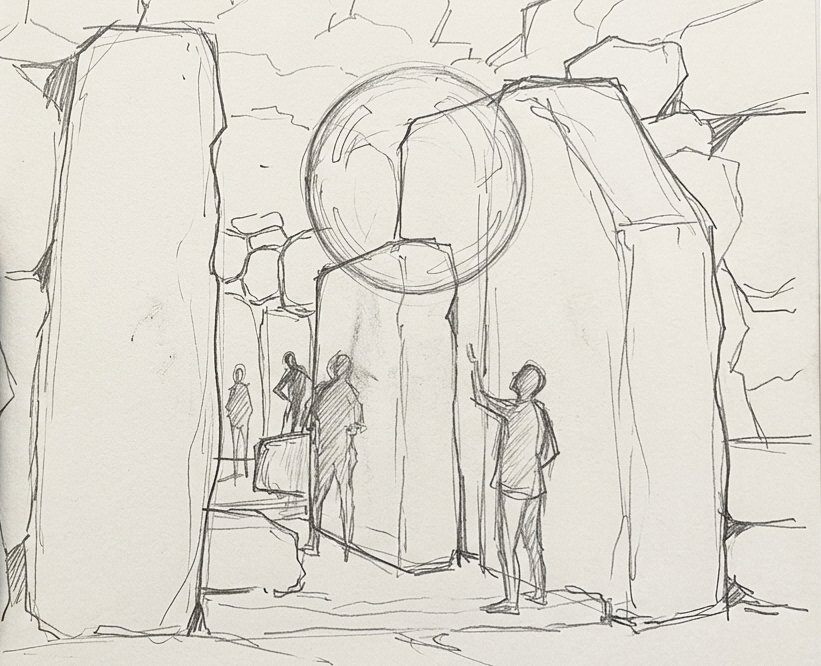
The drawings imagine the proposed action in the setting of Ġgantija. They are conceptual sketches, not documentary images of an actual realization at the site.

A Curator’s Note (Written in response to the original proposal for Ġgantija, Malta, 2025)

What I see in this work is not only conceptual precision, but courage: a deliberate relinquishing of everything that renders art visible, assertive, or commodified. Razheva operates within the traditions of memory, ritual, and transcendence, yet through the strategy of disappearance.
This is where its critical power lies: the artist offers not an object, but a situation that becomes a witnessing. The project is akin to breath, belonging to no one, claiming nothing, it happens and disappears, leaving behind only air and attention. Read the full curator’s note

Julia Sysalova
Curator and critic, AICA member

19 July 2025
Sörnyepuszta & Cserfekvési, Hungary
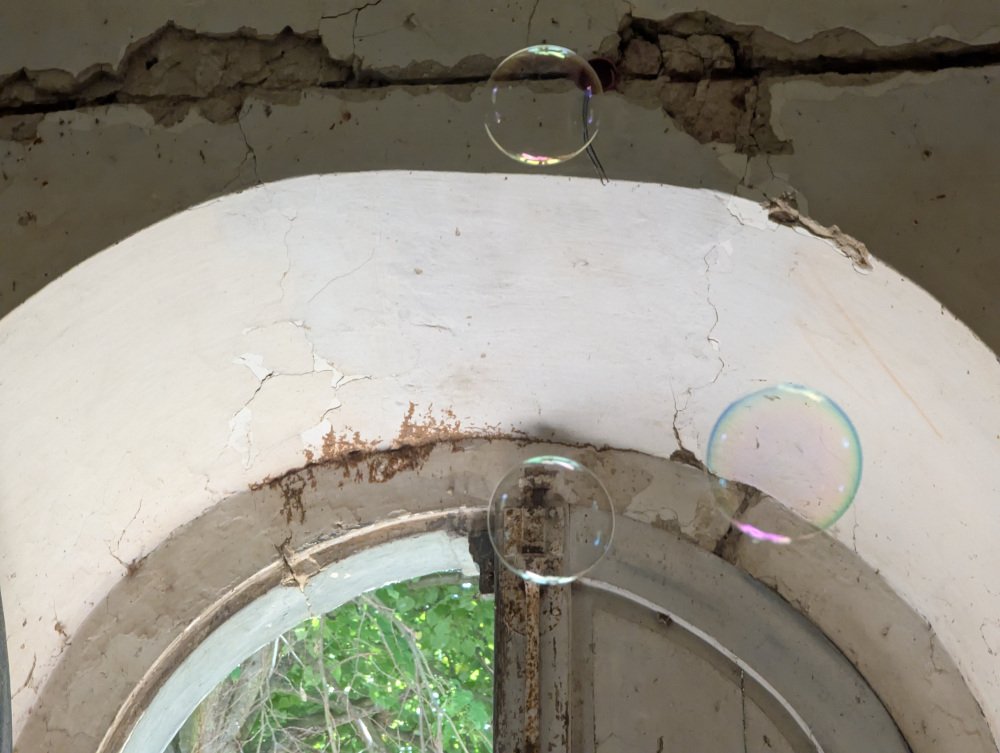
First realization of Fleeting Offering in its present form.

10 June 2026
Spitzelofen, Austria
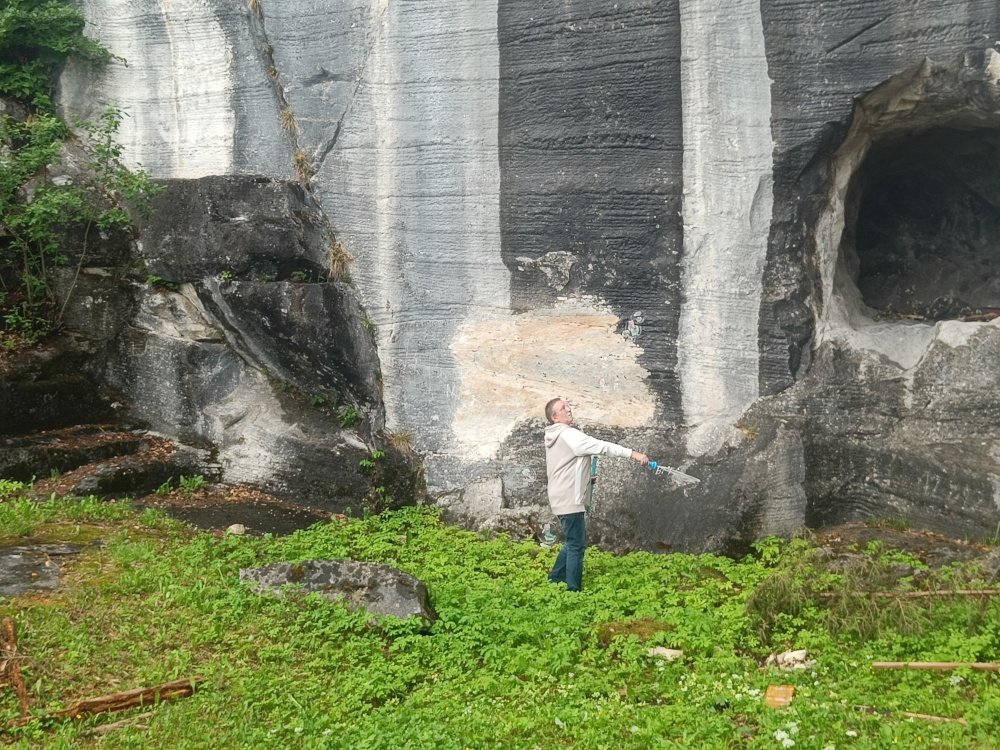
Realization at a former marble quarry bearing a Roman dedication carved into the rock.

19 June 2026
Valcamonica, Italy
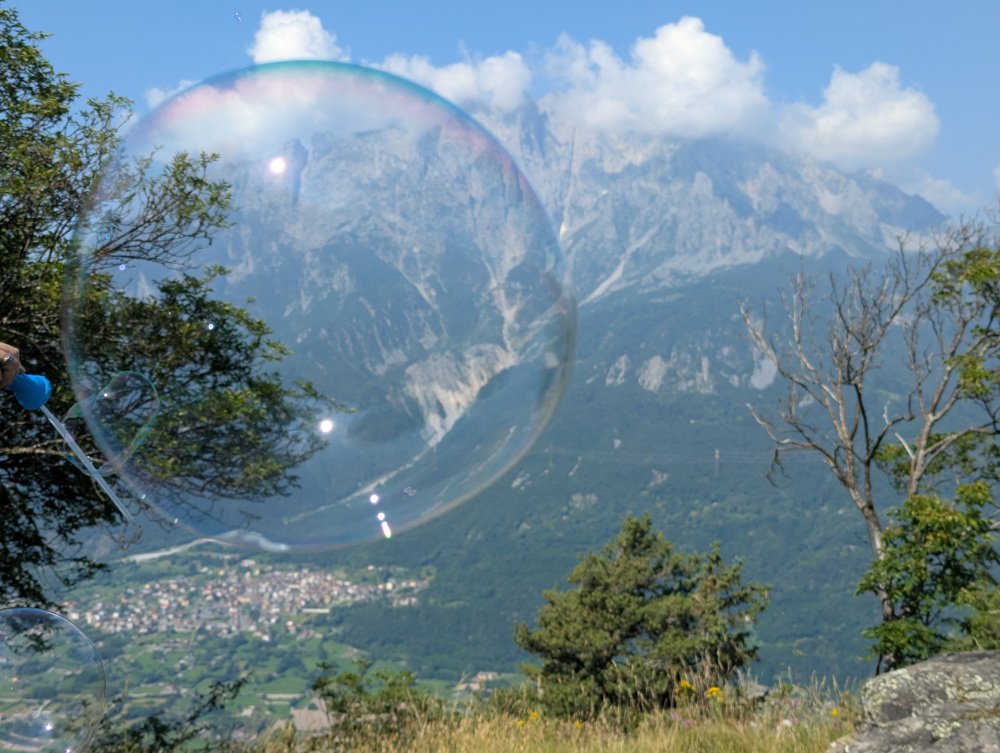
Realization in a landscape containing prehistoric rock engravings.
Project Dossiers

BACK TO WORK

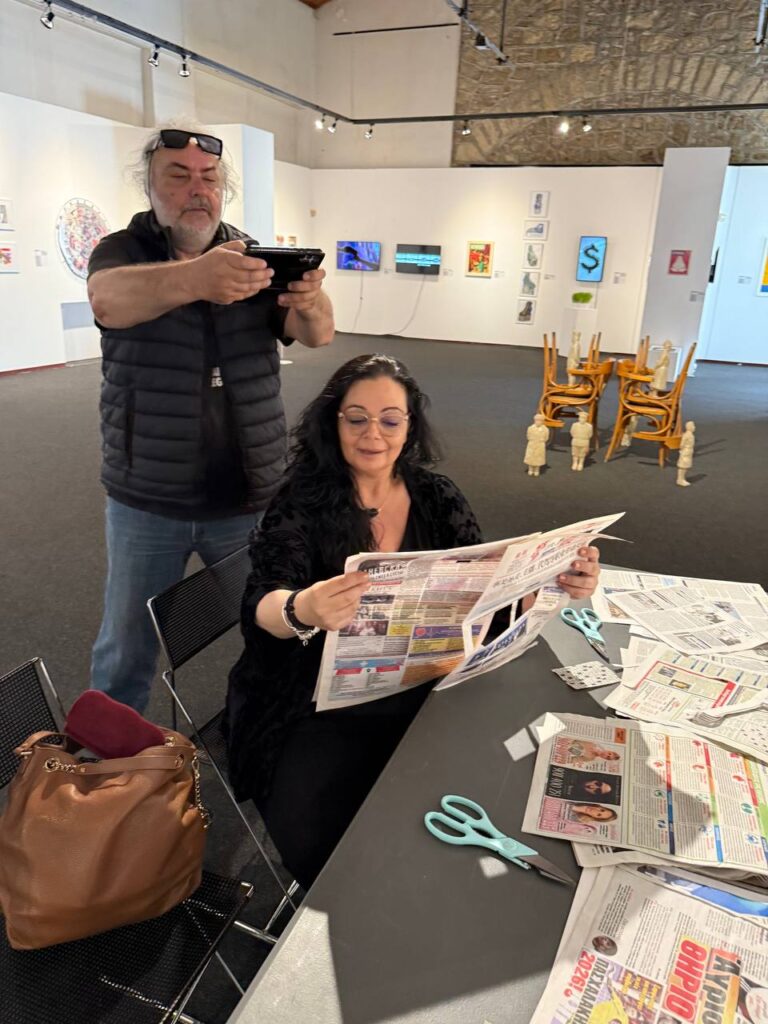
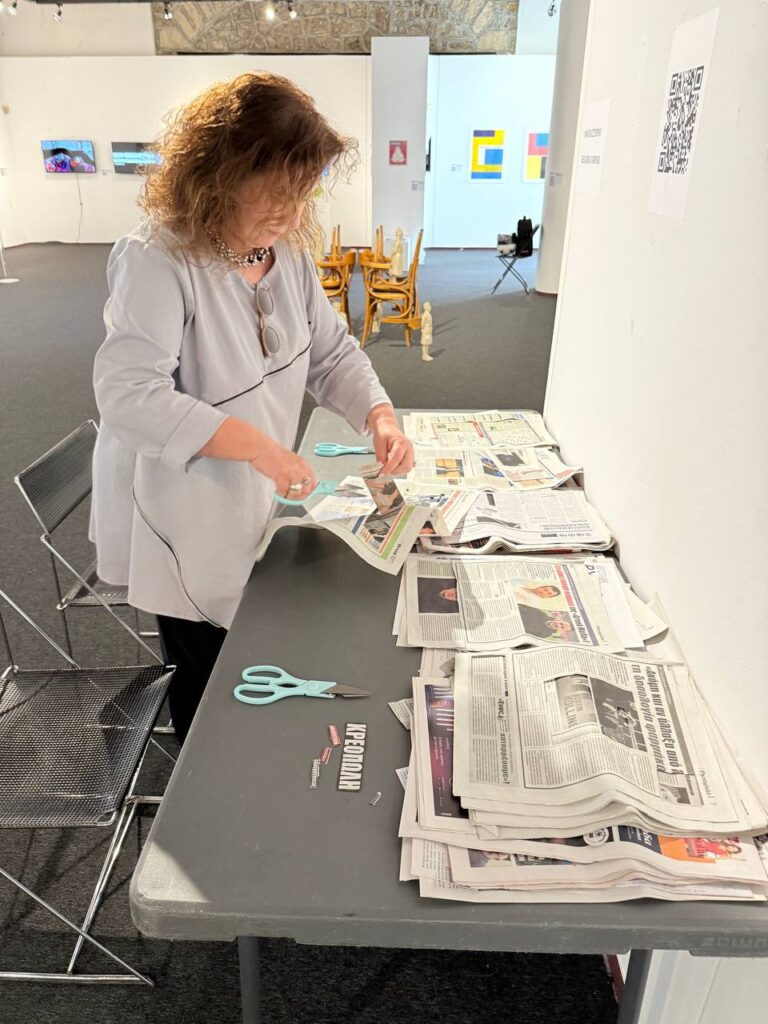
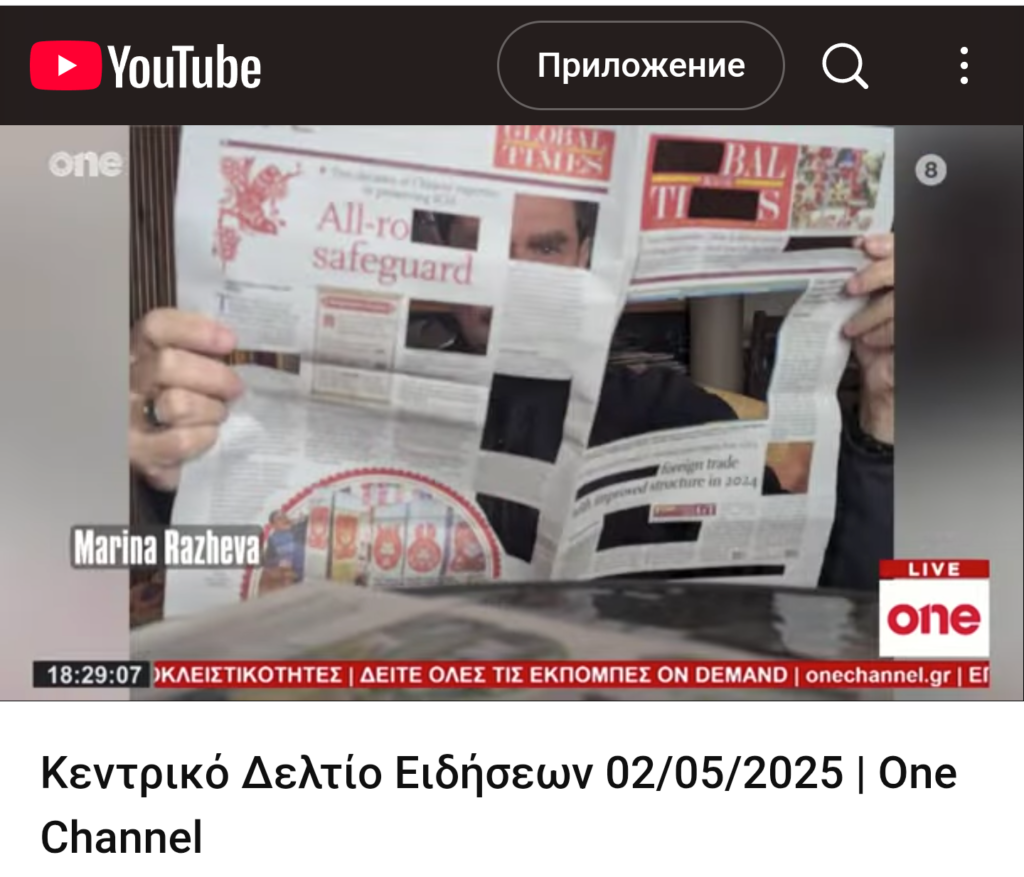
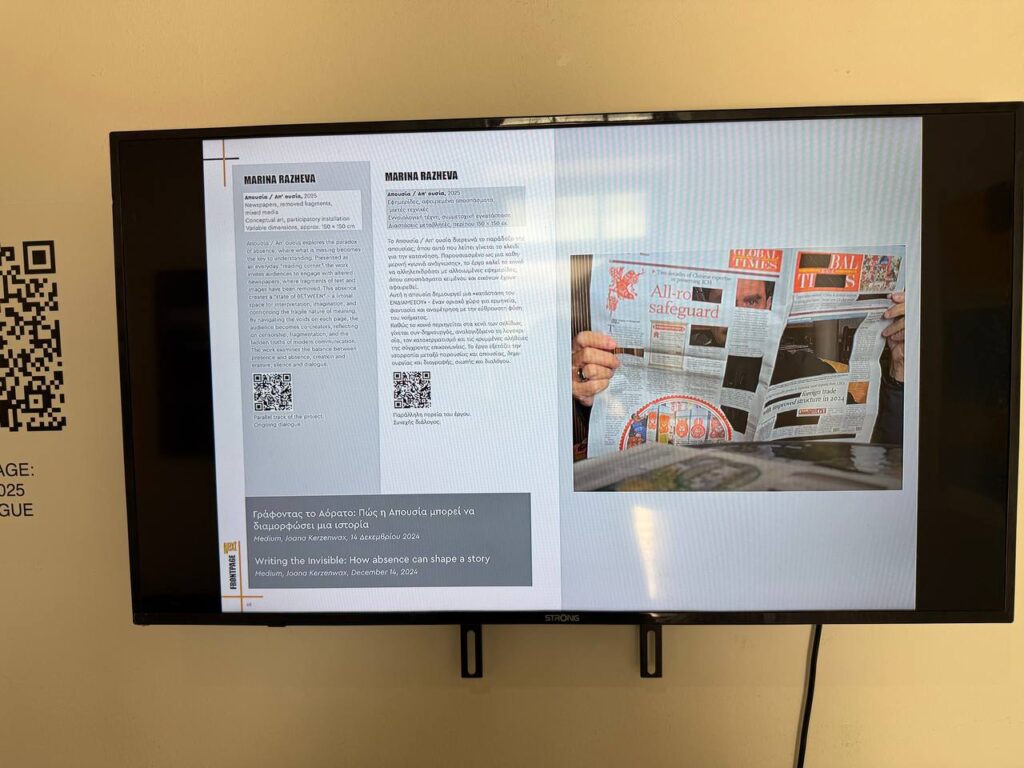
Απουσία / Απ’ ουσία

traces of the work

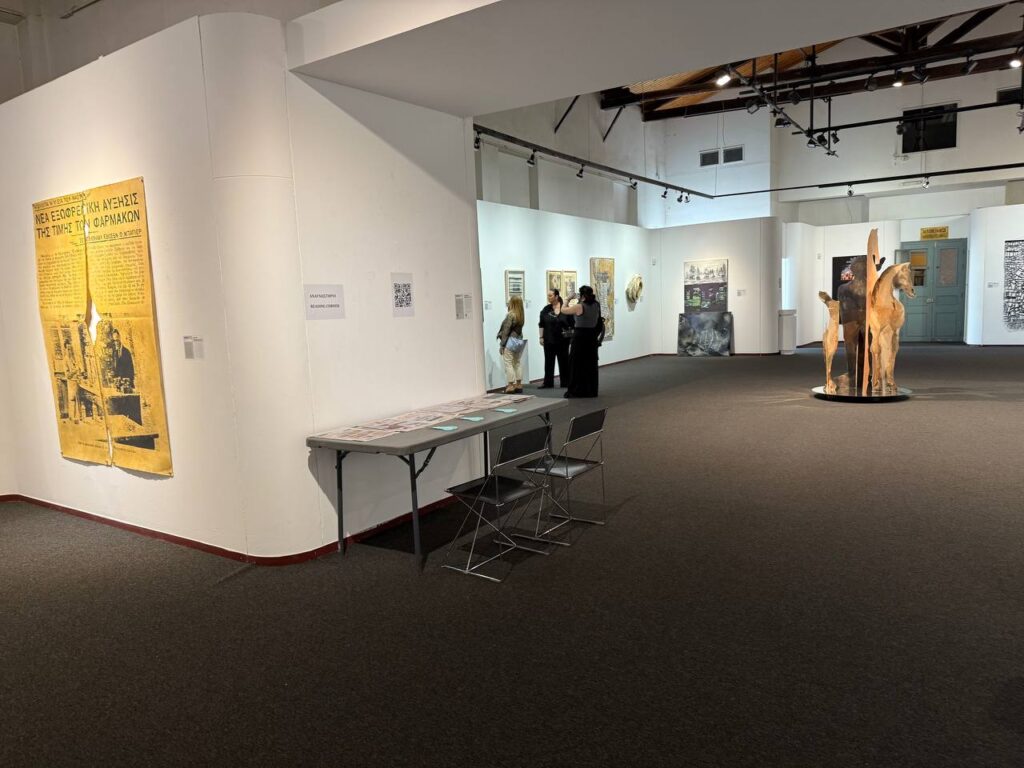
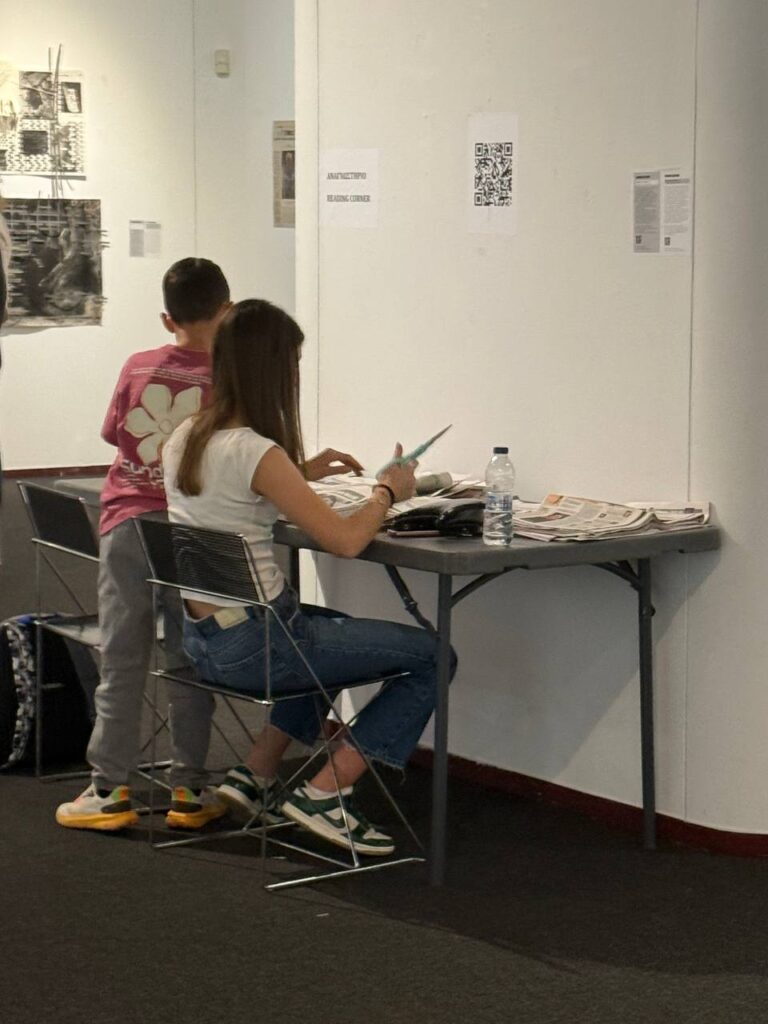
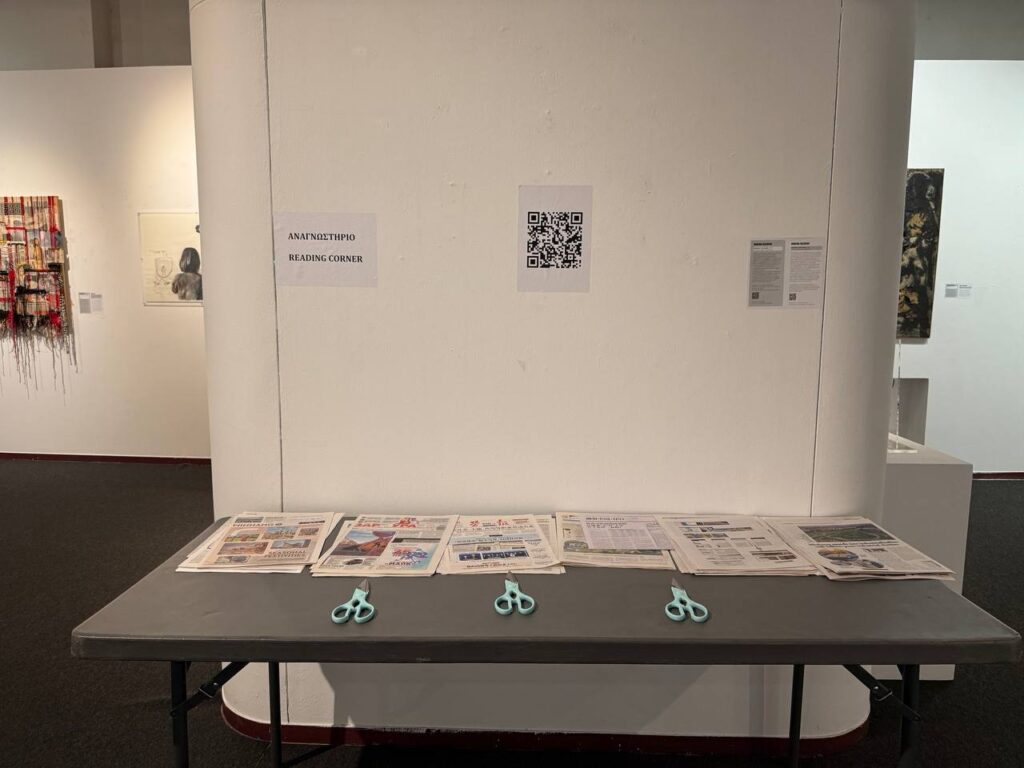
During the exhibition, visitors could upload photographs and comments through a QR code placed inside the installation.

The submissions were edited and published in real time, extending the work beyond the exhibition space.

Artviews

Festival Miden

LIFO

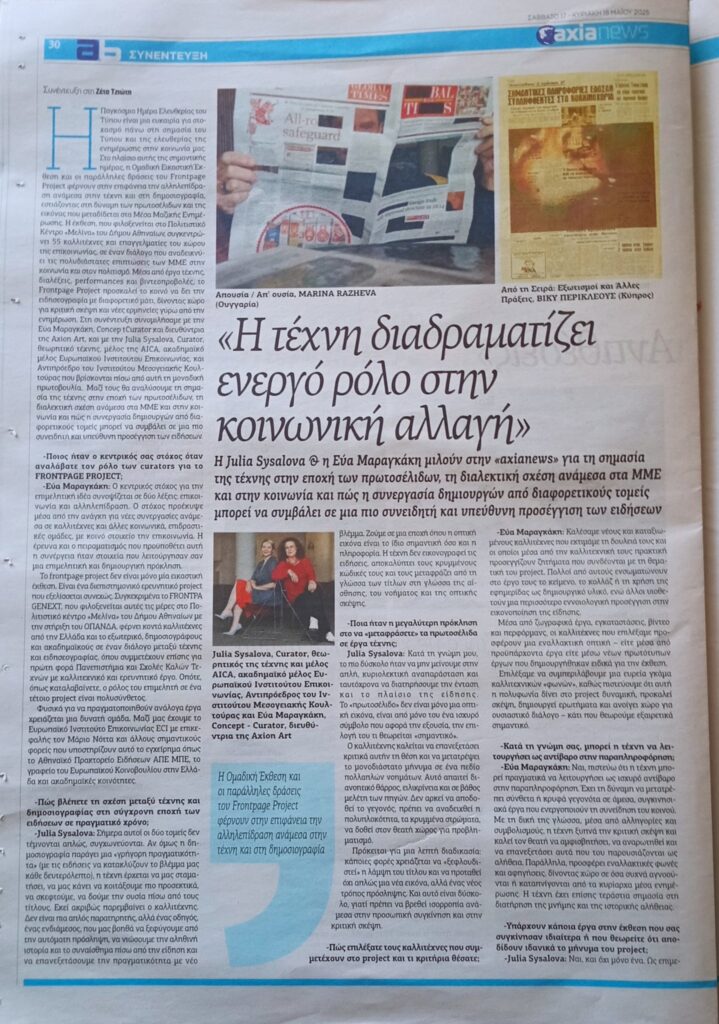
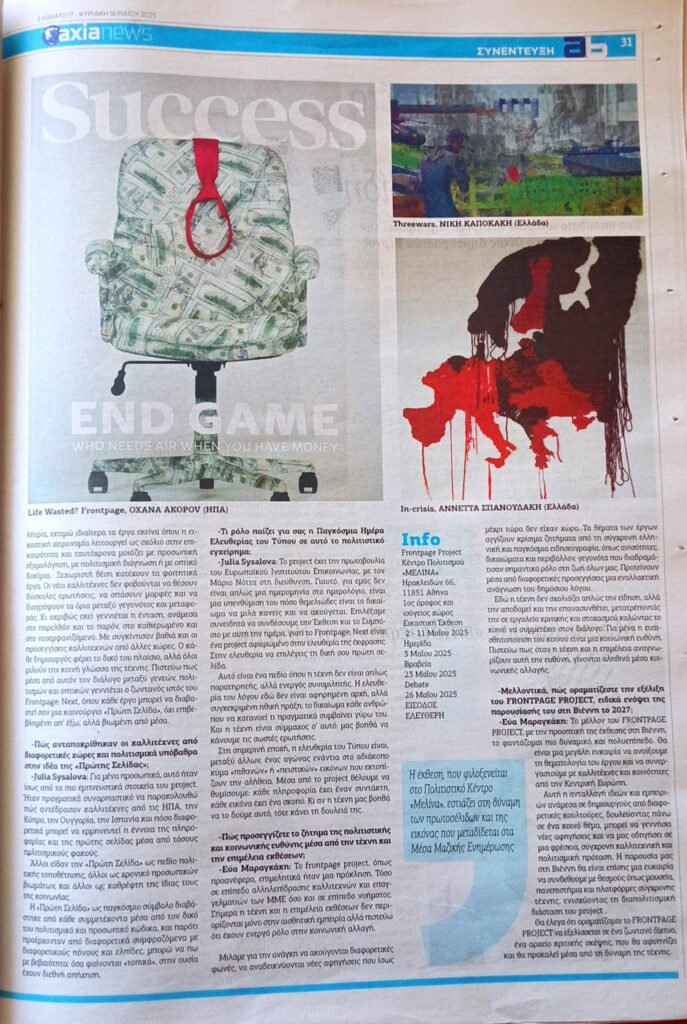
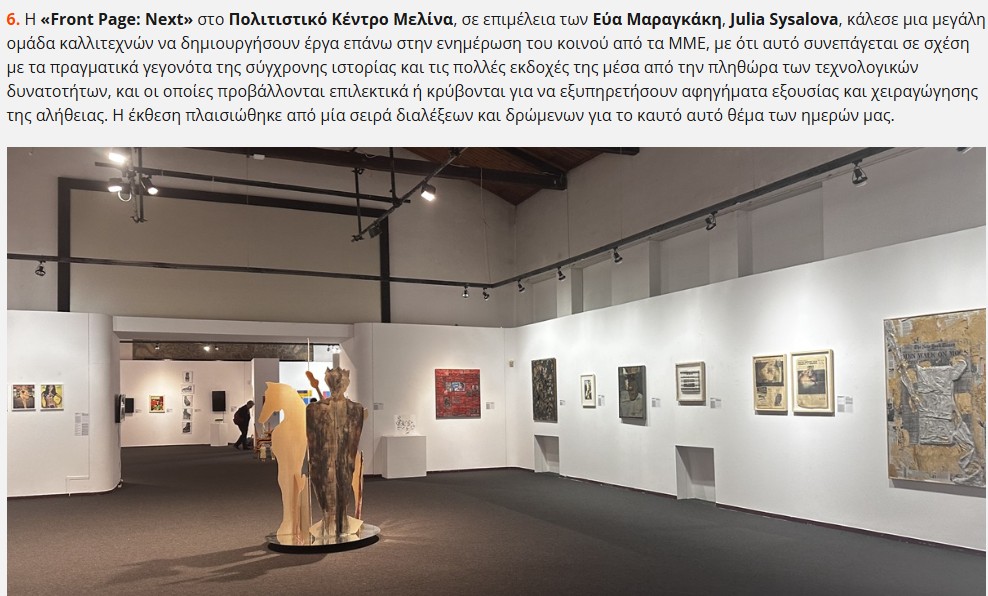
Interview with curators Axianews, 18.05.2025:

Project Dossiers

Lullaby for the River

traces of the work

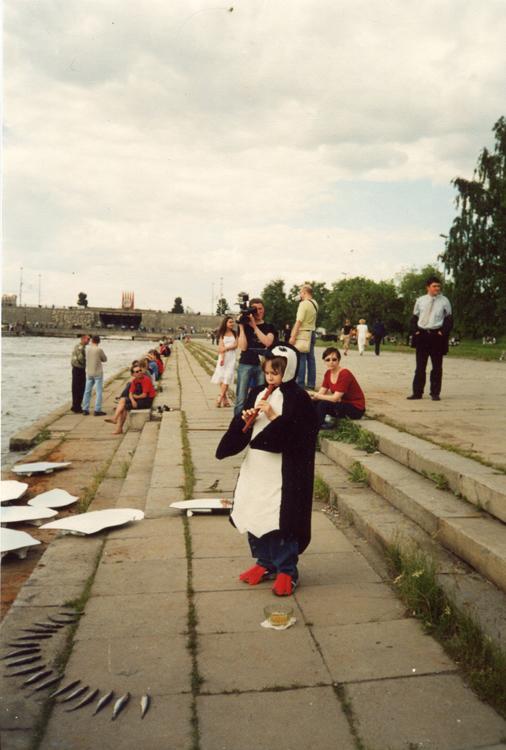
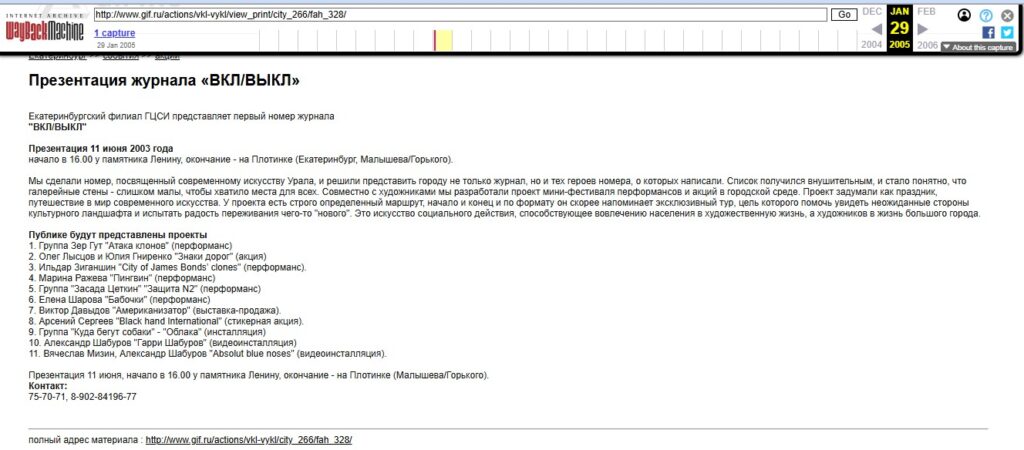
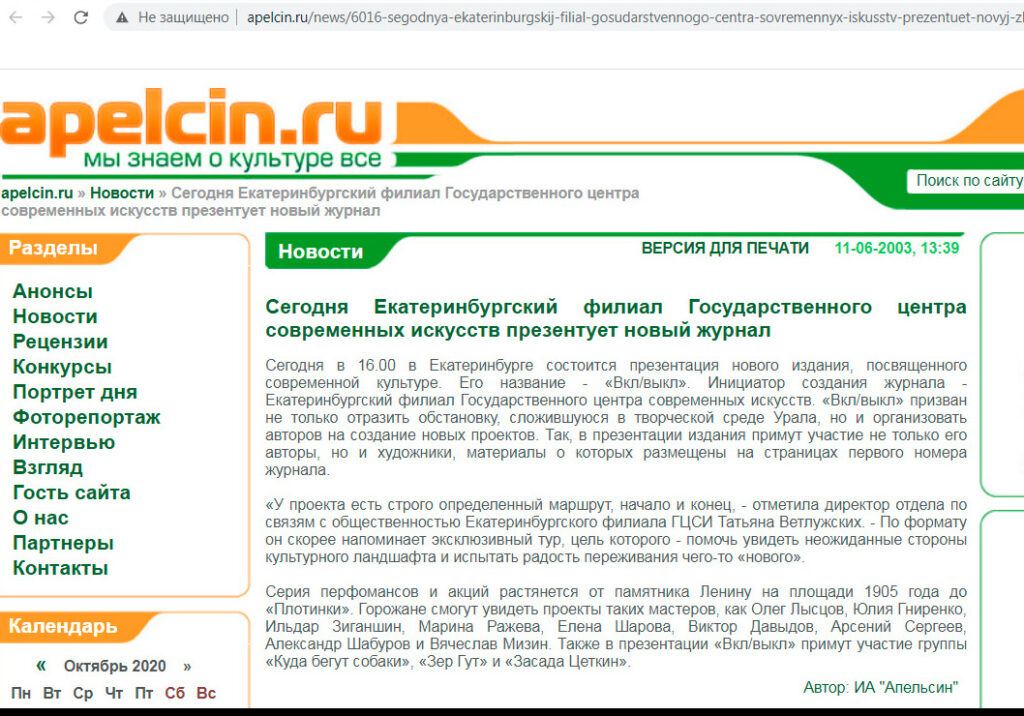
Lullaby for the River was created for VKL/VYKL, a mini-festival of performances and actions in the urban environment, held in Yekaterinburg, Russia, on 11 June 2003. The festival was organized by the Yekaterinburg branch of the National Centre for Contemporary Arts to present the first issue of a magazine devoted to contemporary art in the Urals.

Instead of presenting the magazine within gallery walls, the organizers invited artists featured in its pages to make works in the city. The festival followed a defined route, conceived as a journey through the urban cultural landscape and an invitation to encounter contemporary art outside conventional exhibition spaces.

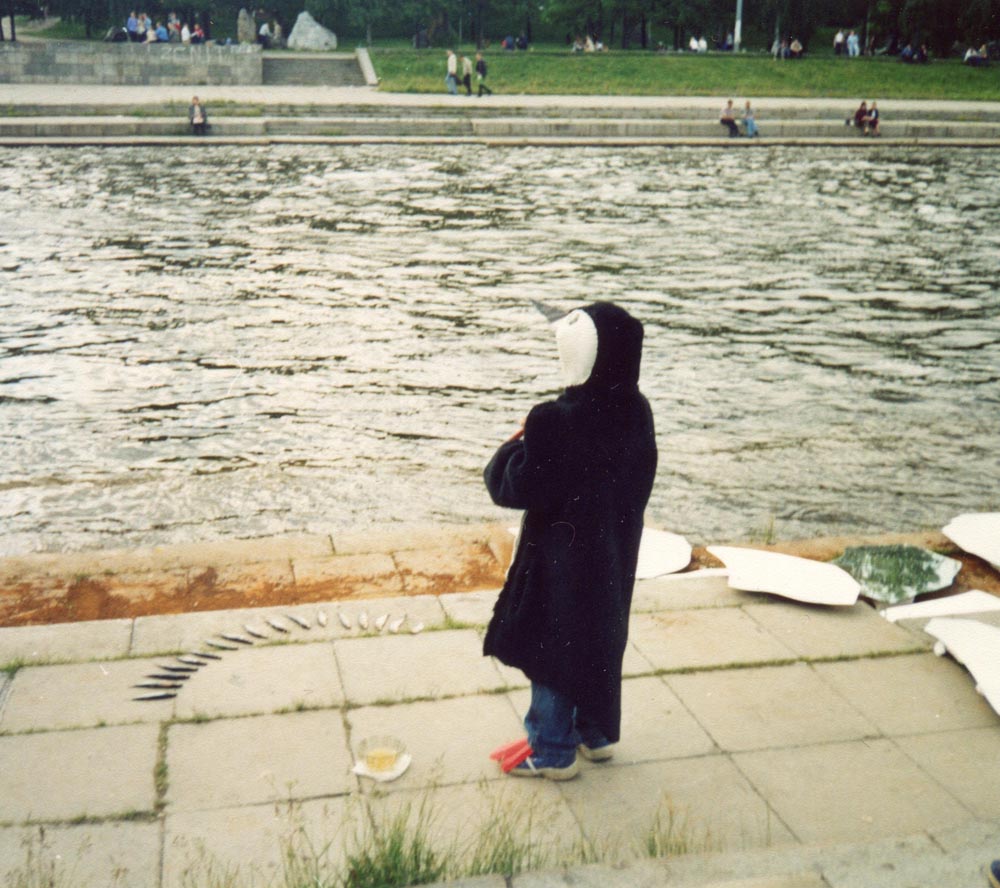
Marina Razheva created Lullaby for the River for this occasion. The performance took place on the embankment of the Iset River. Vladimir Razhev, dressed in a penguin costume, played a wooden recorder. A semicircle of herrings lay in front of him; beside him stood a small crystal vessel containing fish-oil capsules.

The scene brought together a lullaby and a river, a costumed figure and dead fish, a musical gesture and an unusual offering. The work unfolded in the public space as part of a festival that brought contemporary art into the everyday life of the city.

The performance was documented under the title Penguin in the festival’s online archive. The photographs and surviving media references now serve as traces of the action.

Project Dossiers

BACK TO WORK

STONE SCORE

traces of the work

2016 / 2026

Hungary: Pécs / Szentbékkálla

Photography, site-specific action

THE STORY

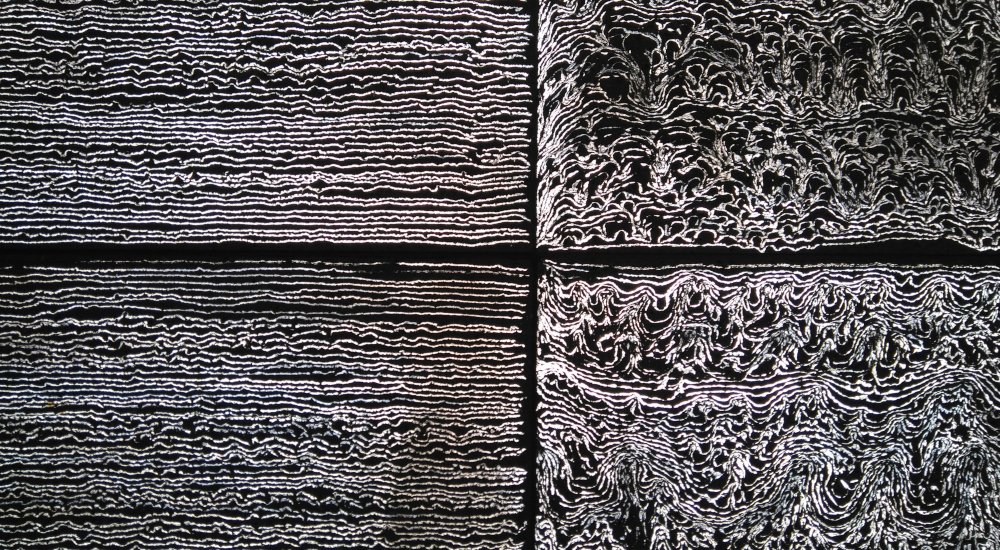
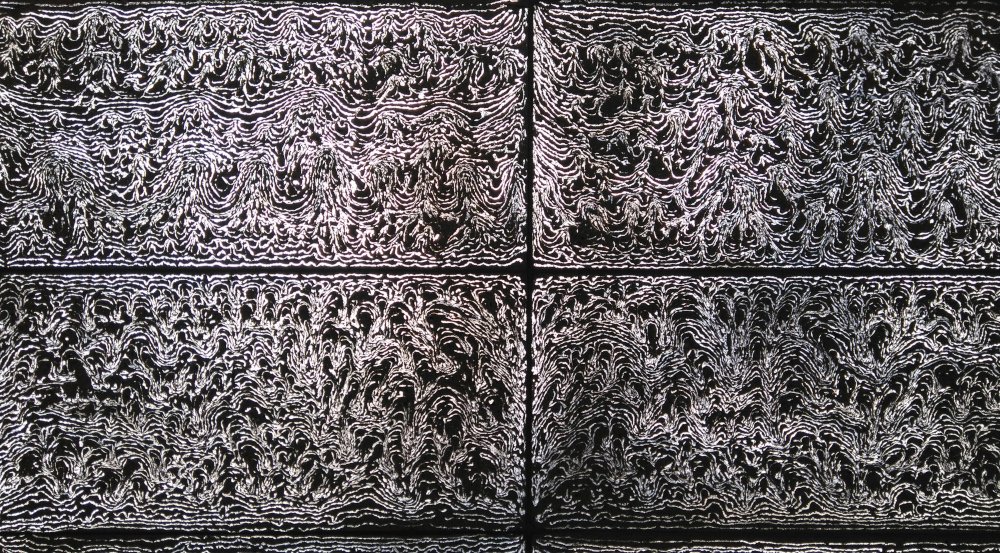
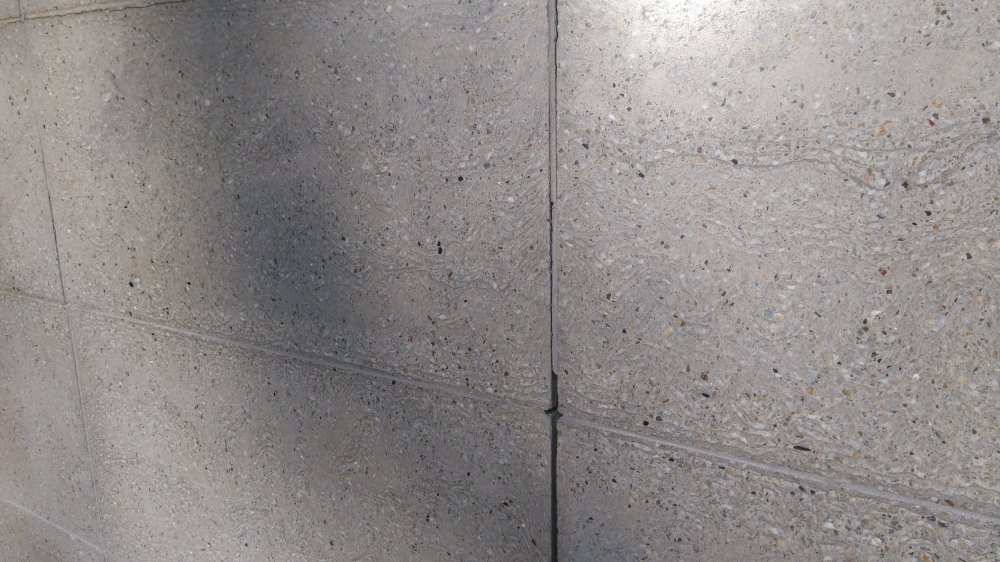
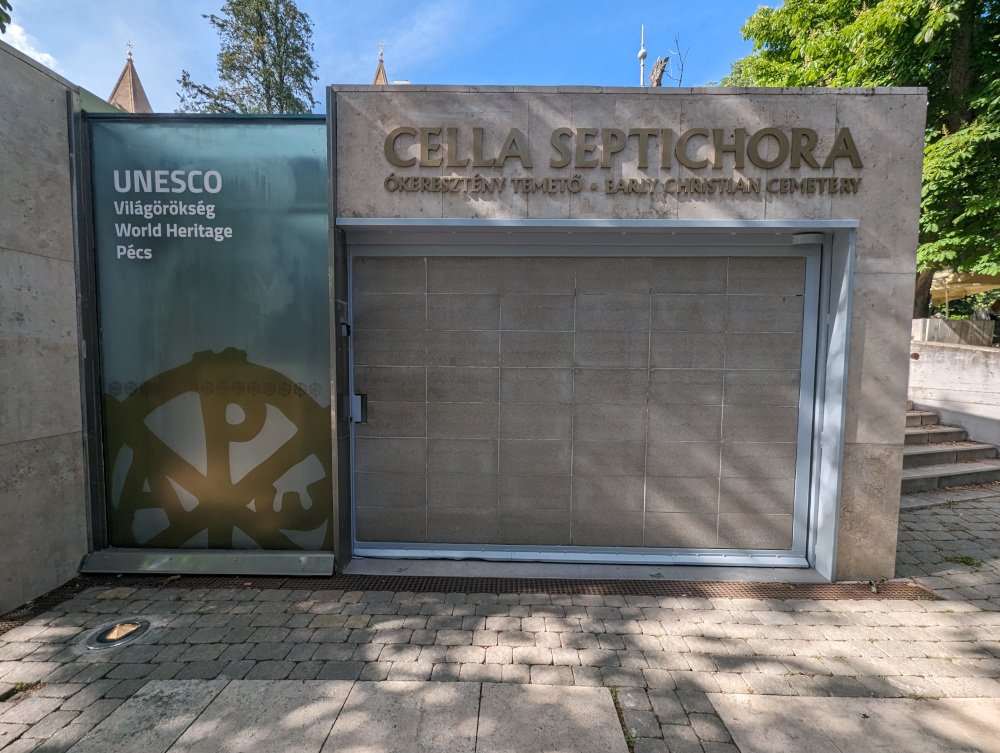
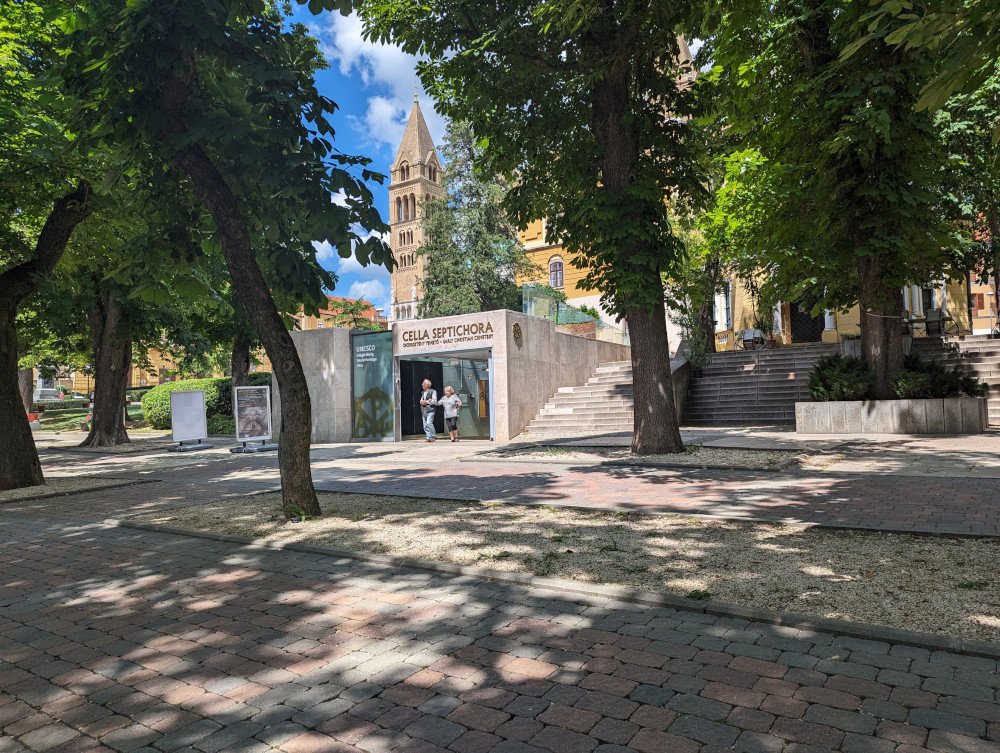
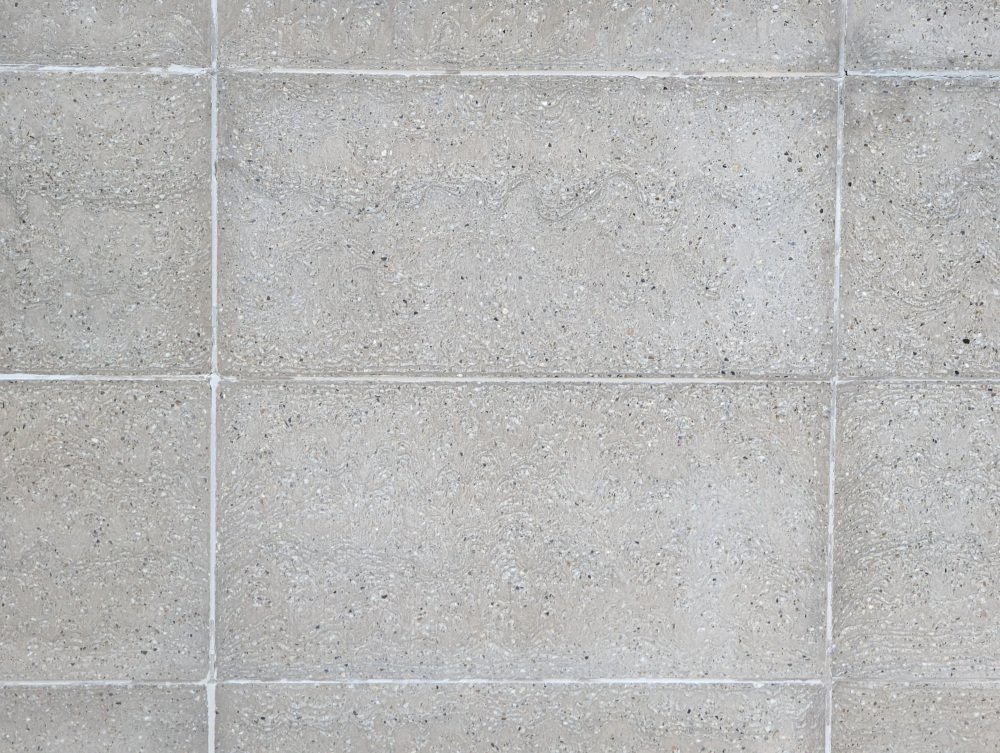
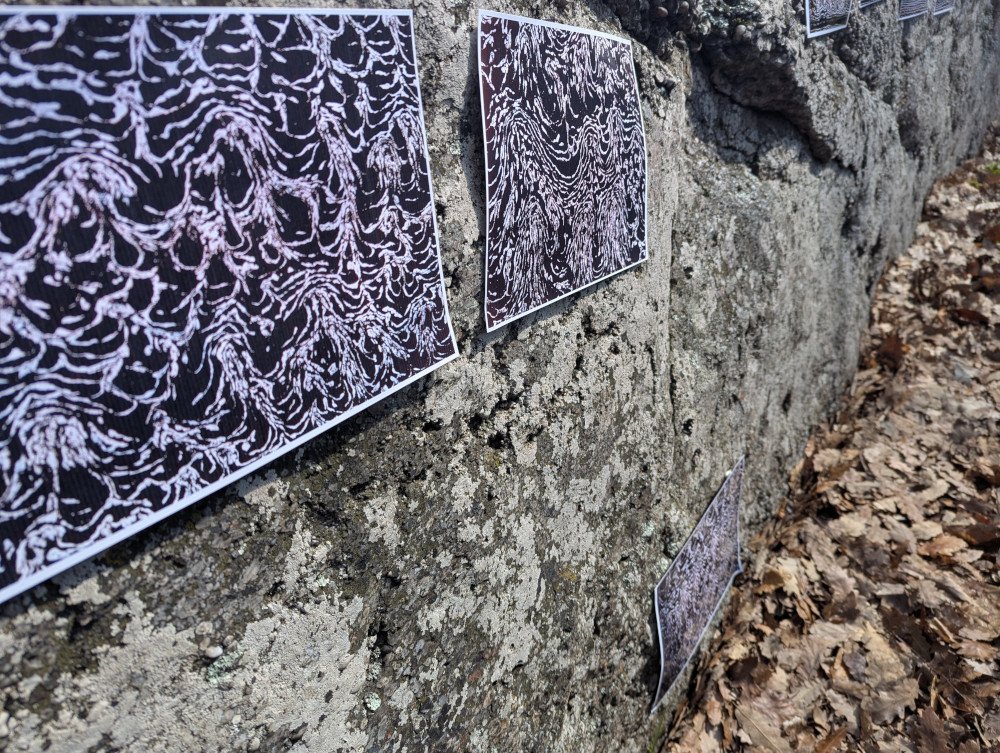
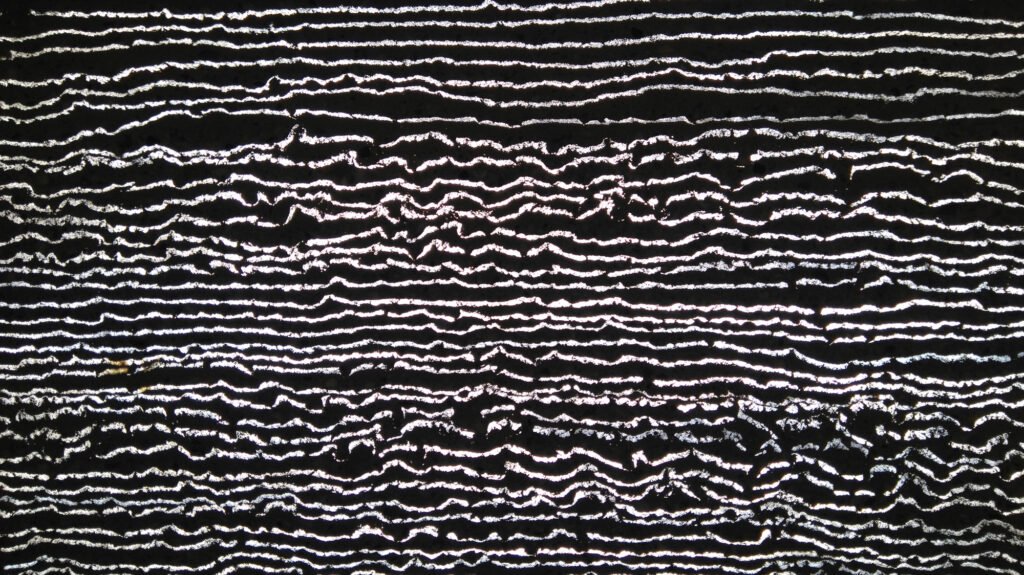
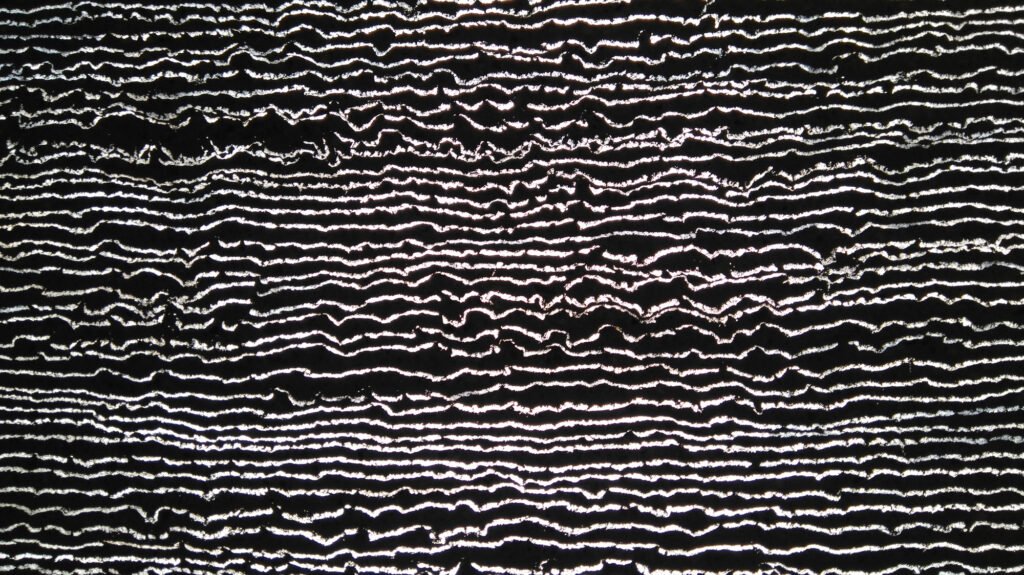
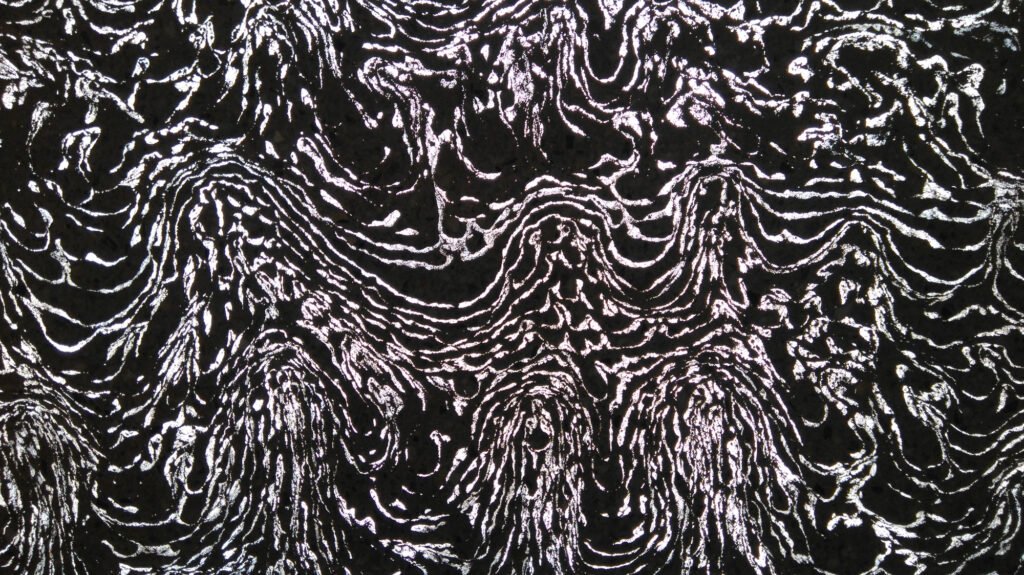
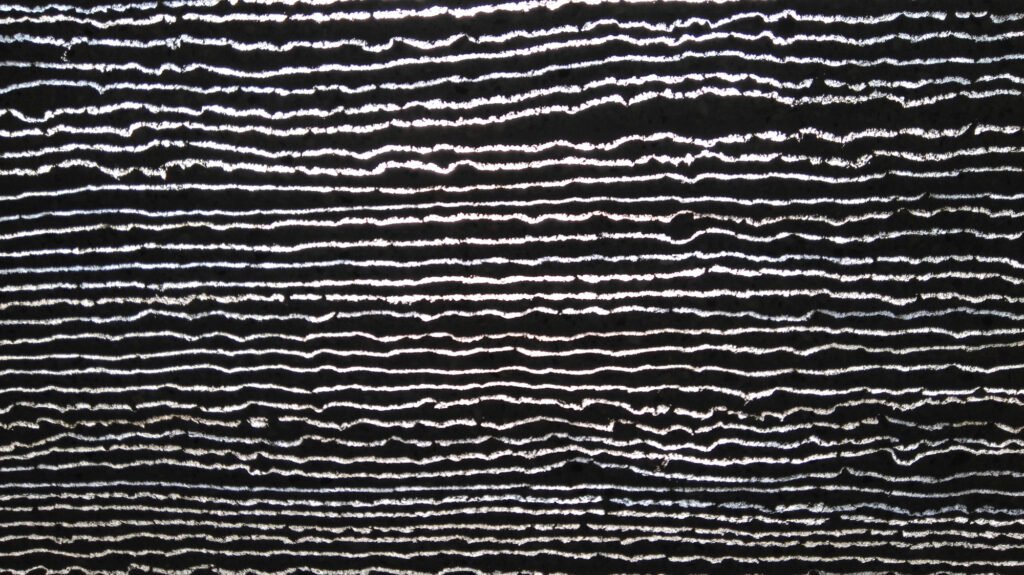
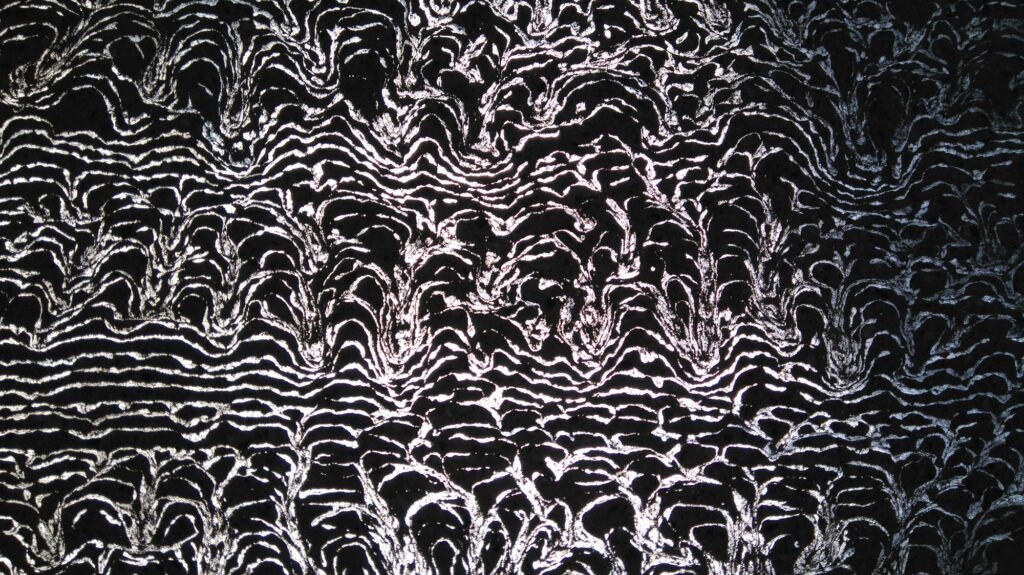
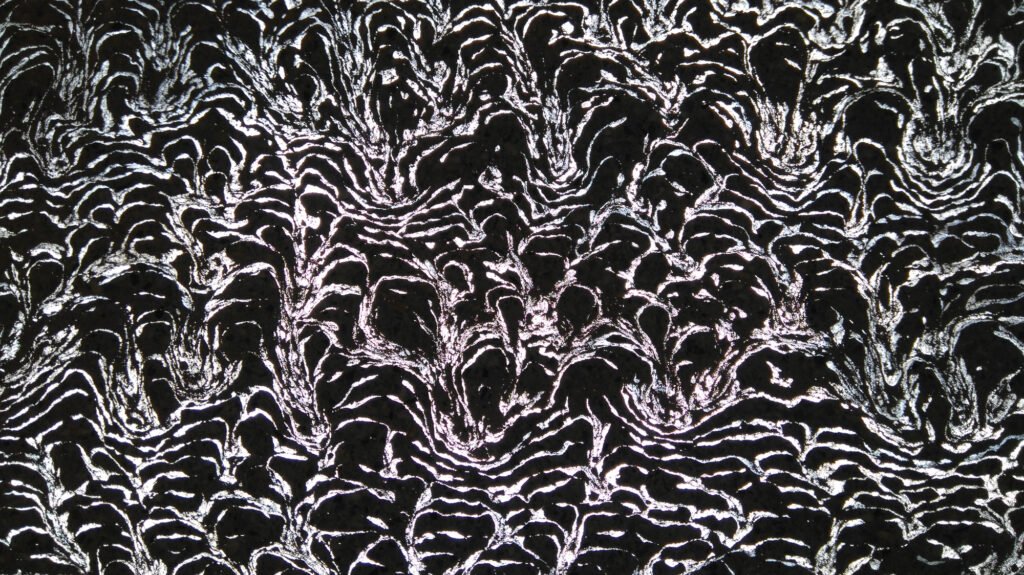
In December 2016, as I was leaving Cella Septichora in Pécs, Hungary, I noticed sunlight passing through the stone of the entrance door. The light revealed translucent and opaque areas of the rock that resembled musical notation, a cardiogram, or an ancient script. I photographed them in colour, without any processing.

When I returned in May 2024, the conditions had changed. In winter the door is kept closed against the cold, even when the museum is open; in the warm months it is kept open. We arrived before the museum opened to photograph the door from outside, closed. Later, from inside, I looked at it as I had in 2016: leaves on the trees obscured the sunlight, and the door stood open. It seemed to be fixed in that position, so we did not close it ourselves. Recreating the original image would have required a clear day, the right position of the sun, bare trees, and a closed door. In December 2016, all these conditions had come together by chance.

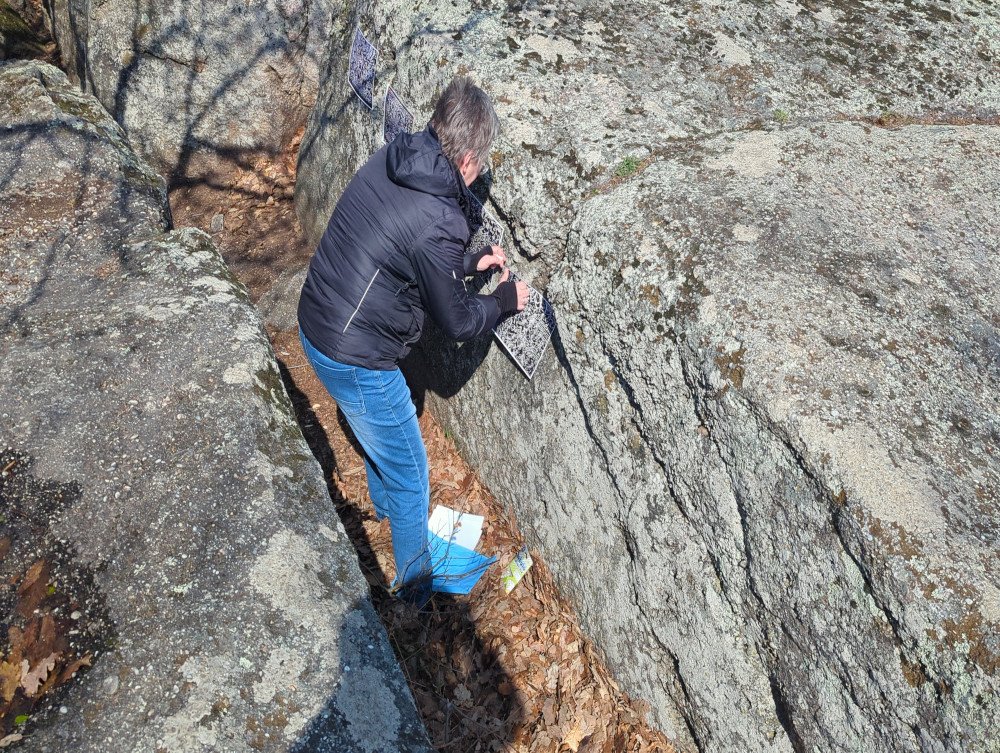
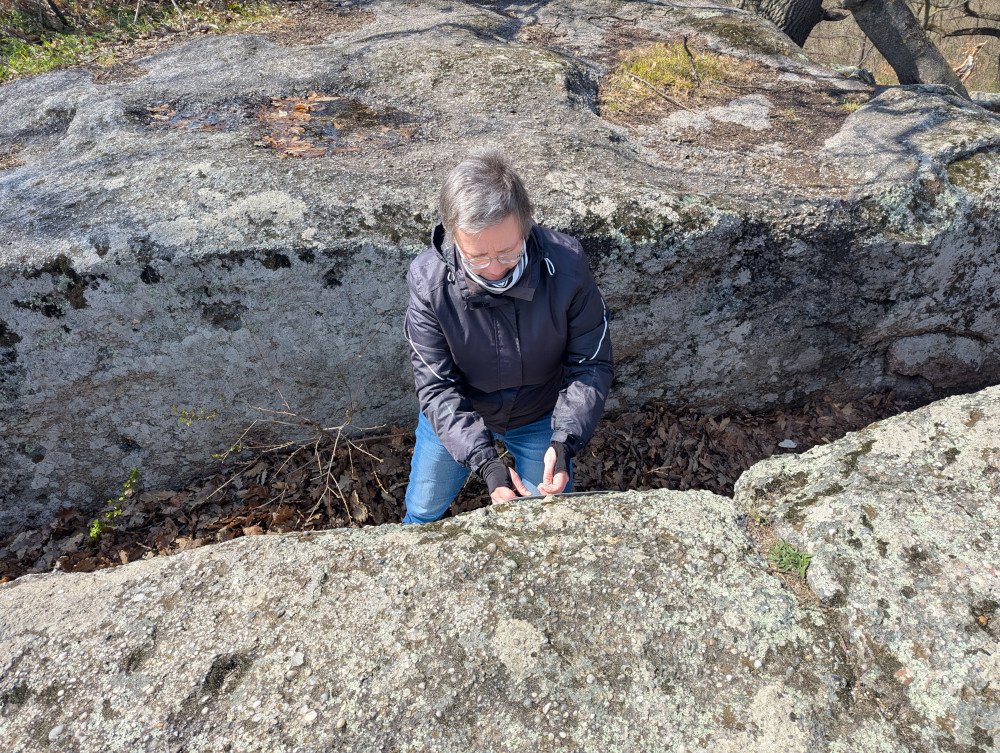
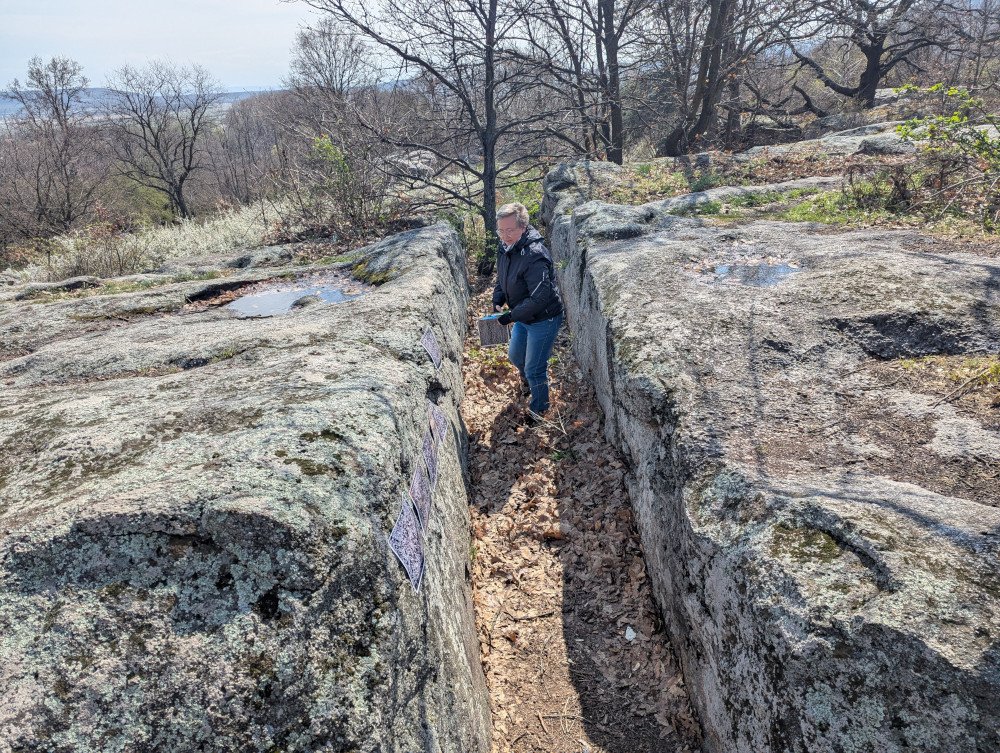
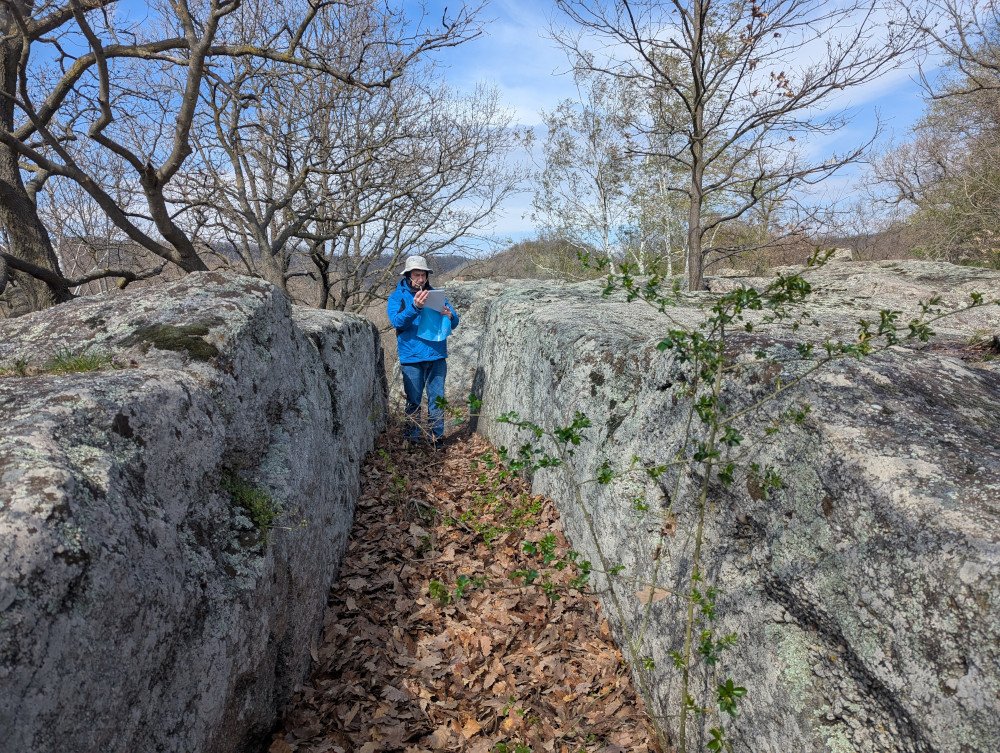
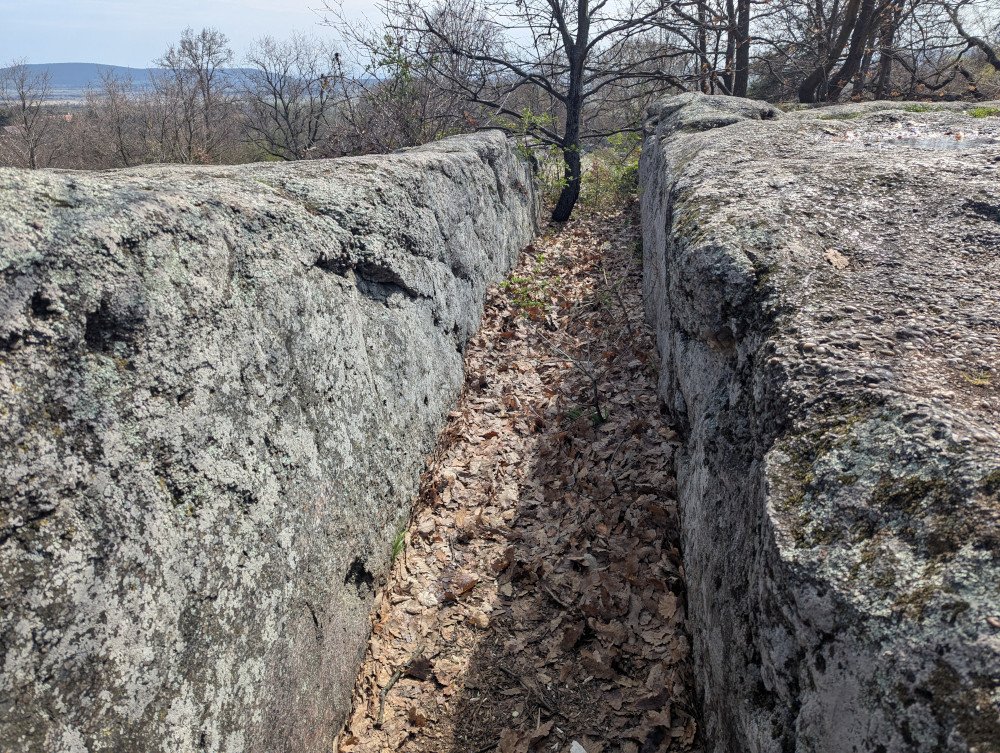
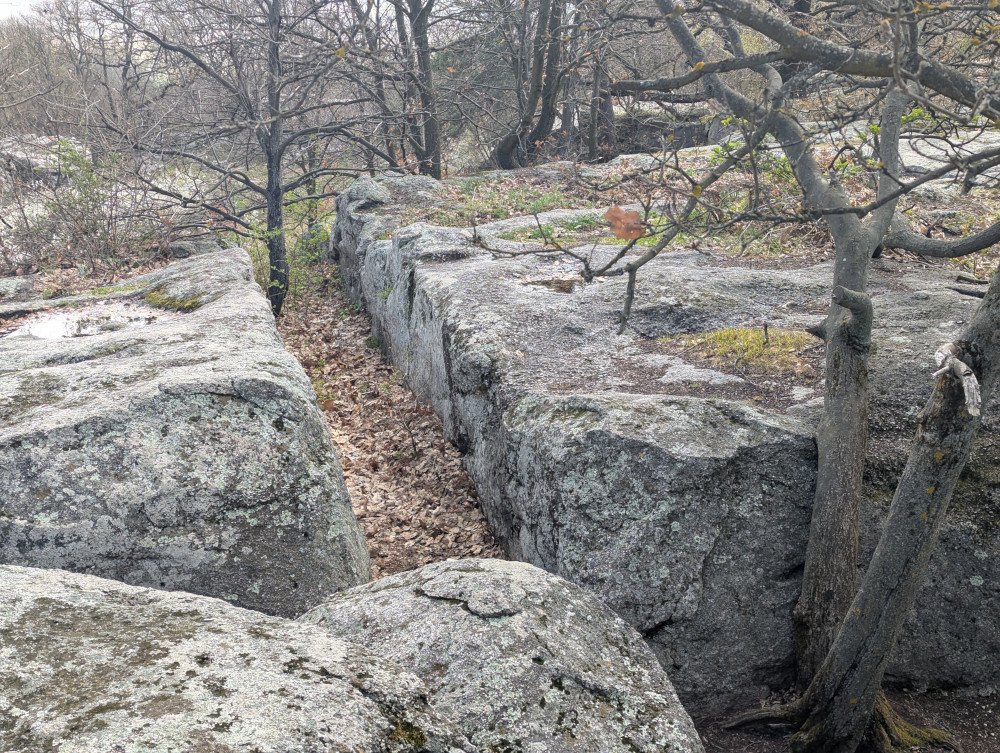
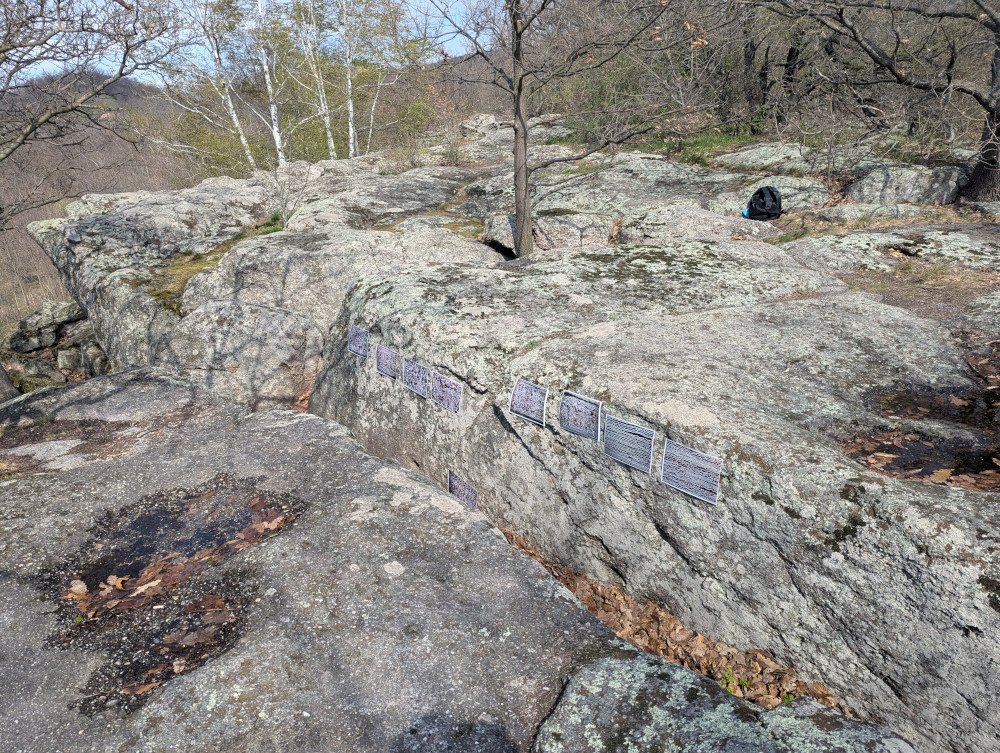
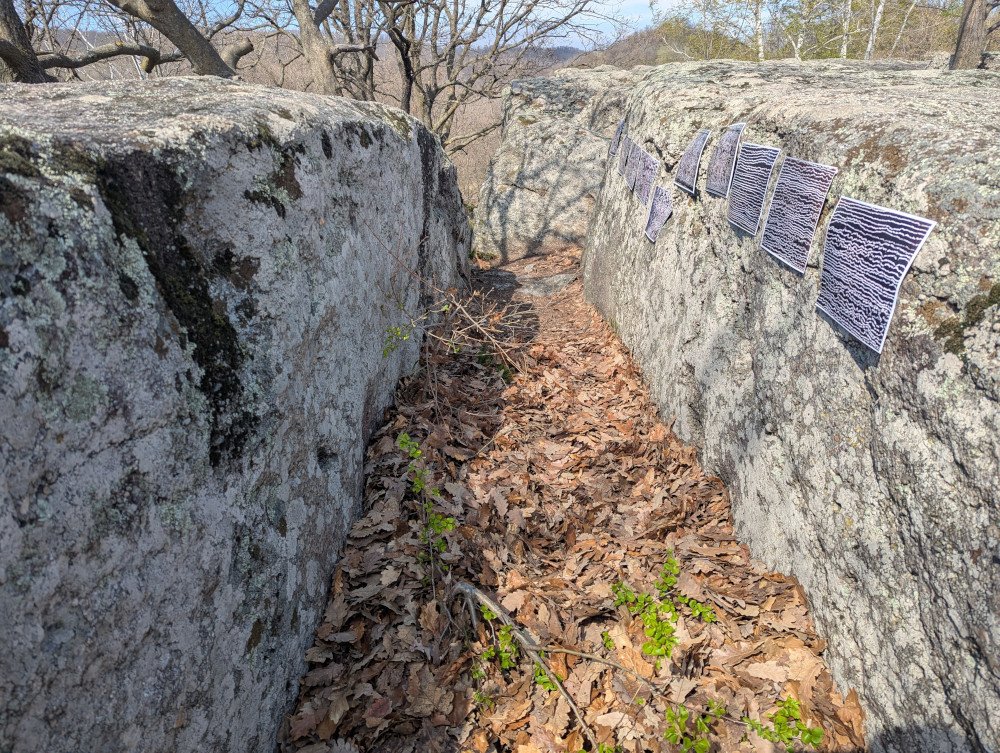
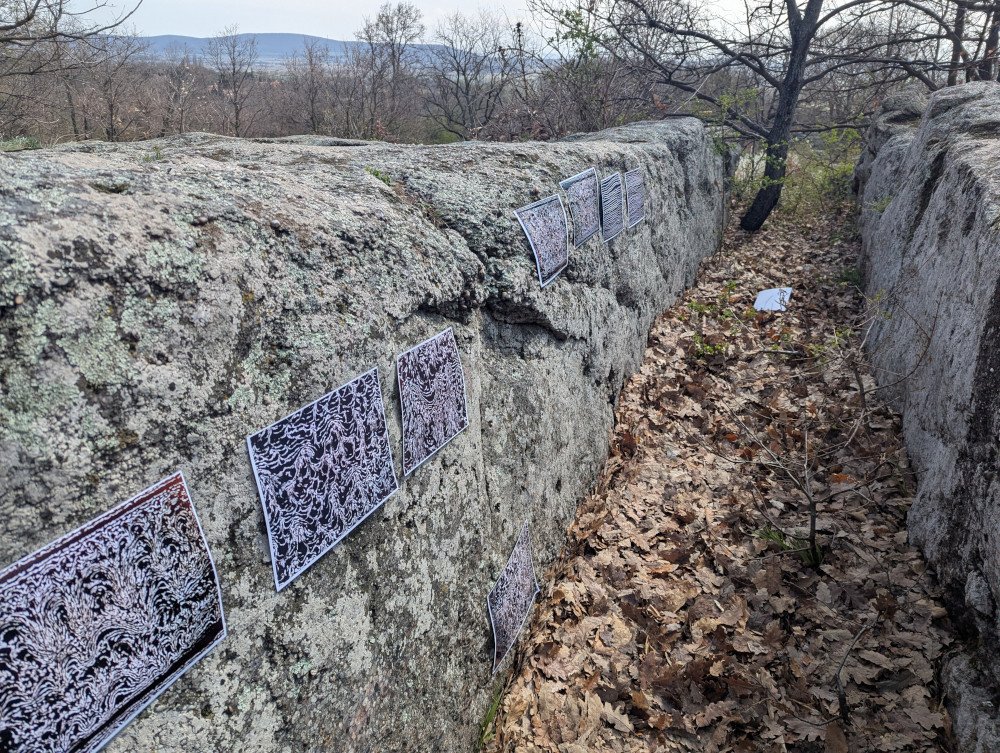
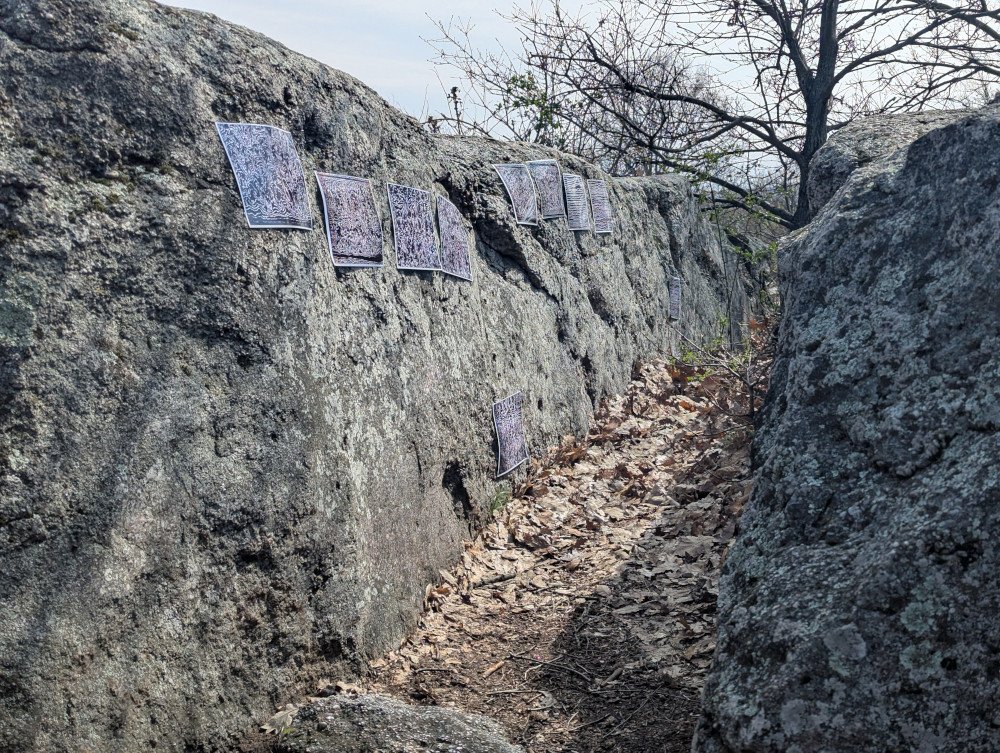
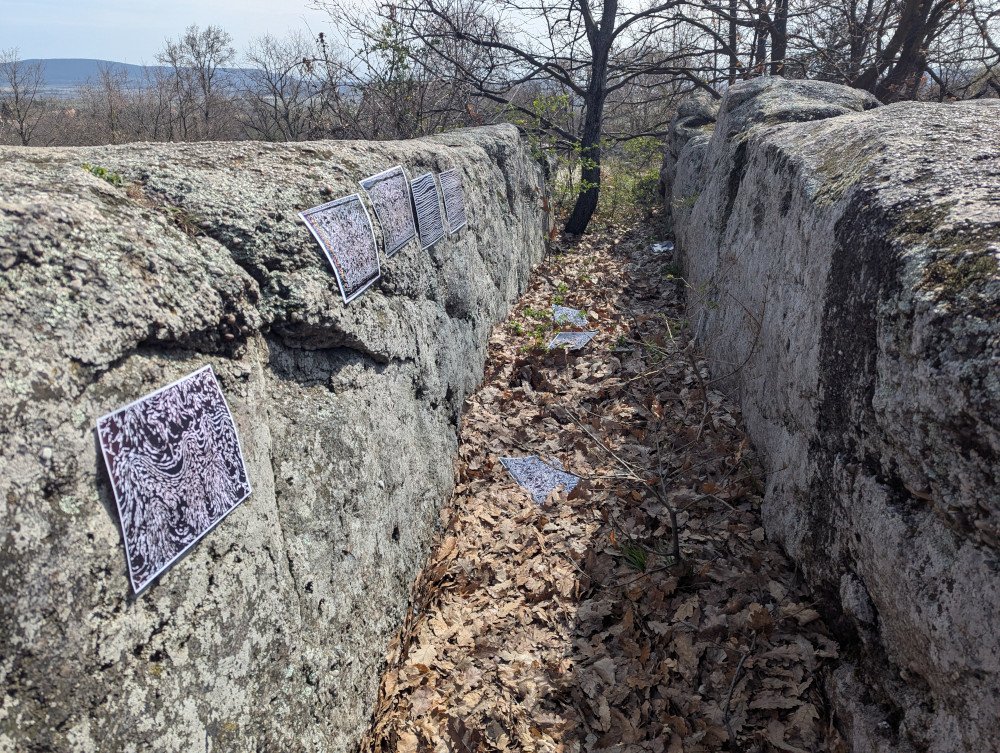
In March 2026, I brought printed copies of these photographs to the Stone Sea near Szentbékkálla, Hungary.

I temporarily attached the prints to the rocks of a narrow, unusually straight stone corridor. The wind tore the sheets loose and displaced them, repeatedly rearranging their positions.

After the action was documented, all the prints were collected and removed from the site. No trace was left behind.

Photographs of light recorded in one stone were read by another. The work emerges in the moment of encounter.

The installation was carried out with the assistance of Dmitry Razhev, who also witnessed the action.

DOCUMENTATION

Stone Sea, Szentbékkálla, Hungary, 28 March 2026

Photographic and video documentation of the action.

SOURCE IMAGES

Cella Septichora, Pécs, Hungary, December 2016

Colour photographs of light and shadow on the stone entrance door, made without processing.

Project Dossiers

BACK TO WORK

THE ANGLE OF VIEW

traces of the work

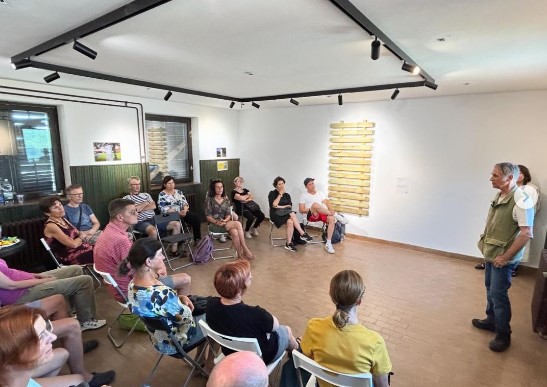
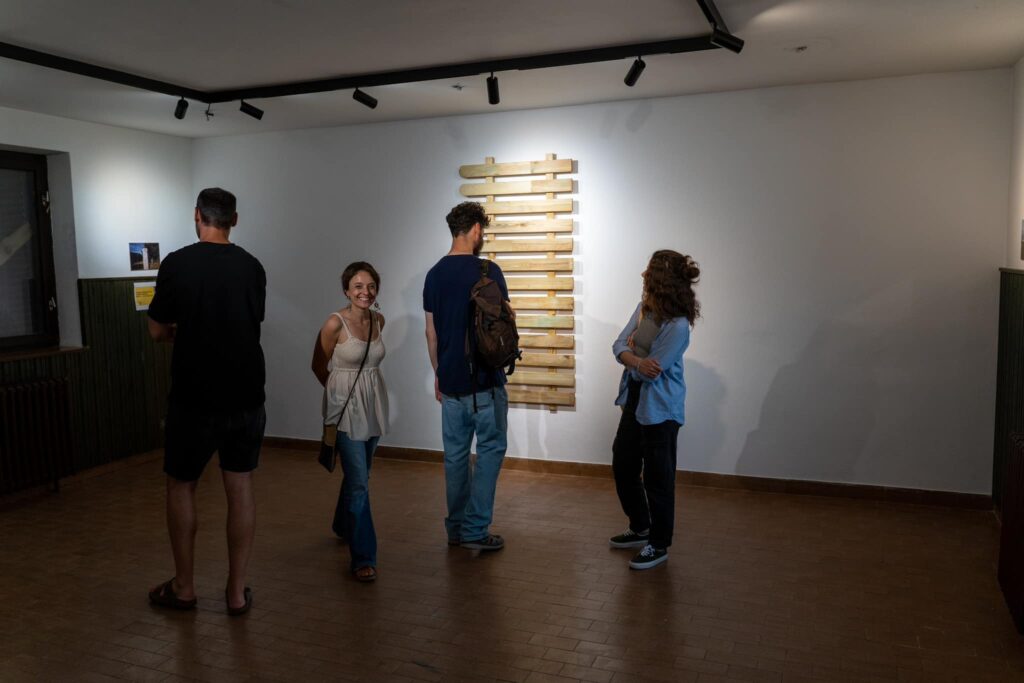
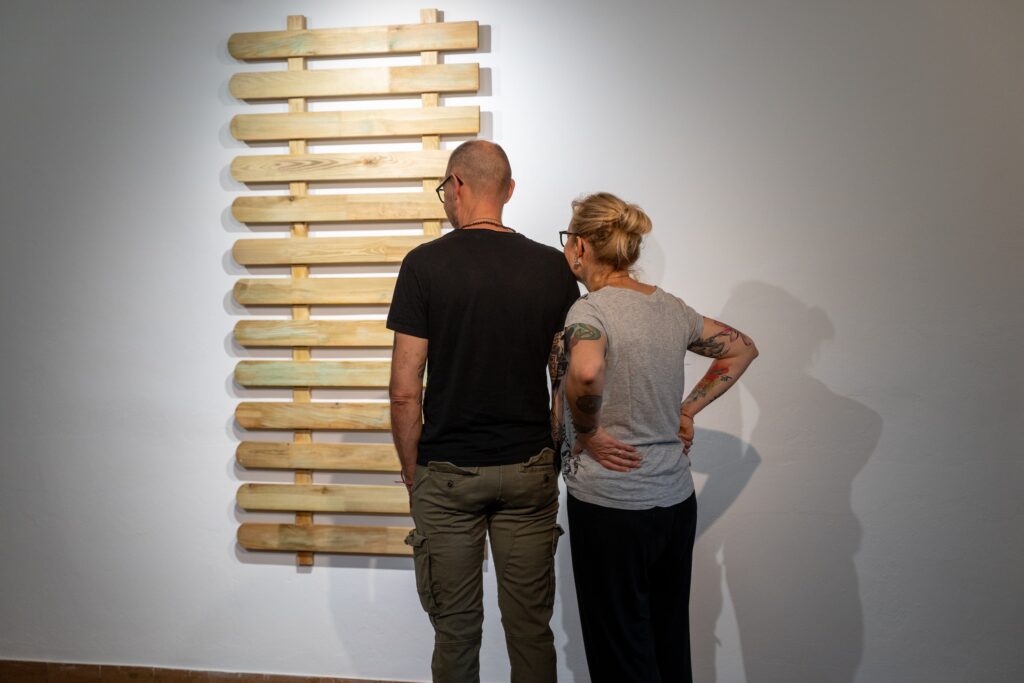
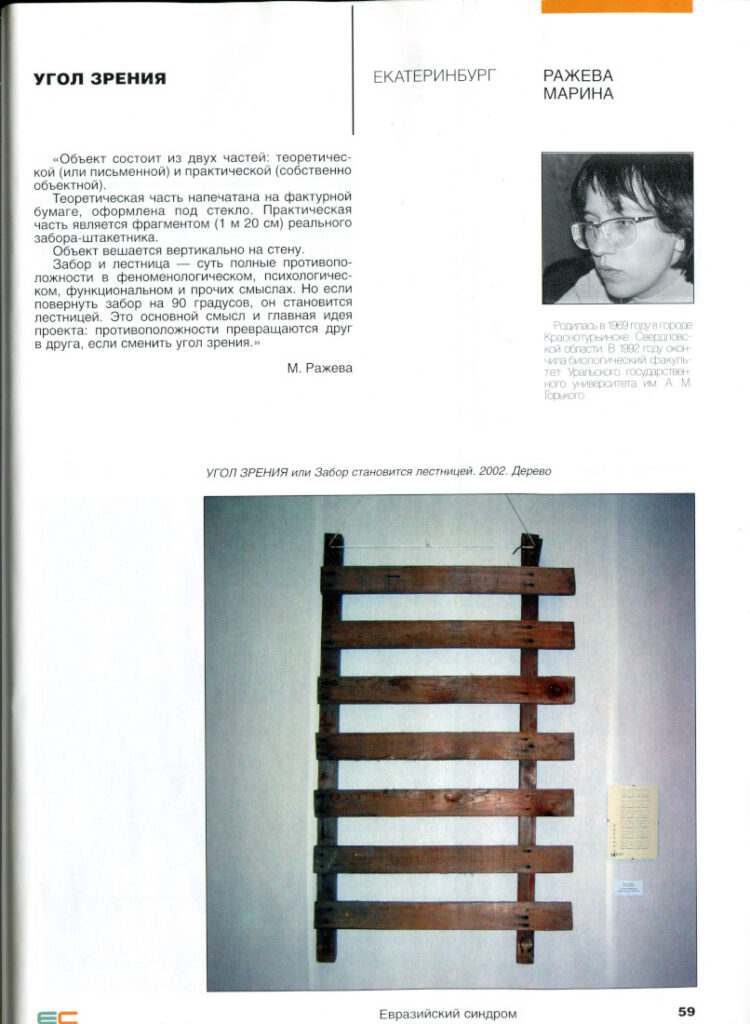
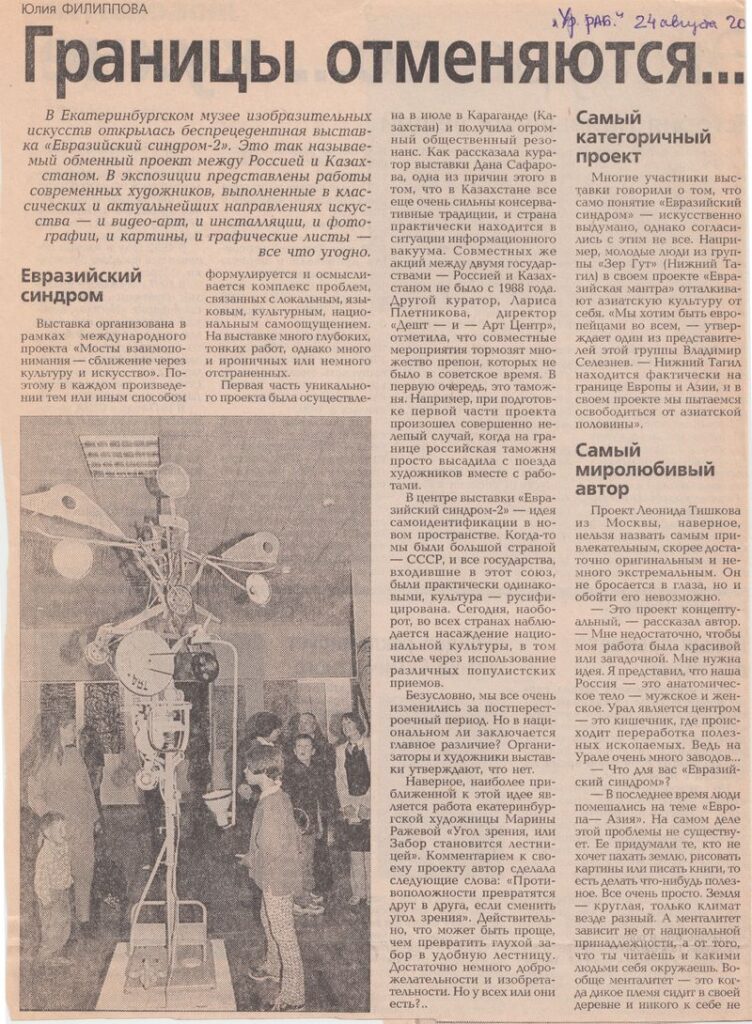
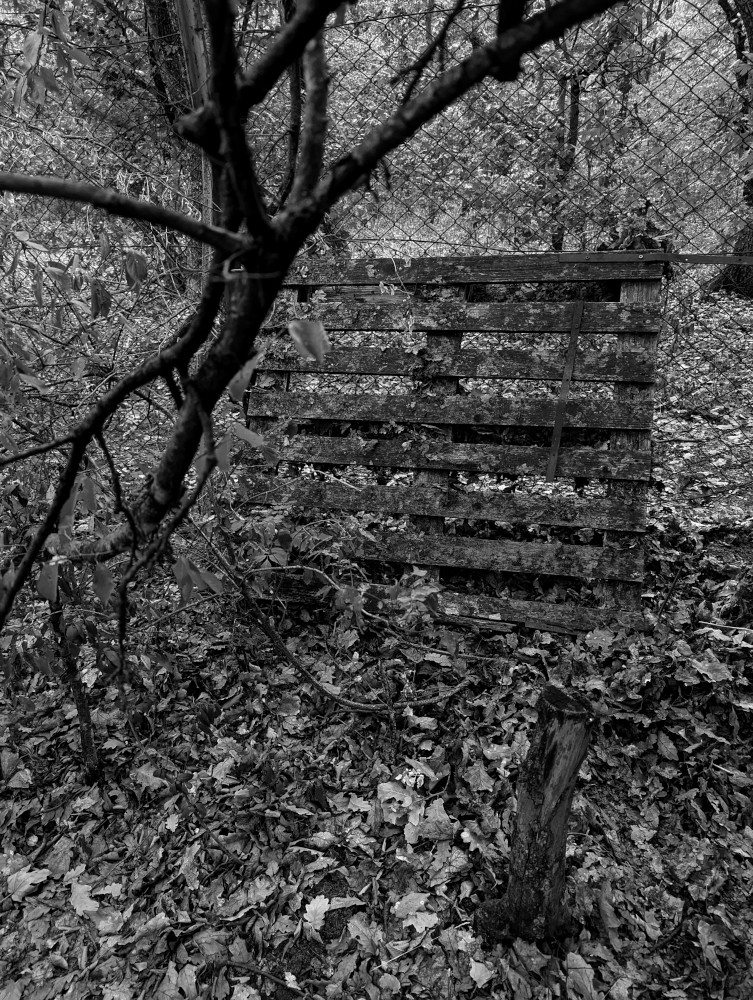
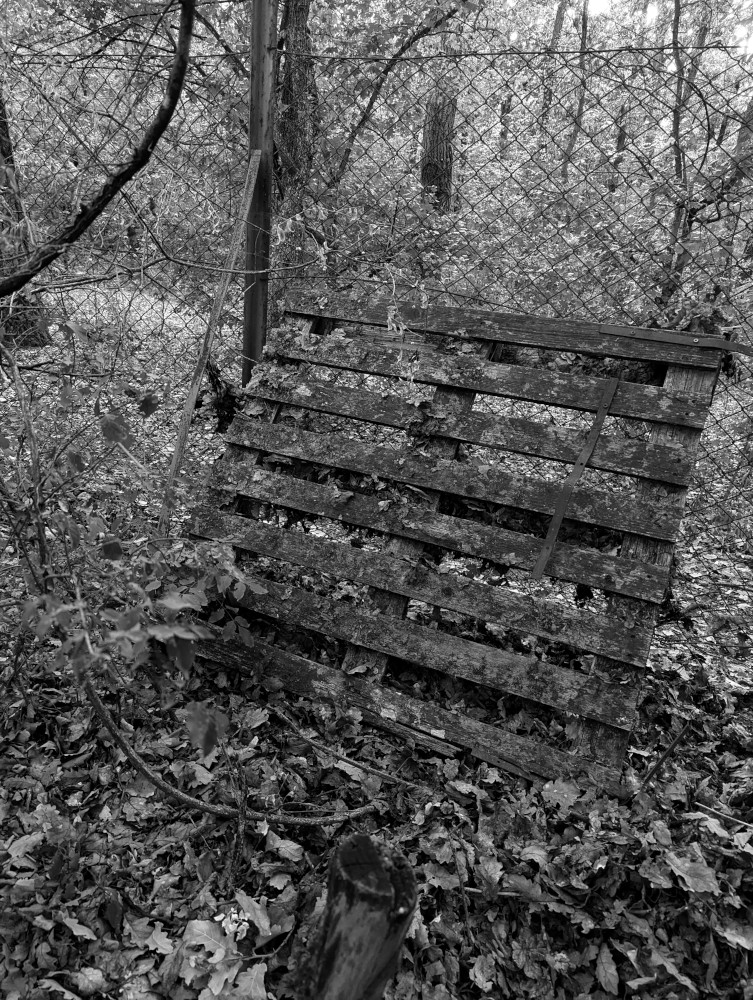
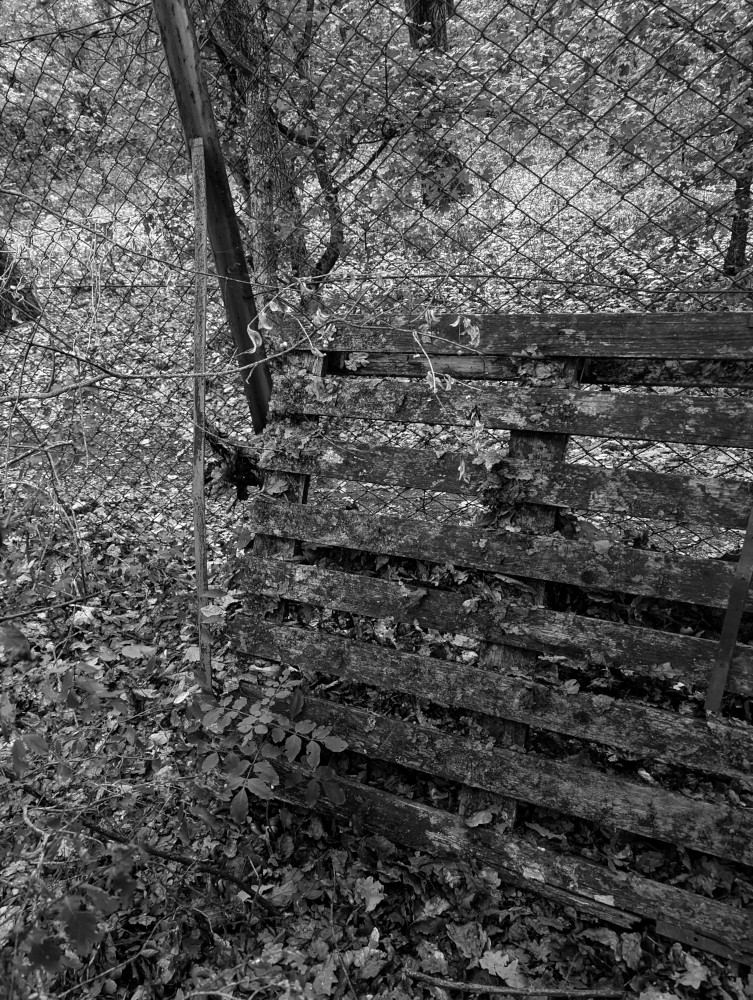
The work began in 2002, when I found a discarded piece of fence picket lying in the street in Yekaterinburg. I brought it home, washed and cleaned it, and took it to the exhibition Eurasian Syndrome 2 at the Museum of Fine Arts in Yekaterinburg. I realized that when a fence is turned 90 degrees, it can become a staircase: what normally stops movement can invite it.

The sentence “Fence becomes a staircase if the angle of view changes” stayed with me and gradually became a guiding principle in my work.

In 2024, the work continued in different ways. For Crossing Borders in Slovenia, a suitable fence could not be found in Hungary, so I bought a piece of fence at OBI and sent it to the exhibition. Later that year, at an art camp, I found a piece of fence lying on the ground, turned it as a staircase, and photographed it.

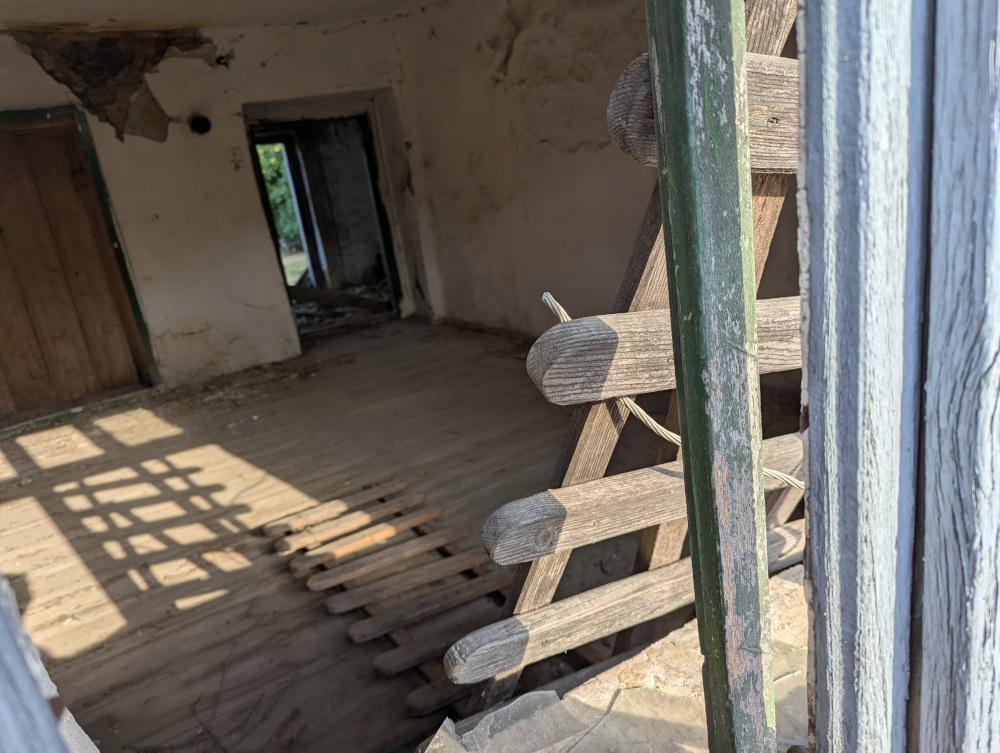
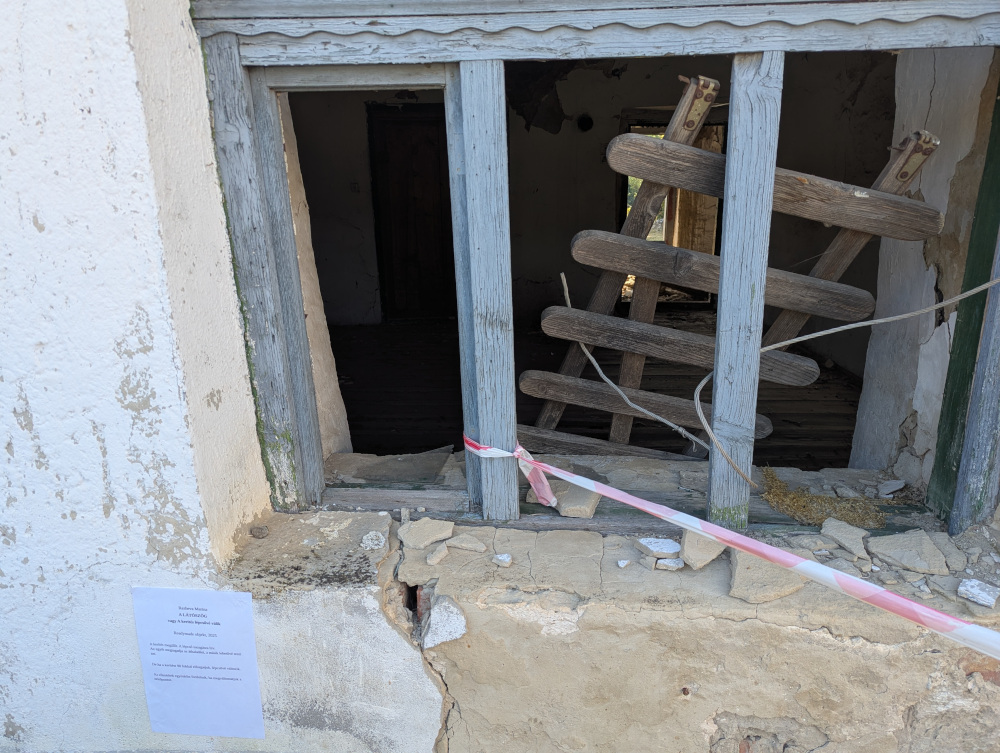
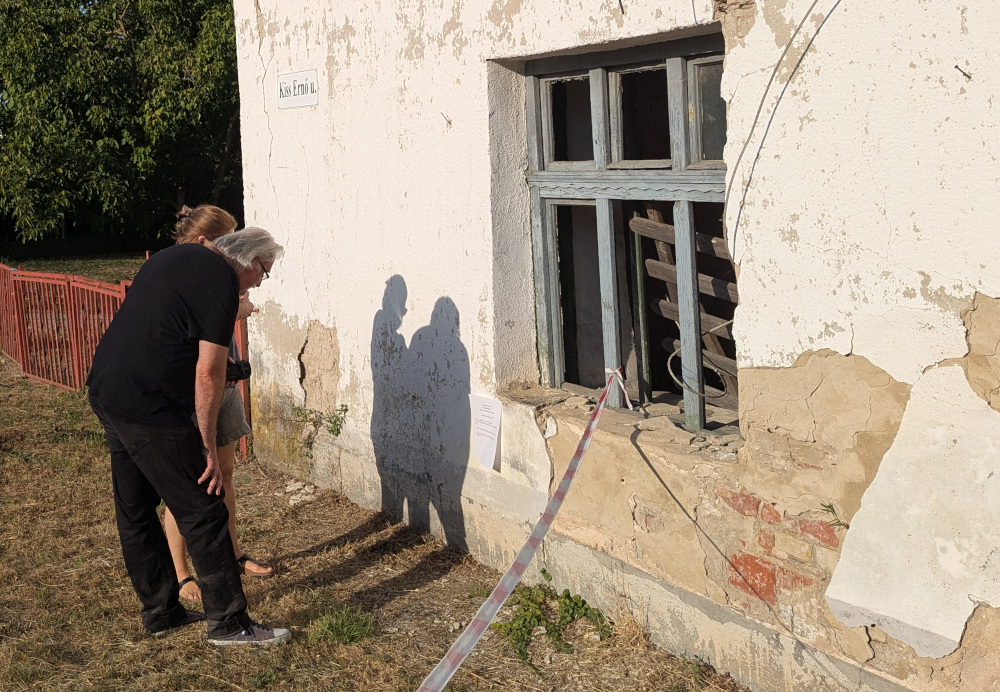
In 2025, in Rácalmás, Hungary, I saw an old piece of fence already positioned vertically inside an abandoned building. Nothing needed to be changed. I only placed the label beside it.

The work had reached a point where the transformation no longer needed to be made. It only needed to be recognized.

______________

Project Dossiers

An Offering to the Sphinx

traces of the work

The intervention remained in the space after the action without supervision or protection.

The future of the golden apple remains unknown.

It may have been taken away, moved, preserved, damaged, or gradually destroyed by weather and time.

The work survives through photographs, video fragments, memory, and retellings.
Instagram publications and video documentation became part of the afterlife of the project.

Realized in the Zsolnay Quarter, Pécs, Hungary, 14 May 2024.

дополнительные фотографии, backstage, кадр со мной, Instagram FB screenshots, video stills, later publications, выставочные следы, process photos.
The Invisible Fir

traces of the work

Press and documentation

Project Dossiers

BACK TO WORK

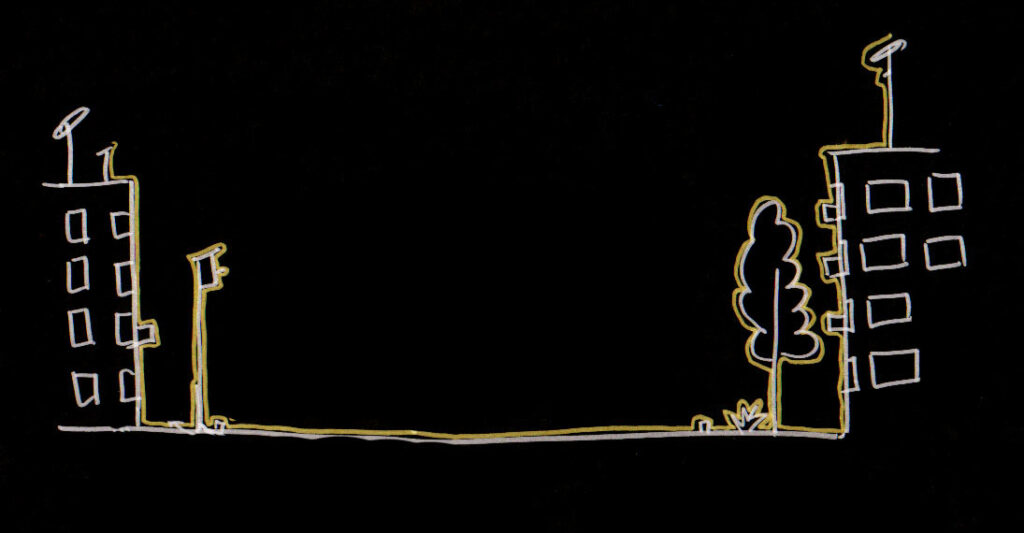
Corridor

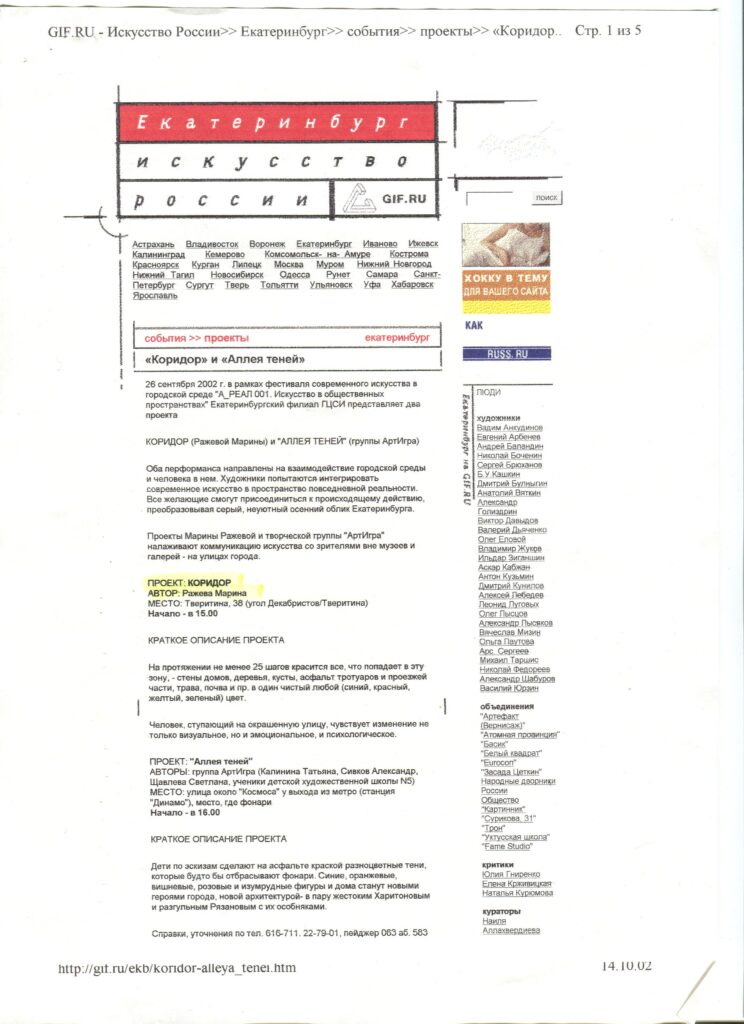
traces of the work

Artist’s Note:
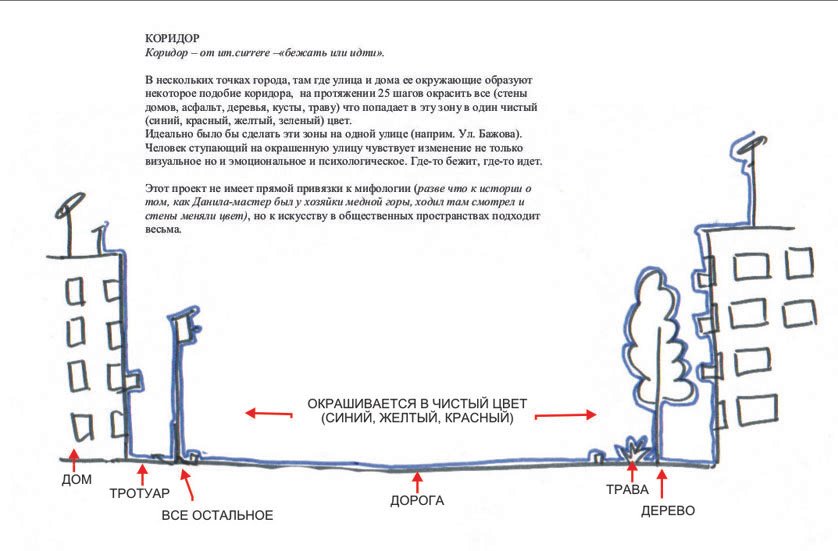
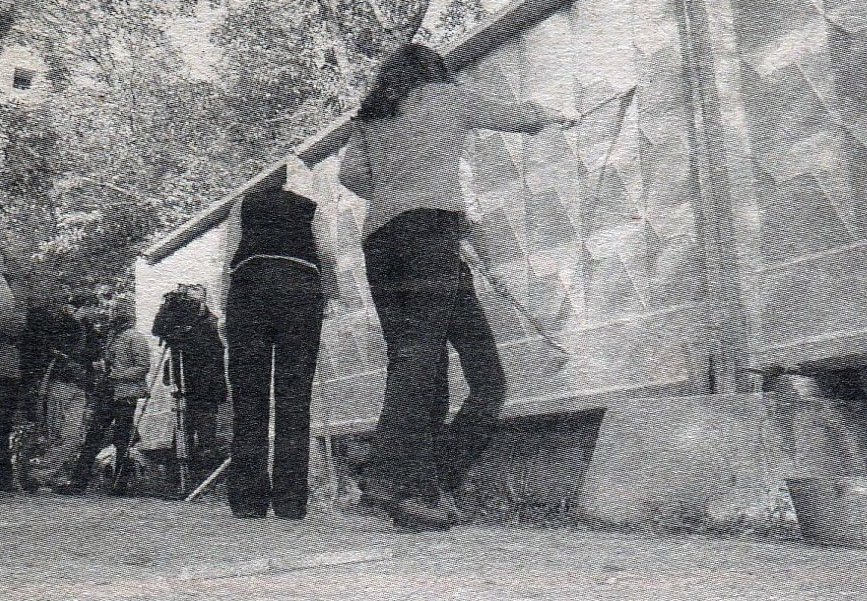
I wanted to mark a passage: not just a path, but a shift in perception.
When you step into a space where even the grass and asphalt are the same bright color, your body reacts: the city becomes less neutral.
It’s about tuning your attention like walking through a thought.

Project Dossiers

BACK TO WORK