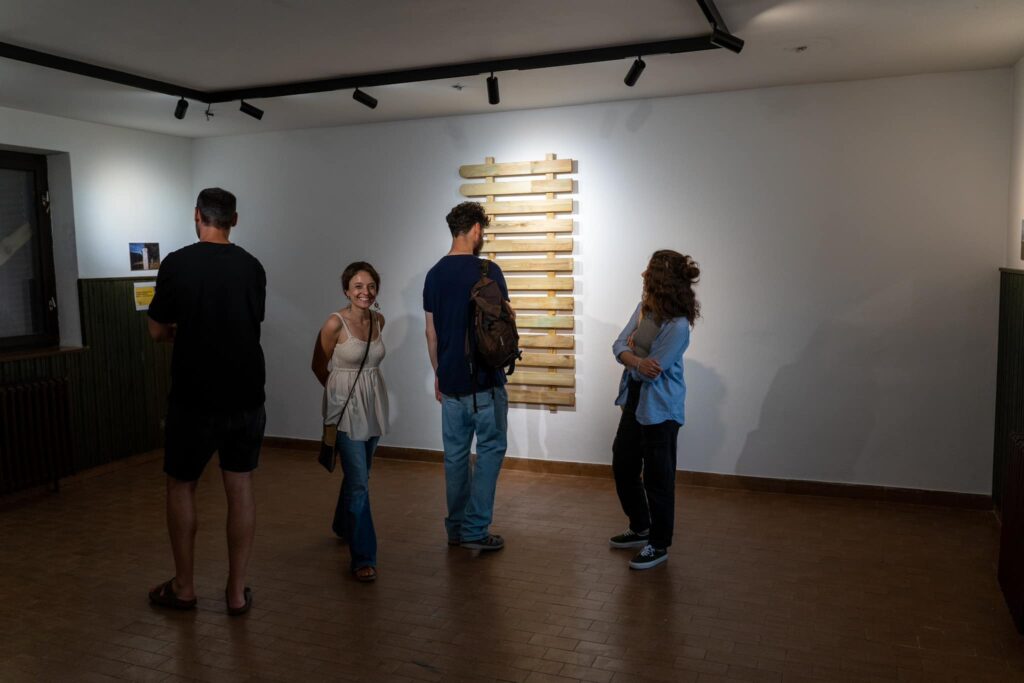
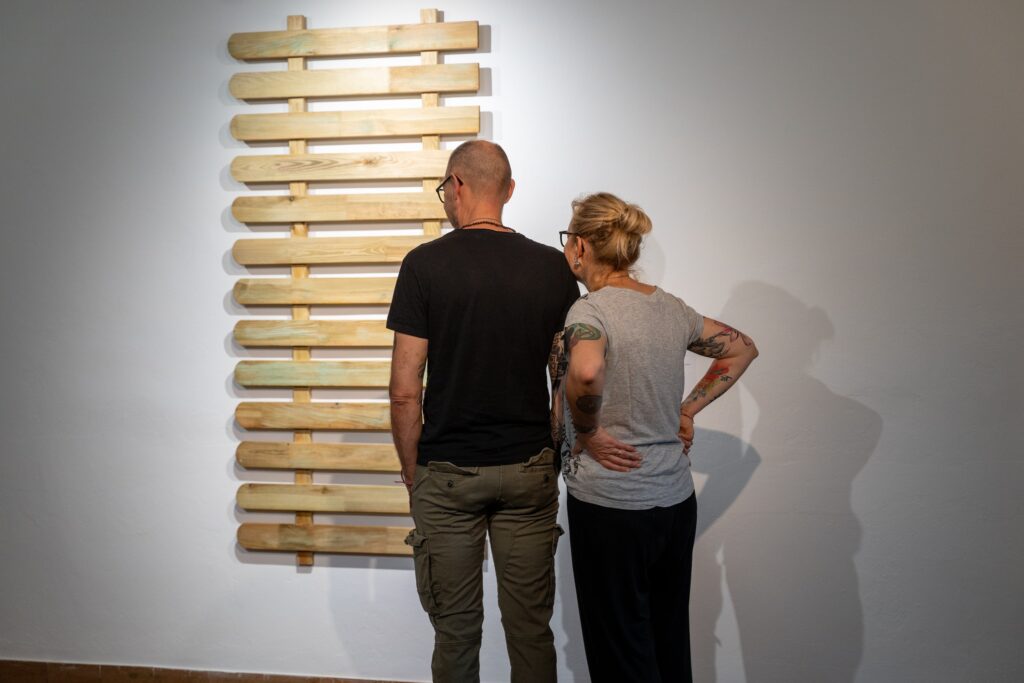
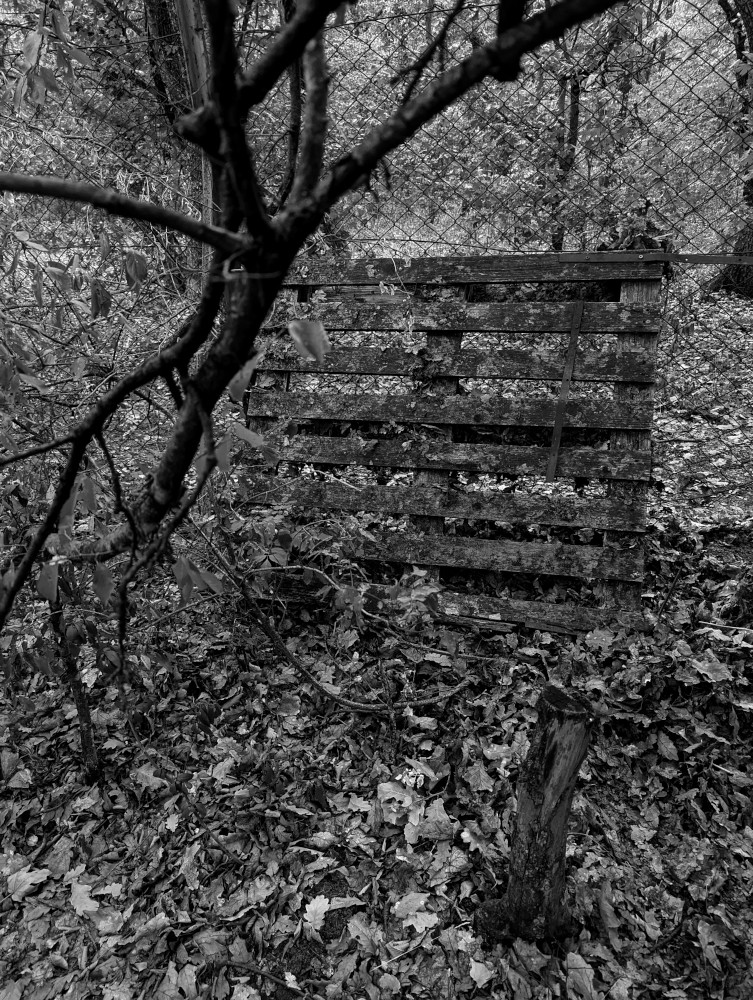
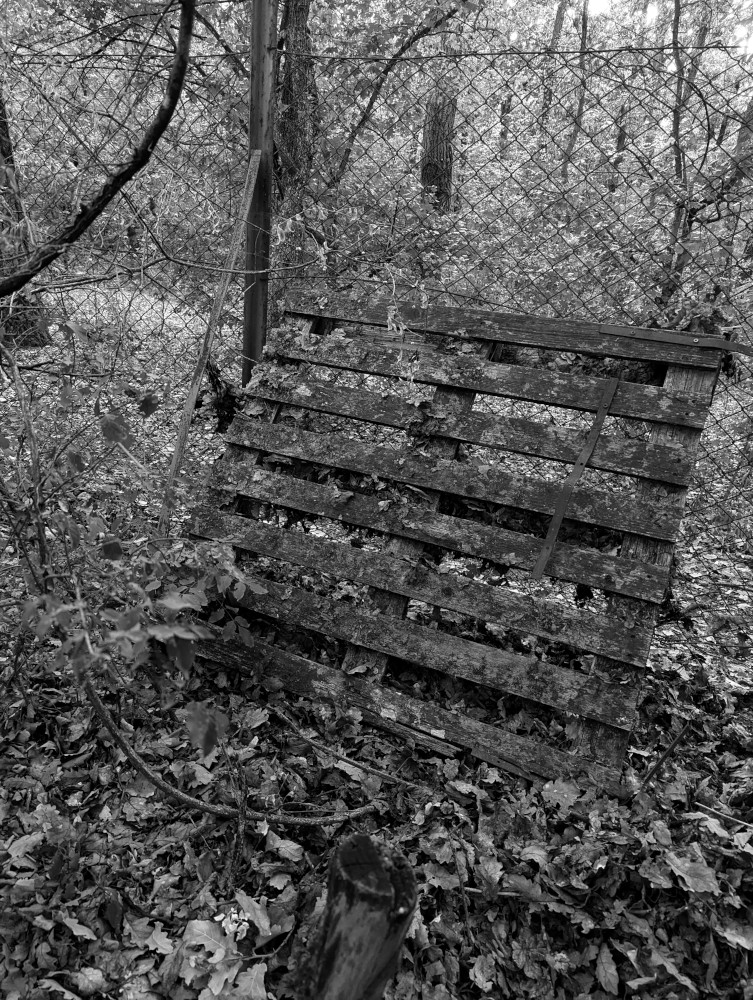
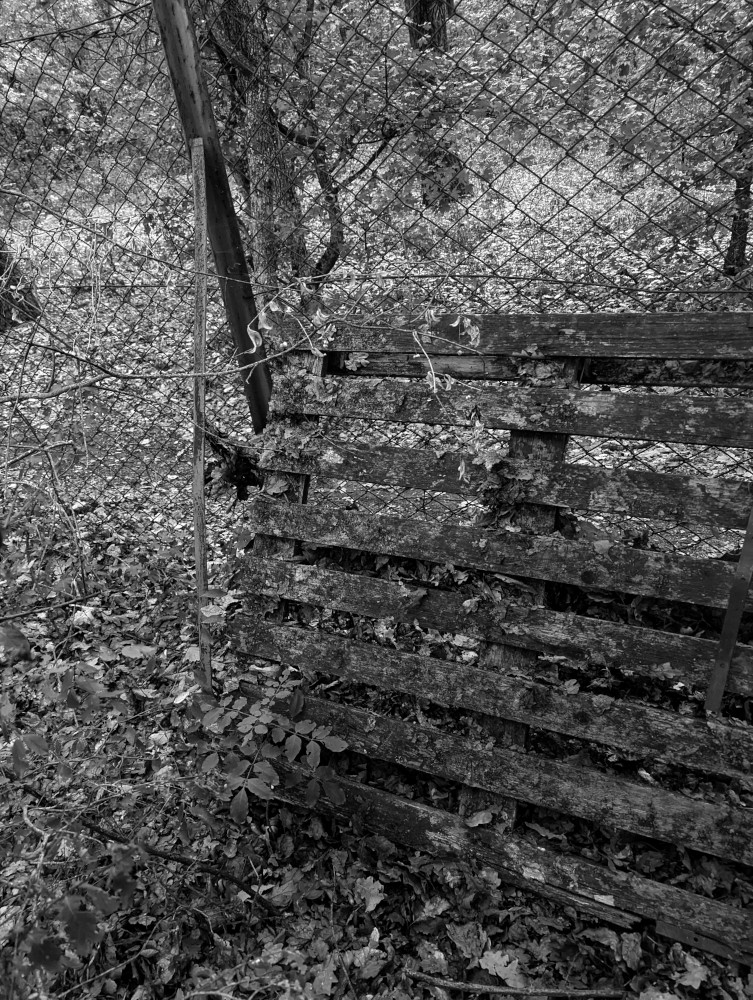
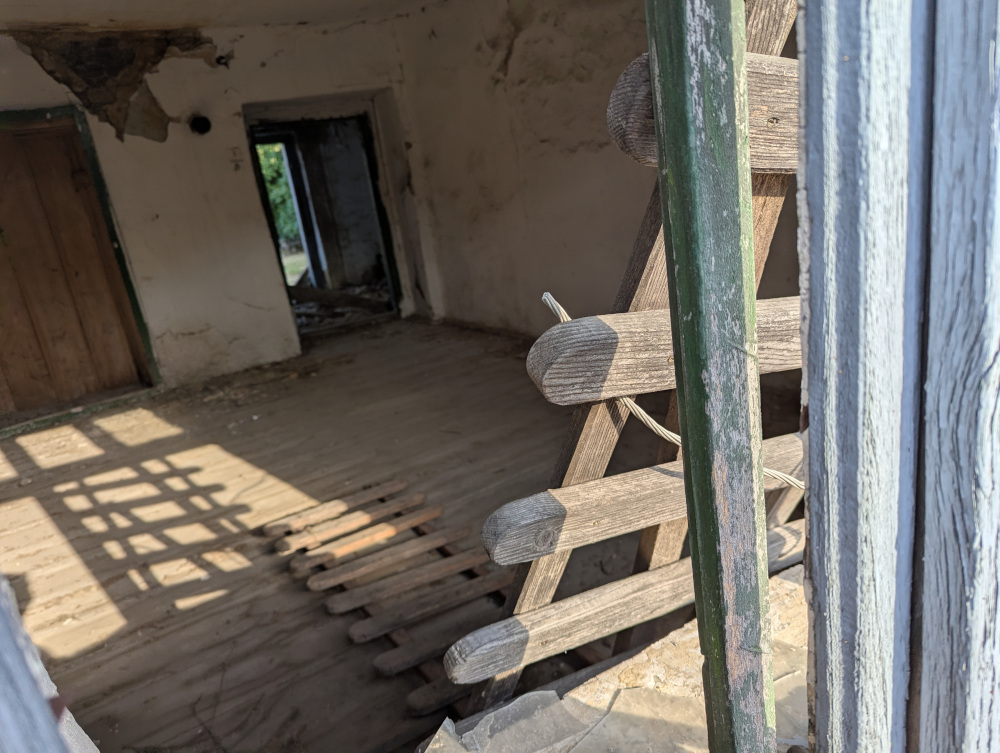
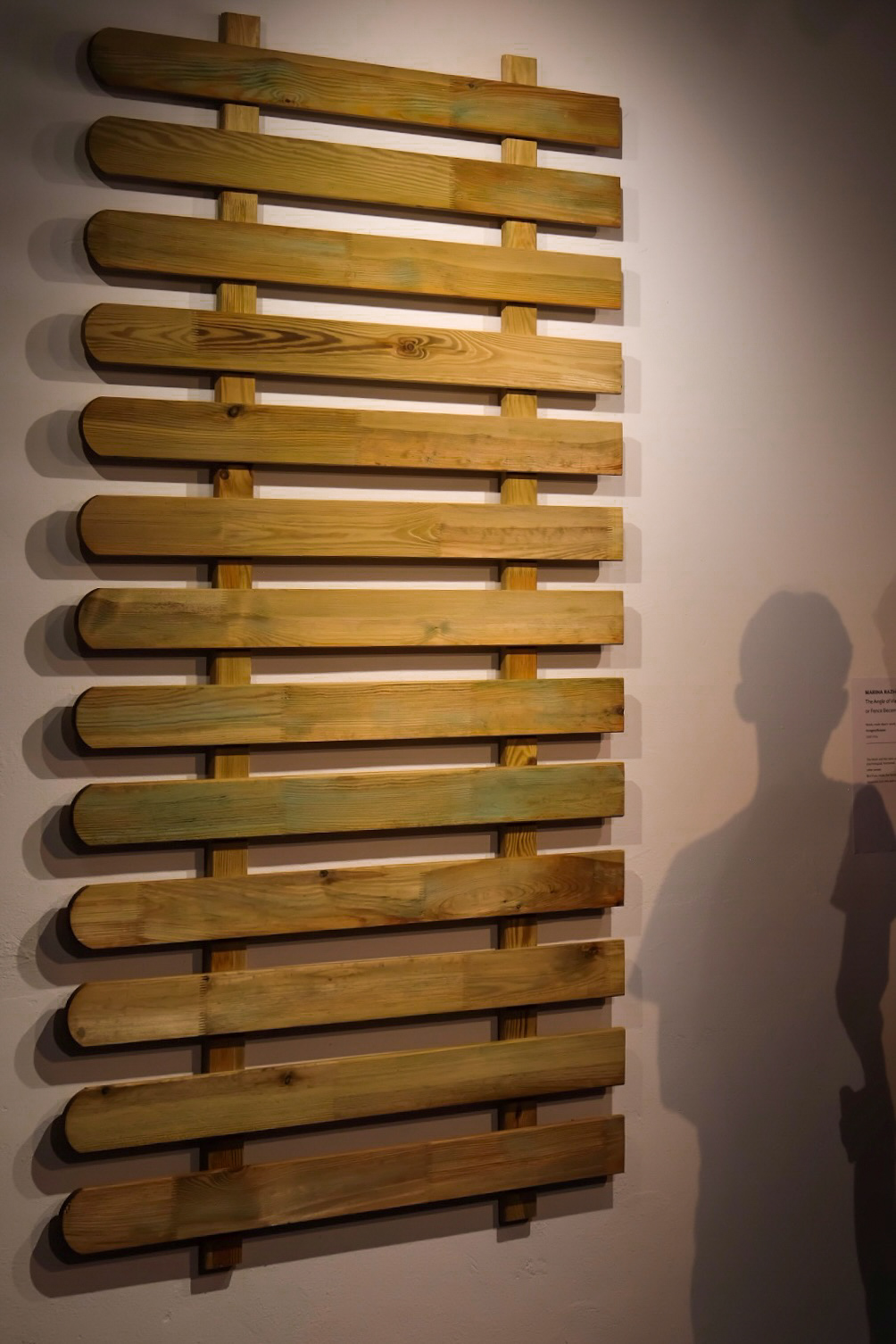
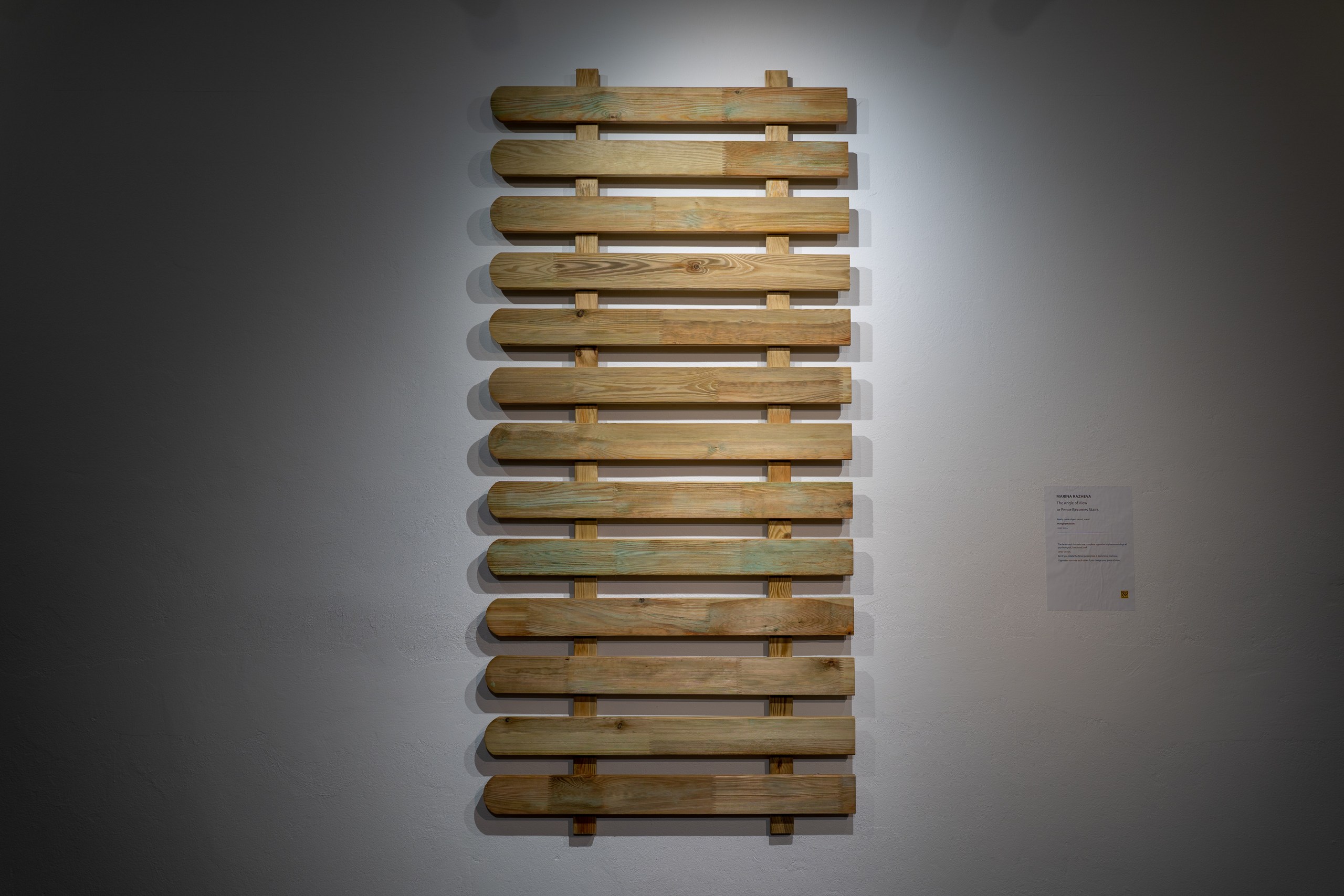
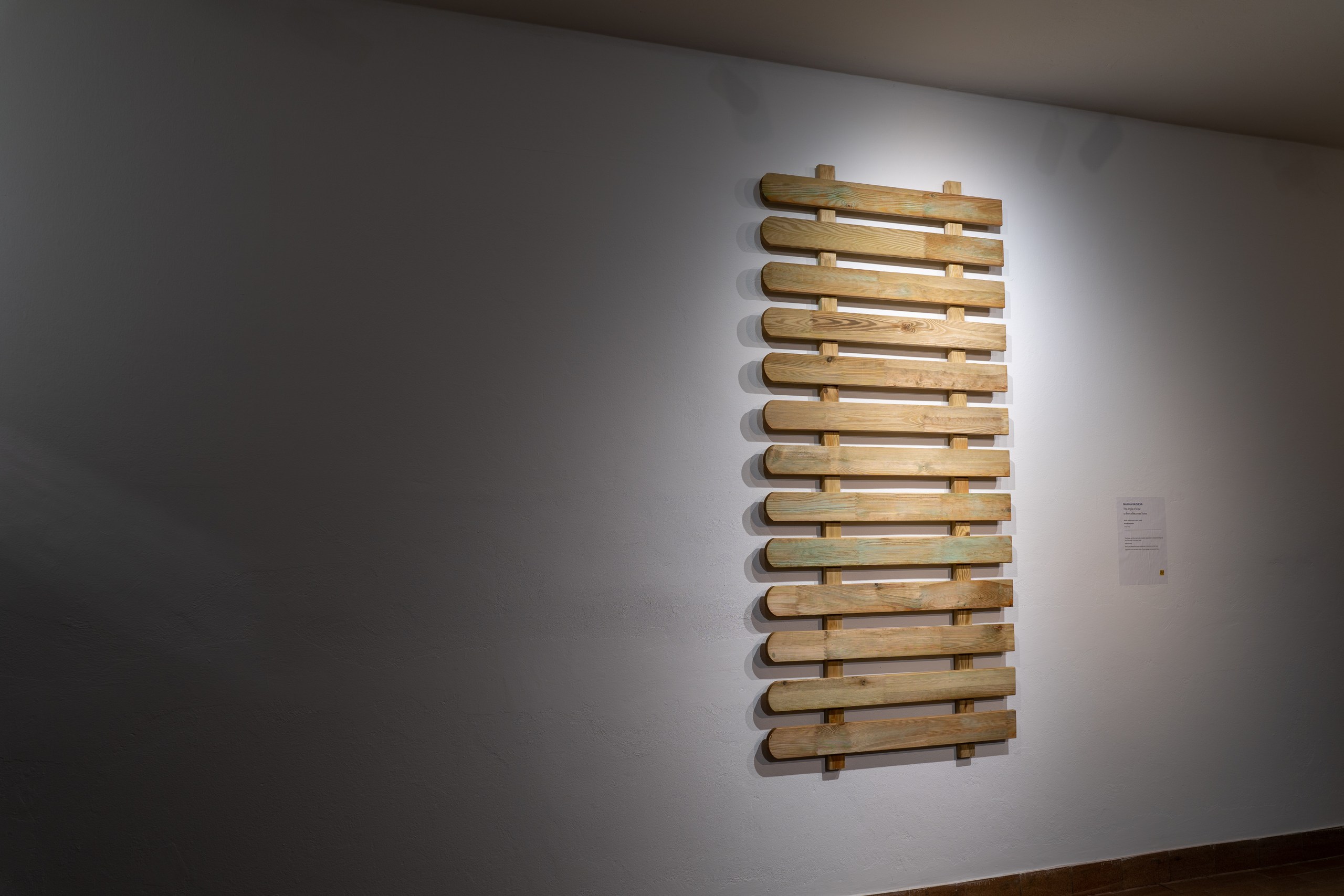
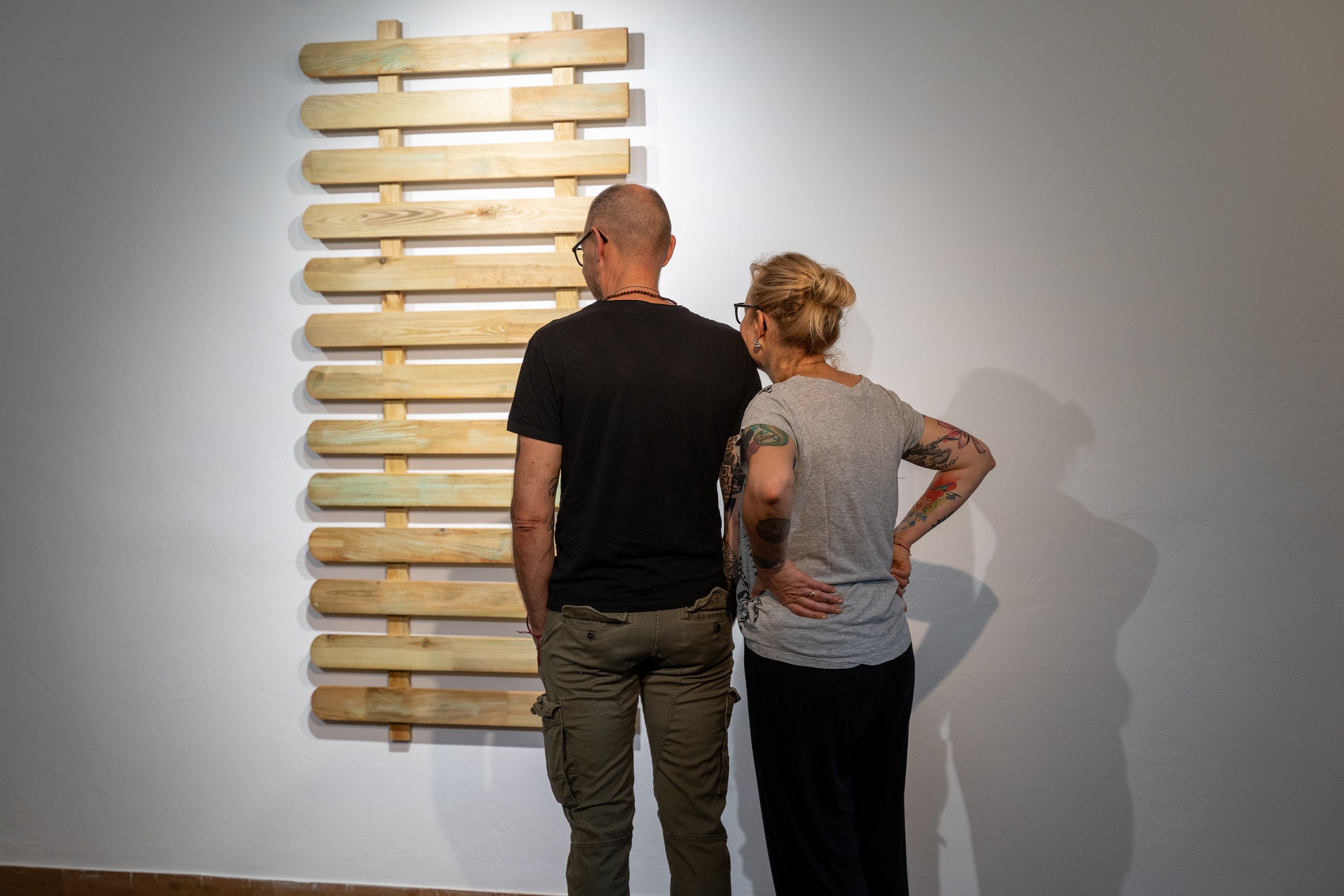
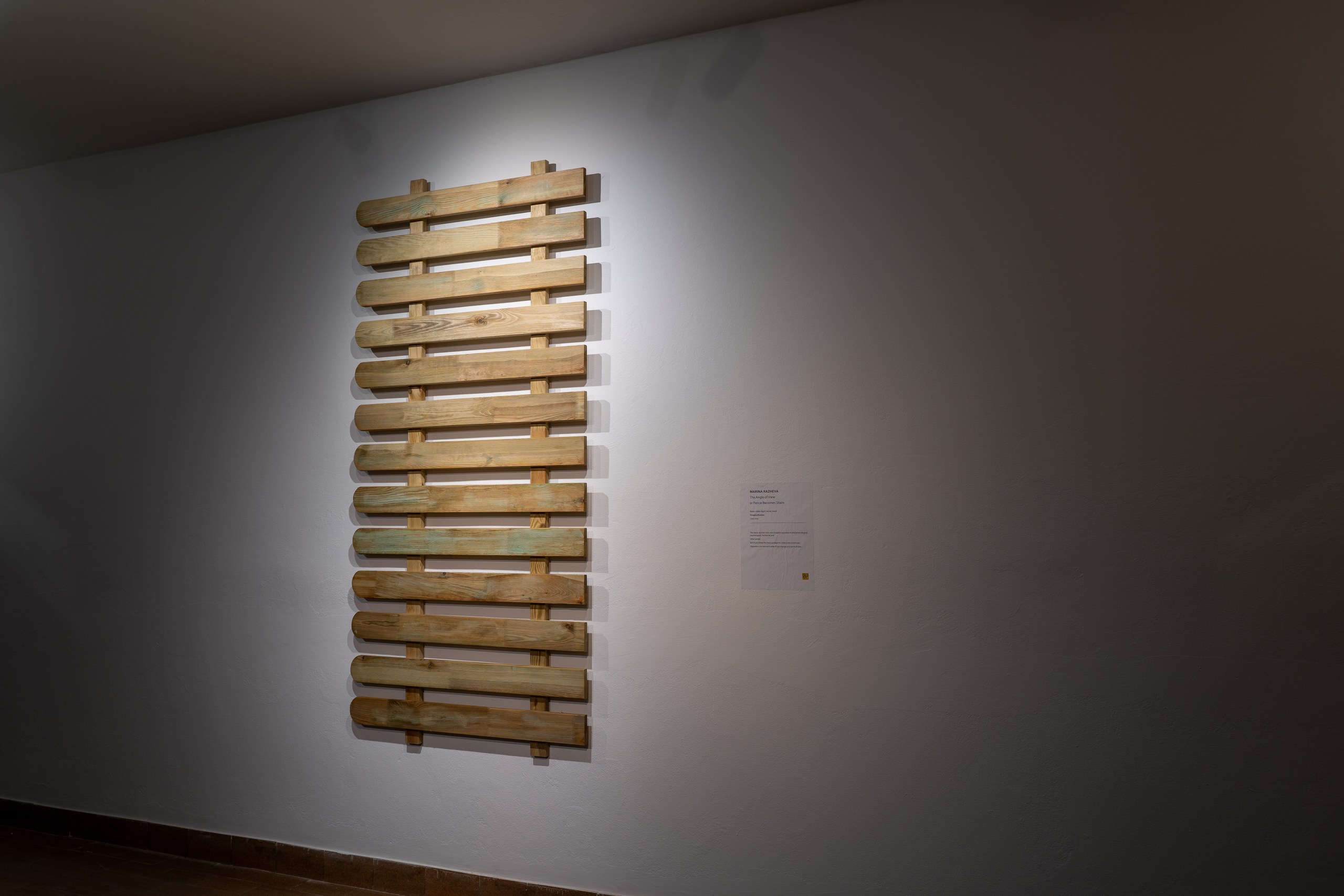
A fence stops you. A stair invites you to move. One denies passage, the other makes it possible. But if you rotate the fence 90 degrees, it becomes a staircase. The opposites turn into each other if you change your point of view.
Exhibited at: – Festival of contemporary art «Crossing borders» 2024. Beka 9, Hrpelje-Kozina, Slovenia – International exhibition “Eurasian syndrome” 2002, Museum of Fine Arts, Yekaterinburg, Russia
______________
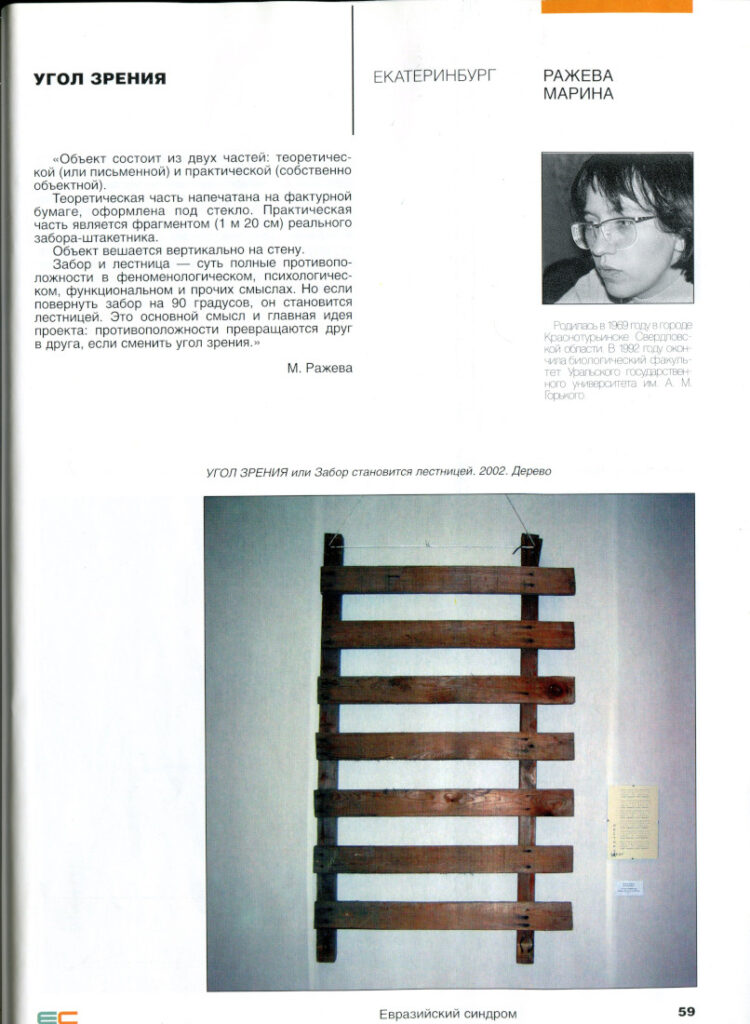
Author note: “The Angle of View” is a story about how meaning changes when you simply turn an object. It’s the same object, but the way we look at it changes everything. Sometimes we see only obstacles. But what if we looked differently? I made this object in 2002 and then came back to it in 2024. The world around has changed, but this idea is still relevant. It’s about how our boundaries are not always what they seem.
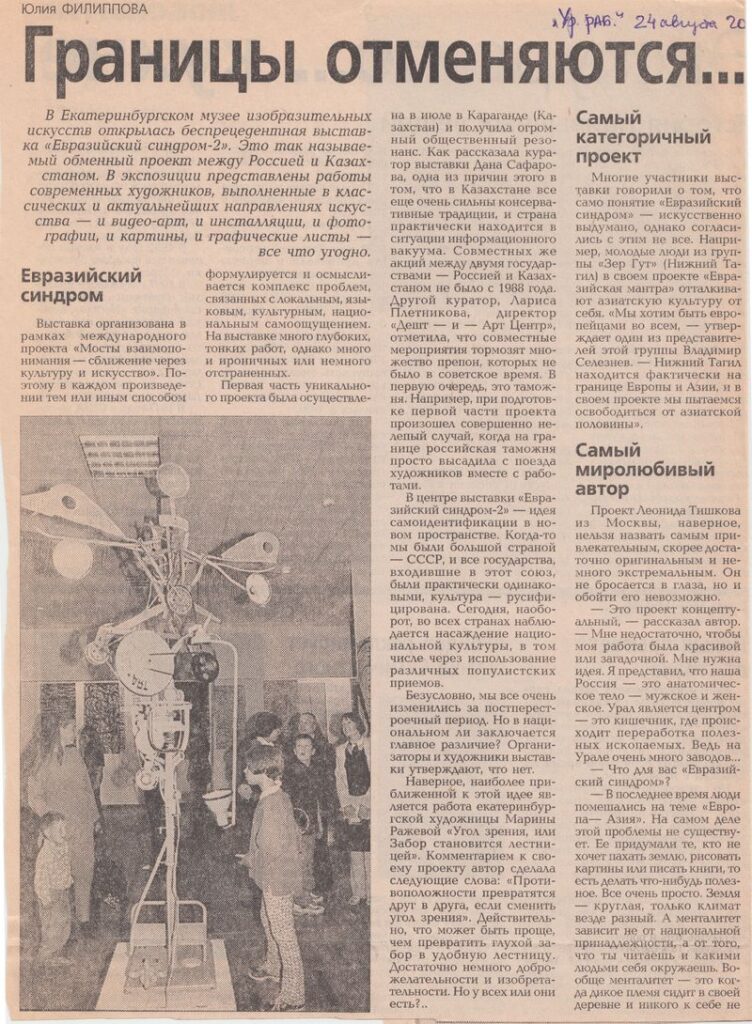
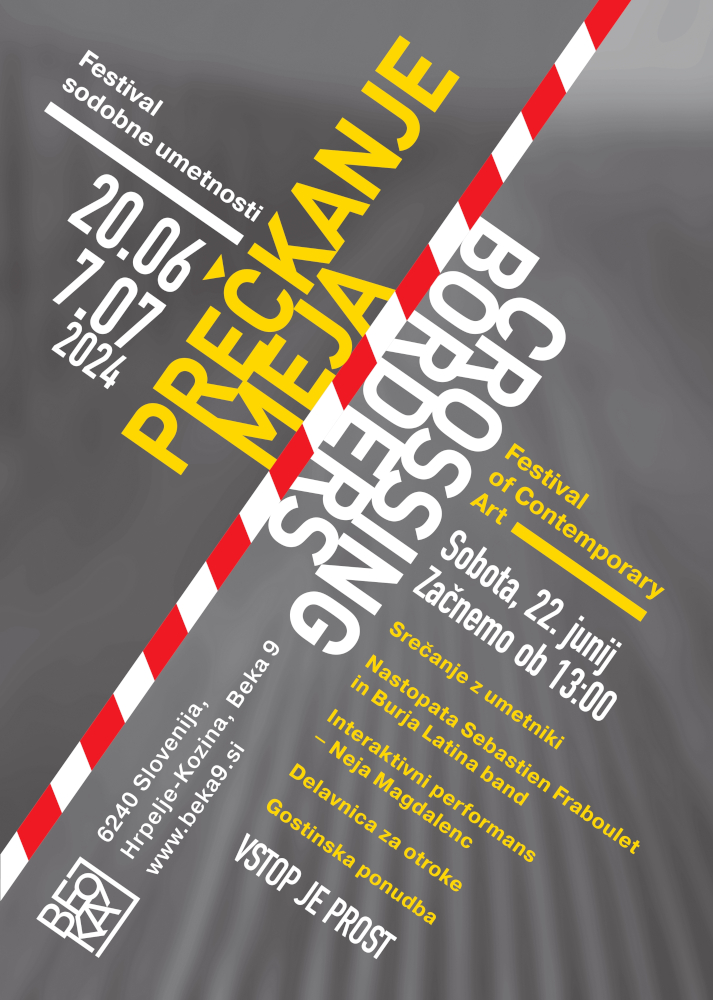
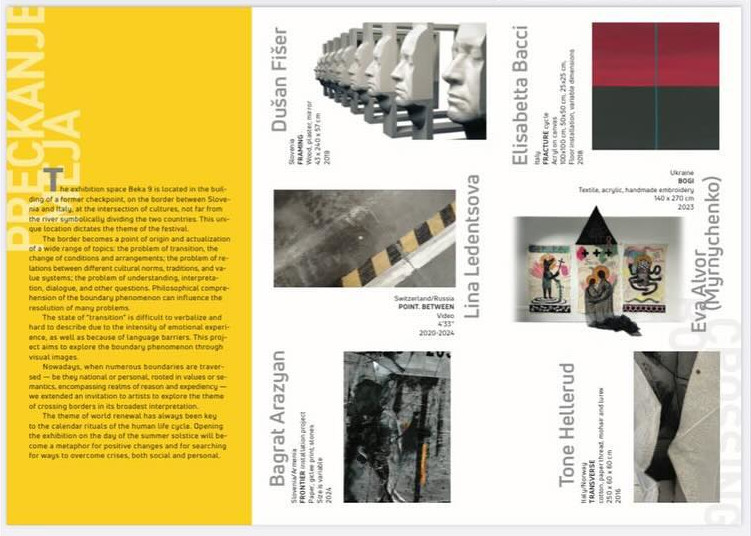
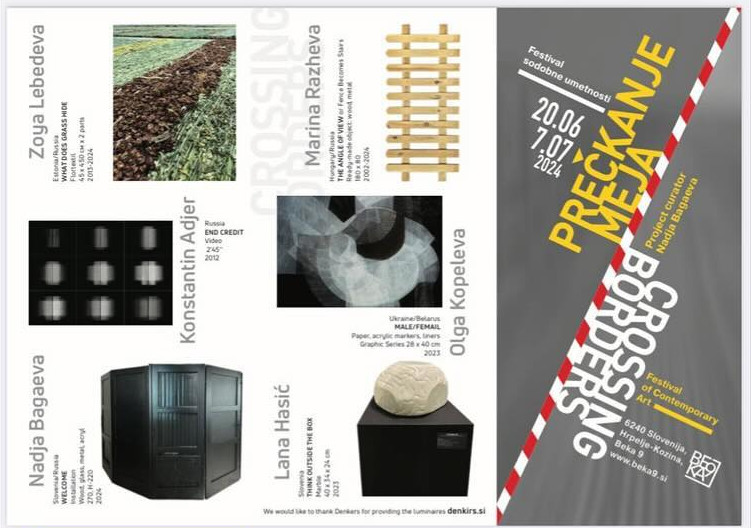
Catalogue page from “Eurasian Syndrome” Museum of Fine Arts, Yekaterinburg, 2002Ural Worker Newspaper, August 24, 2002Festival booklet featuring The Angle of View, Crossing Borders, 2024, Beka 9, Slovenia
Critical response:
“The work by Yekaterinburg artist Marina Razheva titled ‘The Angle of View or Fence Becomes Stairs’ comes closest to the idea of transformative vision. Her comment on the piece was: ‘Opposites transform into each other if you shift your angle of view.’ Indeed, what could be simpler than turning a solid fence into a convenient staircase? All it takes is a little goodwill and inventiveness. But do we all have that?” — Yulia Filippova, Ural Worker Newspaper, August 24, 2002
Continuing:
In 2024, within within an experimental art camp, Káptalanfüred (Hungary), the project was revisited as a ritual action. A found fragment of a fence was physically rotated, becoming a staircase. The action was documented in black-and-white photographs.
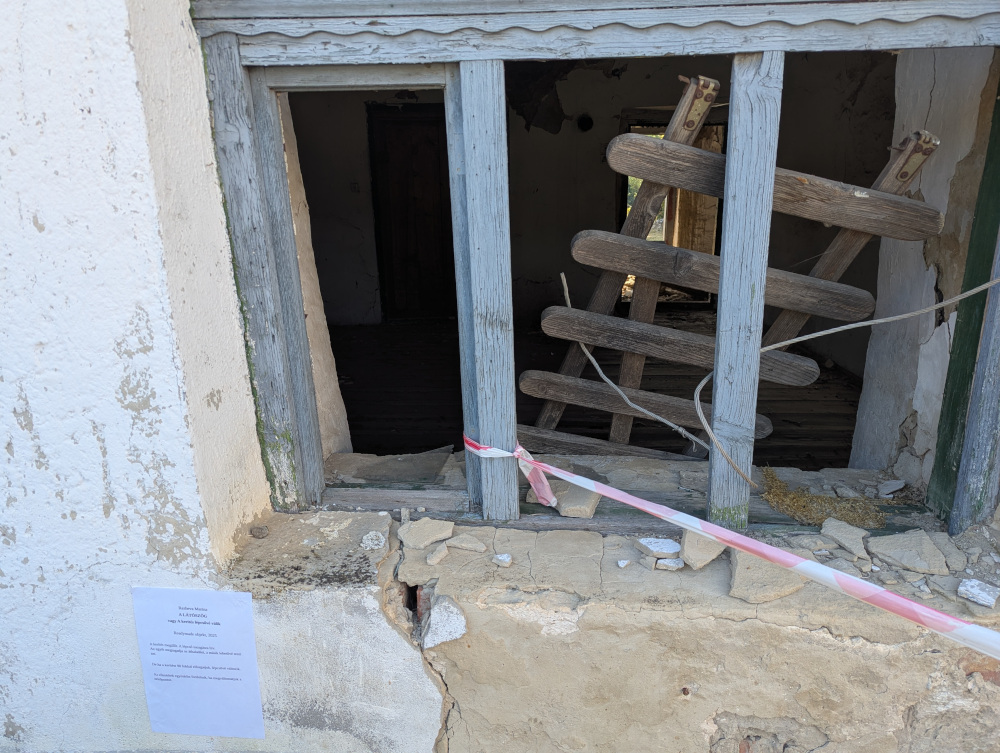
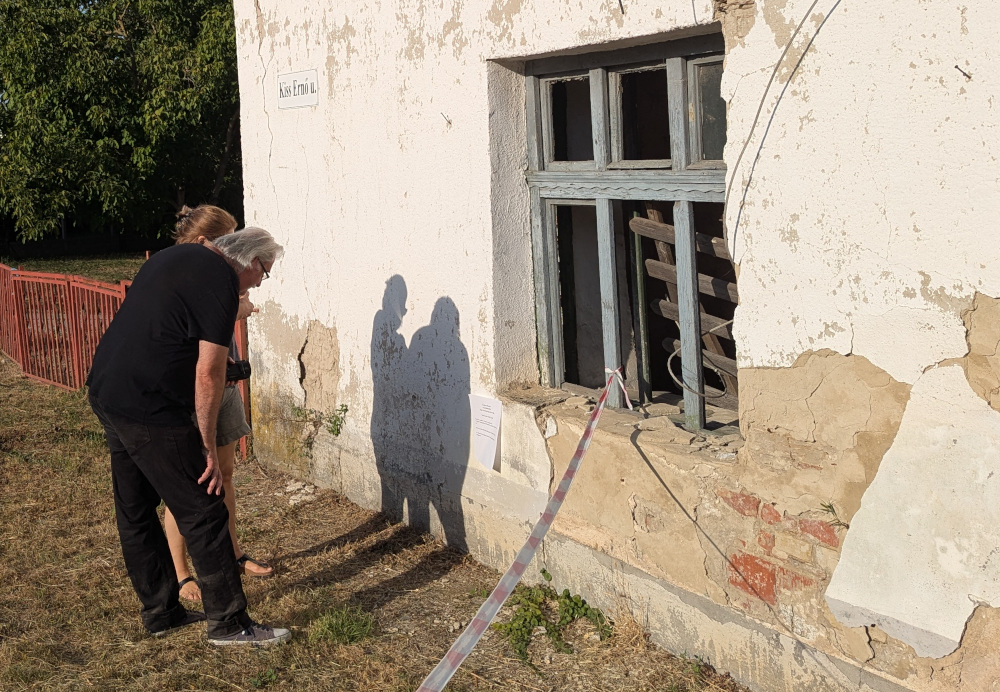
In 2025, during the 5th International Symposium of Land Art, Rácalmás, Hungary, the work continued in a different form. In an abandoned space, a fence already positioned like a staircase was left untouched. Instead of an action, a label was placed nearby, marking the shift of meaning without anyphysical intervention. No transformation occurred, only its recognition.
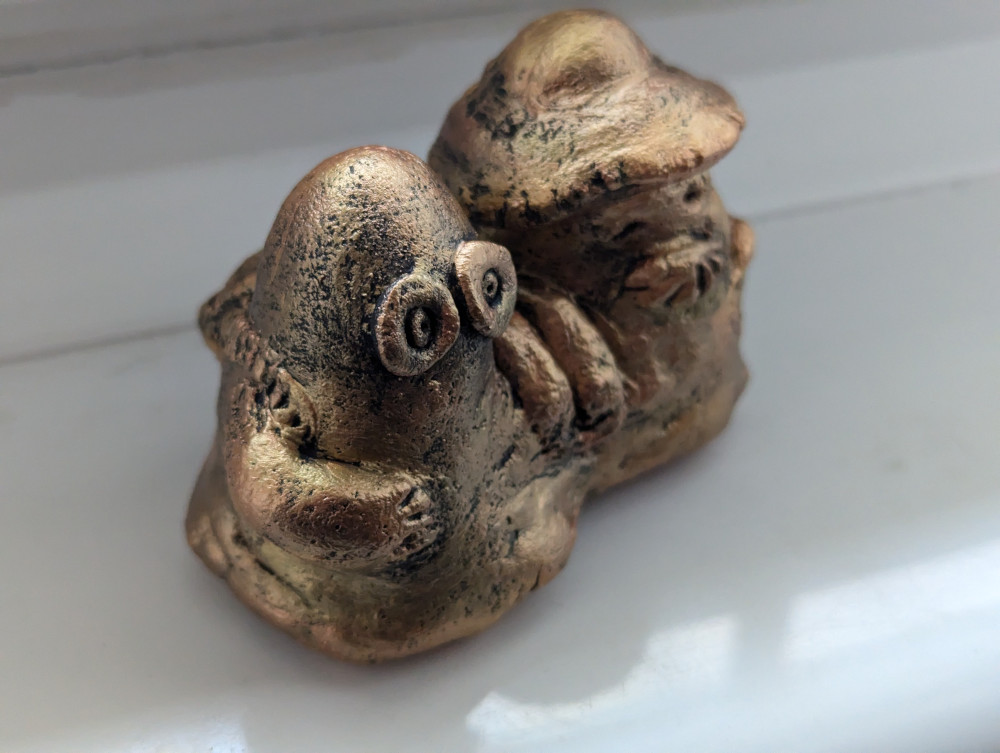
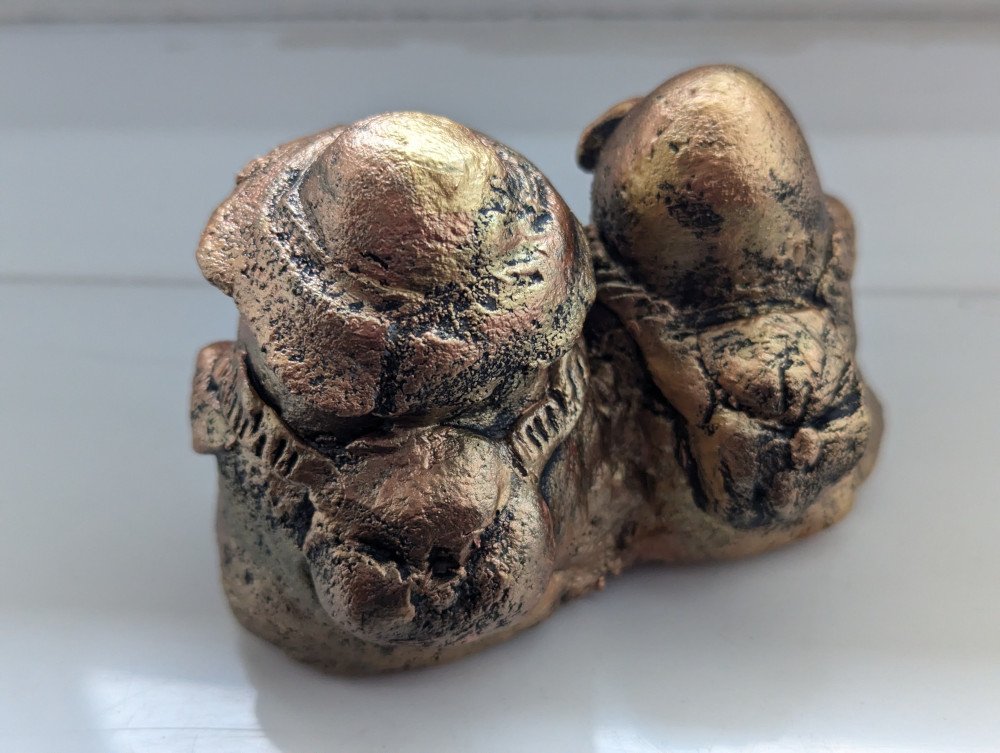
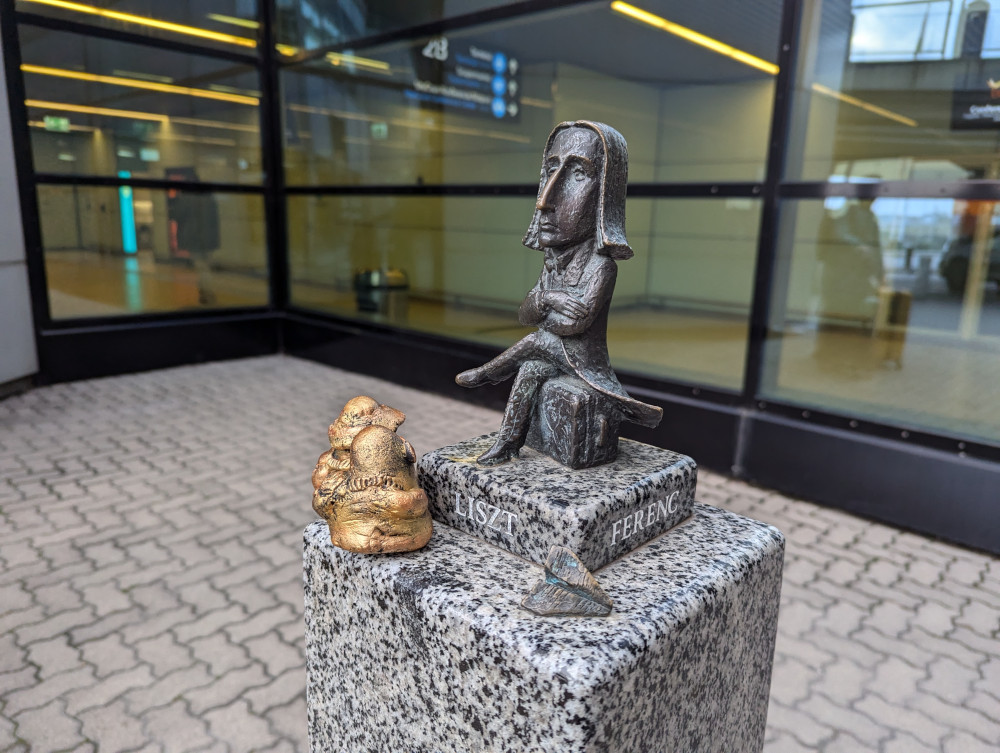
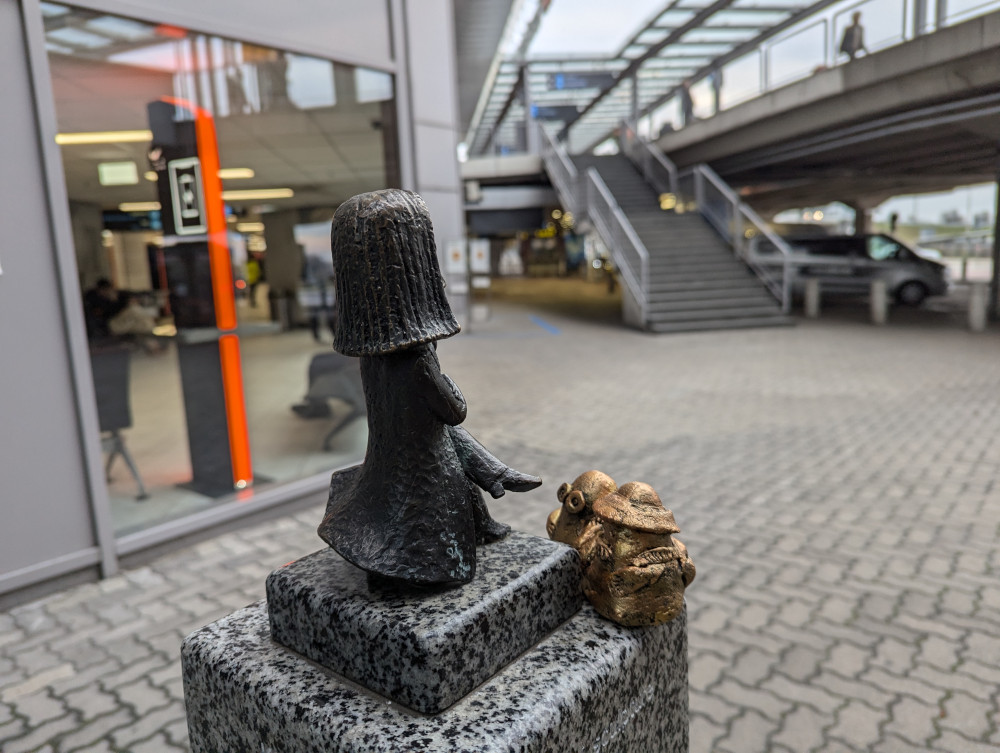
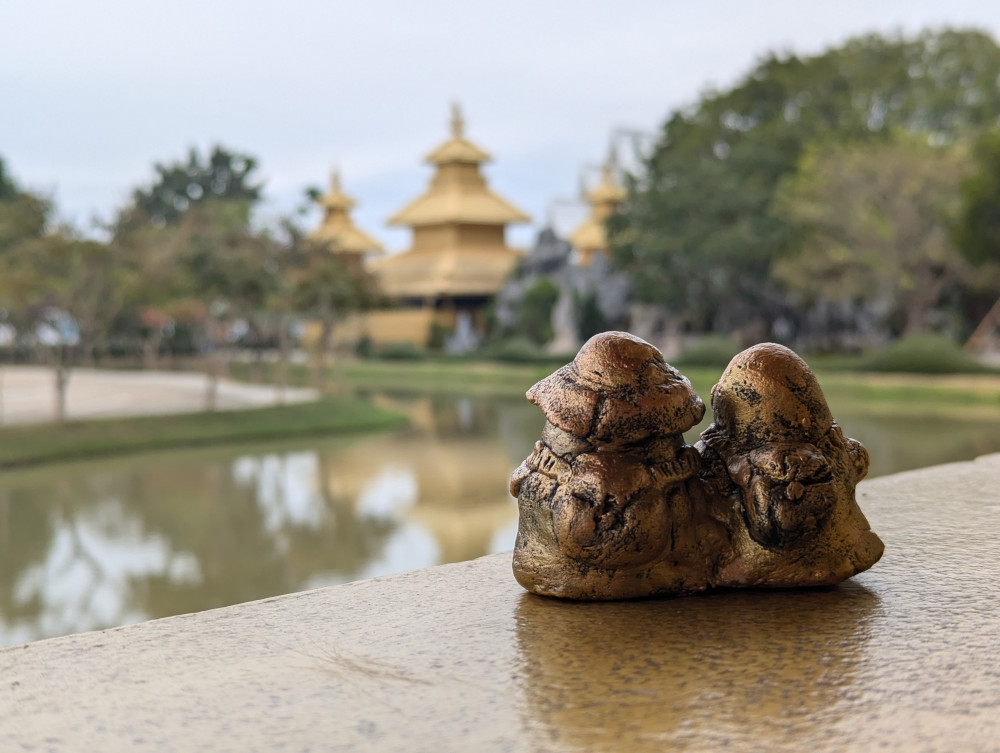
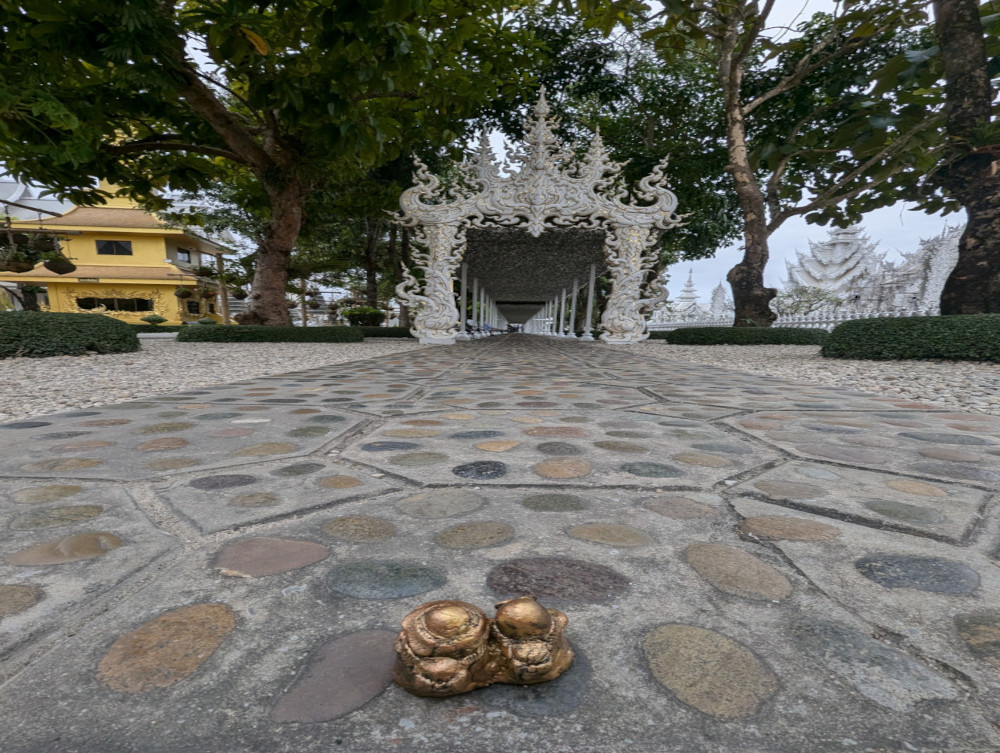
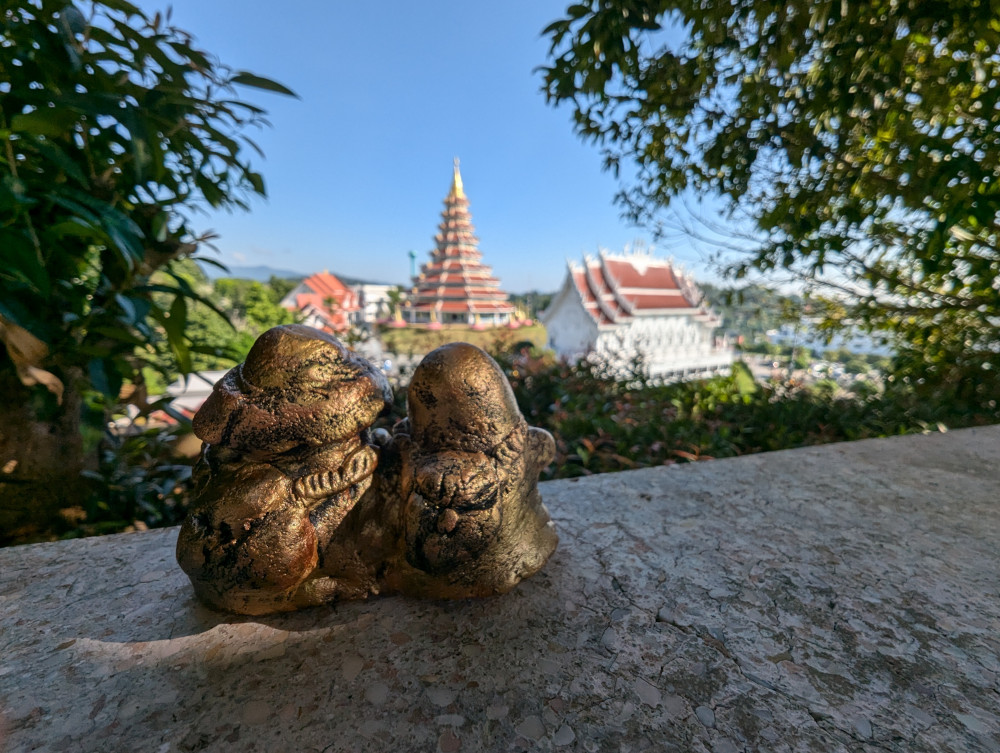
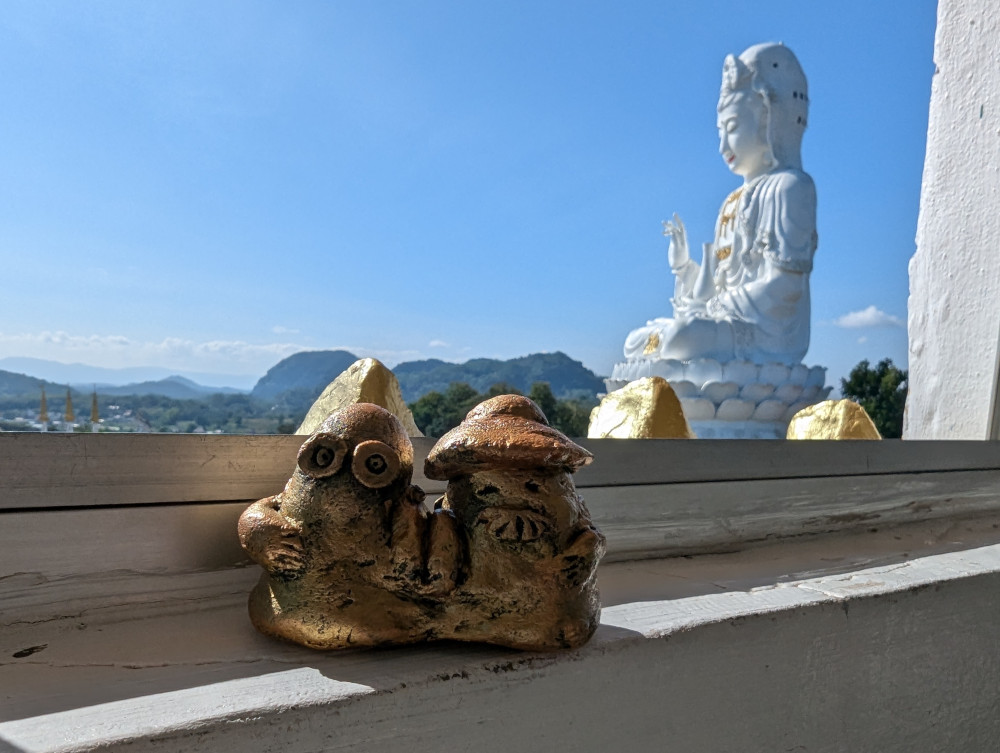
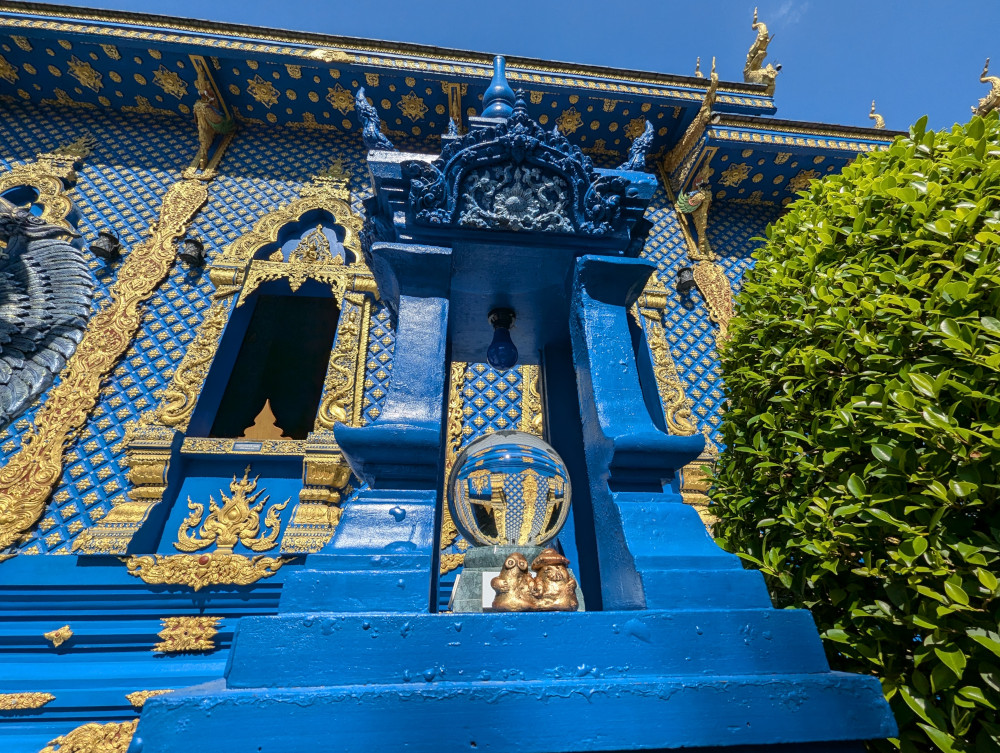
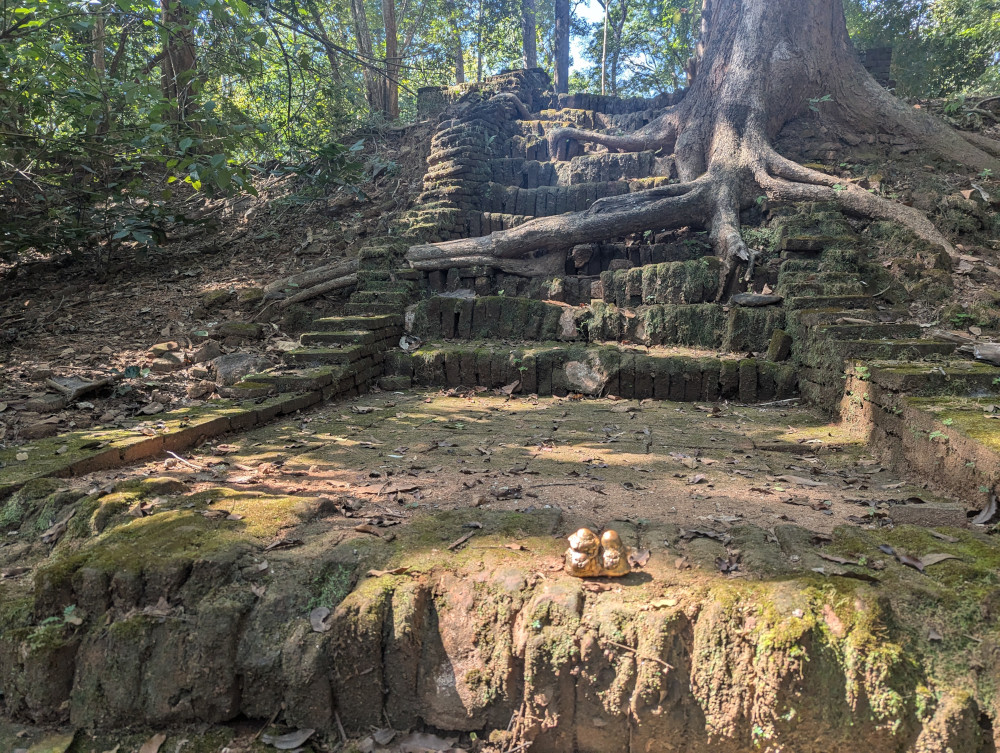
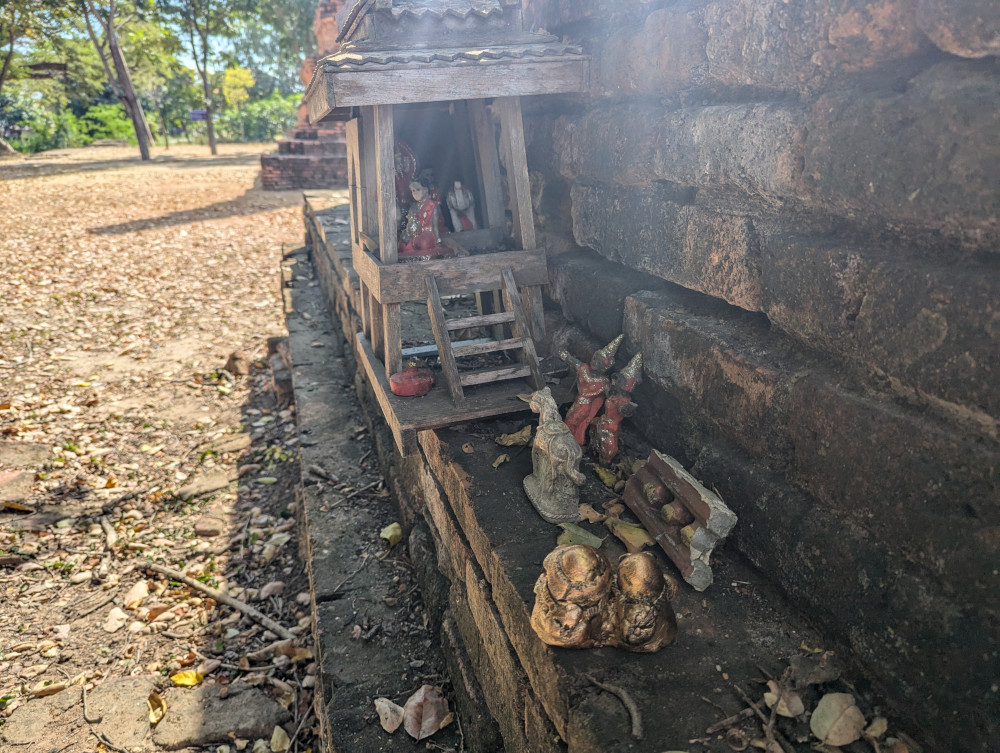
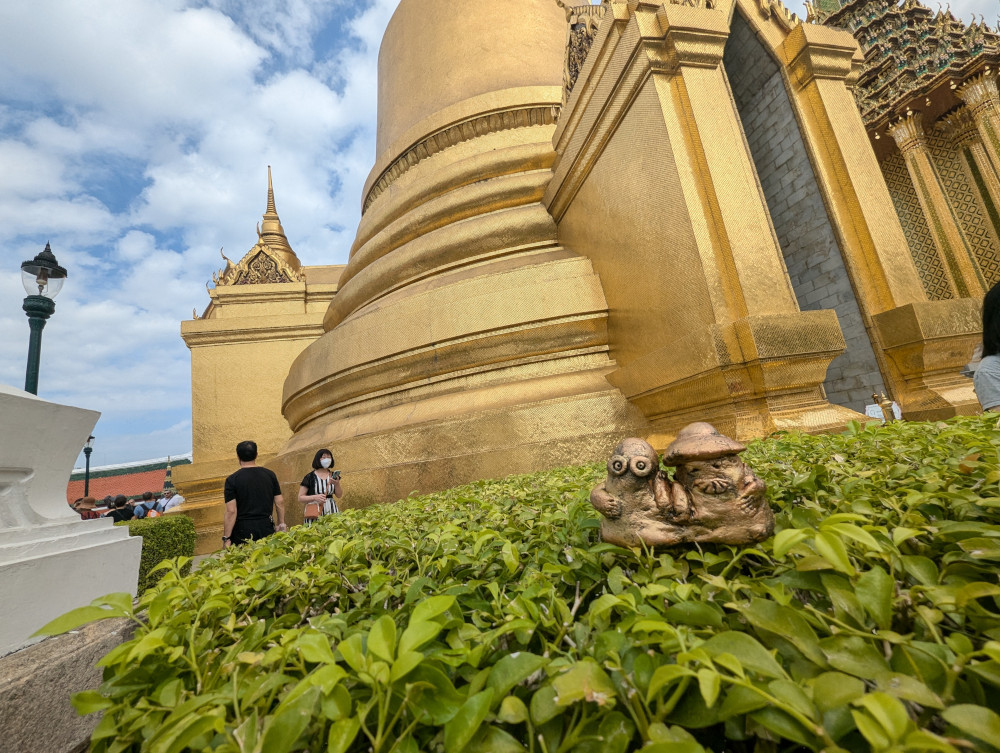
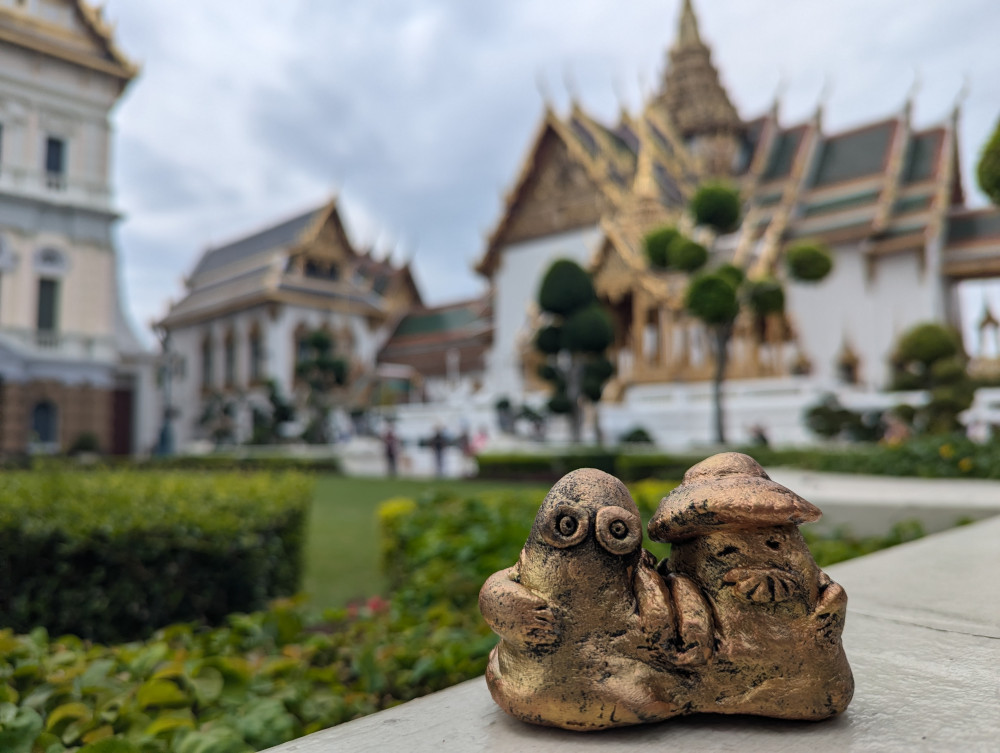
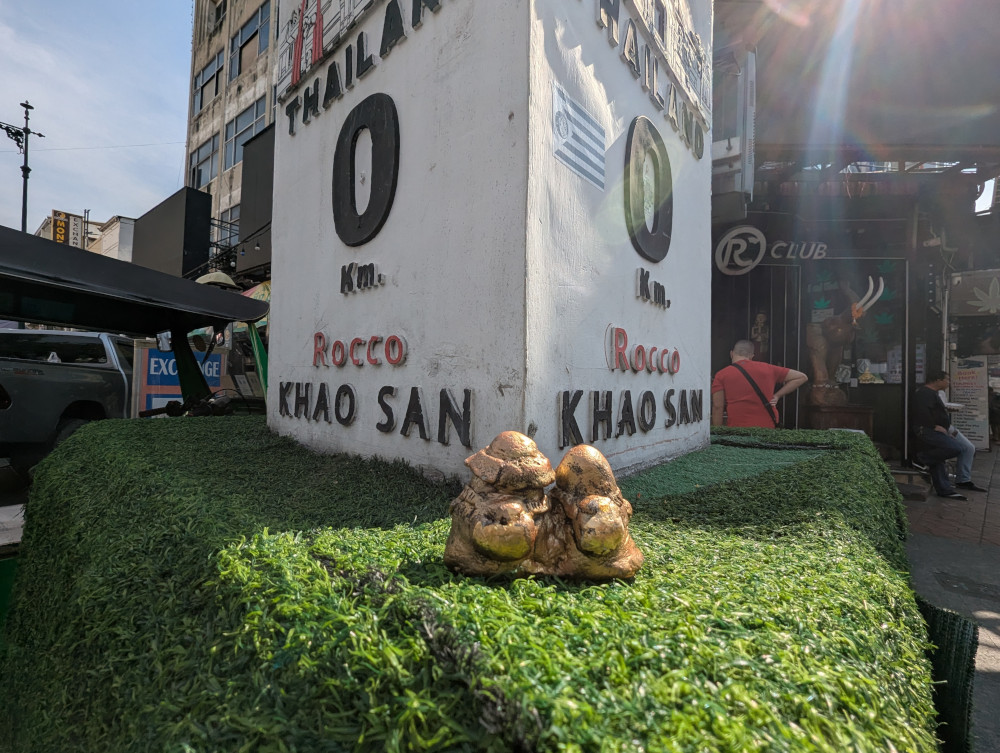
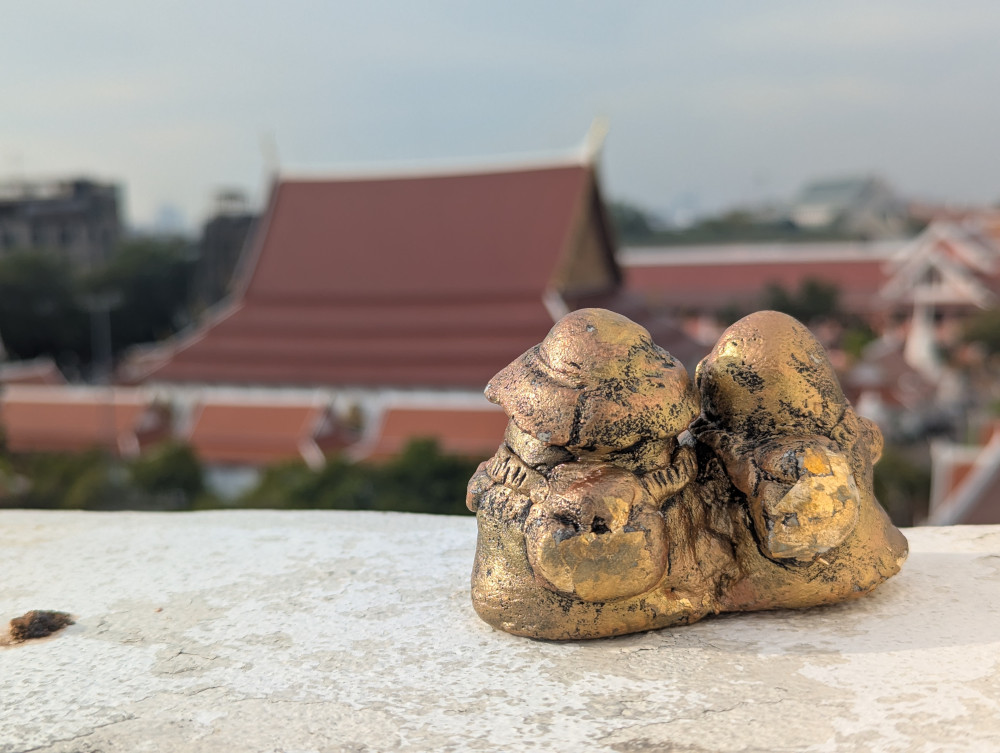
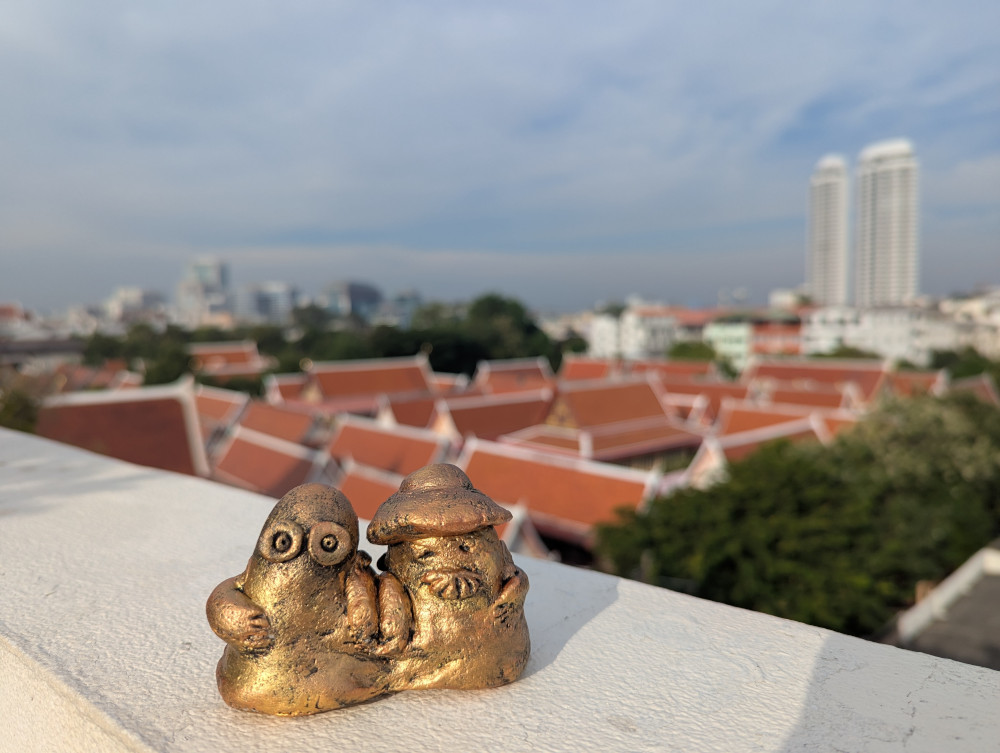
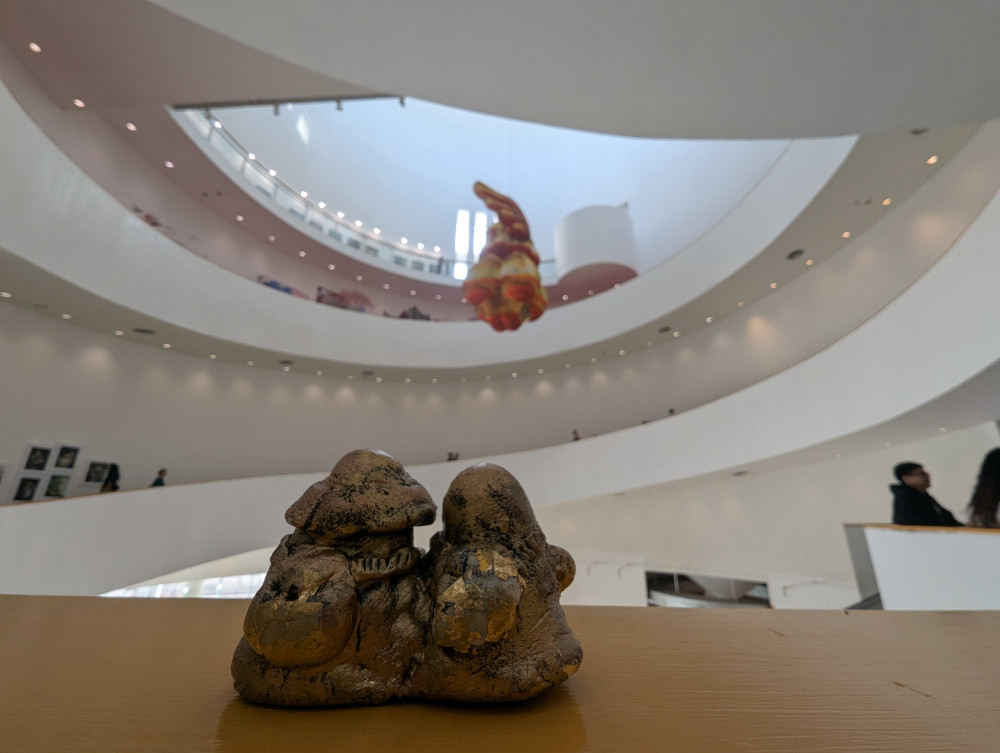
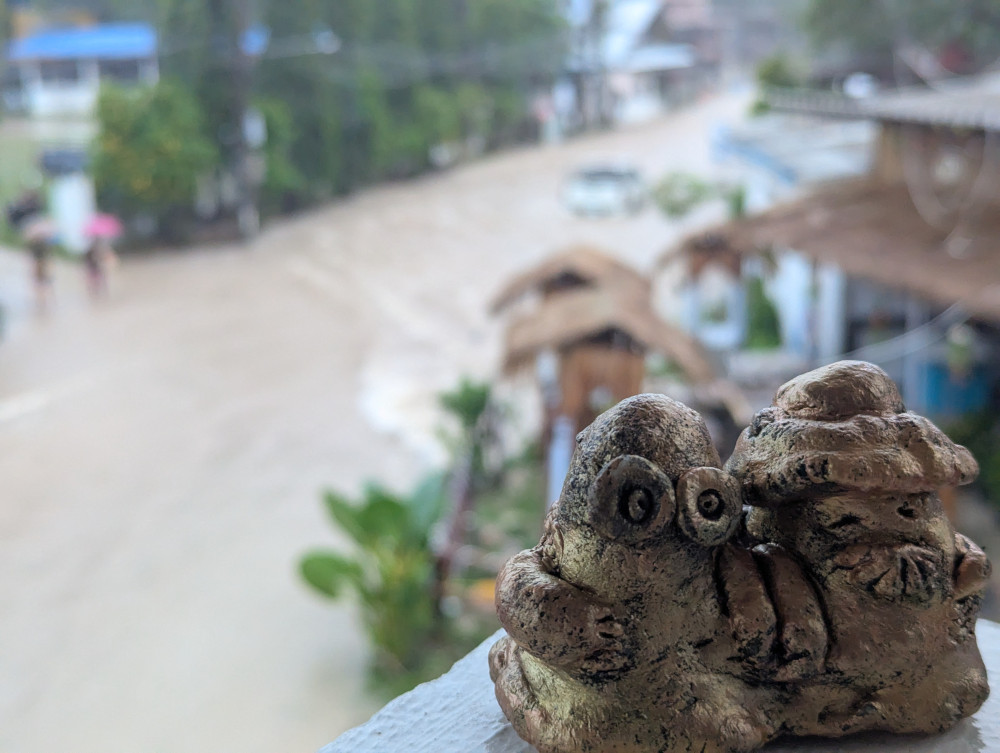
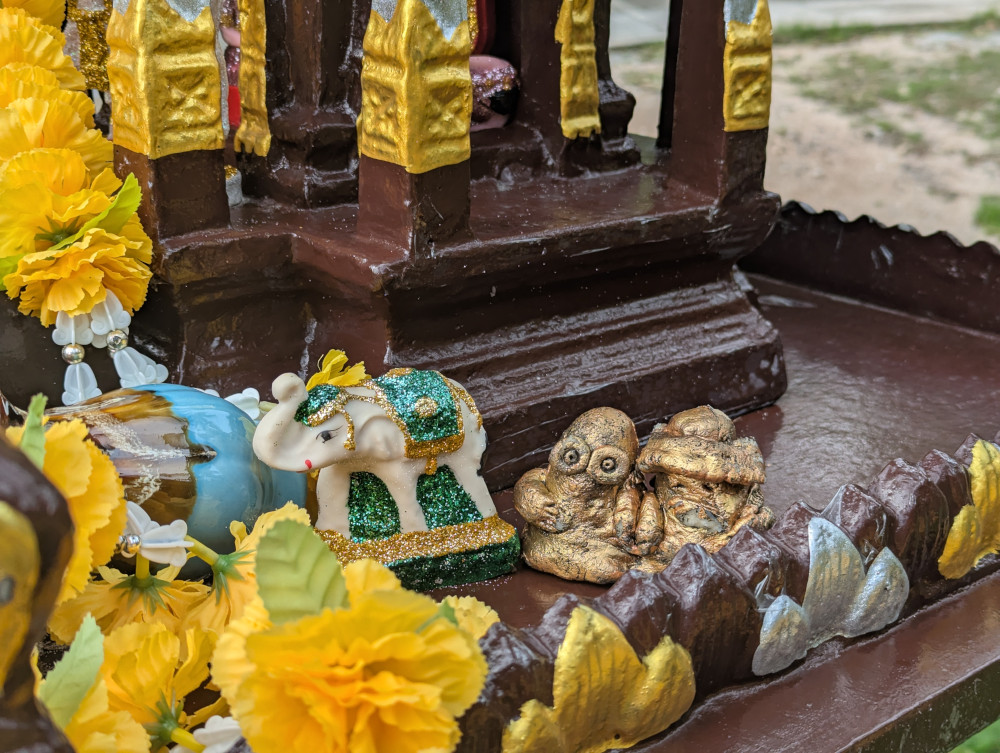
From November 26 to December 16, 2024, the mini sculptures traveled along the route: from Budapest Airport, where they paid tribute to the Liszt monument, to Thailand, where they visited the Golden Temple of Ganesha in Chiang Rai, and Wat Huai Pla Kang with the giant Guanyin, the ruins of Wat Ruesi Chewap in Chiang Mai, in Bangkok the 0 km marker, the royal palace and cultural center with an exhibition of the Bangkok Biennale, and Koh Tao island. At each location, searches were conducted to find a spot for installing the mini monument. The site fitting was accompanied by photographic documentation.
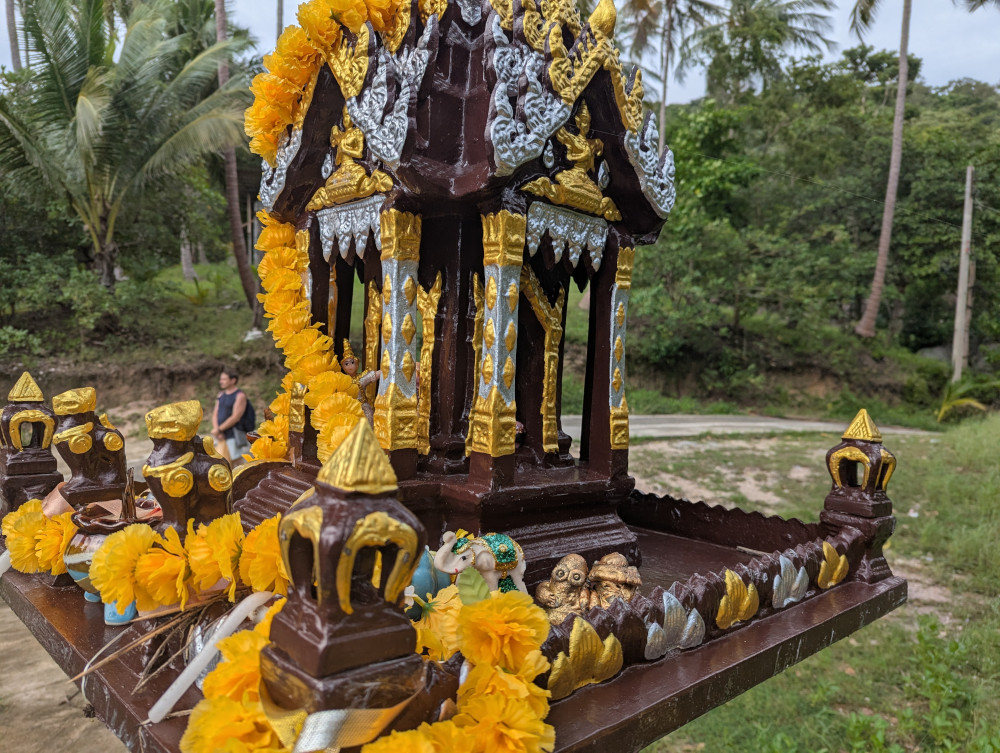
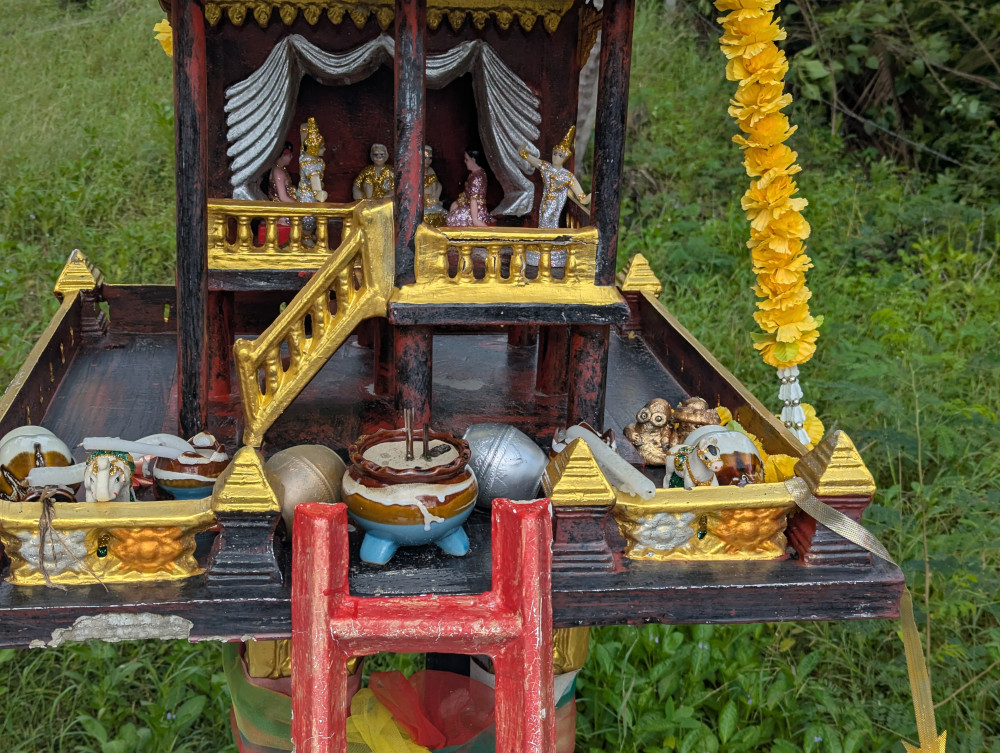
During heavy rain on Koh Tao, they began to soften and bloom. They were sent to the spirit house near Ao Leuk beach to negotiate for good weather. Not in vain — the next day the weather improved. They were left in that spirit house.
The project, developed in collaboration with Dmitry Razev, is dedicated to exploring the phenomenon of deer stones — both ancient and contemporary, archaeological and symbolic, real and imagined. In our work, we combine artistic and scientific approaches: we research, document, interact with, and interpret these stones through the method of Revealed Realism.
What Are Deer Stones?
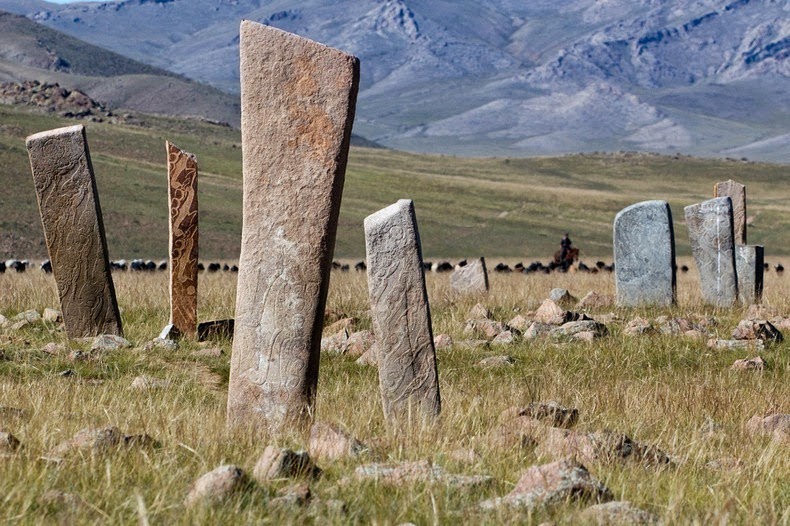
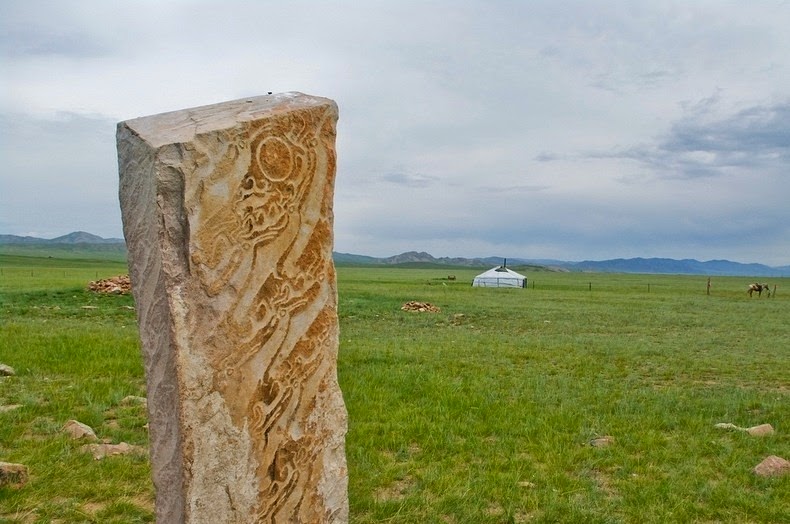
Deer Stones (Mongolian: Буган чулуун хөшөө) are stone stelae, often featuring anthropomorphic traits, with depictions of flying deer and other carvings. They range in height from 1 to 4.5 meters. These megaliths were created by ancient societies that existed between 1200 and 700 BCE in the territories of Mongolia and adjacent regions of Siberia.
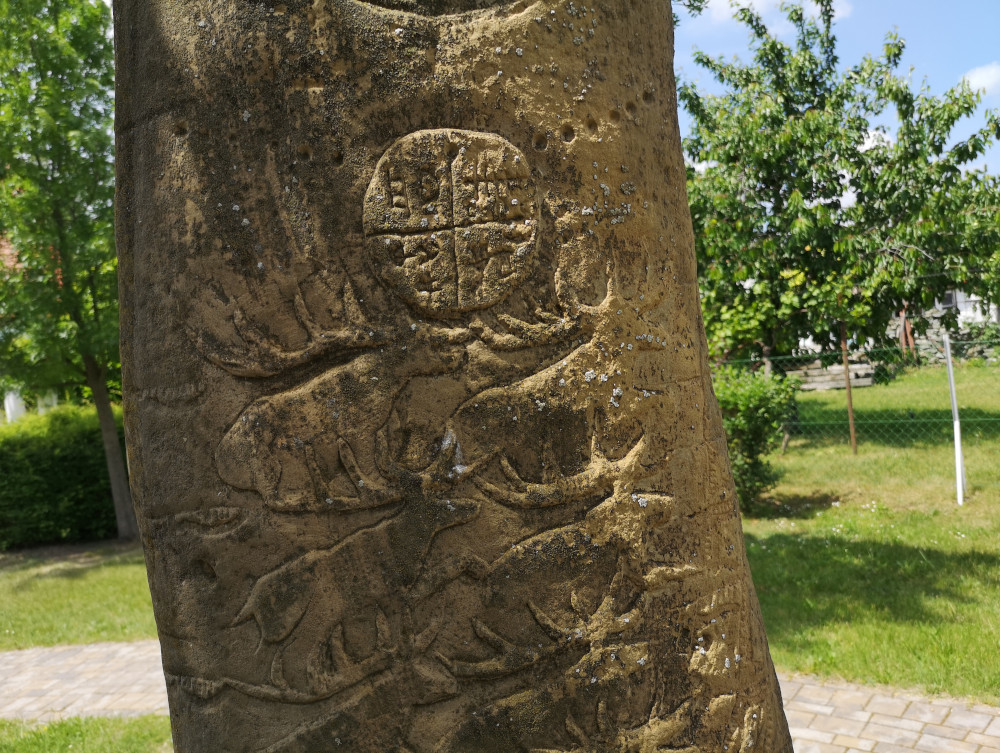
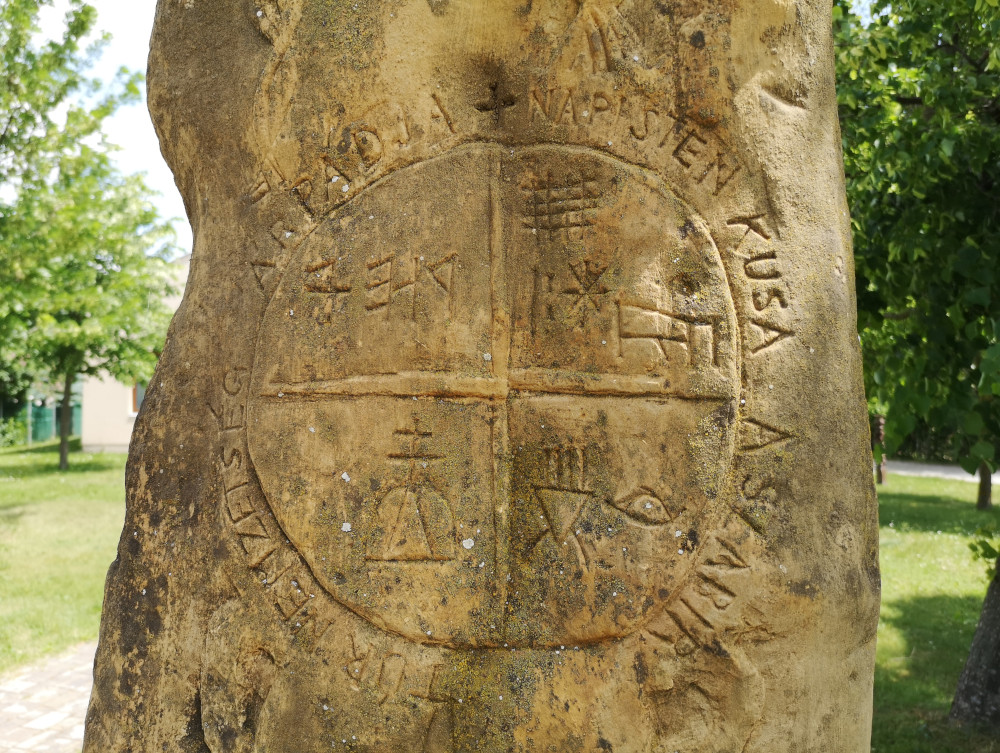
Deer hold a prominent place on nearly all deer stones. The image is based on the Siberian subspecies of red deer (Cervus elaphus sibiricus). Early stones show very simple depictions of deer; over time, the drawings become more detailed. A gap of 500 years leads to the emergence of complex images of flying deer. The deer are depicted specifically as flying through the air, not merely running on the ground. Their antlers become elaborately decorated, featuring extensive spiral patterns that can cover the entire deer. Sometimes the antlers hold a solar disc or another sun-related symbol.
Deer stone, Khovsgol Province, Mongolia fromDeer stone complex at Uushgiin Uvur from
The tops of the stones are usually rounded or flat, often carved at an angle. Human faces appear much less frequently. When present, they are sometimes represented symbolically by a few neat diagonal strokes (//, ///).
Deer stones were part of the sacred rituals of ancient societies. Although the specific forms of megalith usage in rituals of these ancient cultures have not been fully established and may have varied across regions and throughout the 500-year period, there is no doubt that they played an important role in mediating the interaction between the human world and higher powers. The use of deer stones in religious ceremonies was known up until the early 20th century. [12]
Modern “Deer Stones” of Hungary
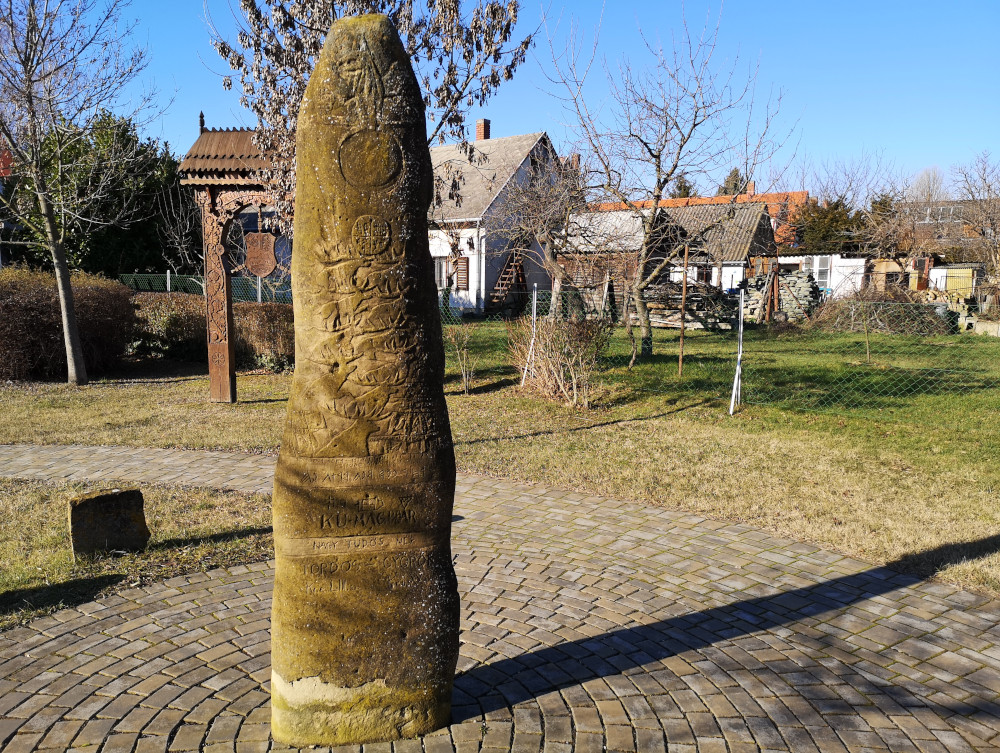
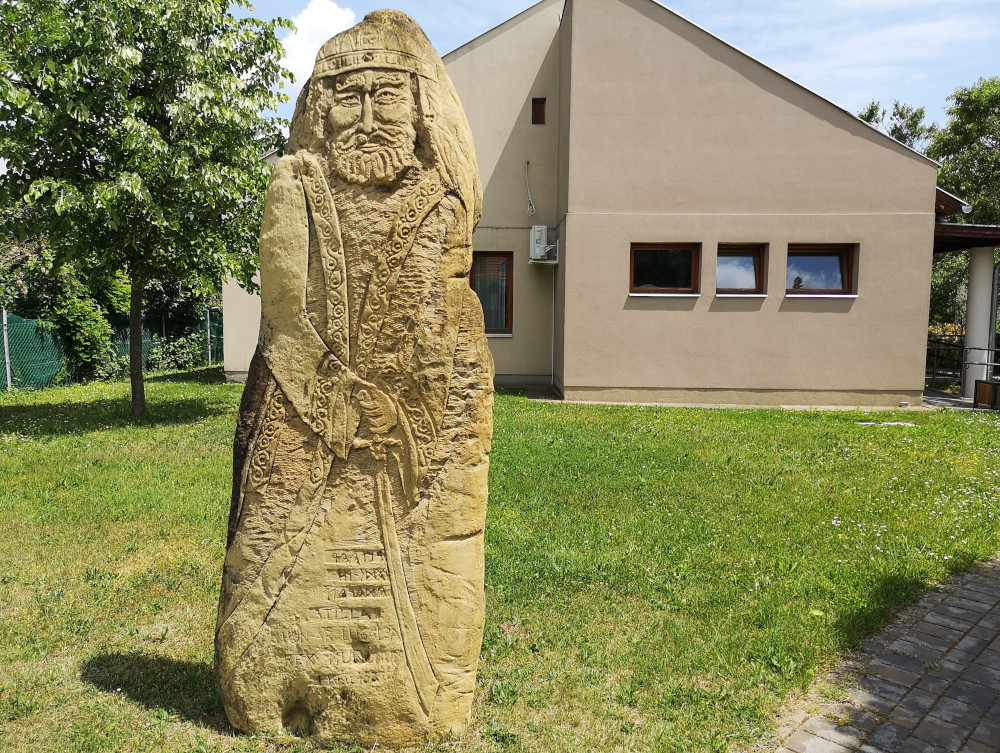
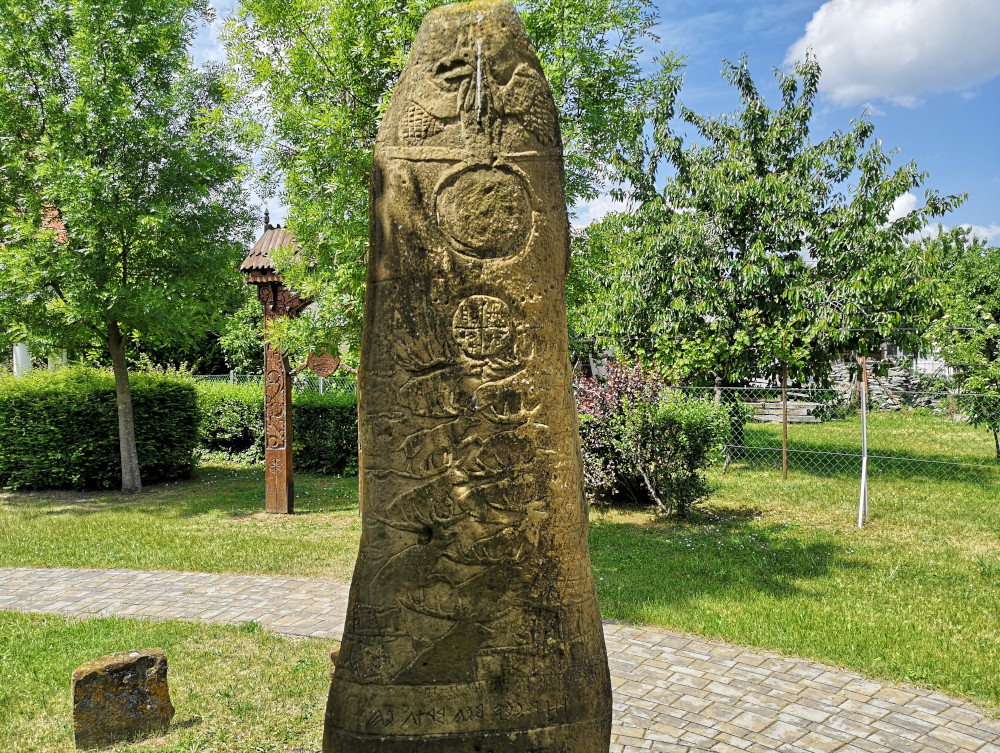
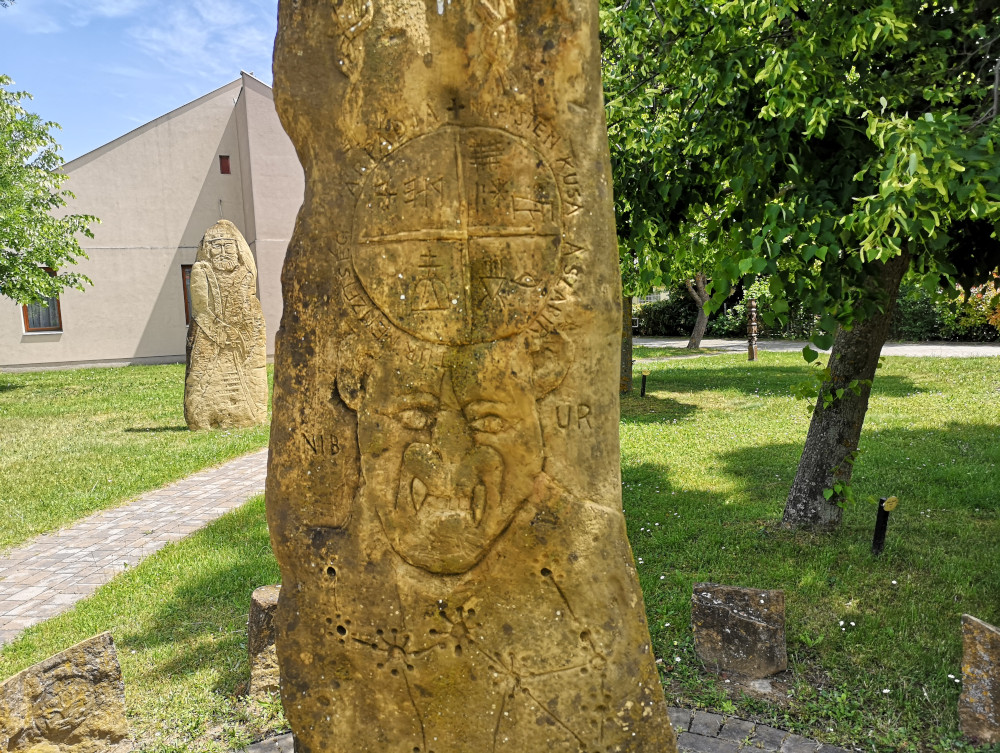
It is remarkable that Hungary is home to contemporary sculptures that closely resemble ancient deer stones in form, content, and symbolism. As part of our project, we explored several such monuments: photographing them, researching their creators, contacting local information services, documenting our findings, and engaging with the works on a creative level.
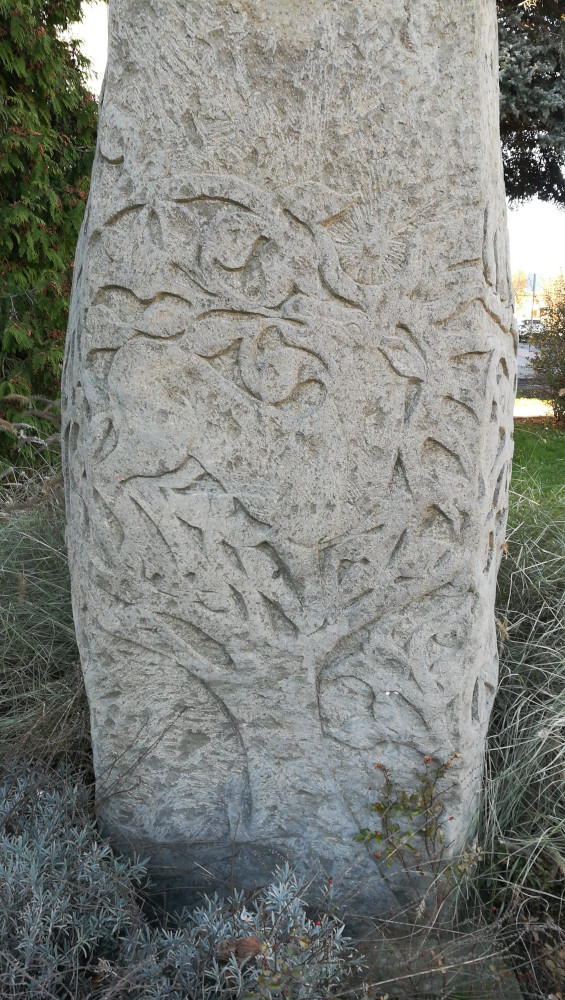
“Tree of Life” (Életfa)
Artist: Péterfy László, with the collaboration of Szerdahelyi Károly Year of Installation: 1980 Location: Zalaegerszeg, Petőfi utca 39.
The sculpture was originally installed in 1980 in the square in front of the Zalaegerszeg Town Hall. In 1989, with the placement of the equestrian statue of Zrínyi in that same square, the Életfa was relocated to a small park at the corner of Ady Endre and Kisfaludy Sándor Streets. However, this would not be its final site. On May 5, 2022, the sculpture was moved once again—this time to its current location at Petőfi utca 39, in the courtyard of the Zala County Regional Organization of the National Hungarian Hunting Chamber and the Zala County Association of Hunters and Hunting Enterprises. After restoration, it is once again open to the public.
Description: Carved from an 8-ton sandstone block that tapers toward the top, the sculpture is covered with animated scenes of life. Mythical and folkloric figures of humans and animals intertwine with gently swaying plants and trees. On the front side, a stag is depicted with a solar disk between its antlers. [12 ]
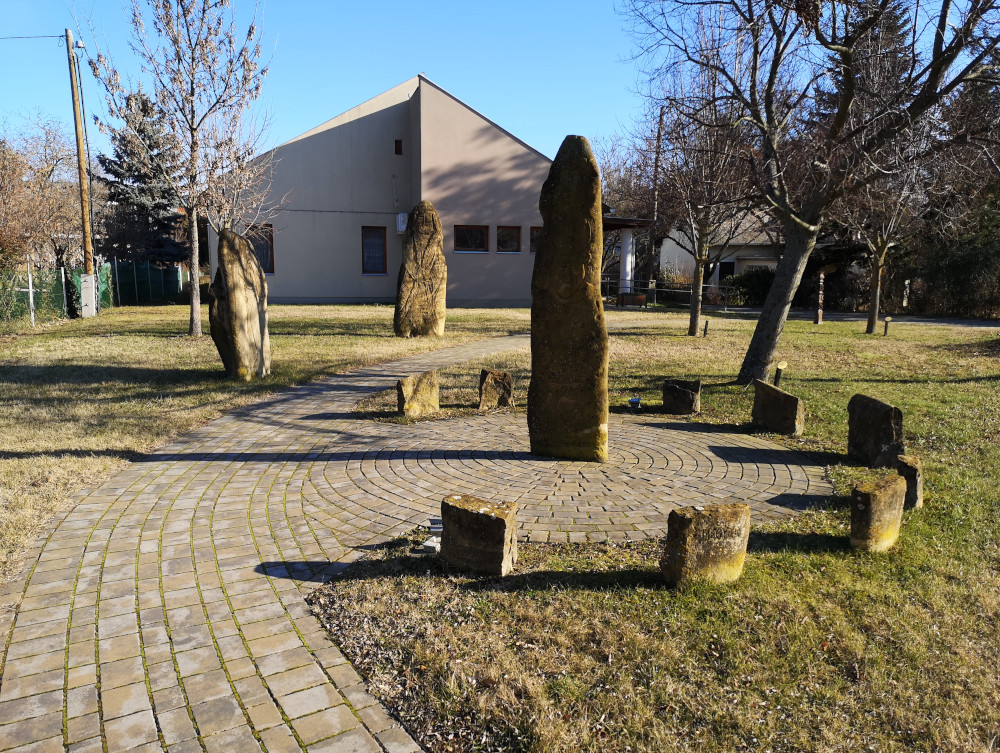
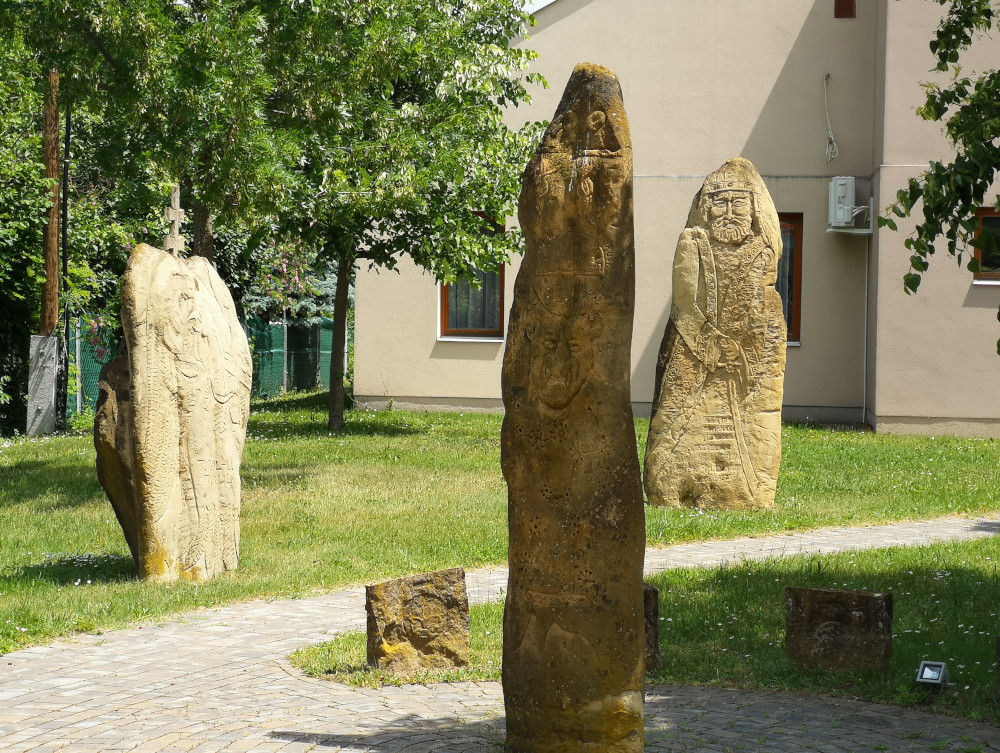
“The Conquest of the Homeland” (Honfoglalás)
(Also known as: “Deer Stone” (Szarvaskő))
Artist: Harmat Ferenc, with the participation of Piszter Péter Year of Installation: 2003 Location: Balatongyörök, Kossuth Lajos u. 29
This sculptural group is situated in a small park within the courtyard of the municipal building complex.
Description:
The sculptural ensemble consists of three large engraved sandstone monoliths arranged in a semicircle. The eastern stele features a depiction of a warrior in the style of the steppe balbal stone statues. The central figure bears the image of the mythical Turul bird. The western stele is surrounded by small stone plaques inscribed with the names of legendary chieftains of the Hungarian tribes. One side of this stele displays the Orion–Nimrud constellation. On the other, rows of deer are engraved, ascending upward in a dynamic, ritual procession.
Frottage as a Form of Artistic Interaction
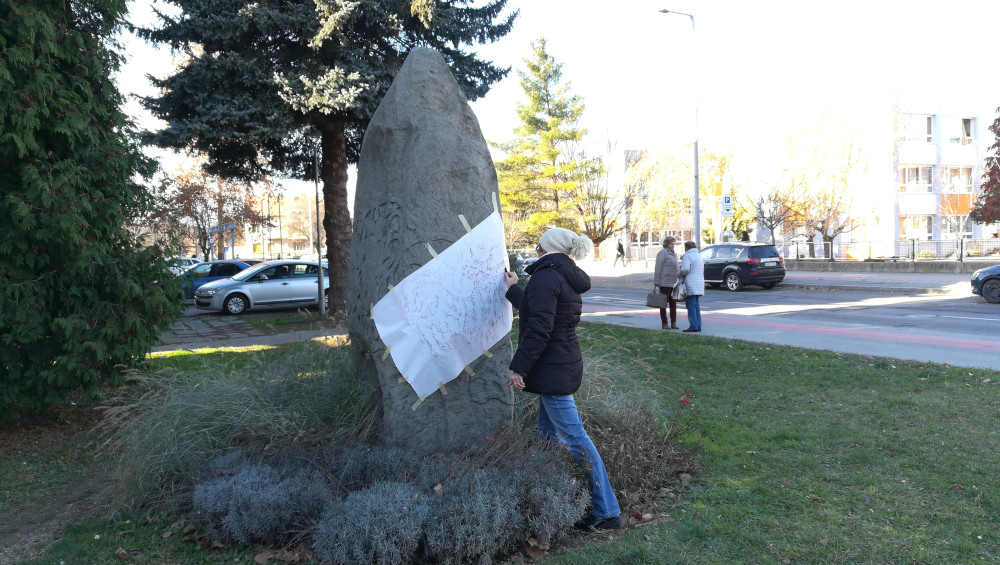
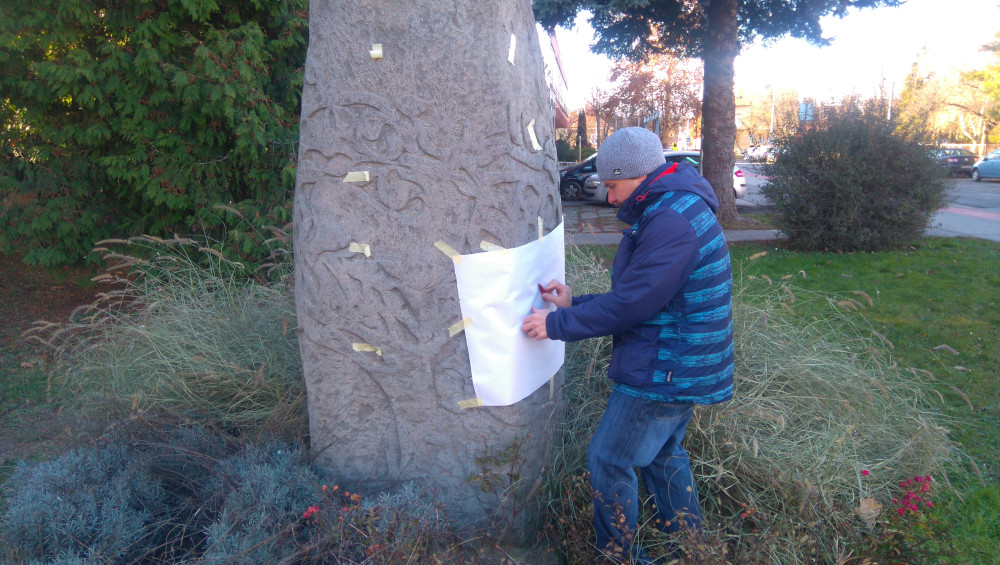
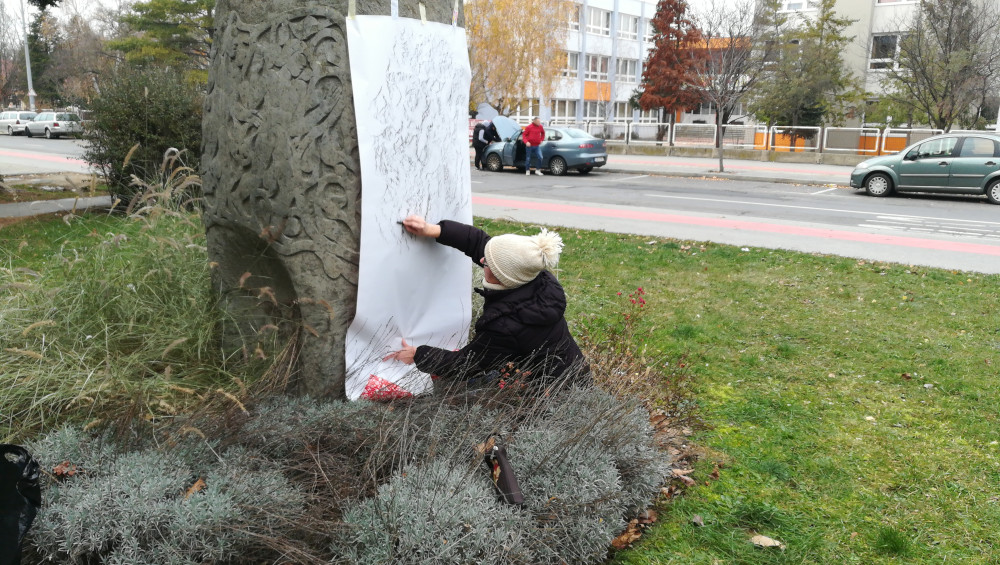
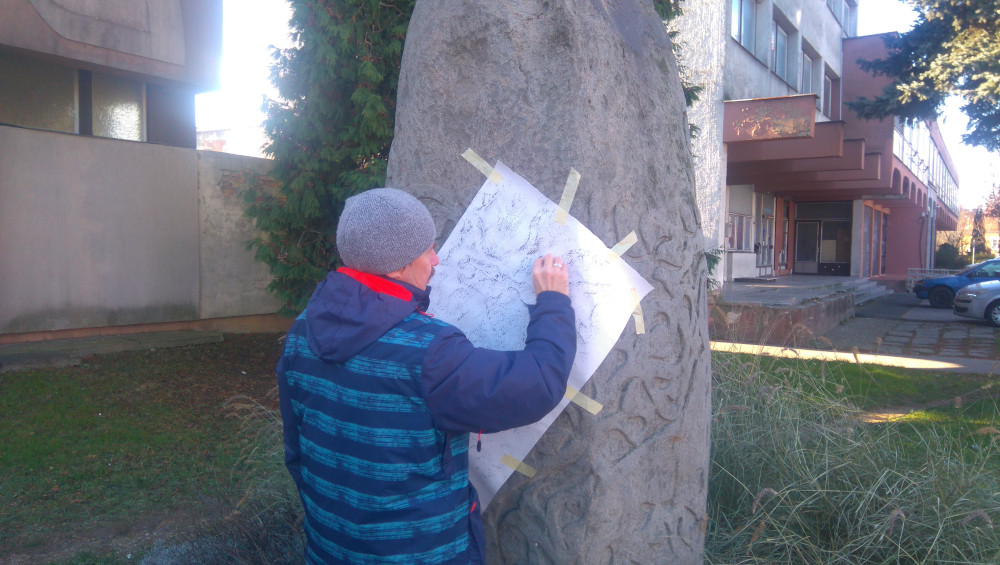
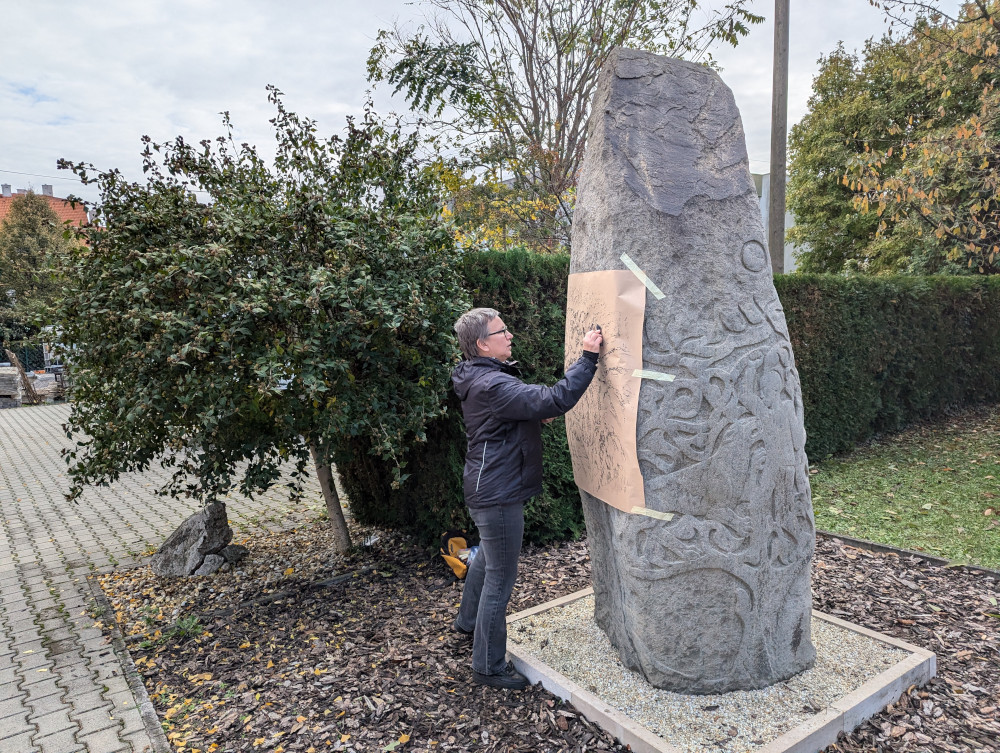
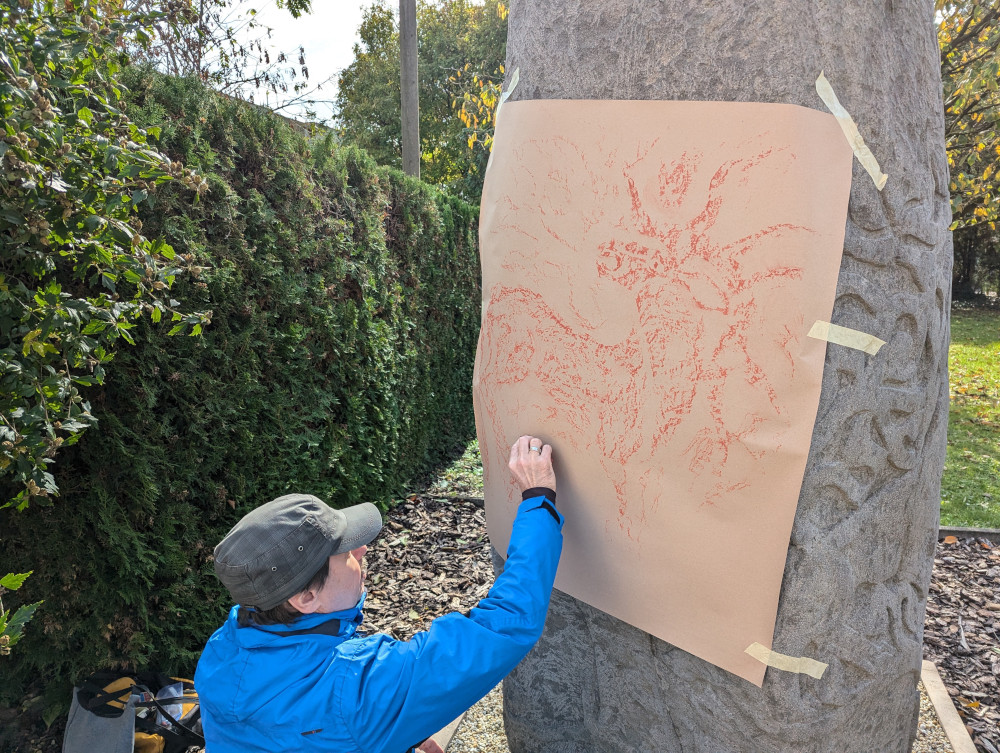
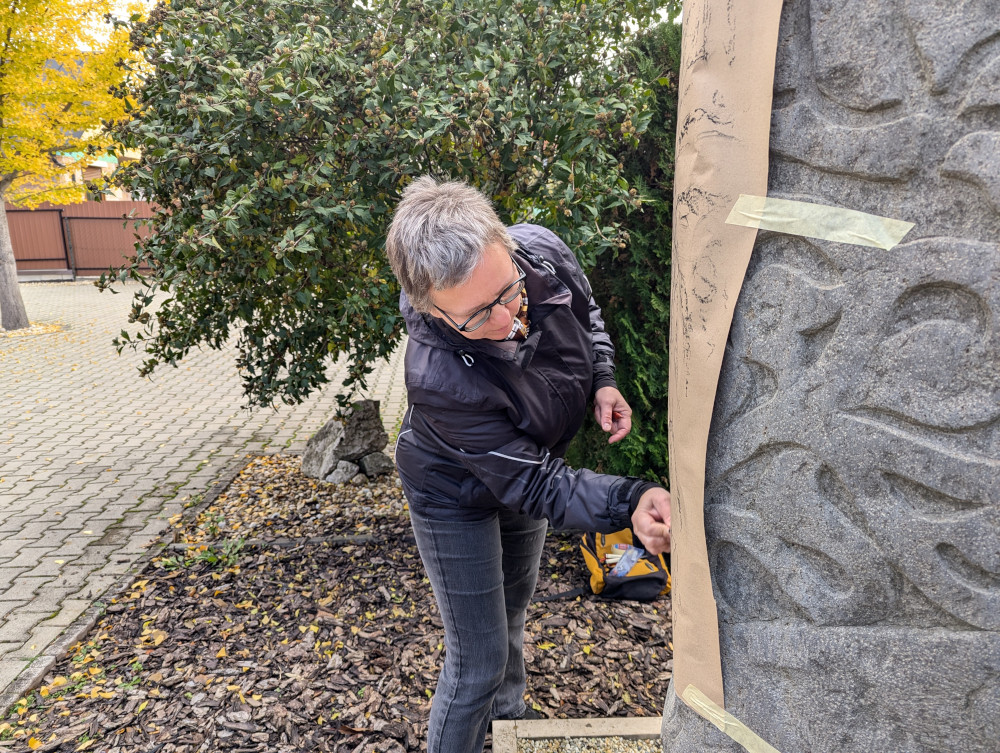
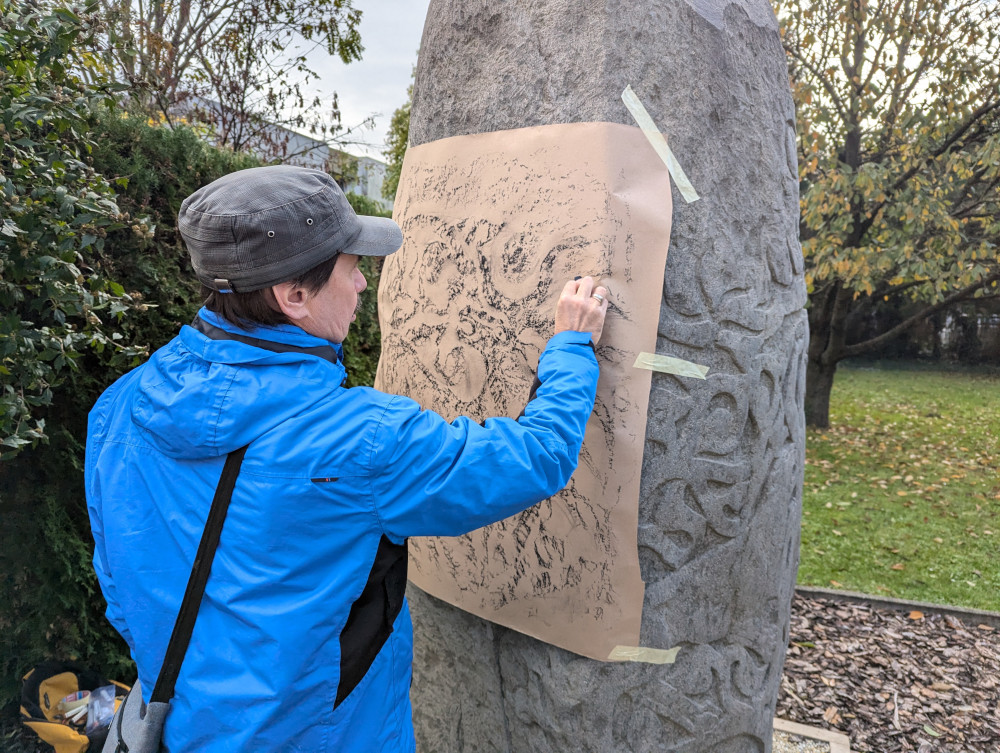
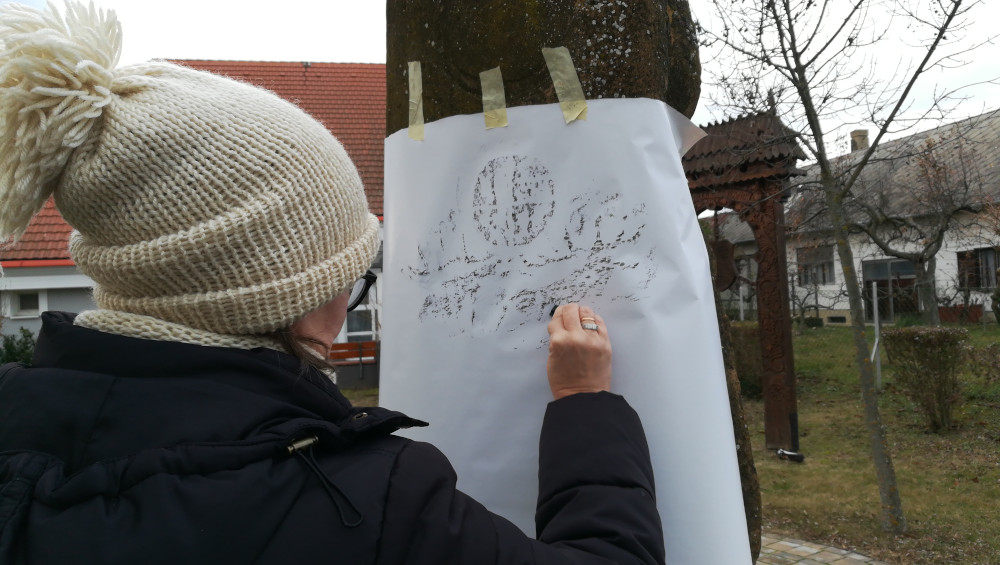
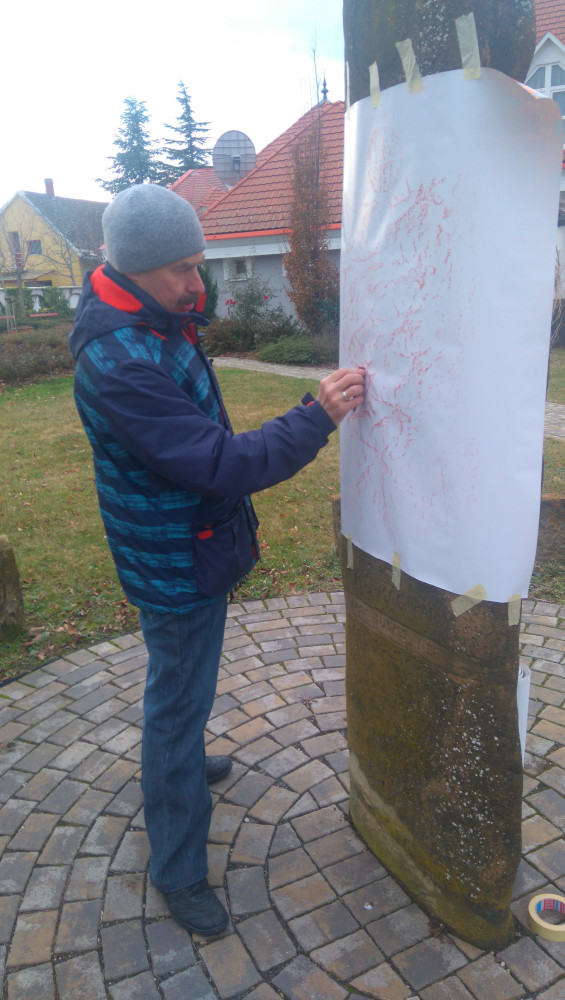
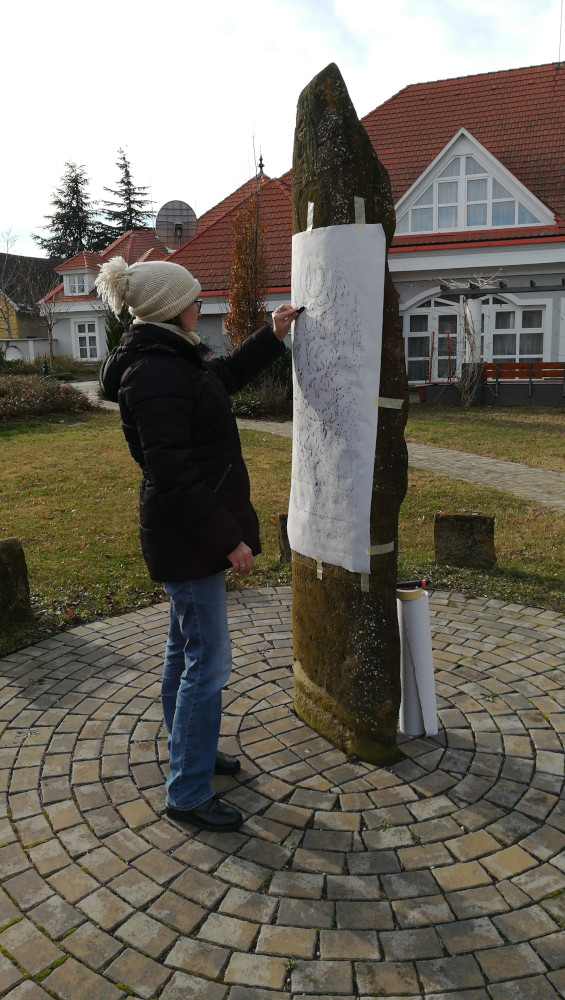
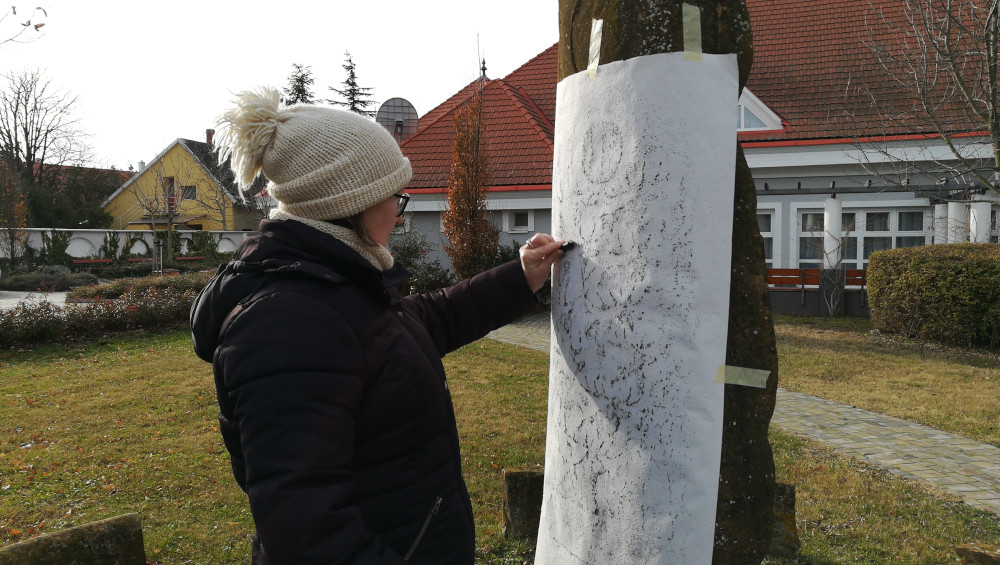
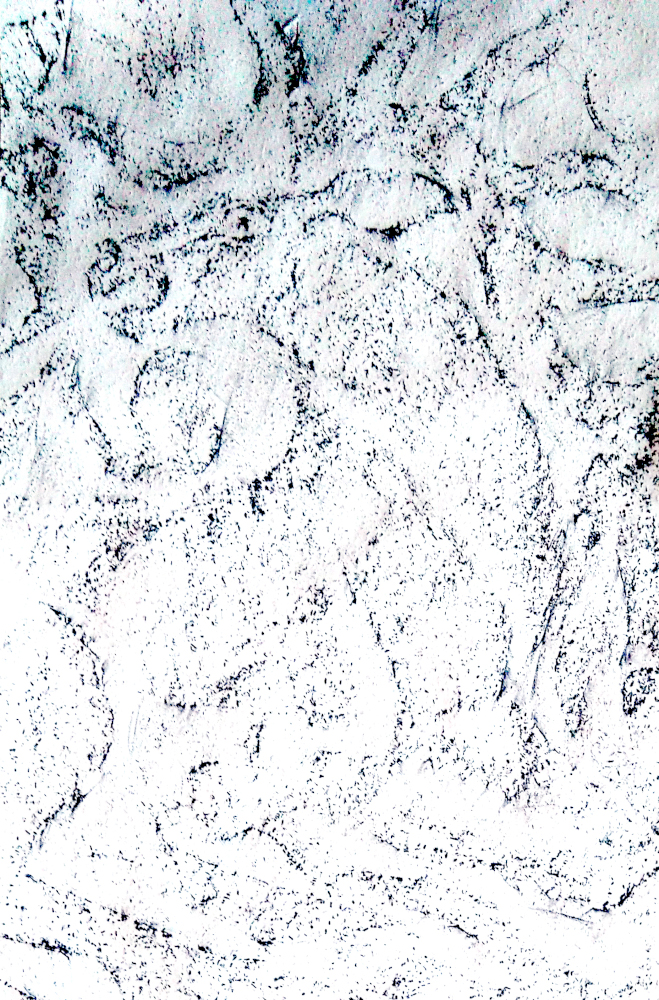
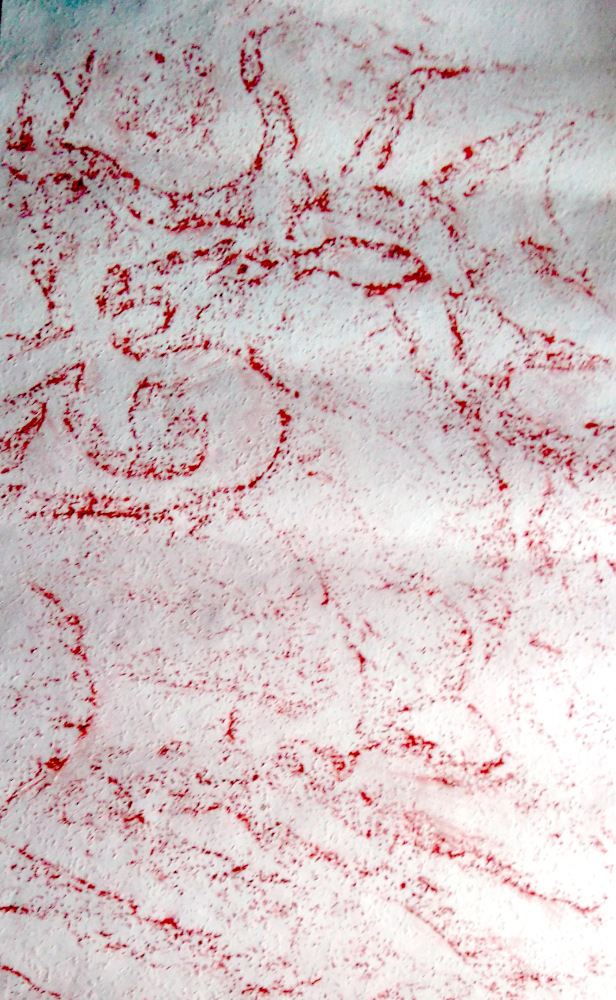
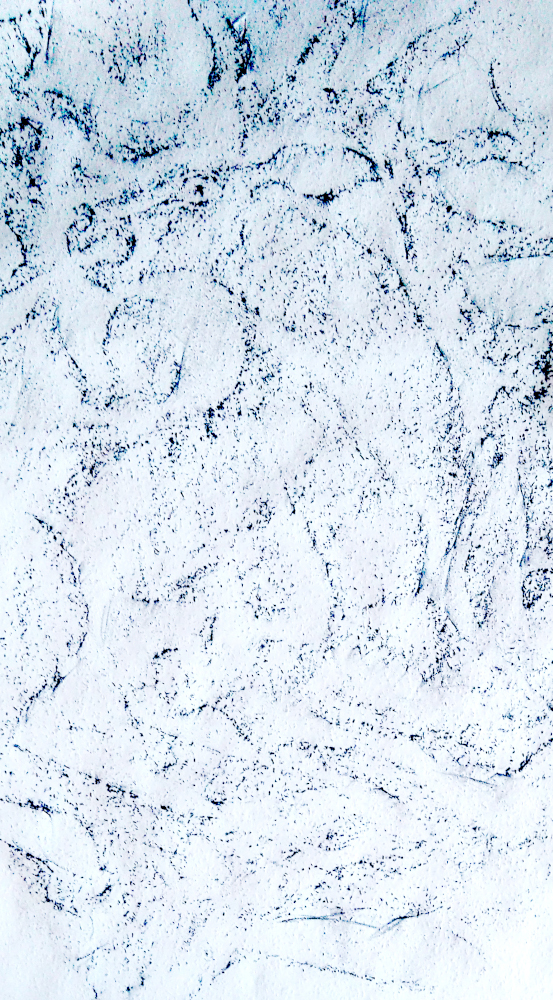
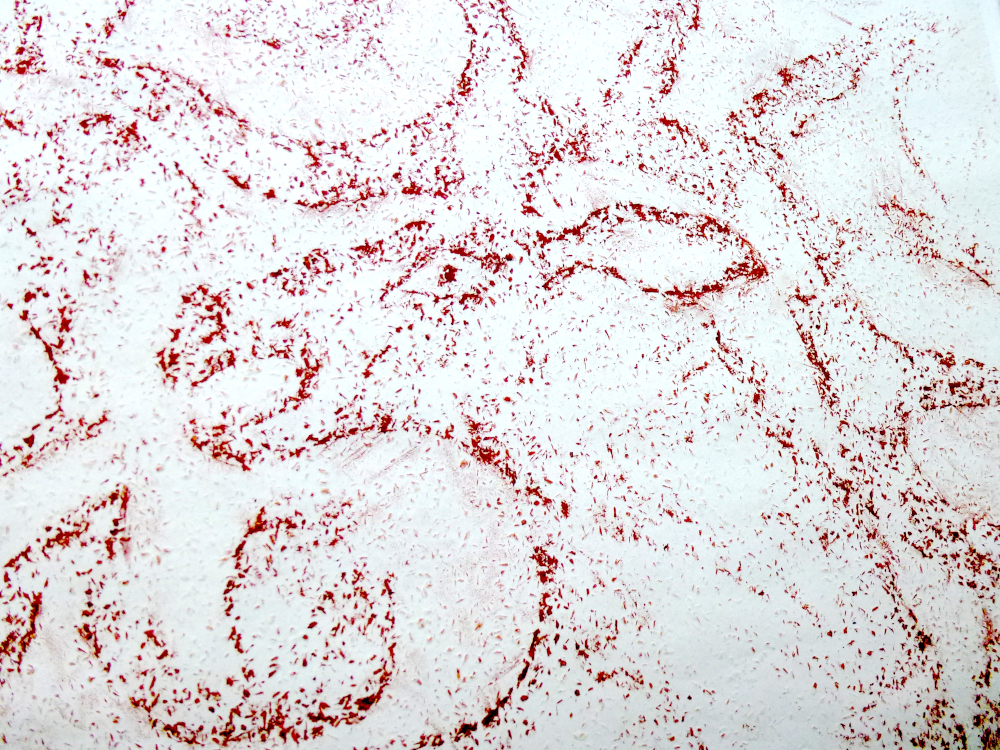
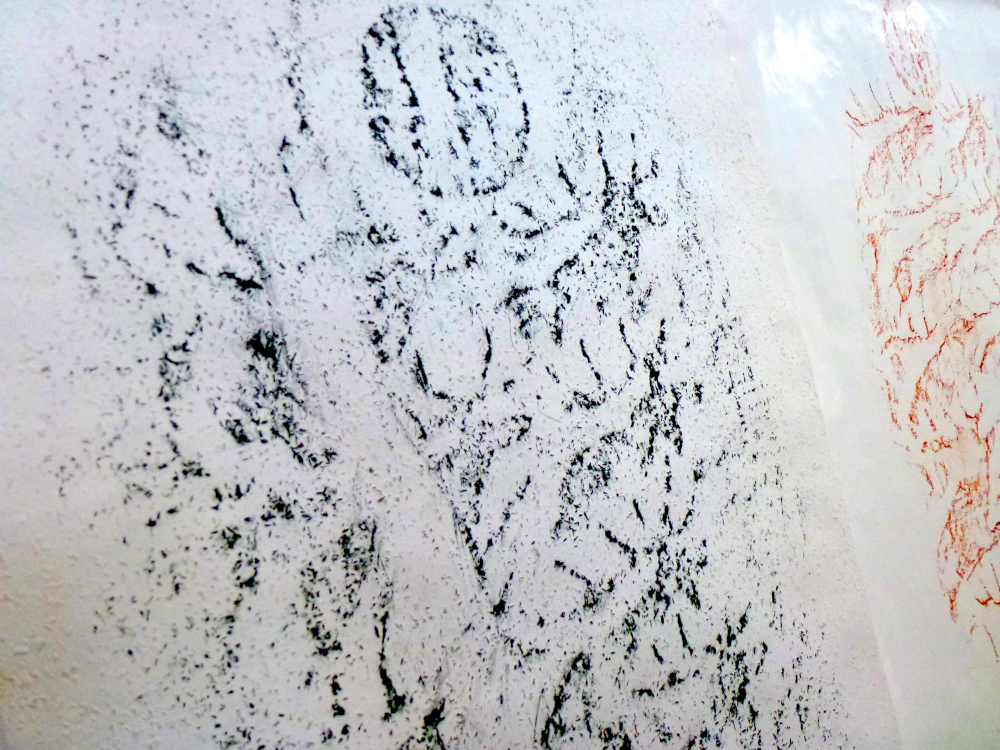
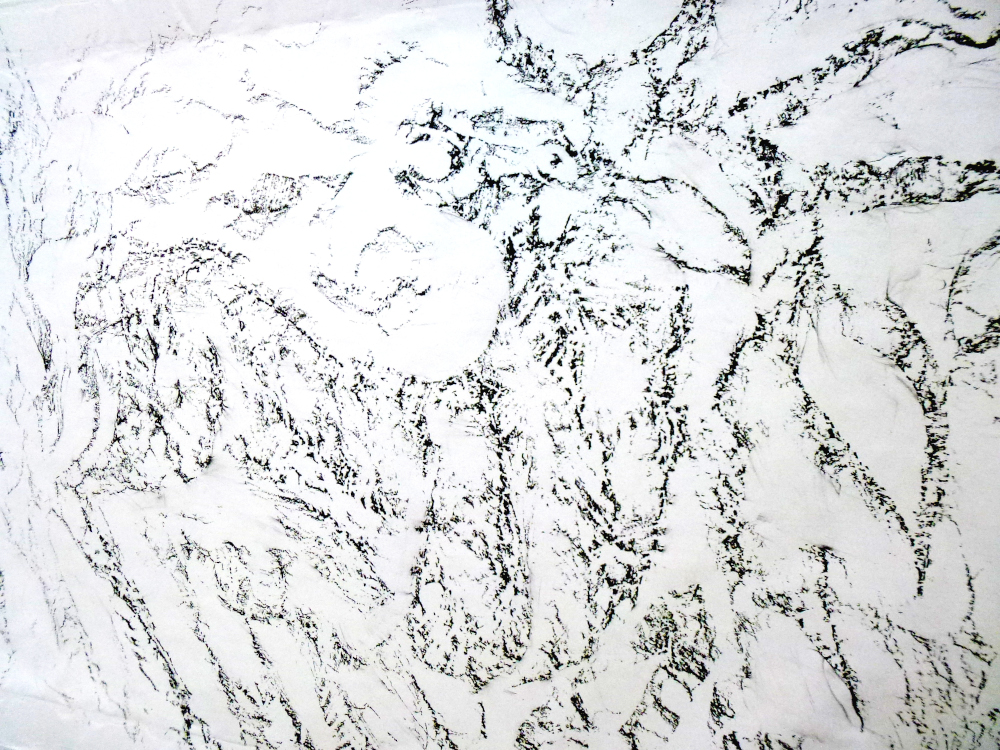
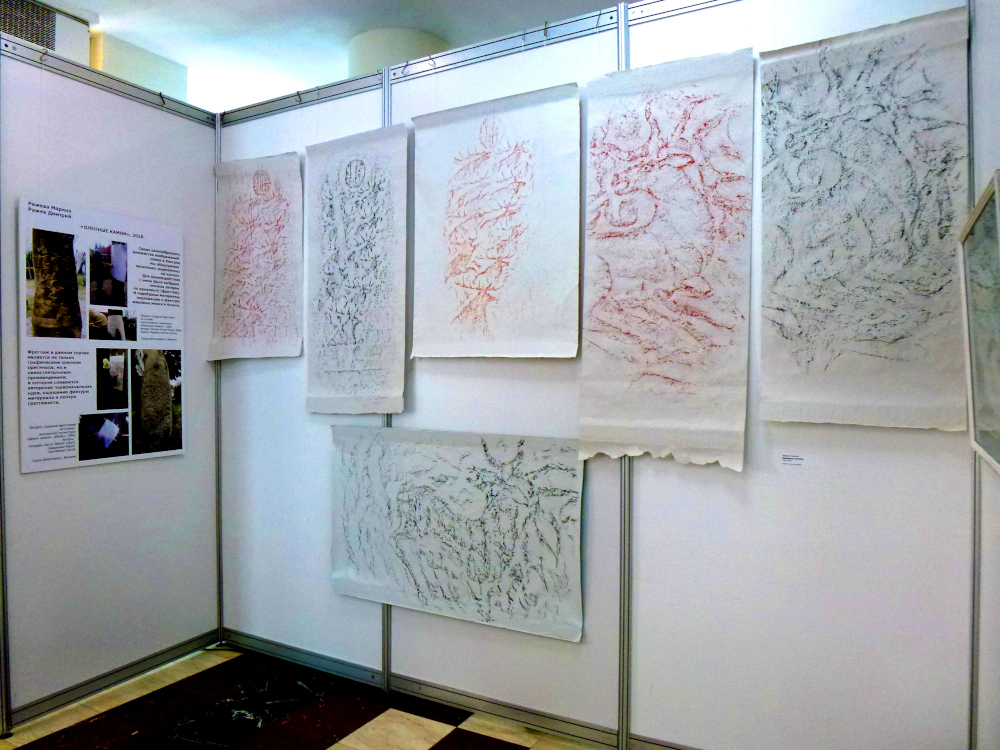
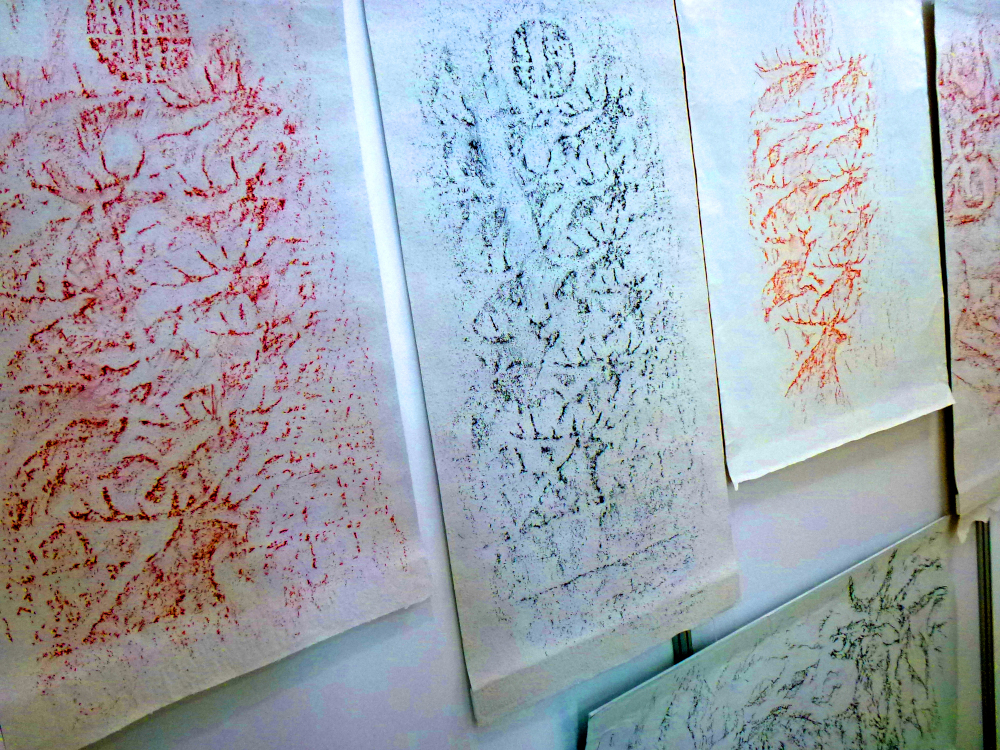
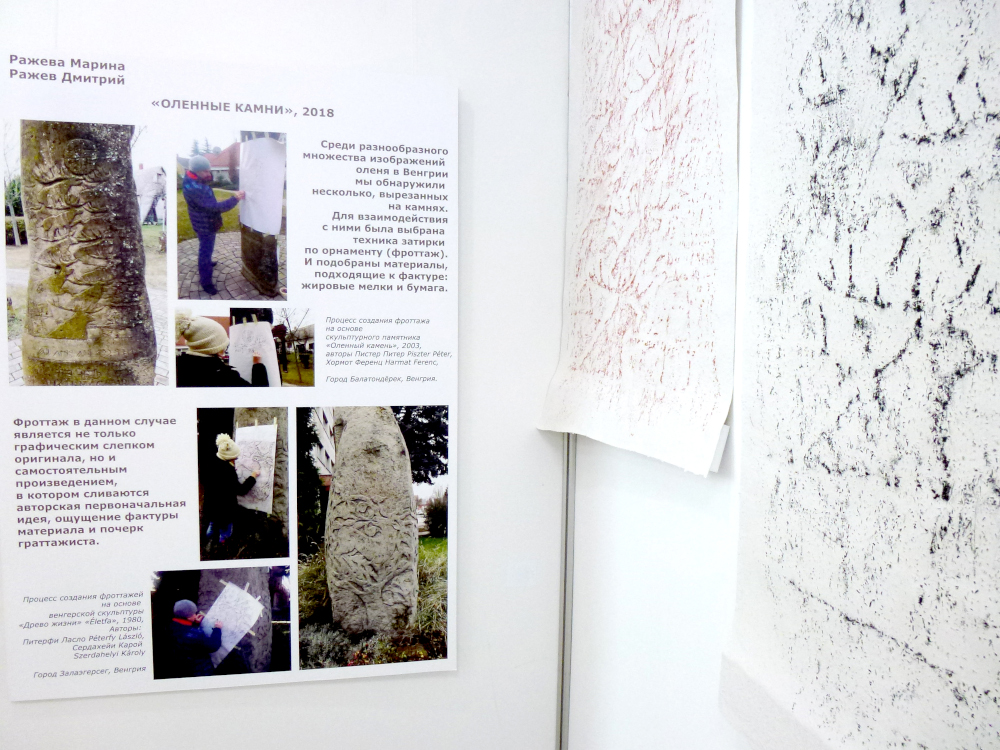
We conducted a series of frottages from these monuments in 2018, 2020, 2021 and 2024. Materials: paper and wax crayons.
In this context, frottage is not only a method of capturing texture — it becomes an independent artistic act. The original sculptural idea merges with the material and gesture of the artist. The relief, surface, and traces of time enter into dialogue with the drawn line and the hand of the one making the imprint. [Instagram 12] [youtube]
These works were exhibited as part of the international art and educational exhibition project “DeerLand“ [Instagram 123]
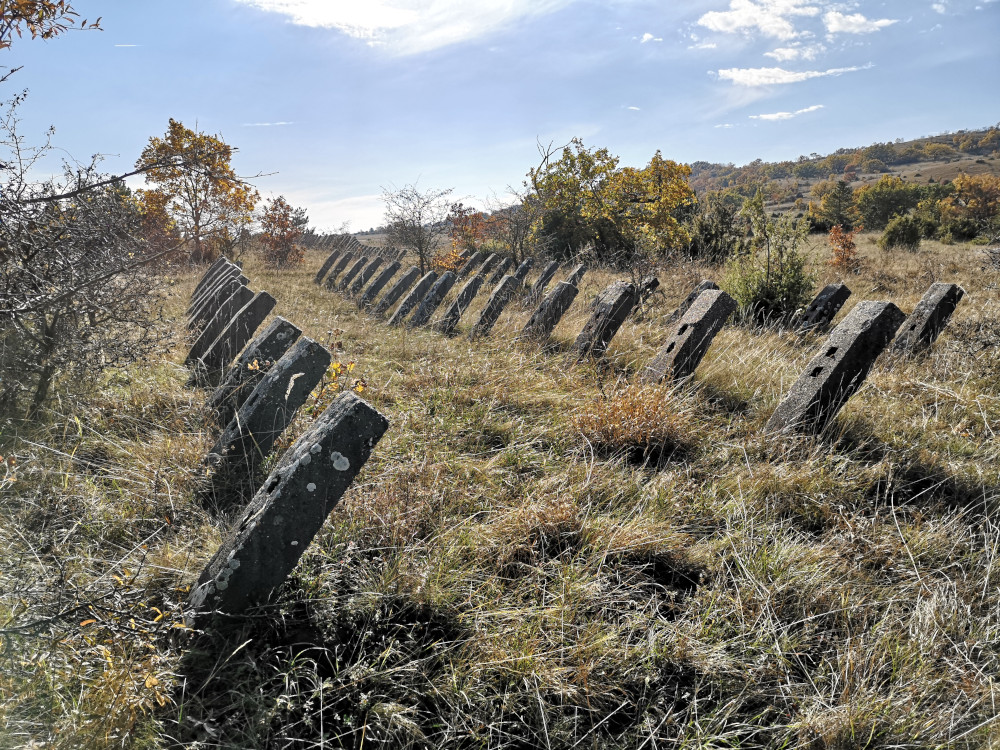
“Field of Deer Stones”
Location: Approximately 5 km south-southeast of Nyirád, in a forest-steppe landscape on the grounds of a long-abandoned military installation.
Author & Date: Created by time, people, and nature.
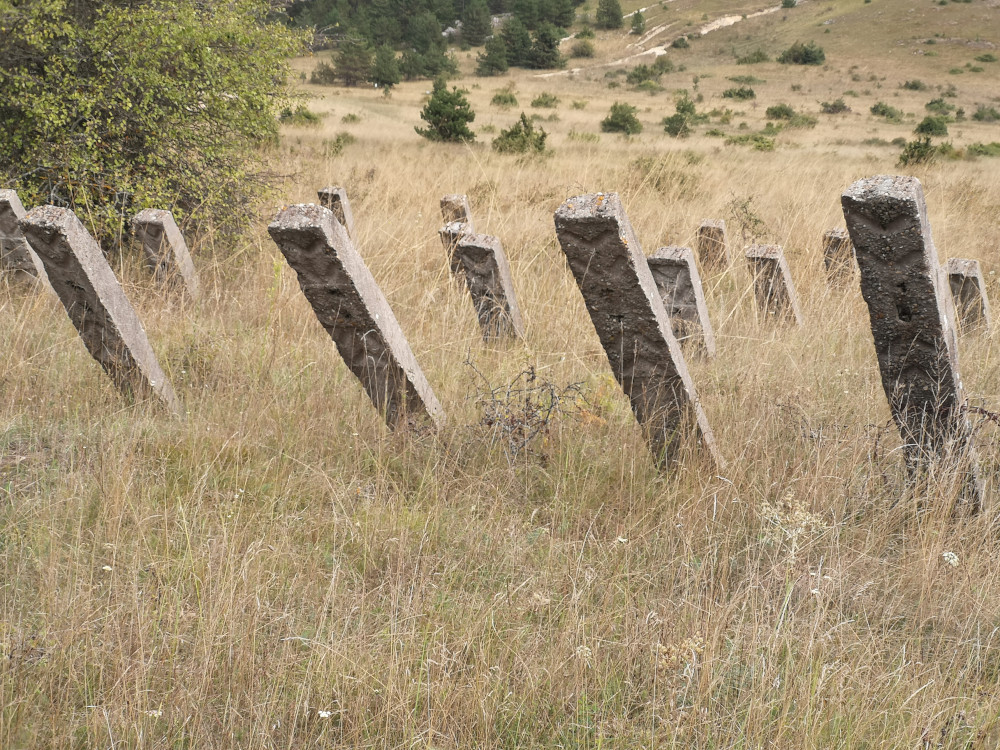
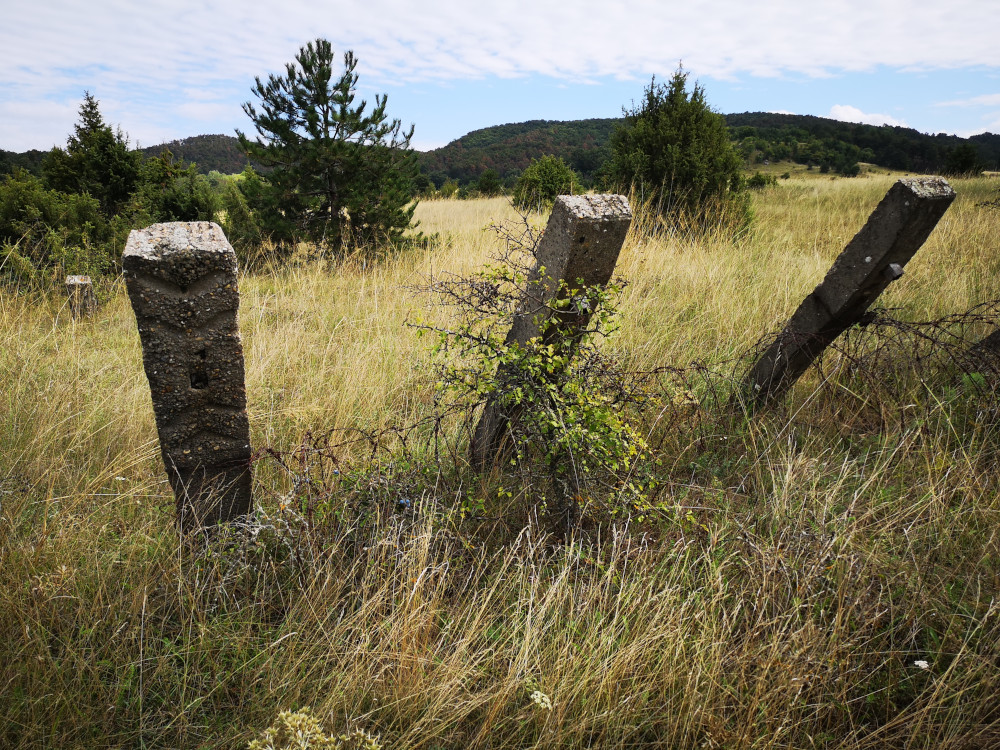
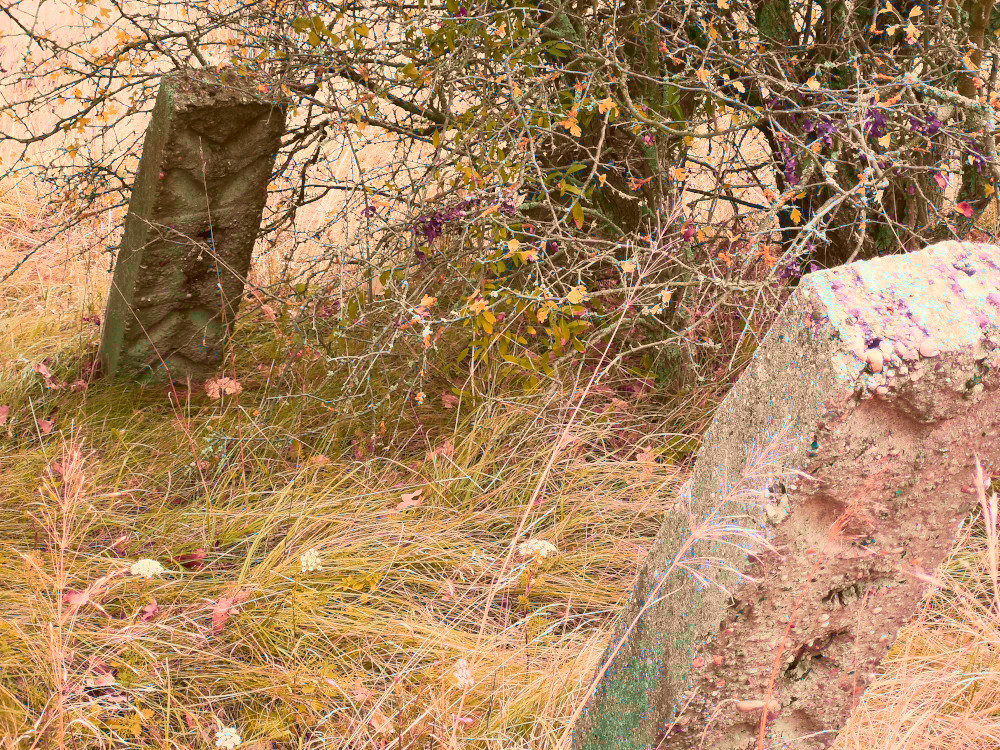
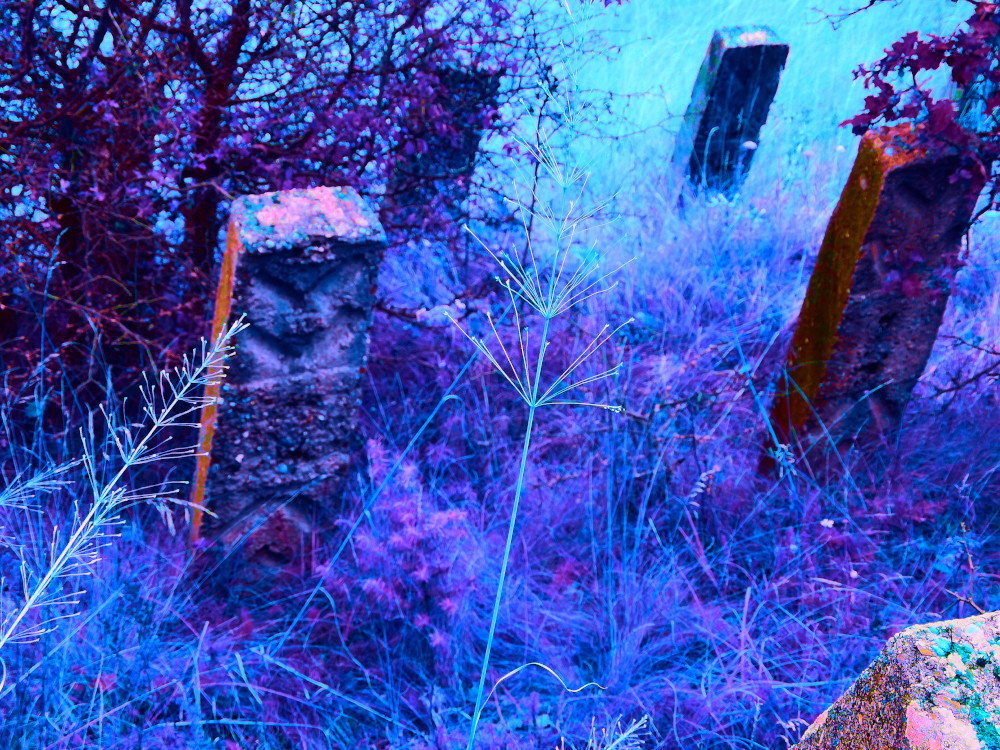
On a gentle hillside, we discovered rows of concrete posts embedded in the ground at an angle. While their original function is unclear, they are likely remnants of military engineering — possibly barriers or training obstacles from a former late-20th-century training ground.
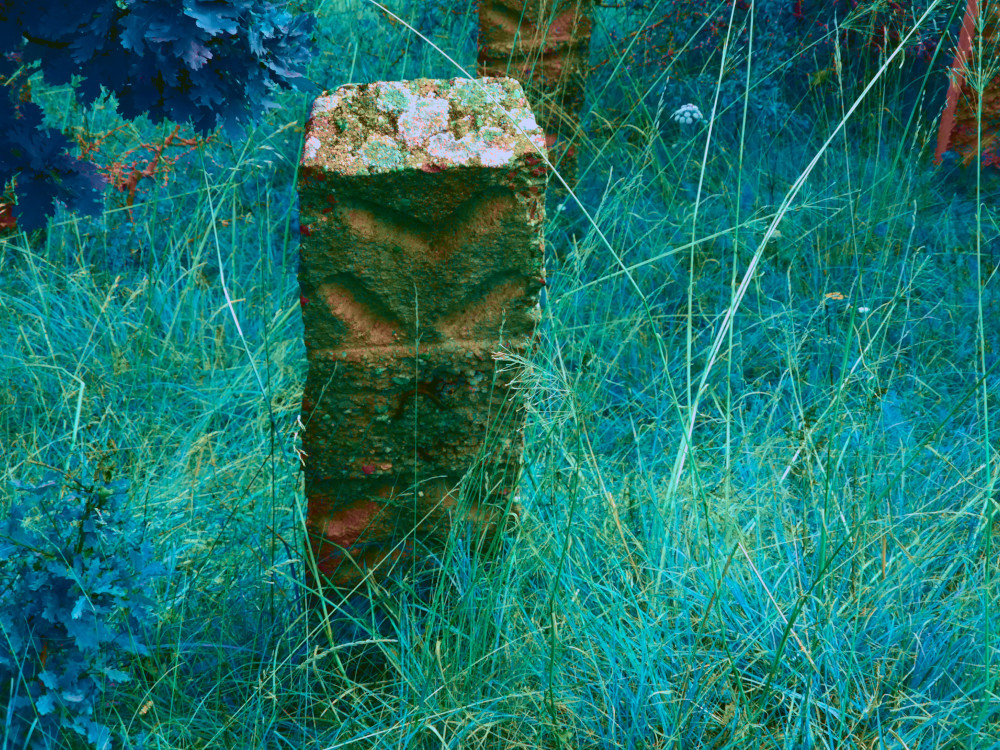
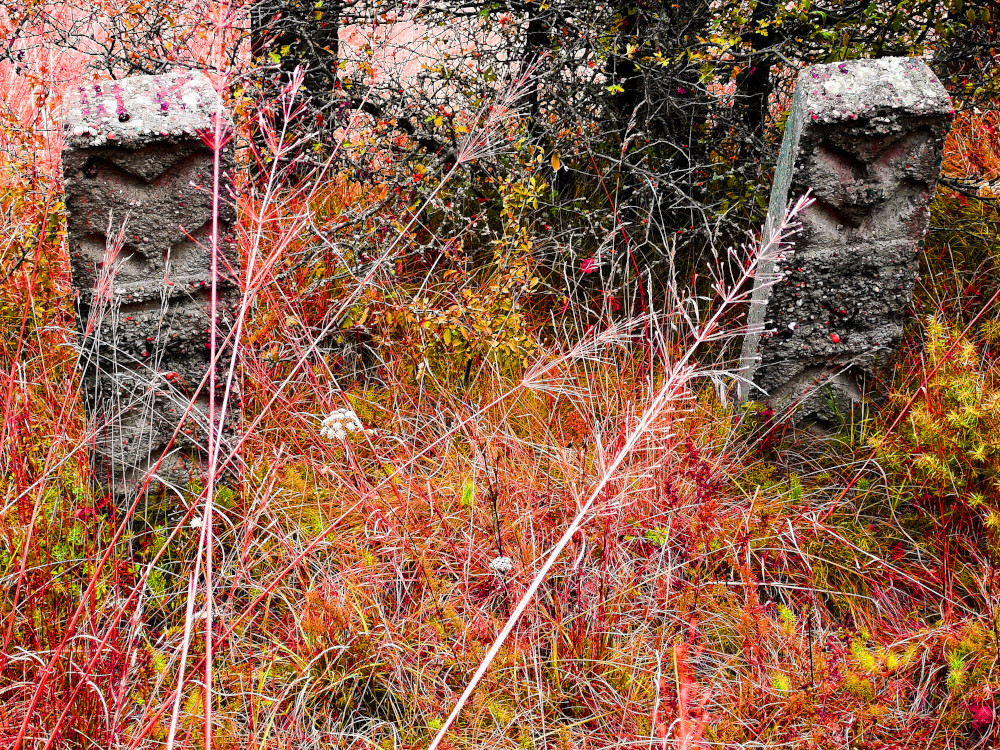
The layout and shape of these structures may be accidental. Yet visually, they evoke strong associations with megalithic alignments — menhirs, deer stones, and ancient stelae. This resonance becomes even more pronounced through artistic processing.
We documented these forms as “found artifacts” and digitally enhanced the images to emphasize their resemblance to ancient monuments. Thus emerged the Field of Reindeer Stones — a visual reconstruction of a myth arising from the intersection of nature, forgetting, and incidental form.
The project draws on the traditions of Siberian and Ural-Altaic deer stones — ancient burial markers carved with weapons, antlers, and symbols connecting different realms. Here, in the Hungarian landscape, a modern echo appears — perhaps unconsciously, perhaps by chance. Yet in this field of frozen forms, the ancient motif of the mediator between worlds seems to reawaken.
This is a powerful example of the “archaeology of the present”: utilitarian structures with lost meaning come to be seen as new archetypes, generating myth.
The series reflects the aesthetic of Revealed Realism: the object is found, but the meaning is overlaid. This corner of the Hungarian cultural landscape became a naturally found site for reinterpreting history, memory, and form — perfectly aligned with our method.
Conclusion
By tracing the echoes of ancient deer stones across time and geography — from Bronze Age Mongolia to the Hungarian cultural landscape — our project reveals how symbols survive, resurface, and transform. Through the lens of Revealed Realism, we seek not only to document but to awaken dormant layers of meaning in the world around us. Whether carved in granite or cast in concrete, the image of the deer continues to mediate between the visible and the invisible, the historical and the mythic, the past and the present.
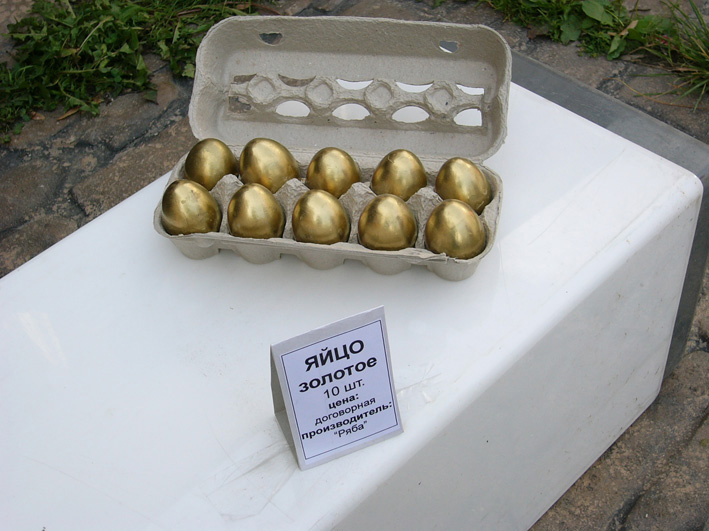
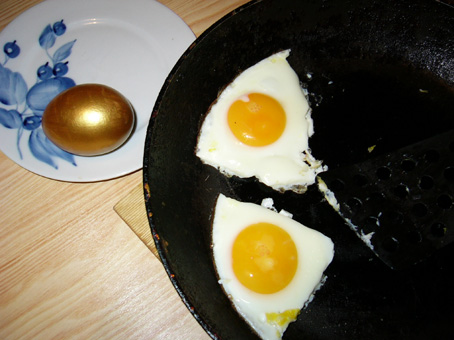
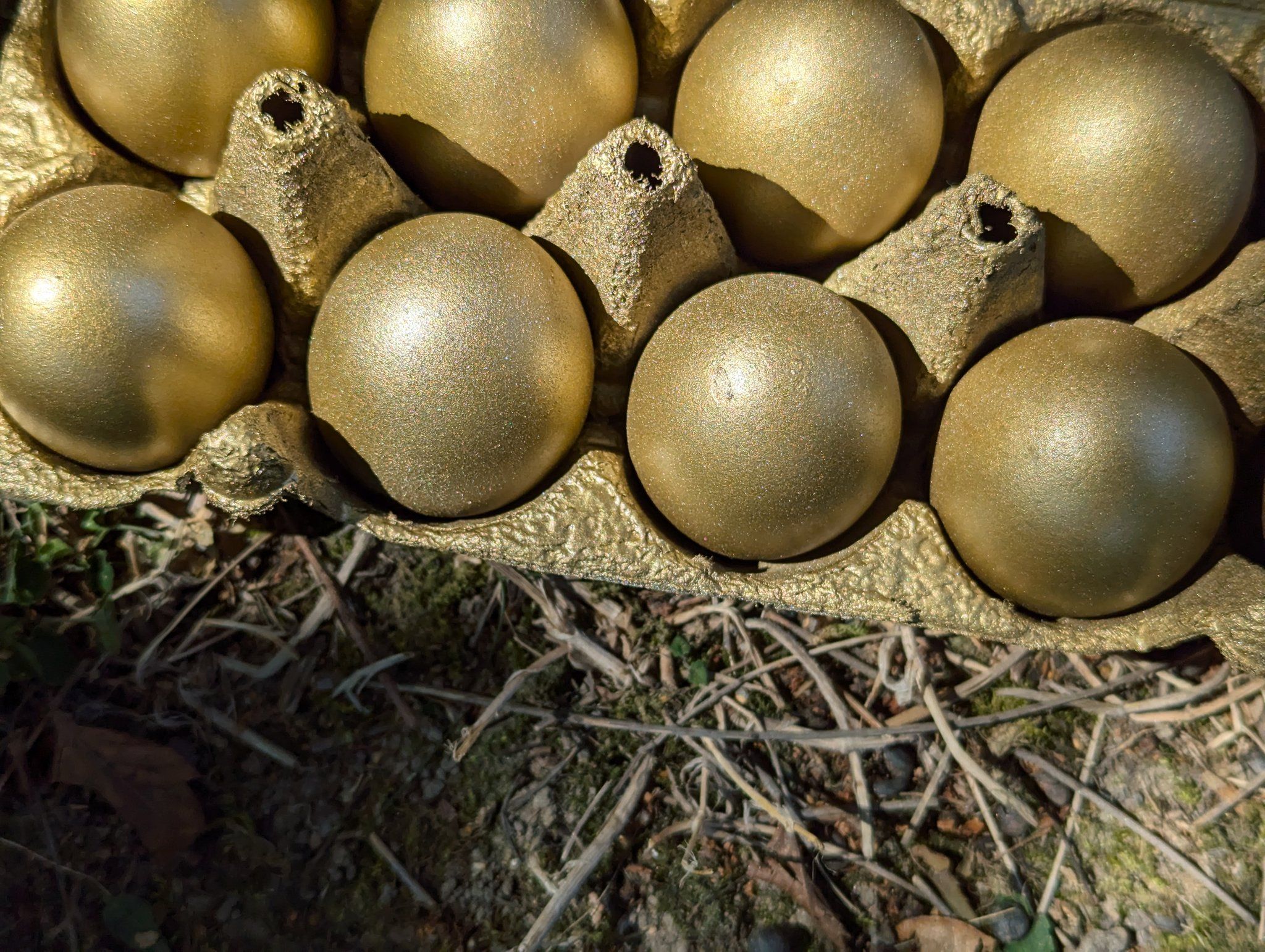
What is the sacred meaning of an old fairy tale about the golden hen known to everyone from early childhood? What was lost and what was gained when the egg broke?
The same questions are raised in many myths of the old and new worlds: about the original egg, the creation of the world, the legend of the golden age. Ideas of good and evil and what is being done on time.
This myth is relevant at all times and at each new moment acquires new semantic shades.
2002200420052024
Exhibition history :
2002 — Living the Simplest Thing, Art-Novosibirsk Gallery Festival, Novosibirsk, Russia
2002 — Shakespeare’s Testament, Ural Museum of Youth, Yekaterinburg, Russia
2004 — Tasting Ball, Pushkin House, Yekaterinburg, Russia
2004 — New Mythology, International Exhibition of Contemporary Art, Karaganda, Kazakhstan
2005 — High-Five, Elovoy House, Yekaterinburg, Russia
2013 — Art Objects on a Book Theme, Belinsky Library, Yekaterinburg, Russia
2024 — JELEN — JELENÉS — JELEN|ÉS, 4th International Land Art Symposium, Rácalmás, Hungary
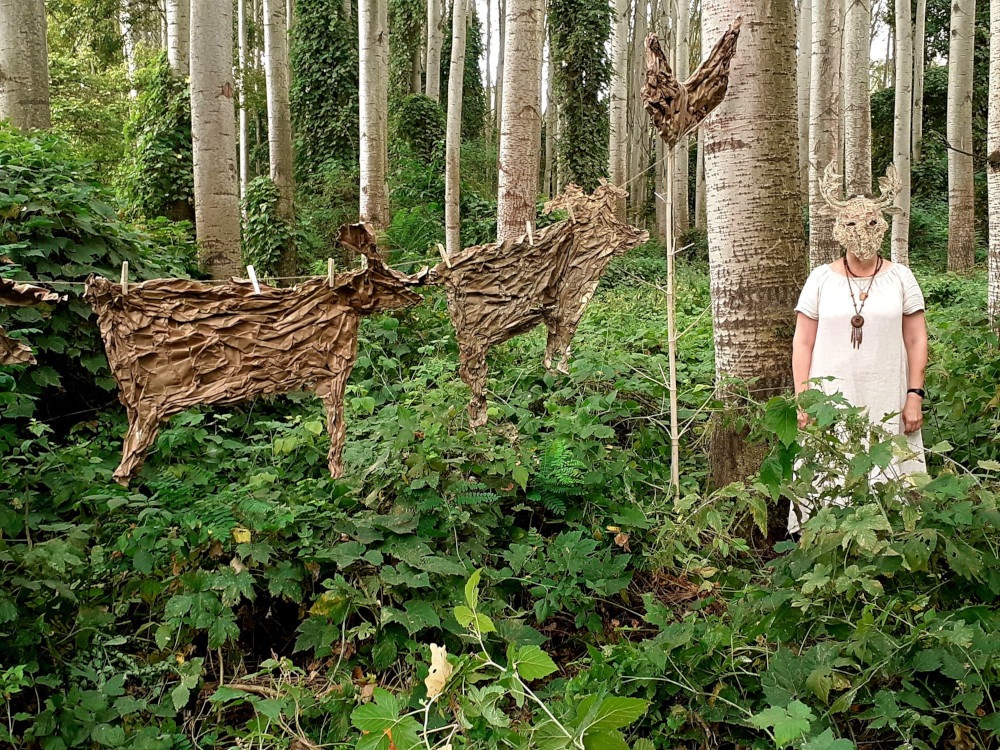
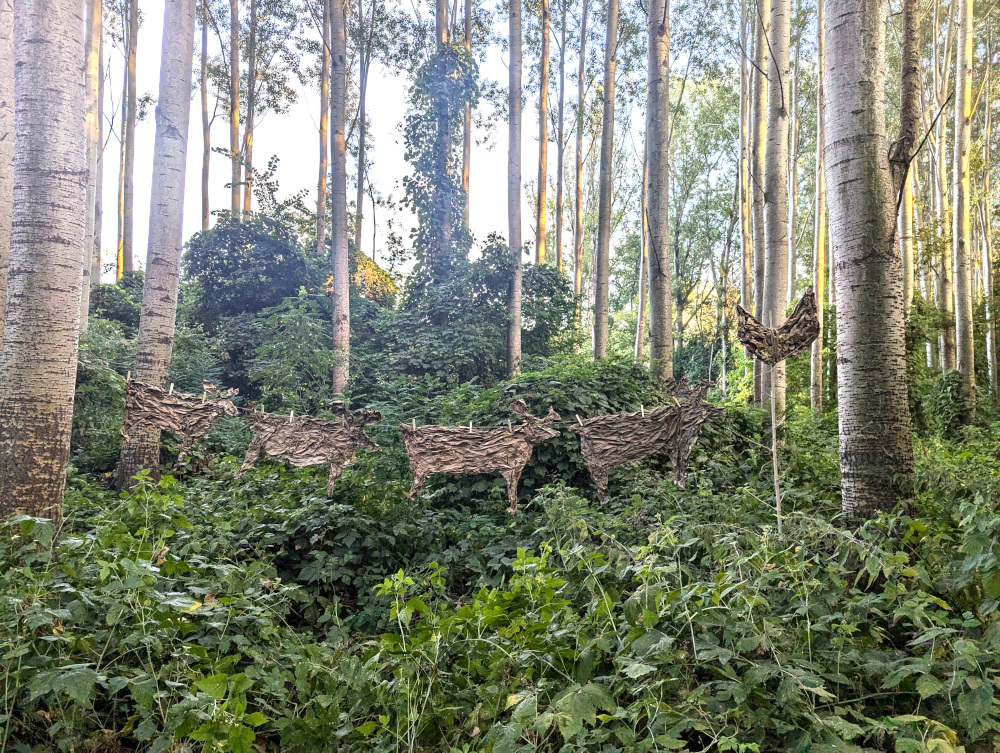
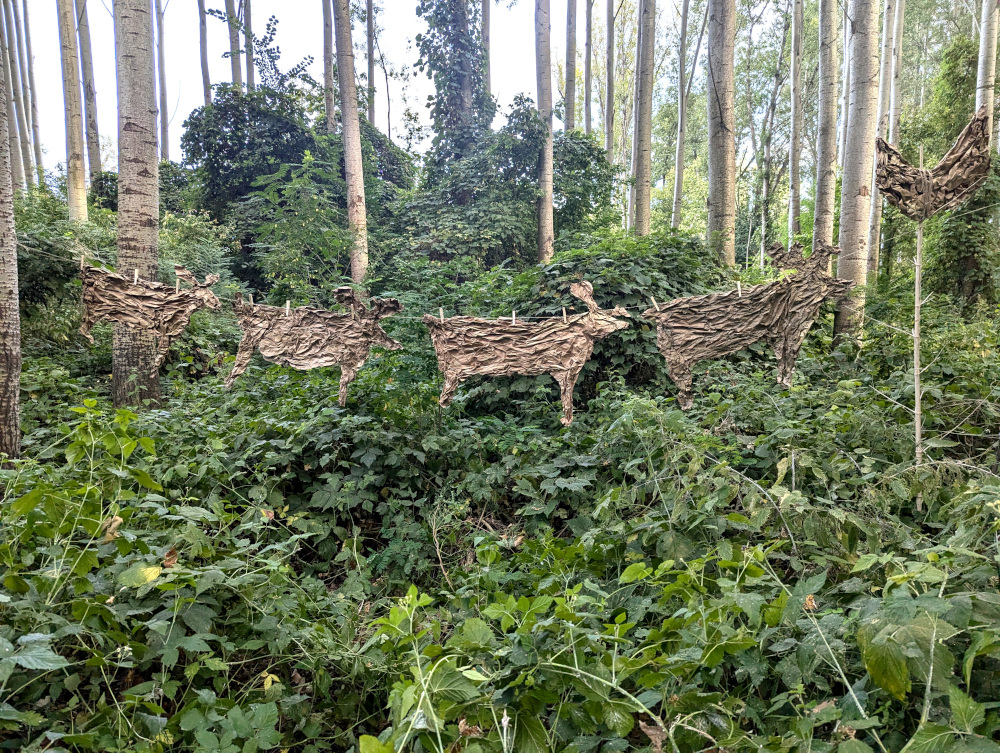
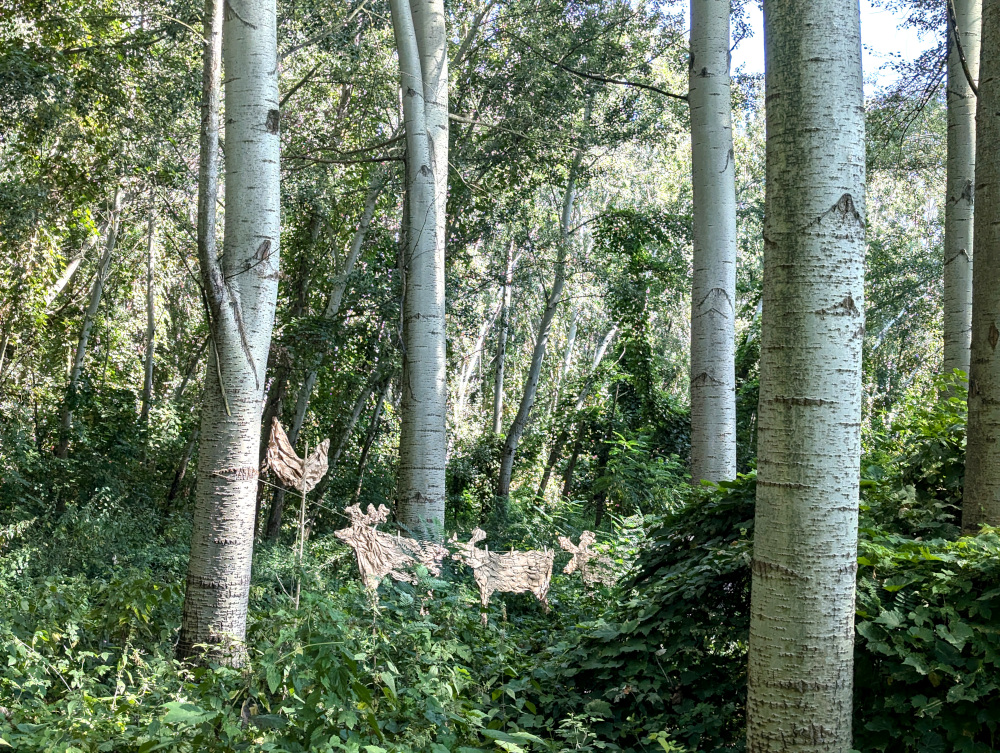
The project “Flying Deer” is inspired by Hungarian ethnographic traditions, in which the deer symbolizes a mediator between the human world and the spirit world. In mythology, the deer is often depicted as a being capable of moving between worlds and serving as a link between the earthly and the heavenly. This image of the deer as a mediator became the central theme of the project.
“Flying Deer” is a work about transitions, about the phenomenon of the hidden, and about the moment of creation. It reflects the multilayered nature of time and space, where myths and reality intertwine, creating a new perception of the present moment. The ephemerality of the object emphasizes the idea of temporality and the elusiveness of the moment, while its ecological nature testifies to a deep connection with nature and respect for its laws.
Фото Nógrádiné Kiss Magdolna
The object “Flying Deer” at the symposium in Rácalmás fits into the theme “JELEN — JELENÉS — JELEN|ÉS”, exploring and visualizing the multilayered state between the present, manifestation, and transition:
JELEN (The Present): In the present moment, something symbolic and meaningful is created — the images of deer flying between sky and earth. This act symbolizes the here and now, a creative process that connects natural elements with cultural symbols.
JELENÉS (Manifestation): The deer, materialized from a simple piece of paper, become a visible embodiment of legends and myths. Their airy silhouettes, as if caught mid-flight, embody the idea of making the invisible visible, the hidden apparent.
JELEN|ÉS (Transition and Interaction): Suspended between trees, the deer symbolize the passage between different states — earth and sky, present and future. The moon-boat complements the image of a journey and connection between worlds, pointing to the cyclical and continuous processes in nature and culture. They exist in a state of “in-between” — between visible and invisible, real and illusory. Their presence embodies the transition from one state to another, and in this transition, the viewer plays an important role by activating the object through attention, making it meaningful. In this sense, “Flying Deer” are an embodiment of the transitional moment, a bridge between the visible world and the hidden world.
From the Author: This project, in general, is about the constant movement and change surrounding us. The deer in this project symbolize a transitional state, showing how the material can disappear and become part of something deeper and unseen. These deer are temporary beings that become invisible as soon as nature takes its course. Thus, the viewer is invited to reflect on how everything around us is constantly changing and how we ourselves exist between different states and moments in life.
In creating this project, I aimed to convey the feeling of transition — a liminal state between worlds, symbolized by the deer in Hungarian mythology. Working with paper soaked in Danube water added an additional layer of significance — a connection to nature and to the river itself as a symbol of movement and passage. The deer, suspended between trees, embody the moment between life and death, material and spiritual, visible and invisible.
The “Flying Deer” project was conceived from the start as an ephemeral object, doomed to gradual decay. Within a short time, the deer figures began to lose their shape under the influence of wind, moisture, and the natural processes occurring in the forest. After rain, the deer almost completely disappeared, leaving only faint traces of their existence. This can be interpreted as a symbolic acceptance of the object by the spirits of nature. The deer, made from natural materials, seemed to be returned to nature in the process of their decomposition.
It is interesting to note that the word “JELEN” in Croatian means “deer.” Since the symposium’s location also contains Croatian linguistic roots, I consider it appropriate to use this implicit connection to support the project. The symposium took place in the town of Rácalmás, whose name has both Croatian and Hungarian roots. In Croatian, “jelen” means “deer,” while in Hungarian, “jelen” translates as “the present.” This linguistic coincidence highlights a cultural intersection and symbolic link between the symposium’s location and the idea behind my object. Using the Croatian word “jelen” in the context of our project “Flying Deer” is justified and meaningful, as it not only matches the Hungarian spelling but also adds an extra layer of meaning, connecting natural imagery and cultural contexts with the symposium theme “JELEN — JELENÉS — JELEN|ÉS.”
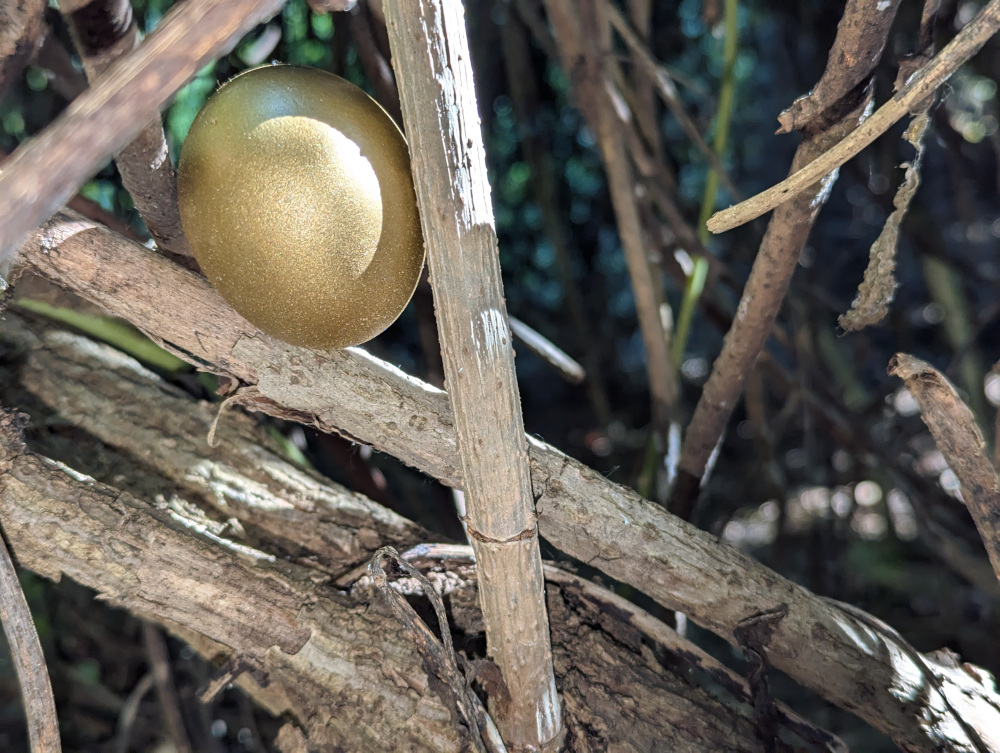
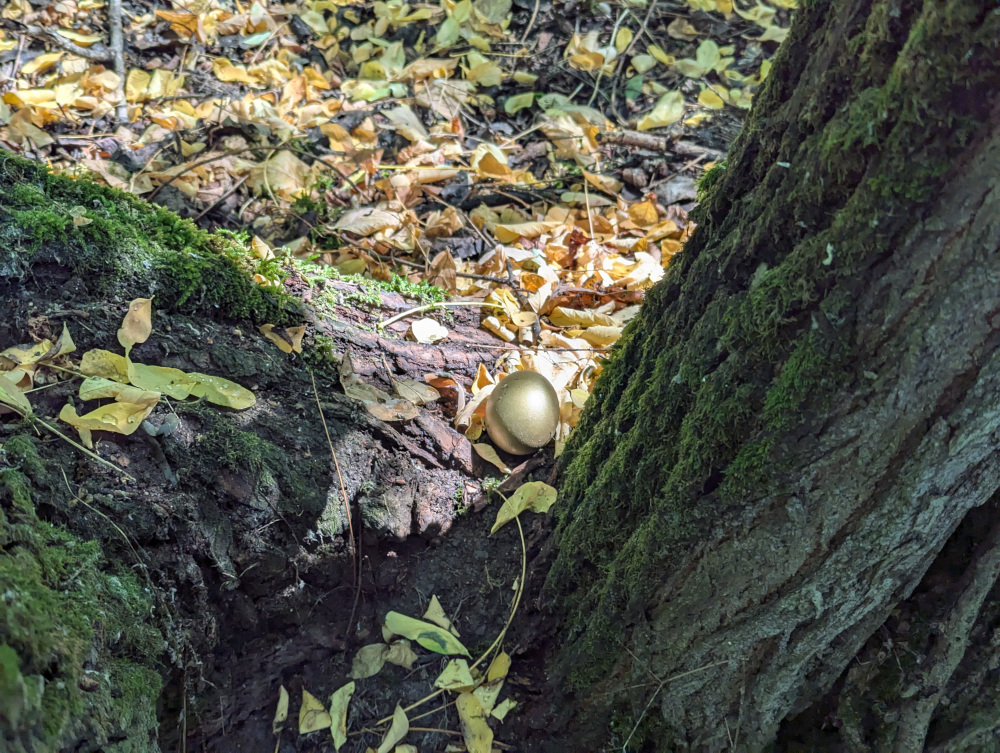
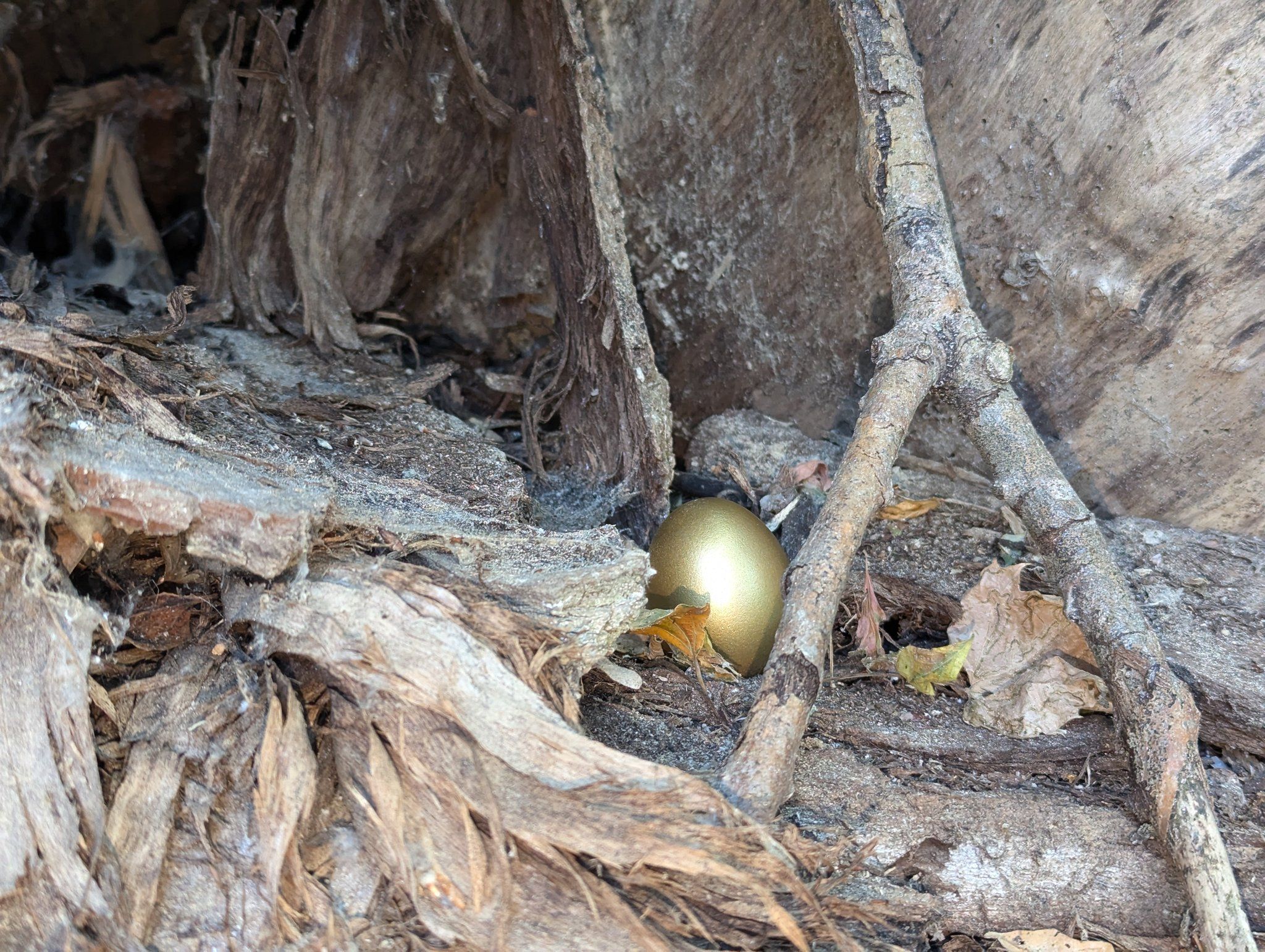
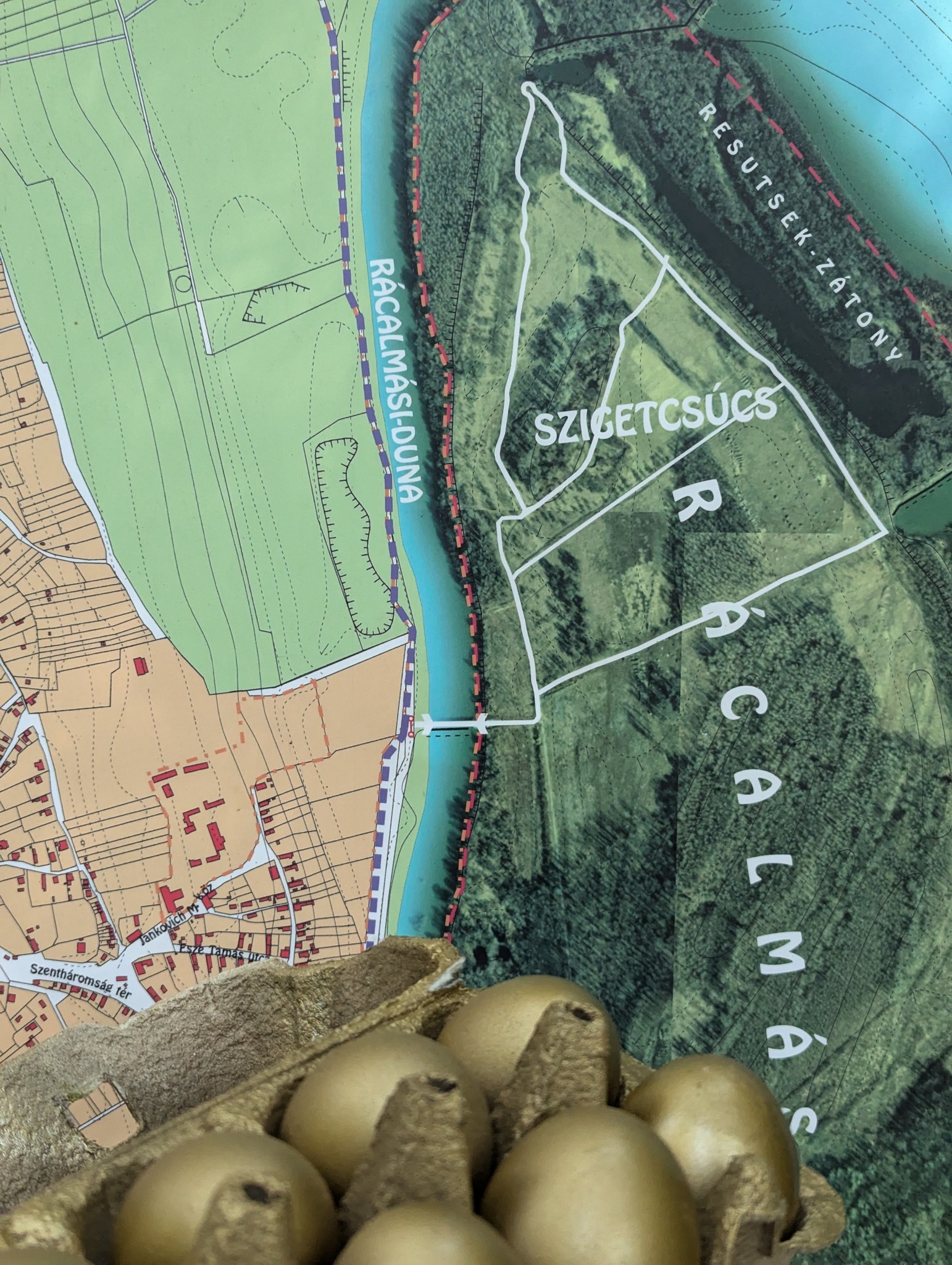
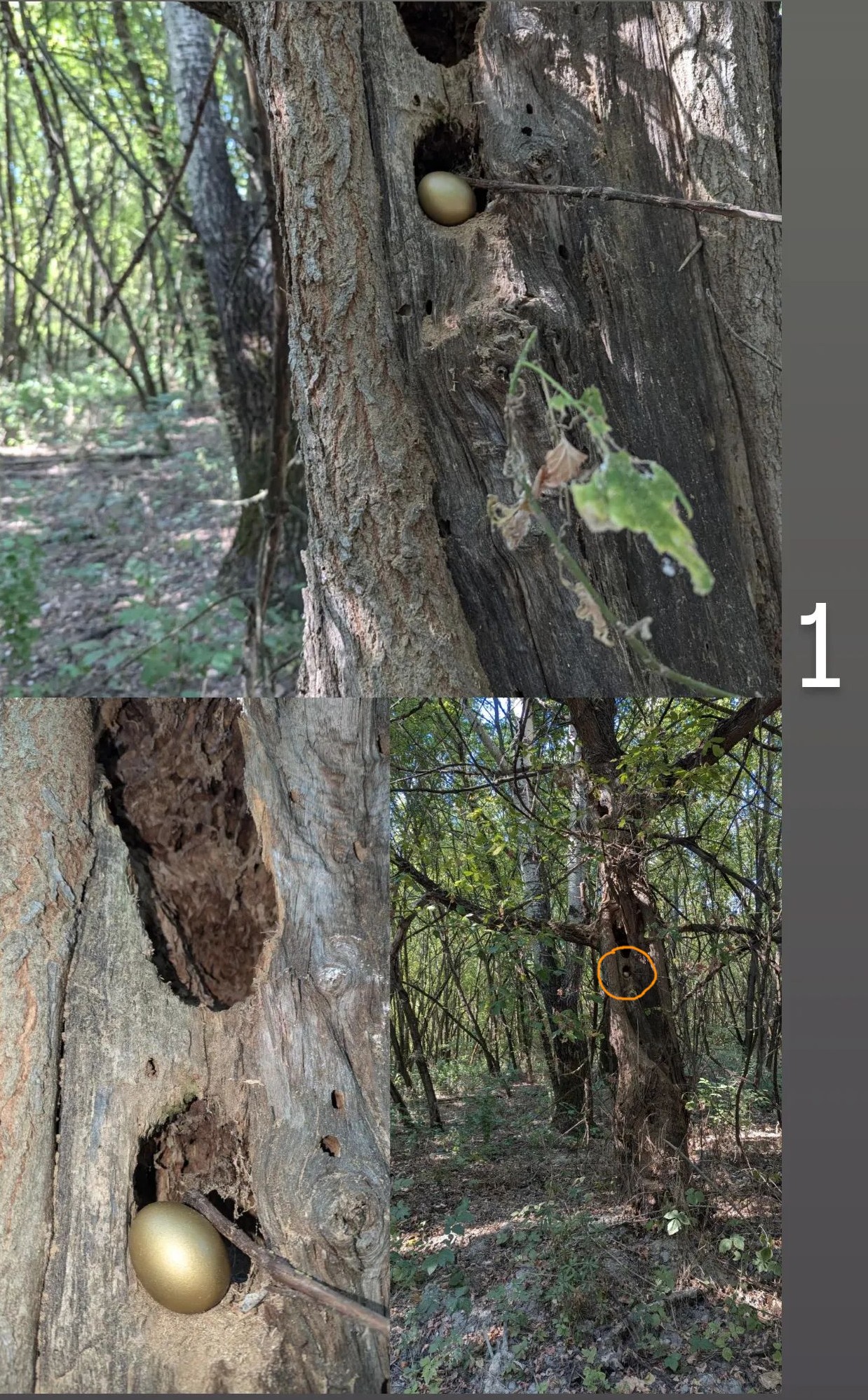
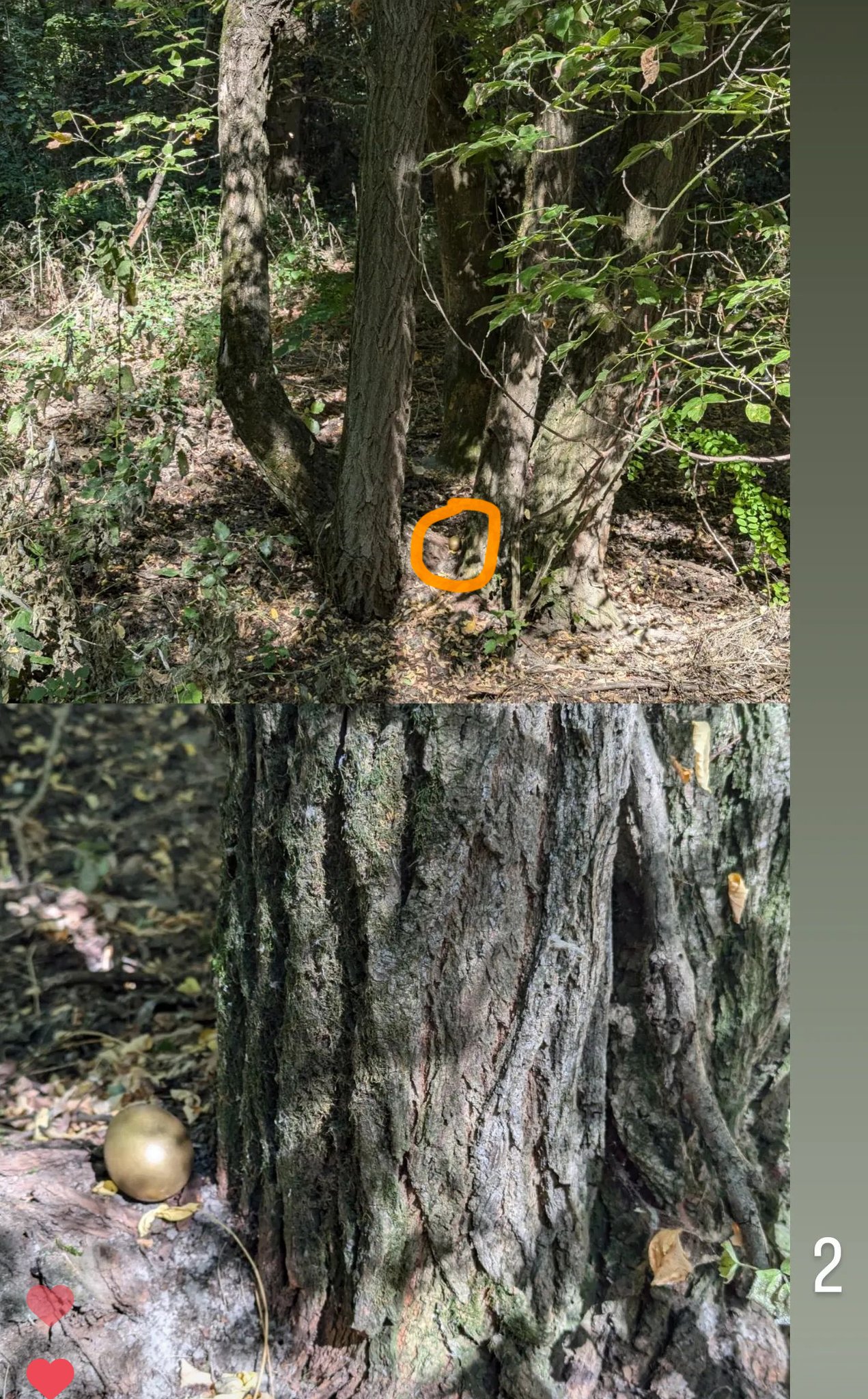
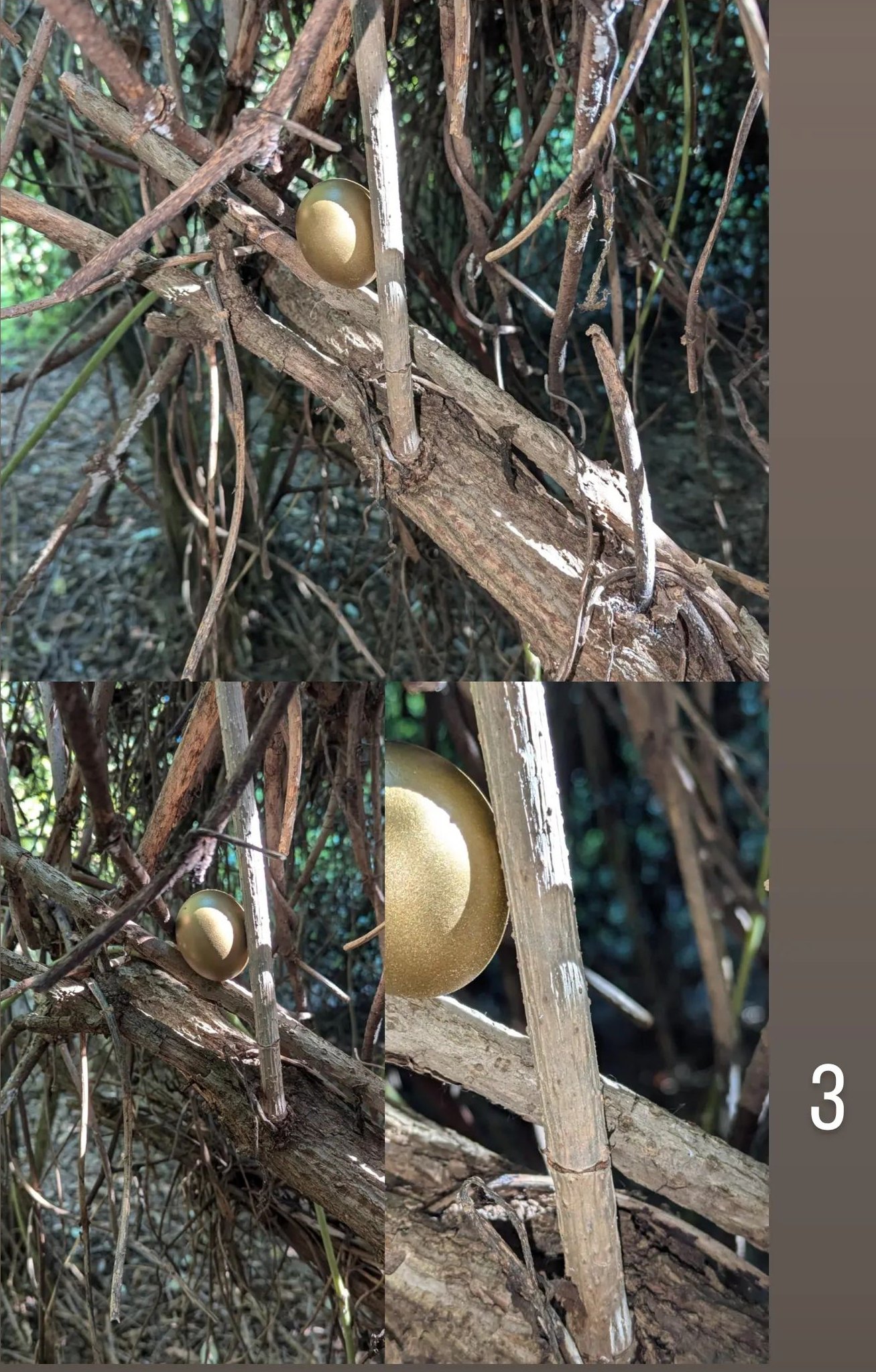
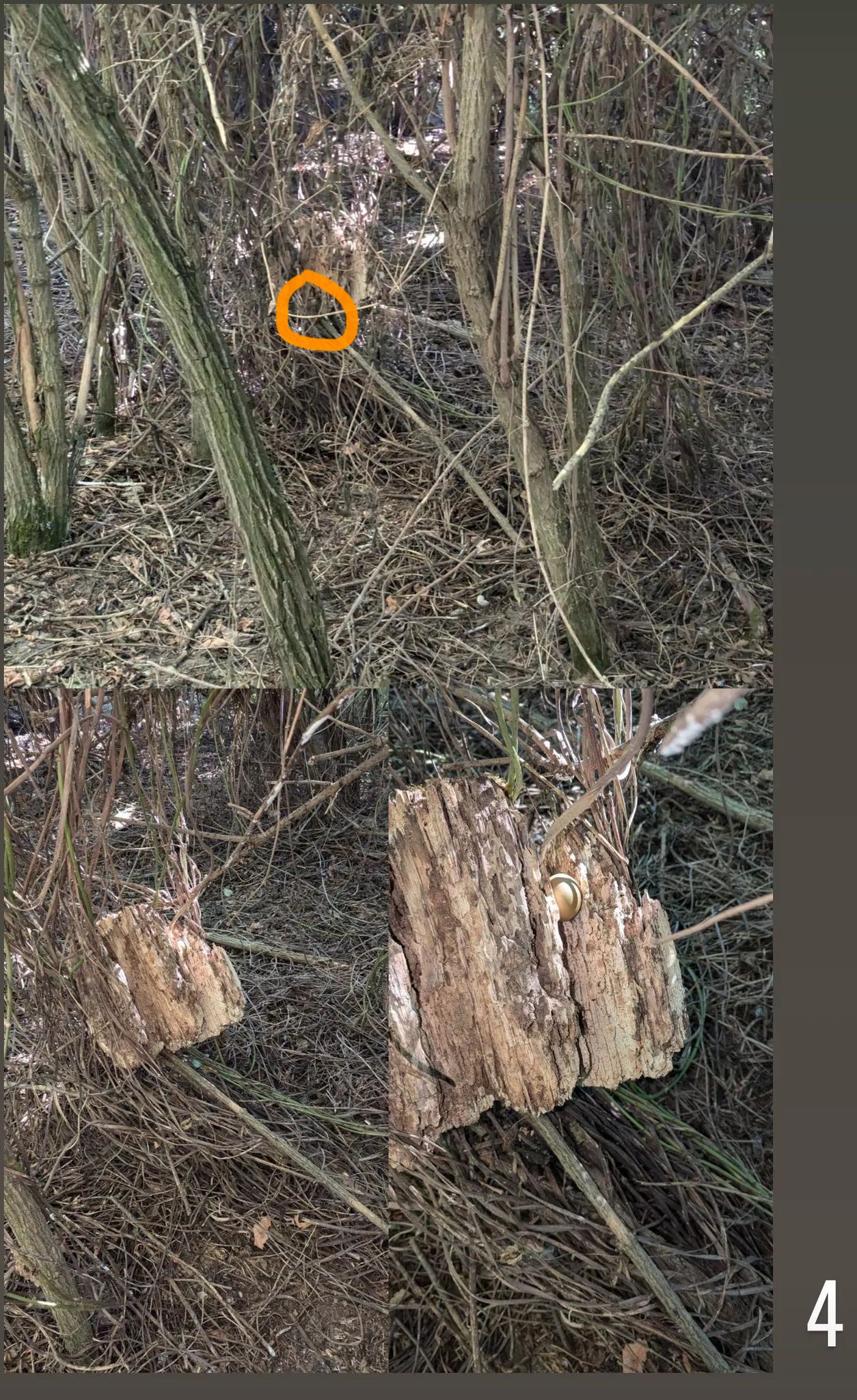
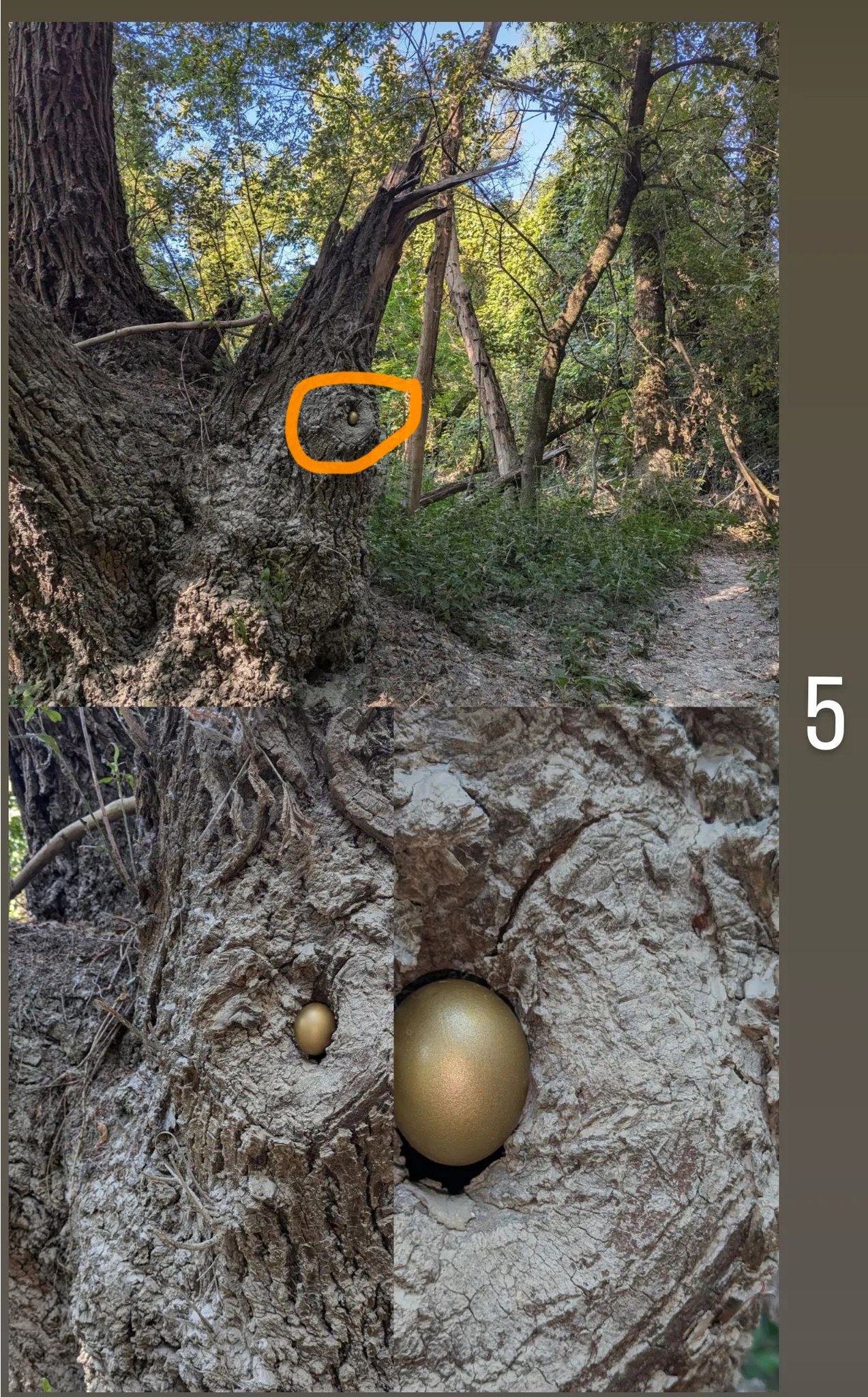
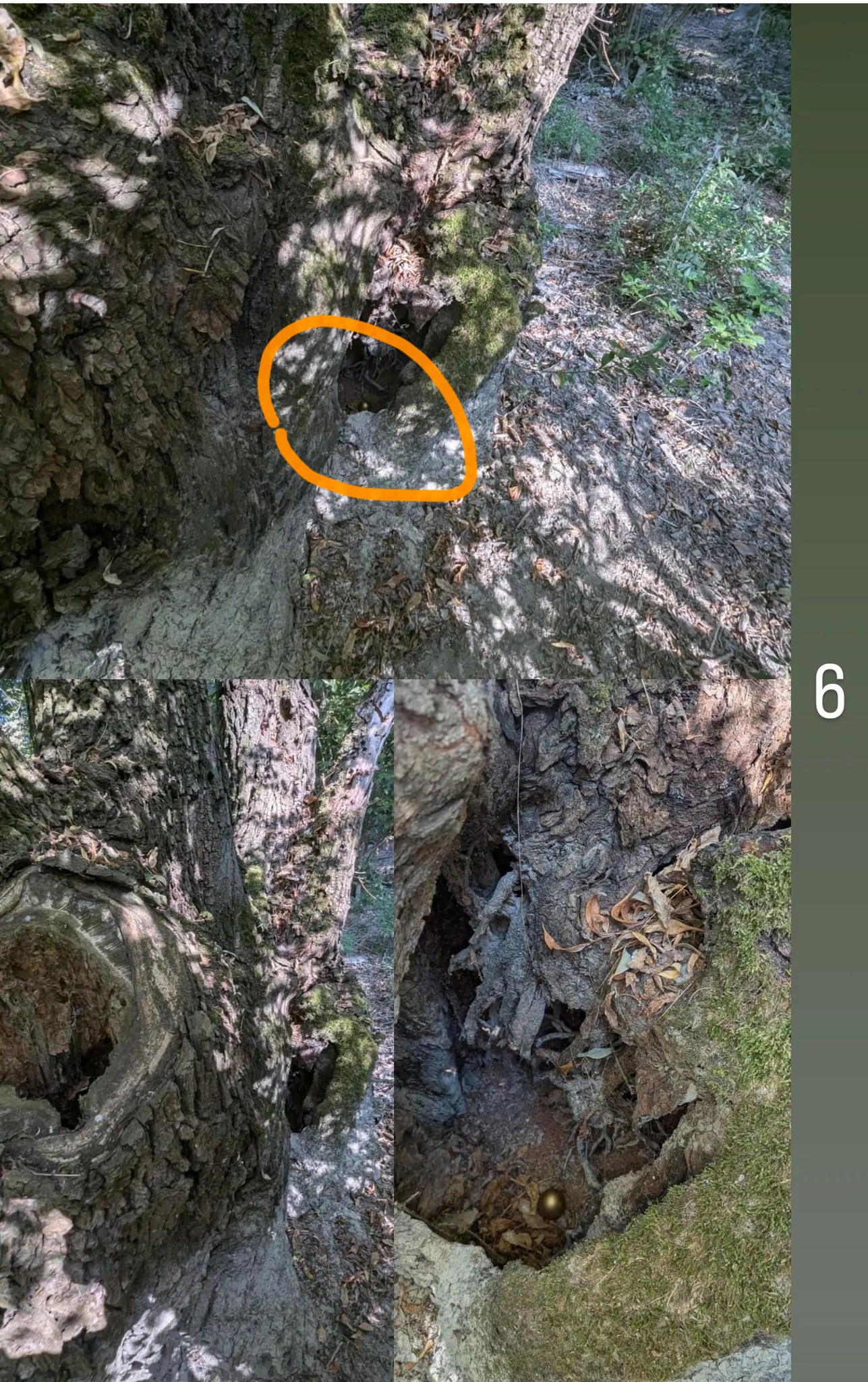
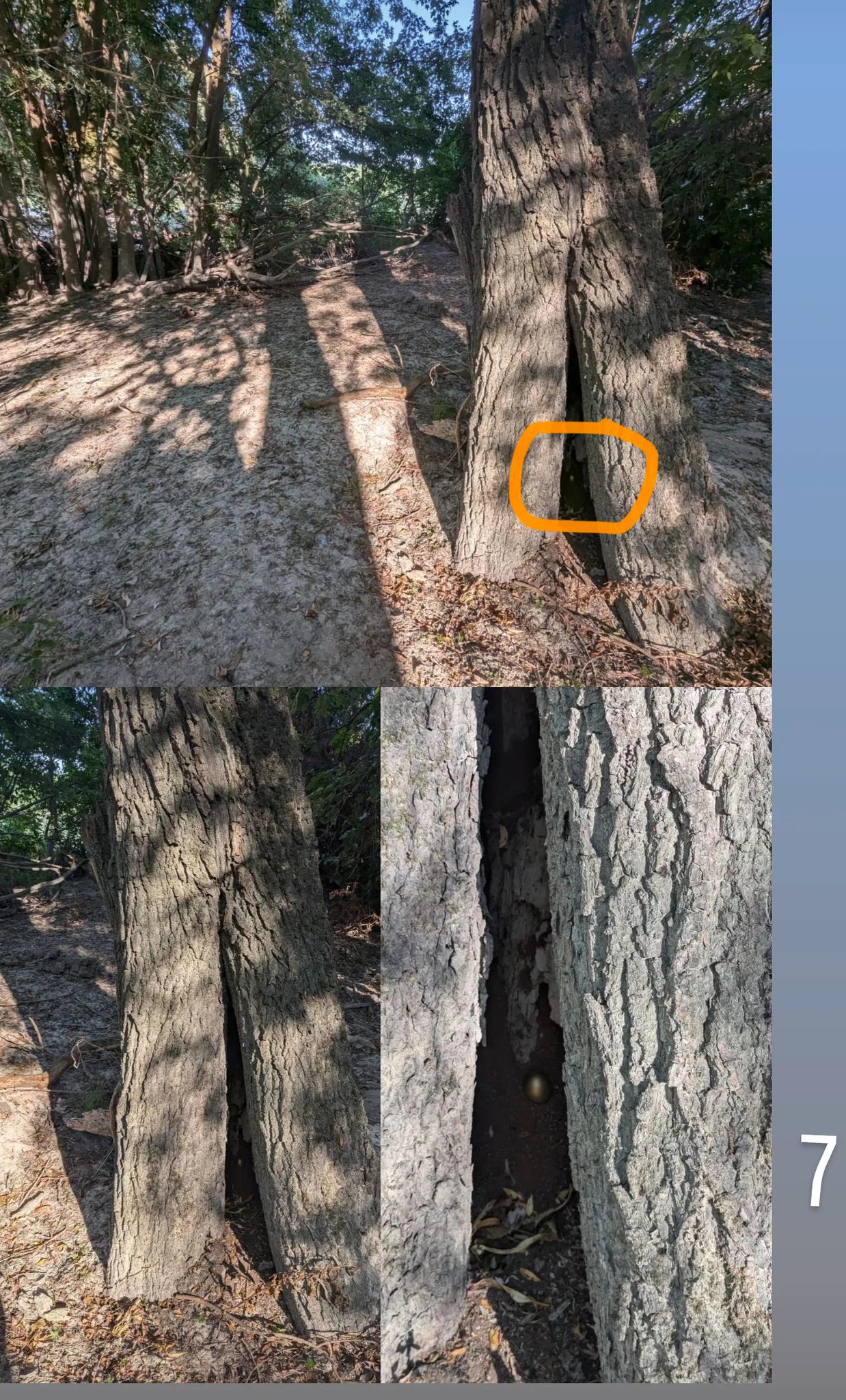
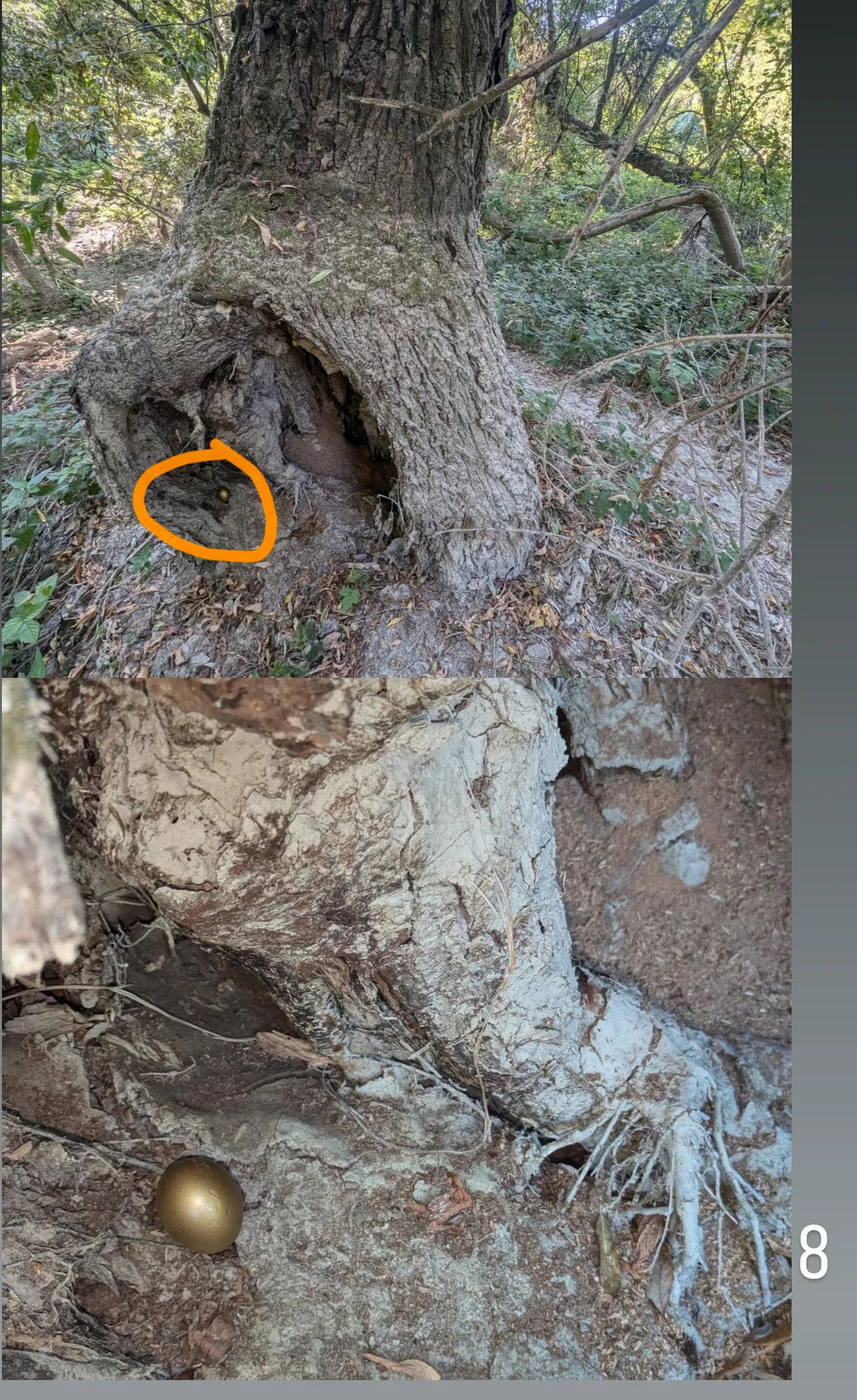
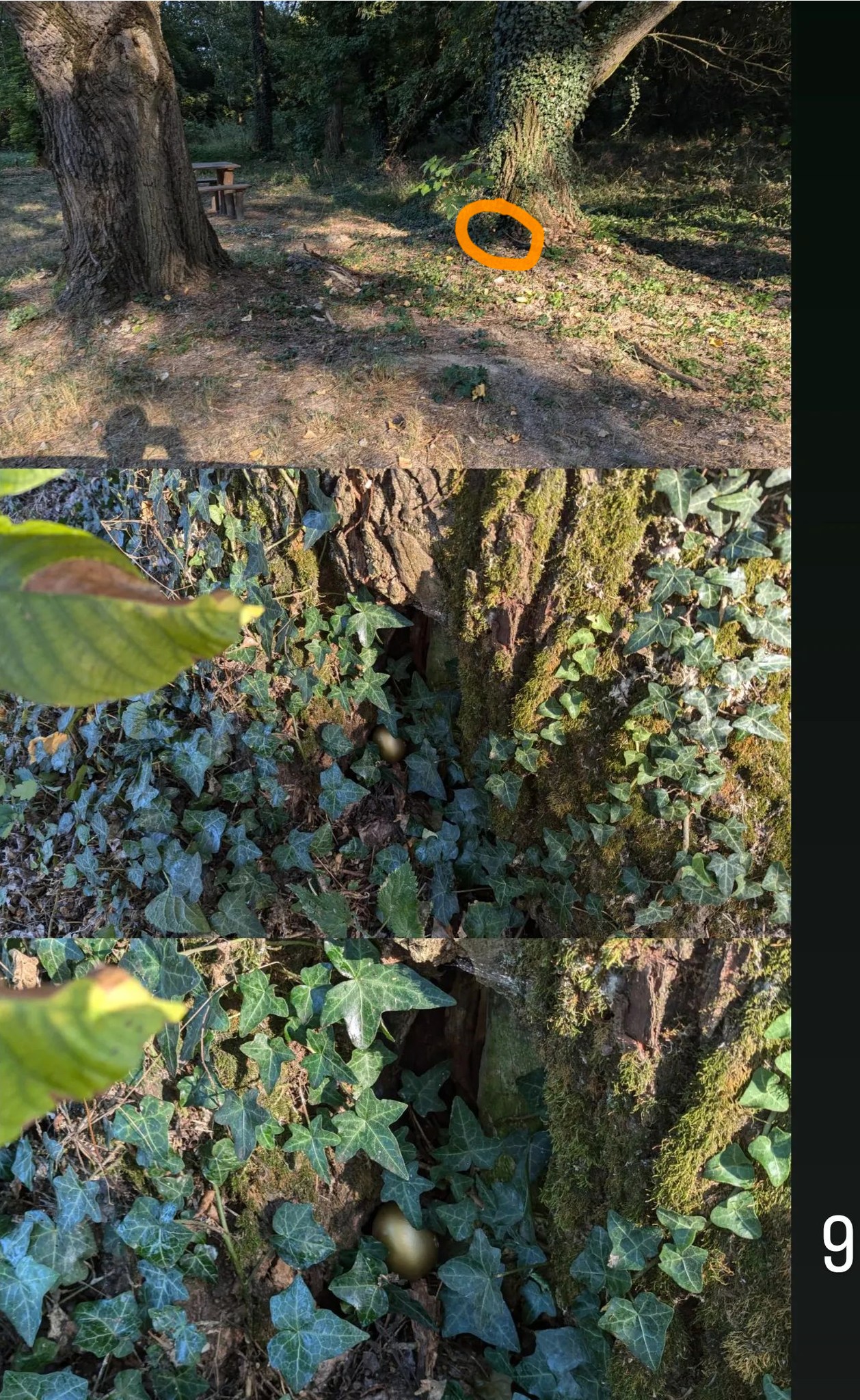
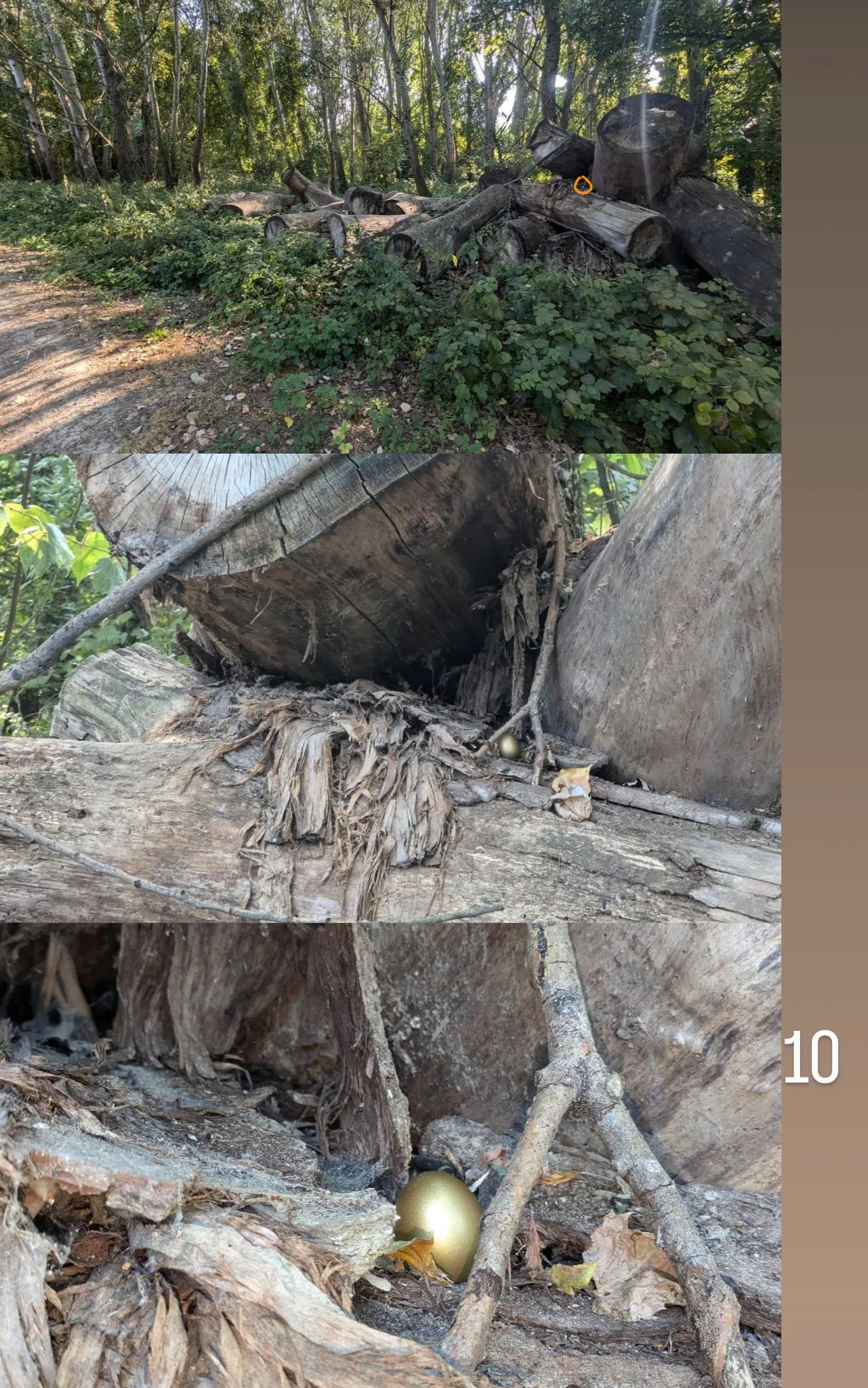
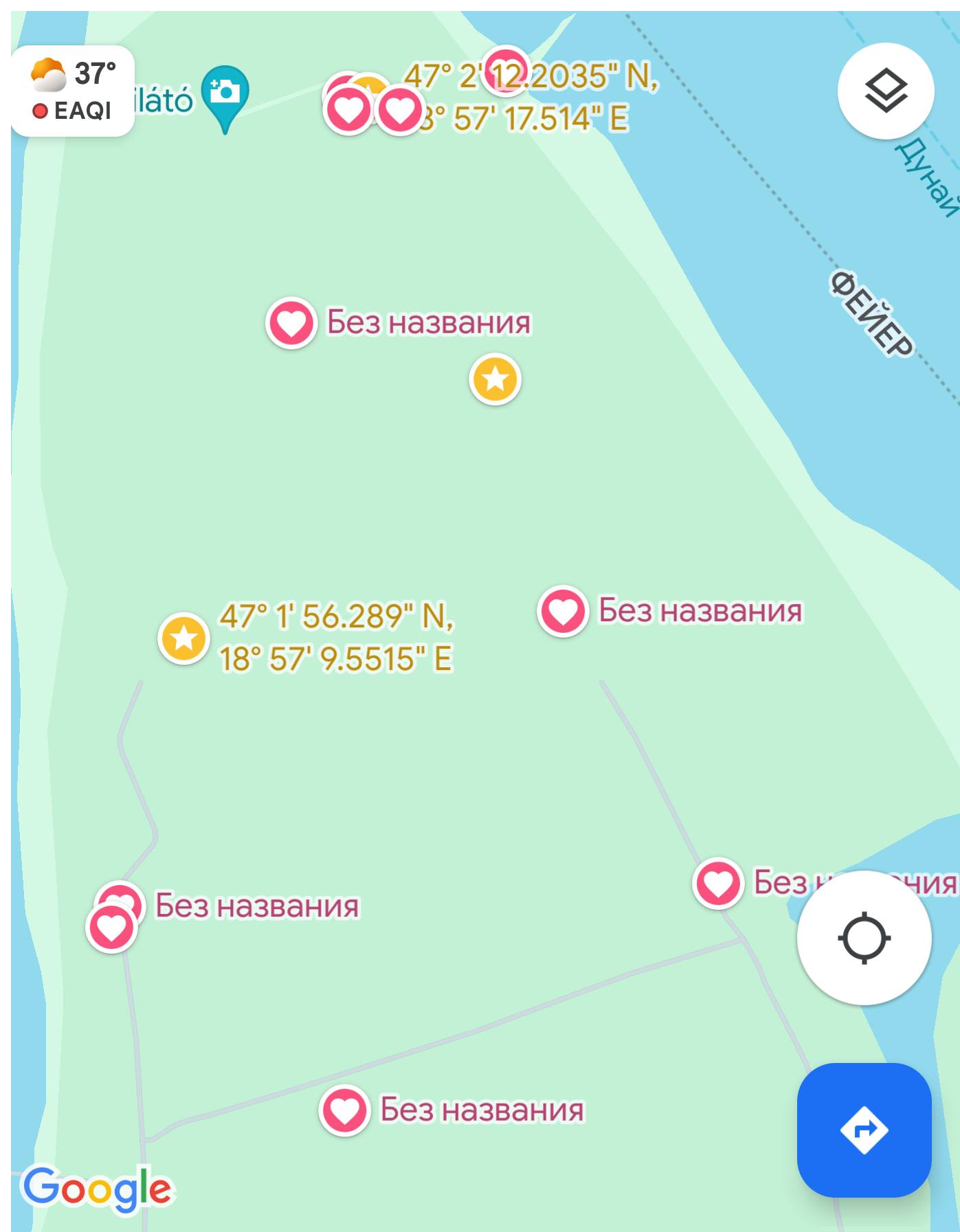
На тропе острова спрятано 10 золотых яиц: в зарослях, среди коряг, в дуплах деревьев. Их местоположение примерно обозначено на карте (не точно — чтобы добавить азарта в поиски). Зрители приглашаются к игре: найти яйца, сфотографировать их и отправить фотографии на страницу организаторов в Facebook или опубликовать их в своих соцсетях с хэштегом.
Яйца обозначены “сердечками”
Проект «Золотые яйца» связан с темой симпозиума “JELEN – JELENÉS – JELEN|ÉS” через следующие аспекты:
• JELEN (Настоящее): Золотые яйца, спрятанные в укромных местах леса, символизируют скрытые сокровища настоящего момента, которые могут быть обнаружены только через внимание и исследование. Они напоминают о том, что важные и ценные элементы нашей жизни могут быть спрятаны, ожидая, когда мы их откроем.
• JELENÉS (Явление): Когда зрители находят яйца, они становятся частью процесса проявления скрытого, как будто нечто невидимое и таинственное вдруг становится реальностью. Это акт обнаружения и раскрытия, который связывает настоящее с моментом явления.
• JELEN|ÉS (Переход и взаимодействие): Проект олицетворяет переходное состояние между скрытым и явным, между ожиданием и обнаружением. Золотые яйца, спрятанные в природных укромных местах, создают связь между прошлым (создание) и будущим (обнаружение), приглашая зрителей участвовать в этом процессе.
От автора: Чувствовала ли я себя птицей, создавая этот объект? Скорее, нет. Но поиск наилучшего места для размещения яйца действительно захватил меня. Возможно, птицы тоже сканируют местность в поисках идеального места для своего гнезда. Я не отходила далеко от тропы, чтобы зрителям было легче искать, но не все локации легко заметны. Иногда стоит оглядеться. Я даю вам подсказки для поиска в виде карты и фотографий.
Участники: Dušan Fišer (Slovenia), Elisabetta Bacci (Italy), Lina Ledentcova (Switzerland/Russia), Eva Alvor /Myrnychenko/ (Ukraine), Zoya Lebedeva (Estonia/Russia), Olga Kopeleva (Ukraine), Bagrat Arazyan (Armenia/Slovenija), Marina Razheva (Hungary/Russia), Konstantin Adjer (Russia), Lana Hasić (Slovenia), Tone Hellerud (Norway/Italy).
Работы выполнены в разных медиа: живопись и графика, инсталляции, видео-арт, скульптуры и арт-объекты из различных материалов.
Выставочное пространство Beka 9, расположено в здании бывшей пограничной заставы, на границе Словении и Италии, рядом с живописной словенской деревушкой Бека, на пересечении культур, недалеко от реки, символически разделяющей два государства. Это уникальное место диктует тему фестиваля.
Фрагменты жкспозиции:
Граница становится местом зарождения и актуализации целого круга проблем: проблемы перехода, смены состояний и установок; проблемы отношений между различными культурными нормами, традициями, системами ценностей; проблемы понимания, интерпретации, диалога и других вопросов. Философское осмысление феномена границы, способно повлиять на решение многих проблем. Состояния «перехода» сложно облечь в слова, трудно описать из-за силы эмоциональных переживаний, а также языковых барьеров. Одна из главных задач этого проекта — исследование феномена границы через визуальные образы. Сегодня, когда нарушается множество границ: государственных, личных, ценностных, смысловых, границ разумности и целесообразности, мы пригласили художников к исследованию темы перехода в самом широком понимании этого процесса.
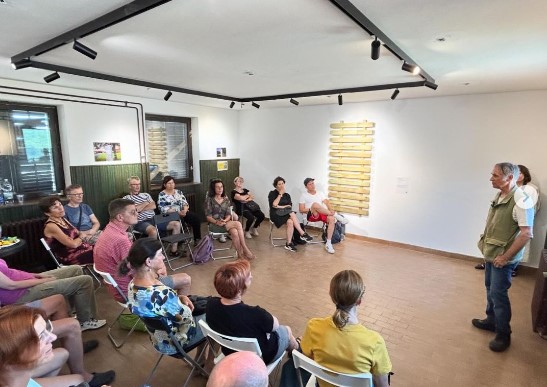
Фотографии с открытия Фестиваля “Пересекая границы” (из открытых источников интернета)
Тема обновления мира всегда была ключевой для календарных обрядов жизненного цикла человека. Открытие фестиваля в день летнего солнцестояния станет метафорой позитивных изменений и поиска путей преодоления кризисов как социальных, так и личных.
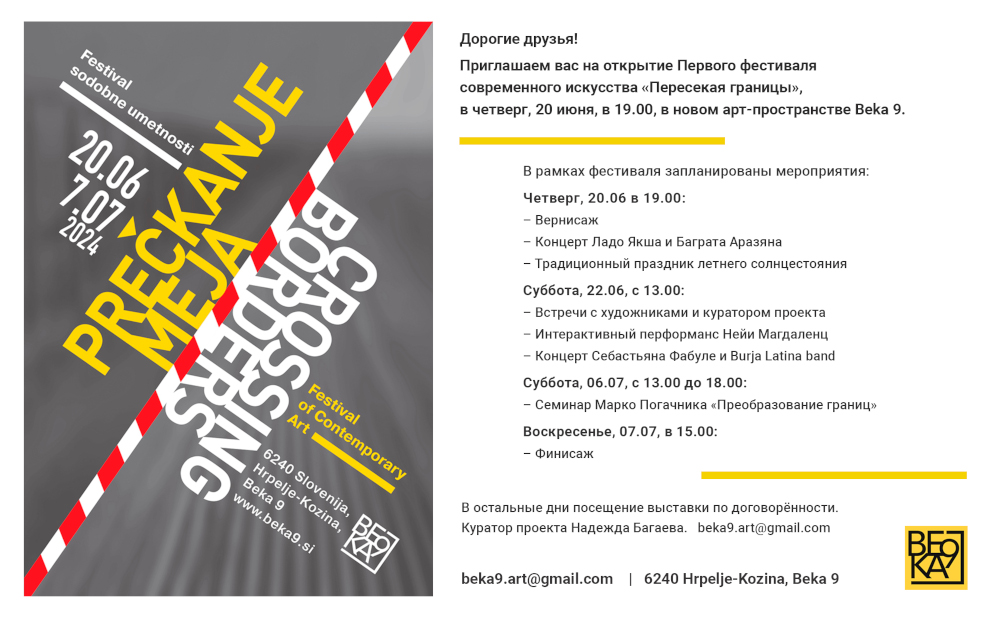
Куратор выбрала для выставки реди-мэйд объект Марины Ражевой “Угол зрения или Забор становится Лестницей”, который был впоследствии передан в коллекцию современного искусства Beka9.
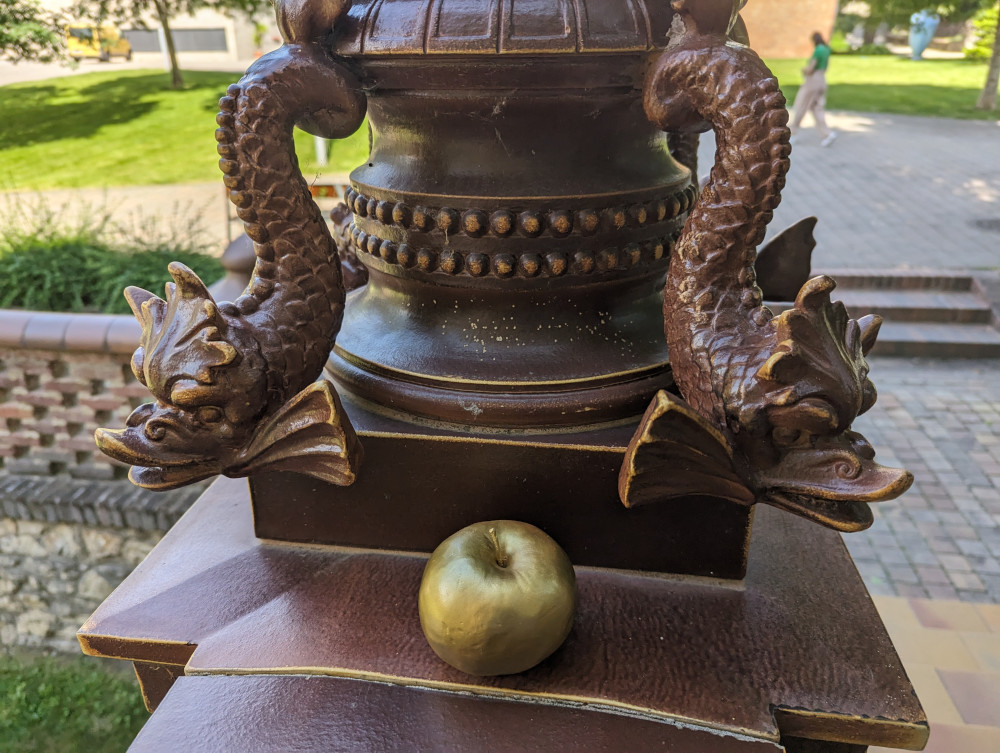
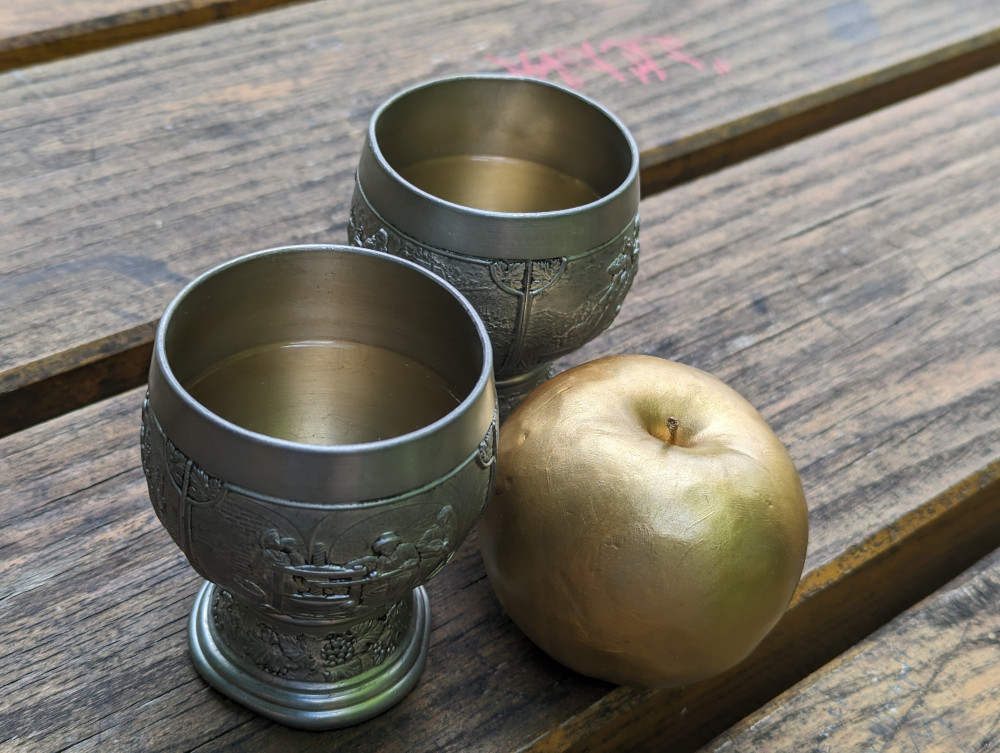
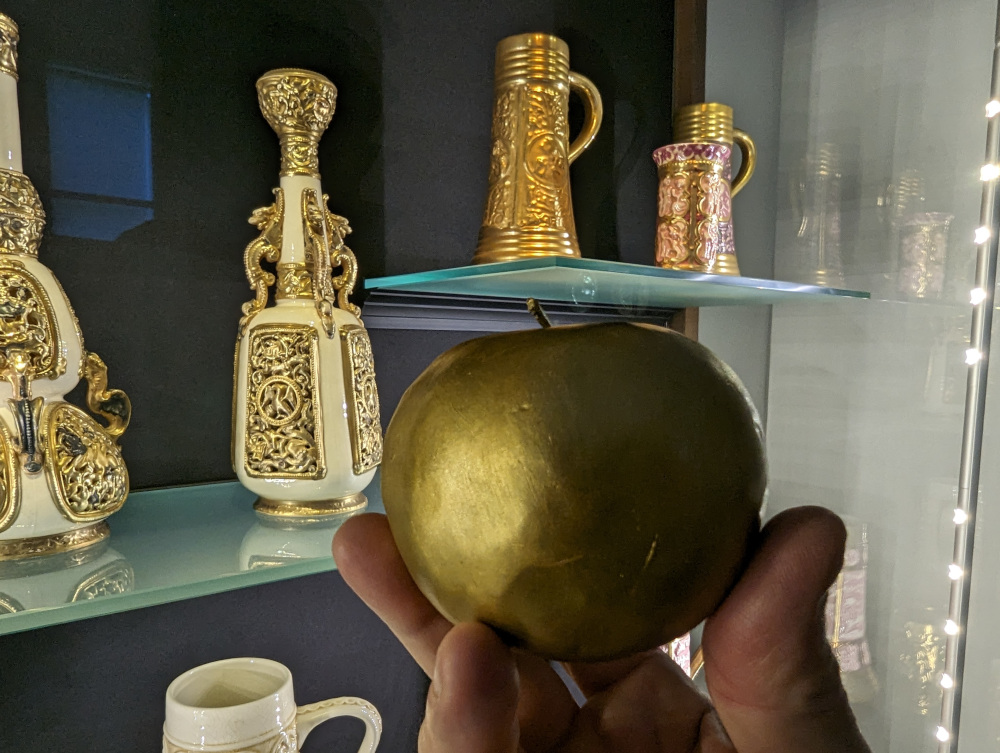
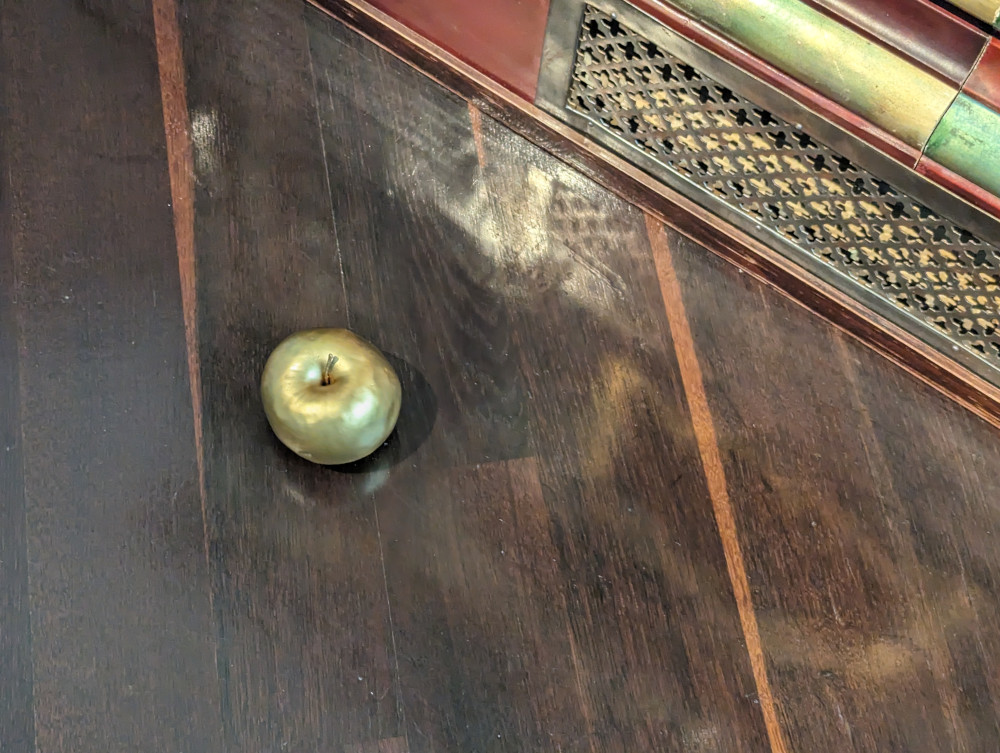
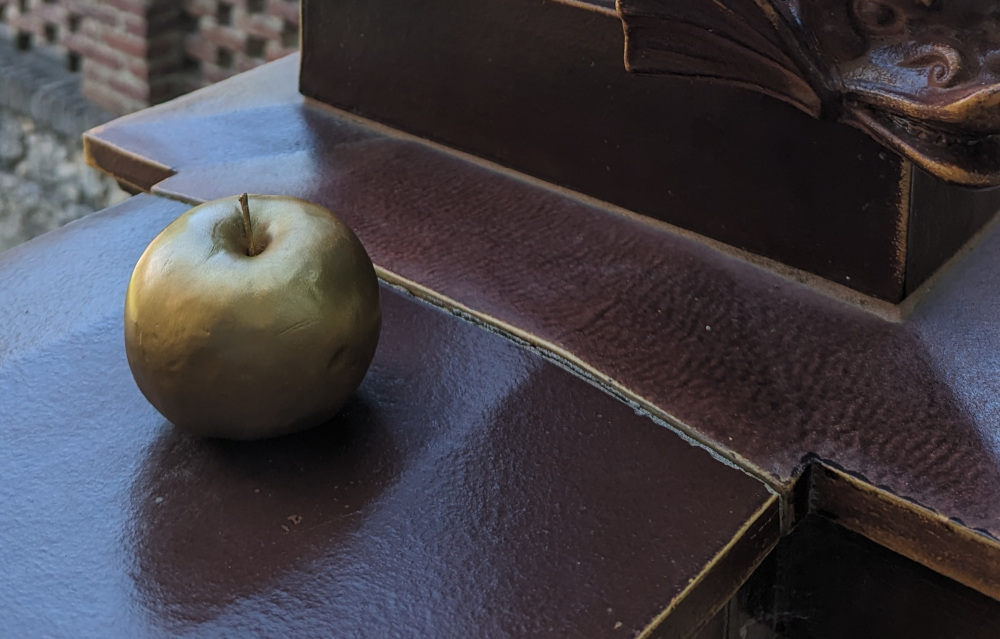
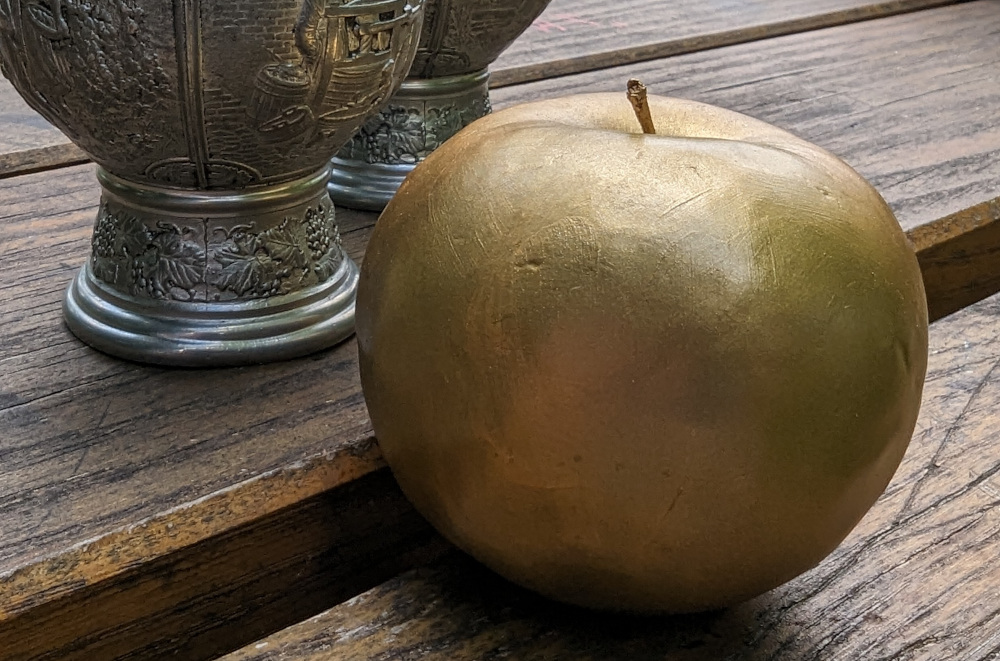
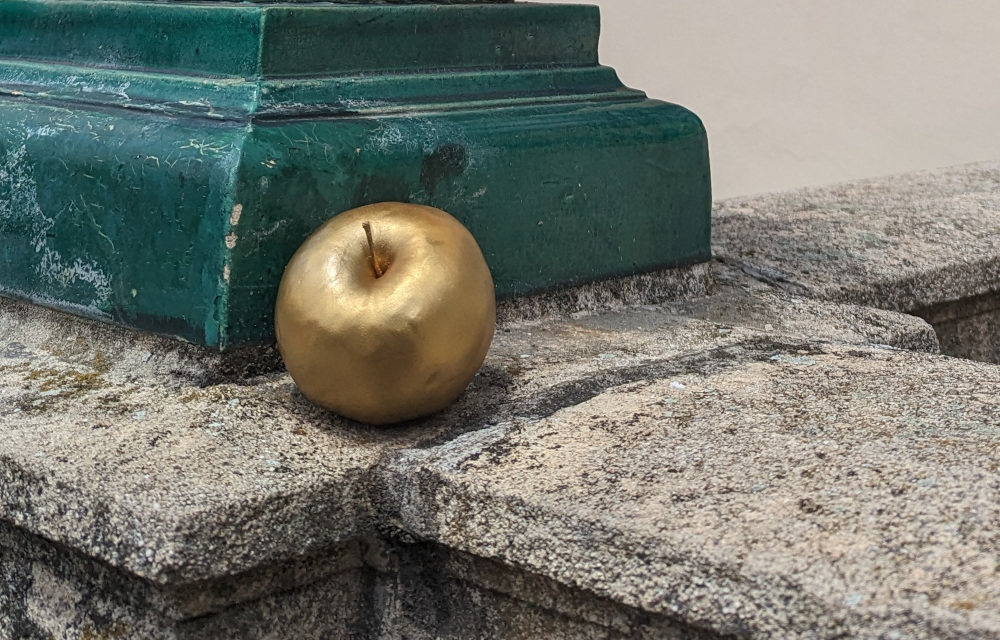
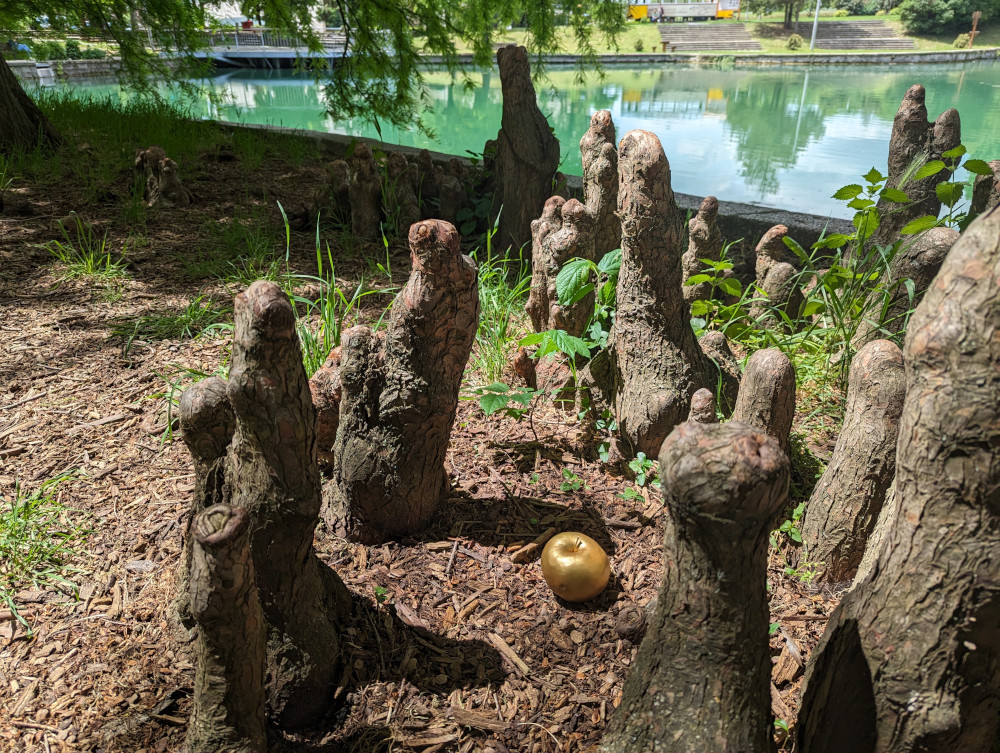
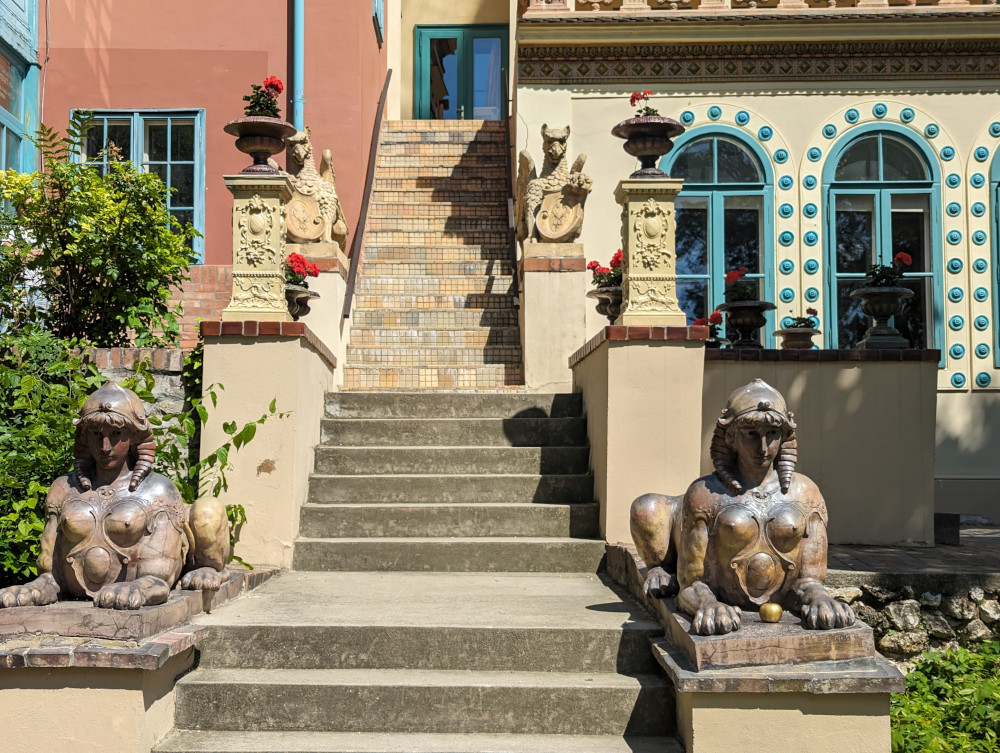
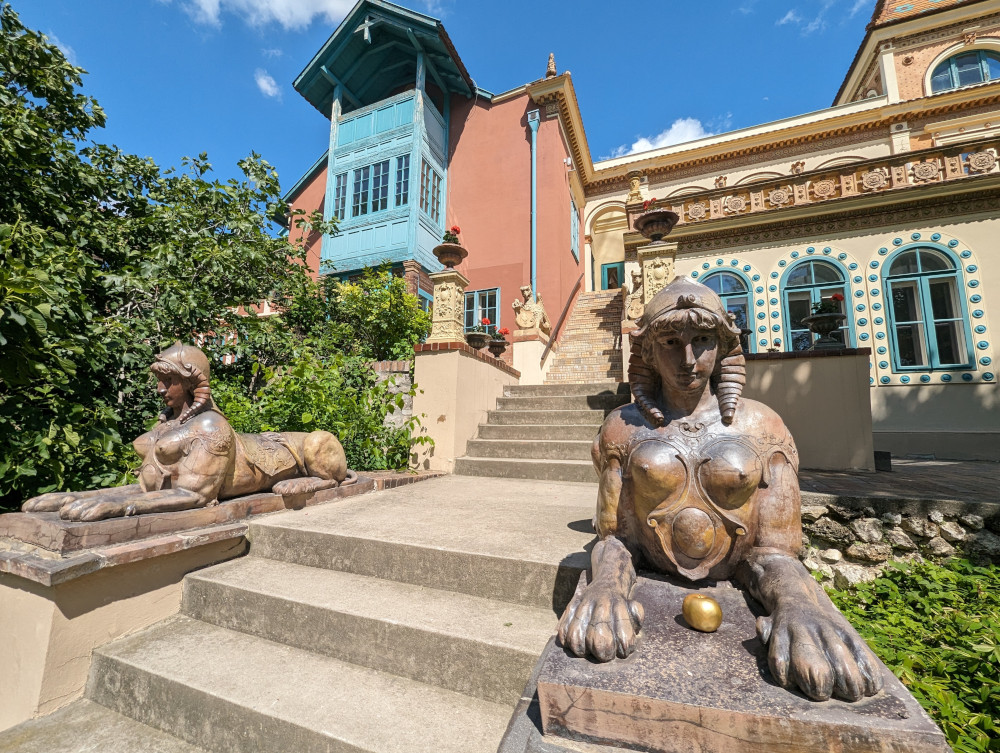
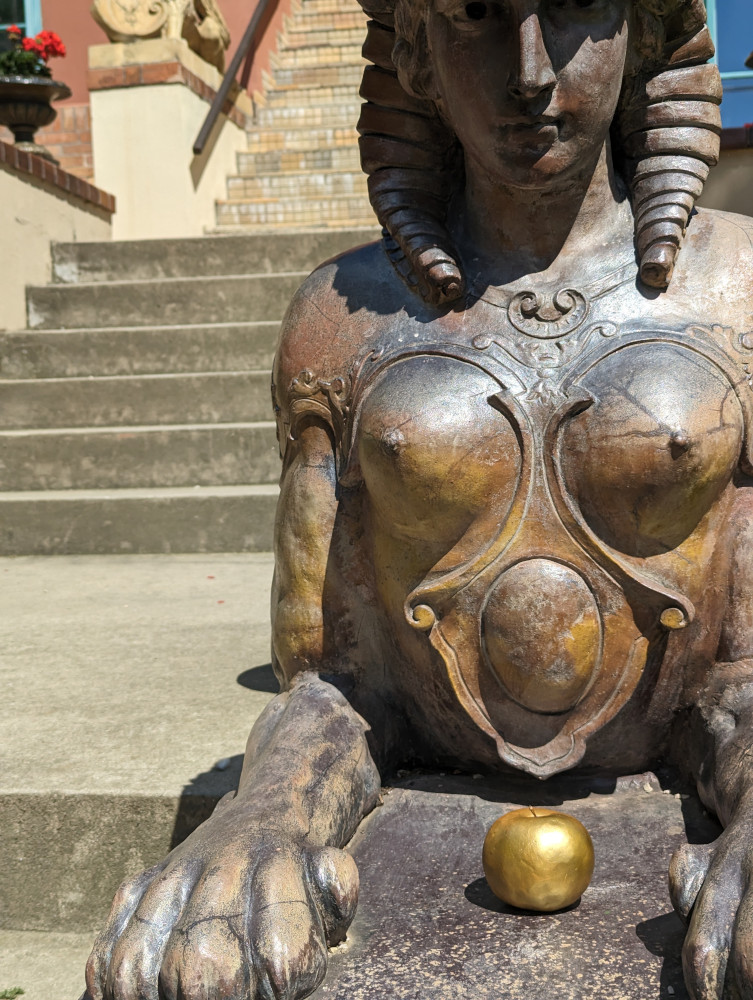
The golden apple embarked on a journey through the historical labyrinth of the Zsolnay Quarter — between time and space, history and modernity, art and the street, matter and reflection.
The apple entered the exhibition space for a moment, becoming part of the “official” history of the Zsolnay Golden Age, then stepped beyond its boundaries, dissolving into the real environment.
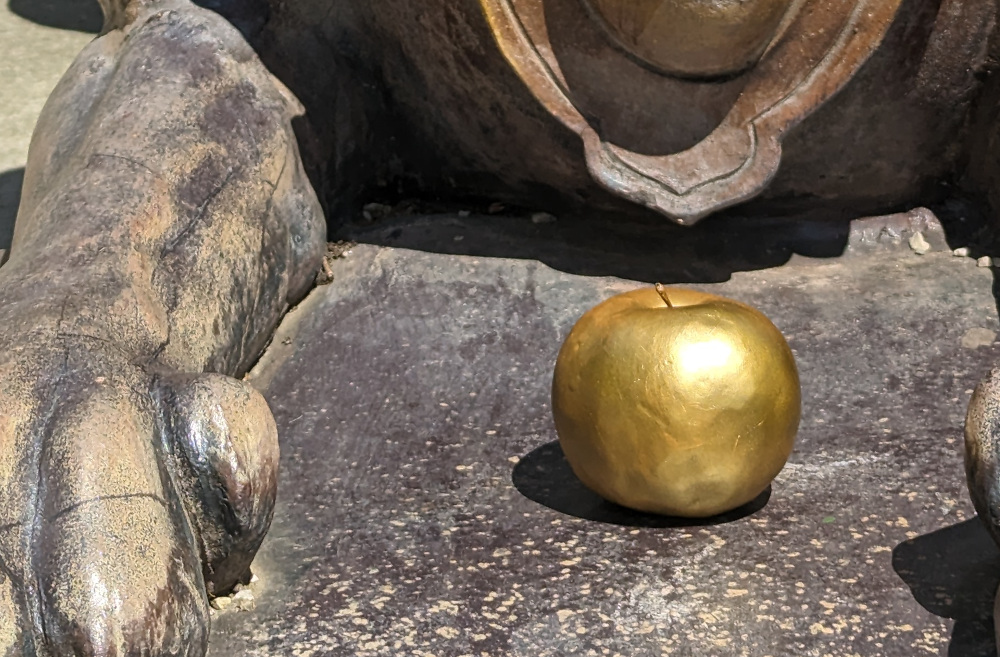
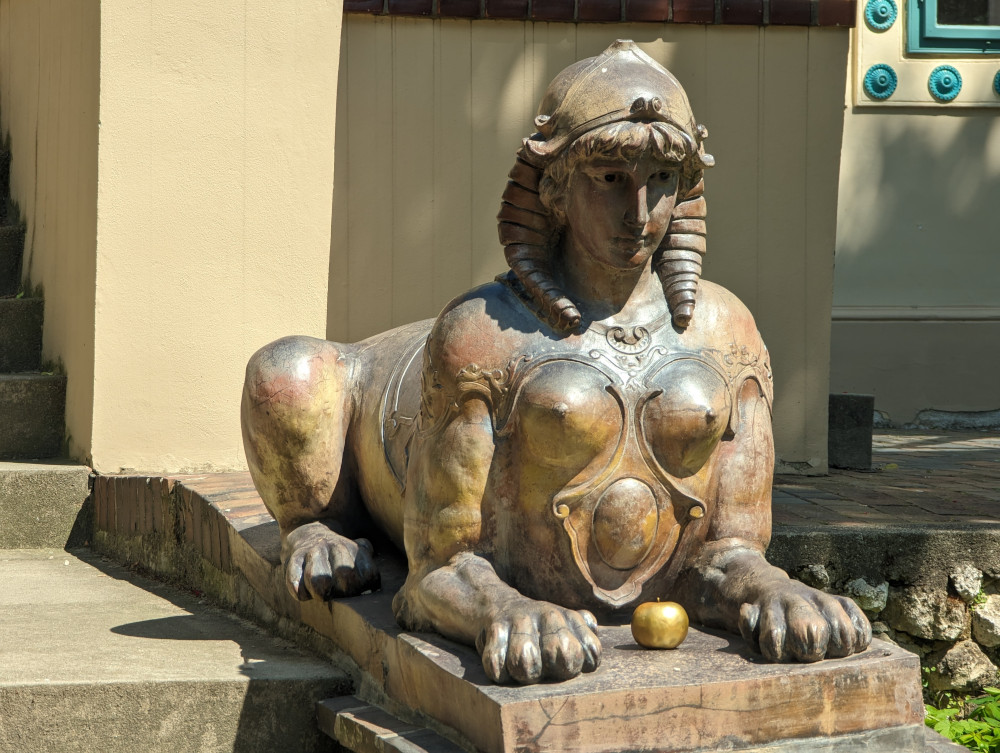
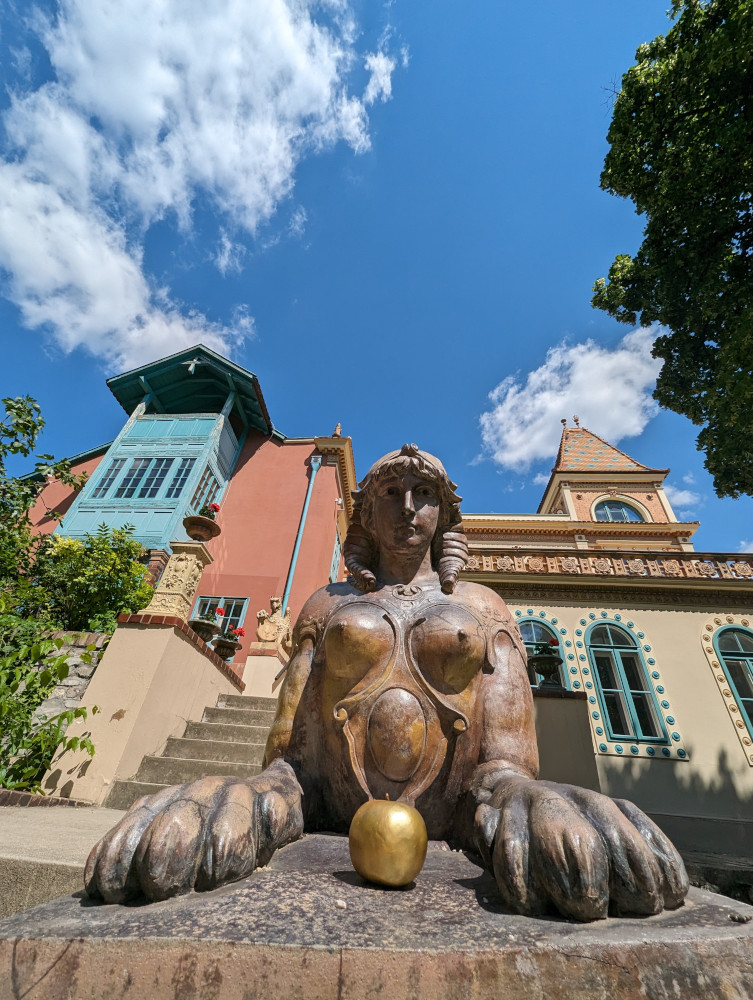
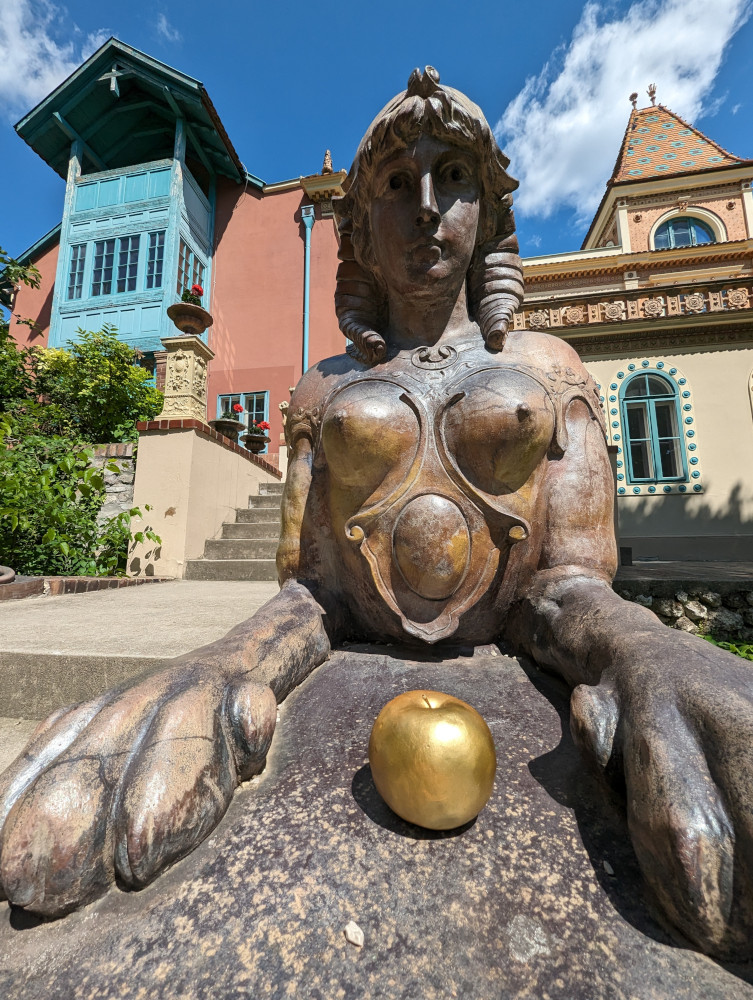
Its journey was documented in a series of photographs: the apple reflected the sun, glided across textures, tasting the matter of time. Each frame captures a moment of choice between motion and stillness, disappearance and presence.
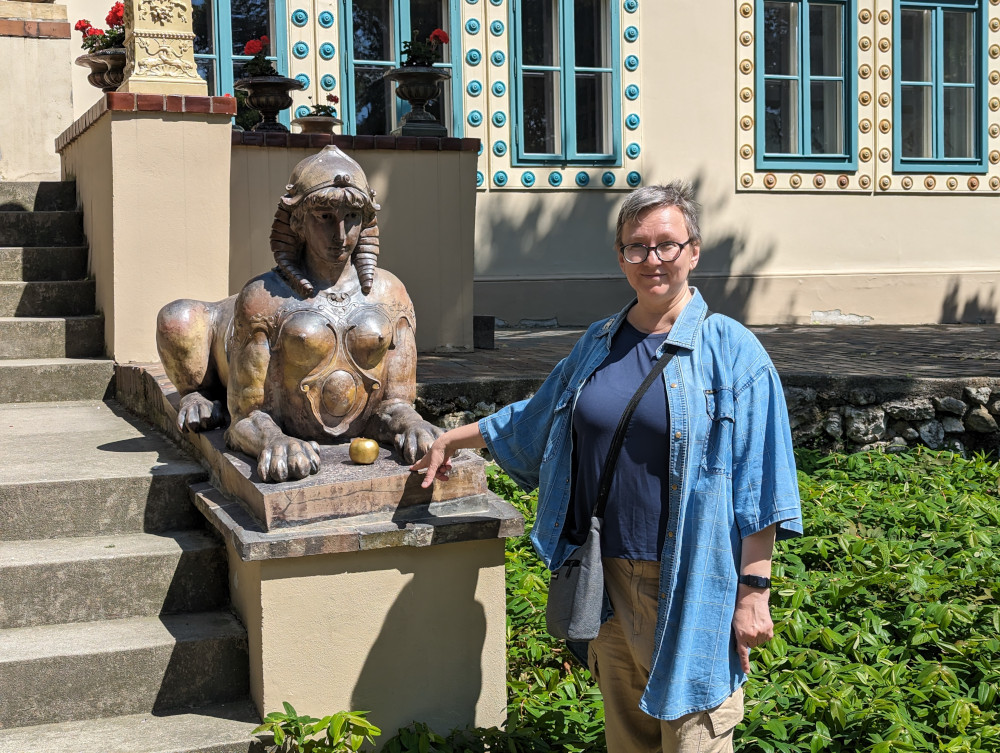
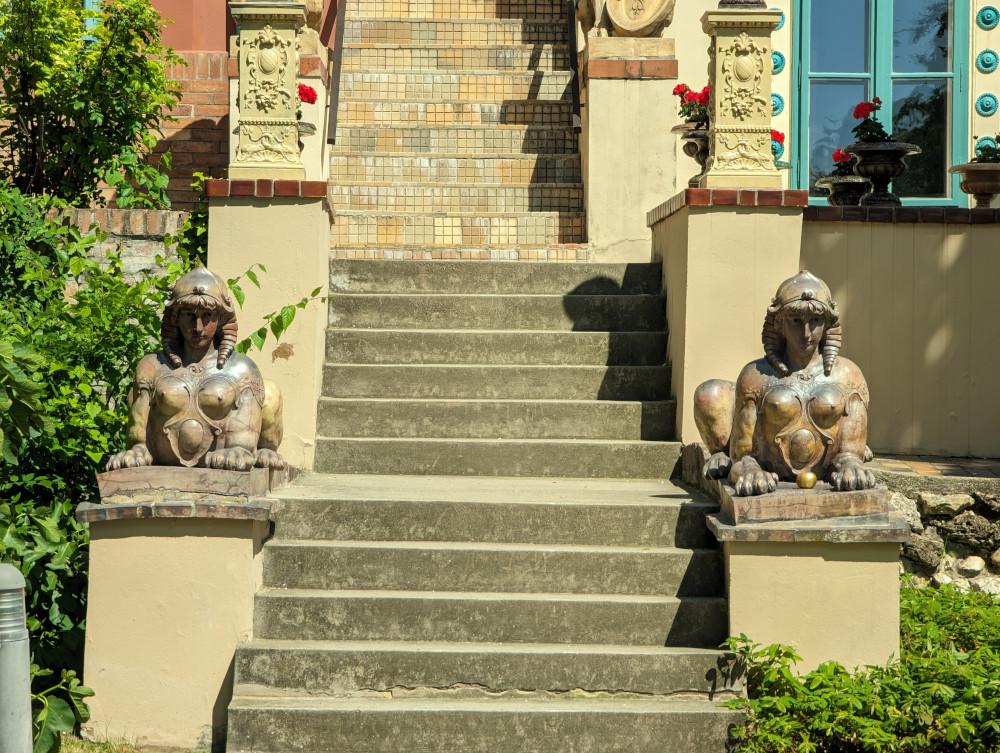
The offering took place beside one of the two ceramic Sphinx sculptures guarding the staircase. The reflection from the golden surface altered the expression on the Sphinx’s face. Was it an illusion, a play of light, or the past come to life, accepting the gift?
The project invites reflection on how values, both material and immaterial, move through time, transforming meanings and leaving a trace in our perception.
From the authors: “We left the apple there, by the Sphinx. What happened next? We don’t know, but we can imagine several scenarios.
Perhaps the Apple disappeared—someone took it. Maybe it was a passerby who saw value or mystery in it. Maybe a tourist took it as a souvenir, or a child believed they’d found a magical artifact.
Or the Apple remained in place but changed—rain and wind began to wash away the gold, revealing the living matter beneath the surface. It began to decay, becoming part of the urban environment, vanishing somewhere between art and nature.
Perhaps the Apple became part of the Quarter—someone moved it elsewhere, continuing its journey. Maybe it appeared by another sculpture, or ended up inside one of the Zsolnay ceramic workshops.
We like to believe the Apple turned into a legend—even if it disappeared physically, its story remains. Someone will tell it again, someone will search for its traces, and someone might catch a fleeting glint on the Sphinx’s face and remember this moment.
In this context, the Apple is a temporary guerrilla sculpture—installed without permission, yet altering the perception of the space. It intervened in the environment of the Zsolnay Quarter, entered into a dialogue with the Sphinx, and disappeared, leaving behind only memory and photographic trace.
This offering was a fleeting gesture, but it sharpened the boundary between presence and disappearance, art and everyday life, the material and the symbolic.”