Harmonization of Space

Malevich's Brigade

2004 | Performance

Event: Founding of Kazimir Malevich’s Malers’ Brigade
Venue: Kolyada Theatre, Yekaterinburg, Russia
Date: 5 November 2004
Group: Kazimir Malevich’s Malers’ Brigade

The Action

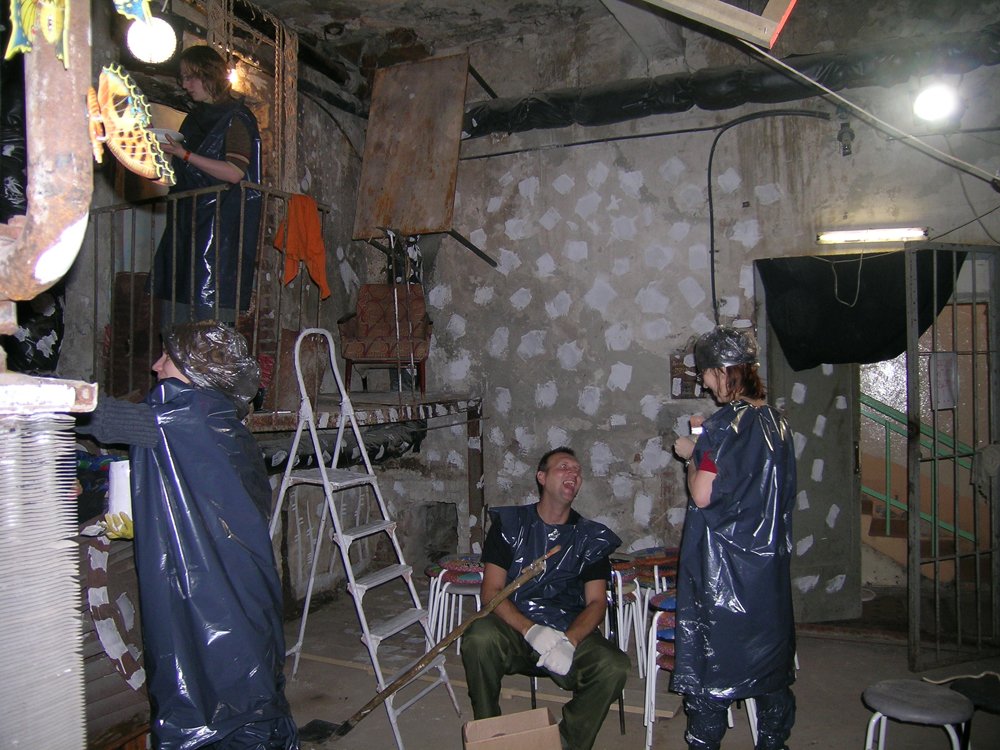
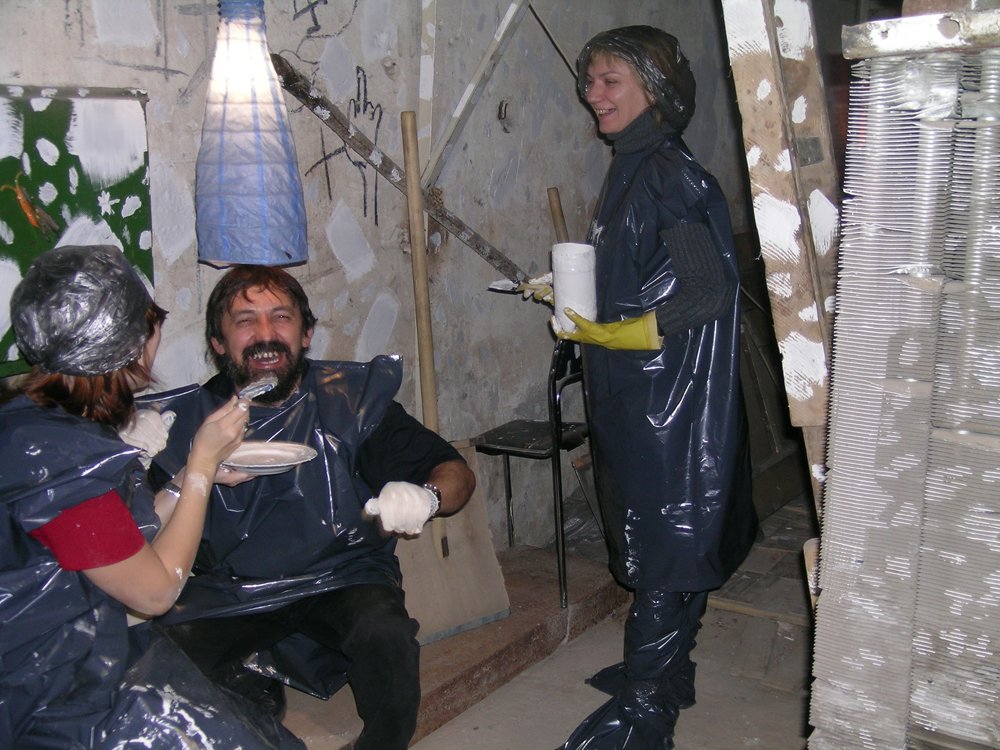
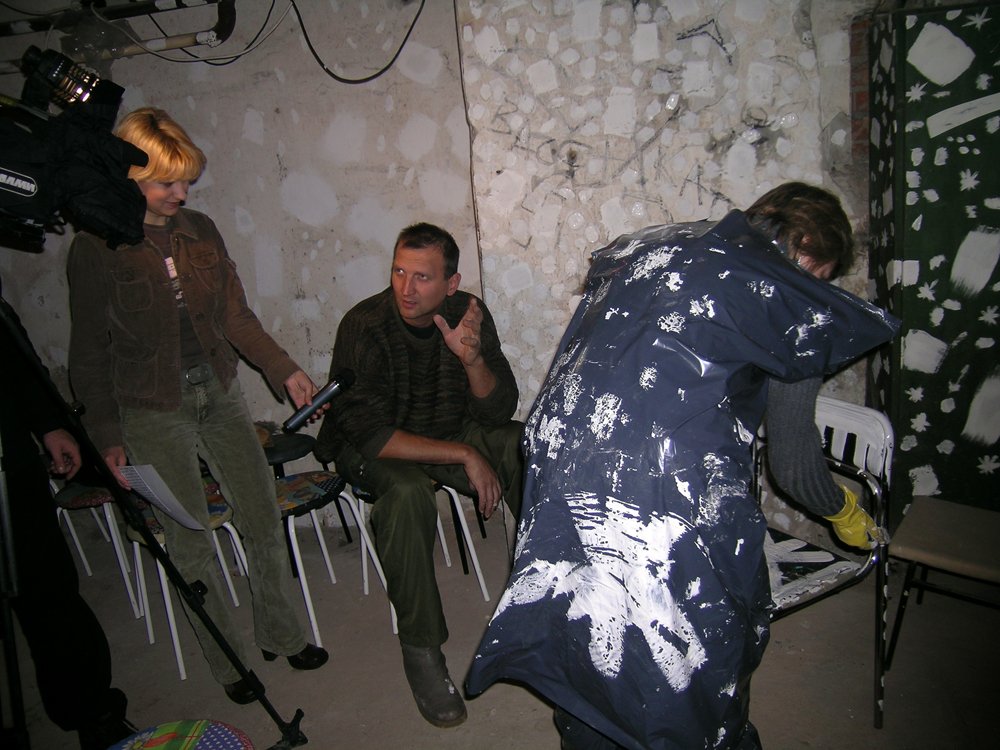
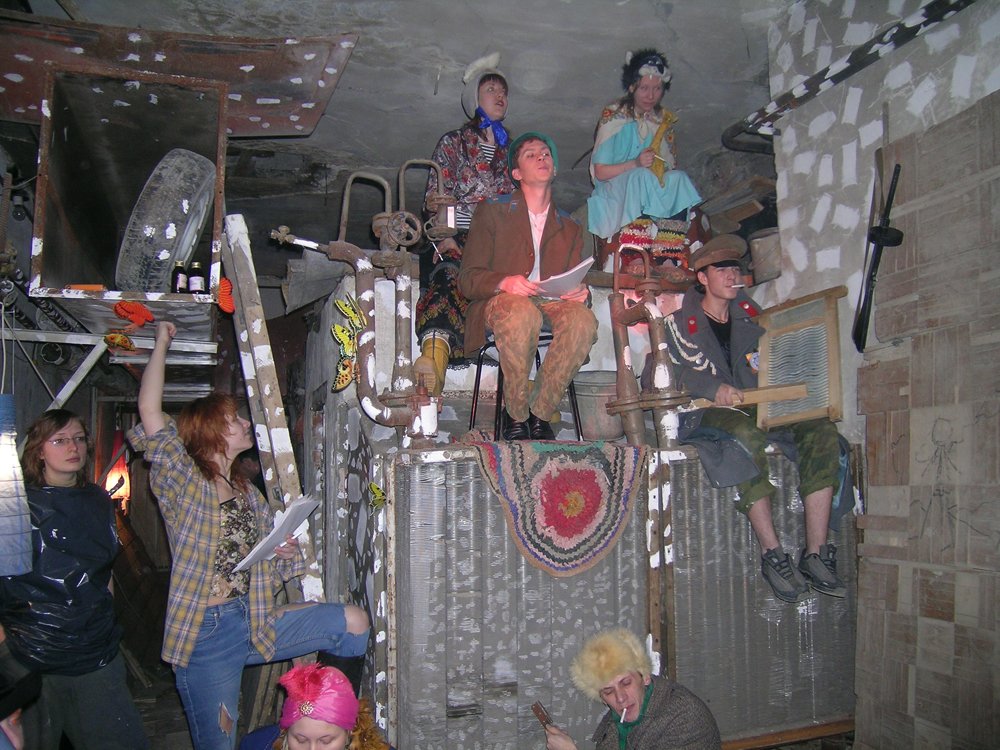
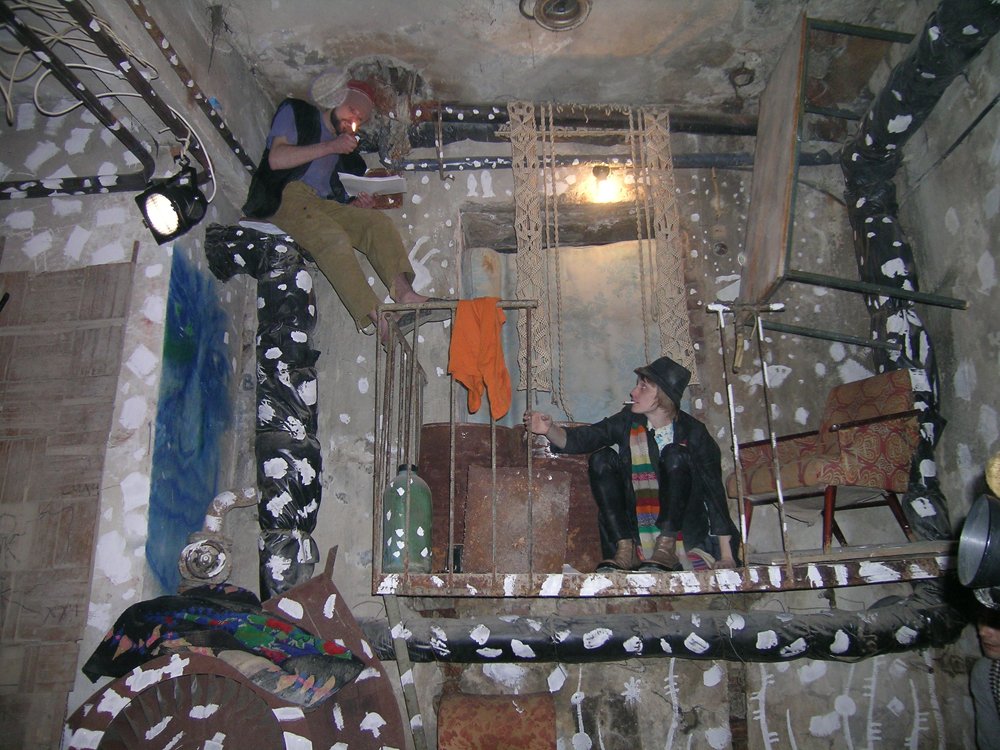
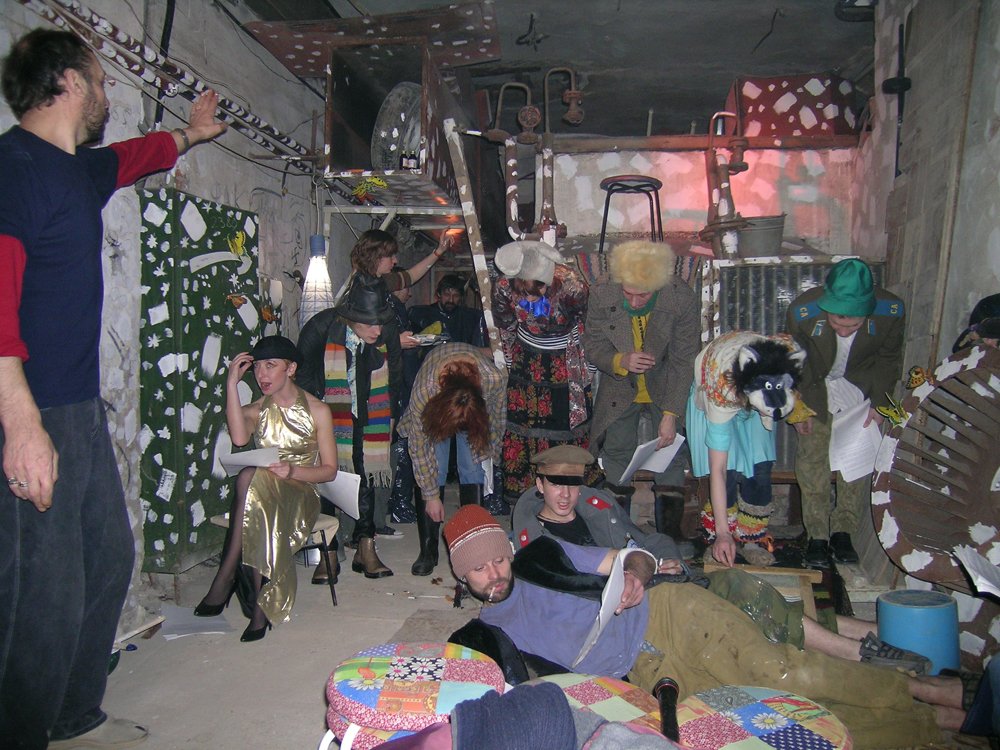
The artists were invited to transform the space of a boiler room at Kolyada Theatre. The work had to be done quickly and economically, while a play was being performed in the same space — without disturbing the actors or the audience.

The solution was Harmonization of Space.
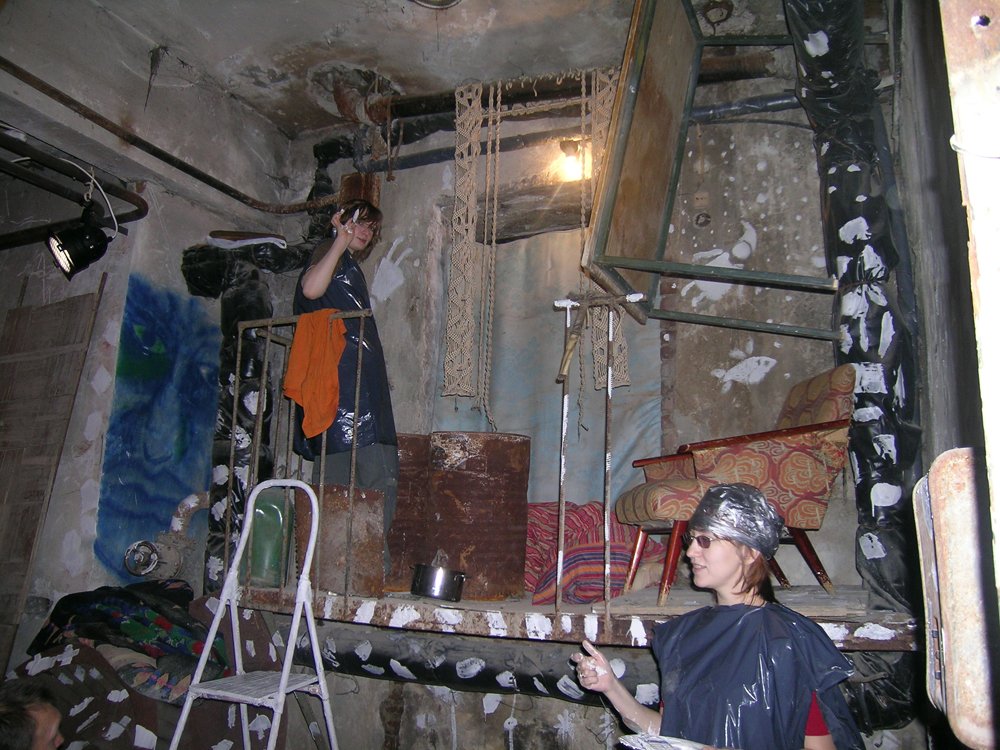
“White over dark — the physical space disappears; the inside turns outside.”

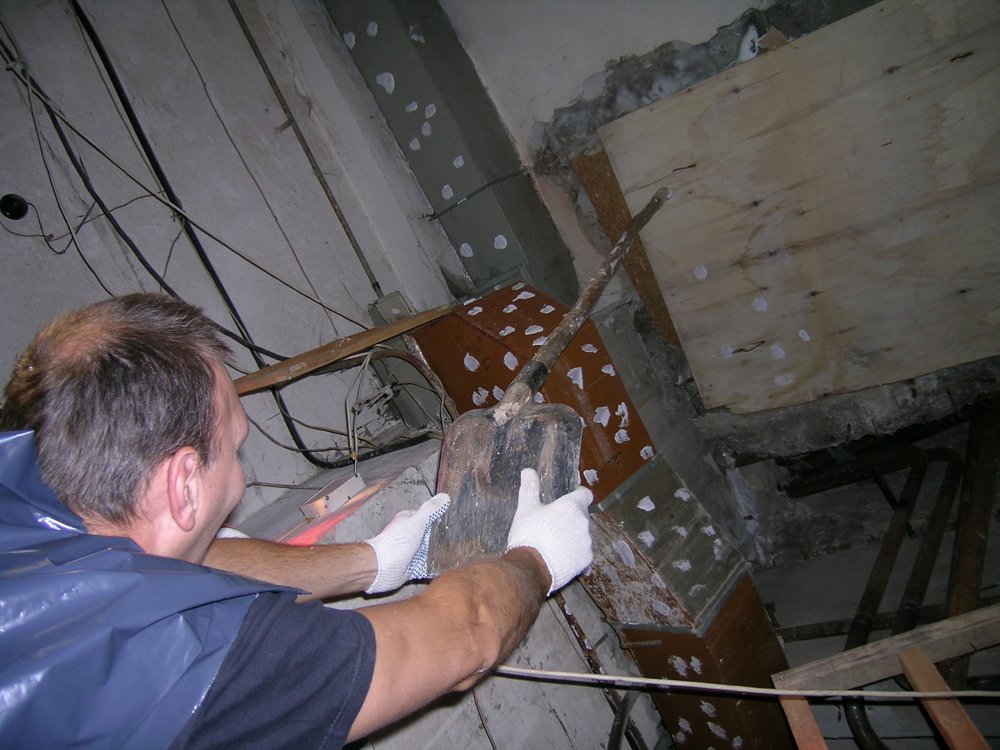
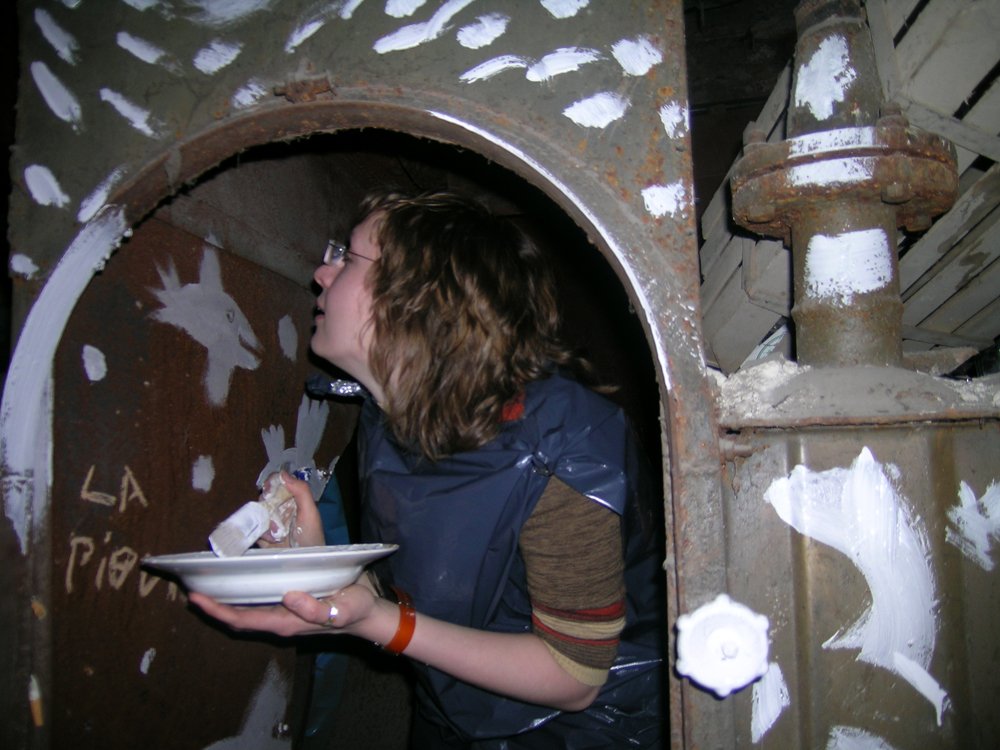
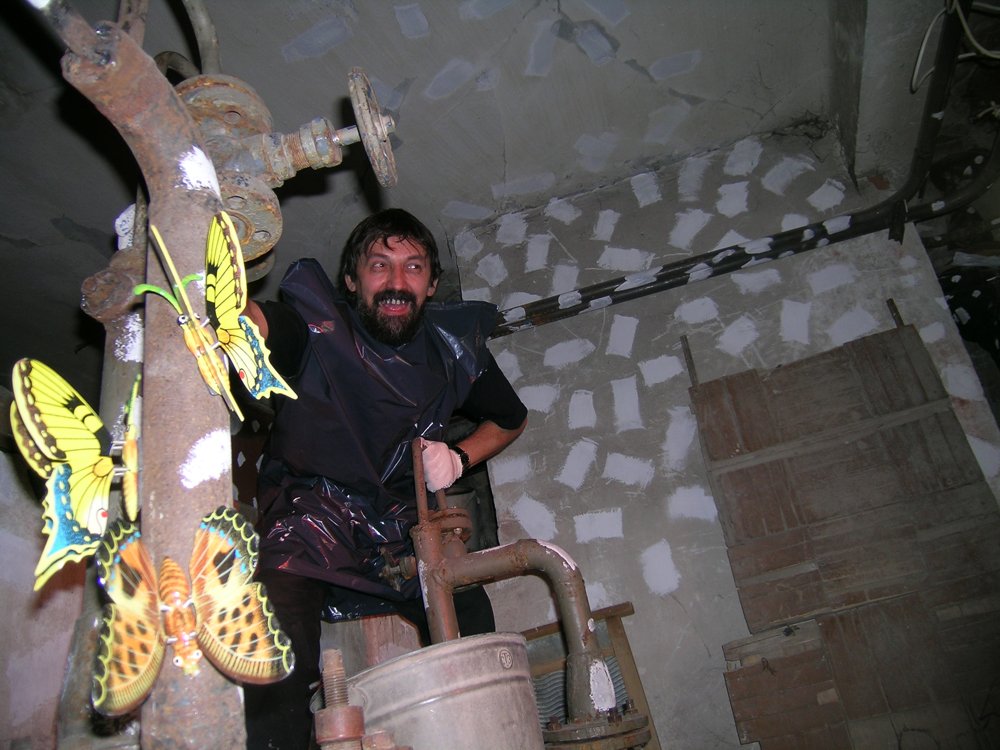
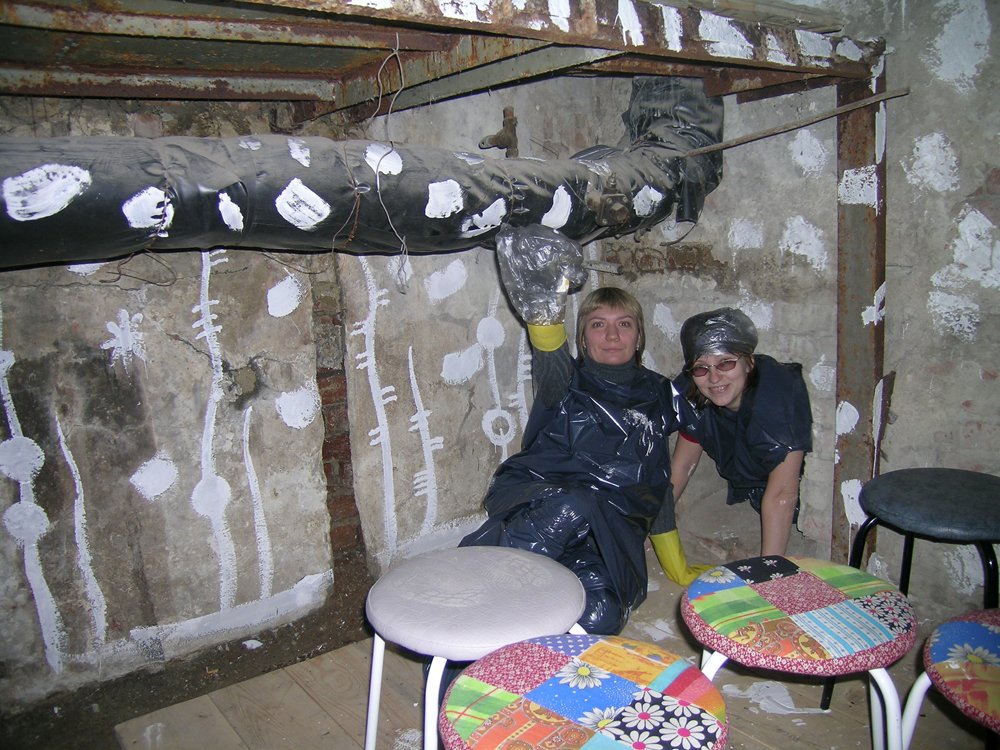
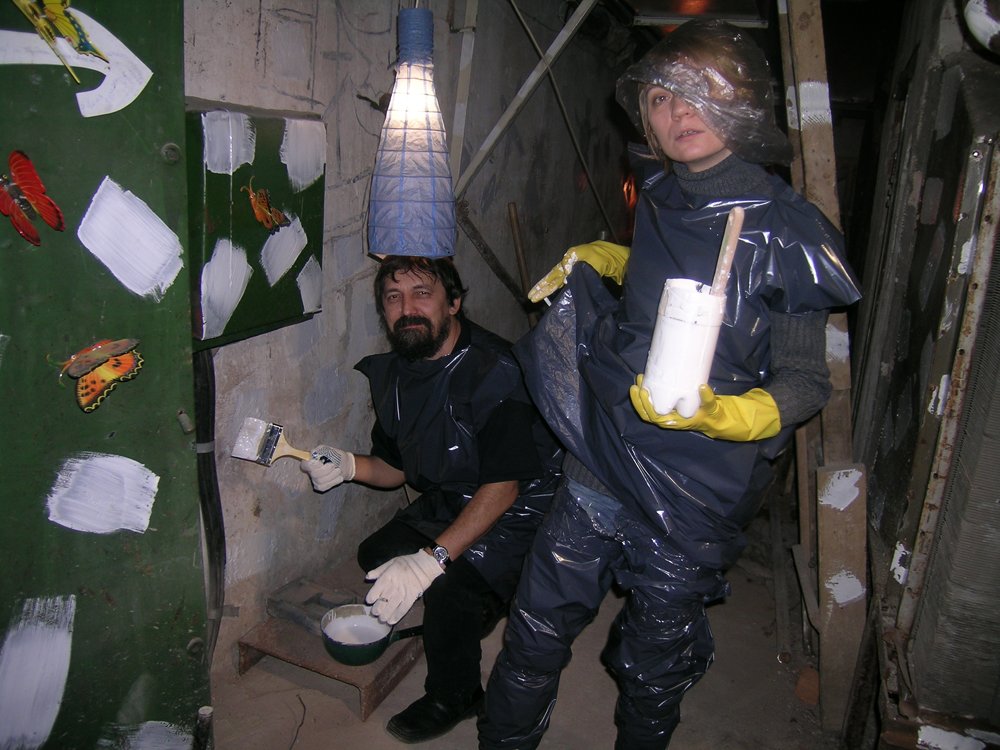
White water-based emulsion paint was poured into plates and applied to the dark surfaces of the room. Each artist brought their own tool.

To protect their clothes, the artists wore black polyethylene garbage bags.

At the time, they did not know that the bags would become the Brigade’s working uniform and one of its most recognisable signs.

The Beginning of the Brigade

The action took place on 5 November 2004, now considered the founding date of Kazimir Malevich’s Malers’ Brigade.

After the action, the first snow of that winter began to fall. The artists jokingly recalled a phrase from a book they had recently read — about a “Brigade of painters named after Kazimir Malevich”.

The phrase stayed.

The temporary group became a name, and the name became a collective.

Elena Gladysheva, Alexandra Krivolutskaya, Viktor Oborotistov, Marina Razheva, Vladimir Romanov

Photo: Tatyana Sekacheva

Back to Malers’ Brigade

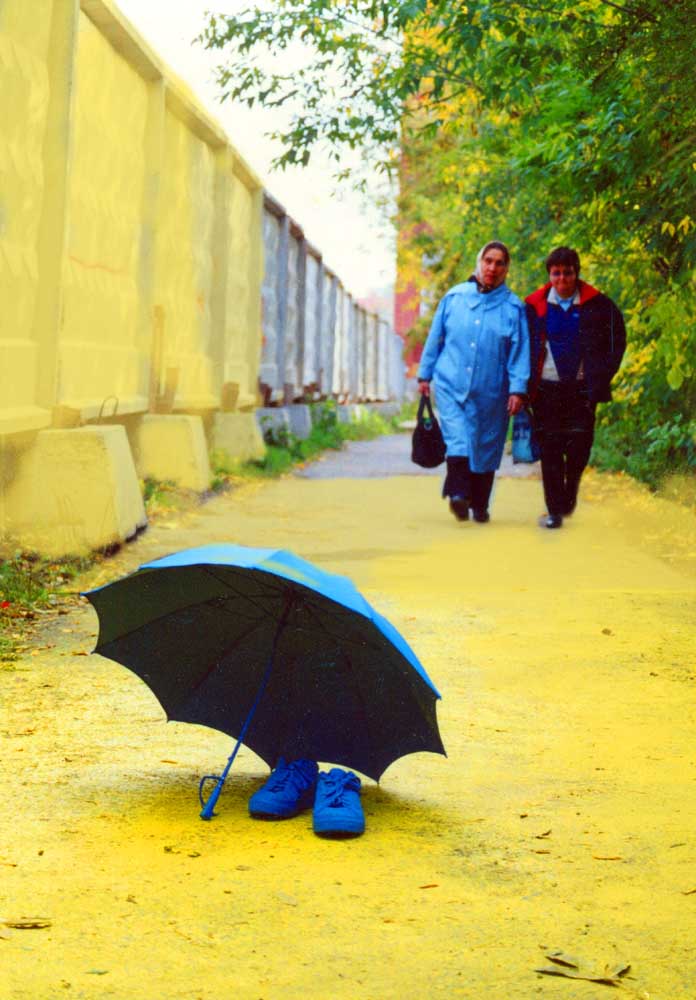
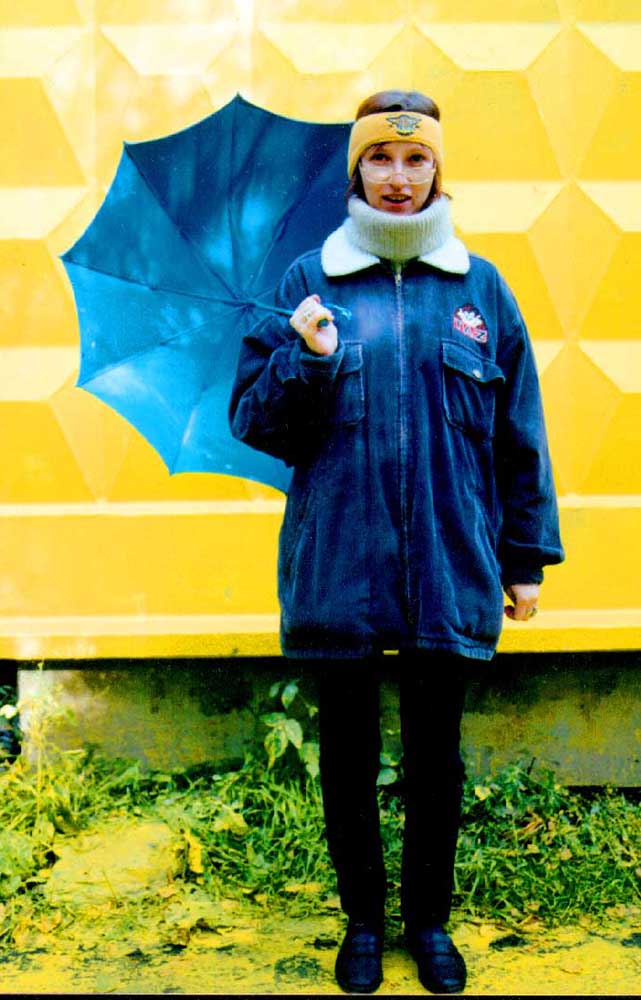
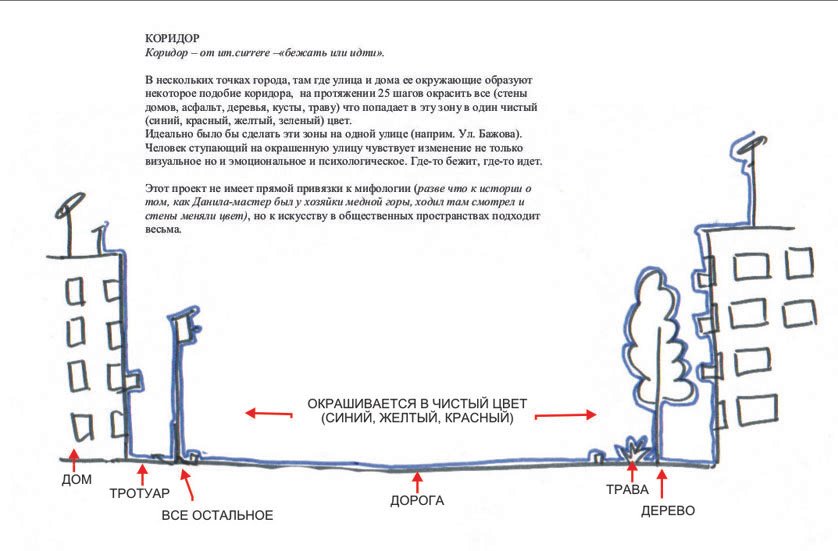
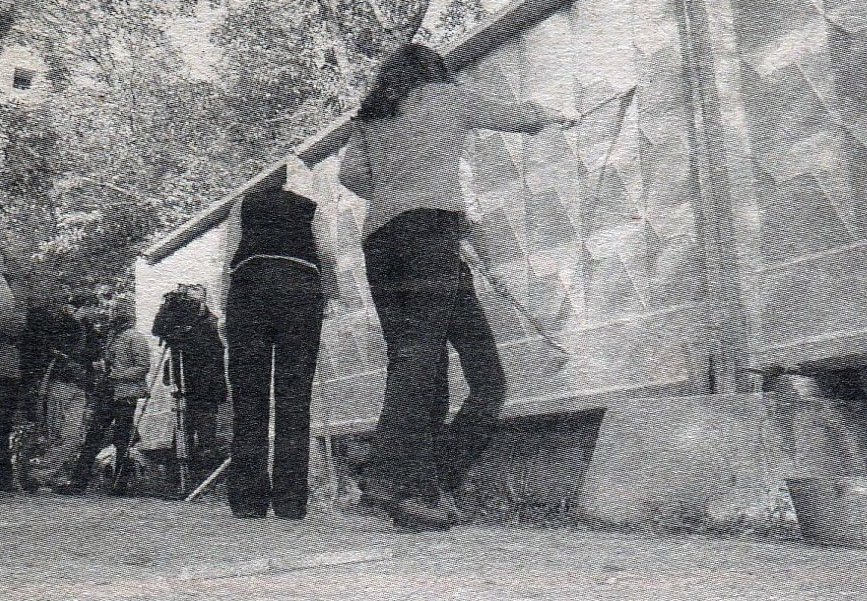
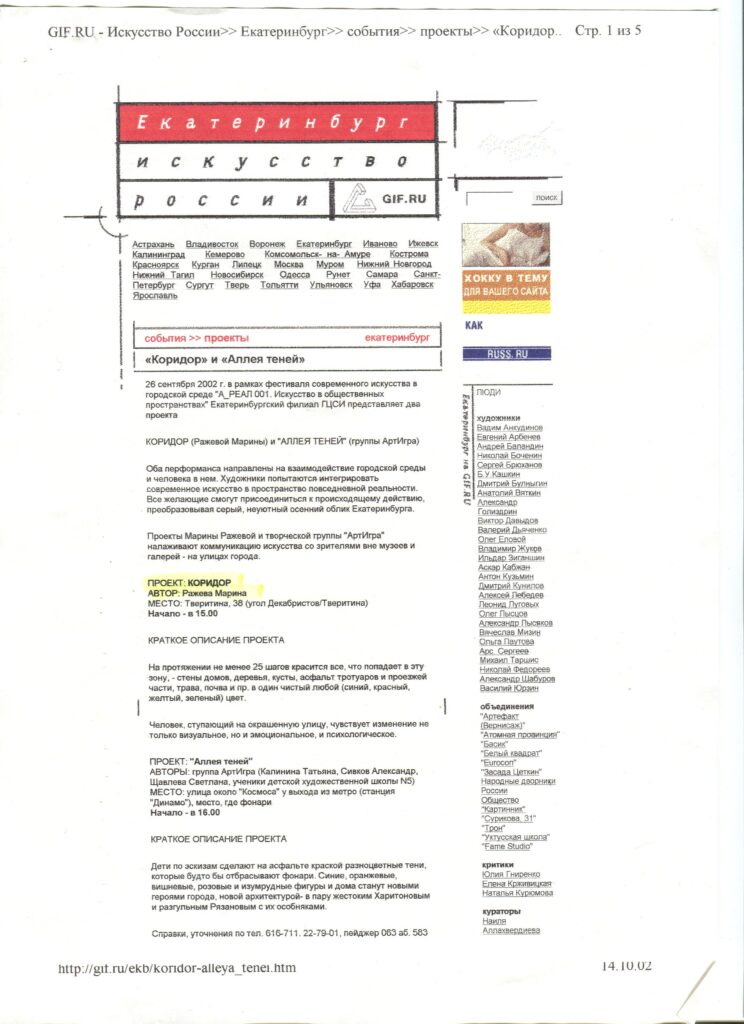
Corridor

2002
photo © Mikhail Charin, 2002

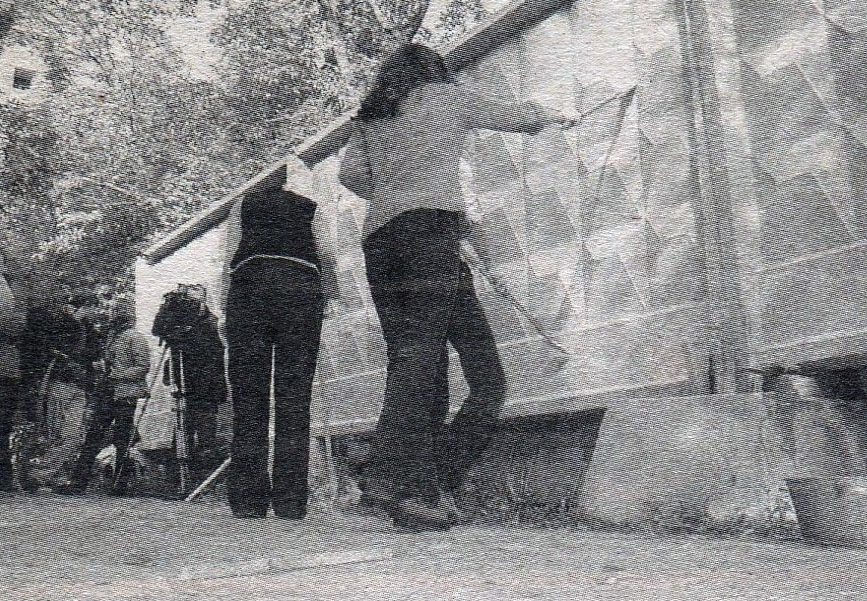
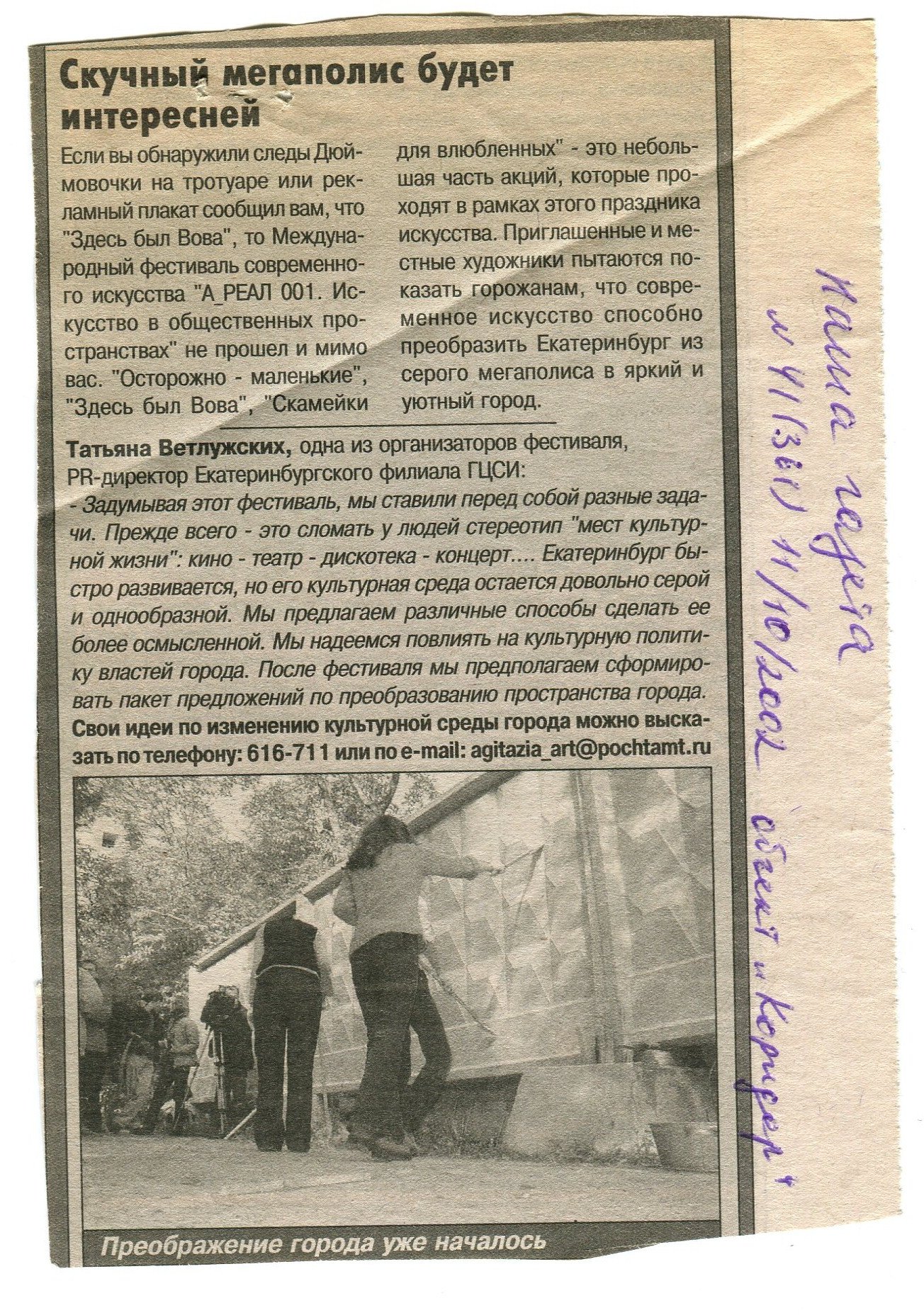
Press photo, Nasha Gazeta, 2002

__________________________________________________

Project Dossiers

Corridor

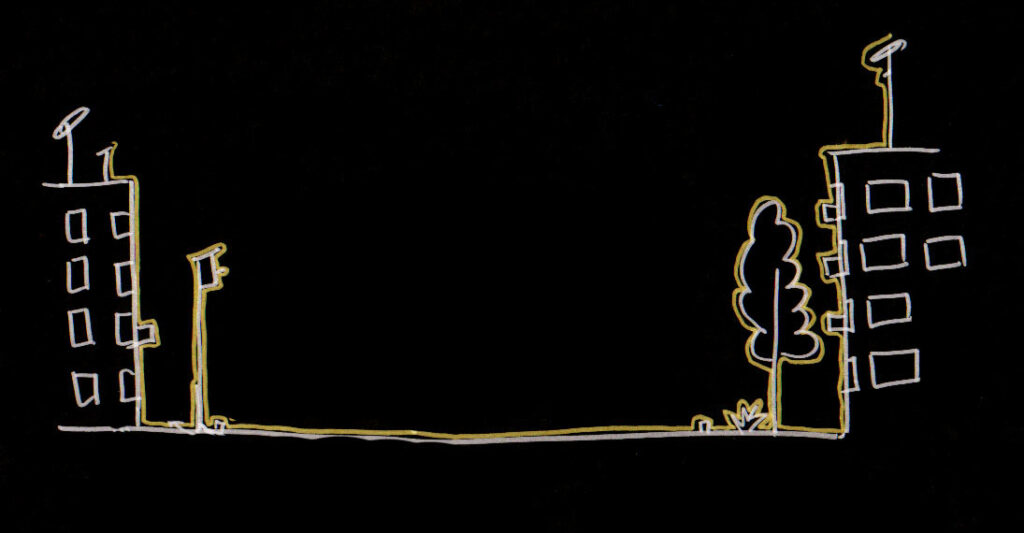
traces of the work

Artist’s Note:
I wanted to mark a passage: not just a path, but a shift in perception.
When you step into a space where even the grass and asphalt are the same bright color, your body reacts: the city becomes less neutral.
It’s about tuning your attention like walking through a thought.

Project Dossiers

BACK TO WORK

POINT OF VIEW

Blog

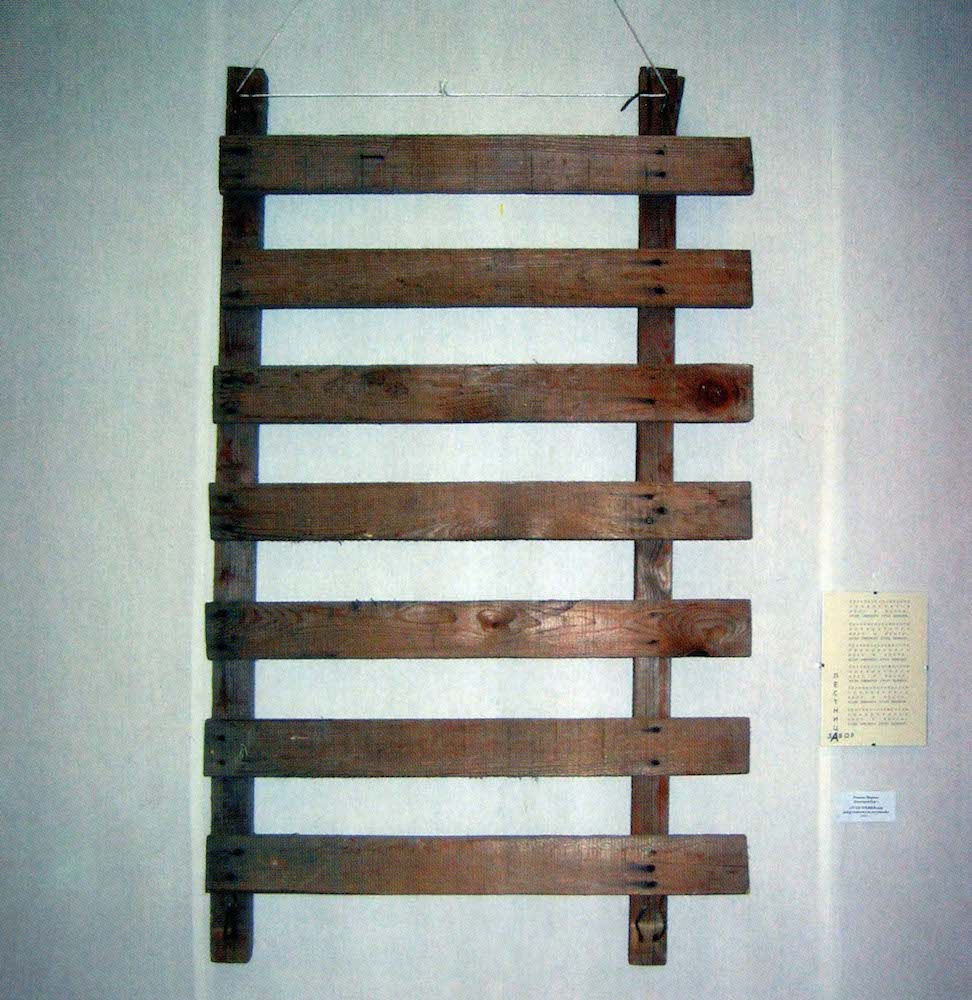
THE ANGLE OF VIEW or Fence becomes stairs

Угол зрения или забор становится лестницей, реди-мэйд объект, 2002

ON ETHICS, AESTHETICS AND BREATHING

2001, REFLECTIONS

(A Point of View)

If we think of artistic practice as an augmentation of reality, there can be many interpretations.

You can add an object to a room. You can open the doors of a cupboard. You can rearrange them—which is not yet creation, but rather combinatorics. You can open a window. You can remove a wall. You can build another room onto the existing one. That is already closer.

And so on…

Different levels. One goal.

When a small window is opened in an enclosed space, at first the fresh air entering the familiar atmosphere may seem almost sacrilegious, destructive.

Then it becomes ordinary and necessary.

Later, unnoticed.

And at that moment, perhaps, it is time to open the window.

Aesthetics is similar to air. At first it agitates us, then becomes familiar, necessary, natural.

Until the next change.

And the creative act is precisely the opening of the window.

Whether this act is ethical or not depends on the situation.

Clearly, this is a metaphor. But in order to give the metaphor reality, one can perform

Breathe into an enclosed space and open a small window.

  1. The reaction will depend on the composition, mood, preparedness, and other conditions of those present and breathing.
  2. When the window is opened, it is not only fresh air that enters the room. Information also leaves it, in the form of a change in the composition of the air produced by the life activity of those present.
  3. The experiment can be modified by using holotropic breathing instead of ordinary breathing.
  4. If desired, the experiment can be continued by performing other actions: for example, opening the window—or perhaps going outside (not necessarily through the window)…

ATTEMPT STATE: BETWEEN

1999, REFLECTIONS

There are states that cannot be put into words. To try to describe them is like pressing a butterfly into a herbarium.

Familiar states: between sleep and waking, thought and speech, intoxication and sobriety. And there is something greater: between life and death…

These BETWEENS do not leave us alone. It seems that revelation, clarity, and the essence of things are hidden there. It seems that just a little more—and you will enter, you will touch it, you will finally understand…

But then: either you wake up, speak, sober up, come alive—or you fall asleep, remain silent, become intoxicated, die.

Once again, you have slipped past it.

The most important moments of transition are beyond our ability to comprehend. The origins of the universe, of life, of the human being are examples of this.

Something happens in the process of transition that leaves us with a profound amnesia.

In therapy, one way of bringing something back from amnesia, whatever its cause, is through provocation: placing a person in a similar environment, creating sensations resembling those associated with the forgotten experience.

This project is an experiment—an attempt to place the viewer in a state that is normally inaccessible to conscious memory.

We are accustomed to the beating of the heart. Yet we hear it from the outside, through the “drum” of the chest.

From the inside, however, instead of metronomic beats, something entirely different can be heard: noise, whistles, gurgling, the sound of liquid moving…

Physiologically, it is simple. The work of the heart as a pump, the pulsation of the atria and ventricles, the opening and closing of the valves, the sound of blood being moved through the body—all of this is what each of us heard during those months when we already existed, but had not yet been born.

Could this be why so many ordinary sounds of everyday life—the sound of rain, the murmur of a stream, birdsong, the rhythm of wheels—can simultaneously soothe and disturb us?

Could it be that they do not pass unnoticed because they are fragments of a single polyphony, the soundscape of what once was “between worlds”?

Can a recording of the sounds of the heart restore something of what we experienced in the womb?

Can these sensations place us at a point of singularity—the one moment when there is already being, but not yet birth?

Can such a state awaken memories?

Text written for the project in 1999.

PROJECTED / EXHIBITED

December 24, 1999 – January 24, 2000
Ural Museum of Youth, Yekaterinburg, Russia
Group exhibition Three Dots Above I, within the international arts festival End of the Century on Voznesensky.

June 2001
Krasnoyarsk, Russia
4th Krasnoyarsk Museum Biennale, KKIМК.