Régi kőbánya, Gyenesdiás, Hungary
2020
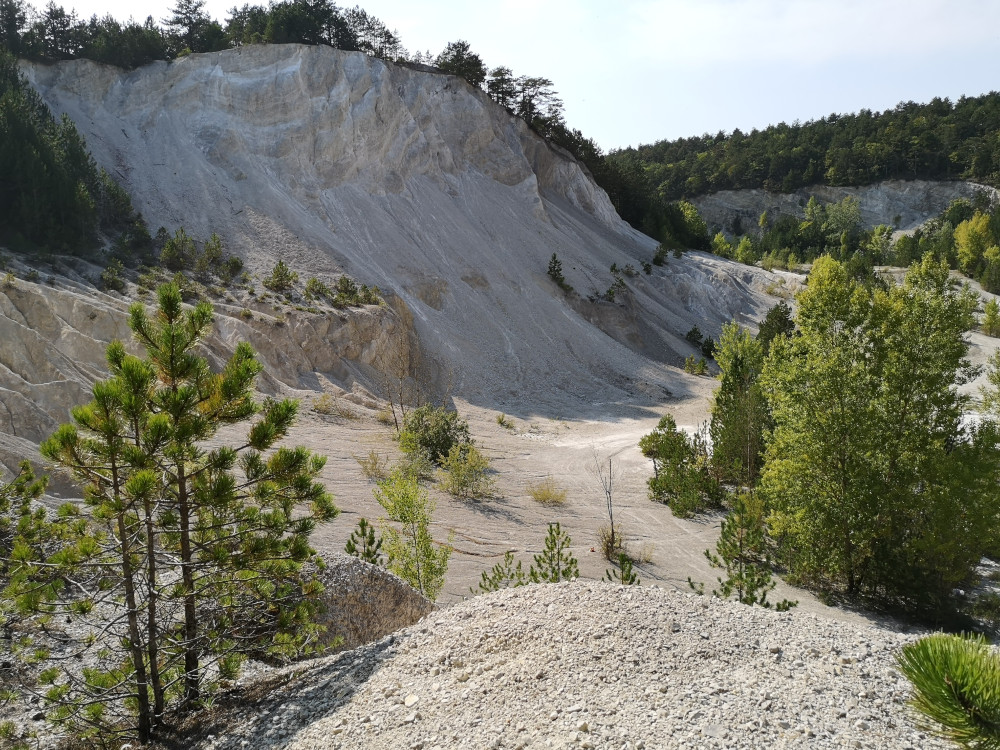
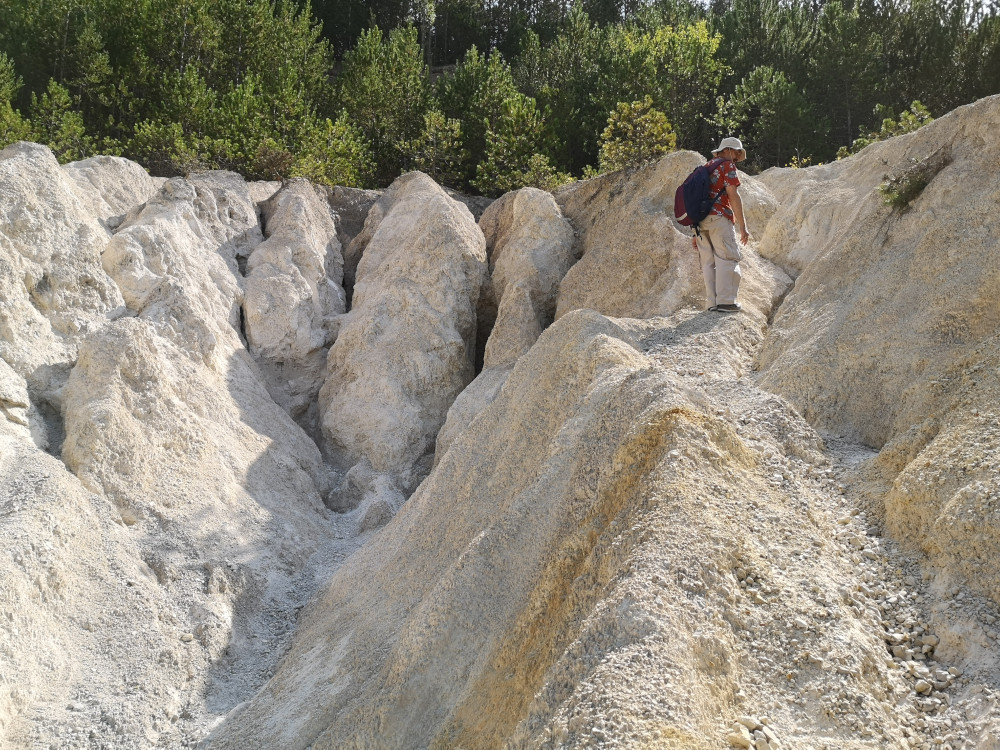
On the northern edge of Gyenesdiás, on the slope of Pipa-hegy hill, lies an abandoned dolomite quarry. Its pale grey walls preserve traces of a much older landscape: more than 200 million years ago, this region was part of the shallow Tethys Sea, where marine sediments gradually formed the dolomite later exposed by extraction.
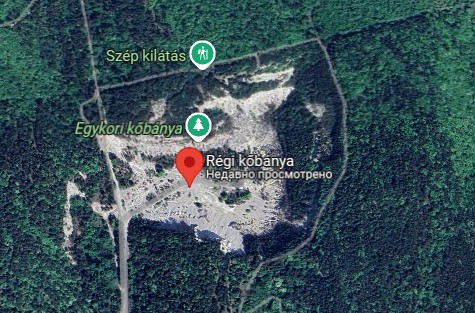
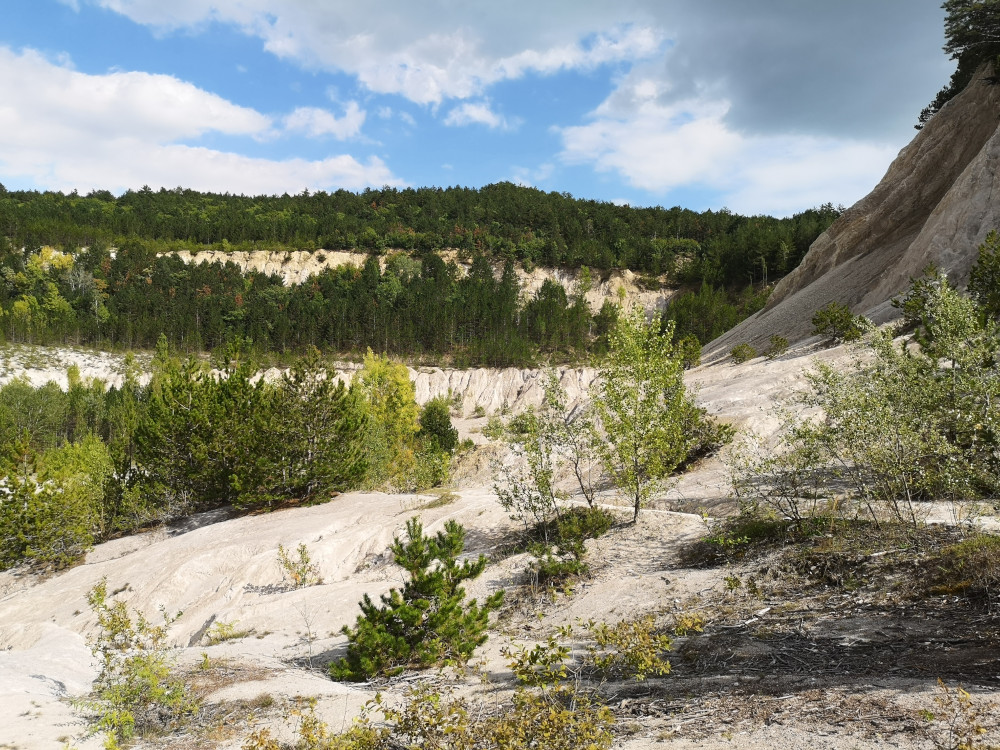
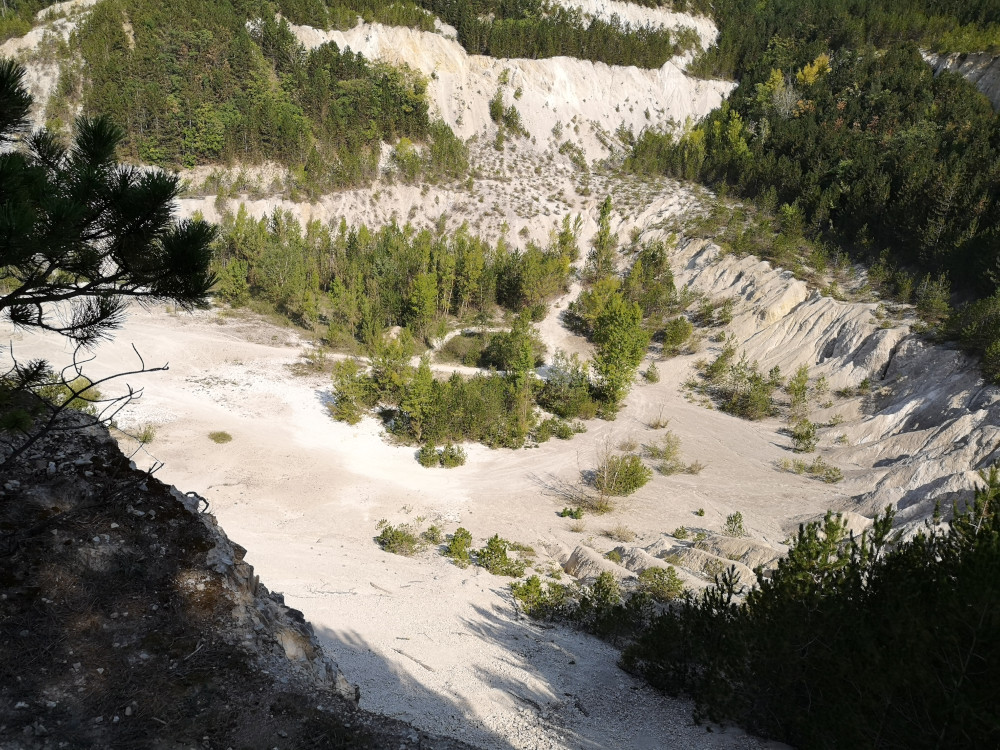
Today the quarry is overgrown and largely silent. Its eastern basin opens into a landscape of ravines, terraces, ledges, and stone formations resembling an ancient amphitheatre. Vegetation has begun to reclaim the abandoned site, while the exposed rock continues to reveal the marks of both geological time and human intervention.
Once an industrial site, the quarry has become a different kind of place — one in which geological memory, natural growth, and human traces coexist.
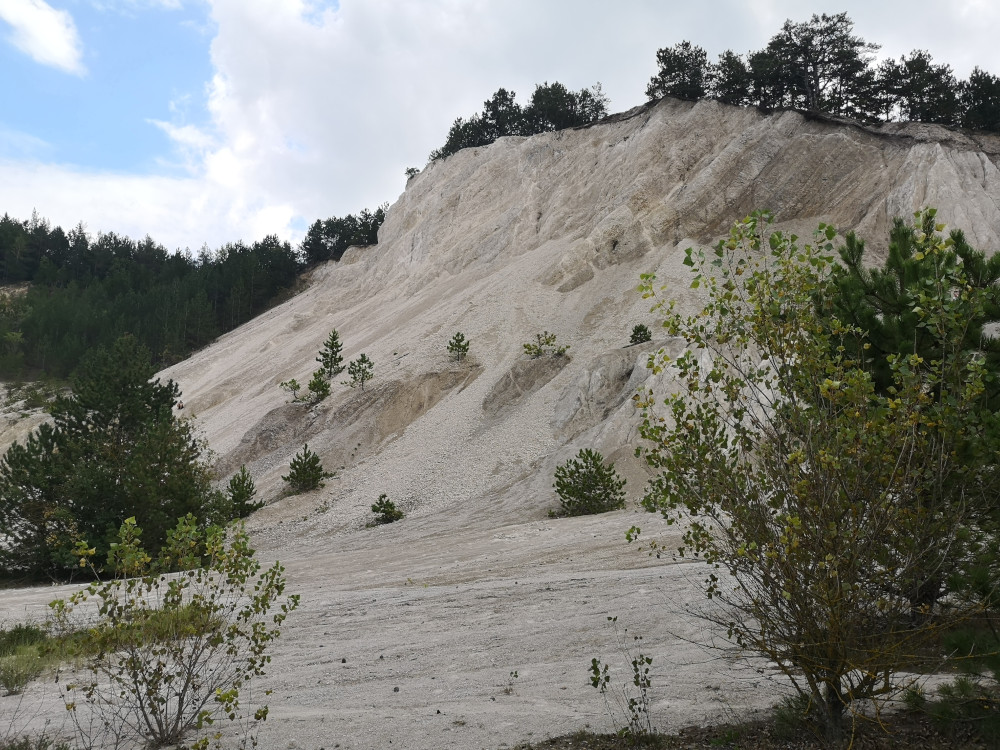
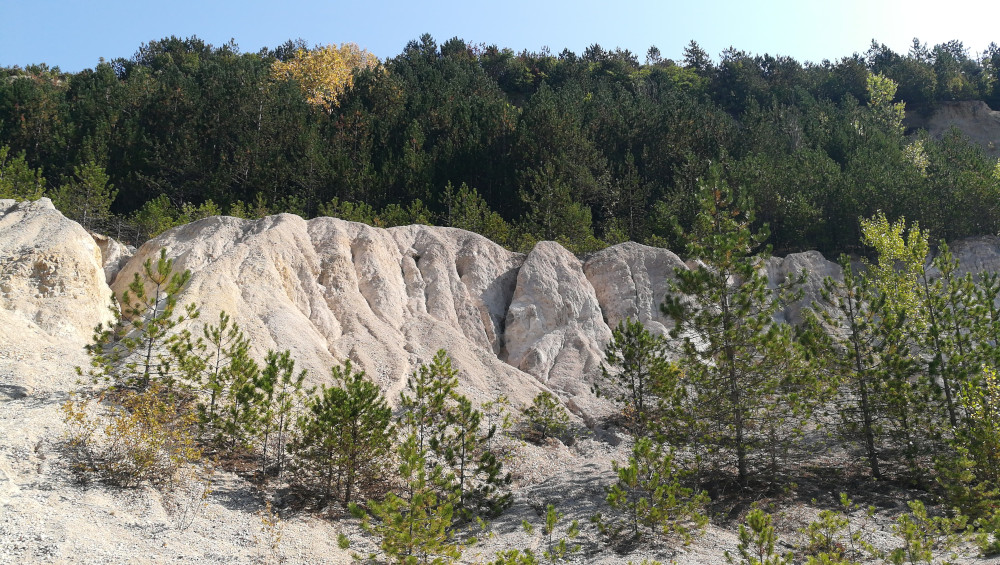
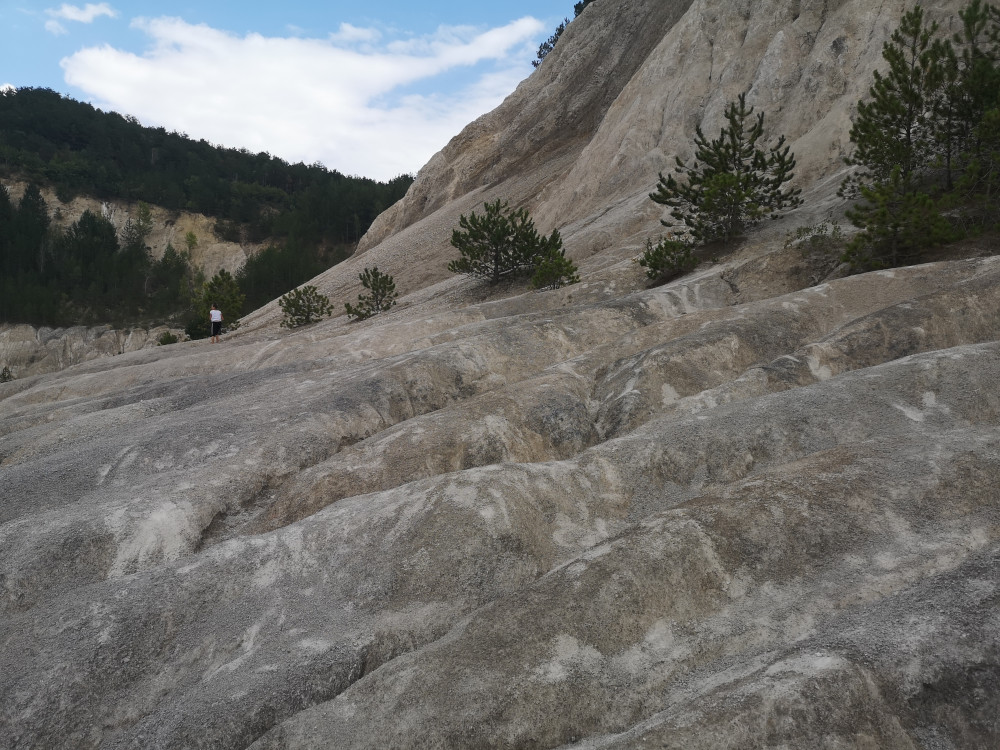
For R², it became a place to explore how a form can emerge from attentive observation rather than be imposed upon the landscape.
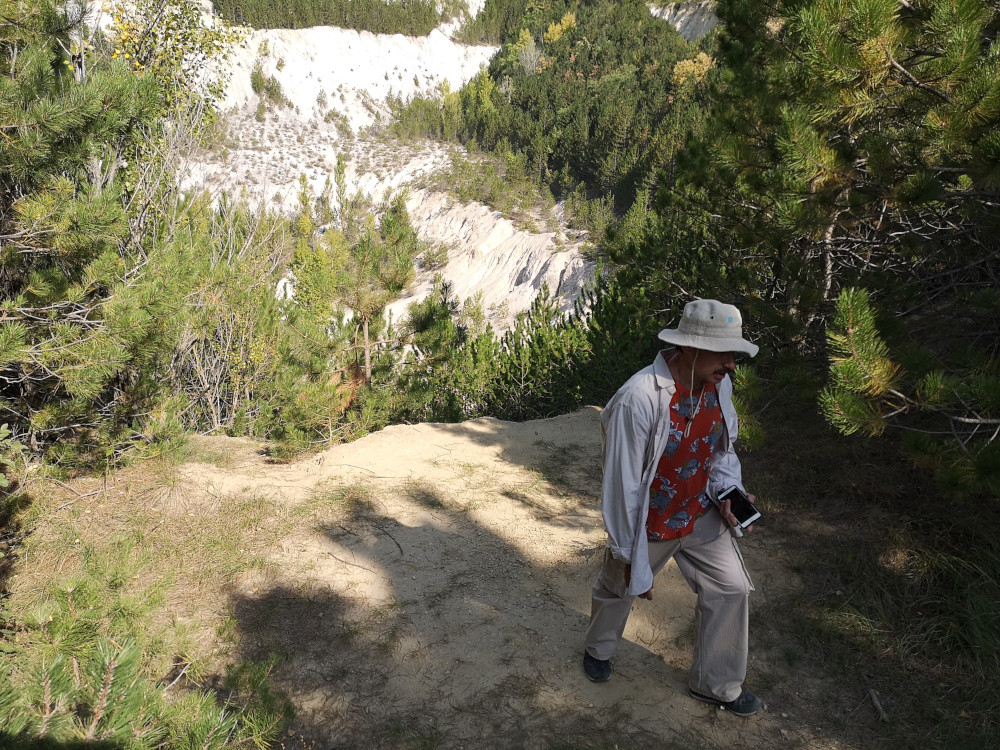
The Szamorodni Deer
In September 2020, during the Deerland art festival, R² explored several abandoned quarries around Gyenesdiás.
The original intention was to work in a different white quarry. On arrival, however, we found that extraction had resumed there. The planned intervention became impossible. Instead, we entered the old, forest-covered quarry on Pipa-hegy.
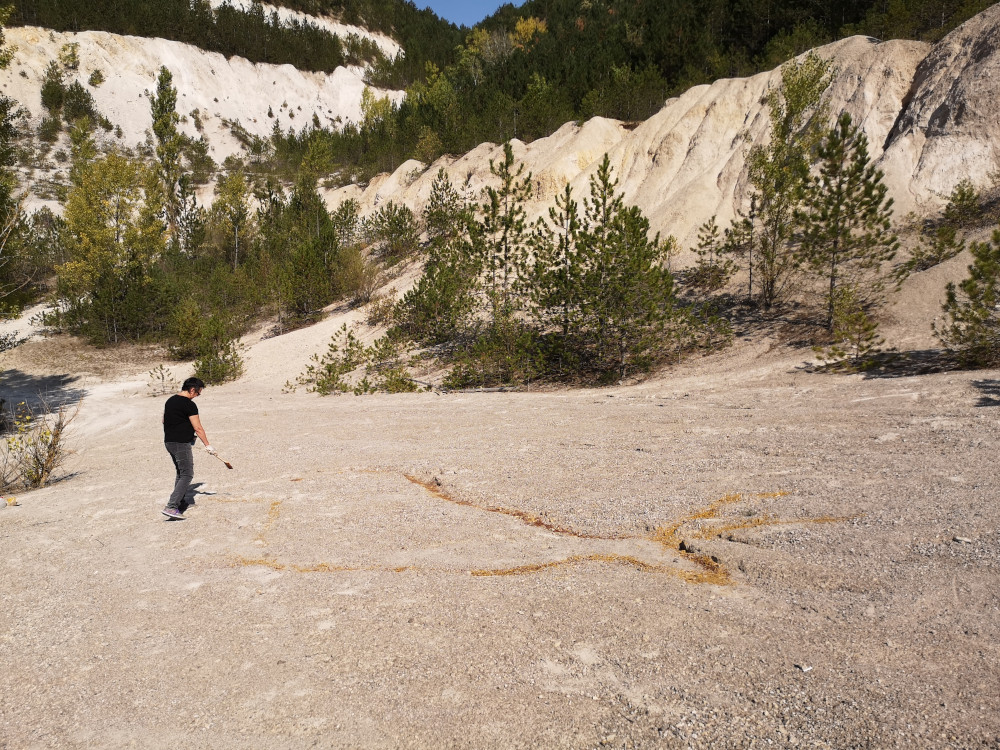
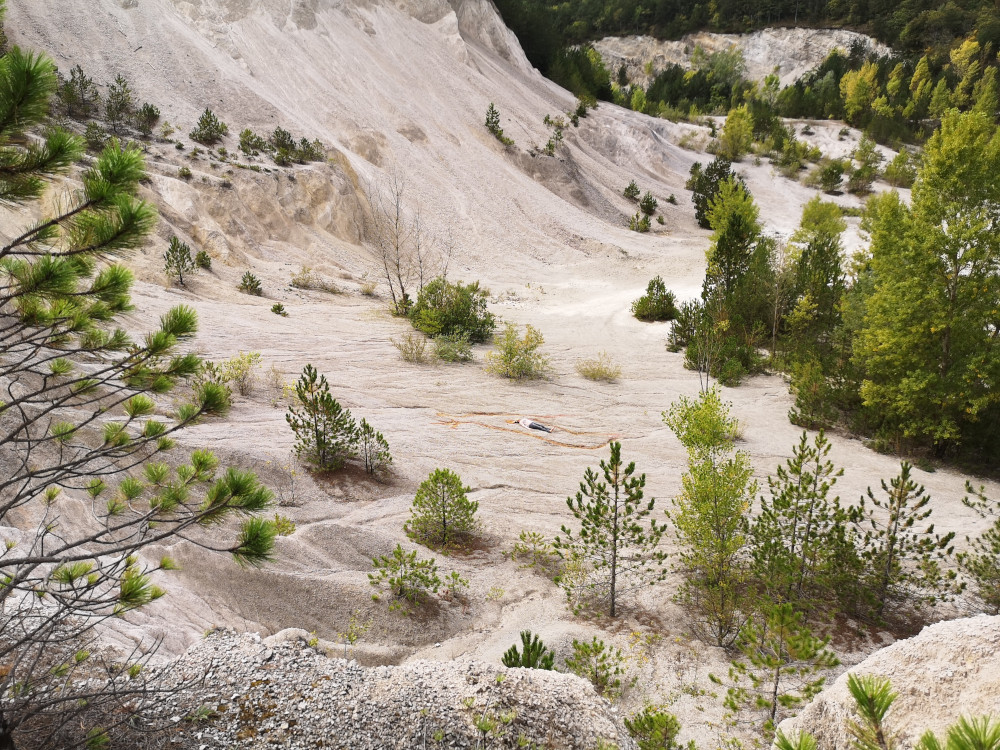
In a small clearing, the terrain itself suggested a form.
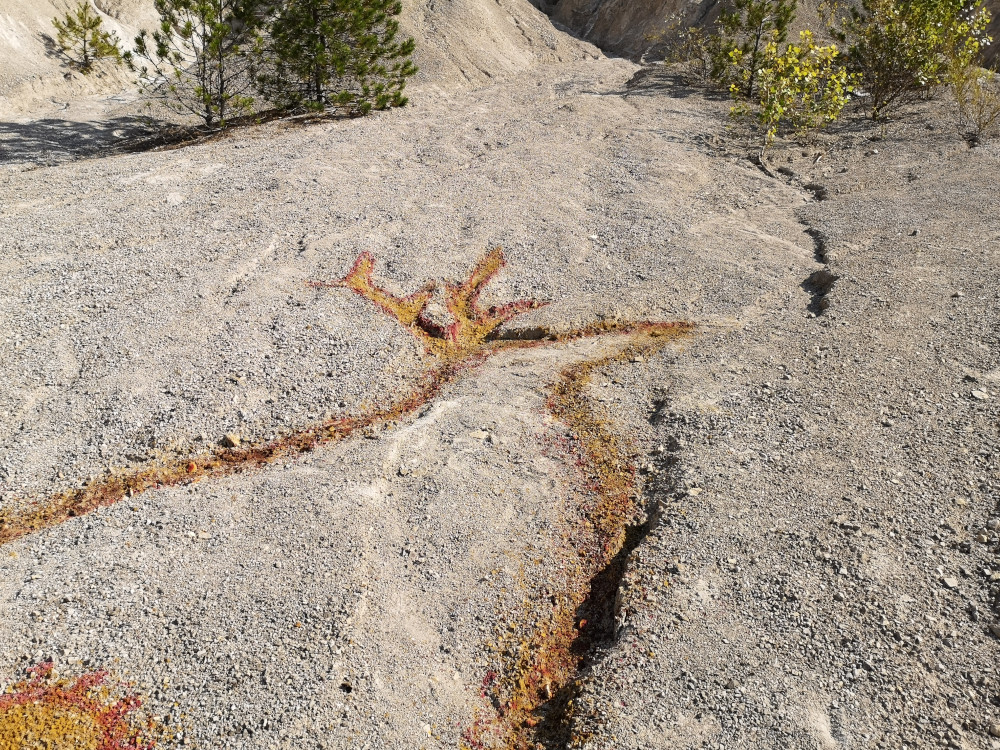
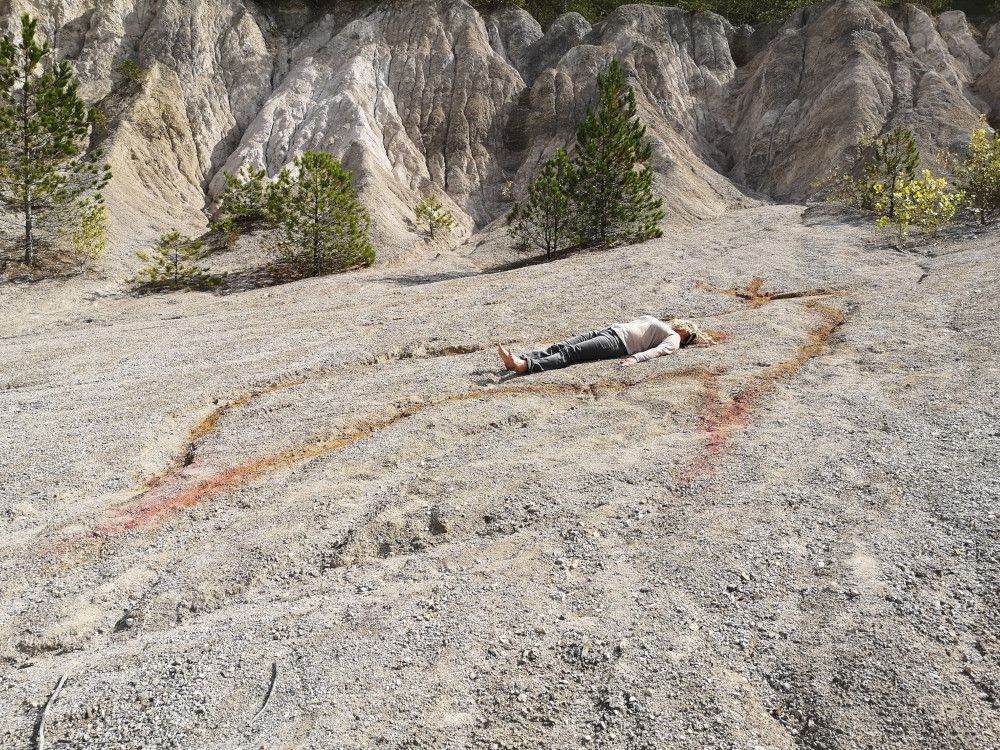
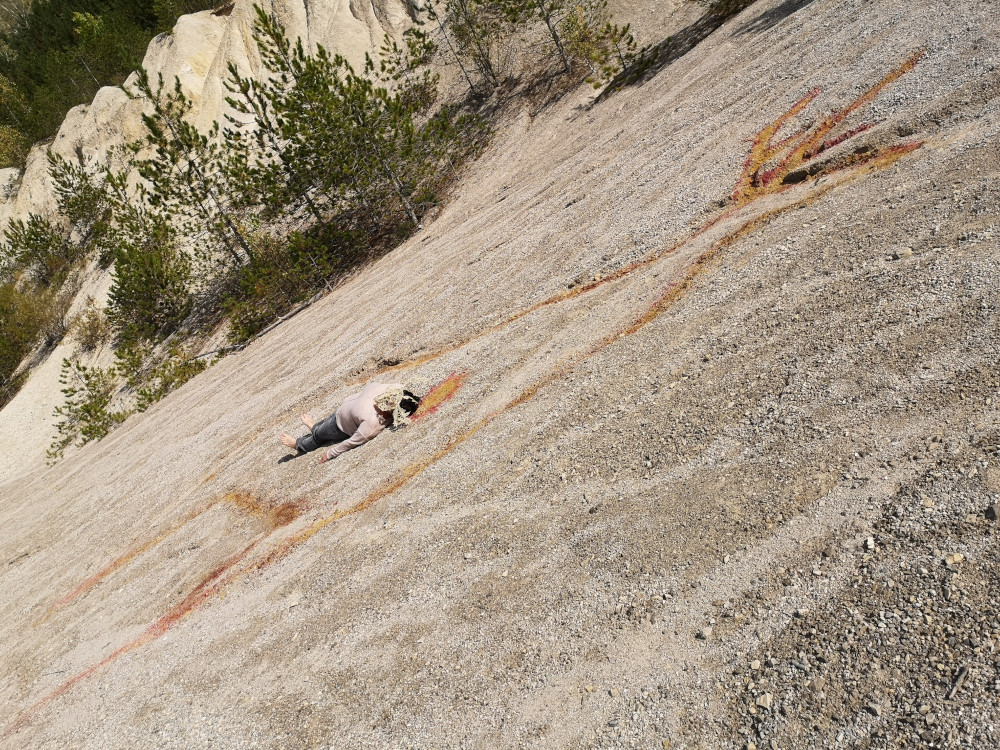
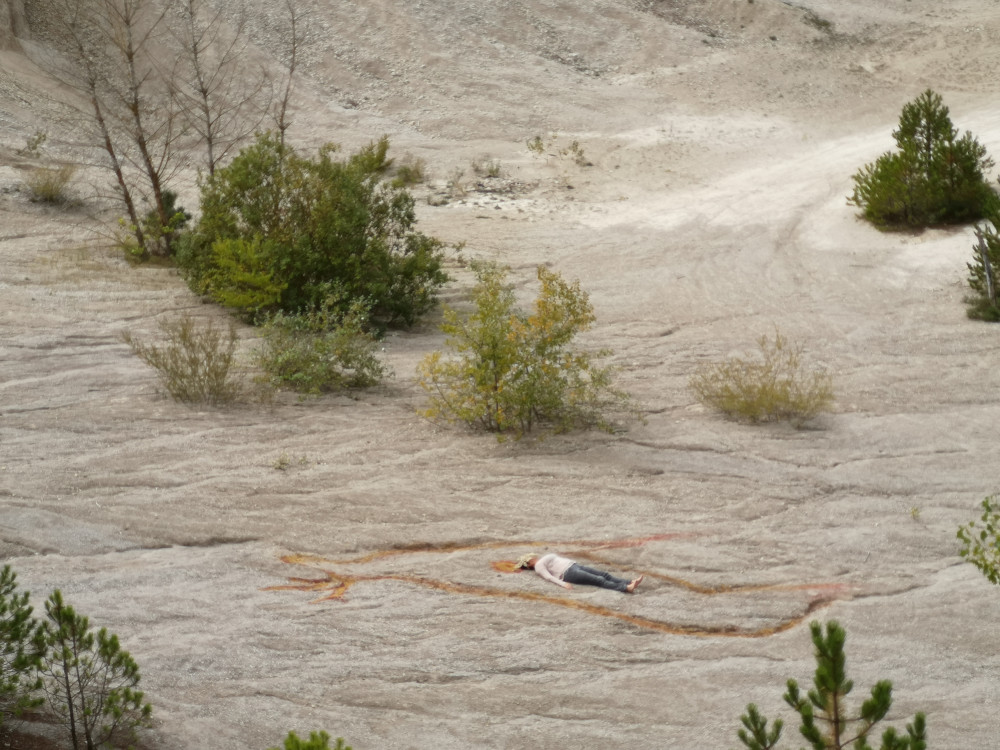
The original sketch — a two-headed elk — no longer corresponded to the place. Natural grooves and streams running through the ground already contained the outline of another deer.
The intervention was reduced to a gesture of revelation: pigments were scattered along the forms already present in the terrain.
The Szamorodni Deer emerged from the quarry rather than being drawn onto it.
A heart-like form appeared at its centre, later reading almost as a sun.



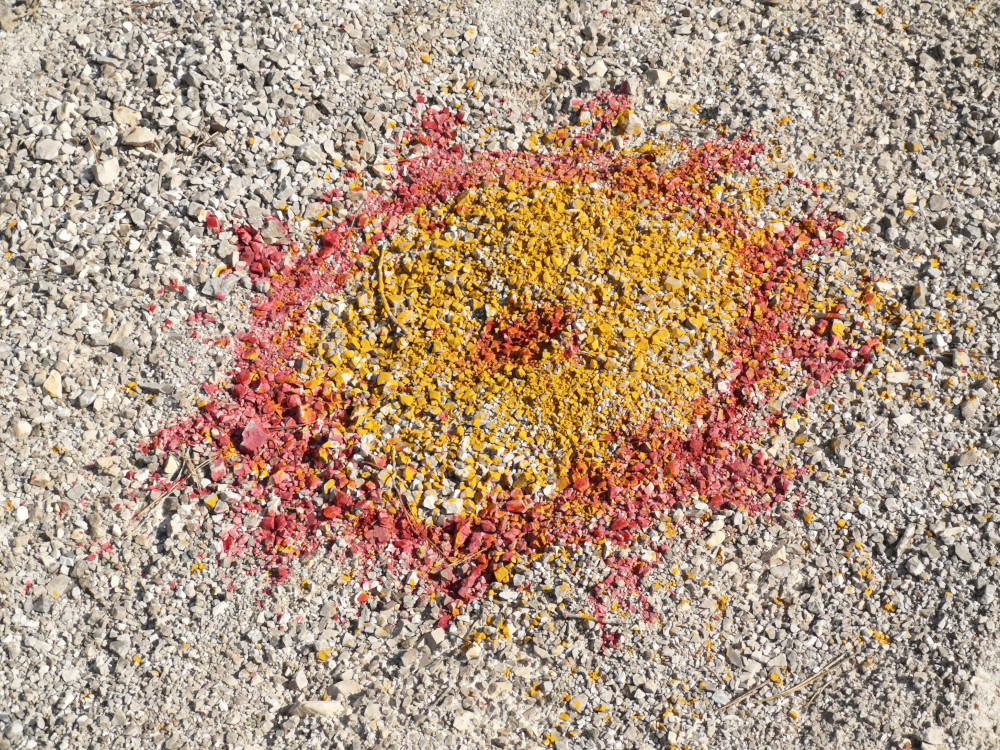
The Szamorodni Deer, 2020
Ephemeral geoglyph, approximately 3 × 5 m
Pigments: ochre, wine, chocolate; water
Technique: pigment splatter
Co-author & photographer: Dmitry Razhev
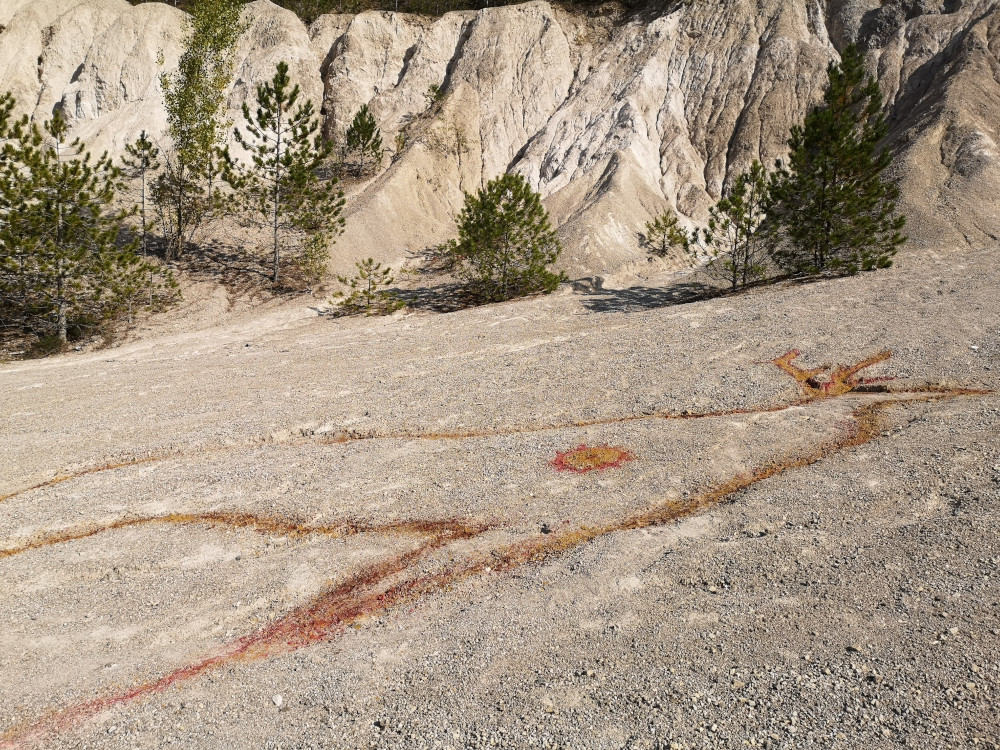
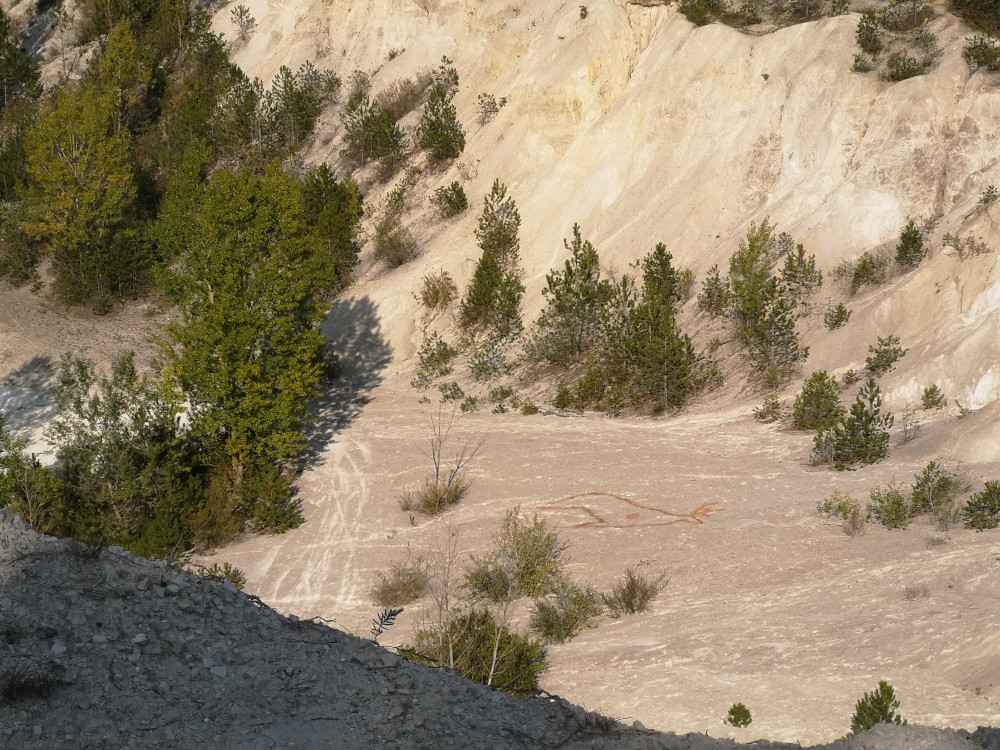
The geoglyph existed only temporarily. About a month later, it had disappeared, leaving no physical trace.
What remained was the documentation — and the experience of having followed a form that the landscape seemed to reveal.
Meditation Inside the Deer
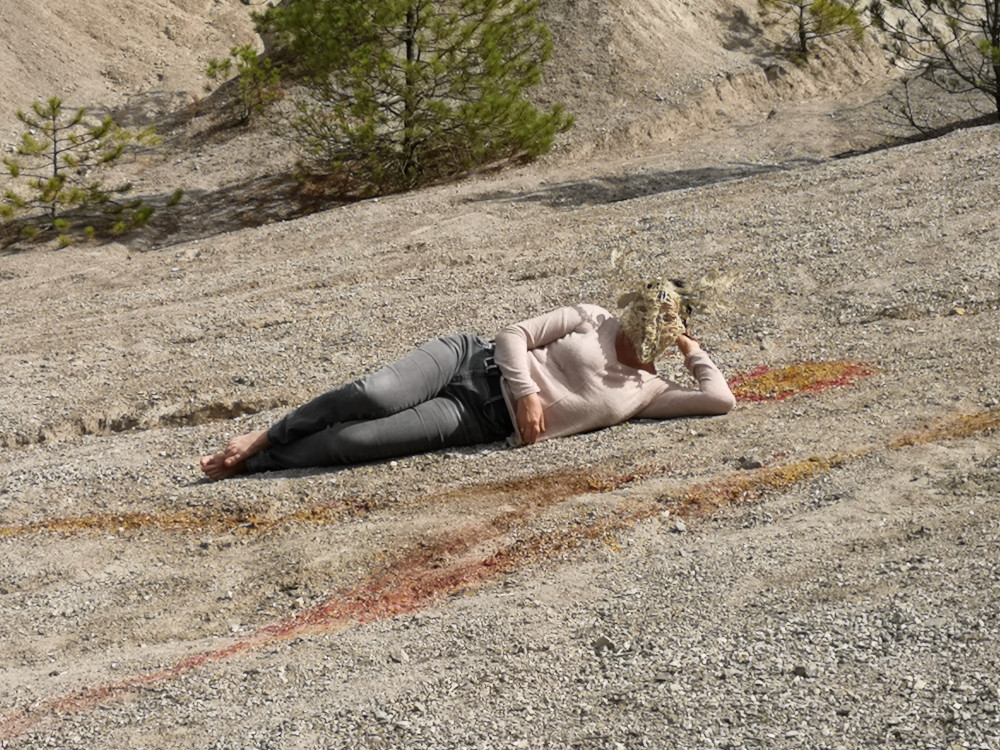
A week after the geoglyph was created, R² returned to the site.
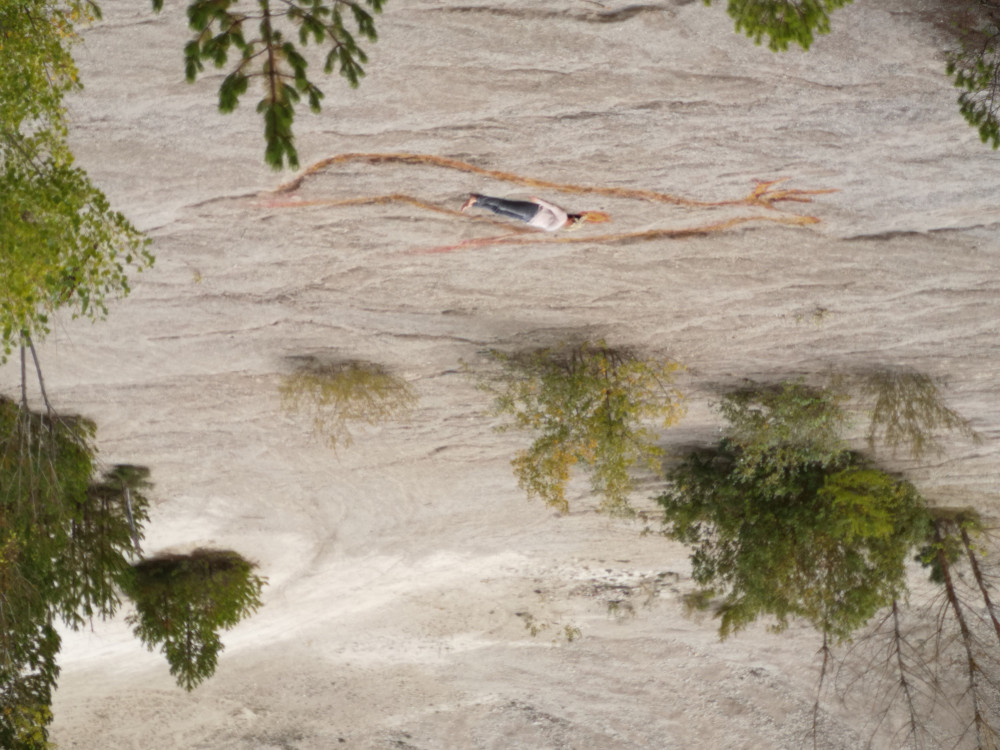
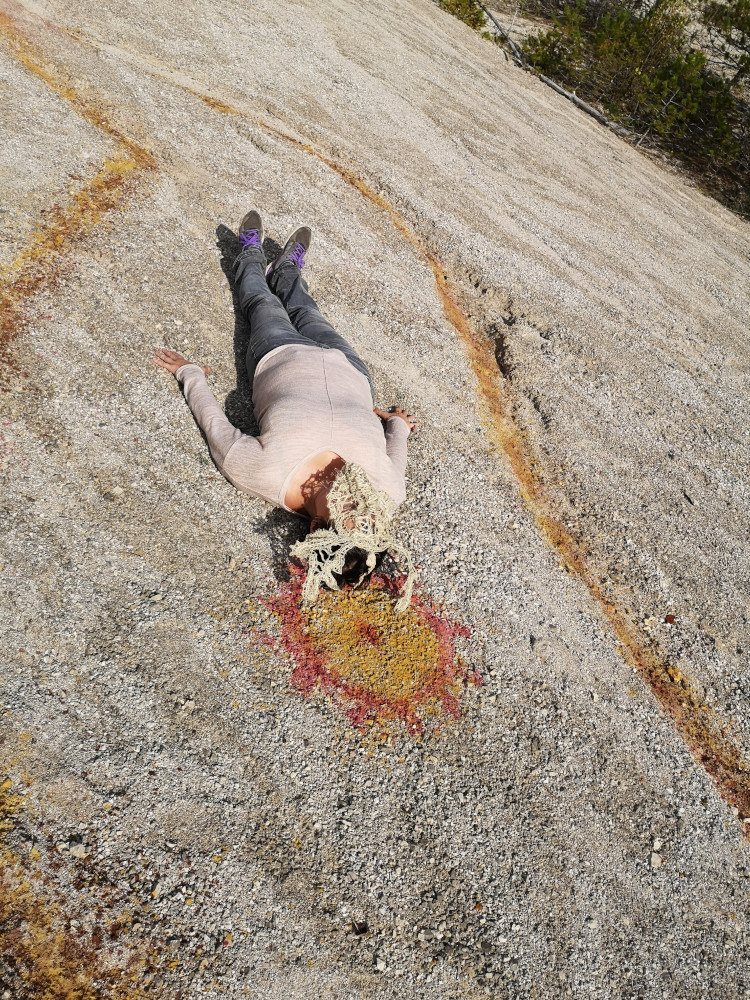
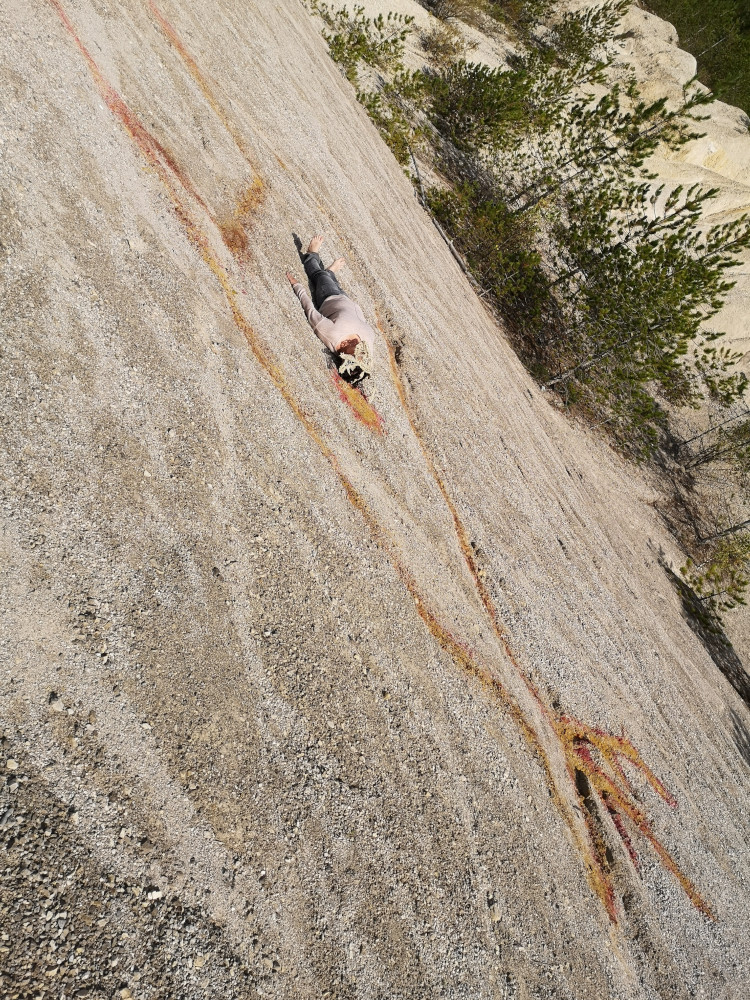
The outline of the deer became a space for a bodily action. A figure entered its form and remained within it, aligning the body with the temporary drawing in the ground.
The performance treated the geoglyph not as an image to be observed, but as a space to be inhabited.
The body became another layer within the landscape — briefly occupying a form that had itself emerged from the terrain.

Spiral with a Deer Hoof
Another intervention developed from the idea of the deer as a trace rather than an image.
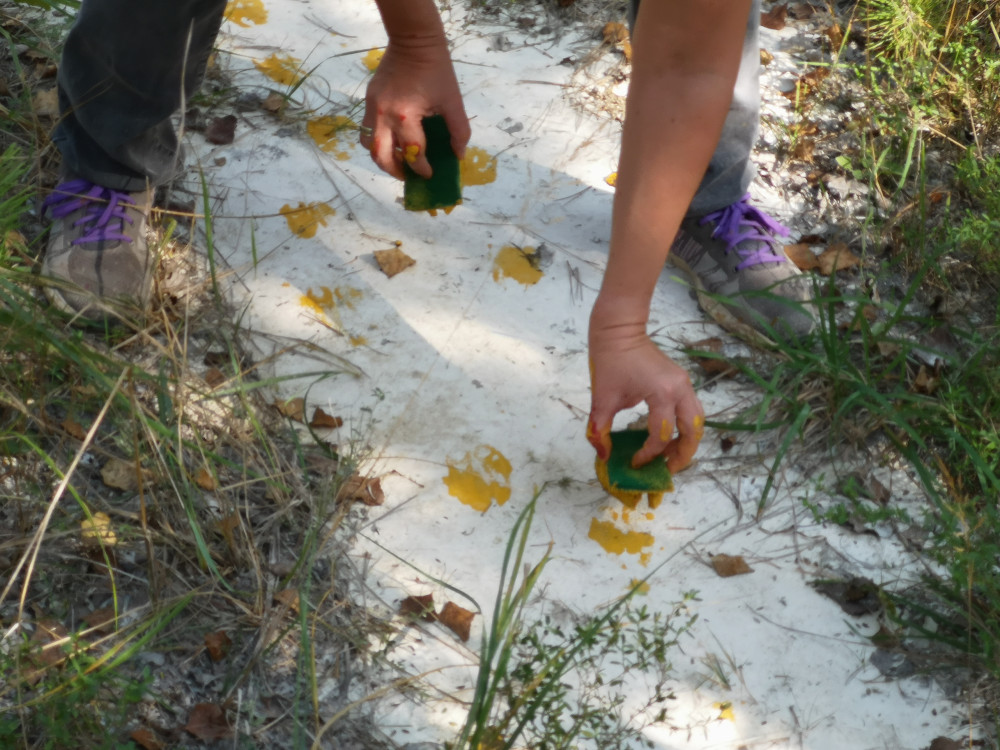
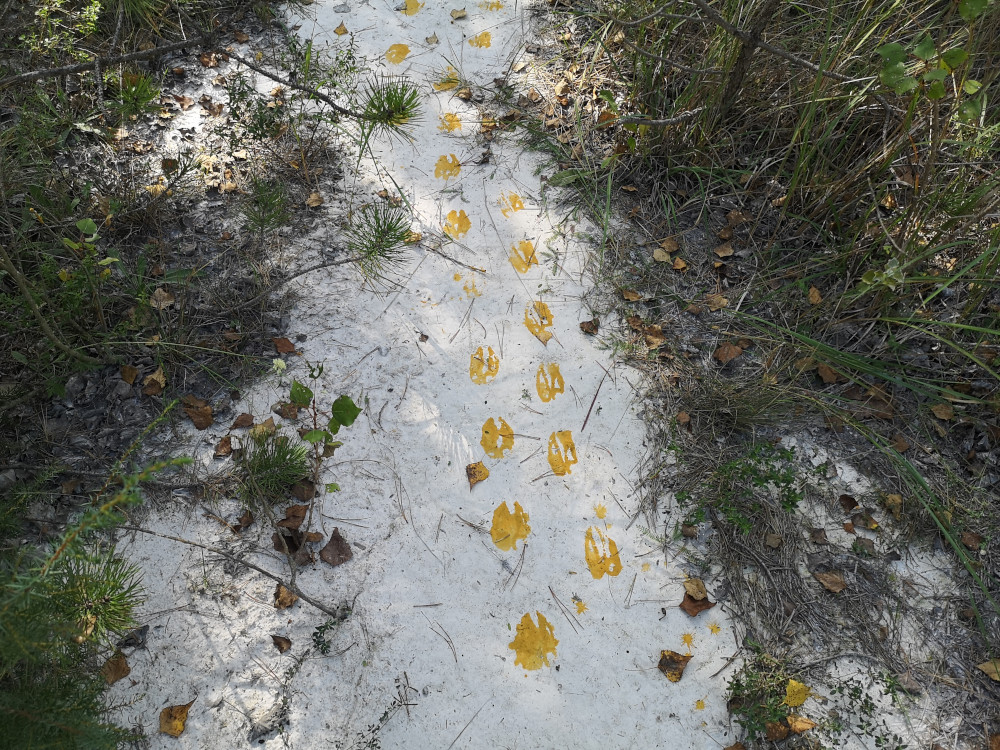
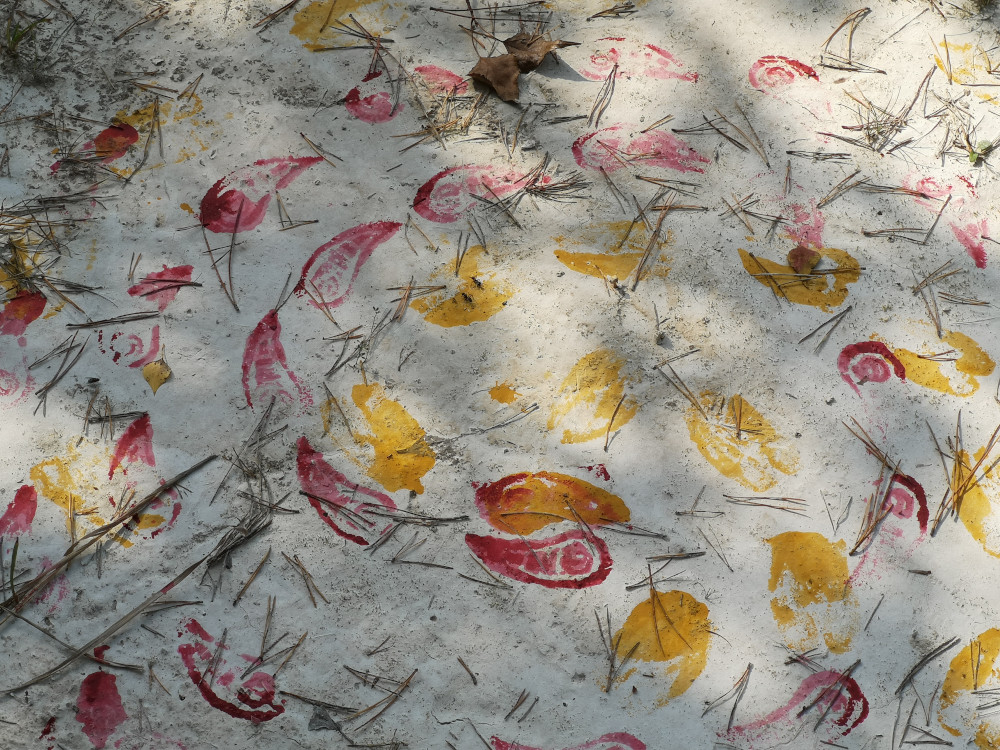
Using a sponge stamp shaped as a deer hoof, R² created a double spiral in the quarry: one movement turning inward in ochre, another unfolding outward in red.
Seen from above, the spiral suggested a movement through time — contraction and expansion, return and departure.
The form existed only for the duration of the action.
Cave Deer
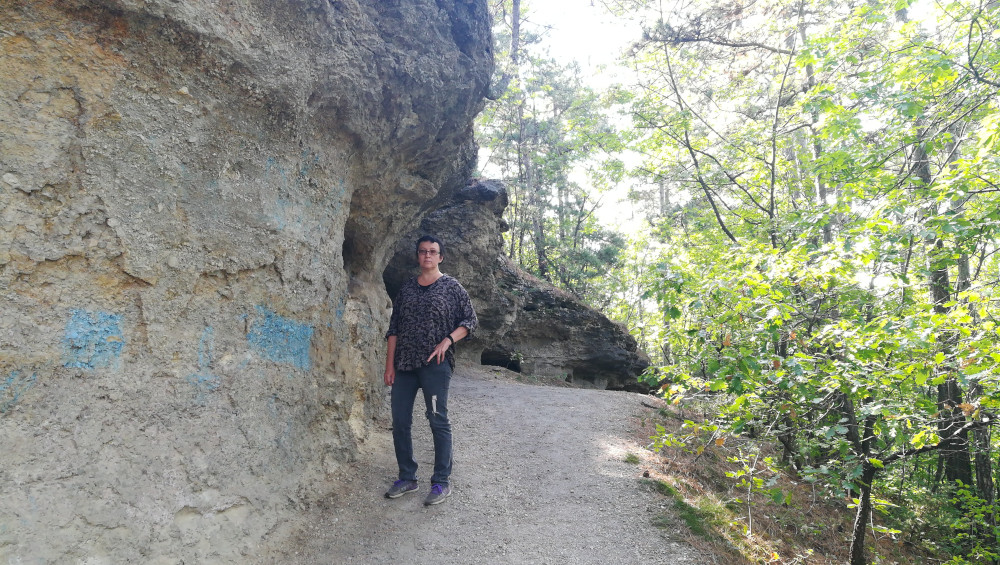
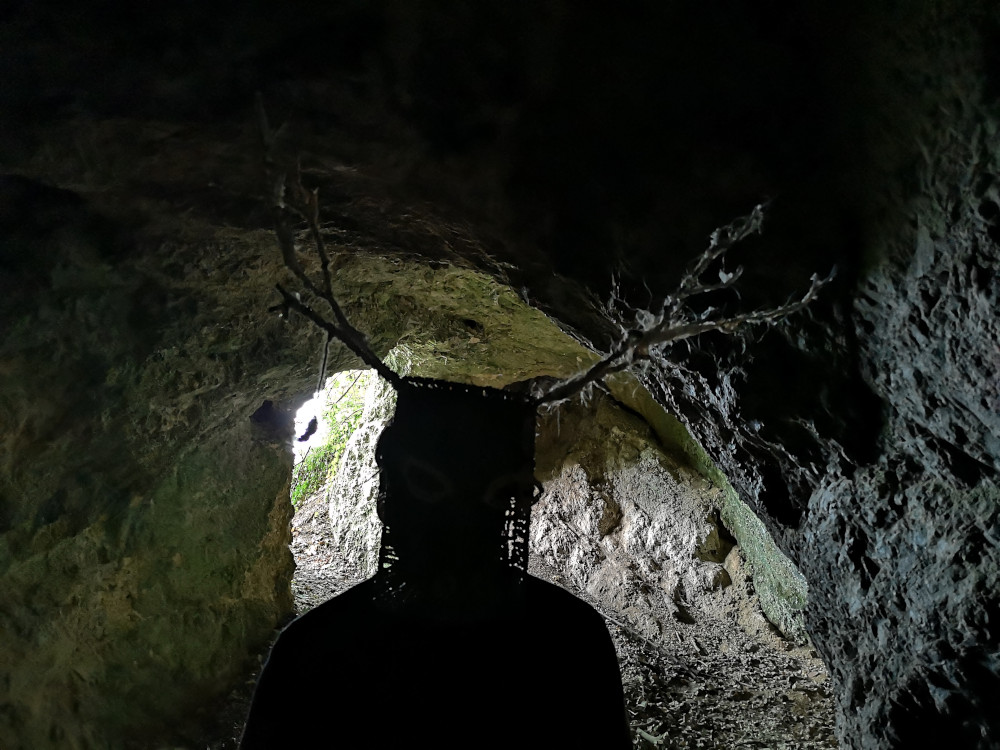
Near the quarry, we discovered a small man-made cave, probably created during stone extraction.
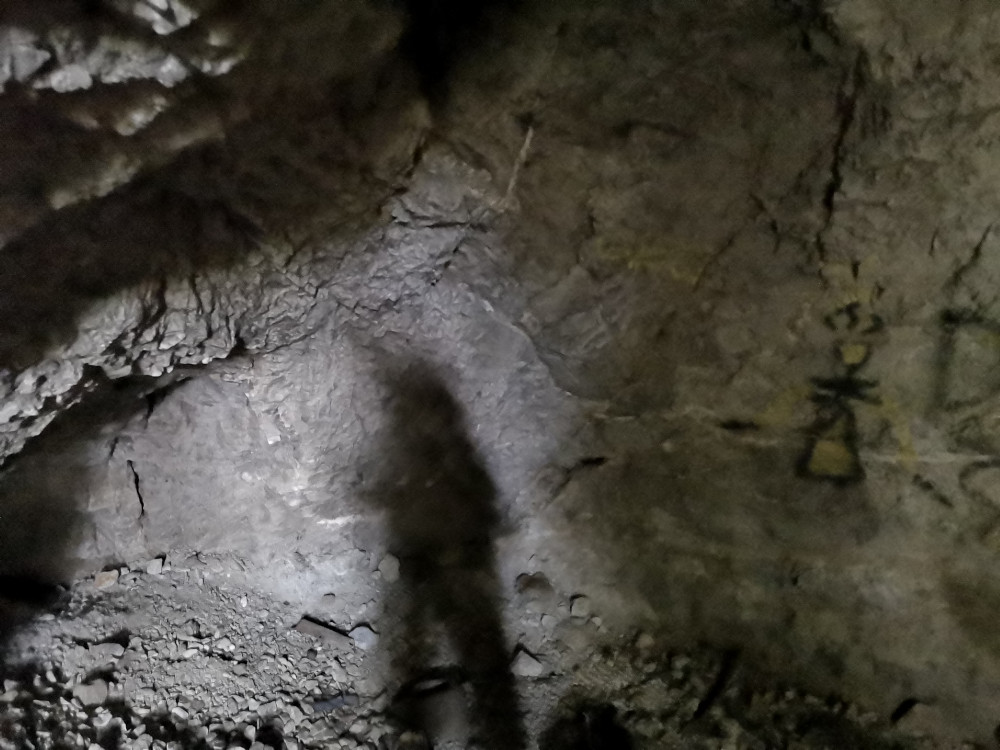
Inside this excavated space, R² staged Cave Deer, a photographic performance in which the human body and its shadow became temporary images on the stone walls.
The cave introduced another layer to the site: beneath the open quarry landscape, the extracted stone became an enclosed space of shadow, memory, and presence.
The work shifted the encounter from the exposed surface of the quarry to its interior.
Revealed Realism
The Gyenesdiás quarry became a particularly direct example of RR-method: the work changed because the place changed the conditions of the work.
The original site was unavailable. The original sketch no longer fitted the terrain. Instead of forcing the planned image onto another landscape, we followed what the new site offered.
The deer was already there — in the grooves, streams, stones, and contours of the ground.
The artistic gesture was to make it visible.
The work therefore did not begin with an image and move toward the landscape. It began with attention, and allowed the landscape to determine the image.
The quarry was not a backdrop. It was the source of the form.
Digital traces
Instagram · Régi kőbánya
Instagram · The Szamorodni Deer
Instagram · The Szamorodni Deer
Instagram · Meditation Inside the Deer
Instagram · Spiral with a Deer Hoof
Instagram · Cave Deer