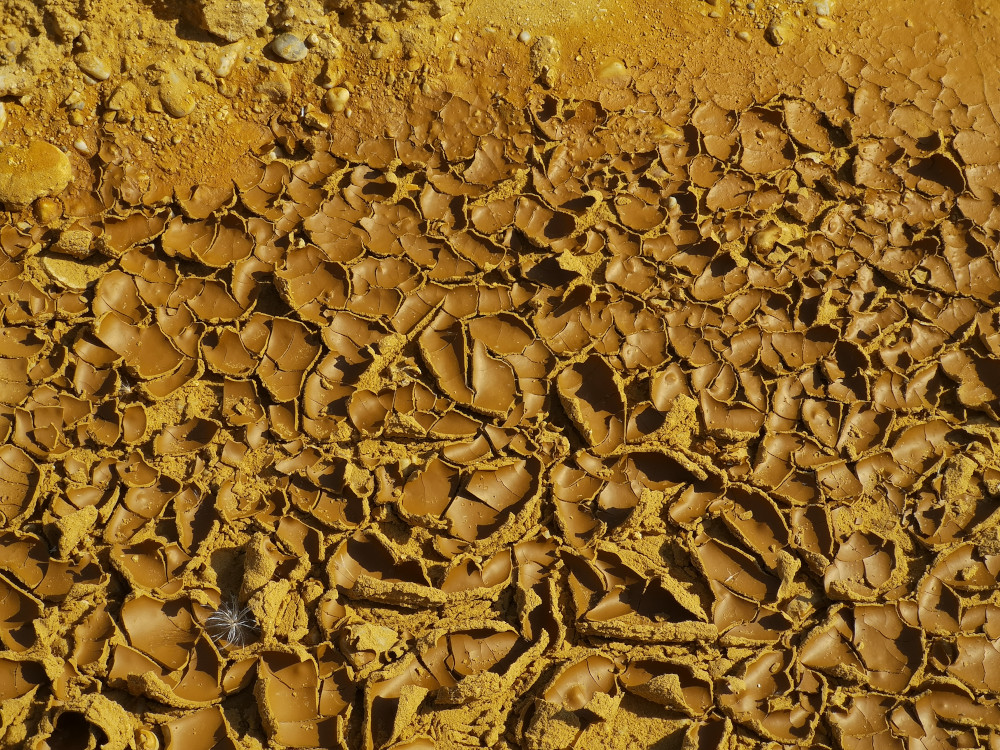
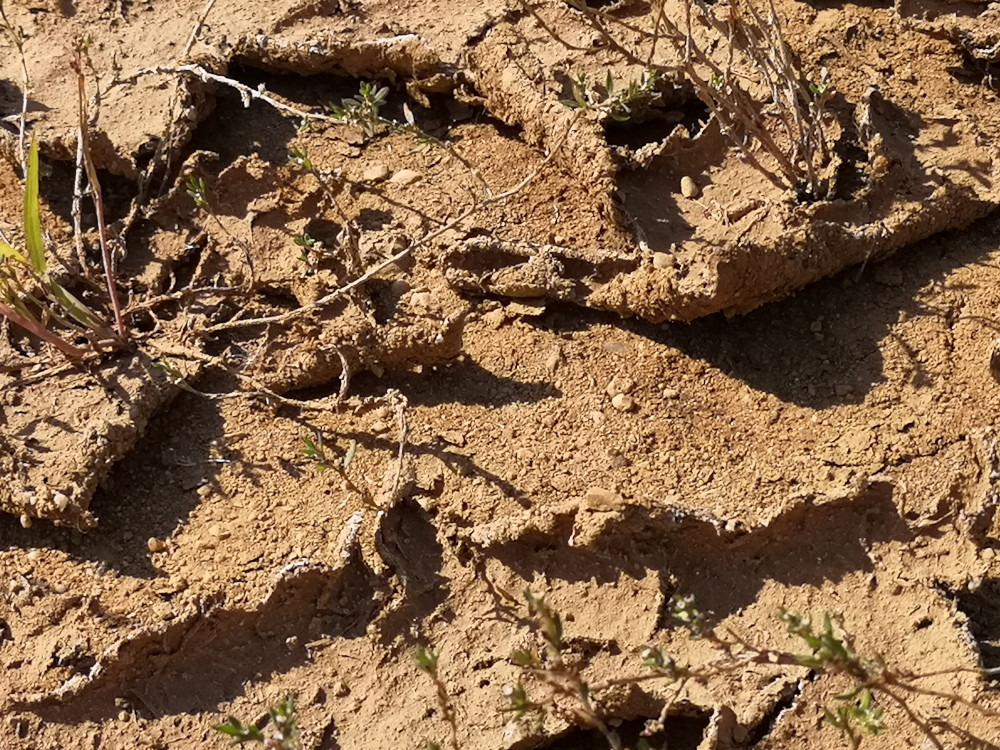
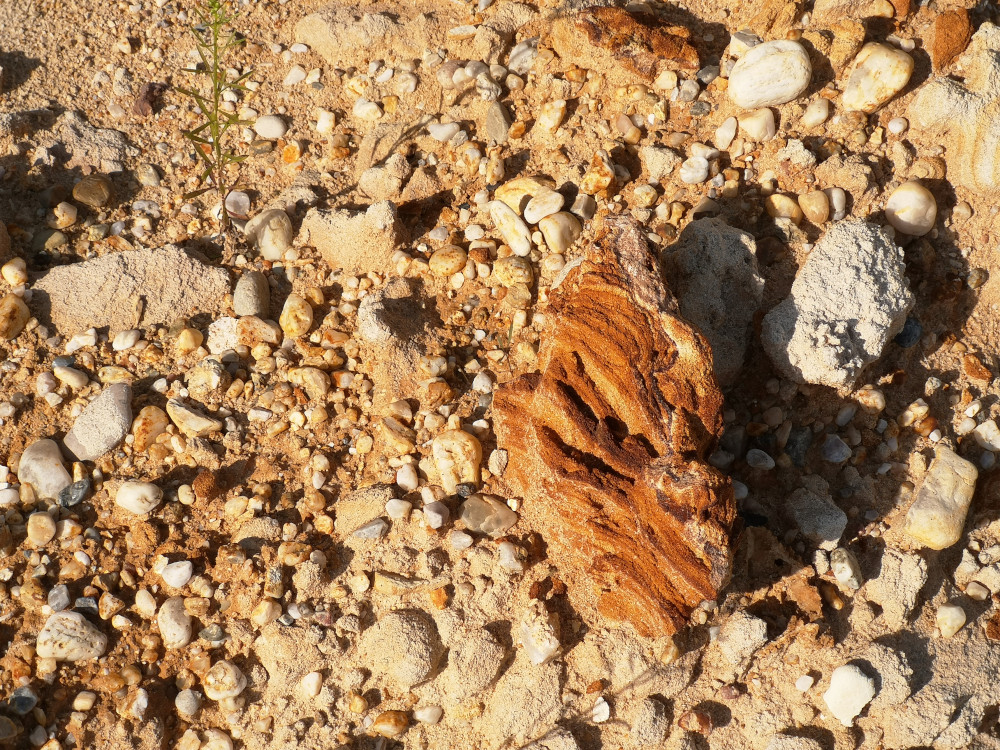
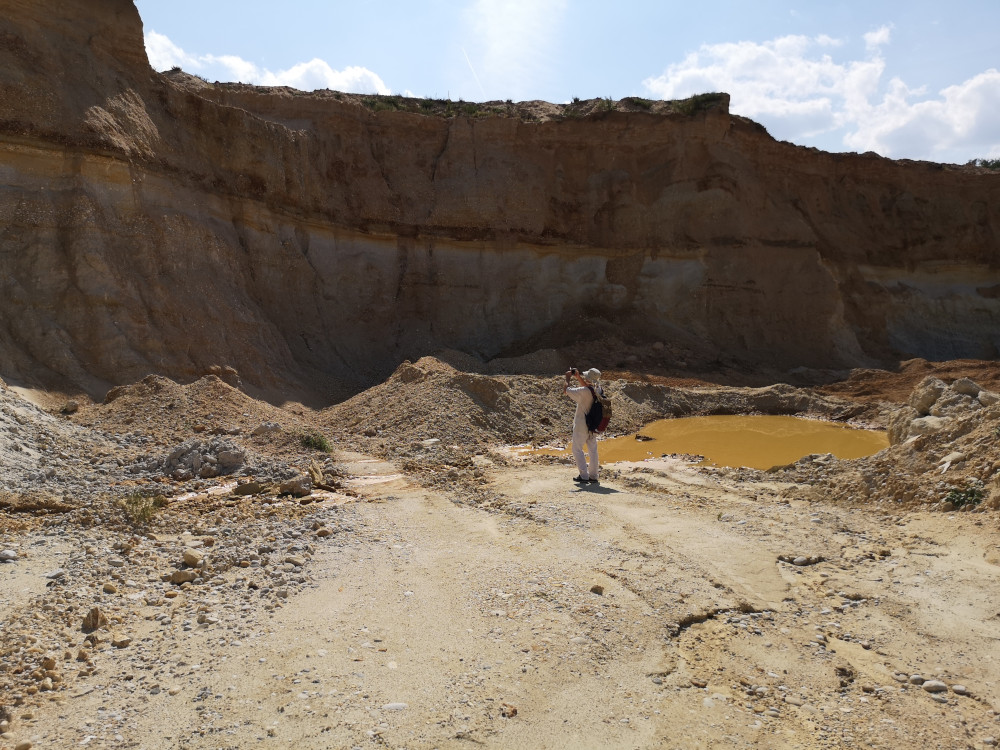
The “Quarry as Witness” series is an art-research project in which quarries are approached not merely as geological formations, but as active participants, guardians, and witnesses of historical, natural, and cultural processes.
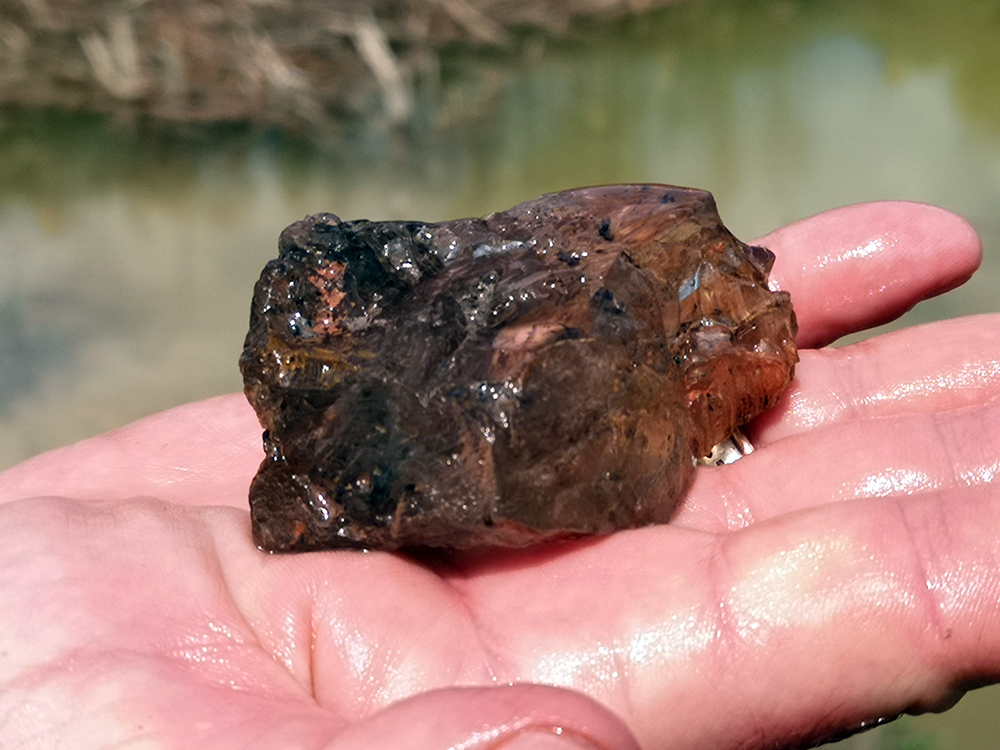
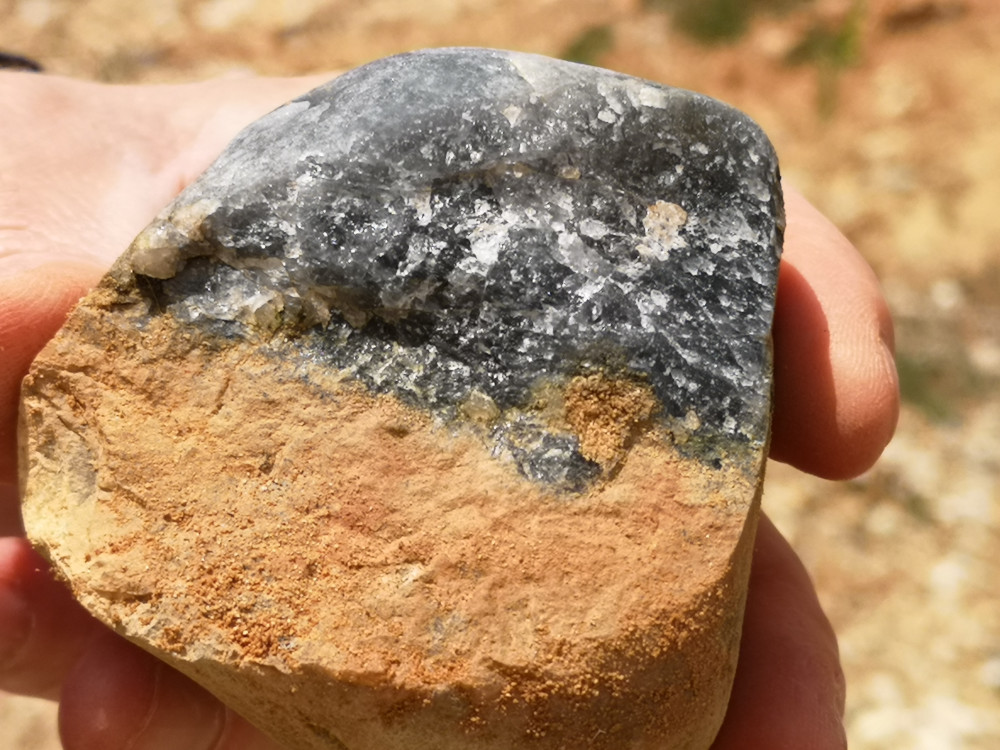
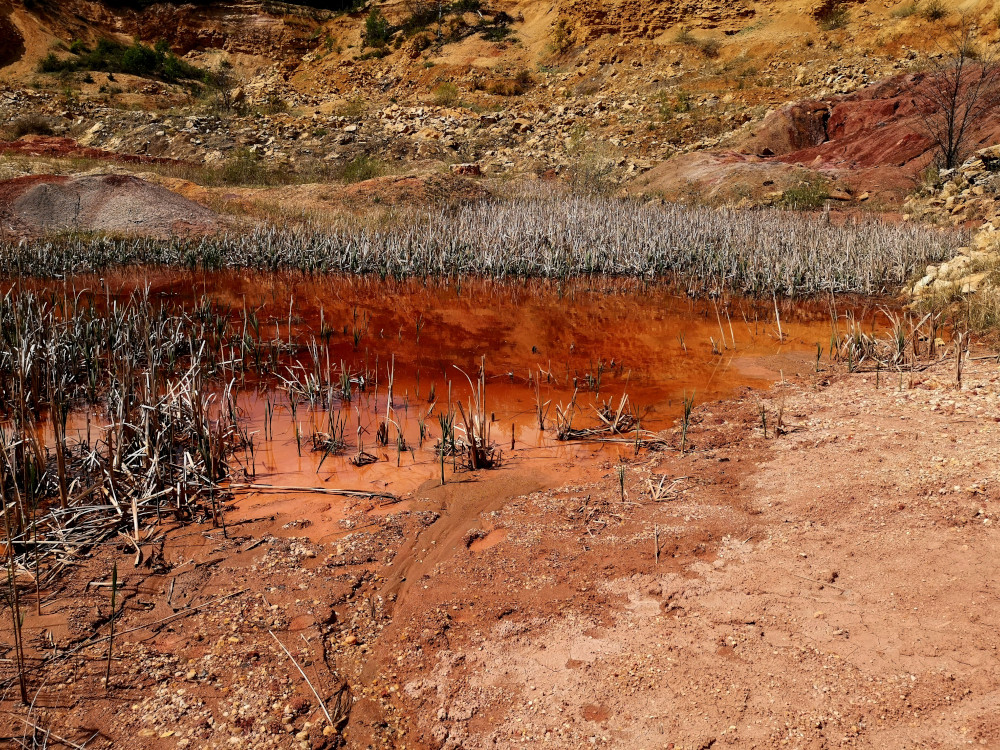
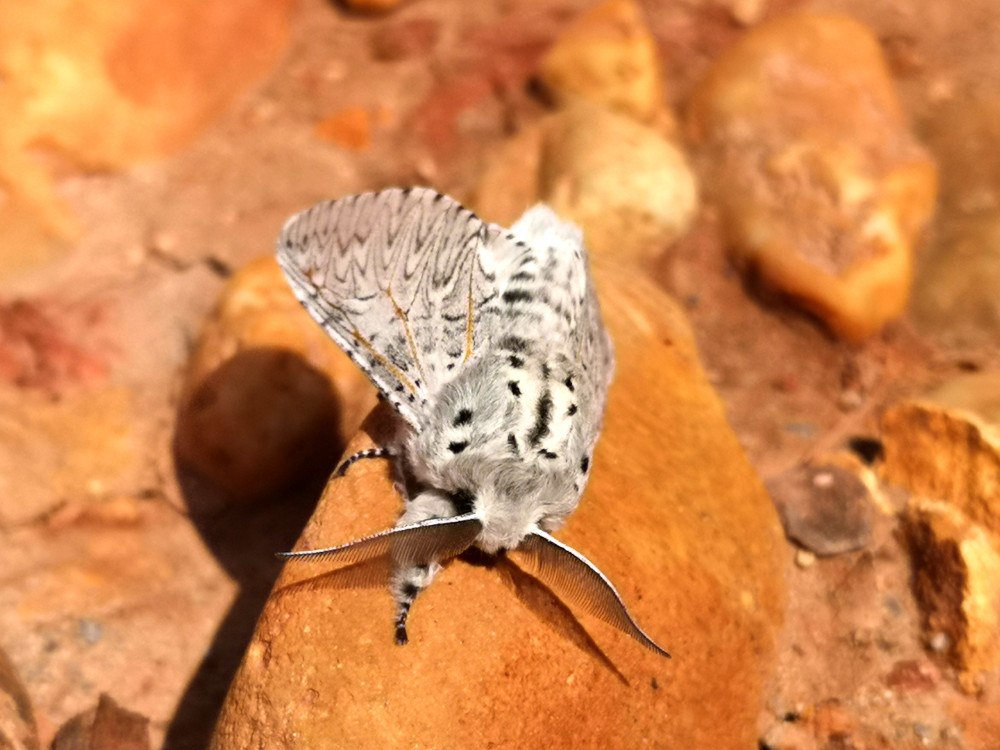
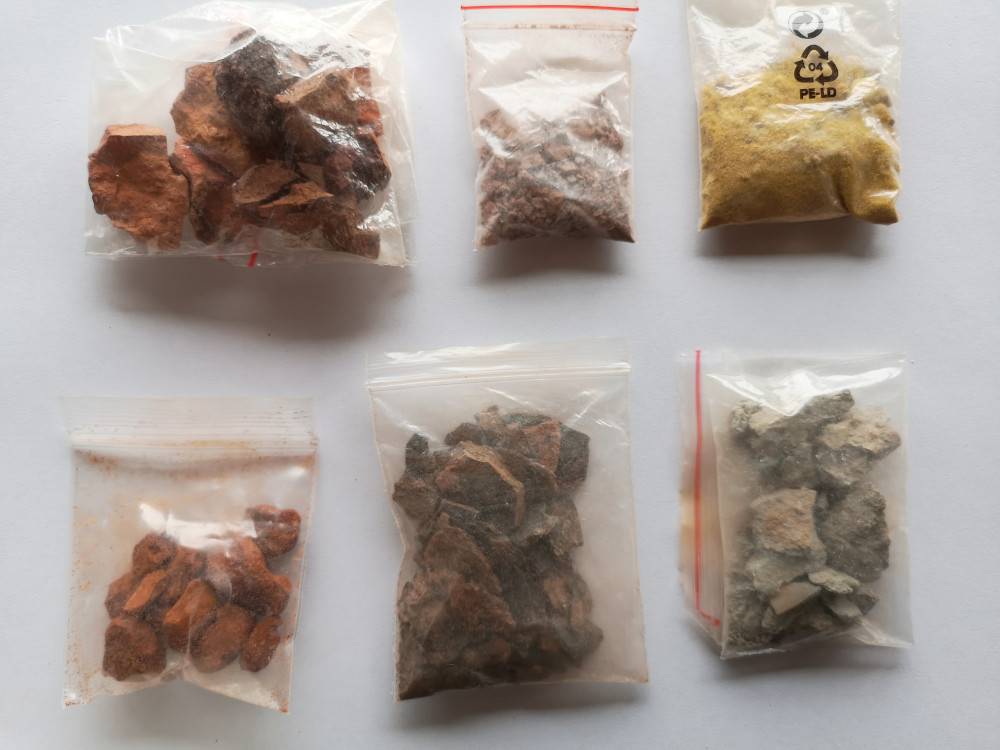
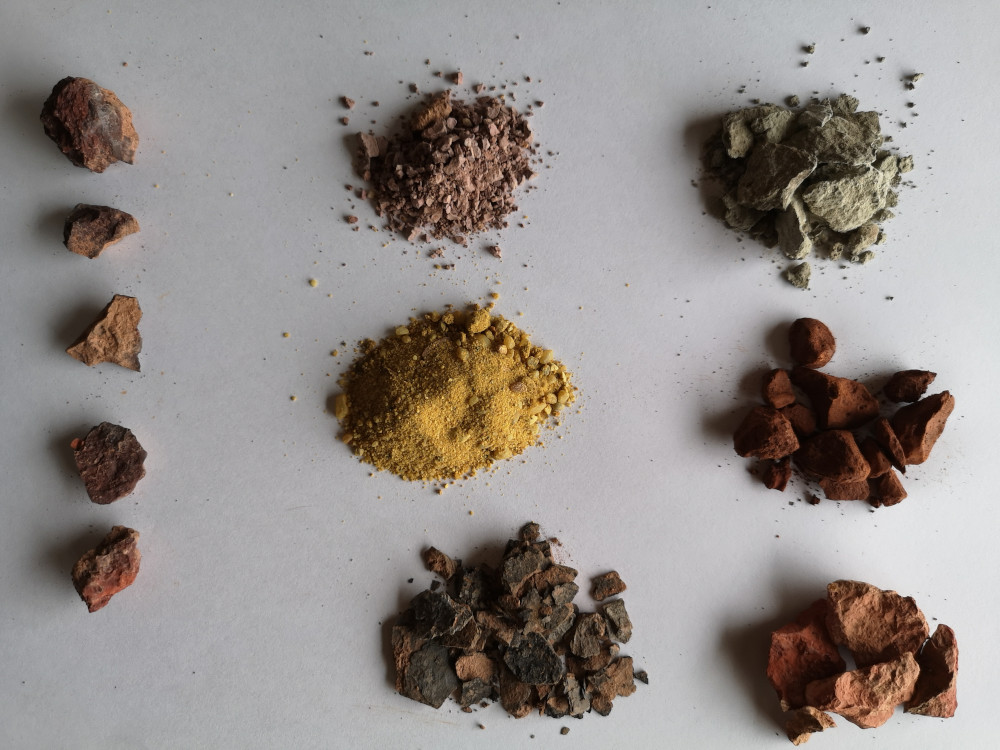
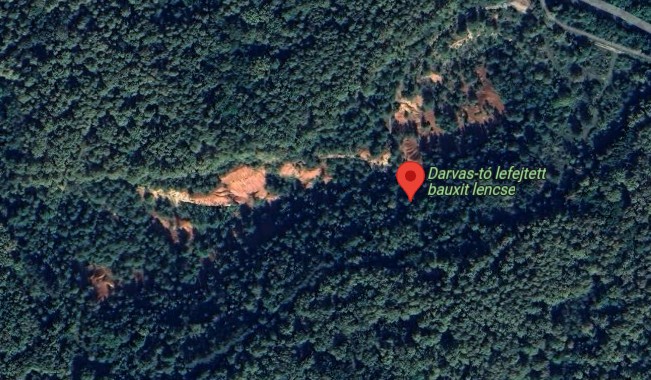
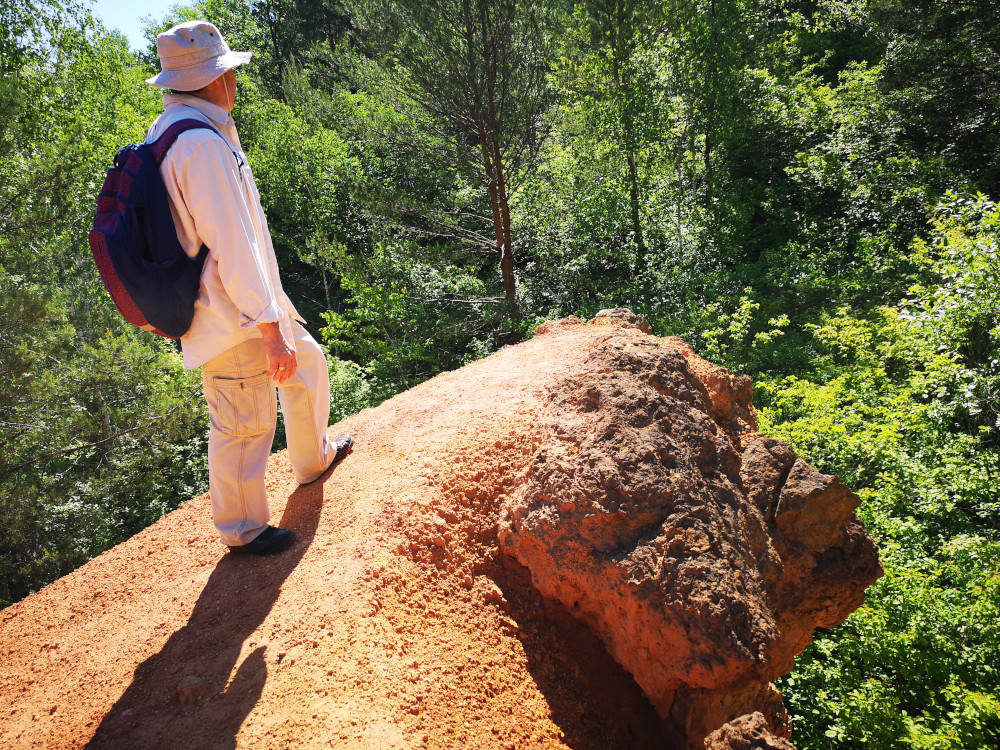
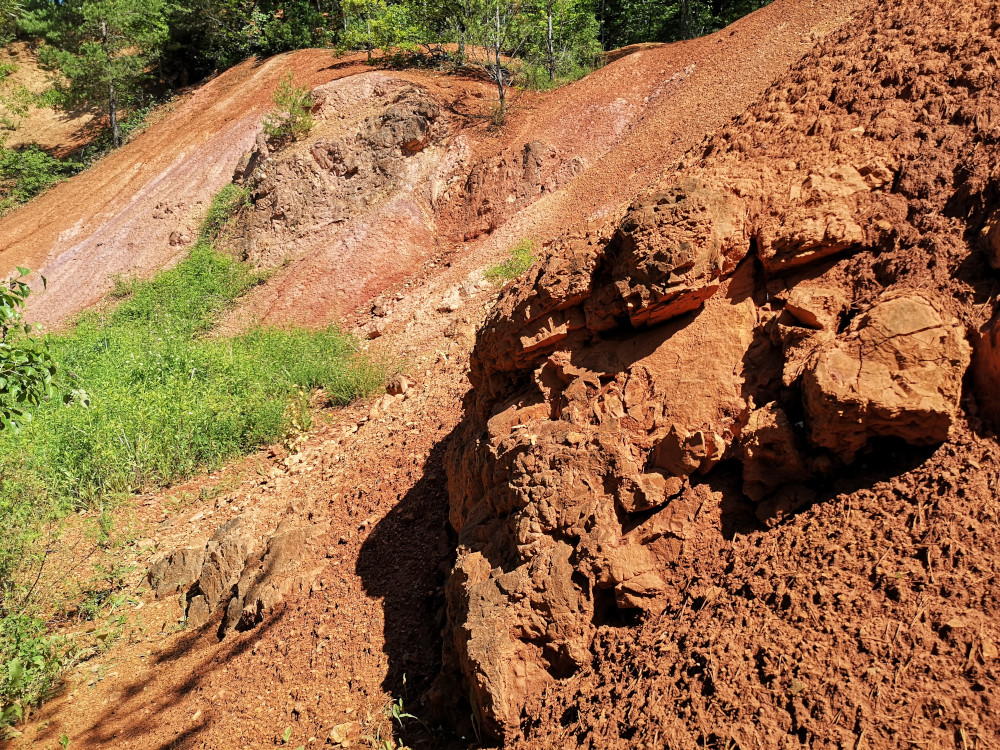
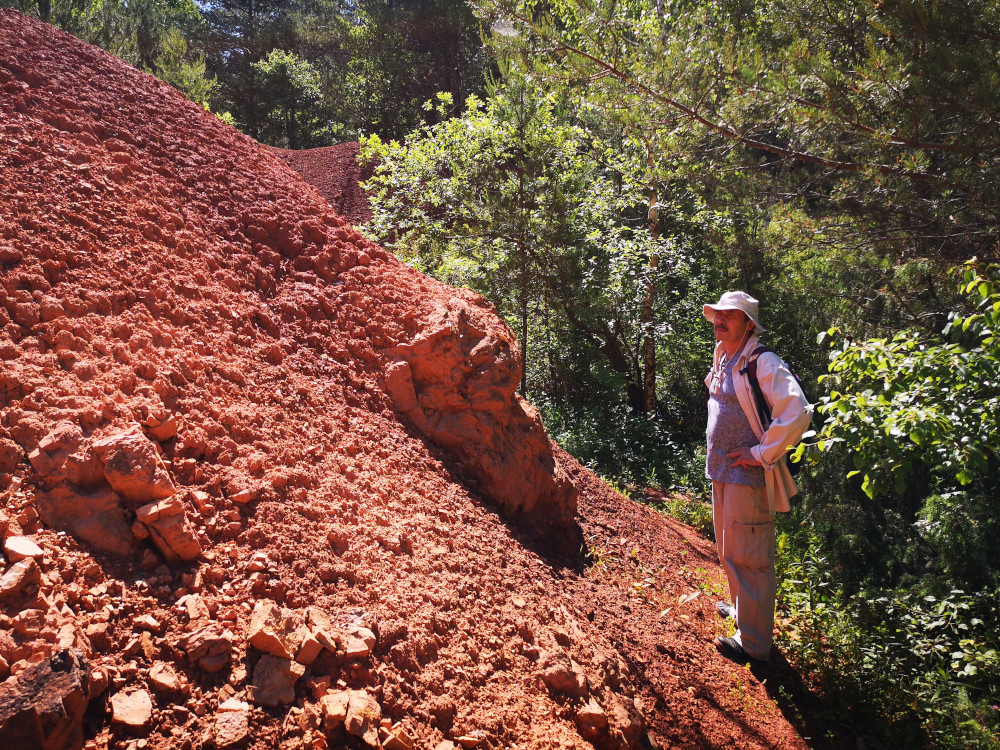
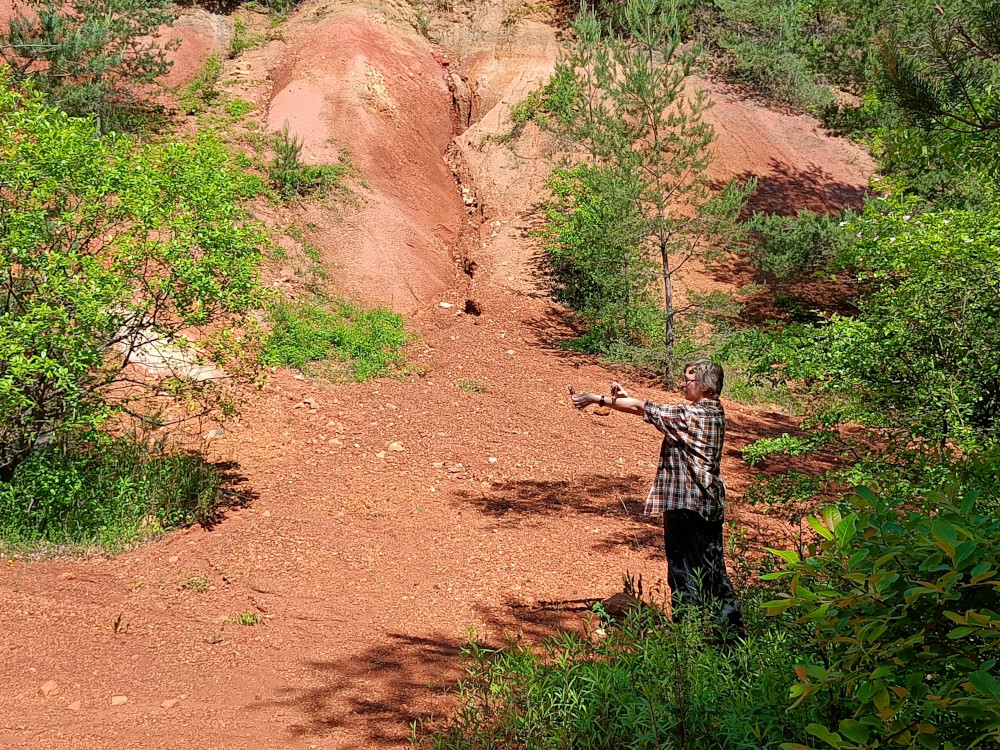
Old Gyenesdiás QuarryPusztamiské Gravel QuarryNyirádi Bauxite QuarryBauxite lens of Lake Darvash
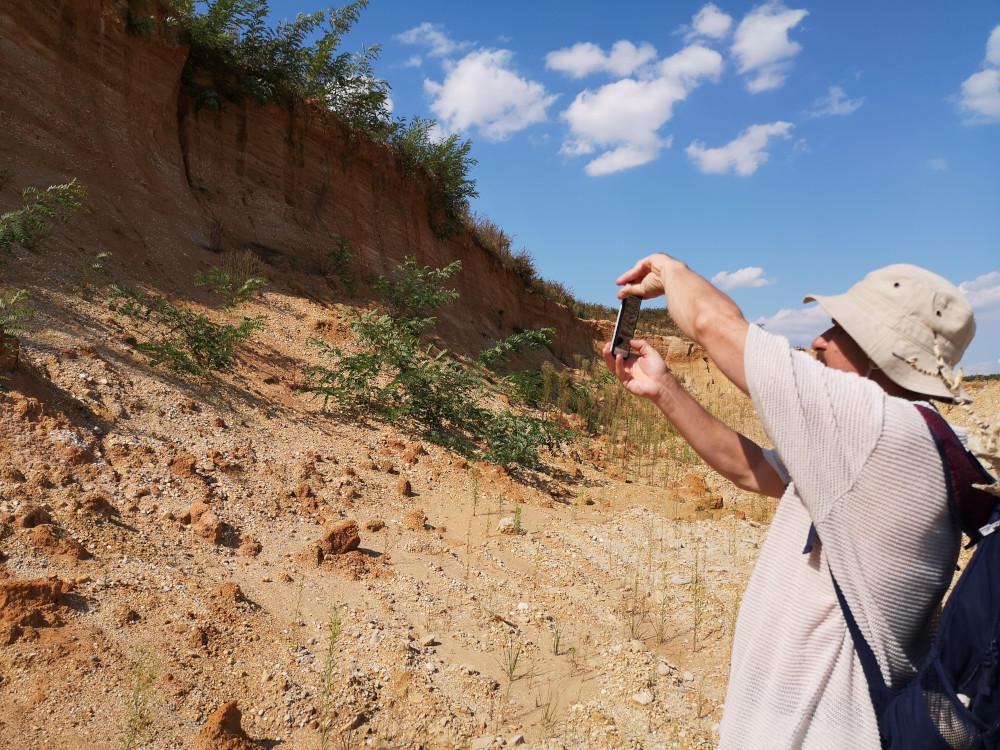
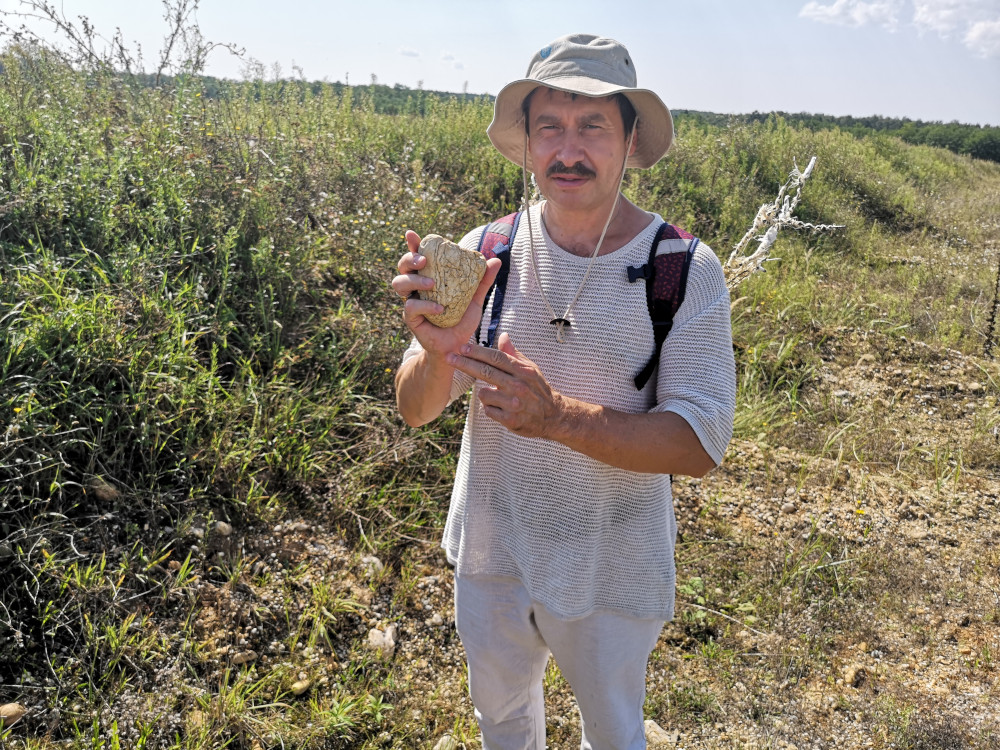
We travel through both active and abandoned quarries, documenting not only stratigraphy and landscapes, but also the ways in which humans interact with these carved bodies of earth. We are as interested in the fossilized traces of flora and fauna as in the scars of human action, stories of neglect, and layers of memory.
At each site we employ the method of Revealed Realism (RR) —a blend of documentary observation, poetic editing, scientific data, and performative intervention. This approach allows us not to reconstruct history, but to listen to the place itself, giving it voice through image, body, sound, shadow, and movement.
The series encompasses field research, video works, performative practices, essays, photography, and cartography. It is a dialogue between what lies beneath our feet and what lies within us.
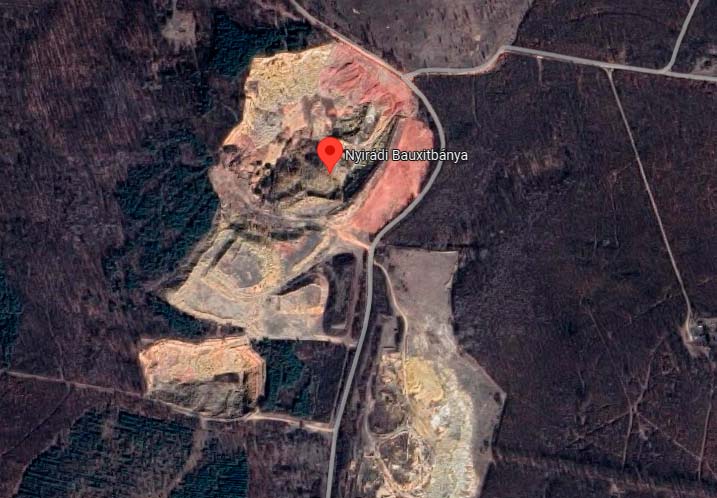
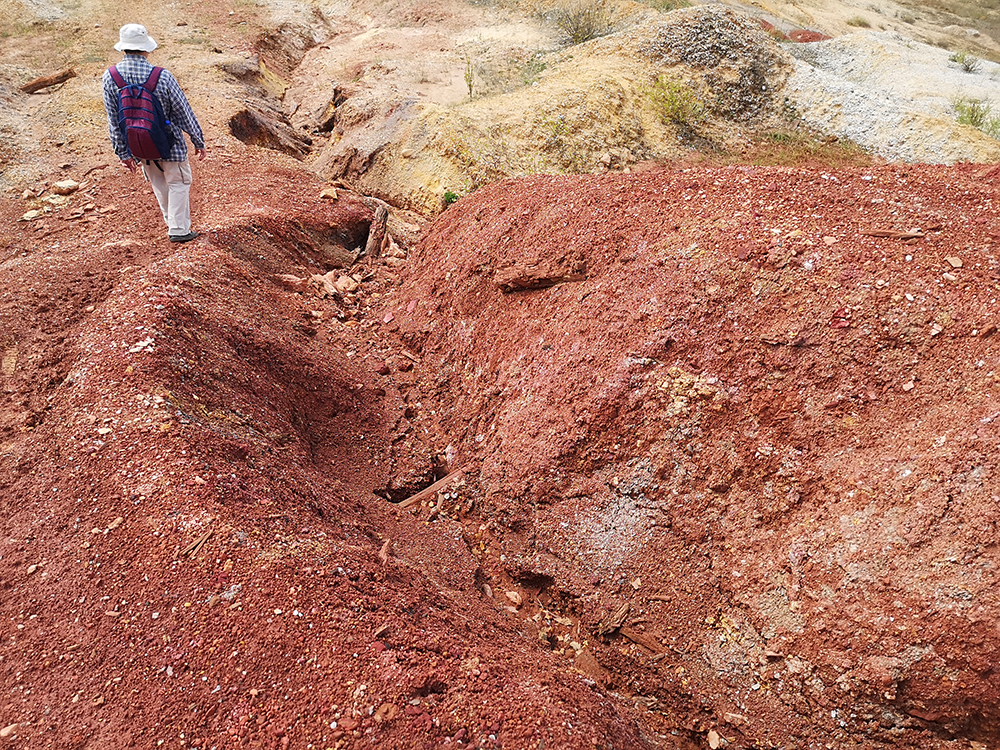
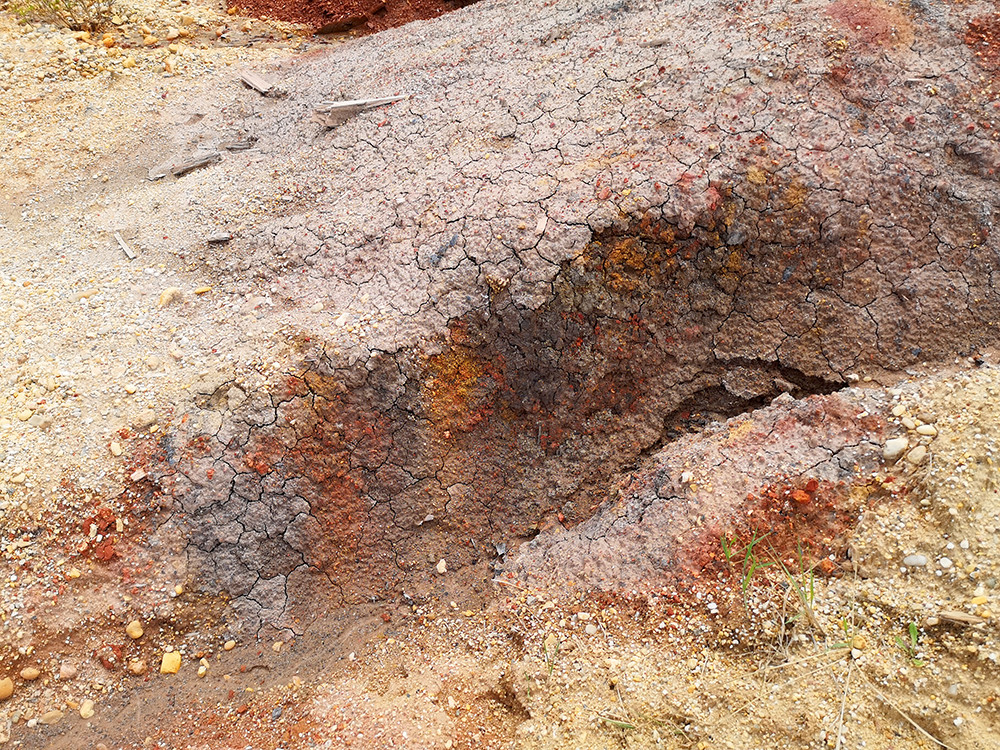
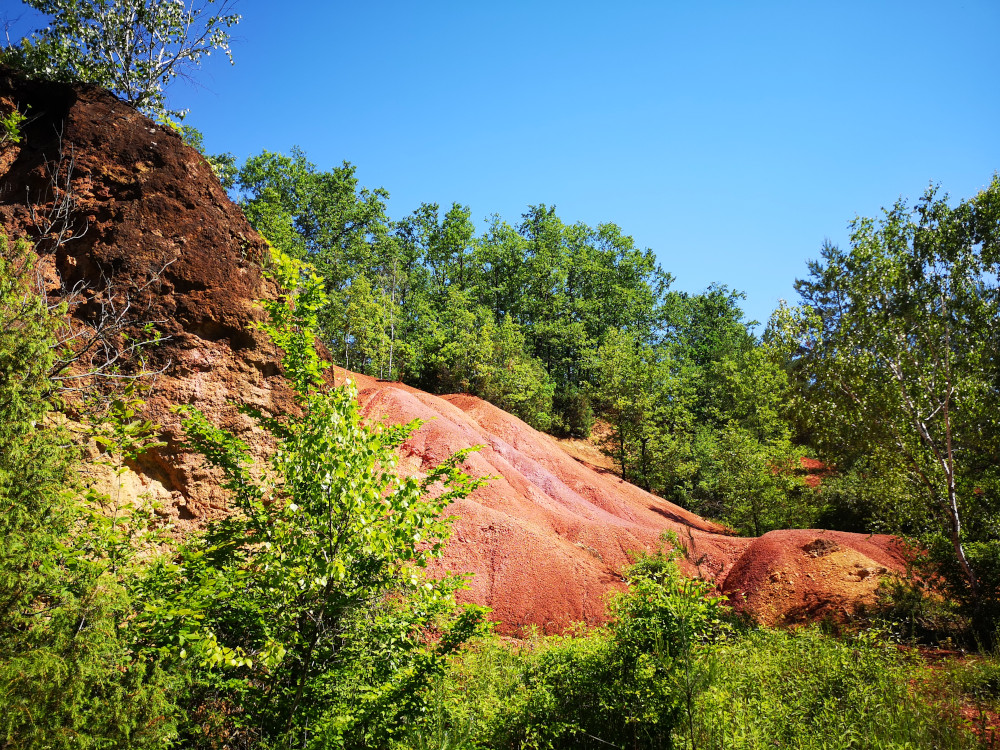
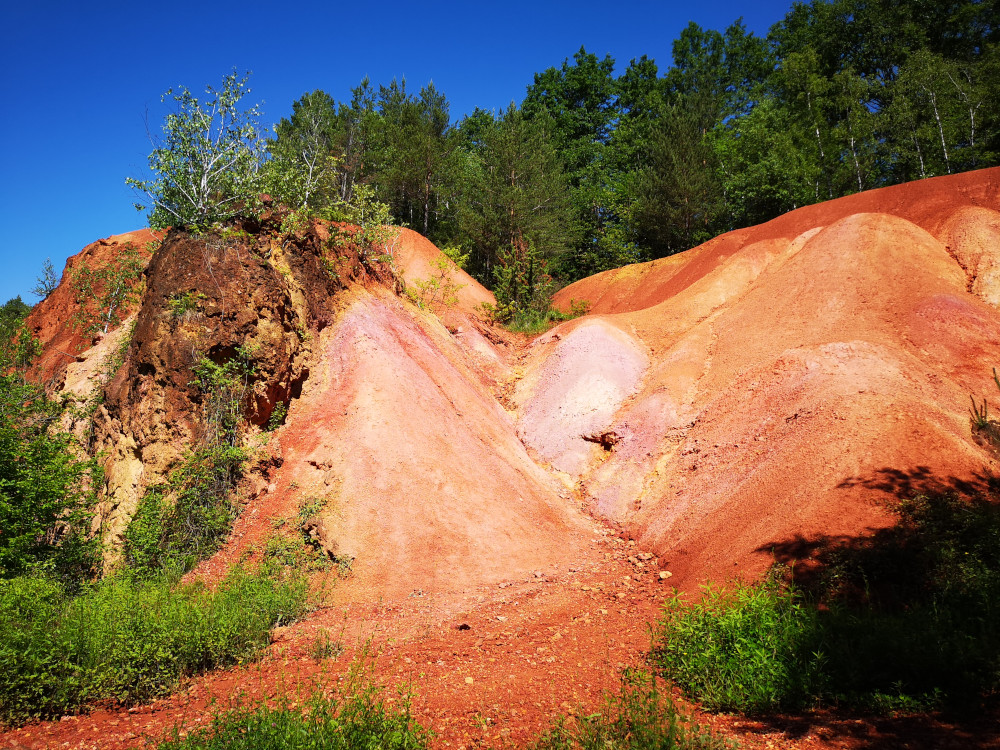
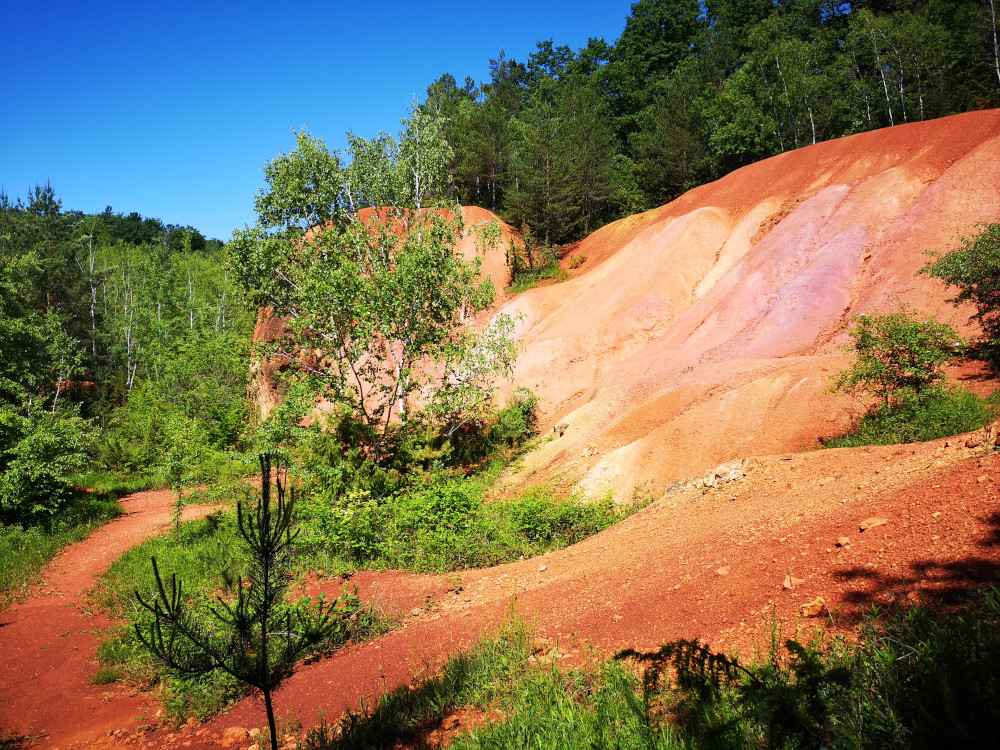
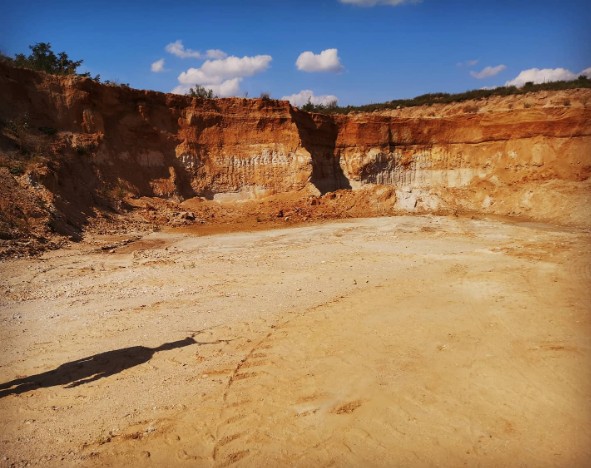
The Nyirád Bauxite Quarry is a place where geology, industry, and art meet. Once a site of intense bauxite mining, it now reveals colorful slopes, water-filled basins, and layers of natural and human history. Through performance, pigment collection, and immersive artistic practice, we bring this landscape’s memory to life.
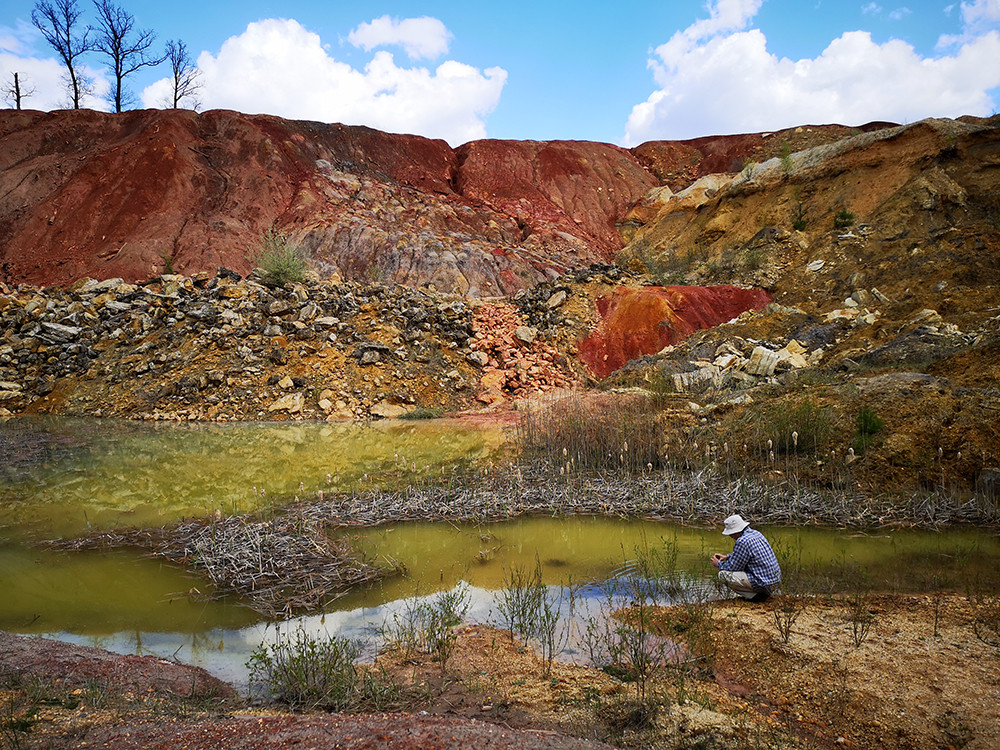
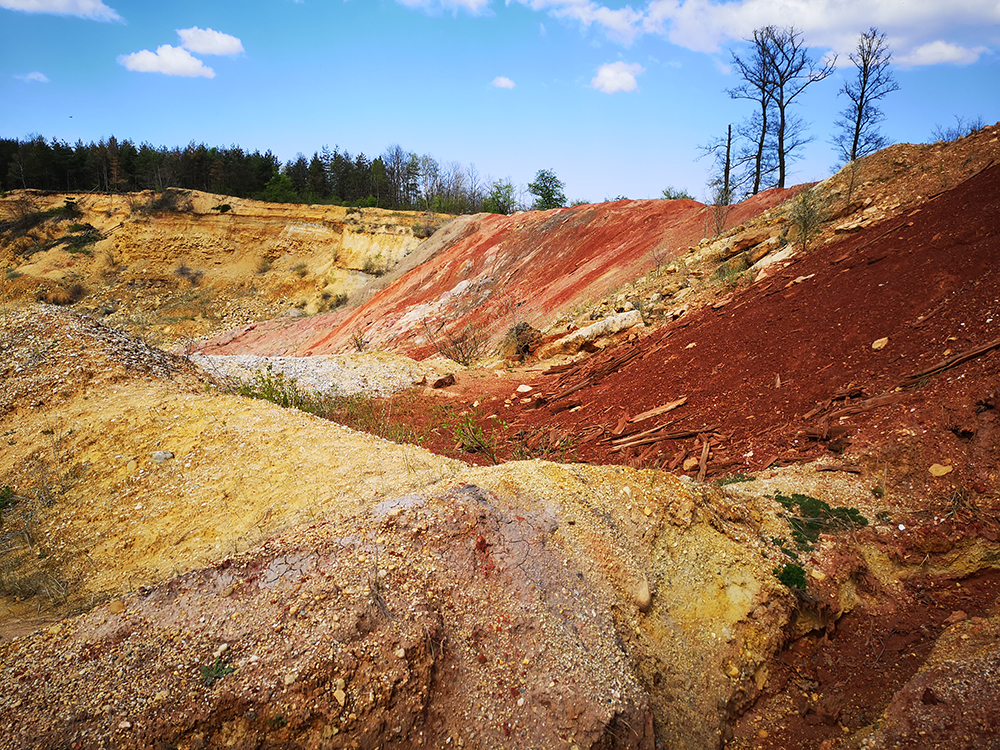
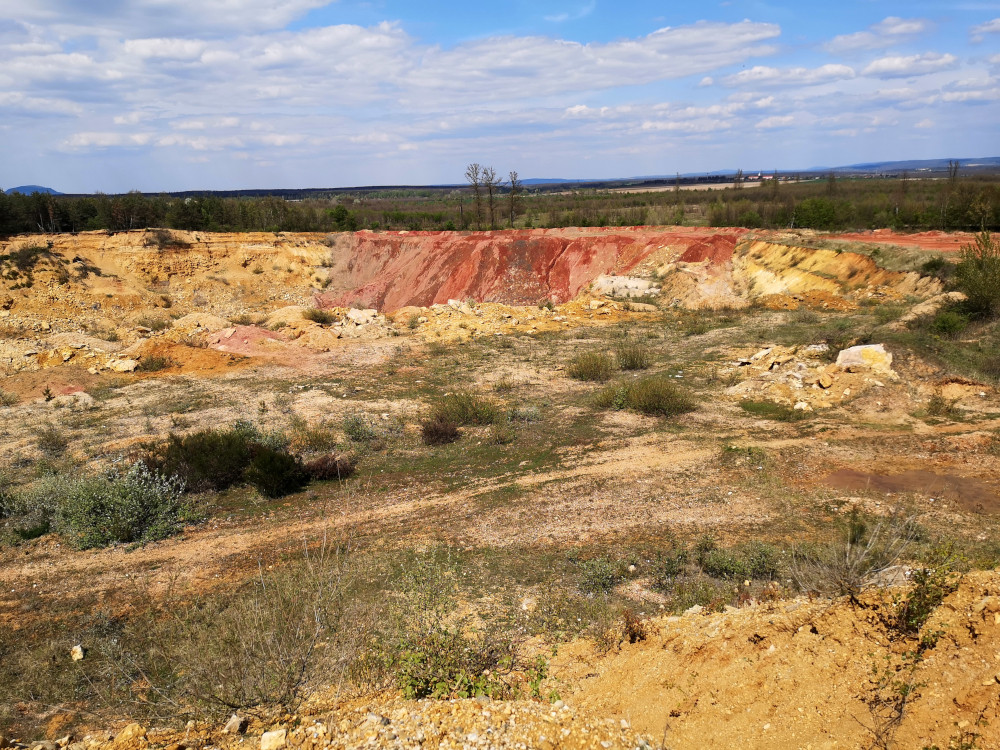
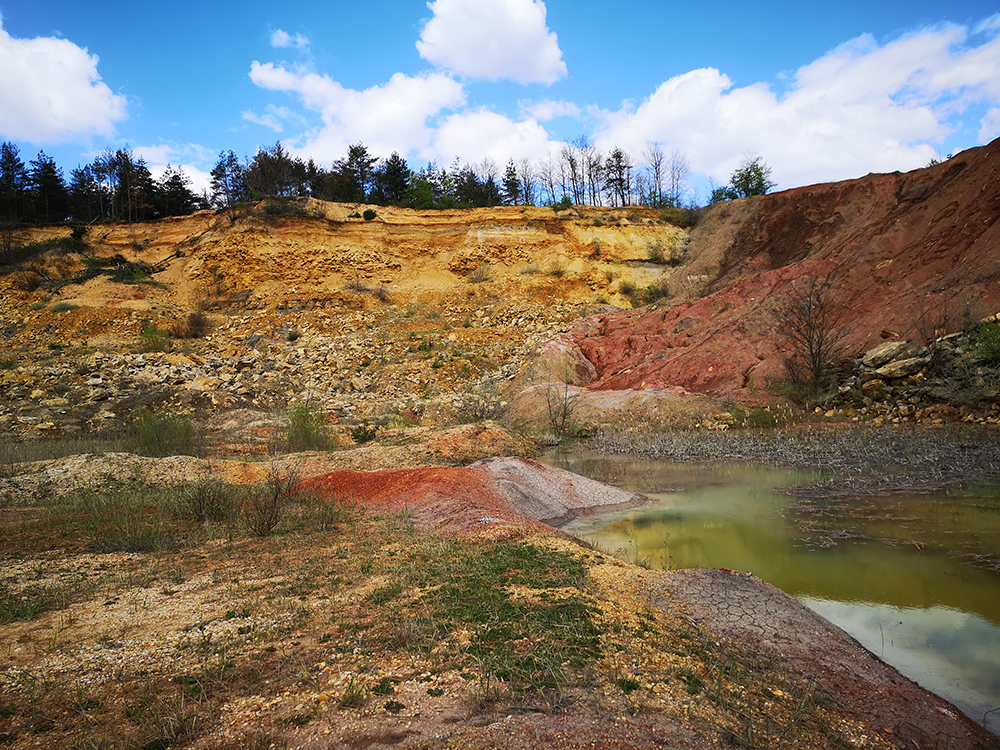
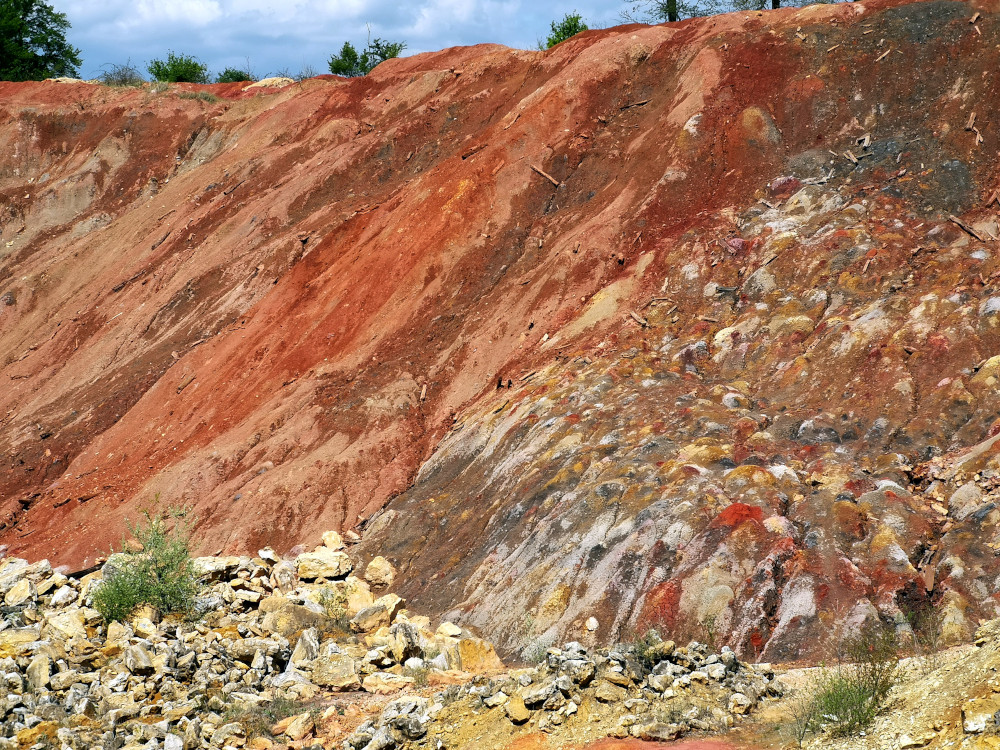
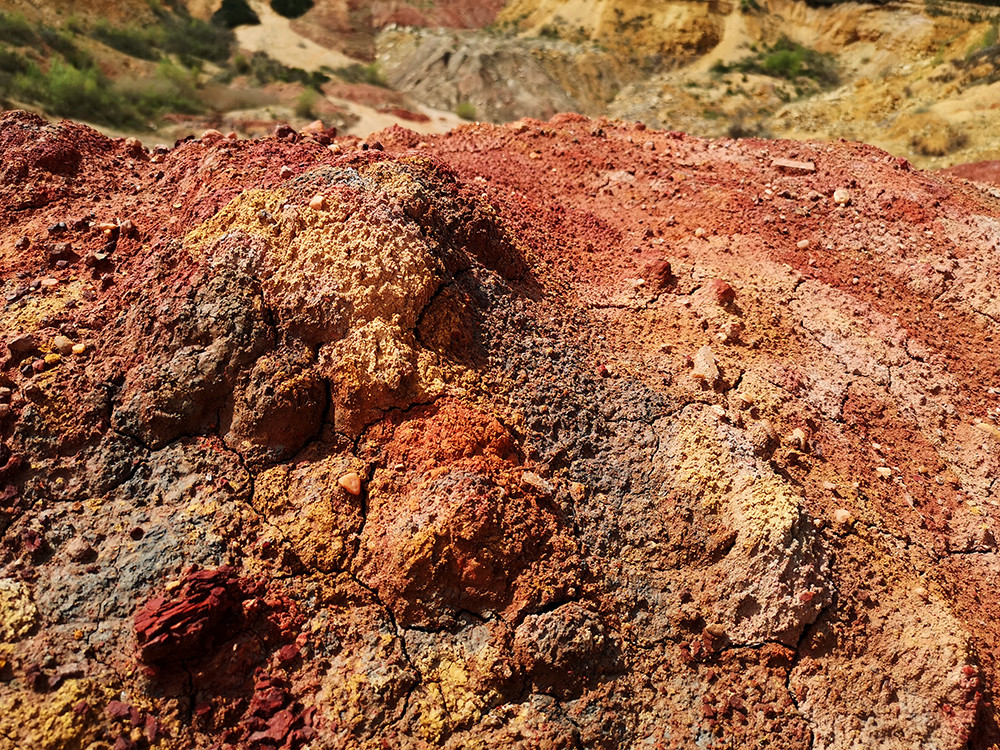
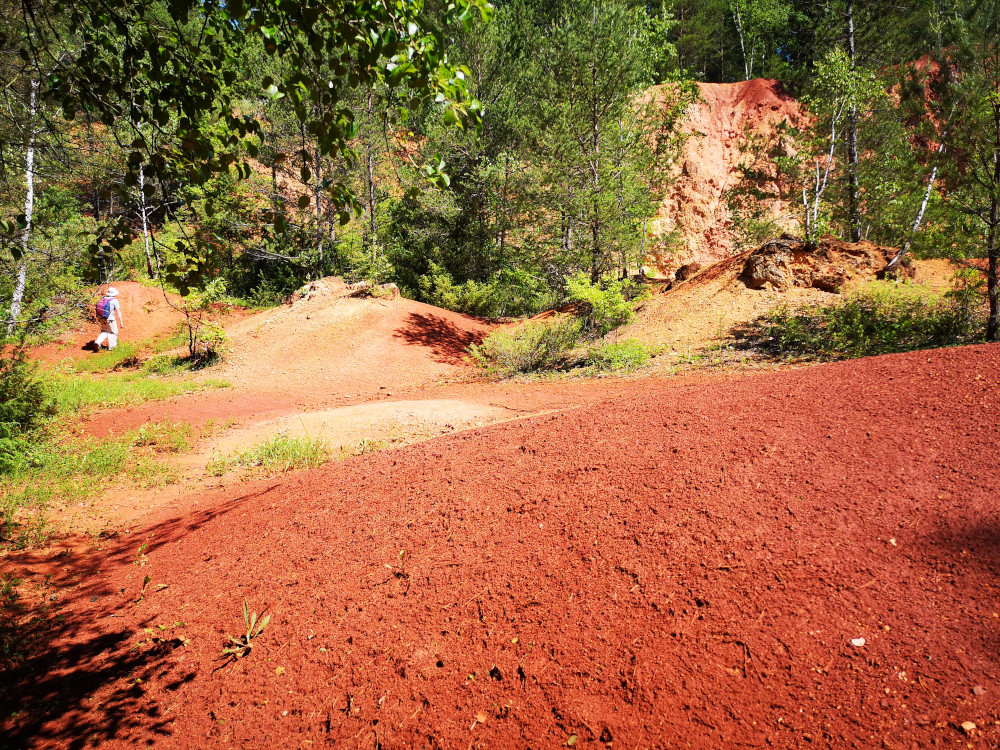
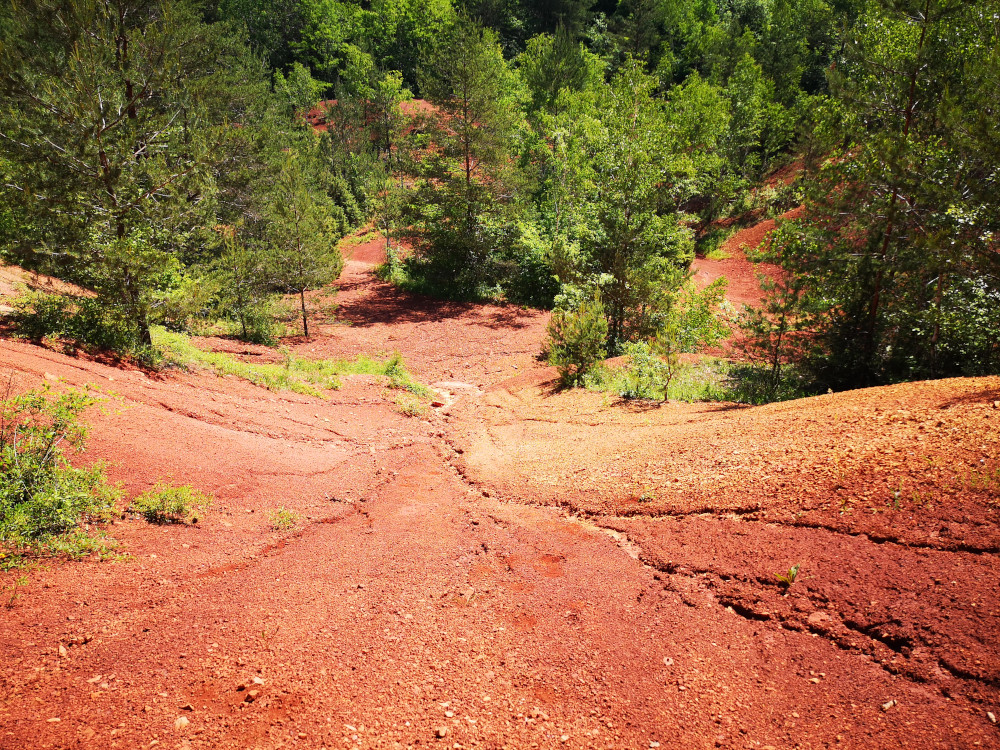
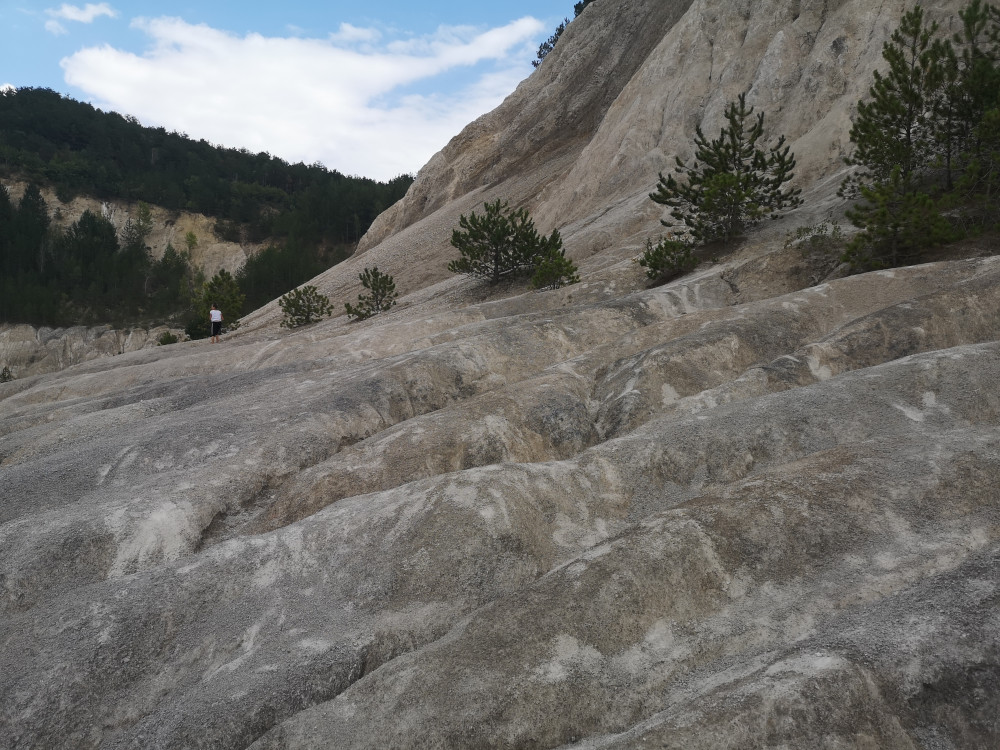
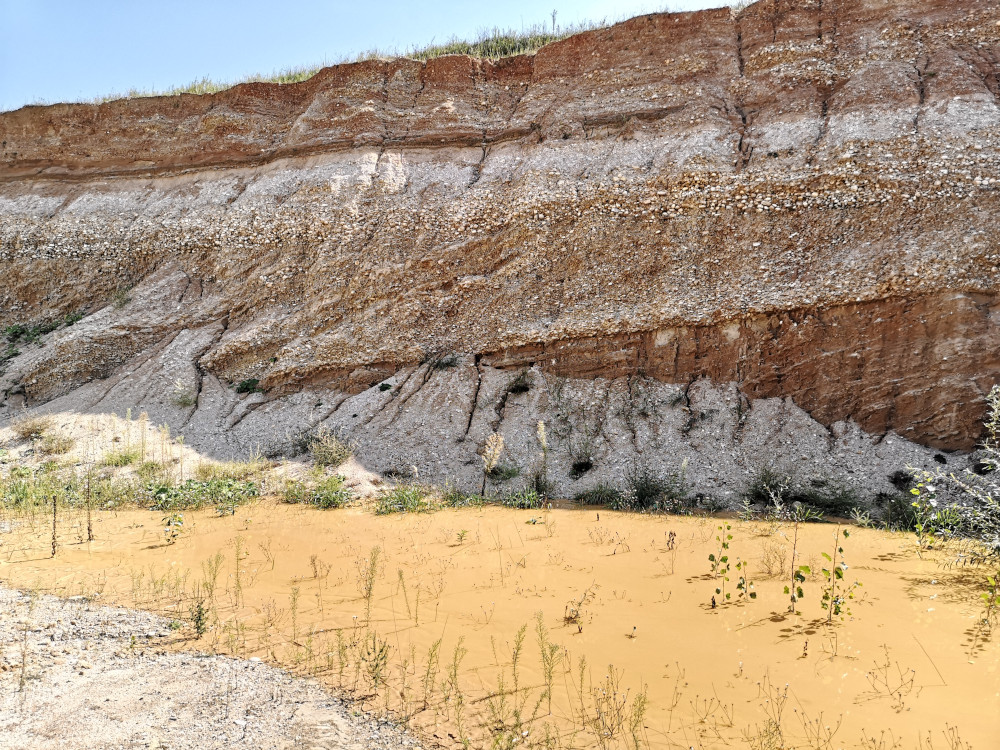
Geological and Historical Context The bauxite quarry is located approximately 4 km south-southwest of the town of Nyirád. It consists of several interconnected basins, covering an area of about 1100 by 700 meters. All mining operations have since been halted. Today, the southern basin features a racetrack, while the northern basin is recognized as a geological natural monument. It showcases exposed multicolored slopes and a partially water-filled floor, measuring around 300 by 400 meters. The quarry is known for its vivid and varied coloration.
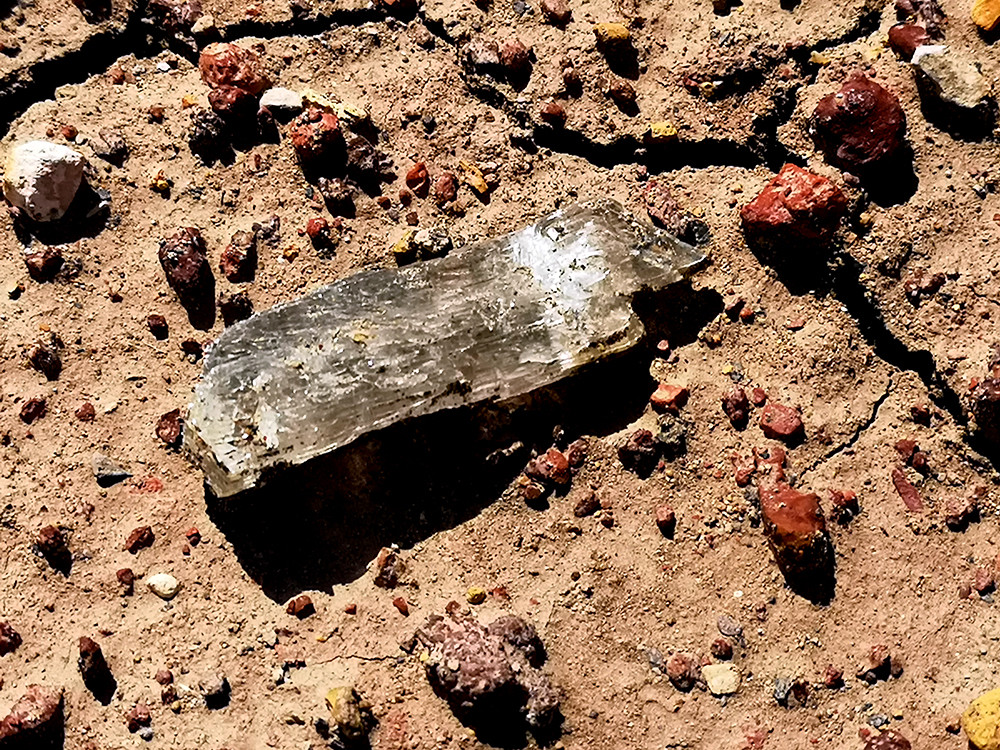
The primary material extracted from the site was bauxite — an aluminum ore. Bauxite forms in tropical climates through the intense weathering of igneous rocks. Under hot and rainy conditions, rock components break down and are carried by water, settling where the flow slows. The quarry’s bedrock consists of Upper Triassic dolomite (227–205 million years old). During the Cretaceous period (approximately 143–113 million years ago), a bay formed in a depression in the dolomite layer. Sediments rich in bauxite minerals accumulated there, creating a bauxite lens.
Aluminum derived from bauxite is widely used in the aviation and aerospace industries. After the construction sector and packaging production (such as cans and foil), one of the largest consumers of aluminum is the energy industry. Mining in this area began in the 1940s. In the 1960s, to prevent flooding of the quarry, a gradual lowering of the regional karst water table was initiated. The ore was extracted through deep mining combined with continuous pumping of underground water. This process disrupted the natural water balance of the Transdanubian Mountains. Major river systems were damaged, and springs—including the Tapolca cave spring and the thermal sources of Lake Hévíz—were depleted. Water inflow into the lake was reduced by half. Although the environmental consequences were known to experts, the political climate at the time did not permit halting mining operations. Extraction was only stopped in the 1990s due to public pressure. Since then, groundwater levels have slowly begun to recover. [1]
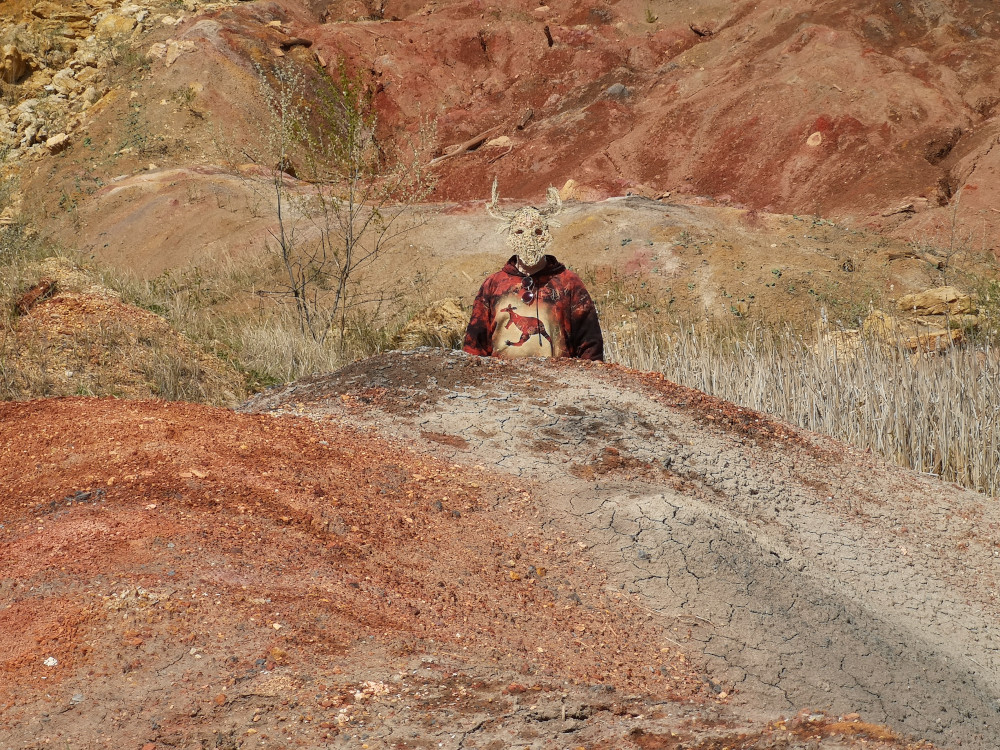
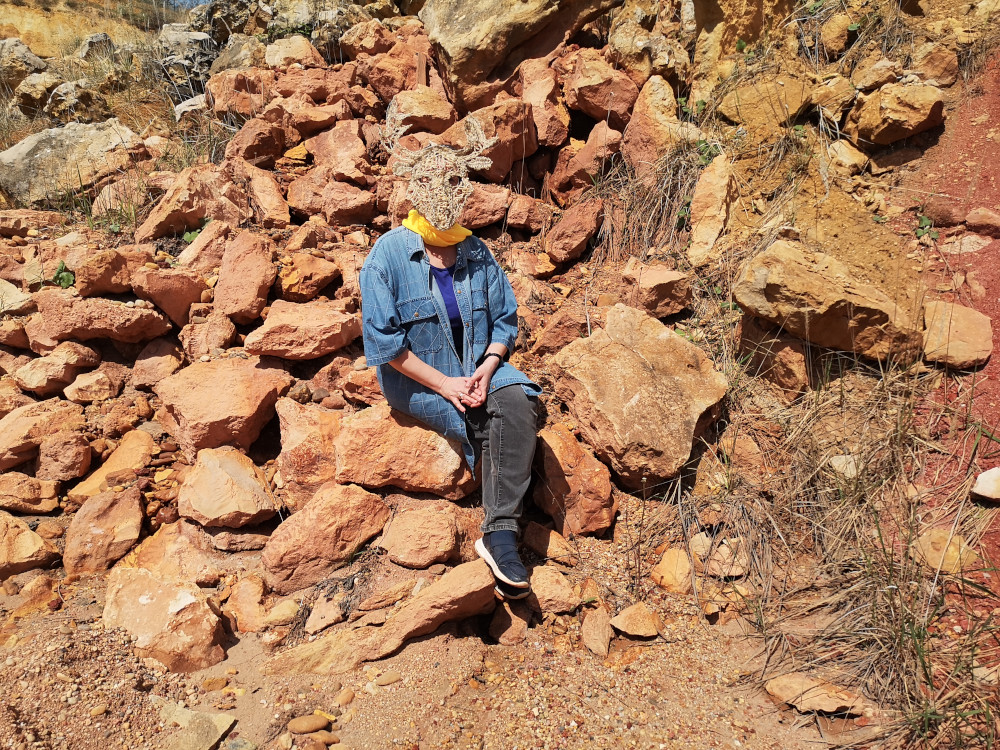
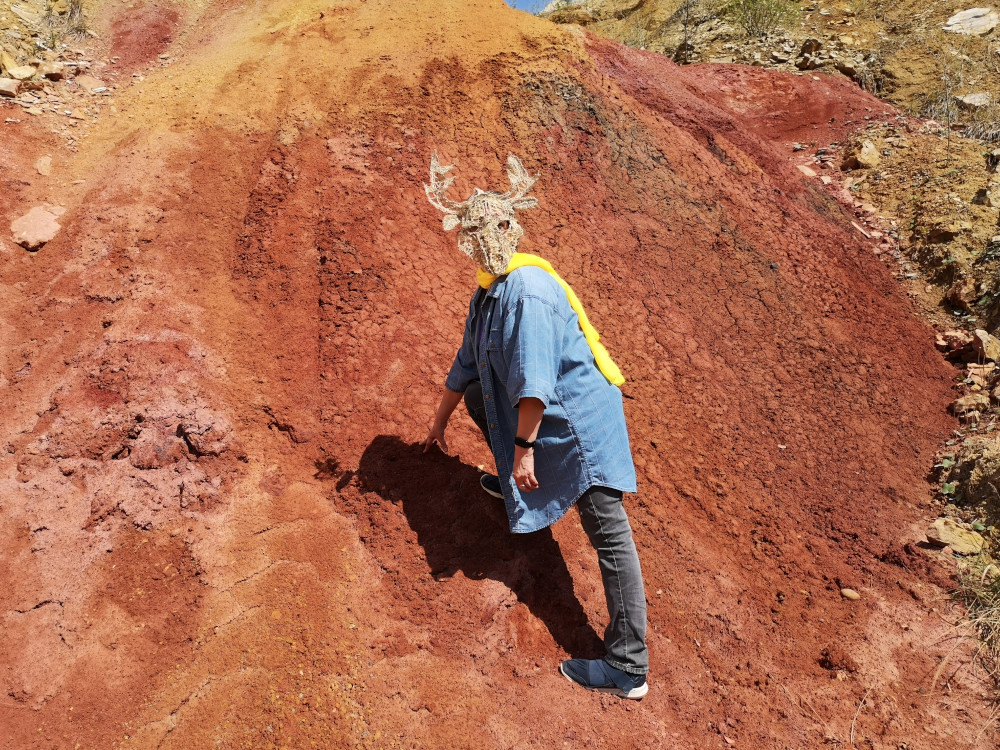
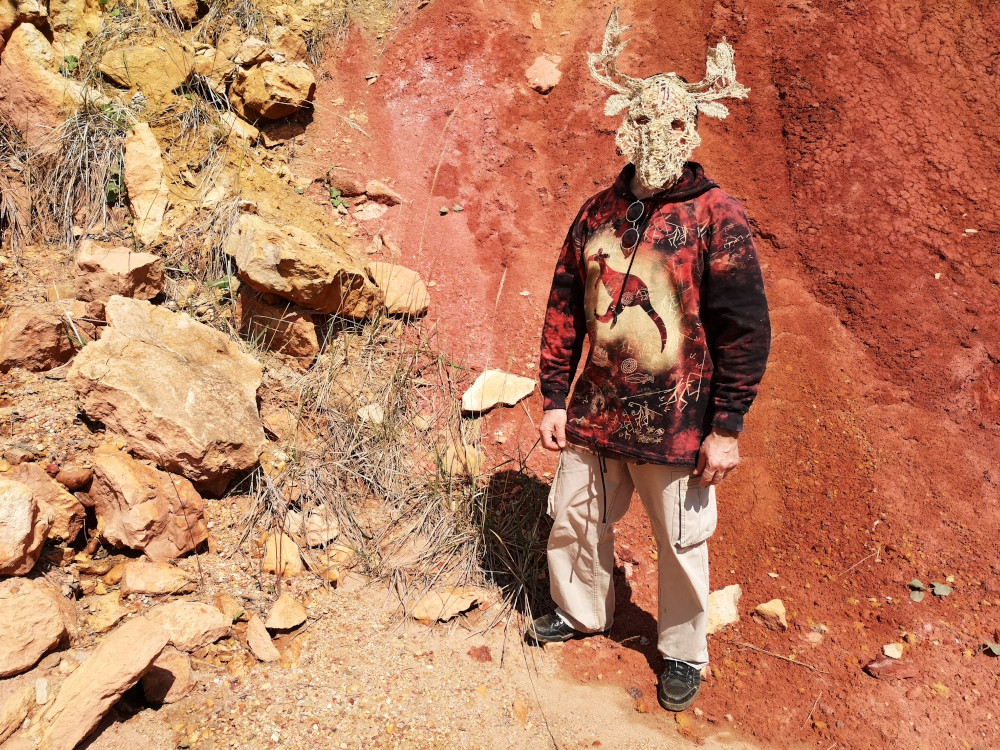
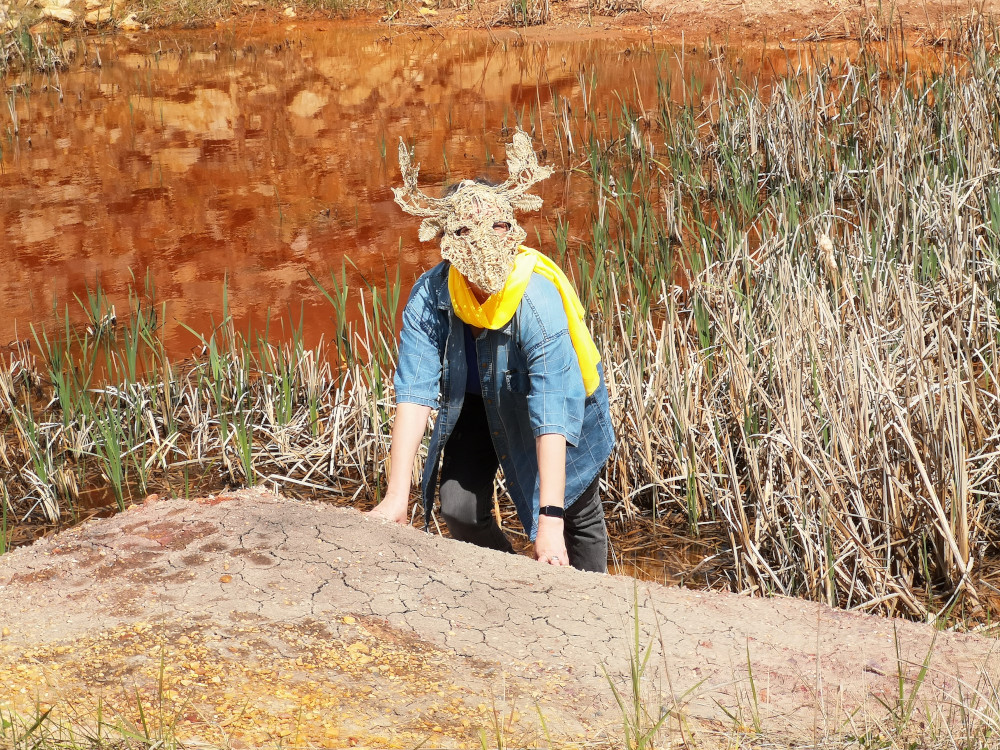
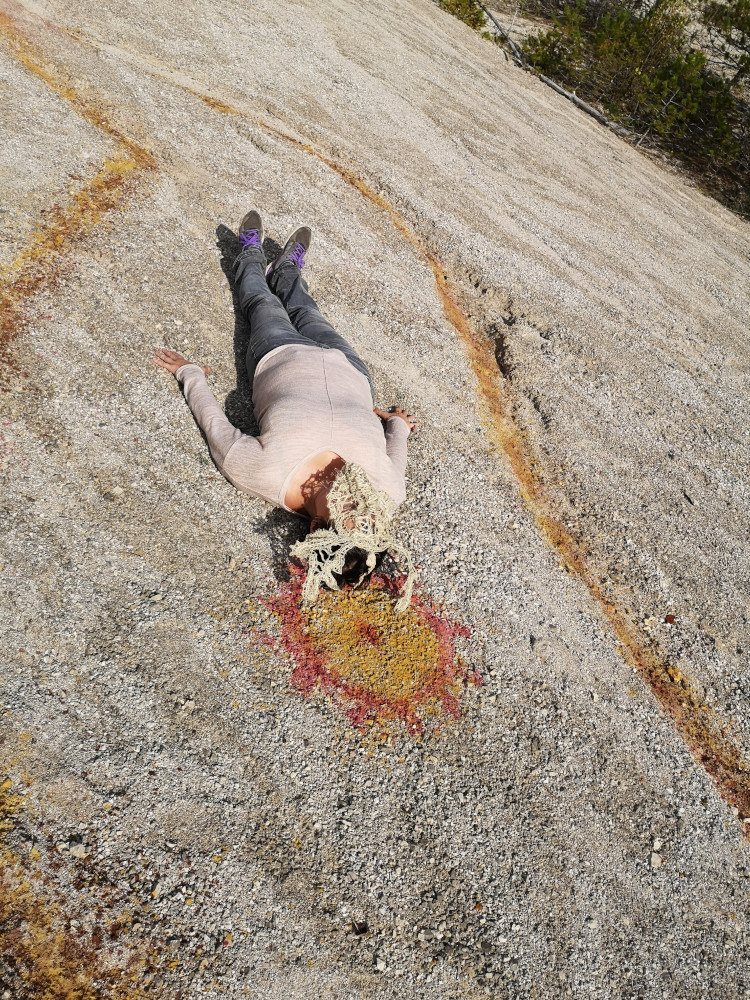
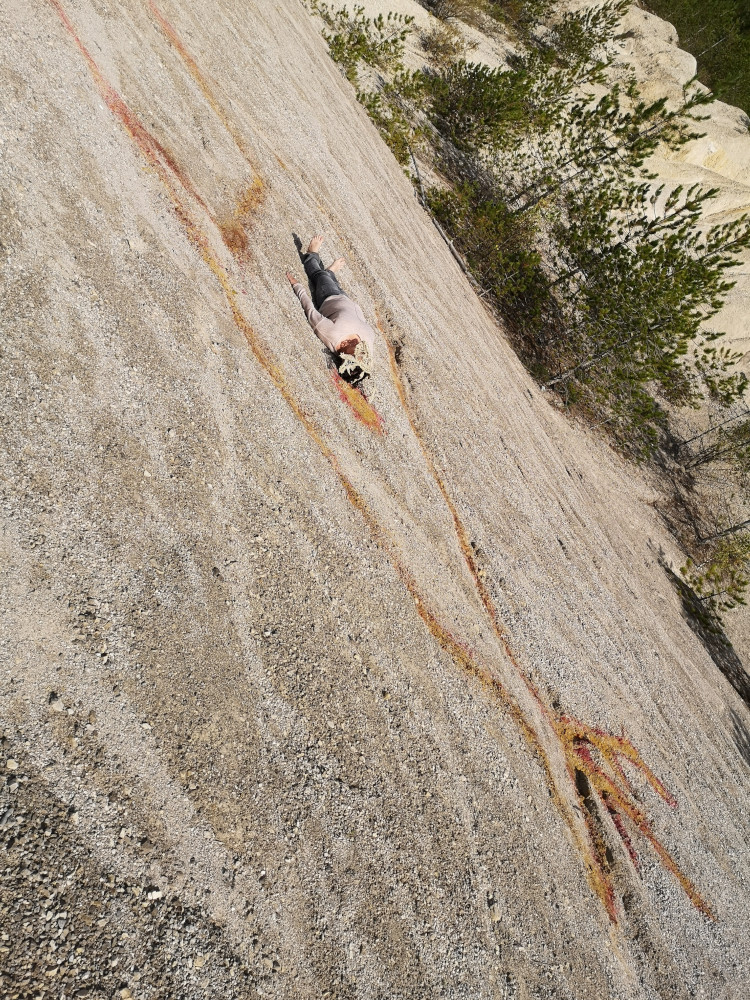
Performance and Artistic Intervention We first visited the Nyirád Quarry in 2022. The site looked almost otherworldly — people often say such landscapes resemble Mars, the planet named after the god of war. In some places, the terrain appeared like a dried, bloody wound. Mining left physical and ecological scars, but also cultural and emotional ones.
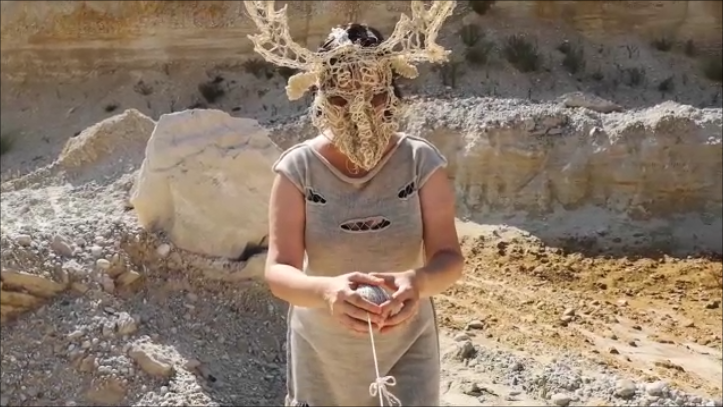
In many cultures, the deer symbolizes a mediator and healer of the earth. Our performances with deer masks embody this role, invoking the idea that art itself can heal landscape wounds. So we performed an artistic ritual in deer masks — a gesture of connection, care, and transformation.
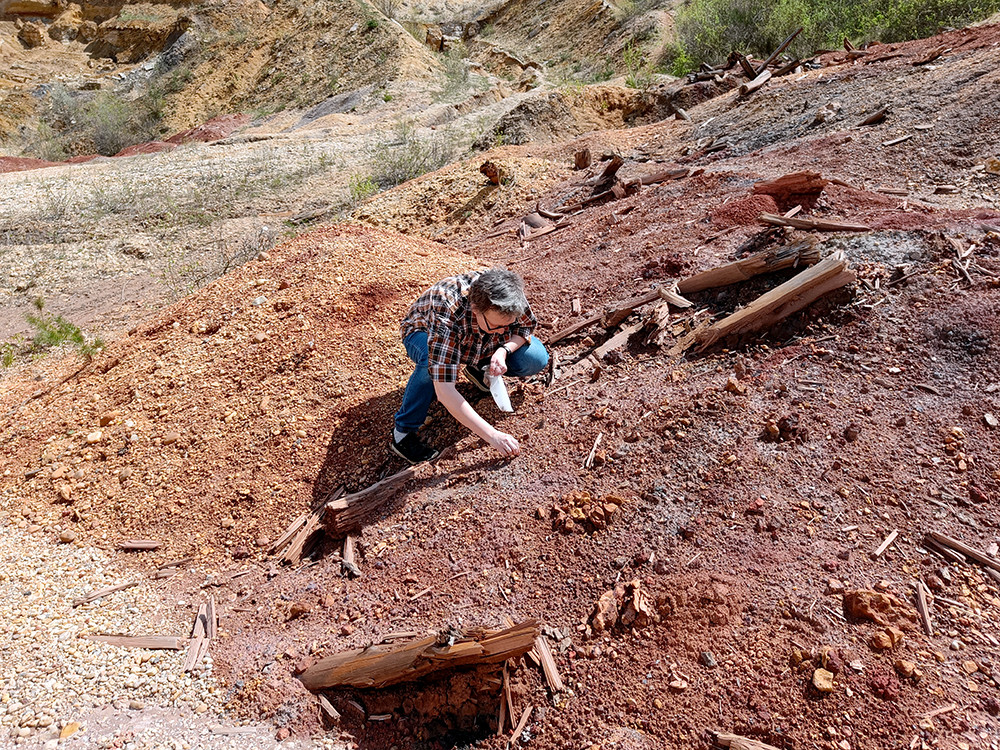
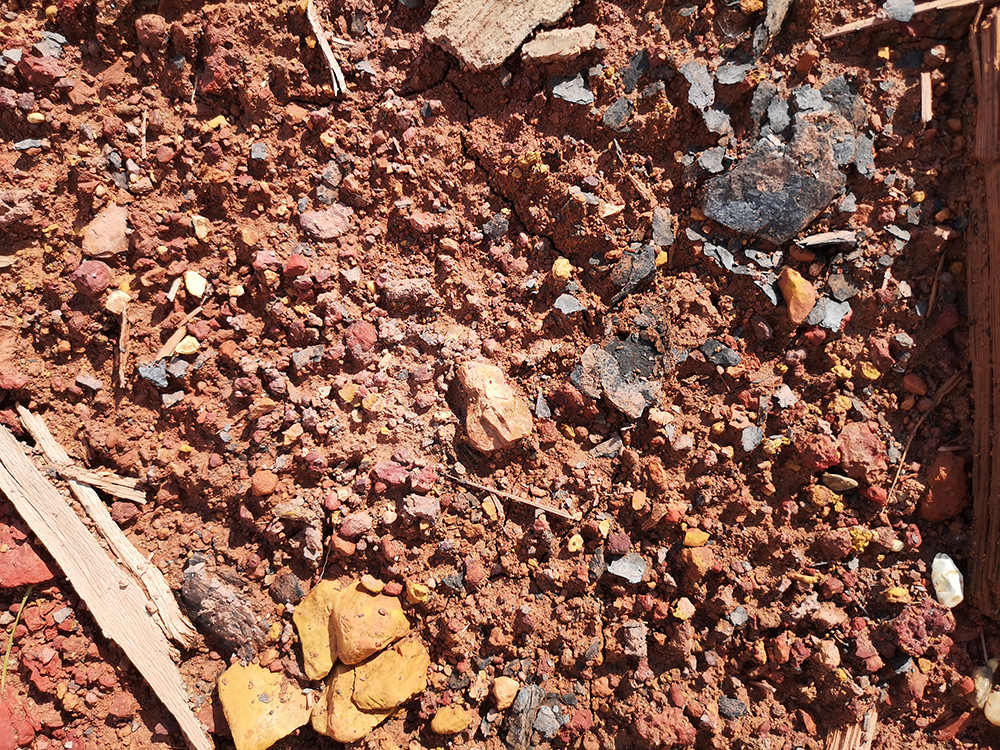
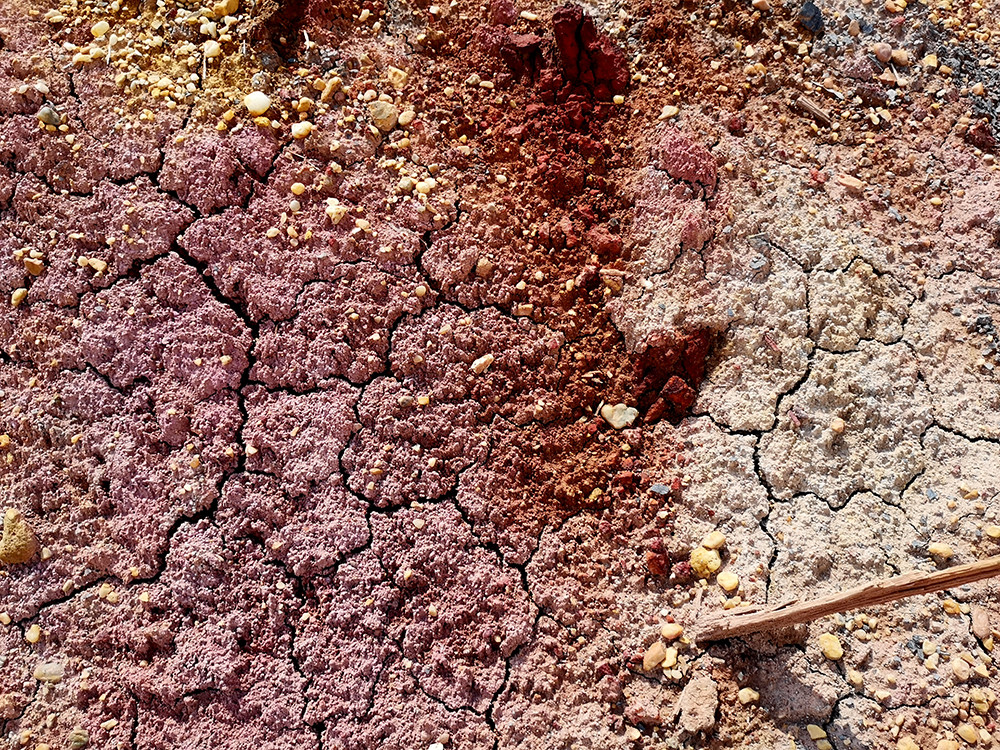
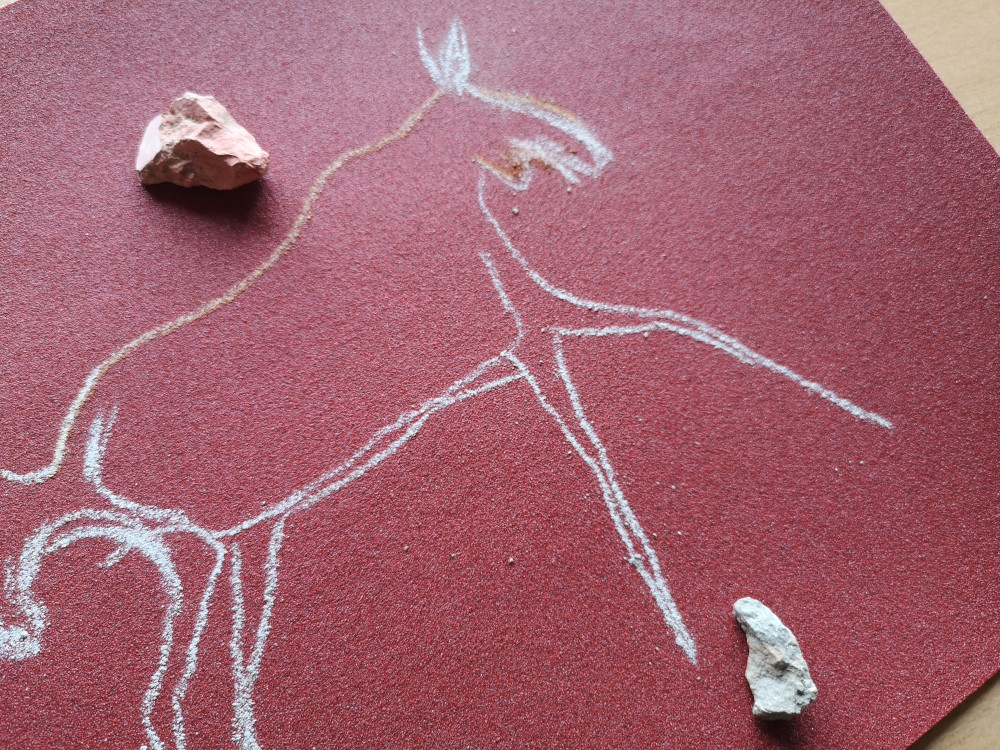
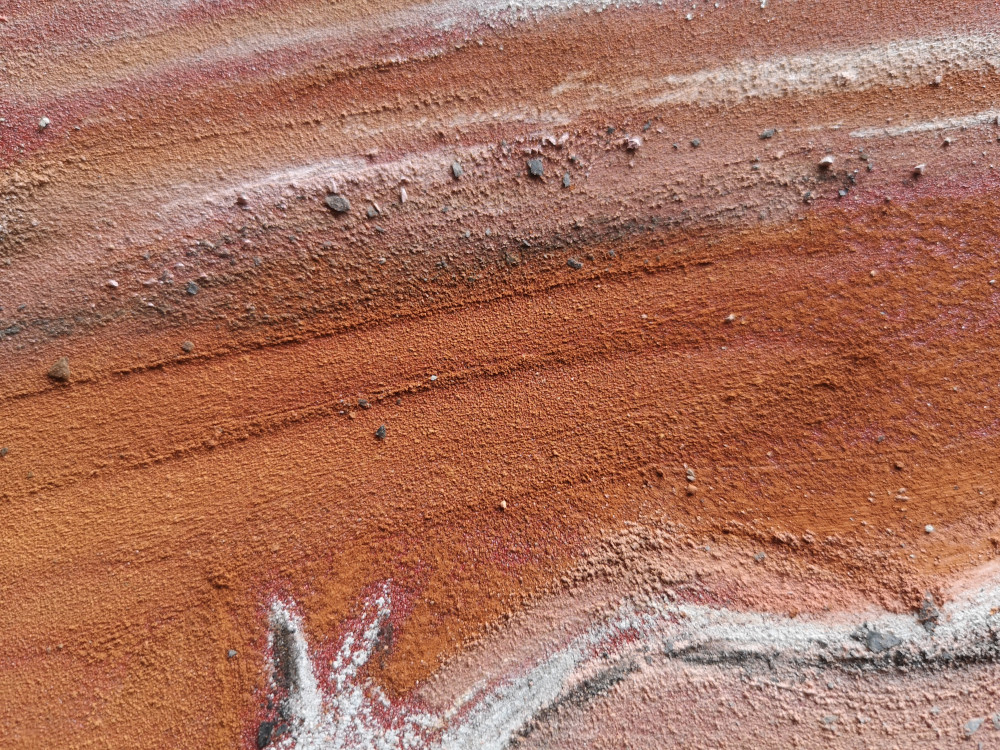
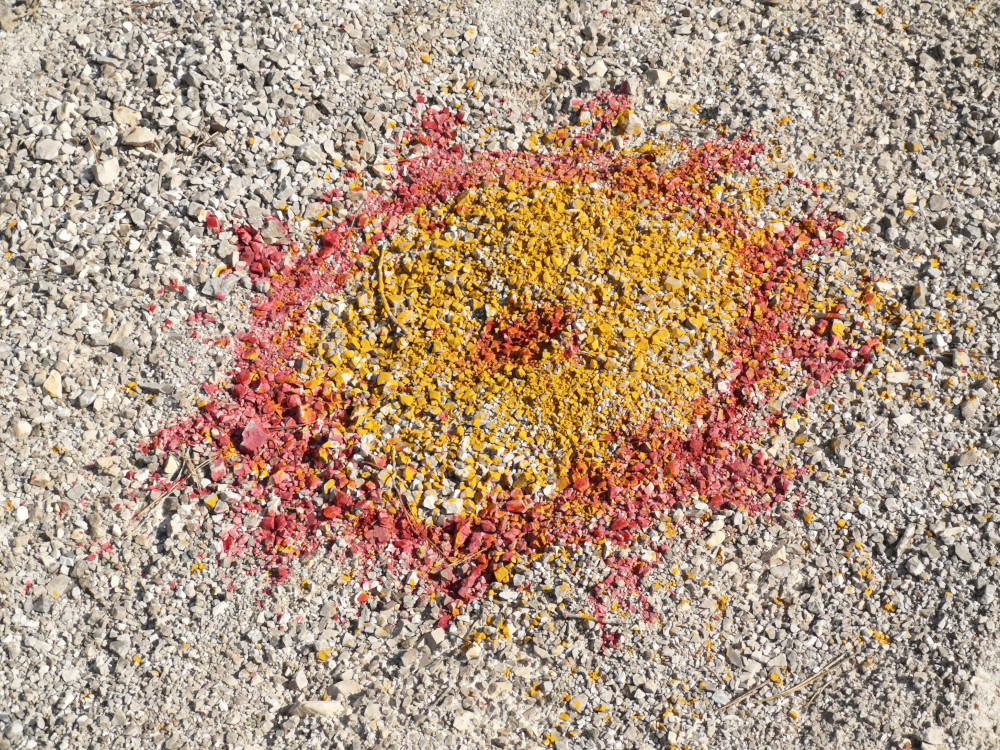
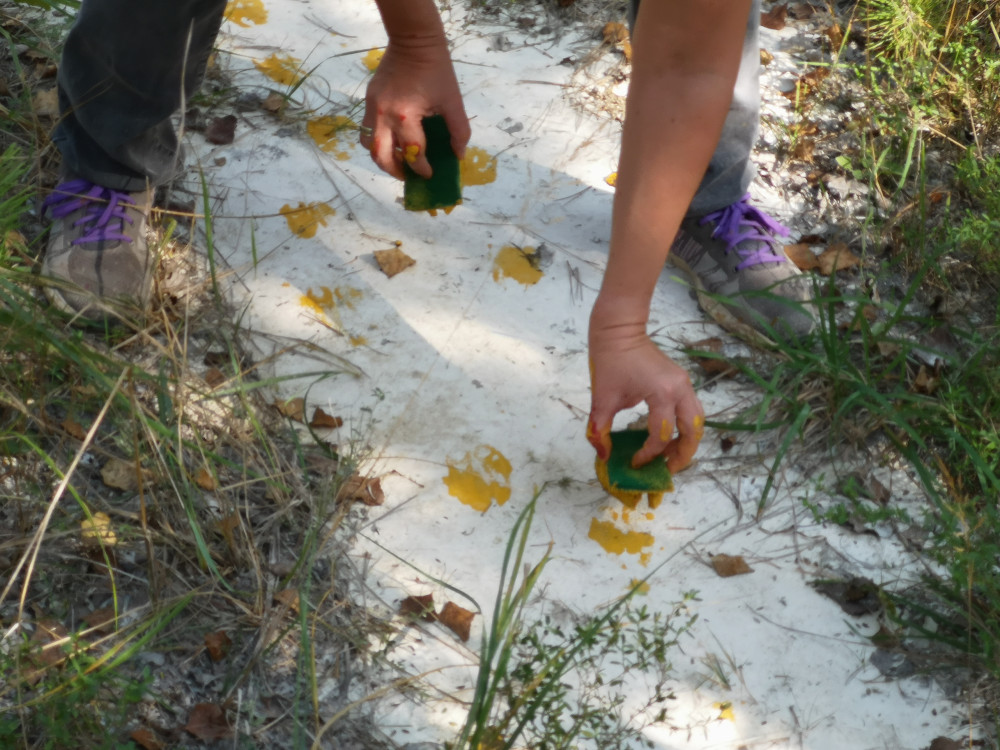
We returned in 2023. This time, in the multicolored part of the quarry, we gathered natural pigments from the vibrant mineral layers.
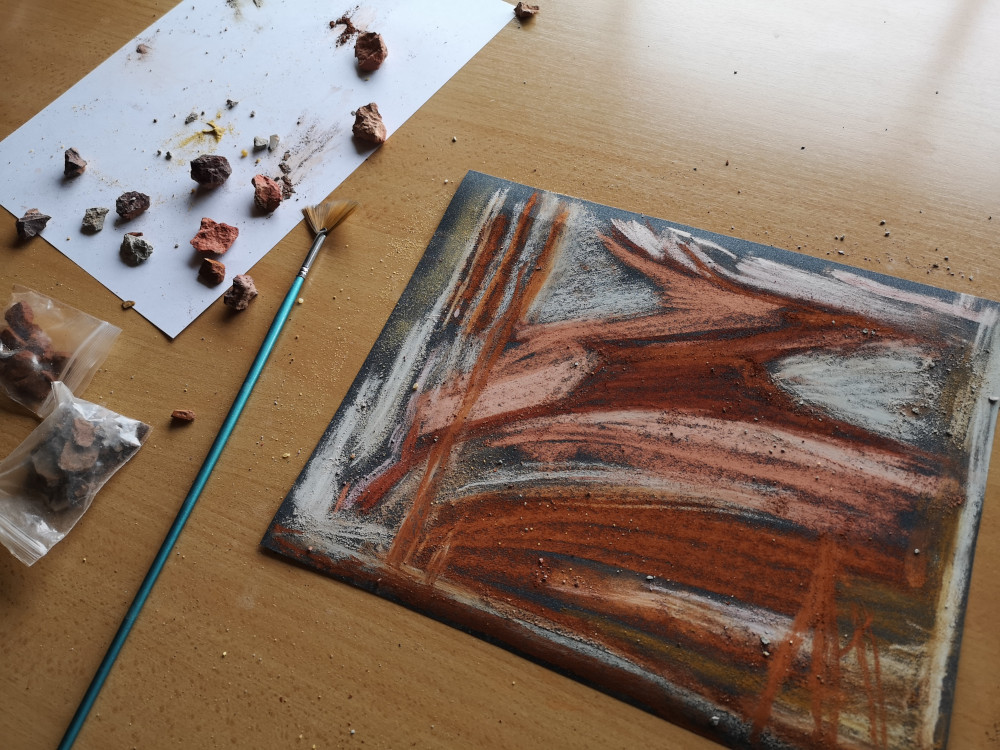
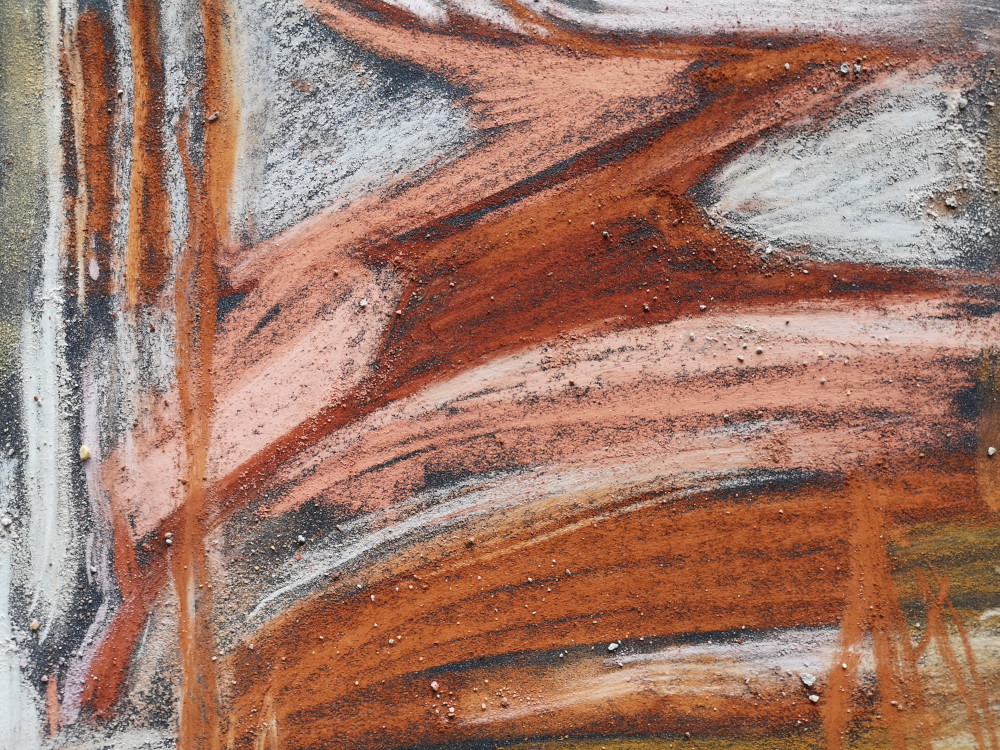
These were later tested on sandpaper – combining touch, memory and matter into images.
Revealed RealismMethod Our artistic approach does not impose new narratives but reveals and amplifies existing realities. By engaging physically with the site—through touch, movement, and material sampling—we deepen the perception of the quarry’s layered history and present condition.
This method bridges science and art, combining geological knowledge with sensory experience to create a multidimensional understanding of place.
The scientist reveals the quarry’s geological past and industrial impacts, preserving knowledge as a form of memory. The artist animates this knowledge, transforming it into lived experience and emotional connection. Together, science and art restore the quarry’s voice, enabling dialogue with its scars and stories.
Materials used: cotton wool, earth pigments from Darvastó, thread, time.
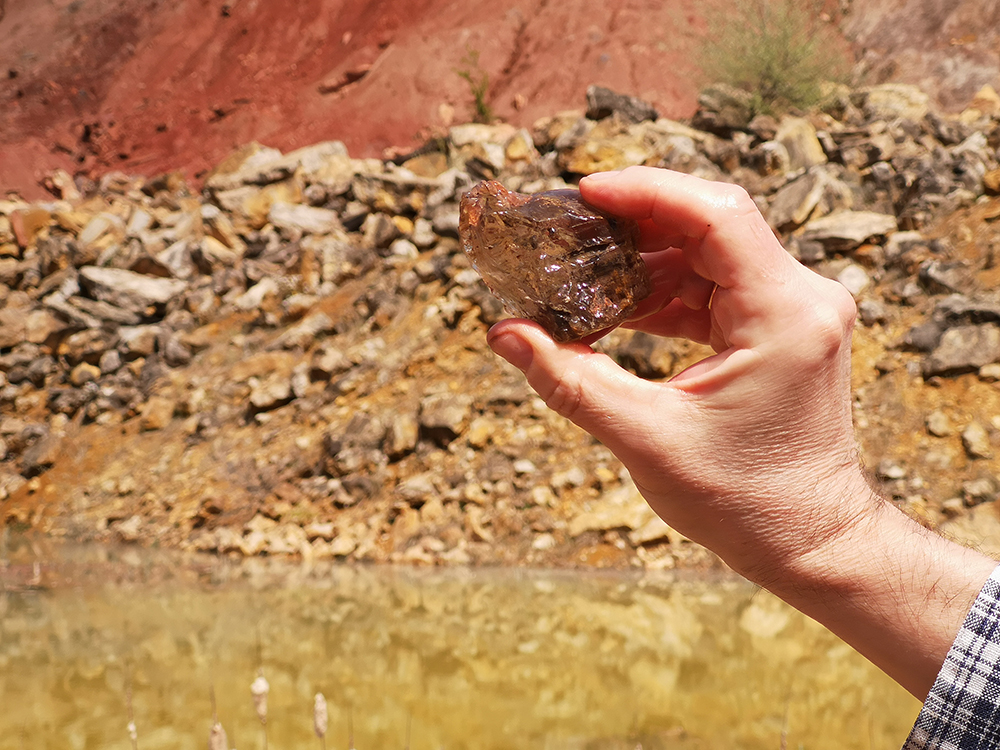
About the Place: The quarry is located approximately 7 km southwest of the town of Nyirád. It is characterized by its red coloration and is currently inactive. The quarry measures approximately 700 meters in length, 250–400 meters in width, and 15–20 meters in depth.
The extracted material was aluminum ore — bauxite. Bauxite forms as a result of the weathering of igneous rocks in tropical climates. Under extremely hot and rainy conditions, the rocks disintegrate, and their components are transported in solution to areas of sedimentation where the flow of water slows down. The bedrock of the quarry is Upper Triassic dolomite (dating from 227 to 205 million years ago). During the Cretaceous period (143 to 113 million years ago), bauxite-bearing particles accumulated in a bay formed by a depression in the dolomite layer, eventually forming the bauxite lens. Bauxite mining in the Nyirád area began in the 1940s. Ore from the lens was extracted through deep mining and the pumping of karst water. The quarry was closed in 1977. [1, 2, 3]
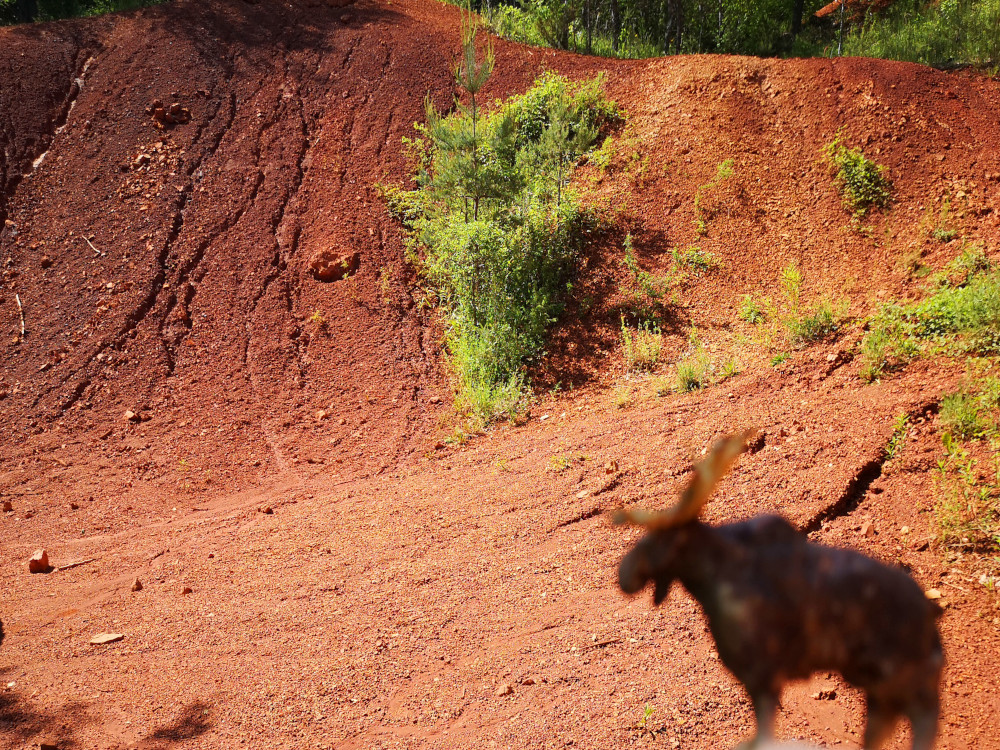
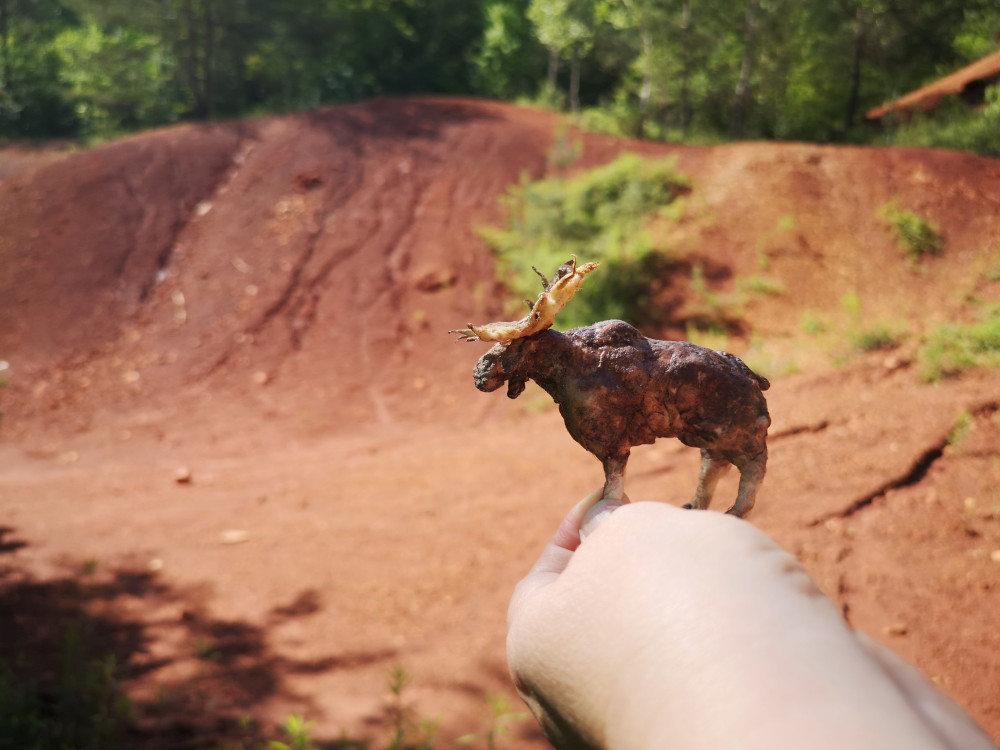
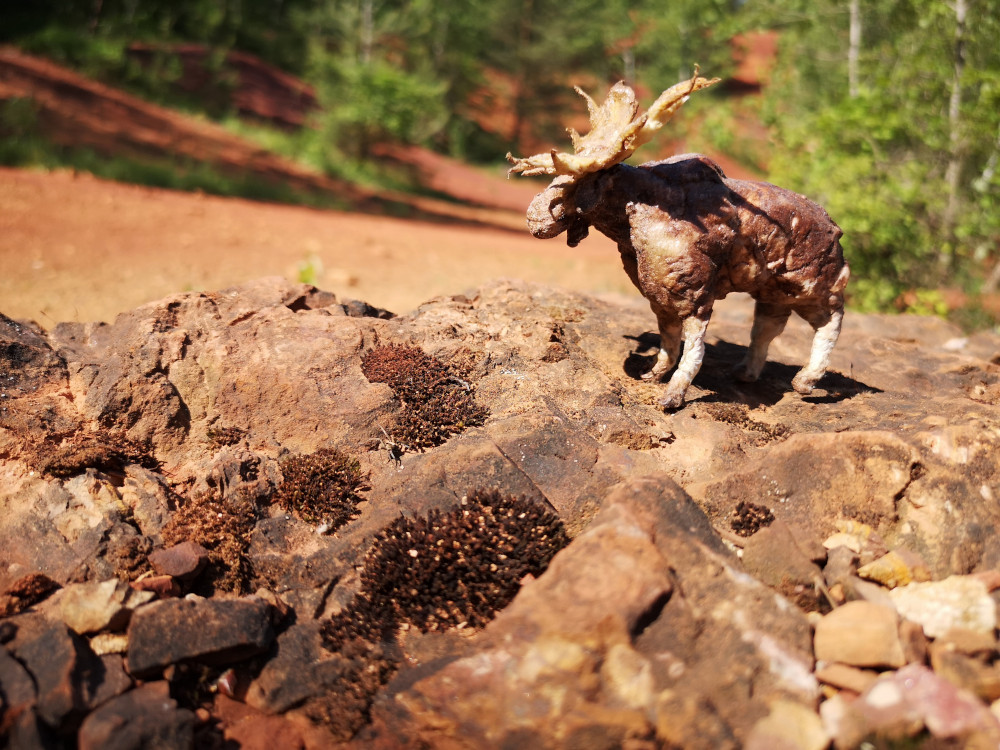
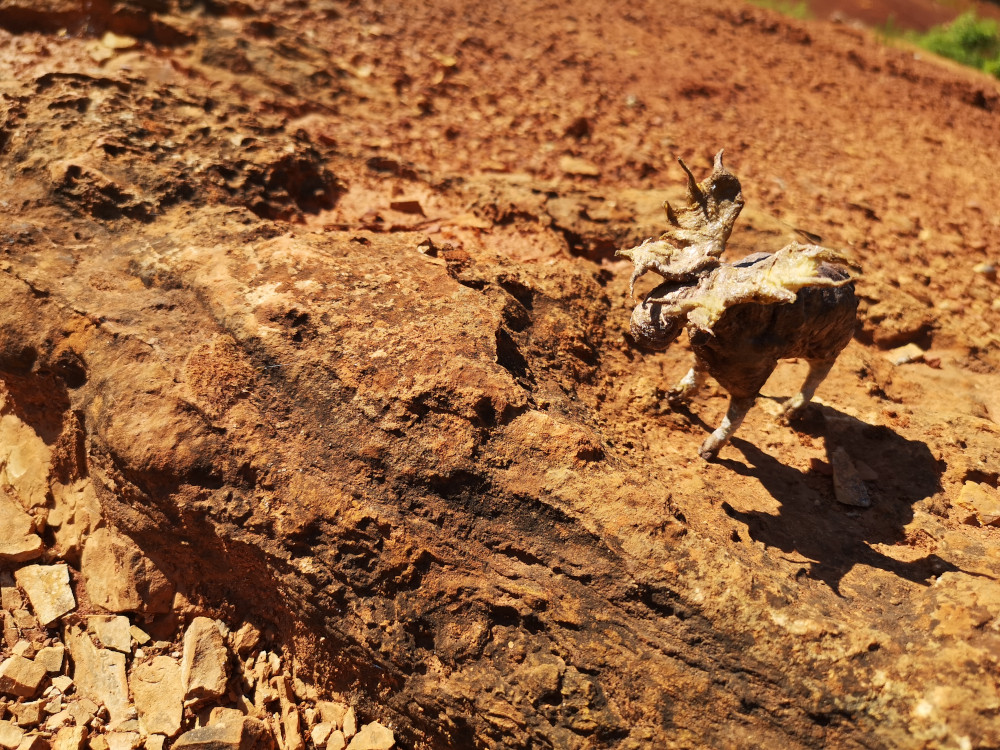
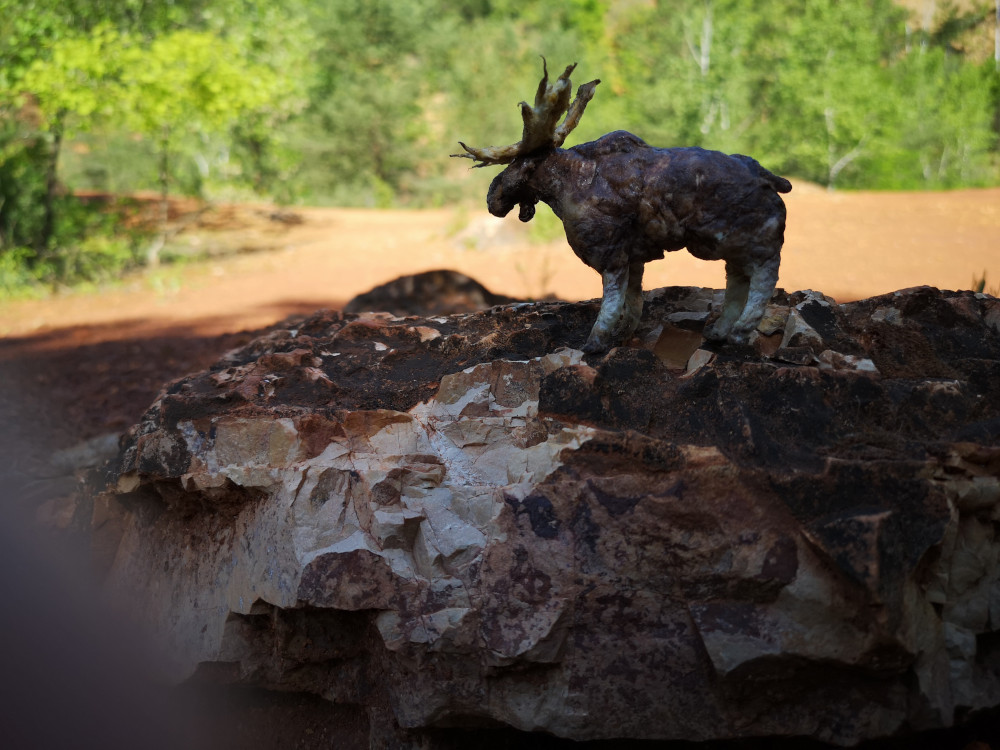
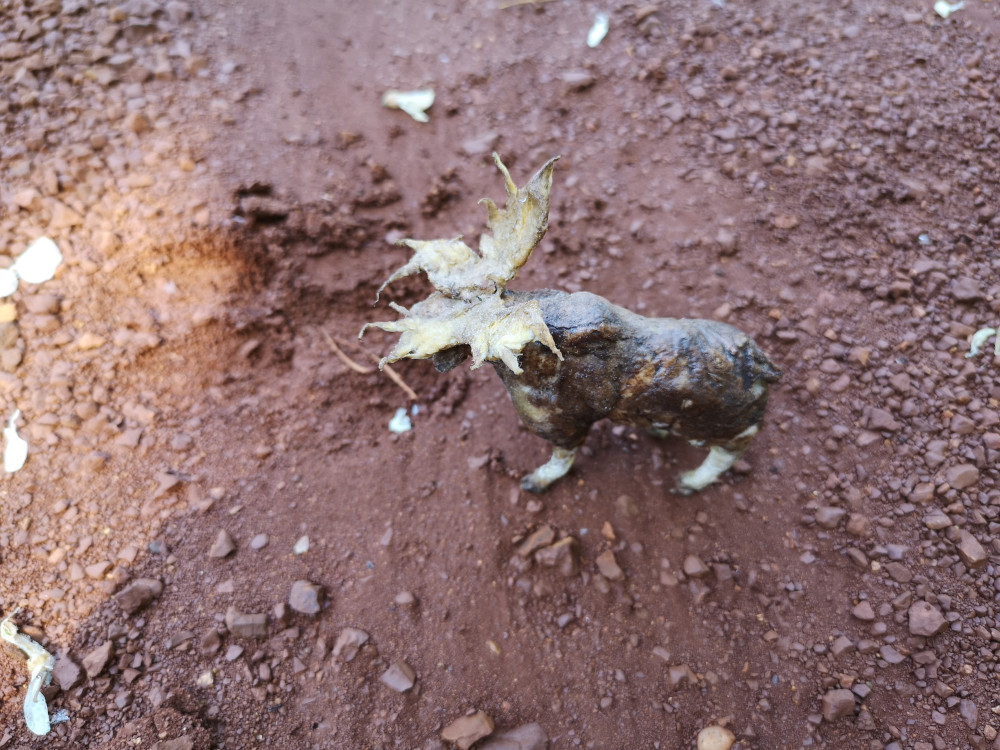
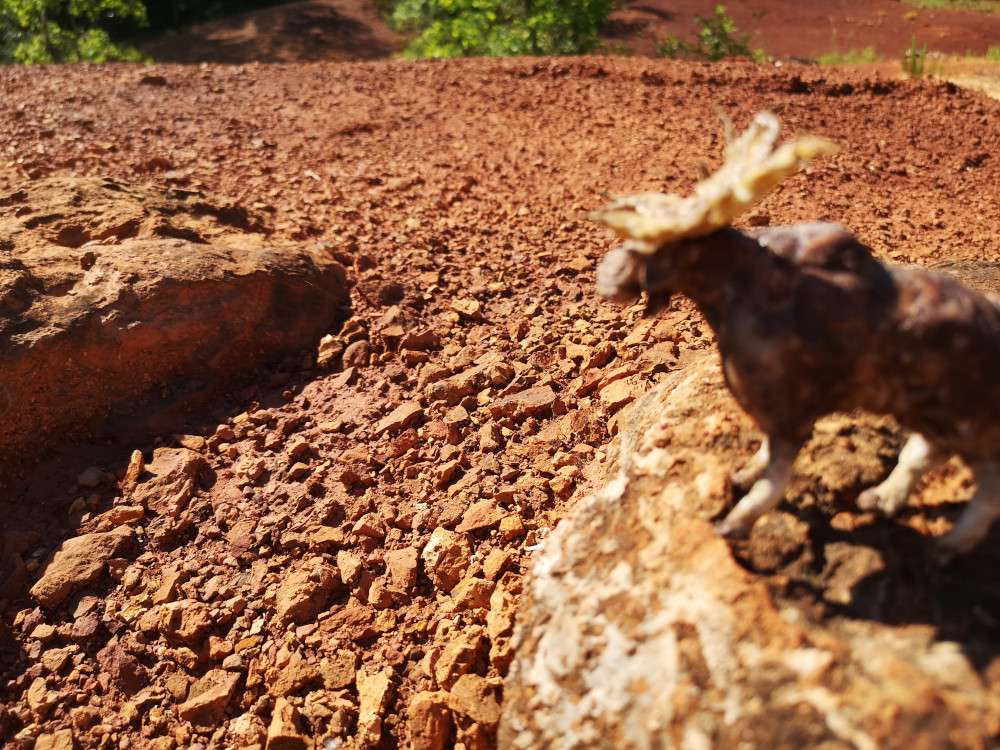
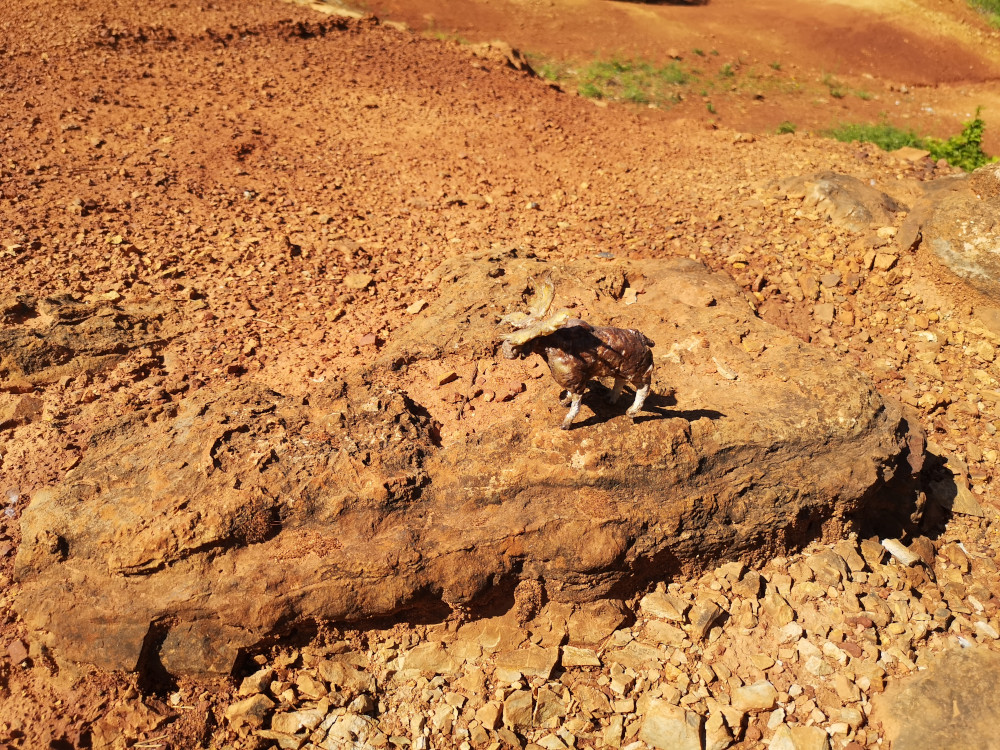
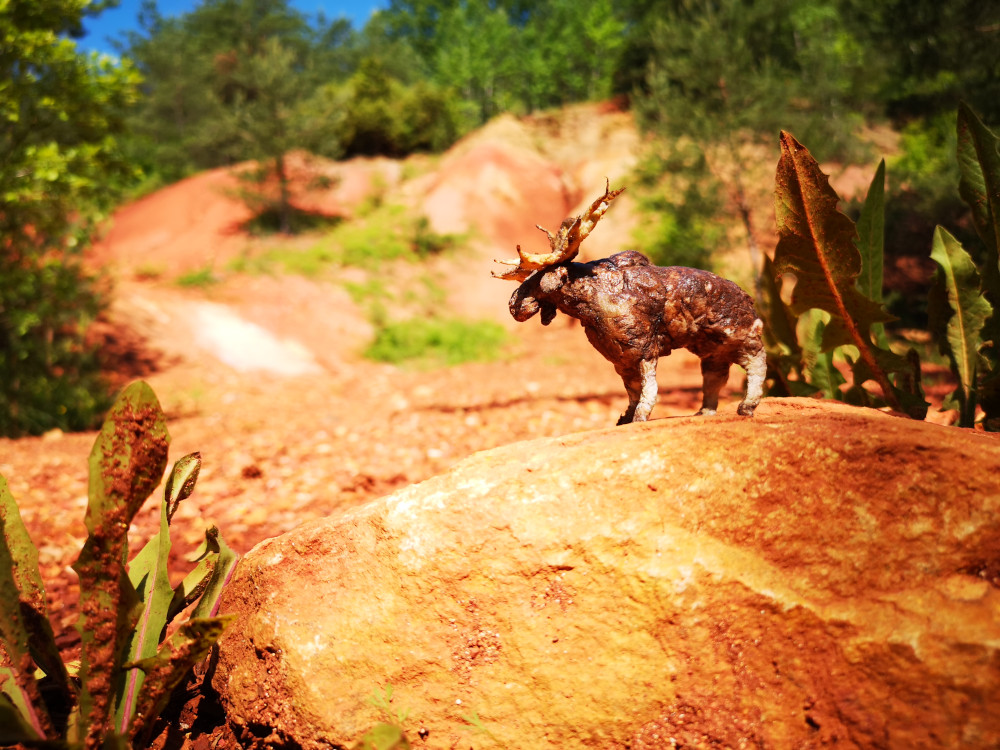
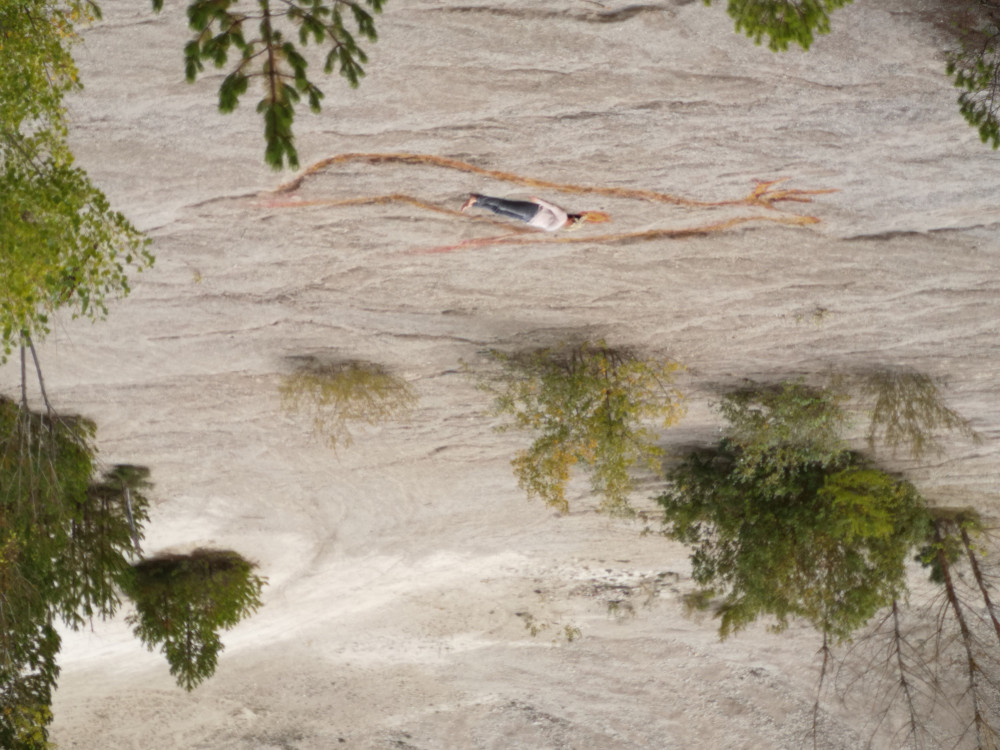
Artistic Intervention In 2022, we visited the quarry and brought an artistic presence into its landscape. A small stag figurine, handcrafted from cotton wool and tinted with natural pigments taken directly from the site, was photographed by us in the quarry. Then we left it there — an unauthorized miniature monument. It bore no label, no explanation, no protection. It simply remained — vulnerable, visible, and quietly appropriate.
The red stag in the red earth became a silent ritual of return. A handmade creature, infused with the color of the land itself, placed into the wounded earth like a stitch.
In many mythologies, the stag is a messenger between worlds — between the visible and the hidden, the natural and the artificial, trauma and regeneration.
We see it as a soft footprint on hard ground. A gesture of remembrance, healing, and care.
This action was created by our team as part of a growing series of works exploring the memory of the land, ecological trauma, and myth through Revealed Realism (RR) — a method of subtle intervention, documentation, and co-presence with altered landscapes.
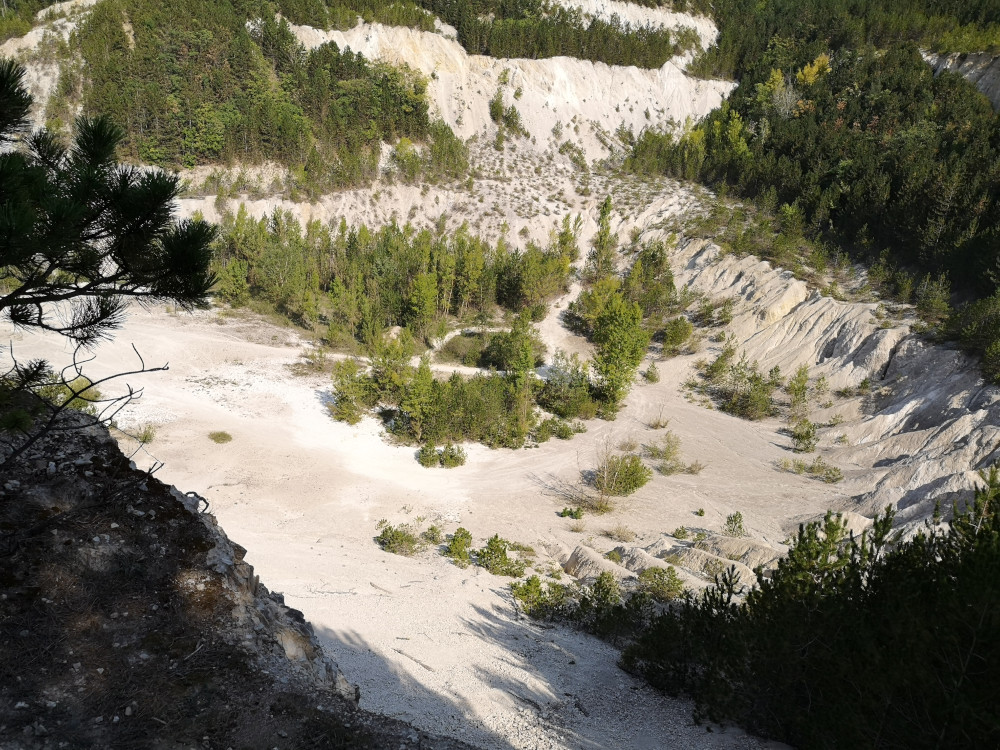
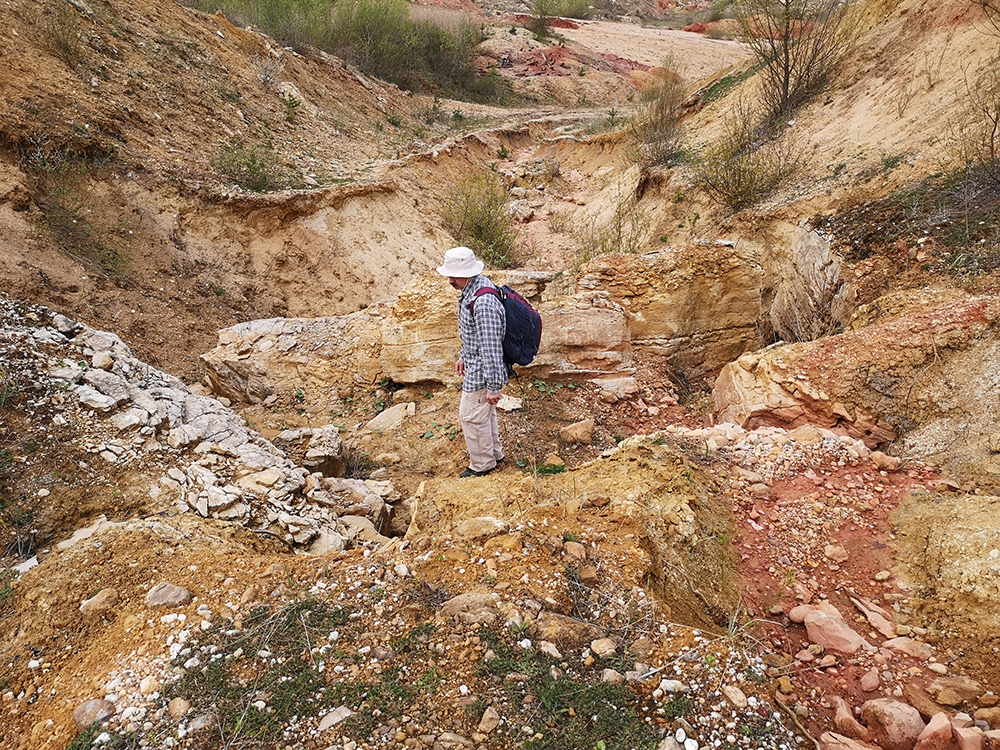
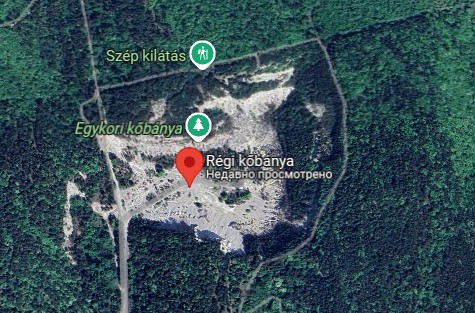
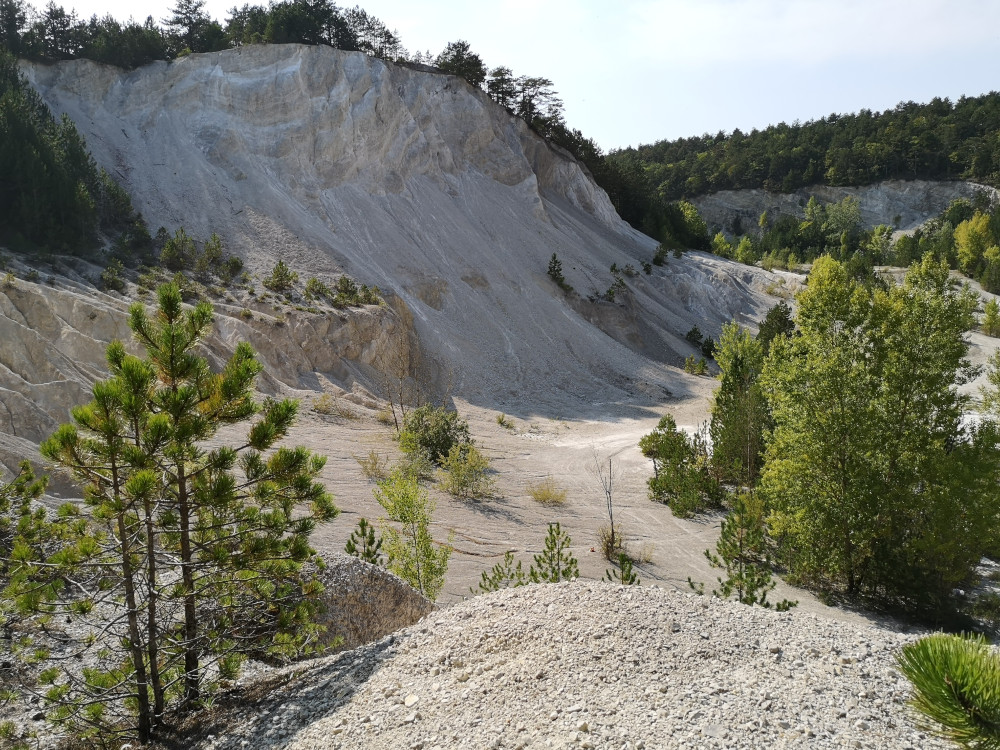
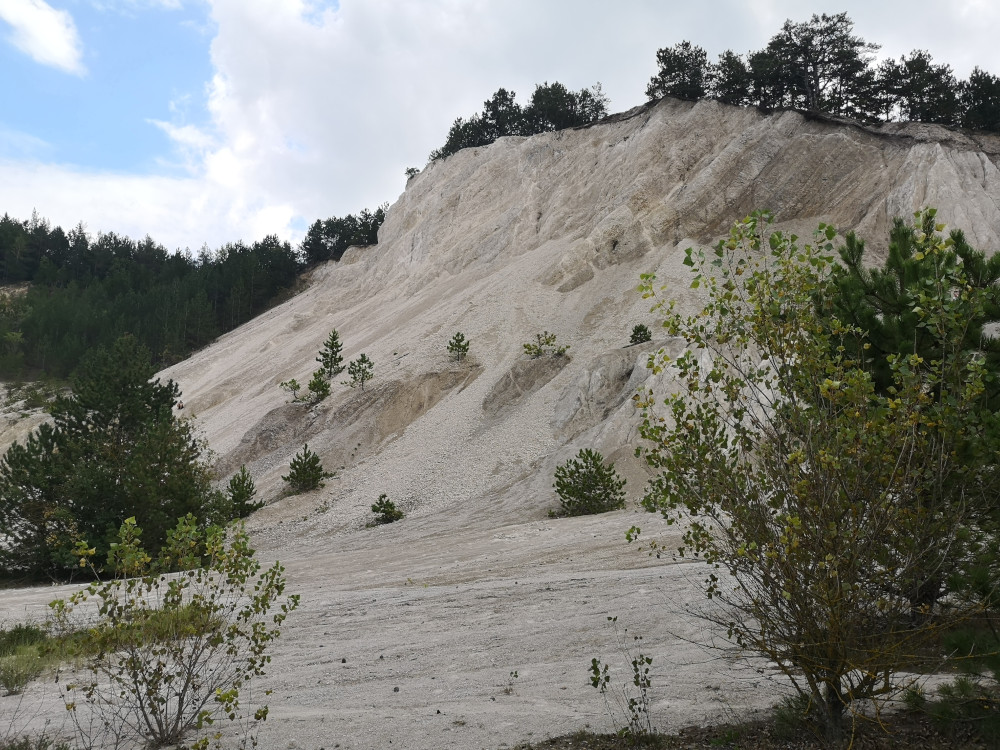
On the northern edge of the Hungarian village of Gyenesdiás, nestled on the slope of Pipa-hegy hill, lies a forgotten landscape — an abandoned dolomite quarry. Its pale grey walls preserve the memory of the ancient Tethys Ocean: more than 200 million years ago, during the Upper Triassic period (237–205 million years ago), warm shallow seas accumulated lime-rich sediments composed of the shells of tiny marine organisms. Through the action of microorganisms, these deposits transformed into a dense, compacted mass of calcium and magnesium carbonates — dolomite.
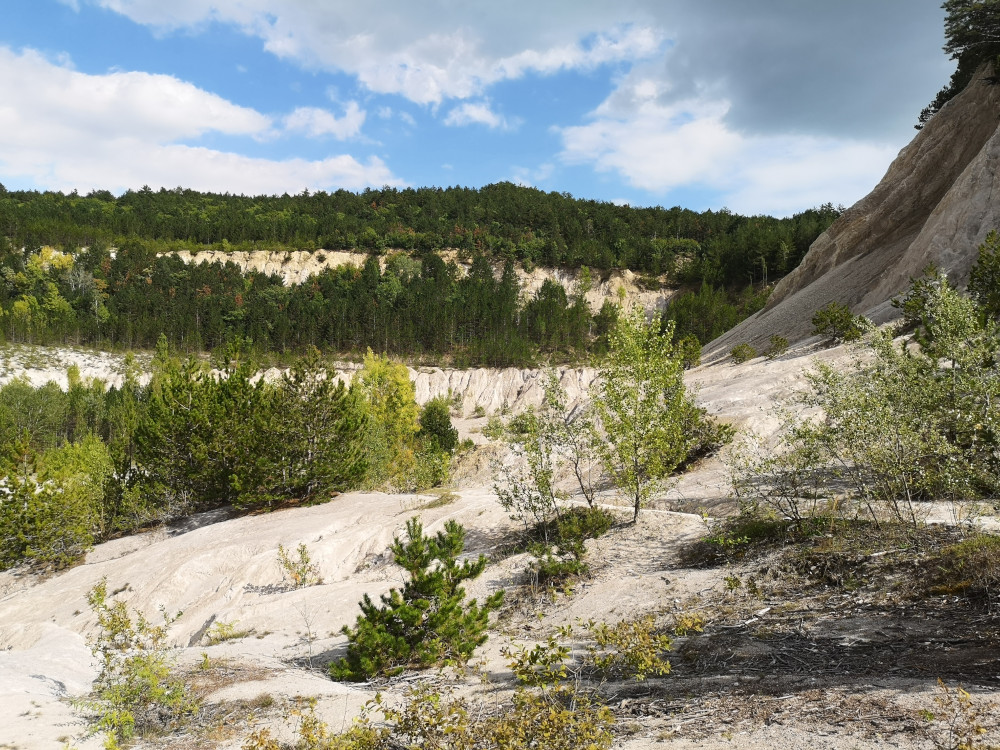
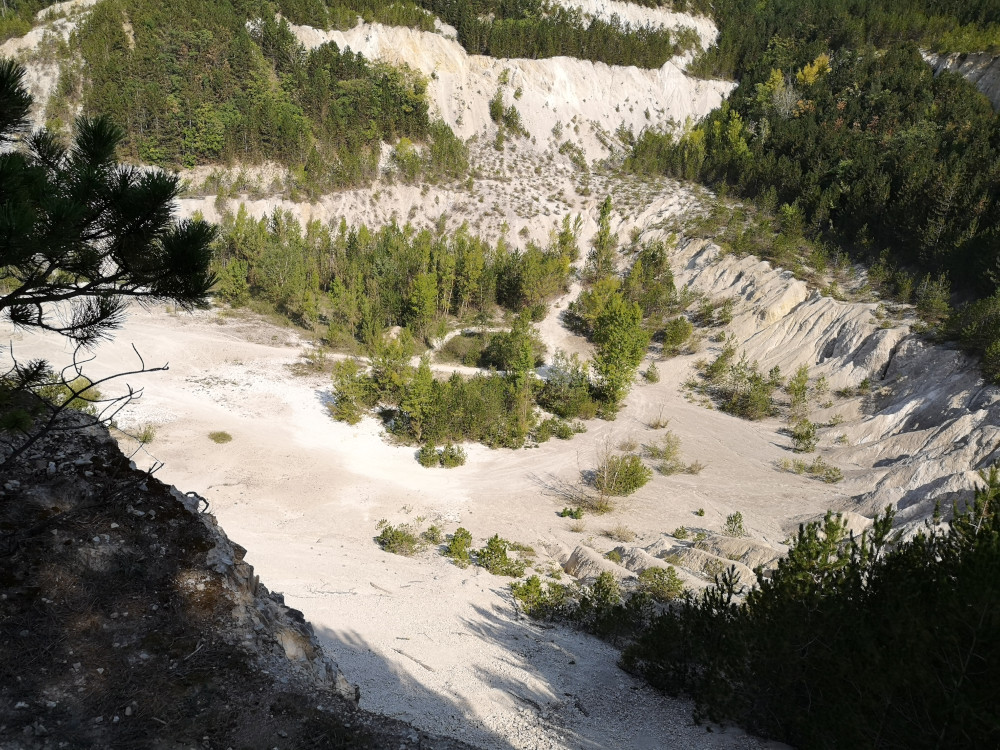
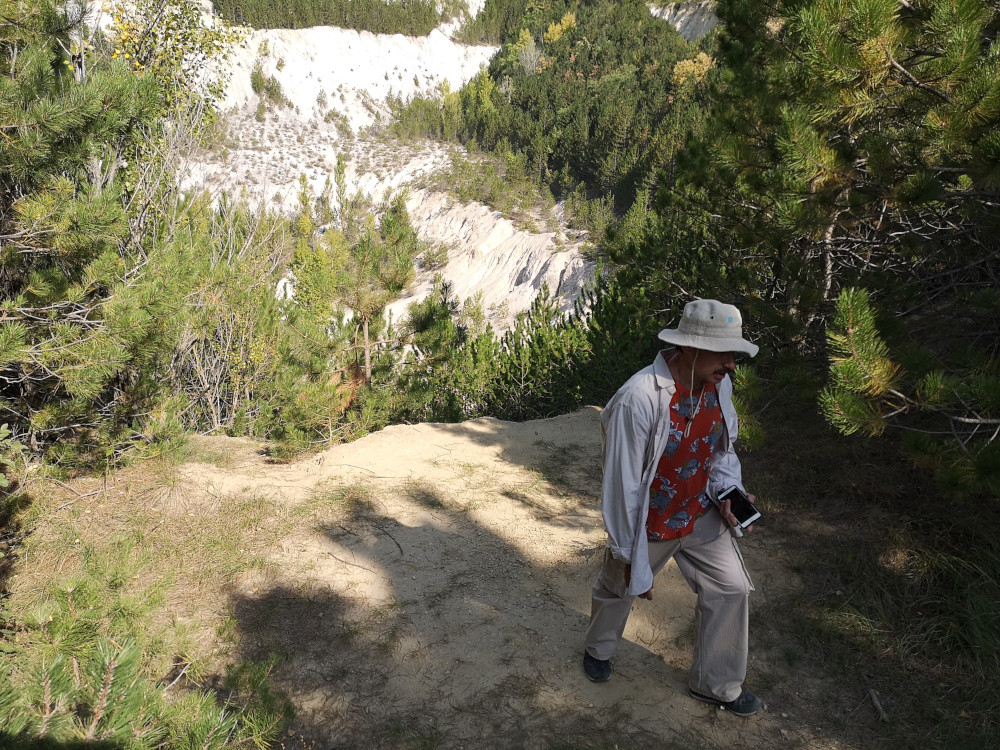
Covering an area of approximately 400 × 400 meters, the quarry is now silent and overgrown. It is divided by a narrow ridge into a spacious eastern section and a smaller western one. The eastern basin is particularly striking: nature has sculpted ravines, terraces, and canyons whose almost fantastical forms resemble an ancient amphitheater. The slopes and ledges are largely covered with black pine and brushwood, and each groove or outcrop feels like a mark left by both geological time and human intervention.
Once, the quarry supplied valuable materials for construction and industry. Dolomite was used as aggregate in building, as flux in metallurgy, to neutralize acidic soils and enrich them with calcium and magnesium in agriculture, as well as in the production of glass and refractory materials. [ 123 ]
Today, with its industrial role long gone, the quarry returns to nature — and simultaneously opens itself to artistic contemplation and action. As part of the series “The Quarry as Witness,” we approach such places as living archives: not only of geological memory, but of the potential for interaction between human presence, form, and time.
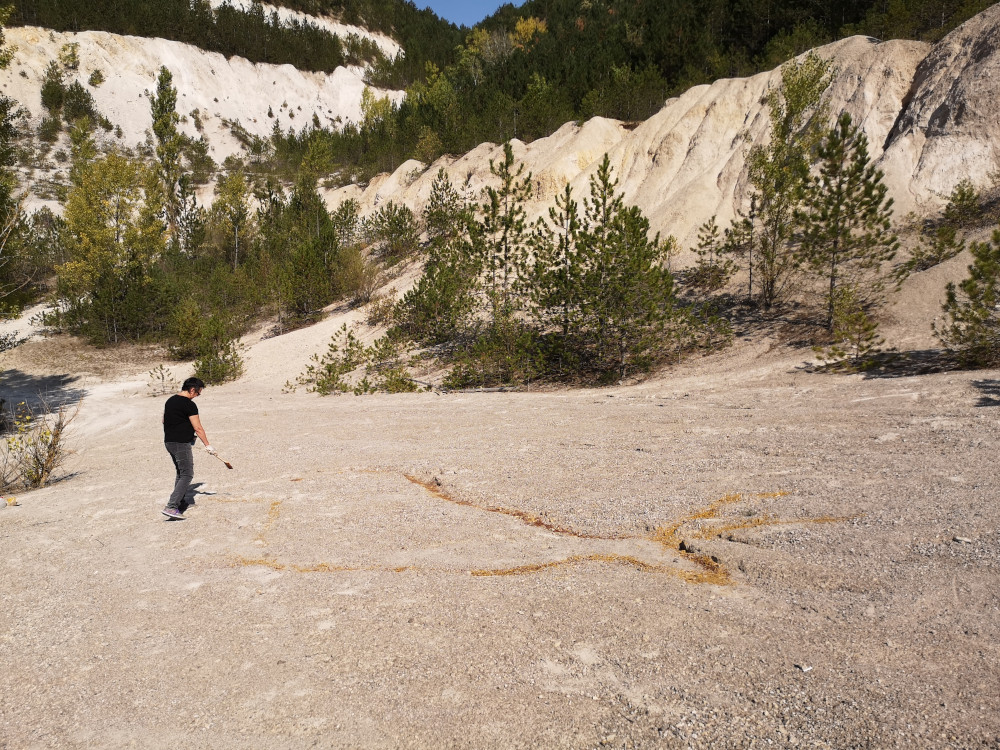
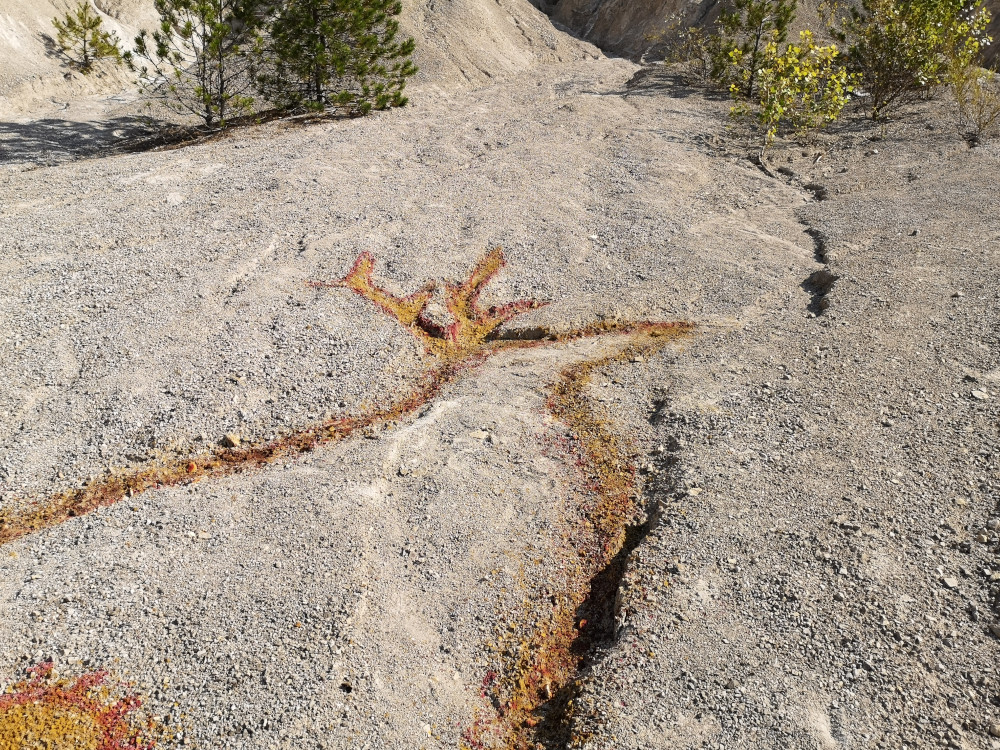
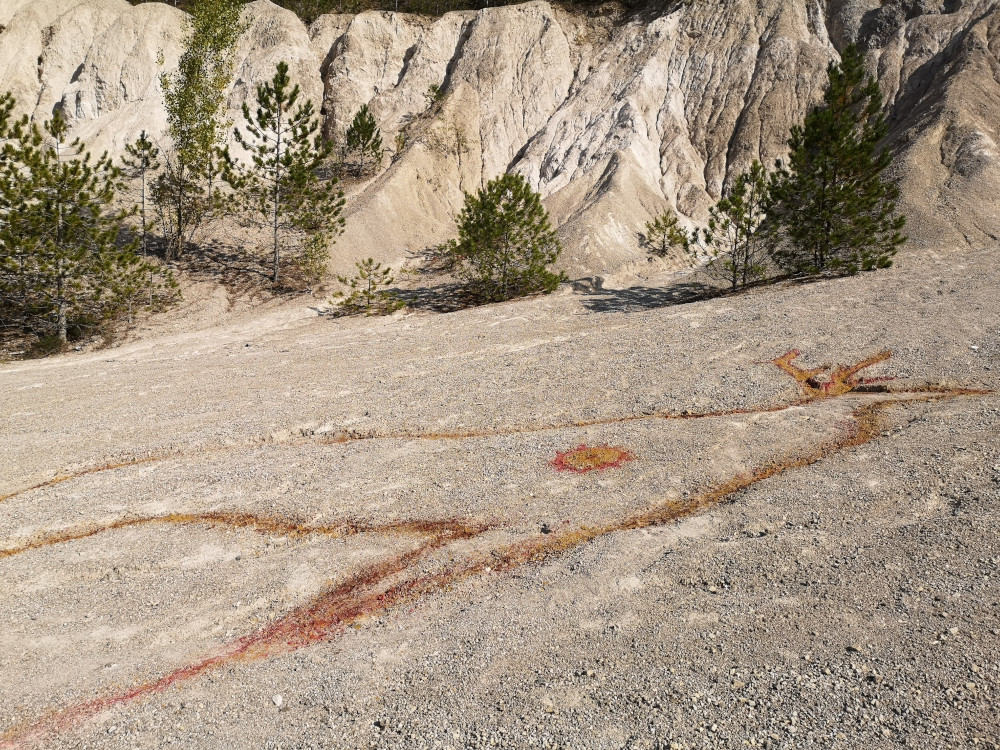
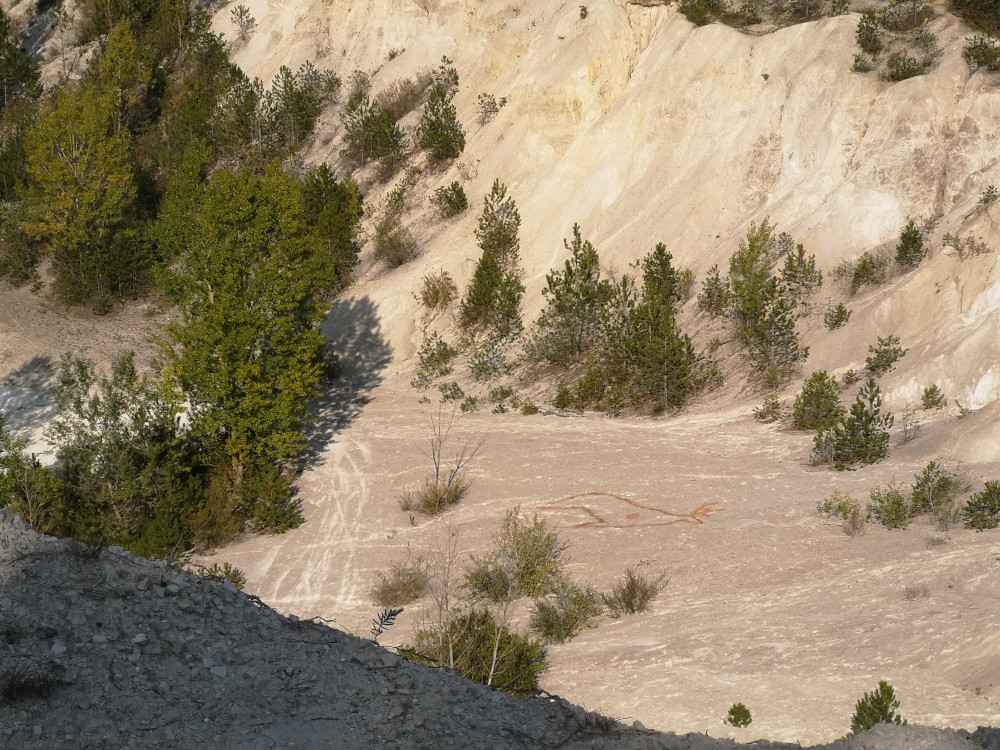
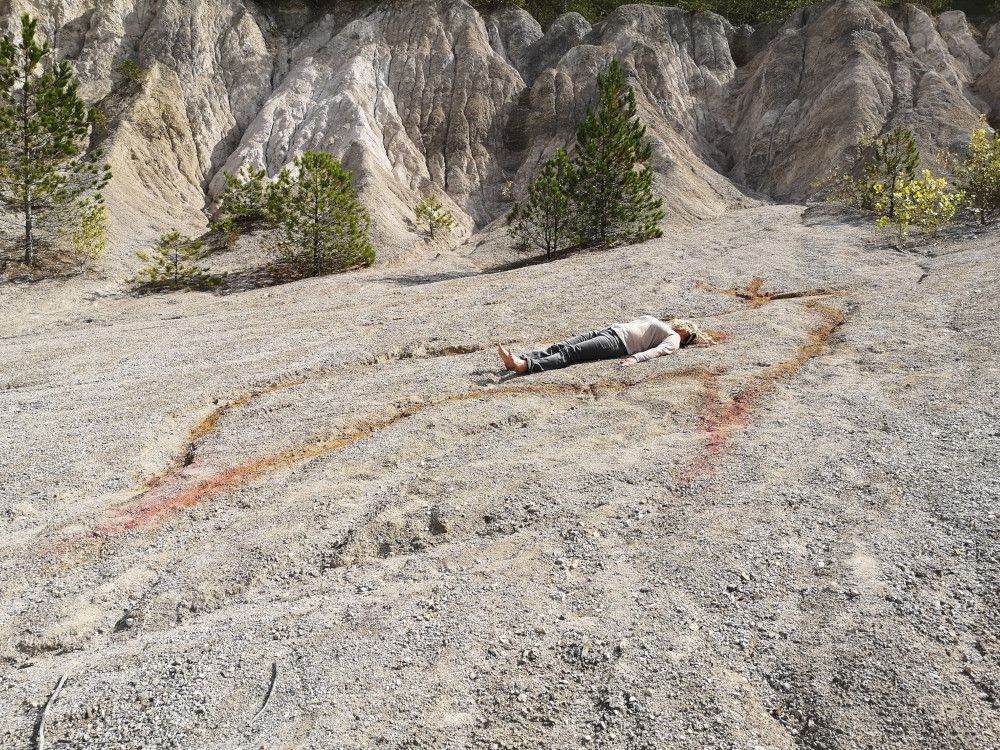
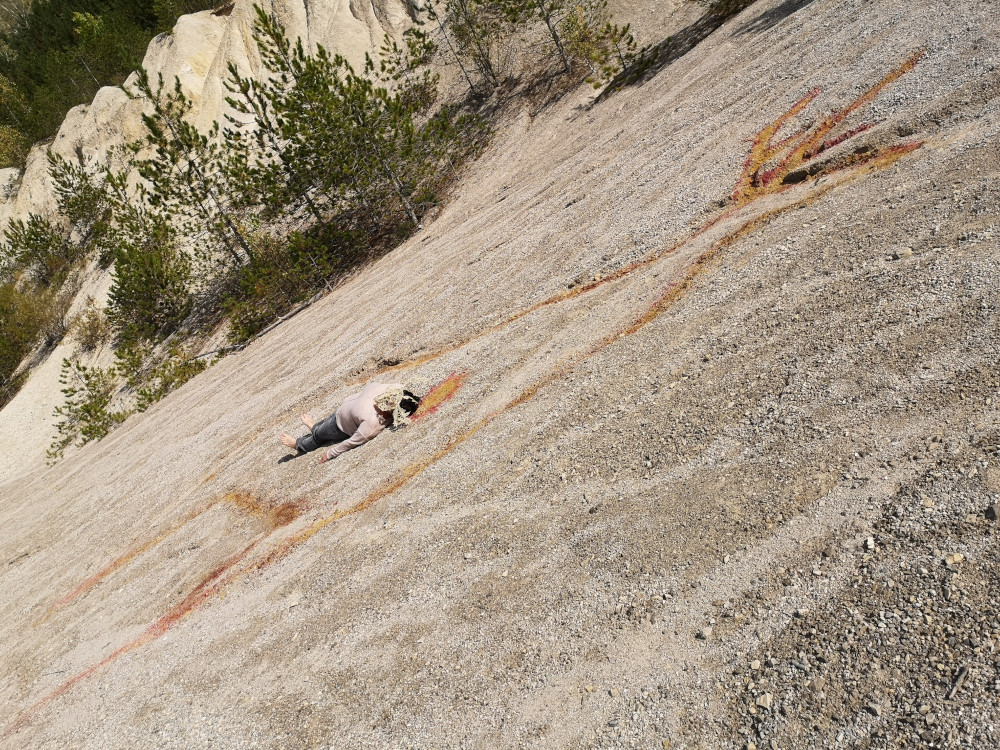
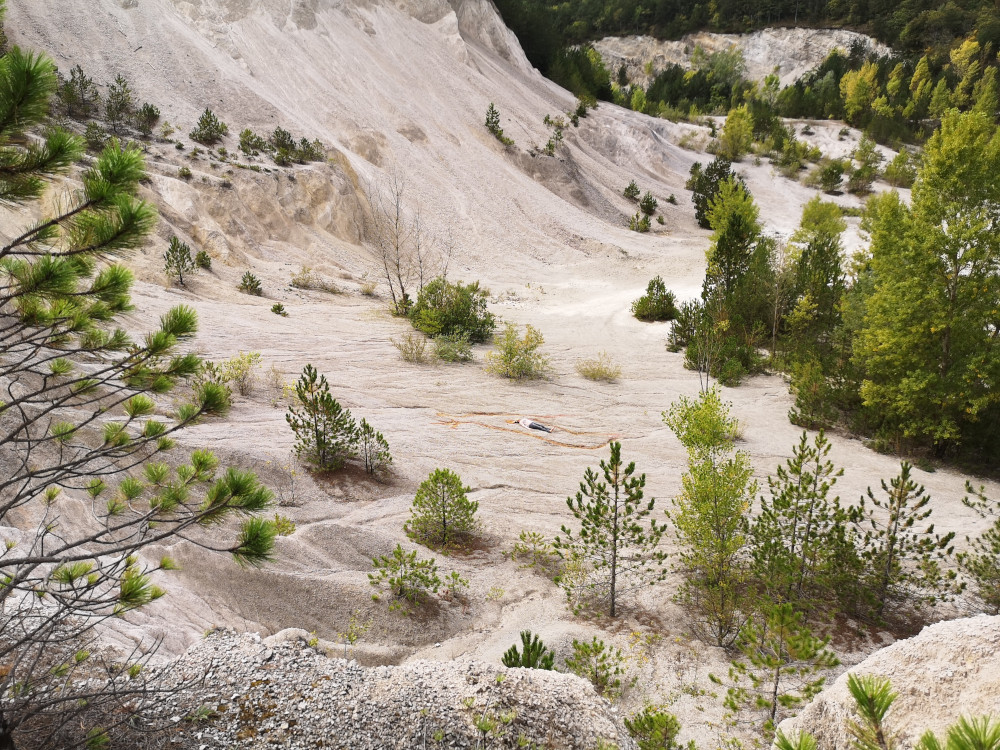
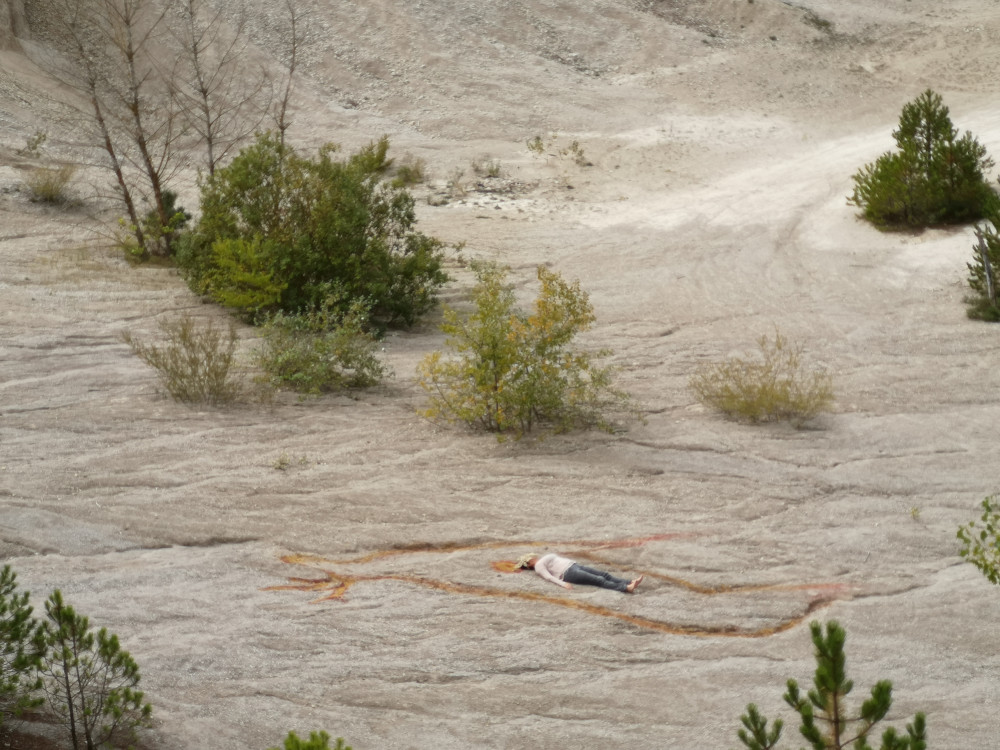
As part of the Deerland art festival in September 2020, we conducted a series of artistic explorations in the old quarries around Gyenesdiás, Hungary. One of the key events was the creation of The Native Deer — an ephemeral geoglyph formed in an abandoned dolomite quarry on the hill of Pipa-hegy. The project became a spontaneous yet profound collaboration with the landscape itself, where natural forms revealed the image that was meant to appear.
Originally, we planned to work in another pristine white quarry, but upon arrival discovered it was again under excavation. We had to change location quickly and chose the old, forest-overgrown quarry. We descended to a light clearing that intuitively called for action.
TheSzamorodni Deer, 2020 (process and details)
Our original sketch — a two-headed elk — didn’t match the terrain. But the natural streams and grooves already suggested another deer’s form. I merely “revealed” it with pigment splatter. Later, a heart appeared in the center, turning into a sun. (Instagram)
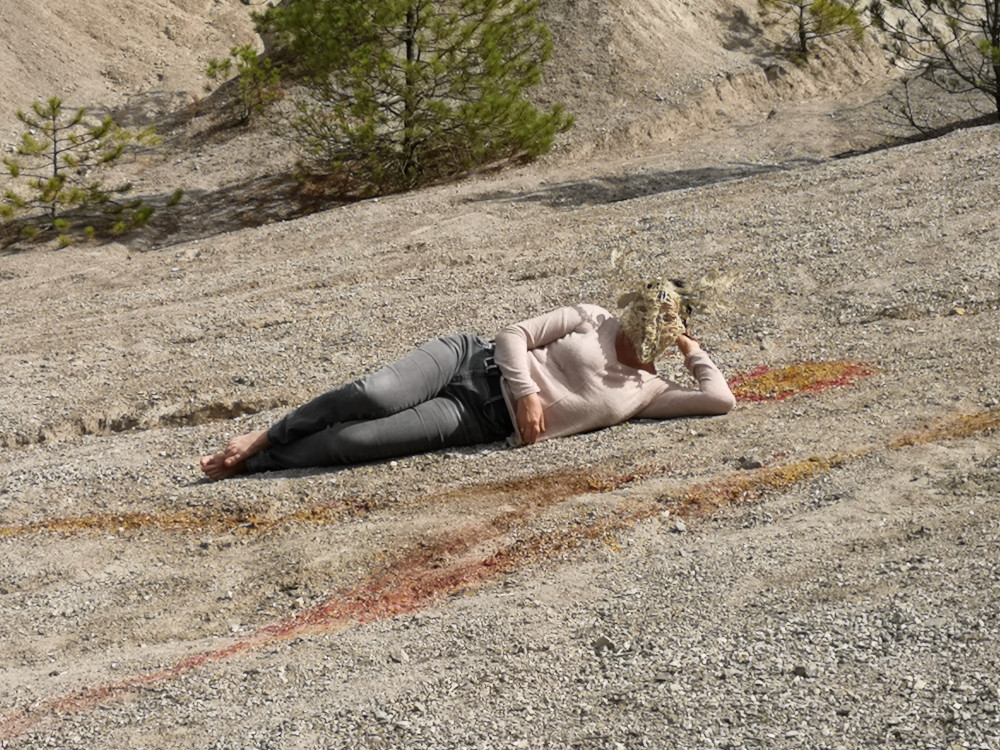
Meditation inside the deer and Performances around
A week after the geoglyph was completed, we conducted a performance inside its outline — a physical alignment with the symbolic shape. The body tuned into the place, activating its latent presence. (Instagram 1234)
Spiral with a Deer Hoof Stamp
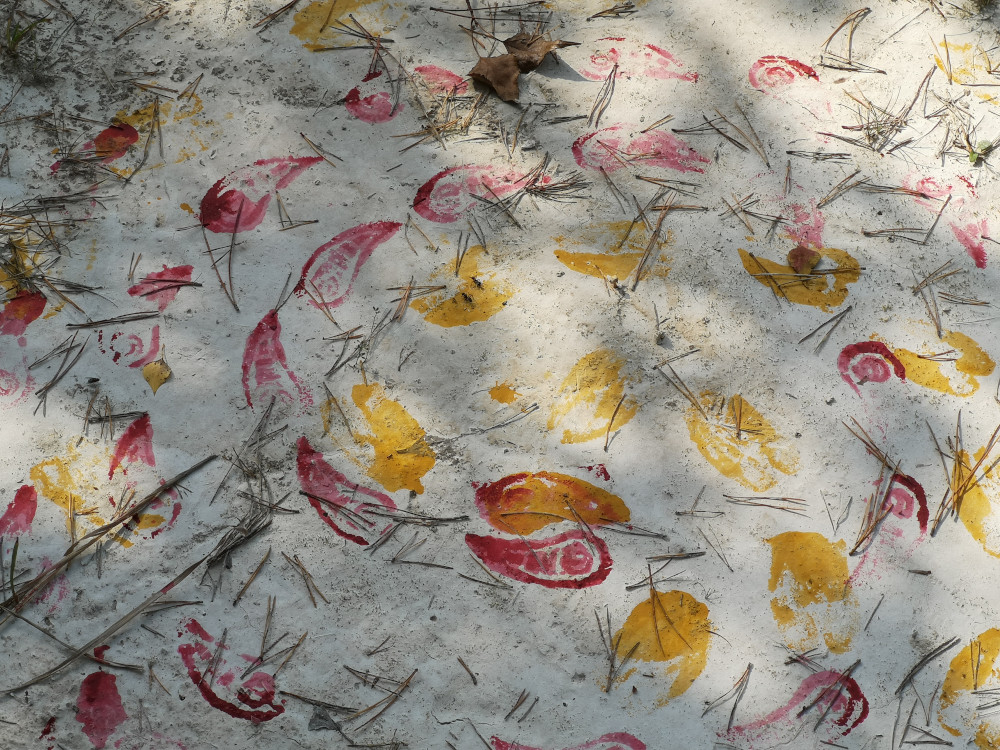
Using a sponge stamp in the shape of a deer hoof, we created a double spiral: coiling inward in ochre, then unwinding outward in red. From above, the form resembled spiraling time — folding and unfolding. (Instagram)
Cave Deer
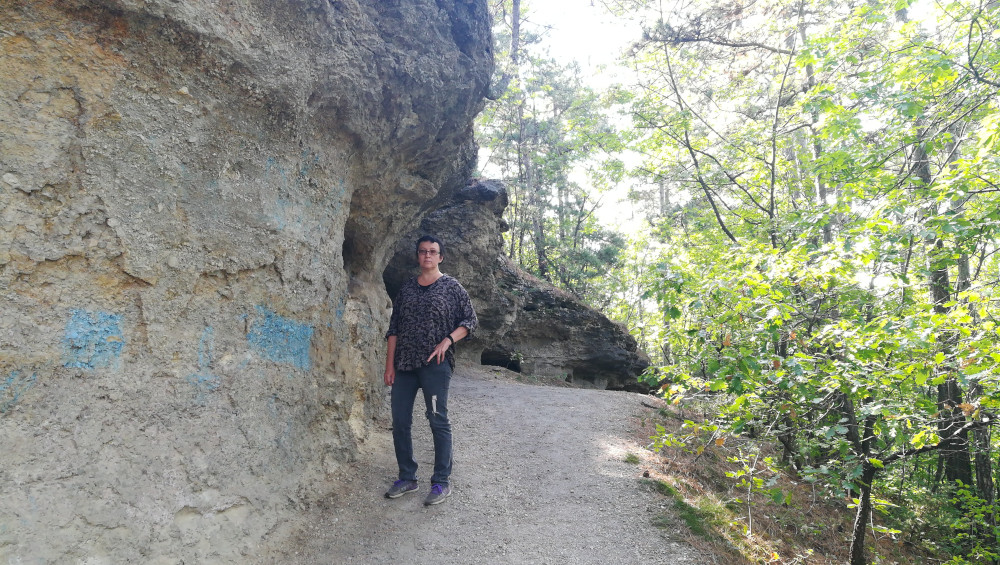
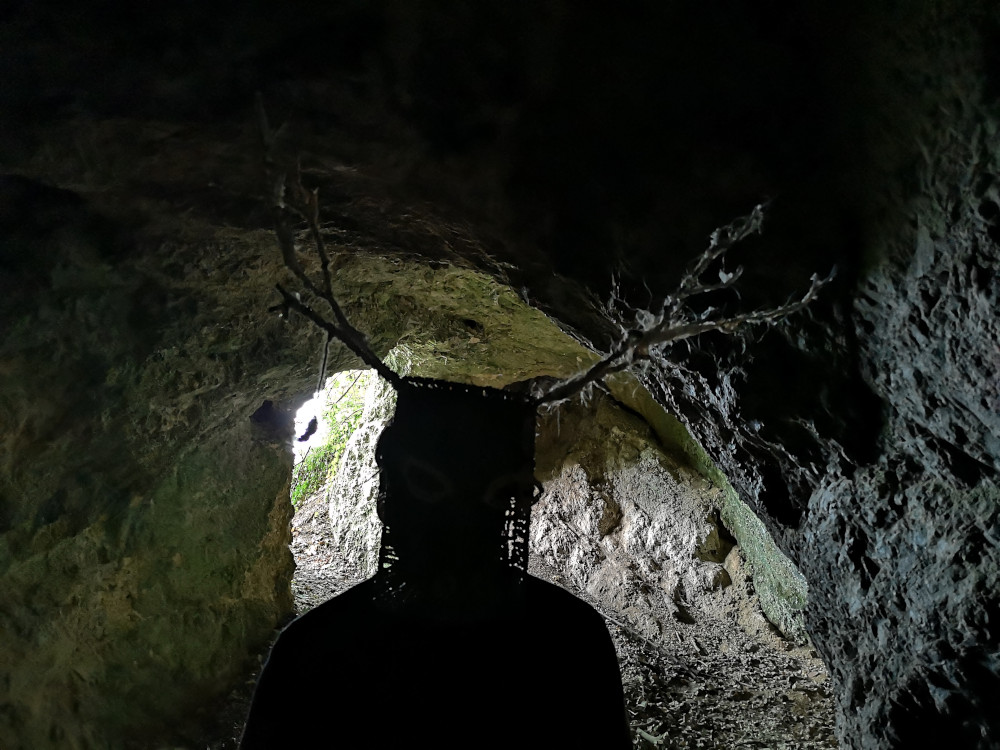
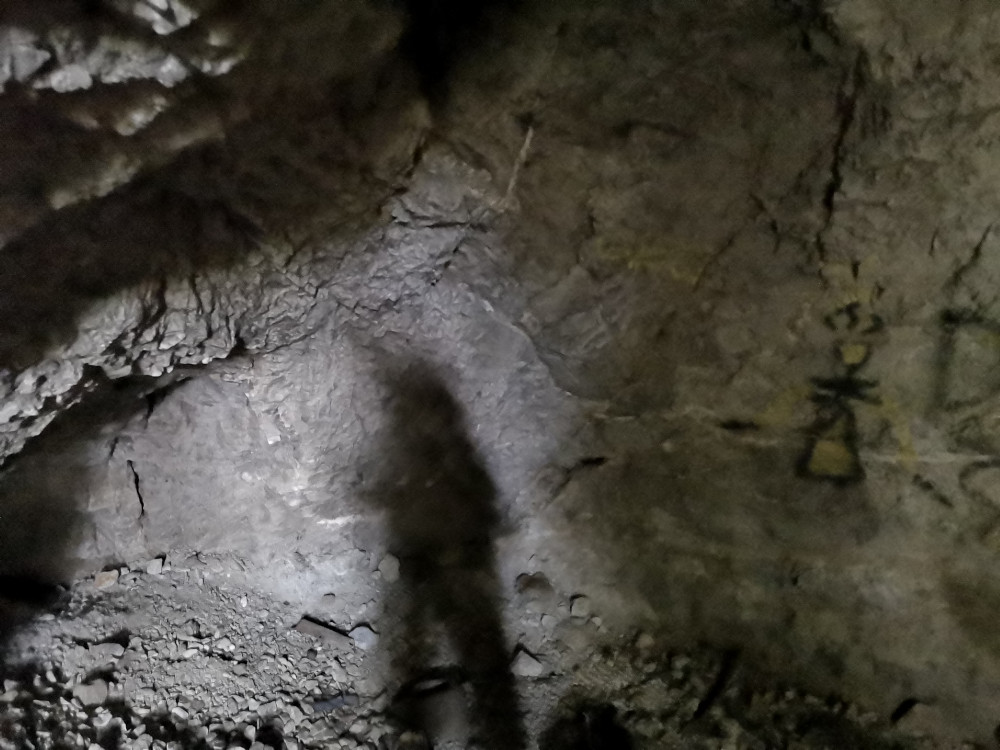
Next to the site, we found a man-made cave — likely carved out during stone extraction. Inside it, we staged a photo performance titled Cave Deer: shadowy images on the walls like memory archetypes. This added a subterranean dimension to the project, deepening the connection between human, stone, and symbol (Instagram)
This work belongs to our practice ofRR-method — an approach where the artist does not impose a new form, but listens attentively and reveals what is already present in the landscape. Here, the environment itself acted as both witness and co-author.
Although nothing went as planned — we changed location, abandoned the original idea, and adapted the technique — the result was unexpectedly precise. We simply uncovered what was already embedded in the place.
That’s how the Samorodny Deer appeared — an ephemeral trace shaped by streams, stones, and light. A month later, it vanished without a trace, as intended. What remains is memory, and the documentation.
But most importantly, what remains is the experience of co-creation with the land — where the quarry was not just a backdrop, but a protagonist.
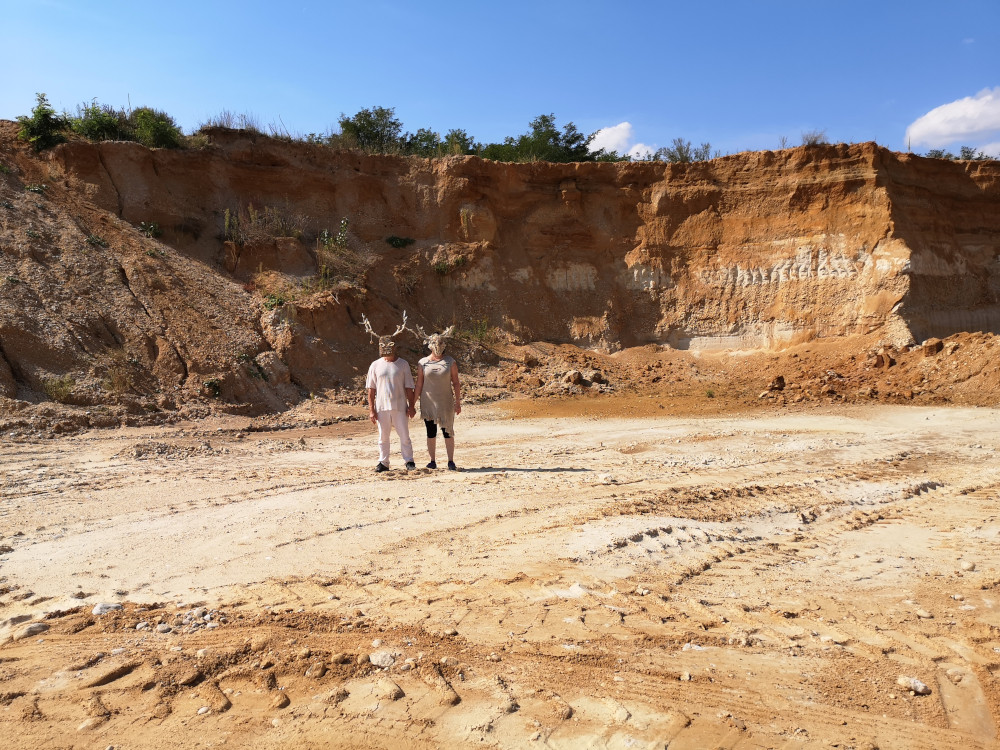
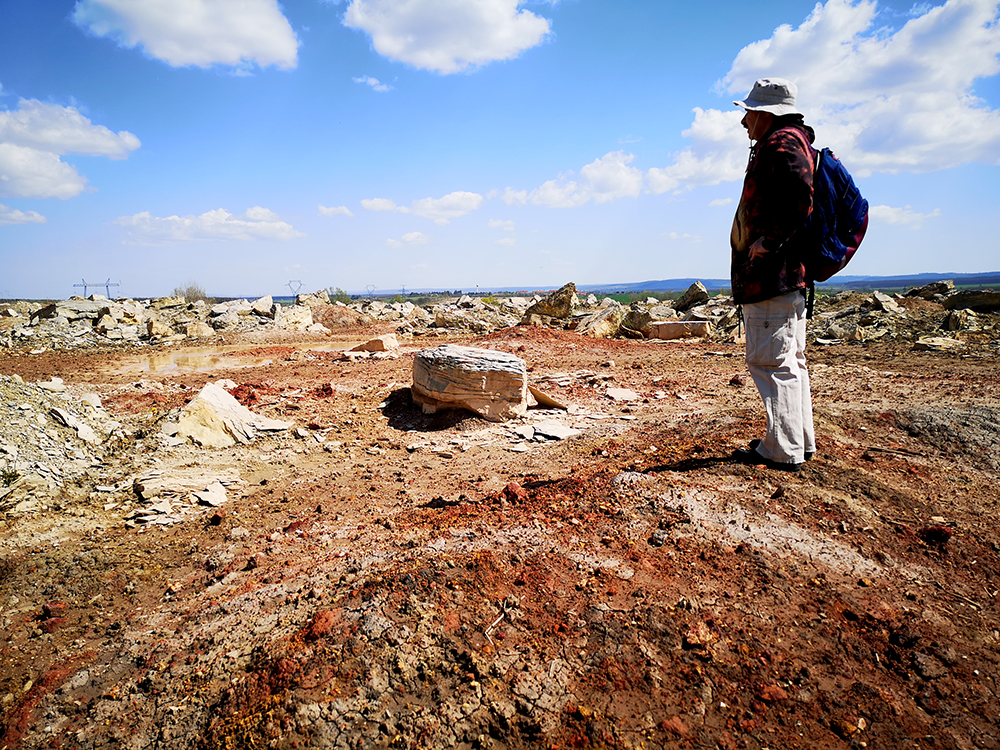
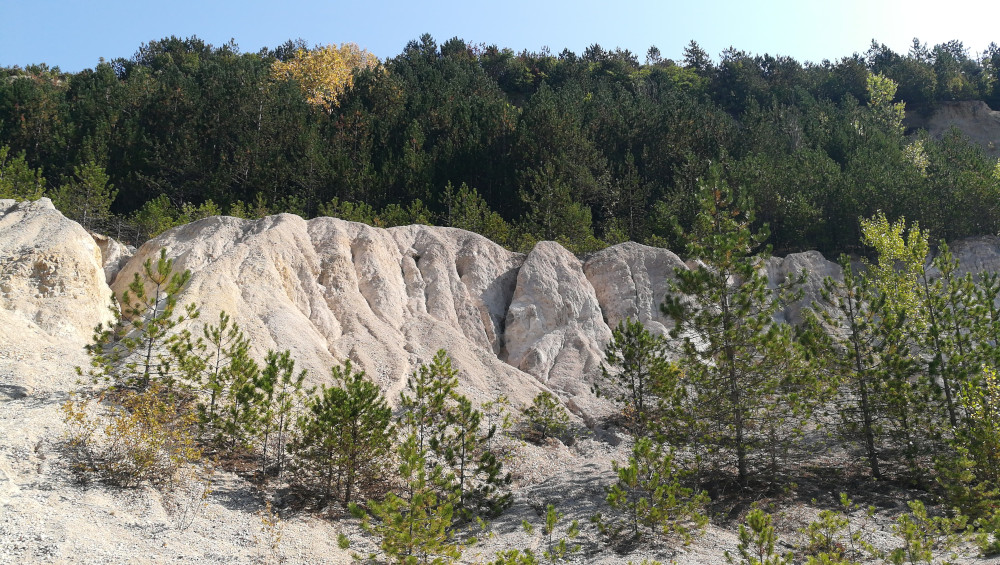
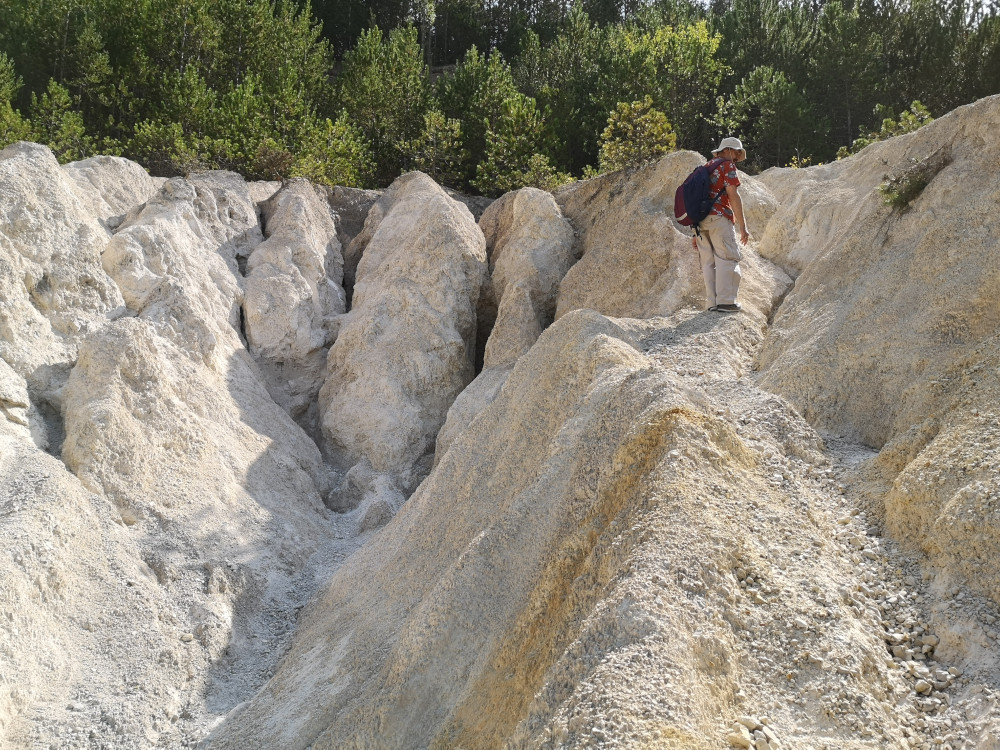
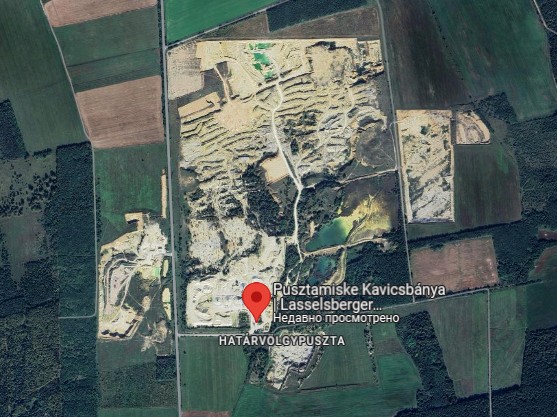
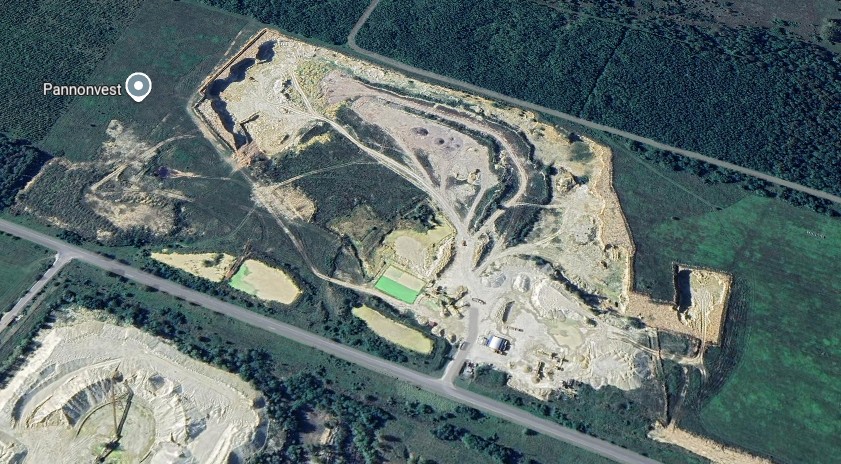
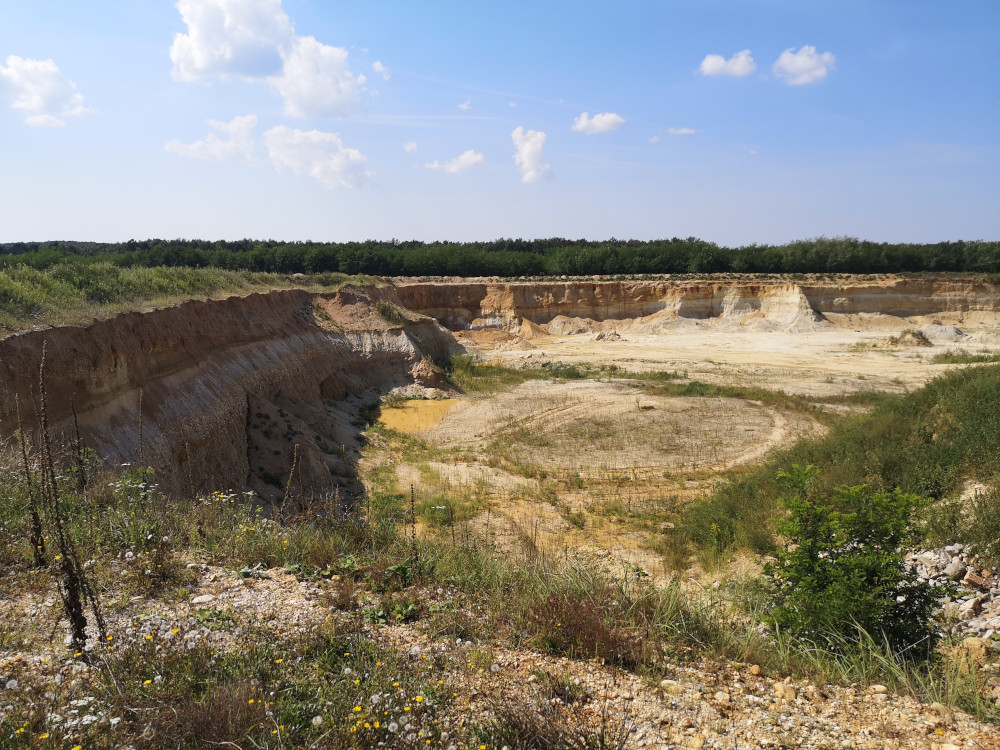
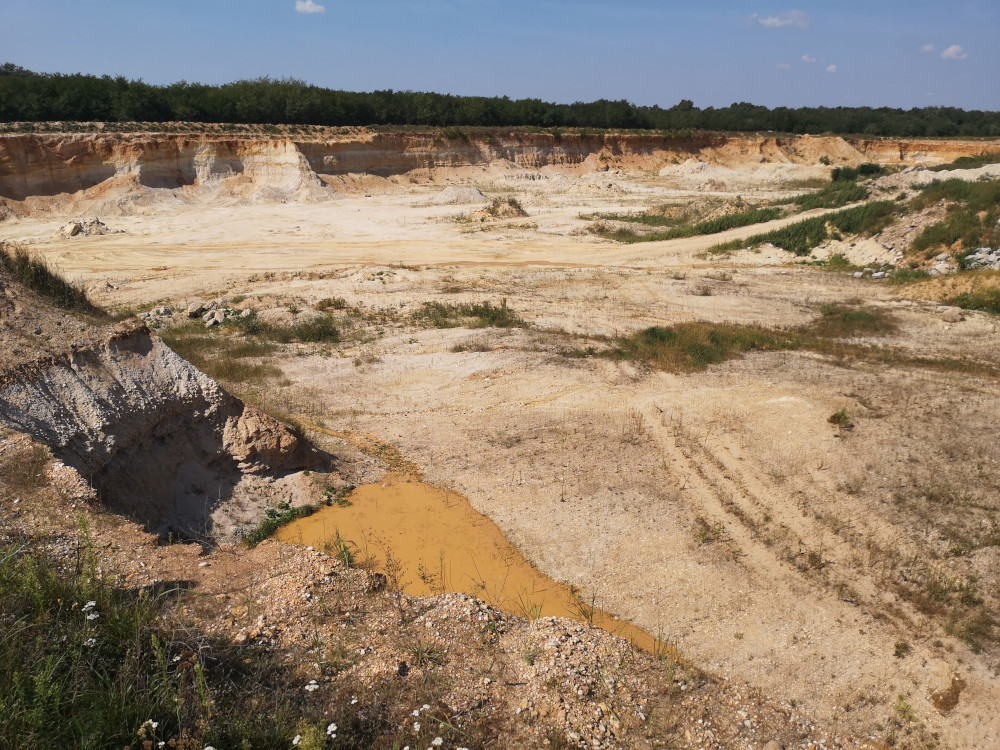
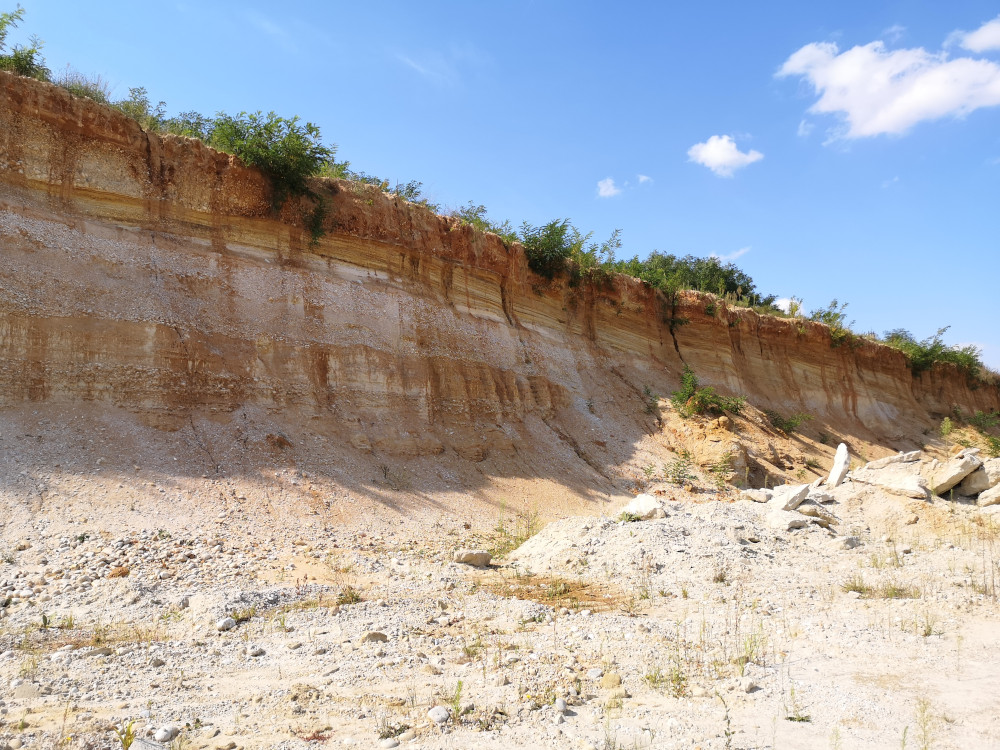
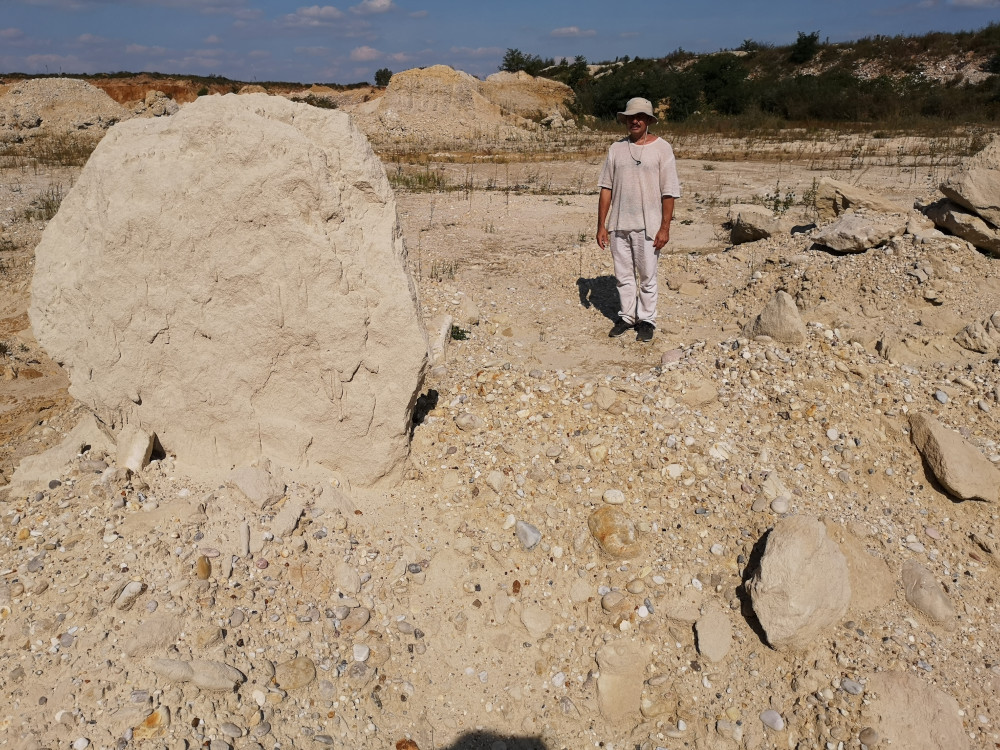
Pusztamiské Gravel Quarry is located 2 km south of the village of Pusztamiske, Hungary. The quarry, approximately 1300 × 1500 meters, is still in operation, though extraction has ceased in some areas. These former work zones are visually divided into two contrasting basins: the southern part is predominantly white, while the northern part displays ochre and orange tones.
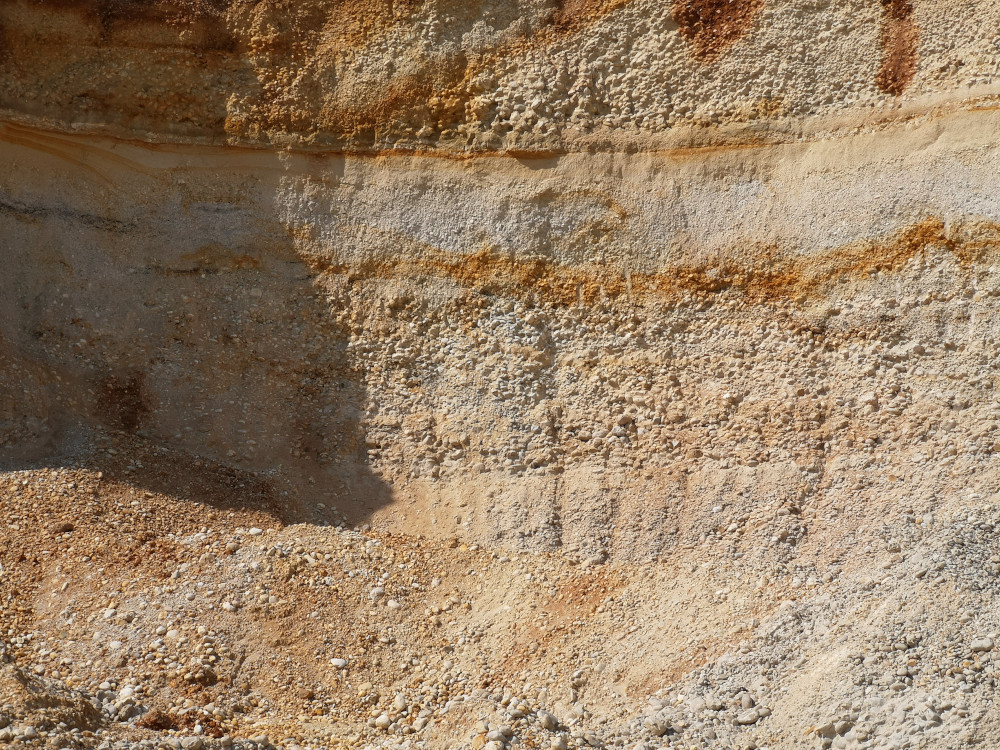
The quarry’s sandy and gravelly layers frequently contain fossilized seashells, sea urchins, corals, and other marine organisms — remnants of the warm Pannonian Sea that covered the region during the Middle Miocene, 12–13 million years ago. These deposits, formed by rivers carrying quartz grains and larger rock fragments, became extensive beds of sand and gravel.
The extracted materials — gravel-sand mixtures, crushed stone, and sand — are processed using modern machinery and used in concrete production, paving bases, landscaping, and even as glass-grade sand. The quarry is developed by the Austrian company Lasselsberger Holding Internationale GmbH, with extraction beginning in the late 1990s. [1, 2]
Pusztamiské is not merely a source of raw material; it is a layered archive, a witness to ancient seas, vanished lives, and present gestures. It holds time not only geologically, but poetically — in deer tracks, in wind-carved sediment, in the color of its cliffs, in the movement of bodies and shadows.
Walls the Color of Time “Walls the Color of Time” is a series of visual and textual observations of the exposed quarry walls, where color, structure, and texture become a chronicle of time. Each stratum carries traces of a sea, a glacier, a forest, or human intervention.
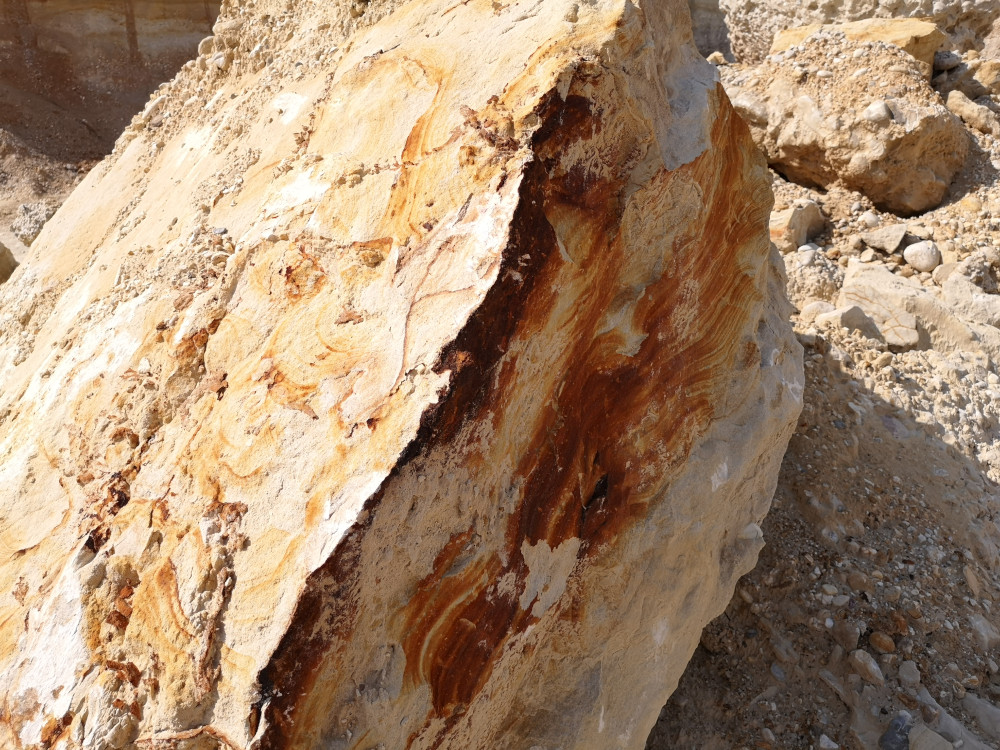
We see these quarry walls as living archives: their palette — ochre, limestone, pale sand, flecks of coal or clay — is not just aesthetic, but a material expression of deep time. The landscape speaks in minerals.
This project combines scientific description with a poetic gaze, recording the moment when the landscape stops being a background and becomes a voice.
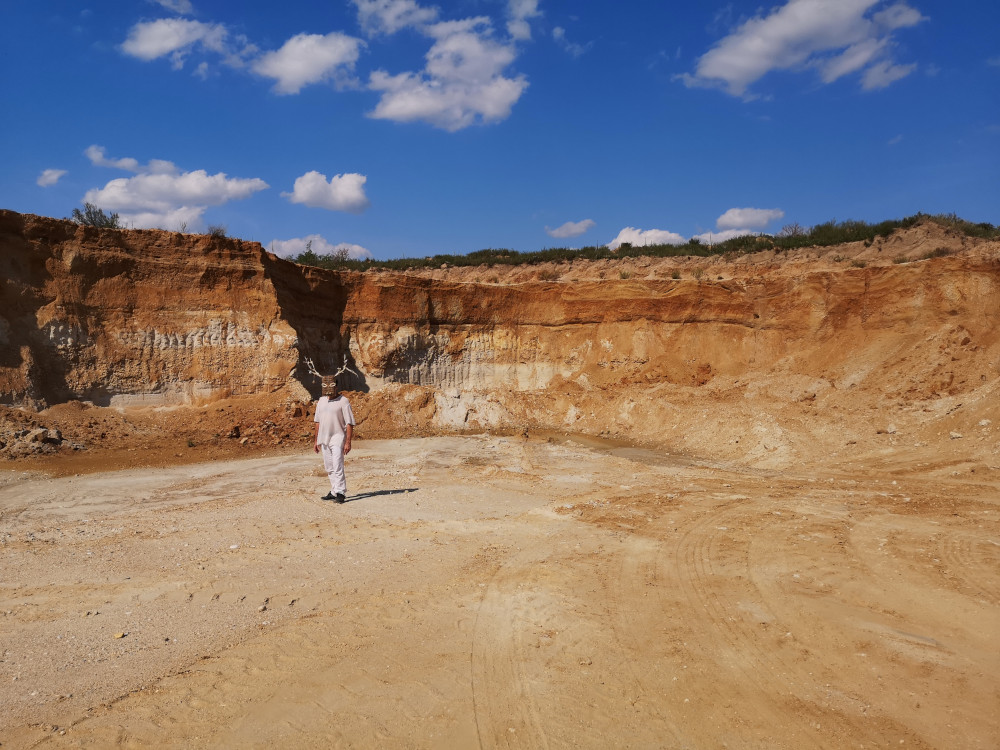
Ritual with Shadows Among the towering walls of orange sand, we staged a performance and photoshoot — figures in deer masks moving slowly across strata, like spectral mediators between epochs.
The quarry’s colors — bleached whites, rusts, ochres — hold the memory of the Pannonian Sea. Its currents, once fast and slow, have left layers like time pressed into pigment. To appear here in deer masks is not masquerade, but listening. The deer, in our practice, is a mediator — one who follows invisible paths, linking the visible with the invisible.
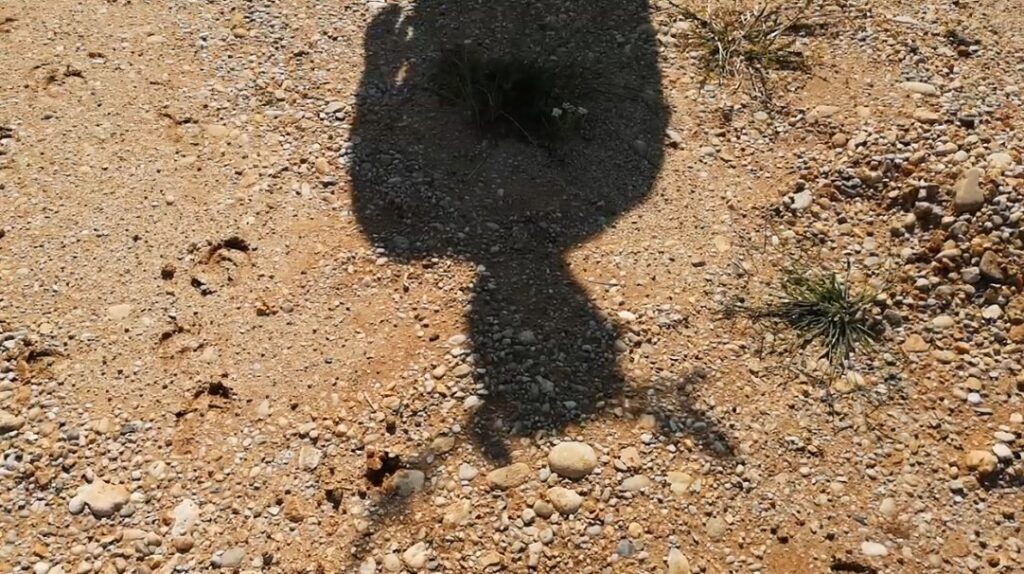
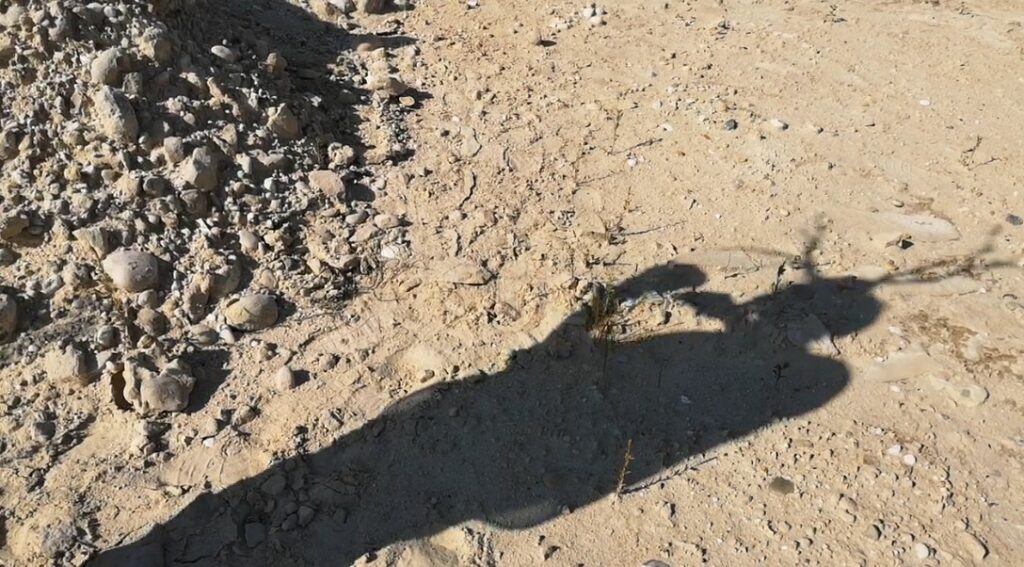
Shadows matter here: they fall across the sand like echoes of past presences. As we move through the light, our bodies become brief projections — alive within the sediment’s stillness.
This ritual is not a reconstruction of history, but an attempt to enter its rhythm, to step into the fluid memory of the landscape and briefly become part of its unfolding.
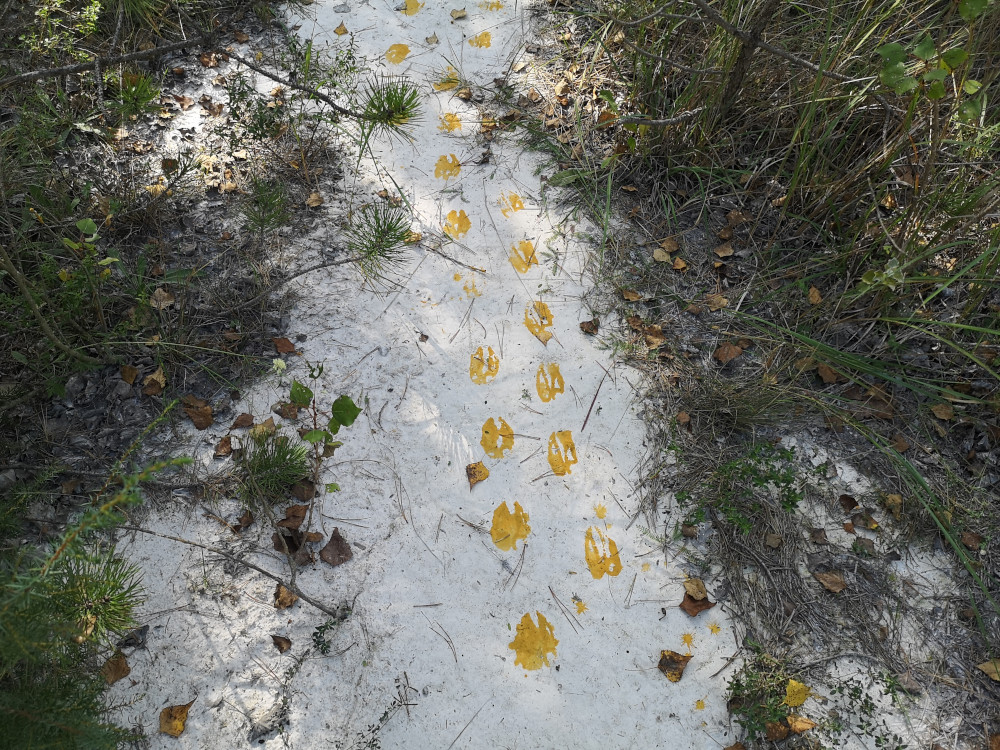
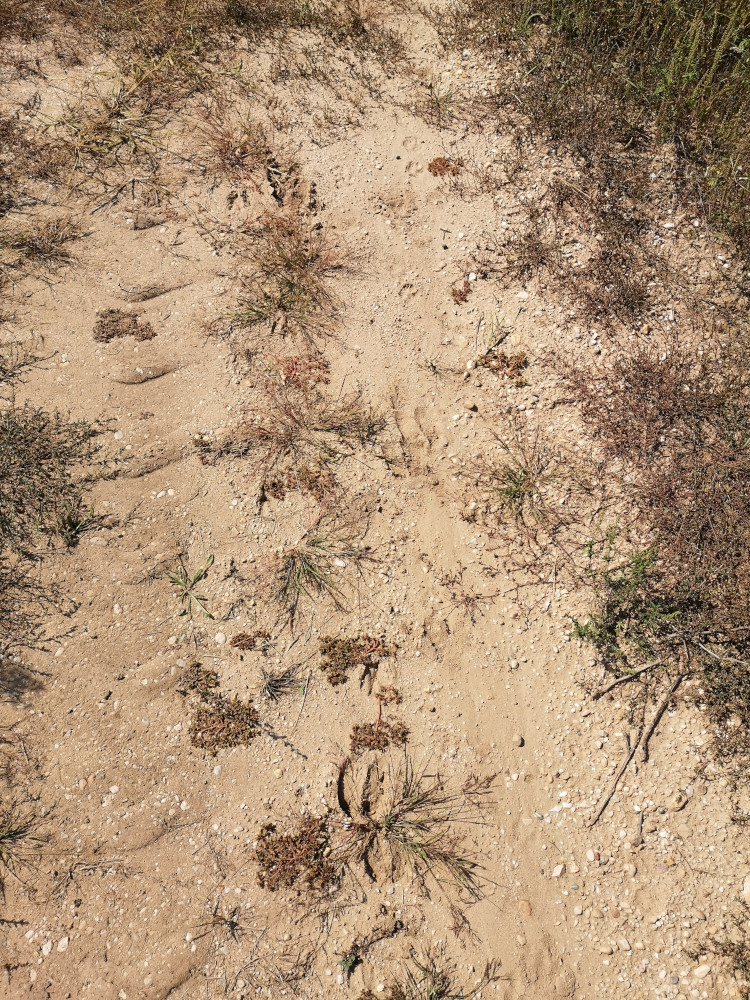
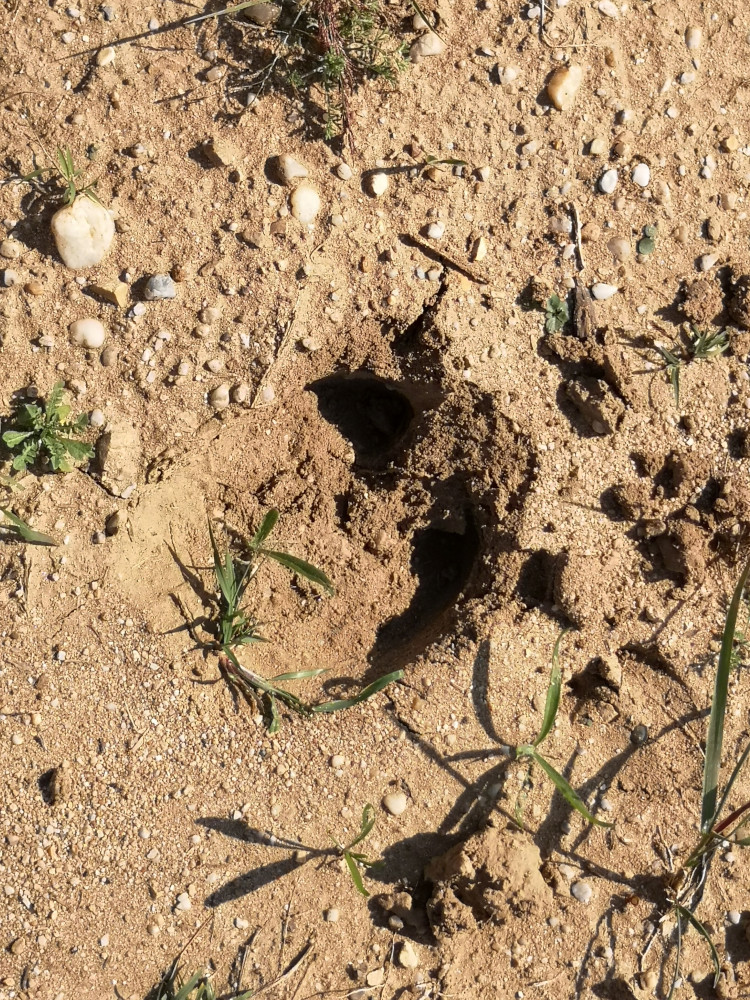
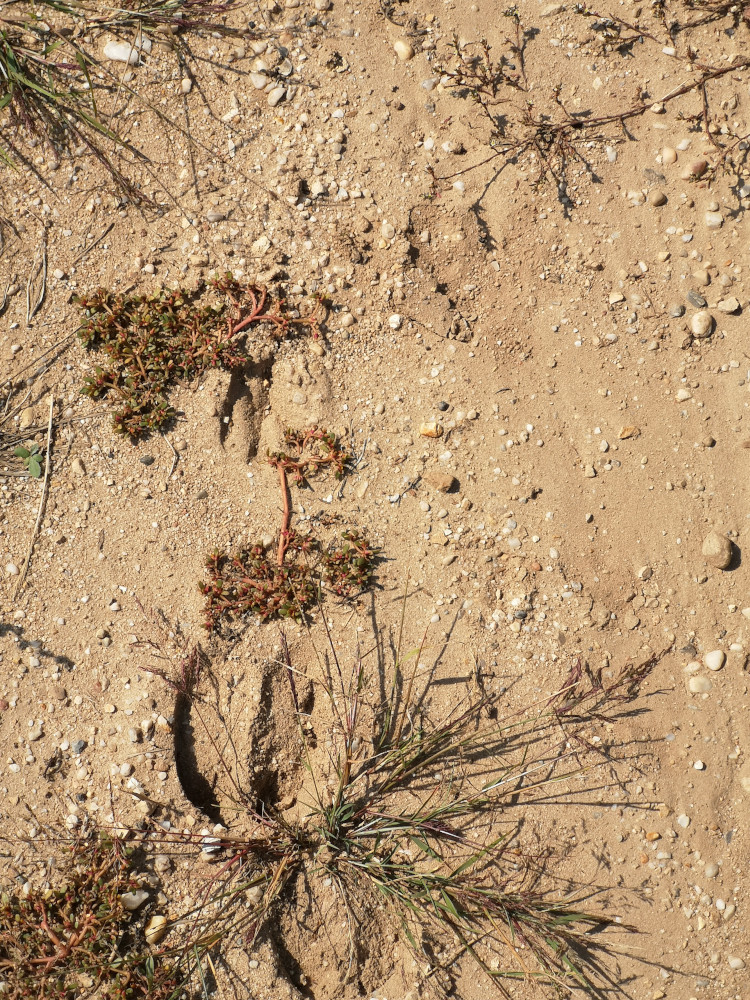
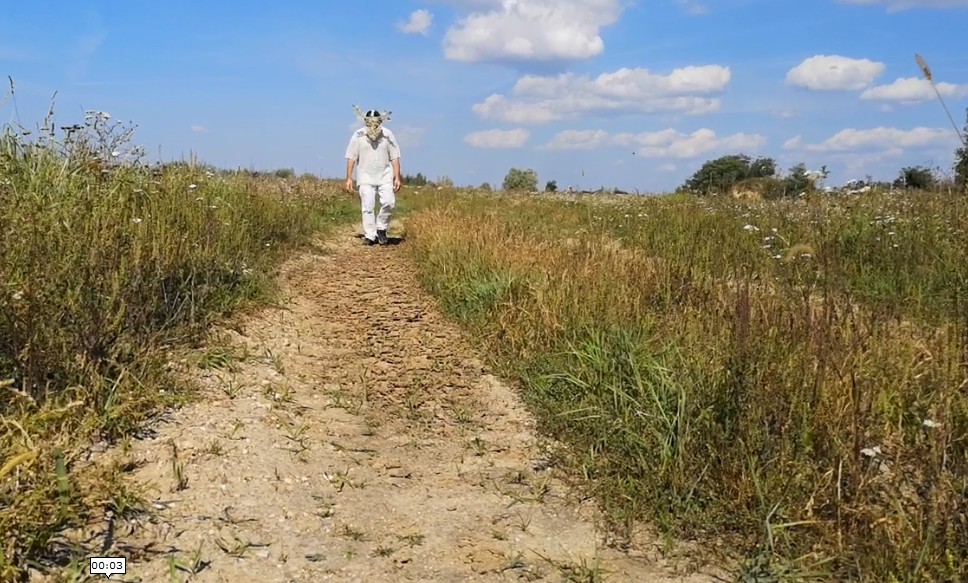
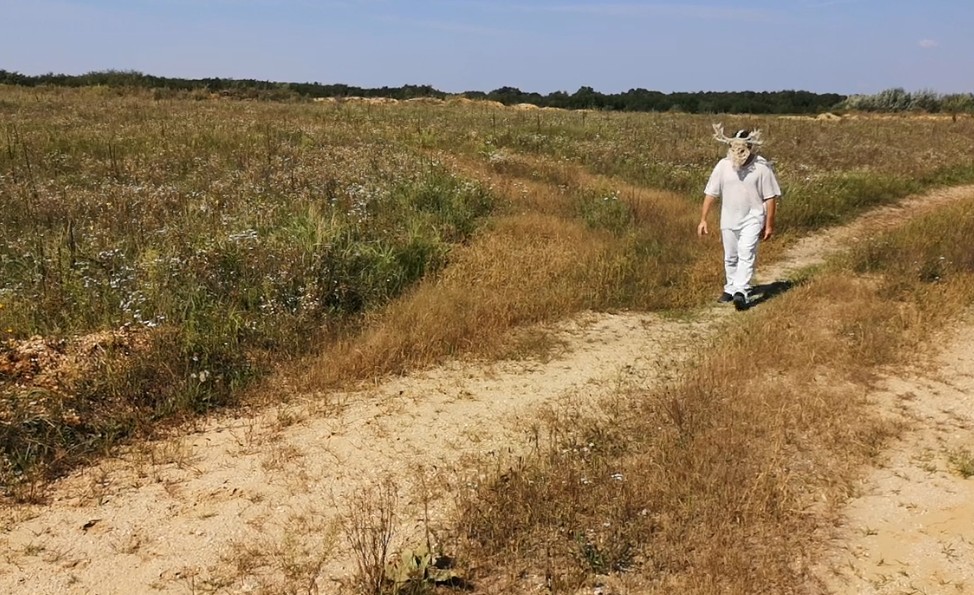
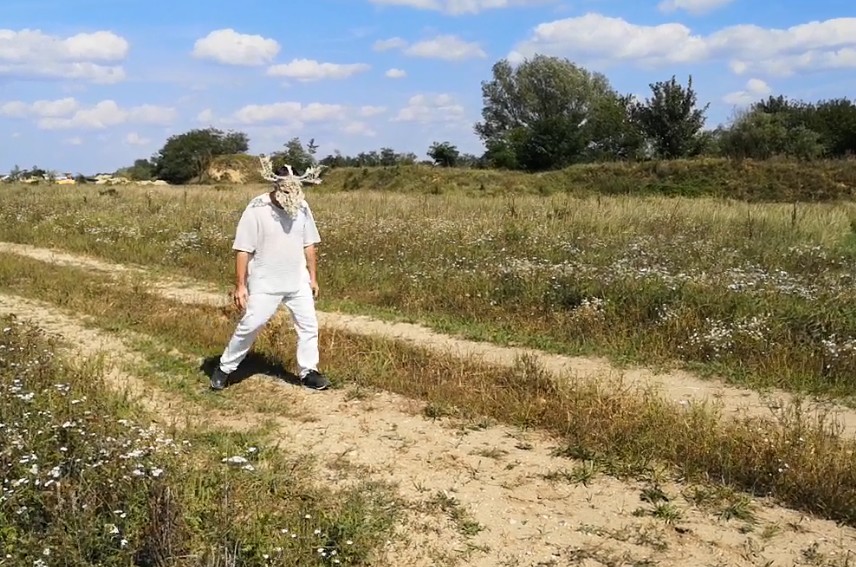
In the Footsteps of the Deer In the inactive zone of the quarry, we found a surprising number of deer tracks. One trail followed a path up a slope, ending on a circular platform — likely used by quarry vehicles — where the tracks vanished.
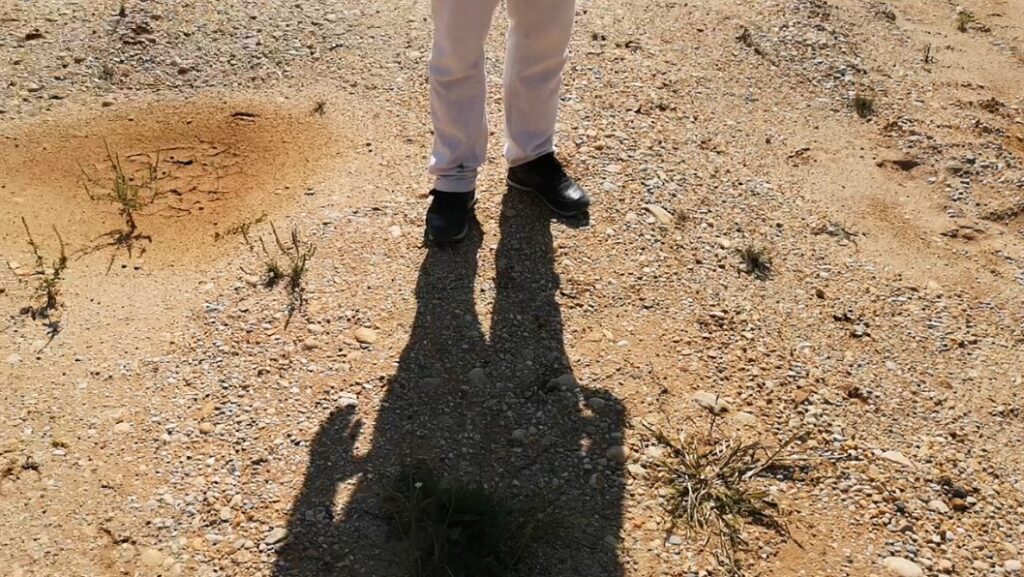
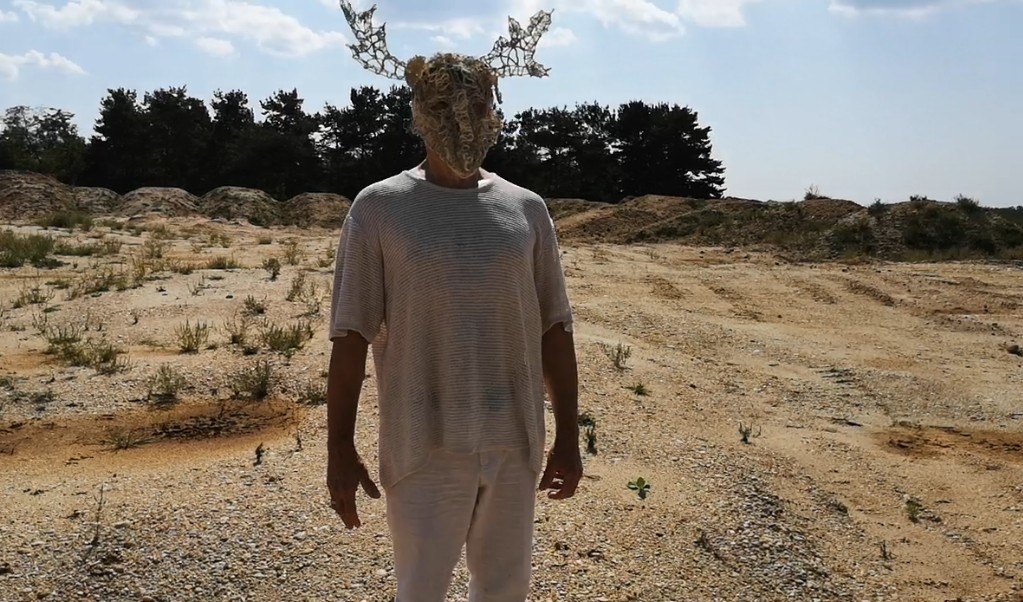
This moment inspired a video. A masked figure follows the trail. At its end, he notices another pair of legs beside him. He slowly looks up — and sees himself. A silent encounter: a meeting of self with self.
Selected frames from the video “In the Footsteps of the Deer” Director & Camera: Marina Razheva · Actor: Dmitry Razhev Editing & Color: Sasha Snova · Music: Vlad Razhev
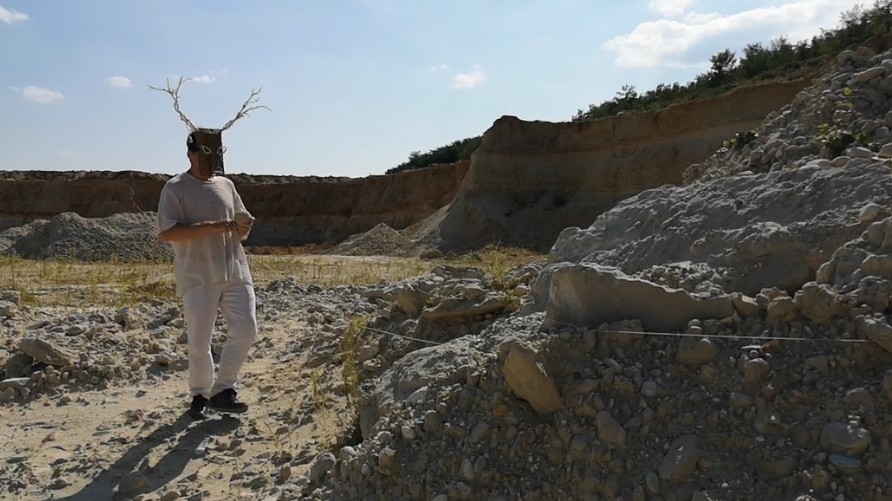
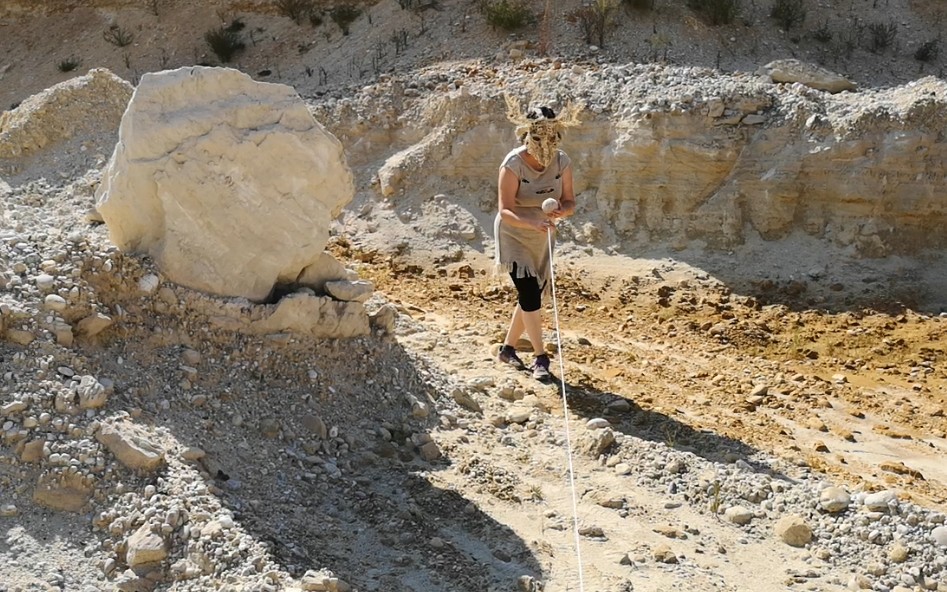
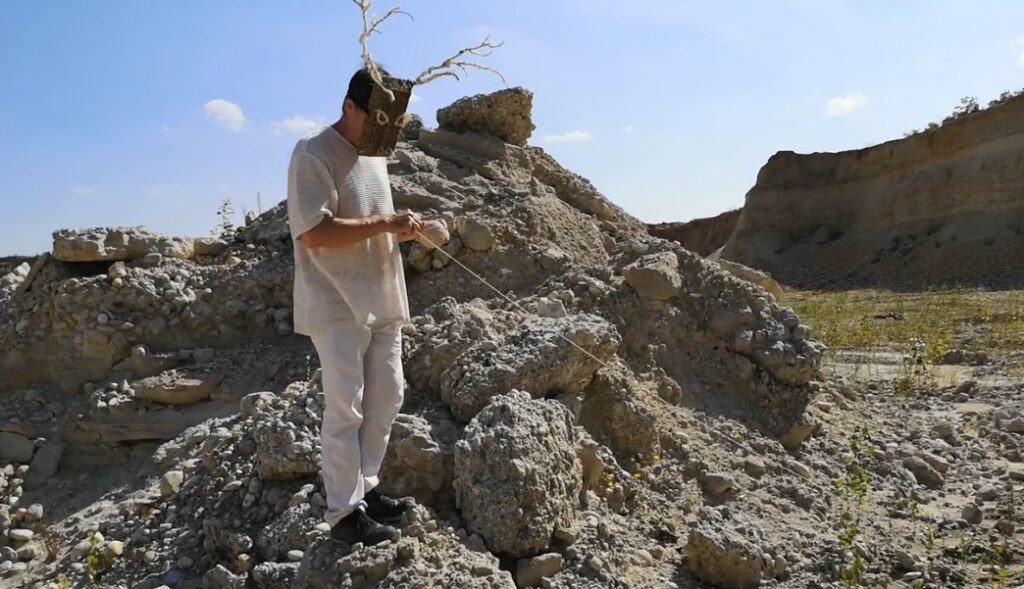
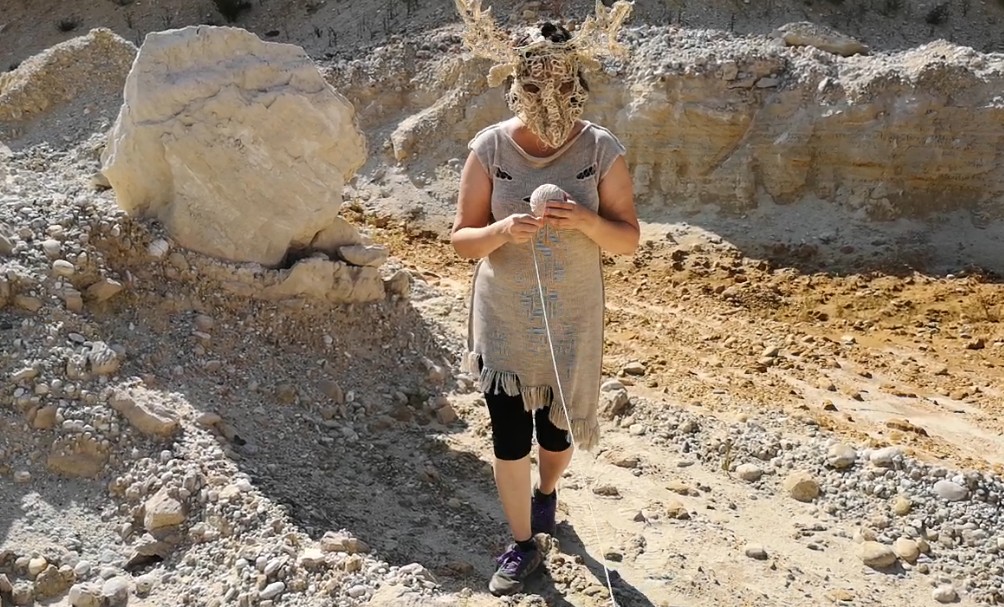
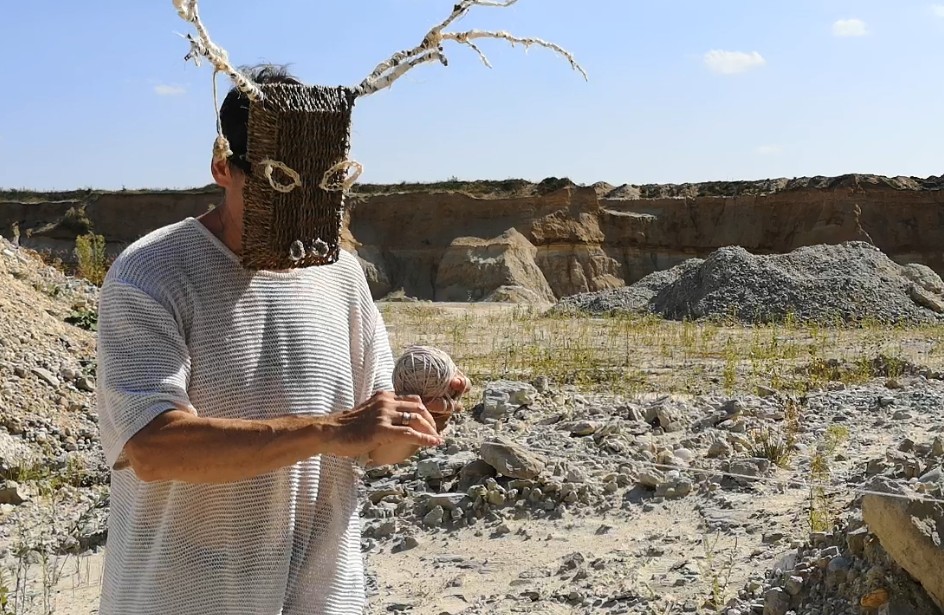
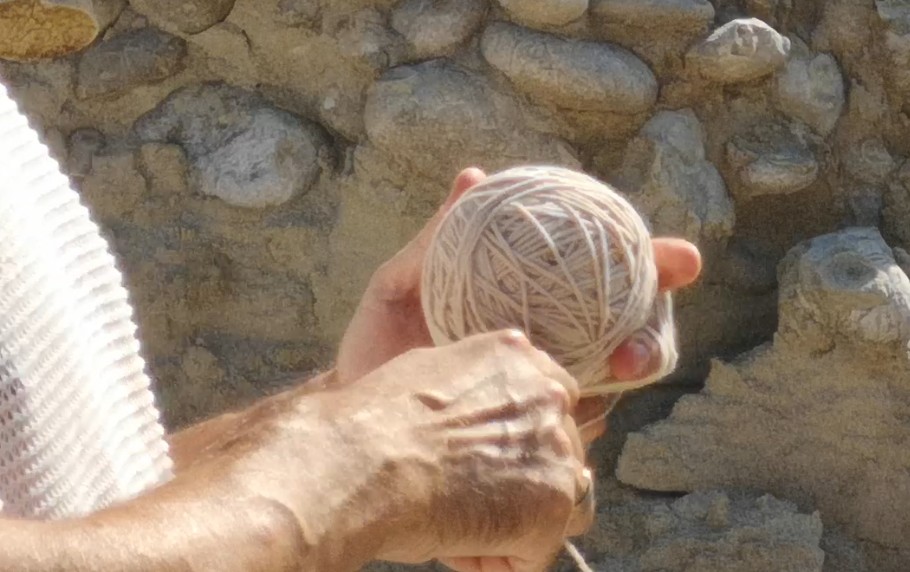
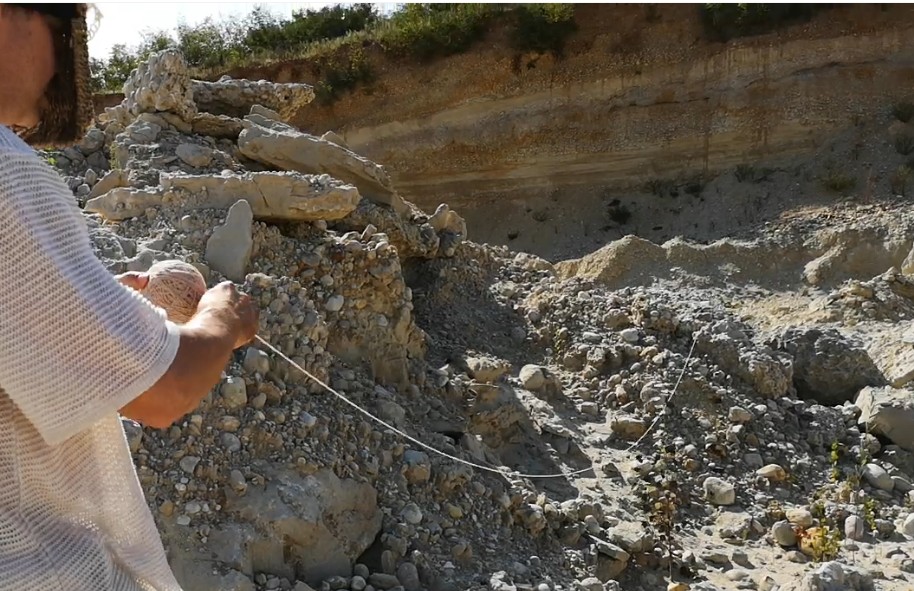
A Meeting Thread In another part of the quarry, pale sand mounds formed a soft labyrinth. There, we filmed a second video: two masked figures walk toward each other, each winding thread onto a spool. When they meet, their threads are already tied in a bow — a symbolic guiding thread that led them to each other.
Stills from the video “A Meeting Thread” Directors & Camera: Marina & Dmitry Razhev Editing & Color: Sasha Snova · Music: Vlad Razhev
This work is part of our ongoing practice of Revealed Realism (RR) — a method that merges artistic intuition with research, myth with landscape, and presence with attention. In this approach, quarries are not neutral scenery, but collaborators. The terrain is active, speaking, remembering.