DEVELOPMENT OF PRACTICE

PRACTICE

The development of the practice unfolds through a series of shifts in how situations, materials, spaces and time become part of the work.
These shifts overlap and recur rather than forming a linear progression.

SITUATION BECOMES MATERIAL

Everyday situations, familiar things and ordinary spaces become material. A small change in context, arrangement or attention makes the familiar appear differently. The work begins by changing how something is encountered.

Otmykay Leto… · Otto Arte. P.S. · Children’s Room · Simple Things · Жили-были… Новогодний синдром · Round Summer · Angle of View / Fence becomes stairs

PERCEPTION BECOMES ACTION

The shift moves from seeing differently to acting differently. Position, movement, observation and the passage through space become part of the work. The viewer is no longer outside the situation, but helps activate it.

Attempt State: BETWEEN · On Ethics, Aesthetics and Breath · Corridor · Observation System · Angle of View / Fence becomes stairs · Brobdingneg

OBJECT BECOMES RELATION

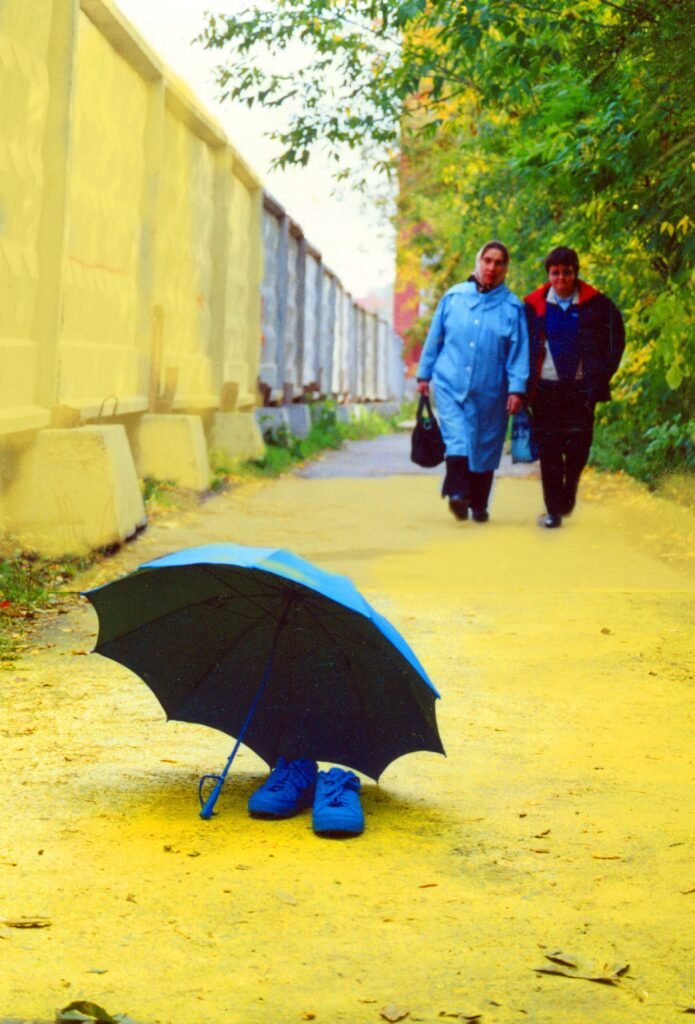
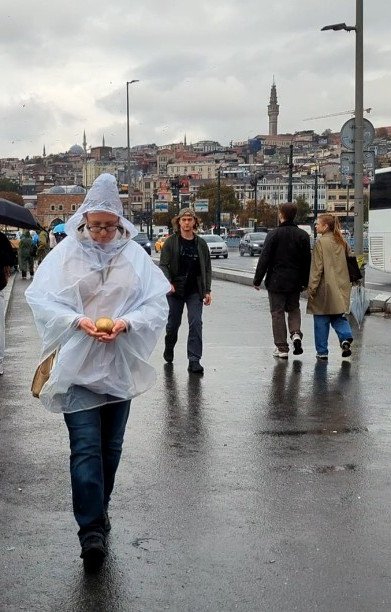
Objects cease to exist simply as objects. Used things, bodily actions, rituals, exchange, consumption, myth and language give them new relations and possible biographies. The work begins to exist between things and people.

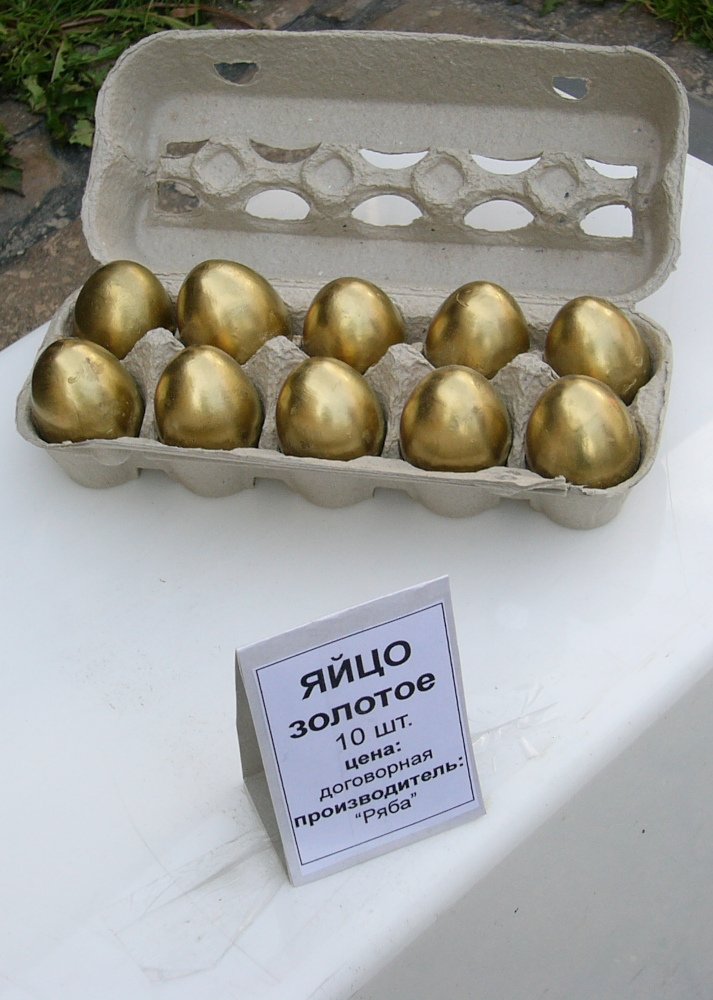
Galanteria: Shoes & Accessories · New hole (Sieve) · Lullaby for the River · Domestic Witchcraft · Appetite · Russian Cheese. Today · The Golden Eggs

THE FRAME OPENS

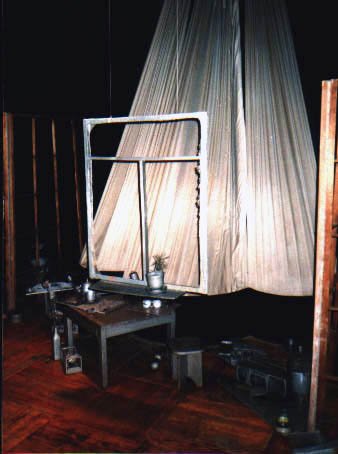
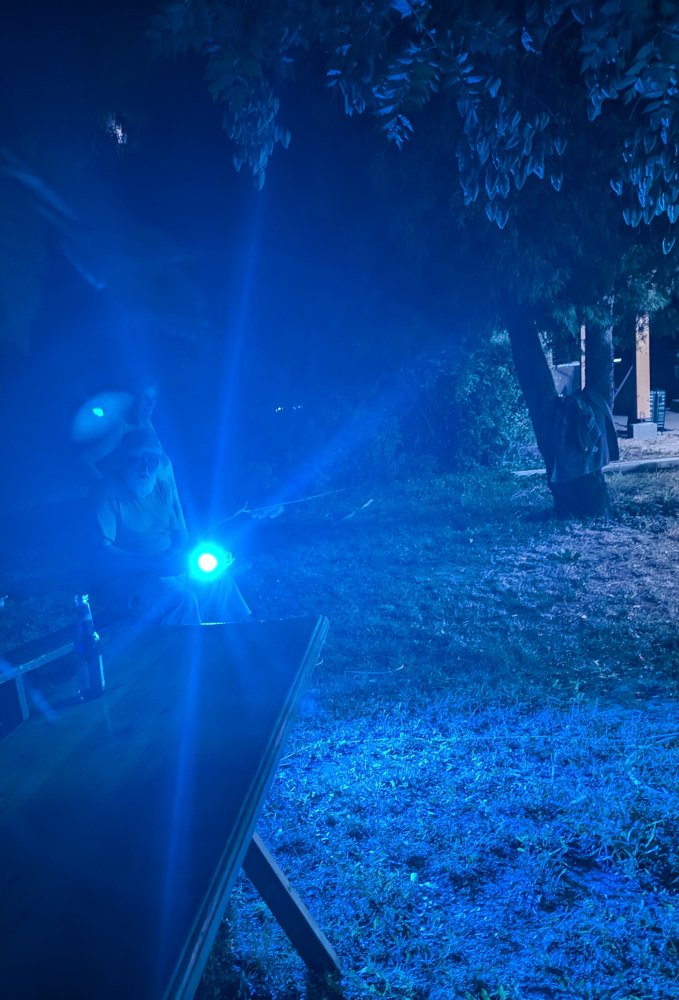
The fixed frame gives way to light, movement, sequence, absence and temporary images. The screen can become a person, a hand, glass, a tree or a passing object; the work may exist only while the conditions are active.

A Single Brushstroke · The Well · The Invisible Fir · Score of the Day · Prophylactorium

PLACE BECOMES AN ACTIVE FIELD

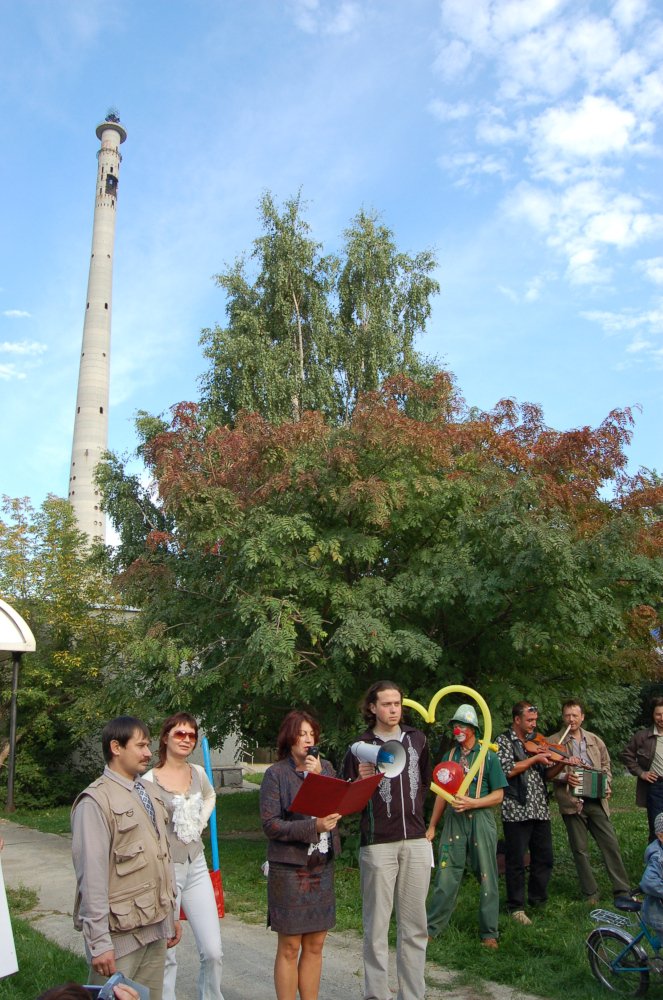
The work moves beyond the autonomous object toward city, architecture and landscape. Place is no longer a background but an active field through which perception and action are organised. The work becomes inseparable from the conditions of the place and from the experience of moving through it.

Wedding of the Tower and the Metro · Möbius Pretzel · PanGorMonium · Shoot for Color · Podberezoviki · Flying Deer / Mythical Forest

PLACE, MATERIAL AND TIME ACT

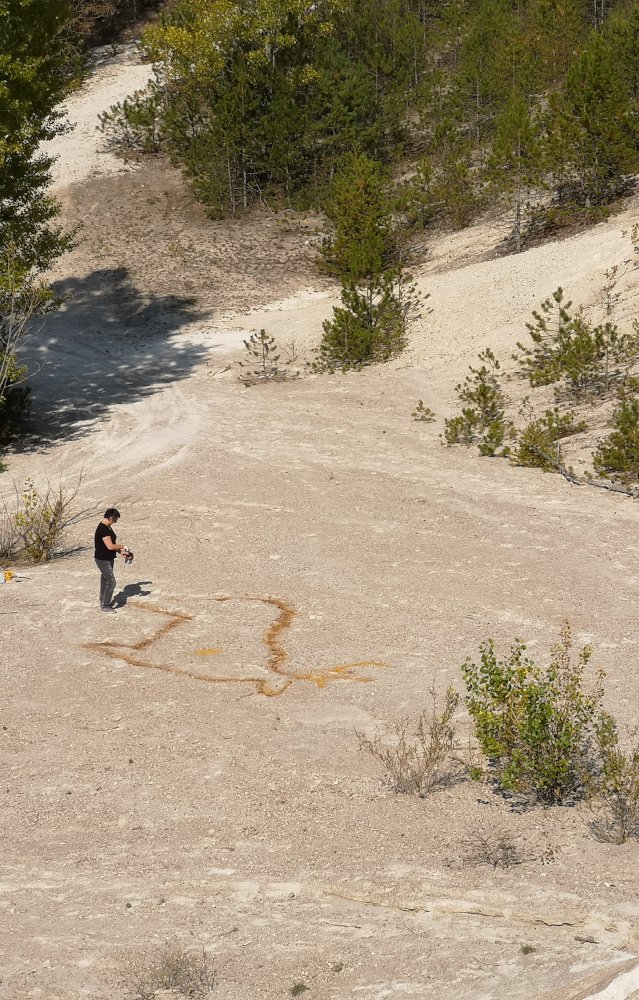
The site begins to affect the work itself. Geological traces, found materials, weather, duration, movement and the history of a place become active agents. The artist can establish a condition, but cannot fully determine what follows.

The Quarry as Witness · Deer Stones

THE WORK BECOMES AN OPEN PROCESS

The work is increasingly released into time, place, weather, chance and participation. It can change, move, disappear or be continued by others. What remains may be an event, a memory, an altered relation or a trace rather than a stable object.

Miniks · Golden Apples · To understand — one must walk · Flying Deer (2024) · Sieve of Silence · Through · Letters of Water · The Golden Eggs Episode 6

CROSS-CURRENTS

The same questions return under changing conditions.

Cross-currentHow it appears across the practice
PRESENCE ↔ ABSENCEFrom The Invisible Fir to Prophylactorium, Eliminates, Απουσία, Nothing and the disappearance of ephemeral works.
OBJECT ↔ SITUATIONFrom Simple Things and Galanteria: Shoes & Accessories to Golden Apples, Miniks and Nest.
VIEWER ↔ PARTICIPANTFrom changed positions in Attempt State: BETWEEN and Corridor to physical and perceptual participation in Through, Golden Apples, The Golden Eggs, episode 6, To understand — one must walk and other open situations.
TRACE ↔ MEMORYFrom used objects and material surfaces to Galanteria, Letters of Water, The Quarry as Witness, Deer Country and the disappearance of ephemeral works.
BARRIER ↔ PERMEABILITYFrom New hole (Sieve) to A Single Brushstroke, Through, Sieve of Silence
PLACE ↔ PERCEPTIONFrom Angle of View / Fence becomes stairs to PanGorMonium, The Quarry as Witness and To understand — one must walk: place increasingly becomes not something to look at, but a condition through which perception is produced.
CONTROL ↔ RELEASEFrom interventions established by the artist to works whose development is continued by material, place, weather, time and chance: Podberezoviki, The Quarry as Witness, Letters of Water, Nest, Flying Deer and Golden Apples.
CONTINUITY

Across these developments, the practice remains grounded in the same operation:

existing reality → minimal shift → changed conditions of perception → encounter → unfolding process → trace

The shift may concern perception, position, relation, material, space or time.

What follows cannot be completely determined.

The question remains open.

Development of Practice

PRACTICE

DEVELOPMENT OF PRACTICE

I did not begin with a method.

I began by looking.

At ordinary things, familiar situations, small changes in what is usually overlooked. I was interested in what happens when attention shifts slightly—when something ordinary stops being transparent and begins to reveal another layer.

SITUATION & PERCEPTION

In the late 1990s, I worked with everyday situations, simple things, childhood memories, rituals and fragments of ordinary life.

I was not interested in illustrating them. I wanted to see what could happen if I changed the way they were arranged, framed or encountered.

Gradually, I began to understand that the situation itself could become the material of the work.

In Attempt State: BETWEEN (1999–2001), On Ethics, Aesthetics and Breath (2001), Corridor (2002), Angle of View / Fence becomes stairs (2002) and Observation System (2002), I moved from observing a situation toward intervening in it.

The position of the viewer became important.

Where you stand, how you move, what you can see and what remains outside your field of vision can change the work.

I began to think of perception not as something given, but as something that can be constructed.

THE FRAME & THE TRACE

I became increasingly interested in things that already carried a human history.

Used objects seemed more interesting to me than new ones. They had been touched, worn, abandoned, kept.

In Galantereya (2003), I looked at umbrellas, shoes, gloves and belts as things that had accumulated traces of their former owners. I began to treat the object not simply as material, but as something with a possible biography.

This question took another form in A Single Brushstroke (2006).

A beam of projected light crossed the exhibition space and went through the window. A person, a hand, a piece of paper, the window glass, a tree or a bird could enter the beam and temporarily become part of the image.

I was interested in a work that could not remain in one fixed form.

The frame could move.

The screen could be anything.

The work could happen without being completely under my control.

This was an important shift for me: from making an object to creating a condition in which something could happen.

REVEALING THE UNSEEN

At the same time, I became interested in traces, surfaces and memory.

In Kon­spekt Assotsiatsiy (2009), I worked with images that seemed to emerge from material surfaces, fragments of memory and associations. I used different techniques and unexpected materials because I was less interested in applying a particular medium than in finding a way to uncover something.

The surface became something to read.

Something to excavate.

Something that could contain an image before the image was consciously made.

This way of working continued through found and used materials.

In Nails as People (2010), I collected worn nails and treated each one as an individual. A minimal drawing was enough to shift the object from anonymous industrial material toward a particular presence.

I was beginning to understand that sometimes the task of the artist is not to add an image, but to notice what is already carrying one.

FROM OBJECT TO SYSTEM

Another change came when I started thinking about several works not as separate objects, but as parts of one structure.

In The Score of a Day (2011), twenty-four images were arranged as a temporal sequence. The works could be read individually, but together they formed a rhythm—a score.

Sound, light, movement and the viewer entered the work during the opening performance.

The painting was no longer only something to look at.

It could be followed, listened to, entered.

I became interested in what exists between things: in sequence, rhythm, context and the relations produced by bringing different elements together.

PRESENCE / ABSENCE

Later, the question of presence became inseparable from its opposite.

In Eliminates (2021), I photographed people in public space and removed those whose faces could be recognised. First I marked them, then physically scratched them out of the photographic surface.

The absence was not represented.

It was made.

The photograph became a surface on which presence and disappearance could be experienced at the same time.

This returned me to a question that had been present much earlier in my work: what makes something visible, recognisable and significant—and what happens when it is removed?

SITE & MEMORY

The work increasingly moved into landscape and specific places.

In Podberezoviki, cacti were planted among birches, grasses, ferns and junipers so that they would not immediately attract attention.

I was thinking about displacement and adaptation, but I did not want to illustrate these ideas.

I wanted to create a situation in which a displaced living thing actually had to exist in another environment.

The place became part of the work.

The work could no longer be separated from what surrounded it, from the time it existed there, or from what happened to it afterwards.

This became important for my later practice: landscape is not a background. It is an active participant, carrying its own time, traces and memory.

TOGETHER

Over time, I also began to understand that some questions could not be developed alone.

R² emerged from a long-term practice together with Dmitry Razhev, where different forms of knowledge, attention and experience meet.

Here the work is not simply a collaboration between two authors. It becomes a way of thinking through relation.

The question shifts again:

not only what do I see?

but what can become visible between us, between a person and a place, between different kinds of knowledge, between what is present and what is remembered?

Looking back, I see the practice not as a sequence of separate subjects or media, but as a continuous movement.

From the thing to the situation.

From the situation to the relation.

From the visible to the trace.

From the trace to memory.

From the individual object to the space around it.

And from working alone toward working together.

I still do not know where this movement ends.

The work continues.