Ural Childhood — Iron Toys

2010, Malevich's Brigade

2010 | Interactive happening

Exhibition: Ural Childhood — Iron Toys
Parallel Programme, 1st Ural Industrial Biennial of Contemporary Art
Venue: PoLe Gallery, Yekaterinburg, Russia
Date of action: 10 September 2010
Group: Kazimir Malevich’s Malers’ Brigade

The Exhibition

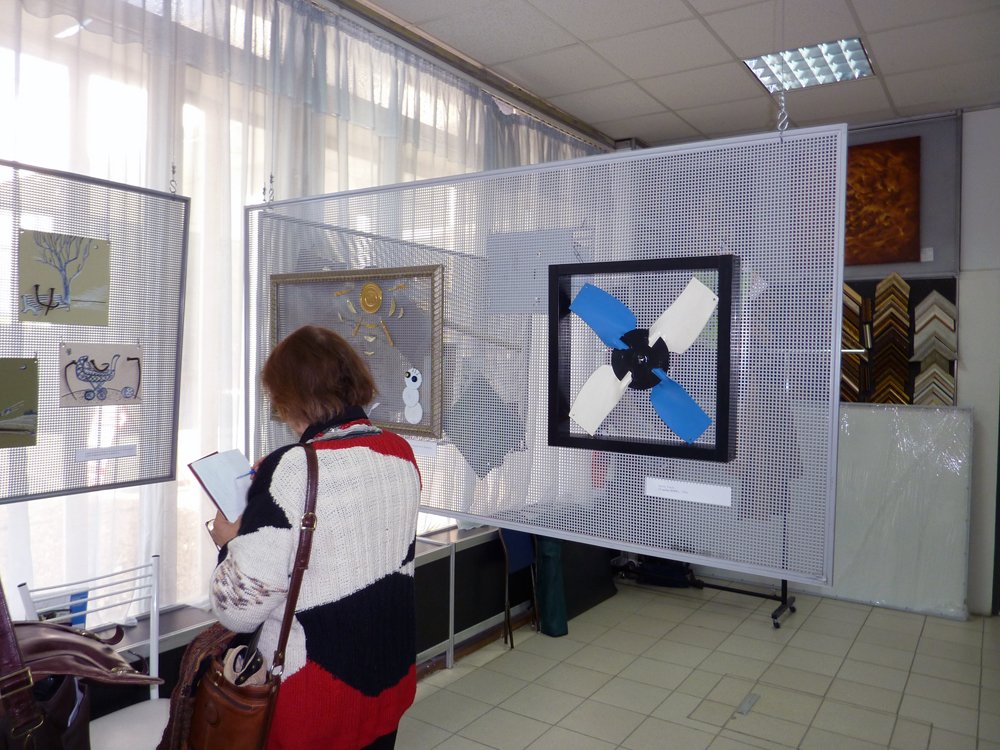
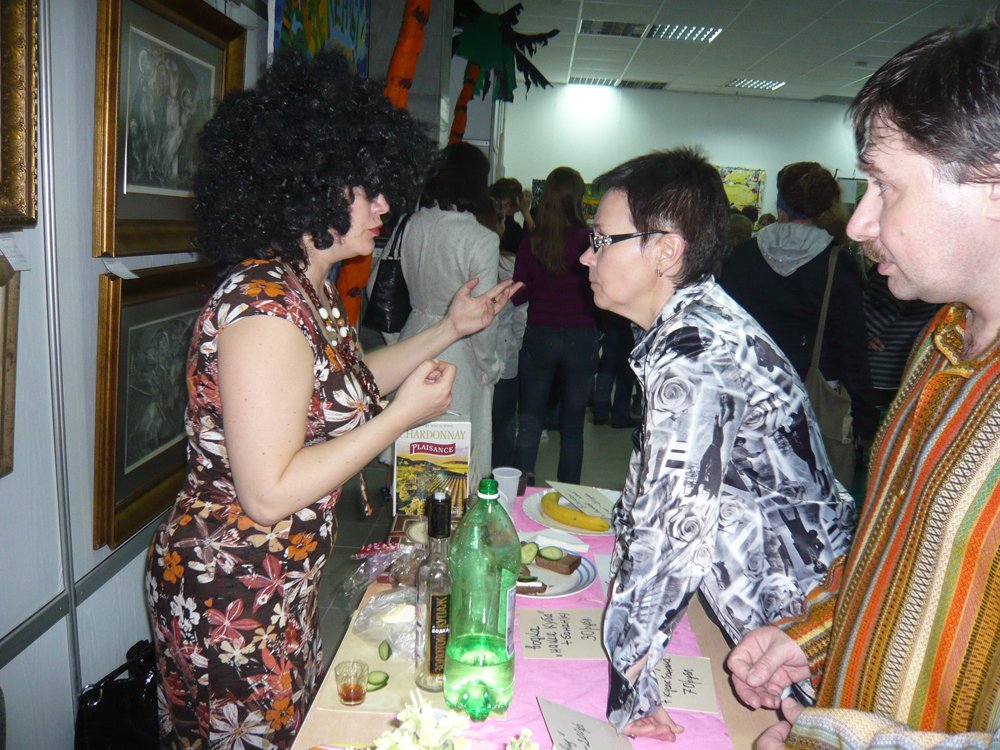
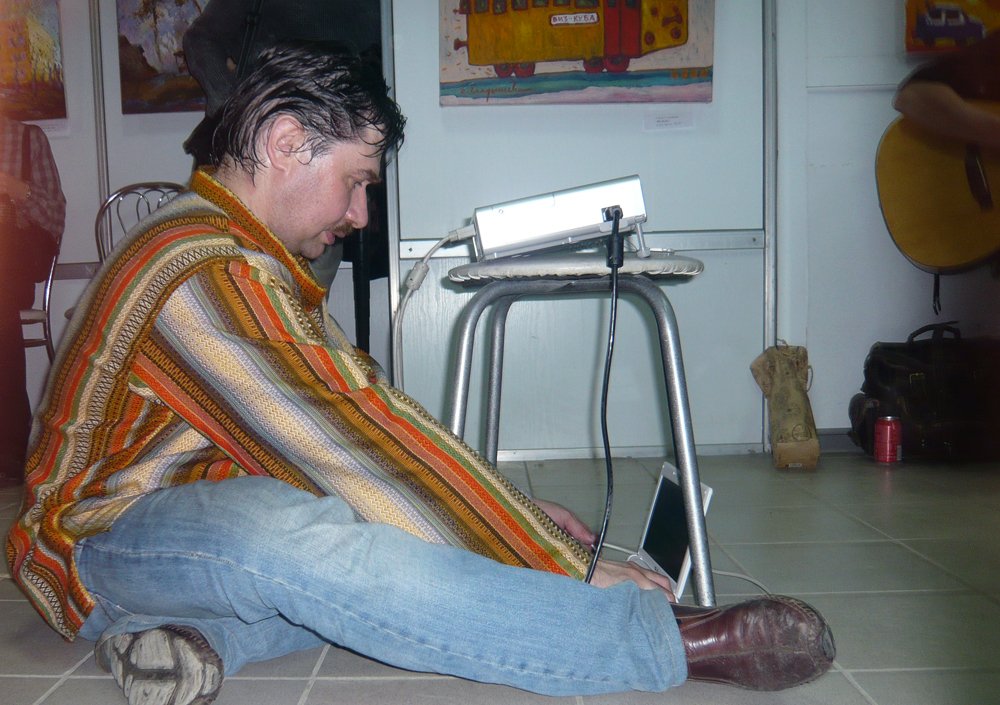
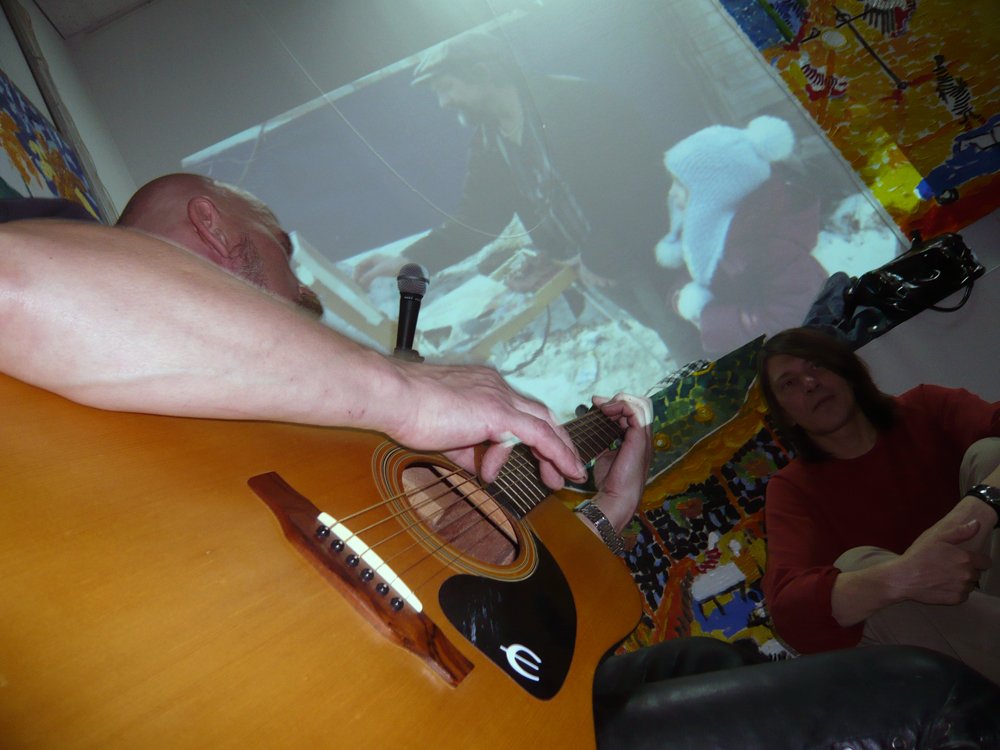
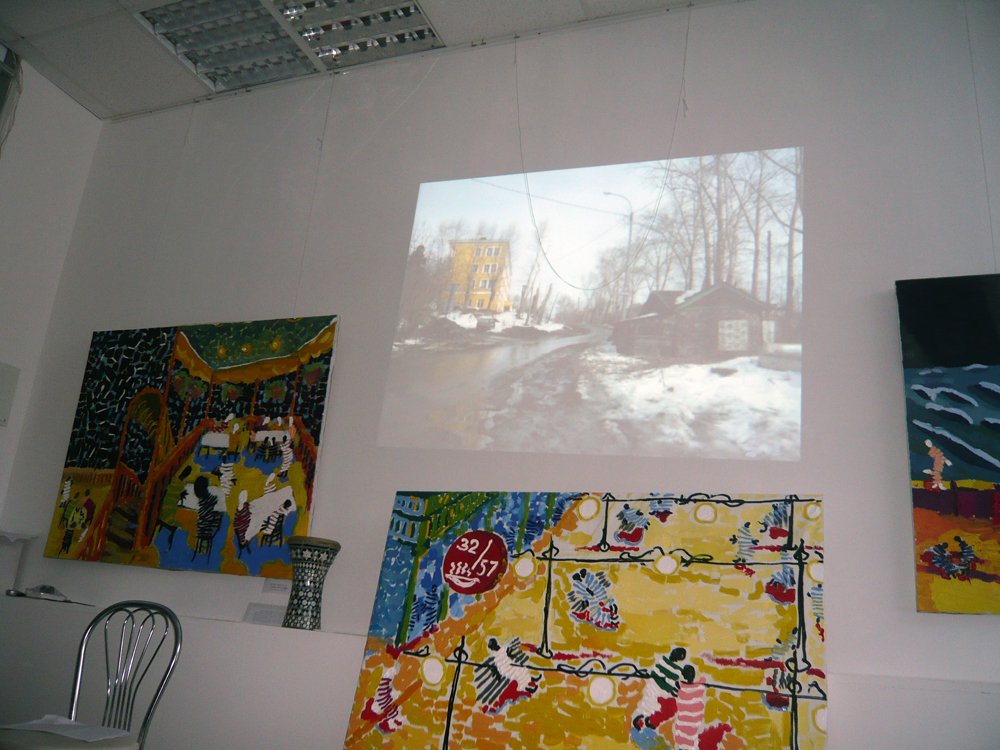
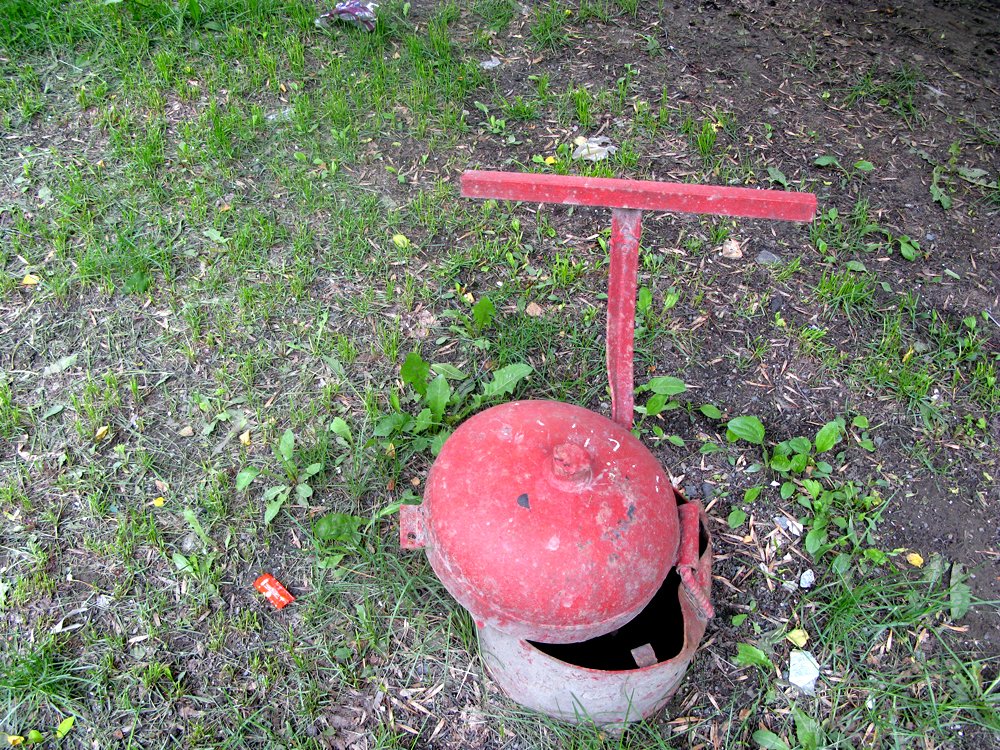
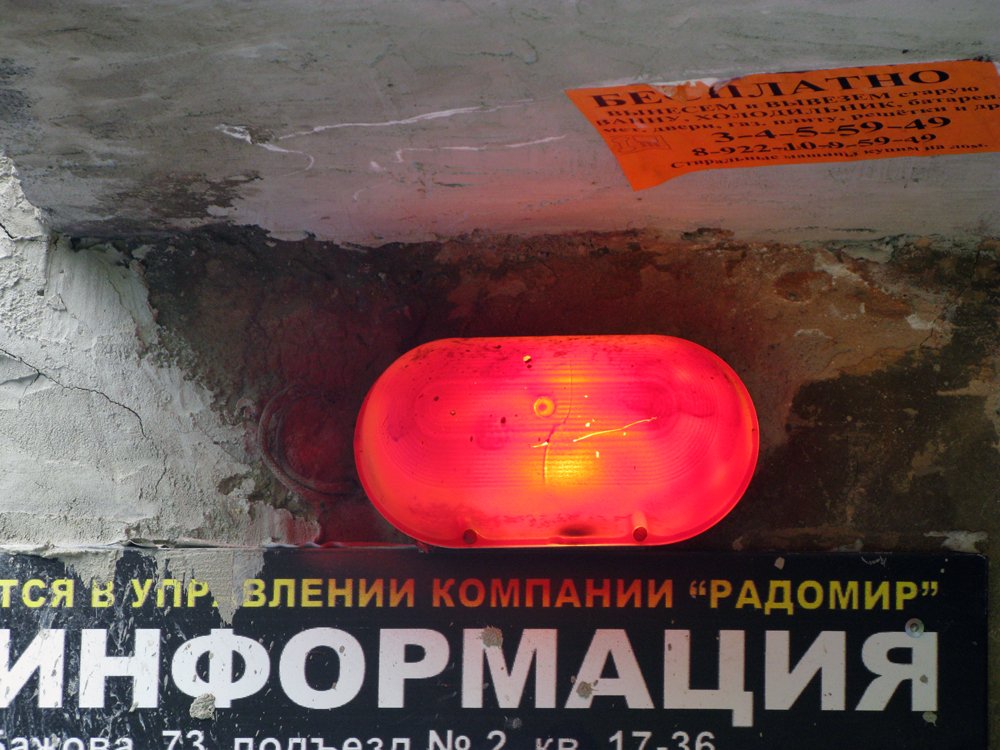
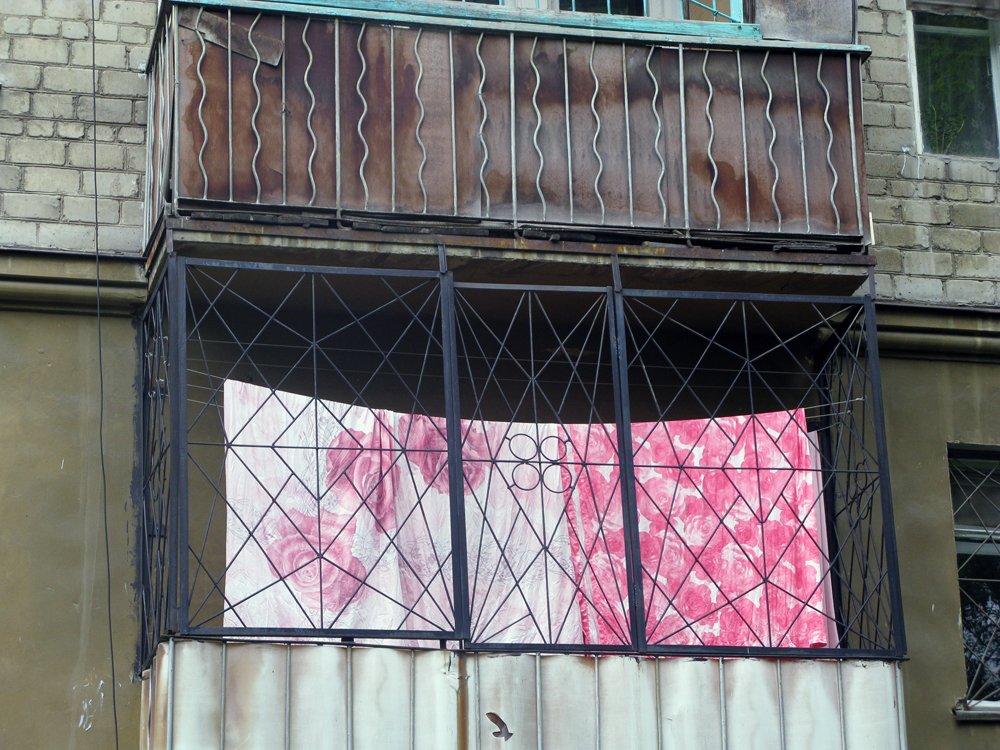
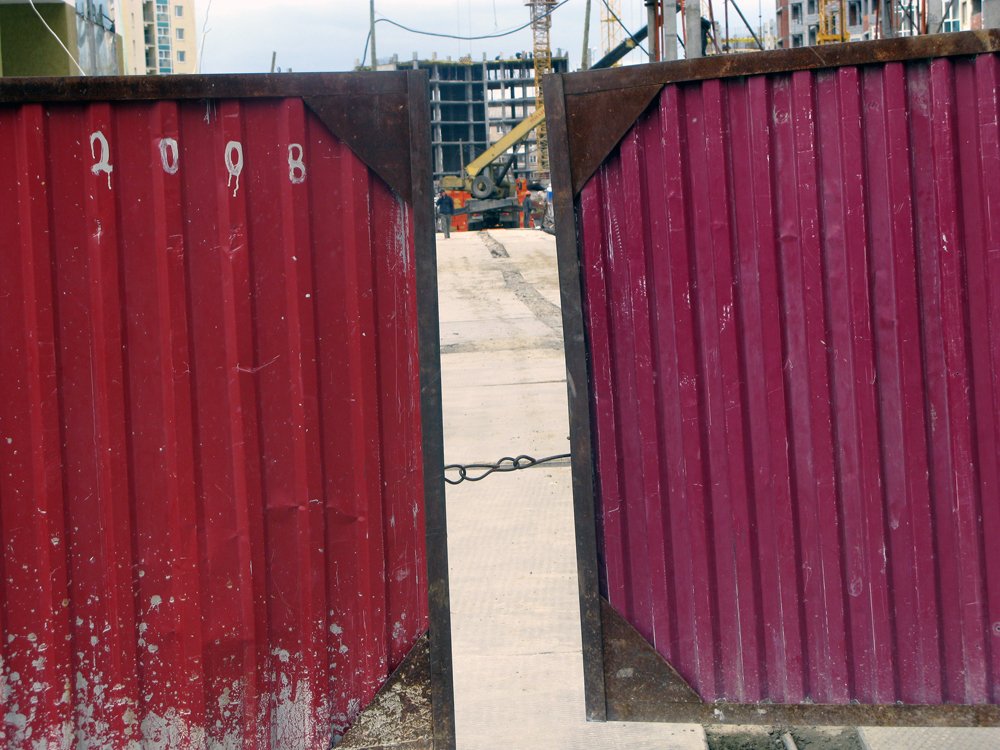
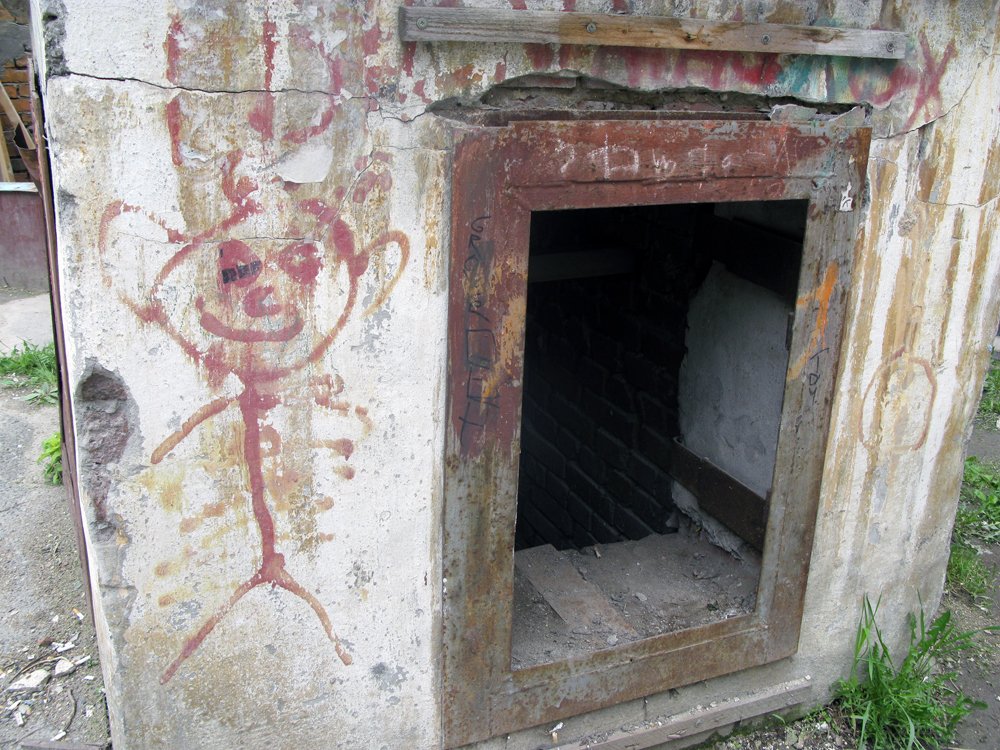
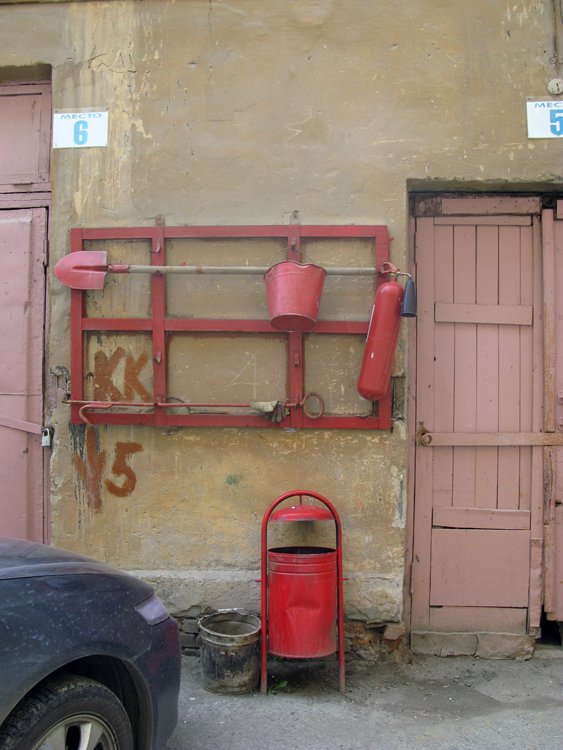
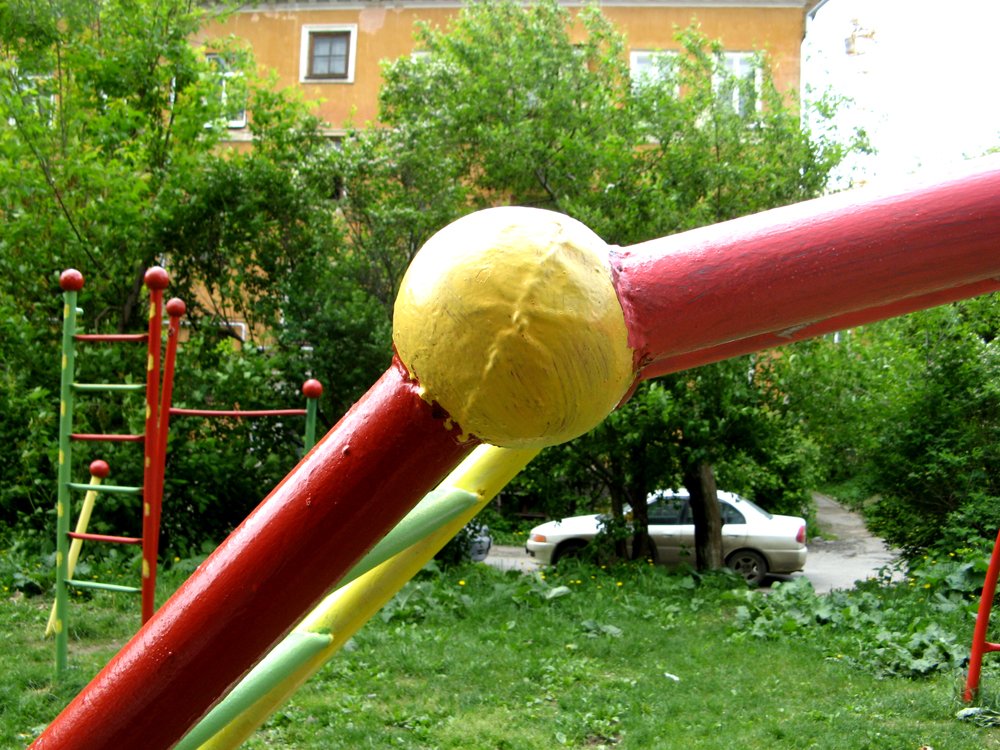
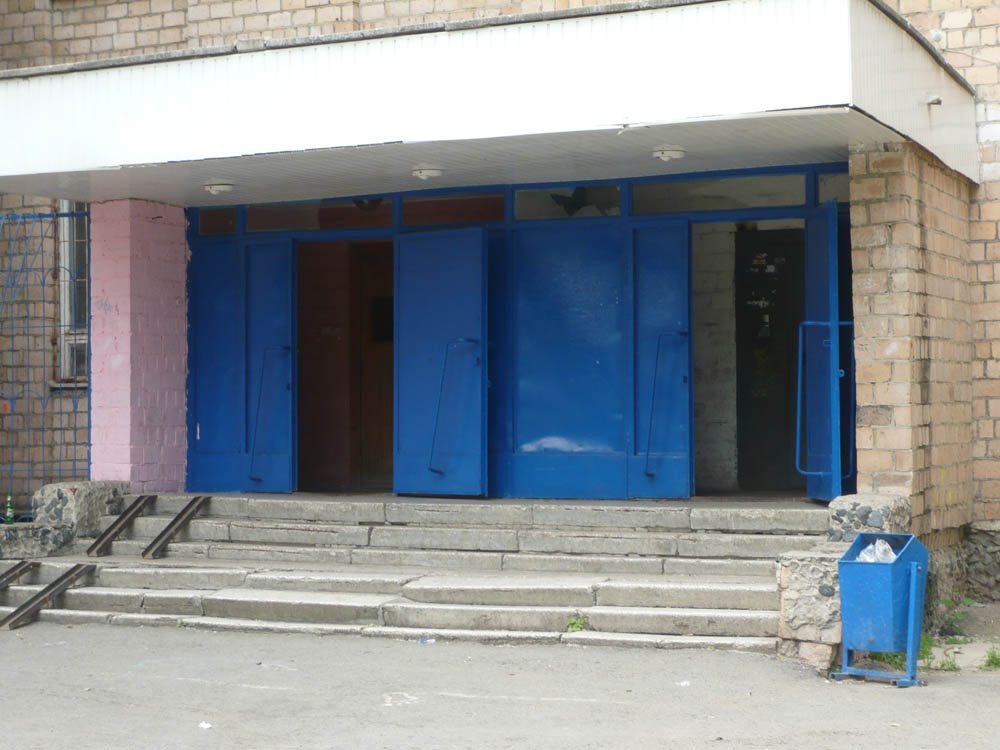
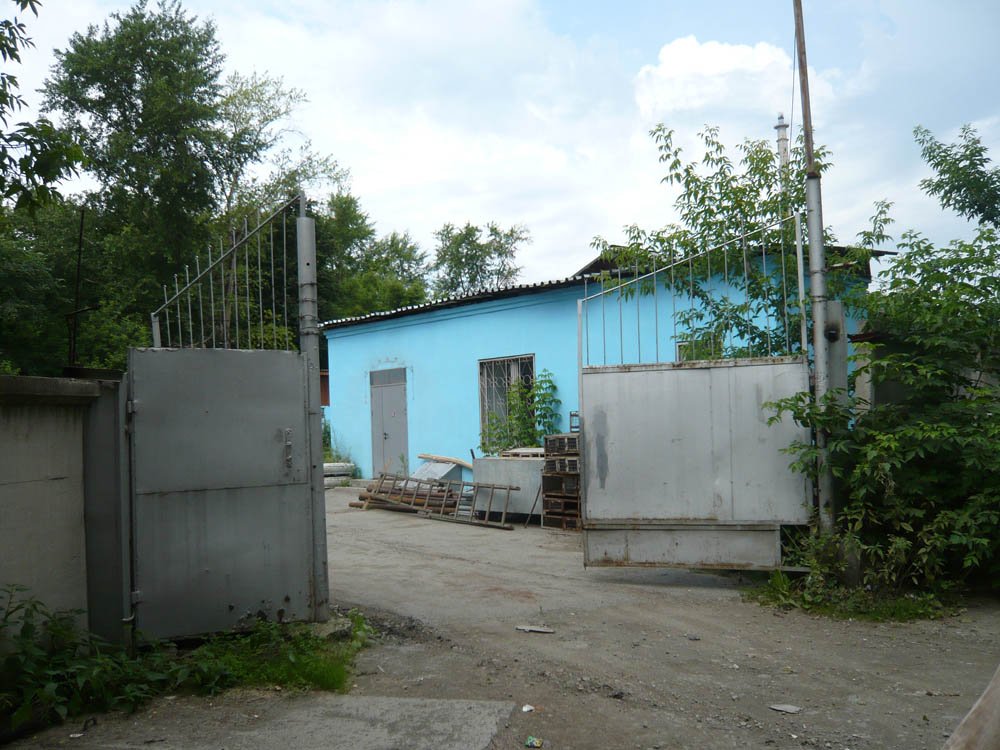
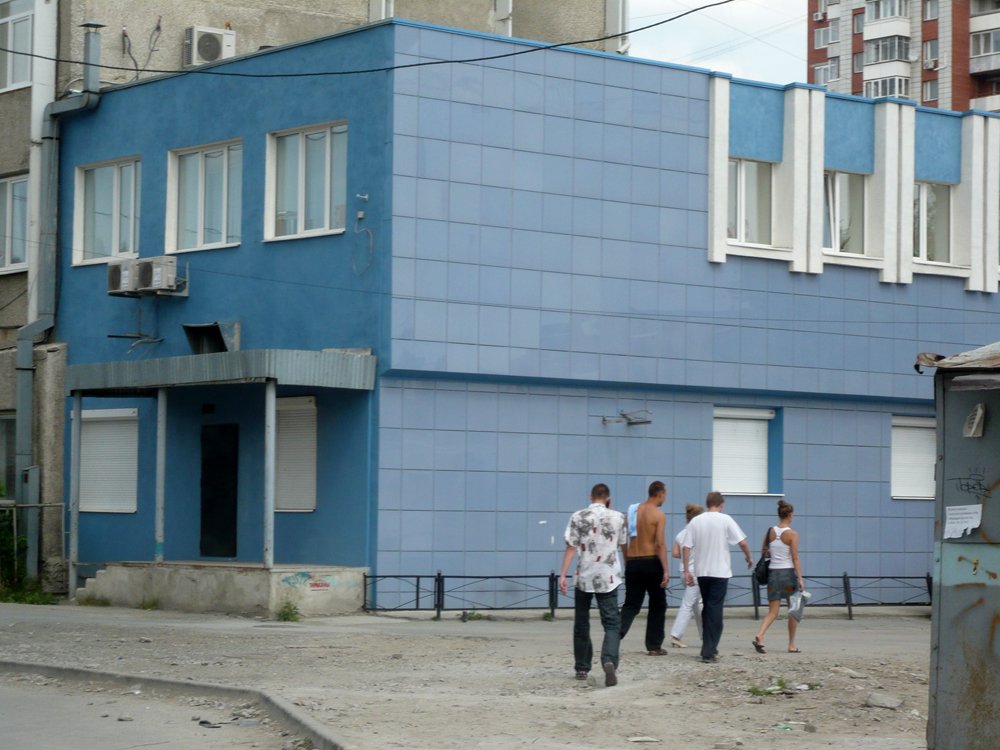
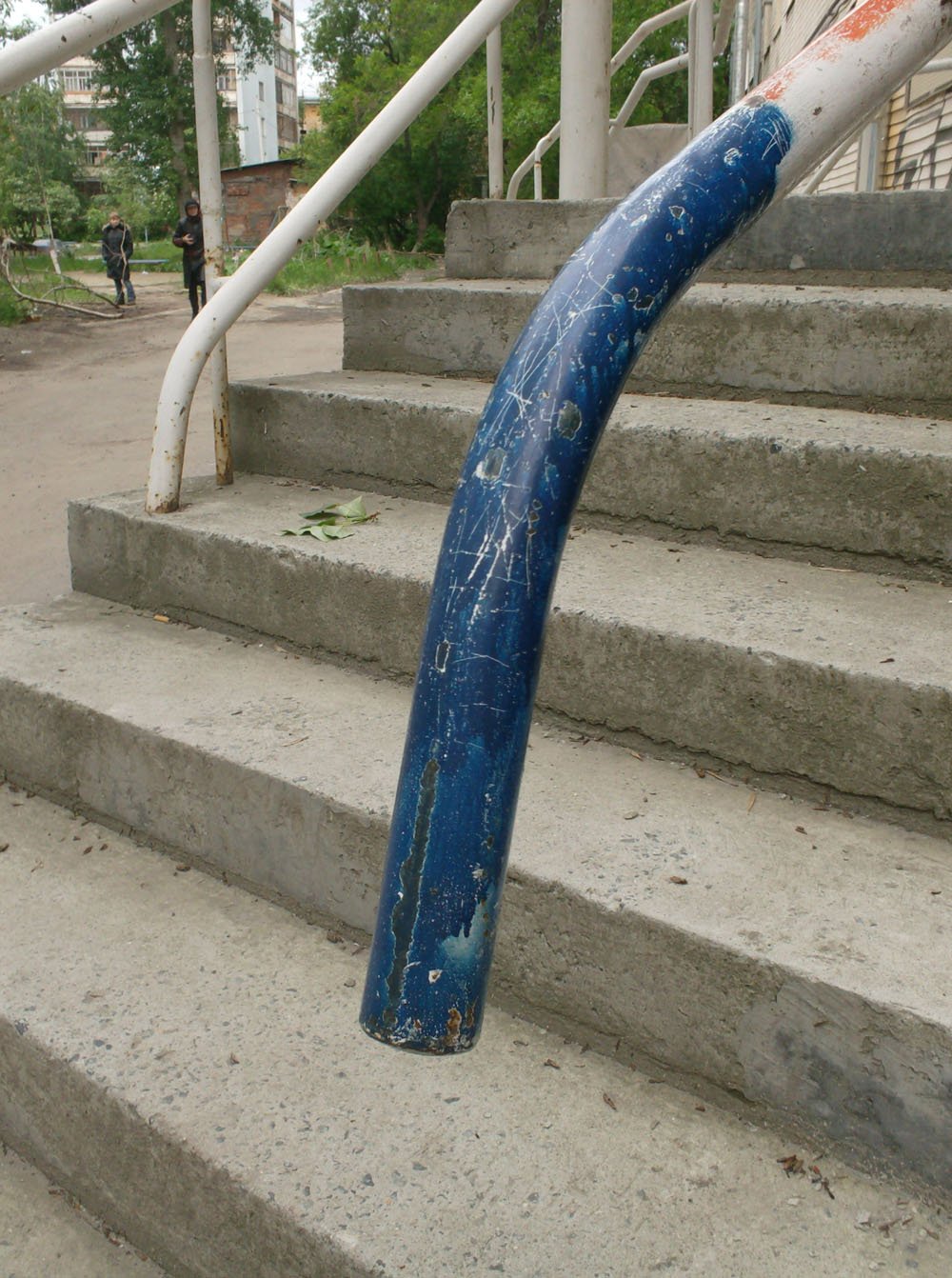
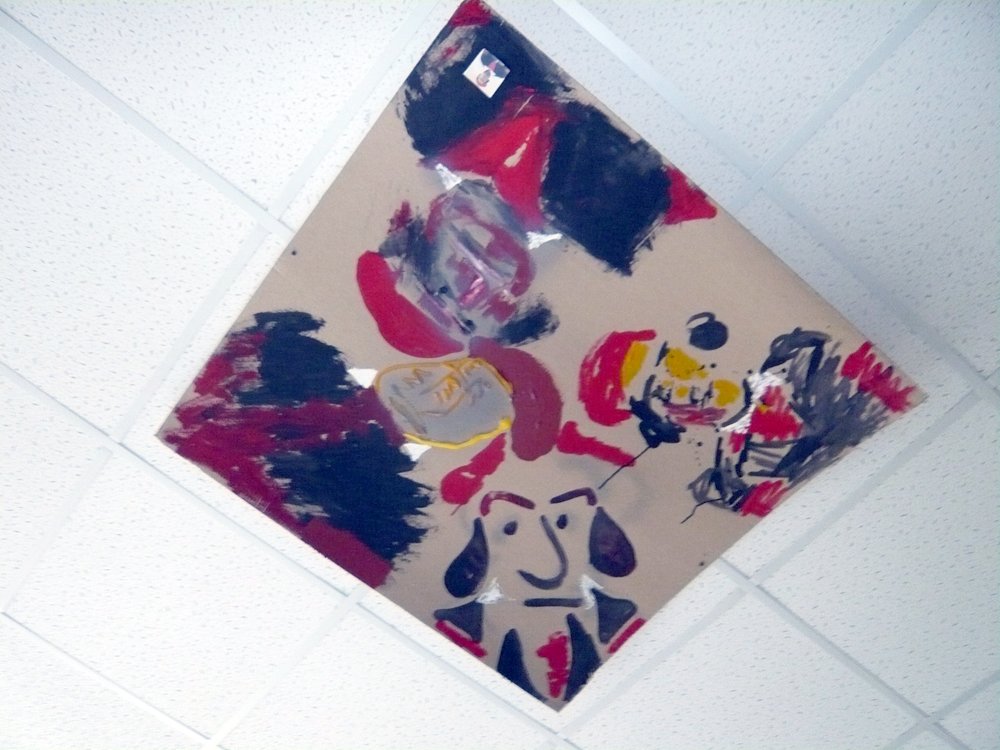
Ural Childhood — Iron Toys explored childhood memories shaped by the industrial environment of the Urals, where metal, factories and industrial landscapes were part of everyday life.
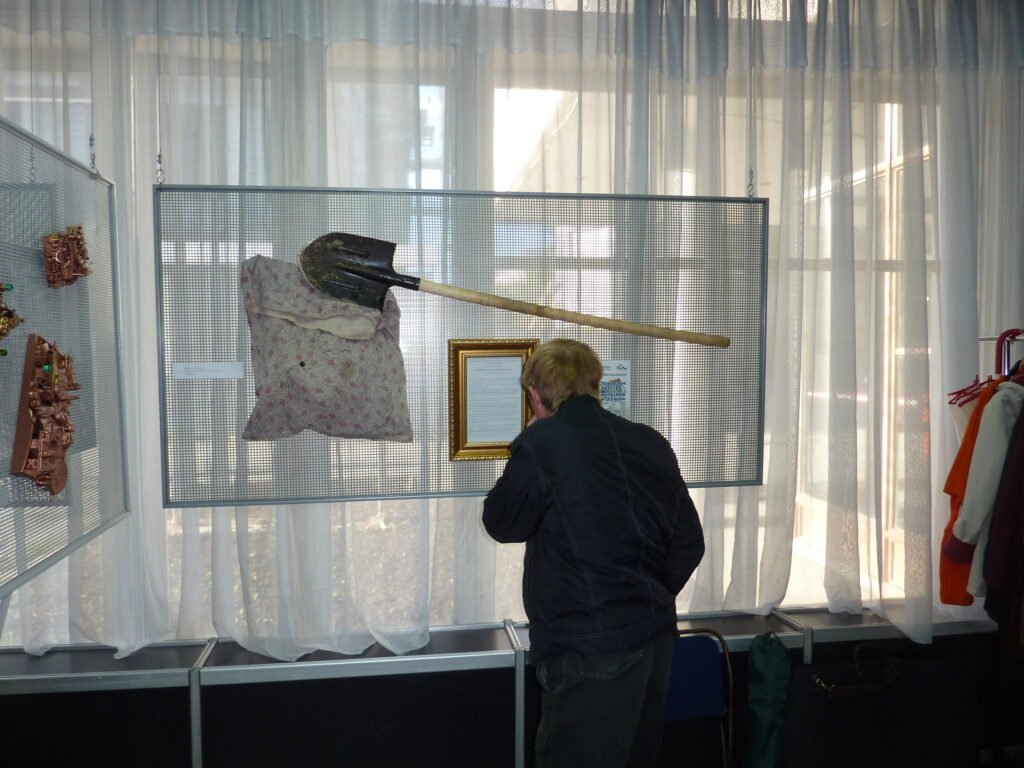
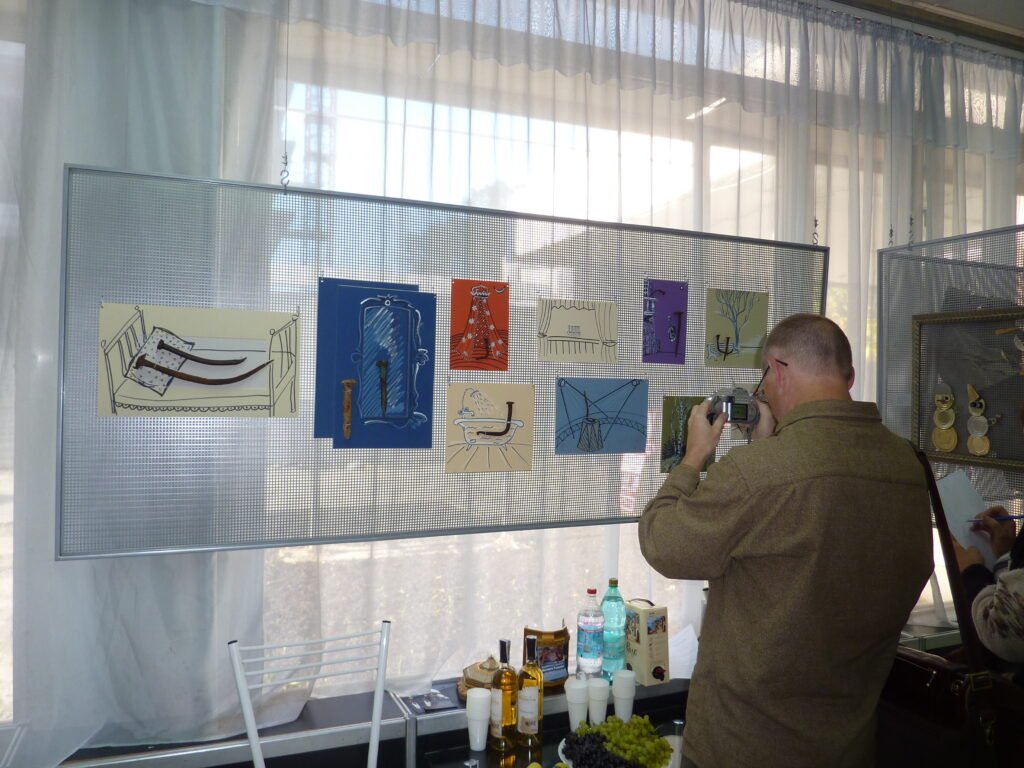
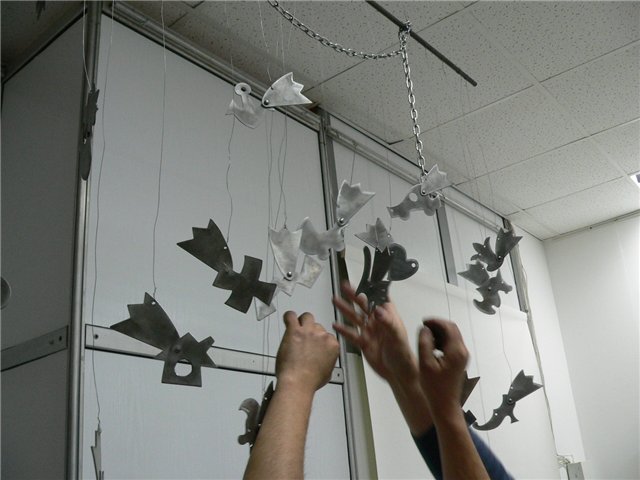
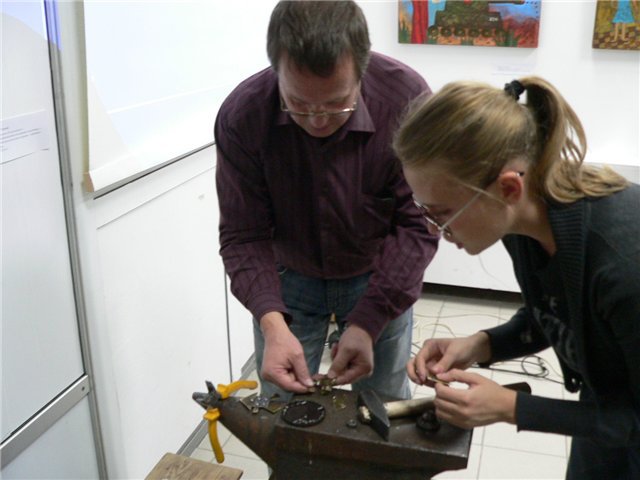
Within the exhibition, each member of the Brigade presented an “iron toy” of their own, together with instructions for making or playing with it and memories associated with it. The works included paintings, objects and other forms of recollection.

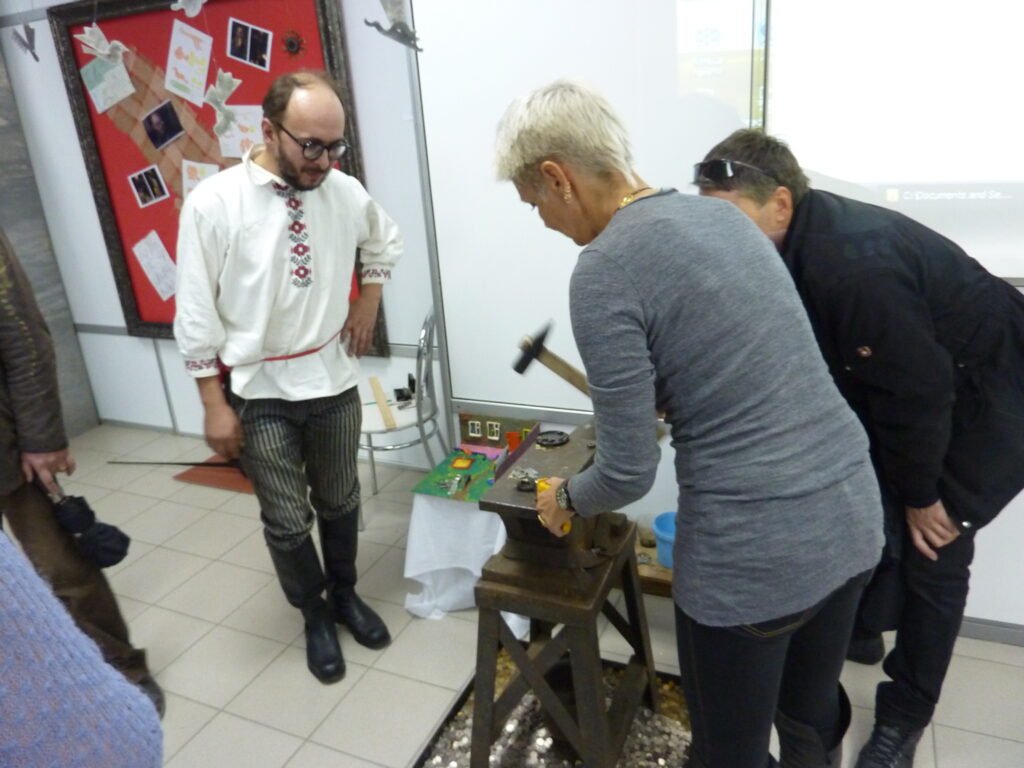
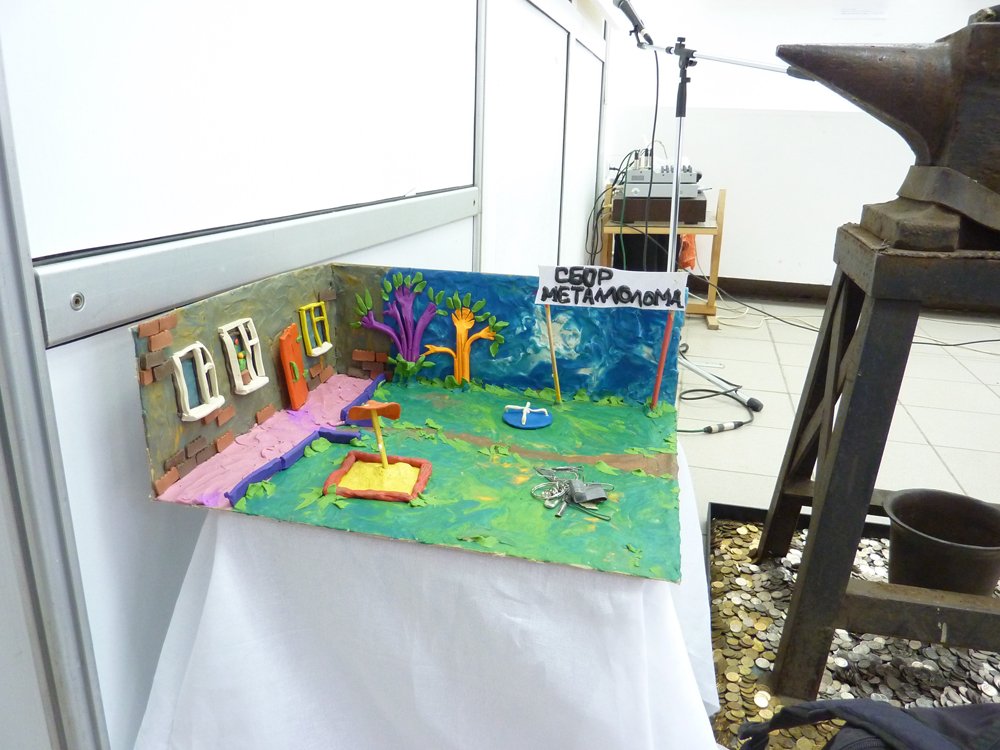
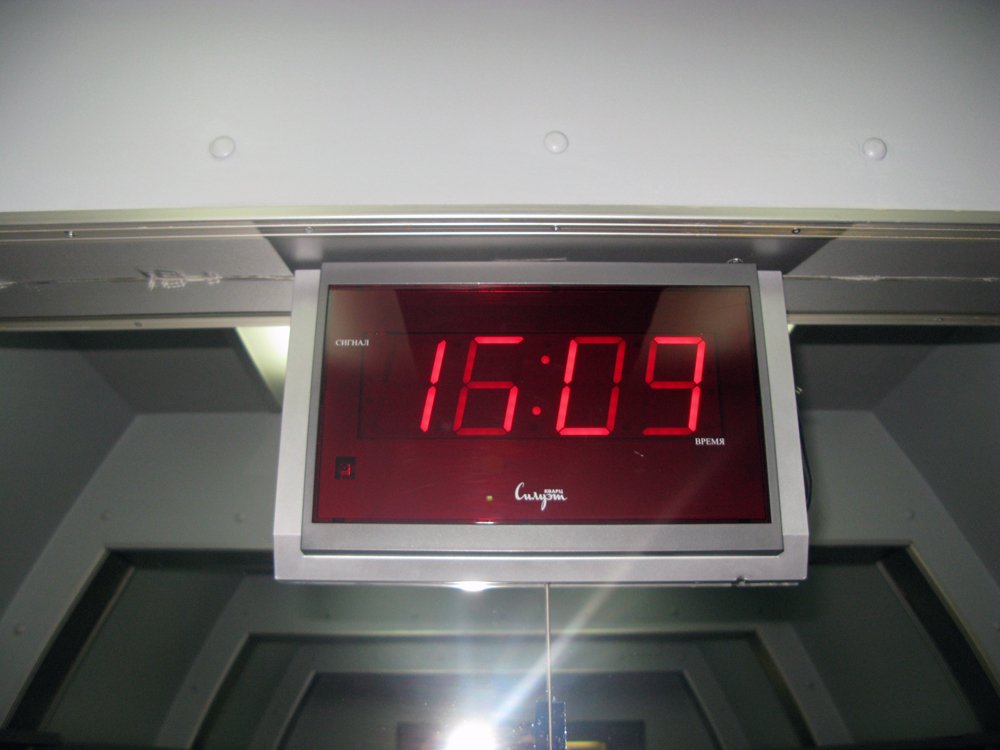
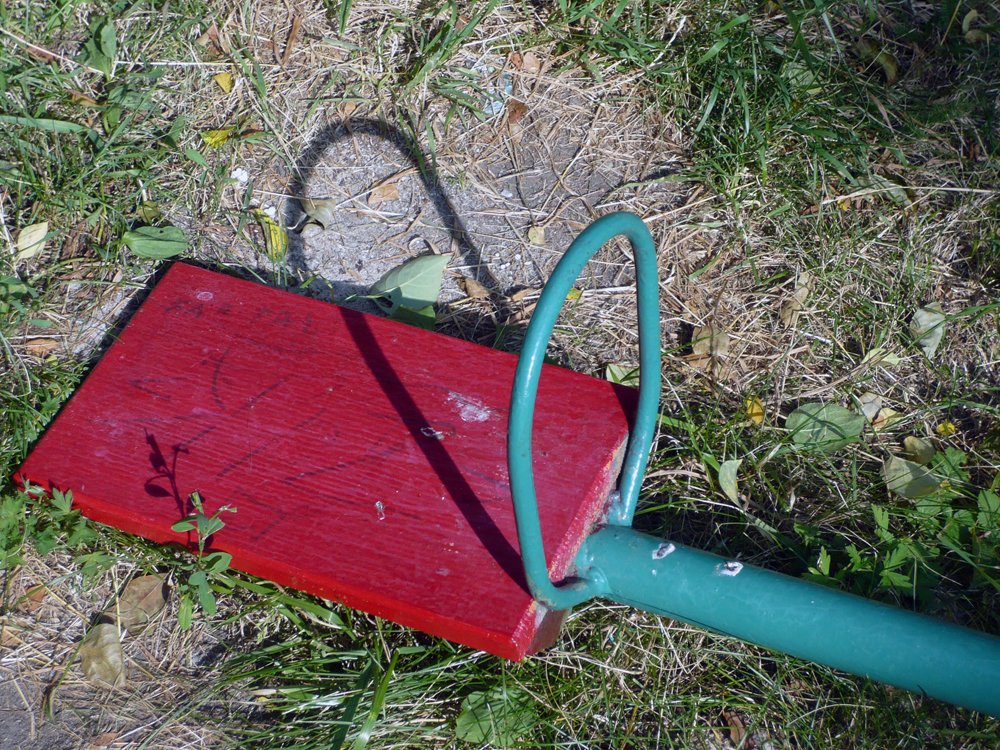
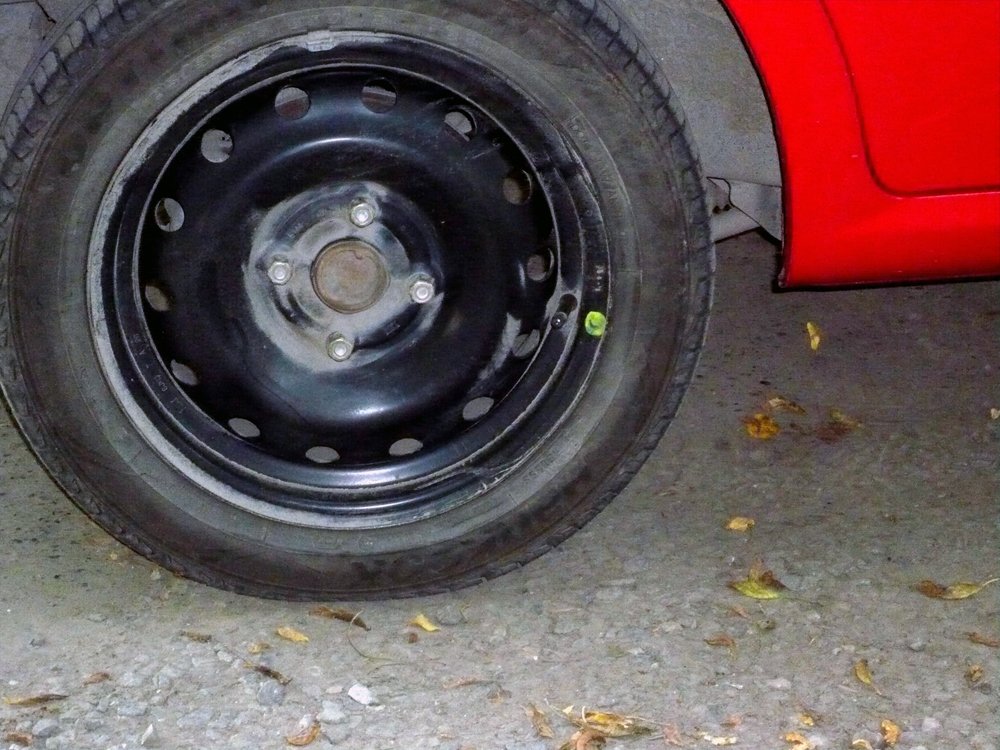
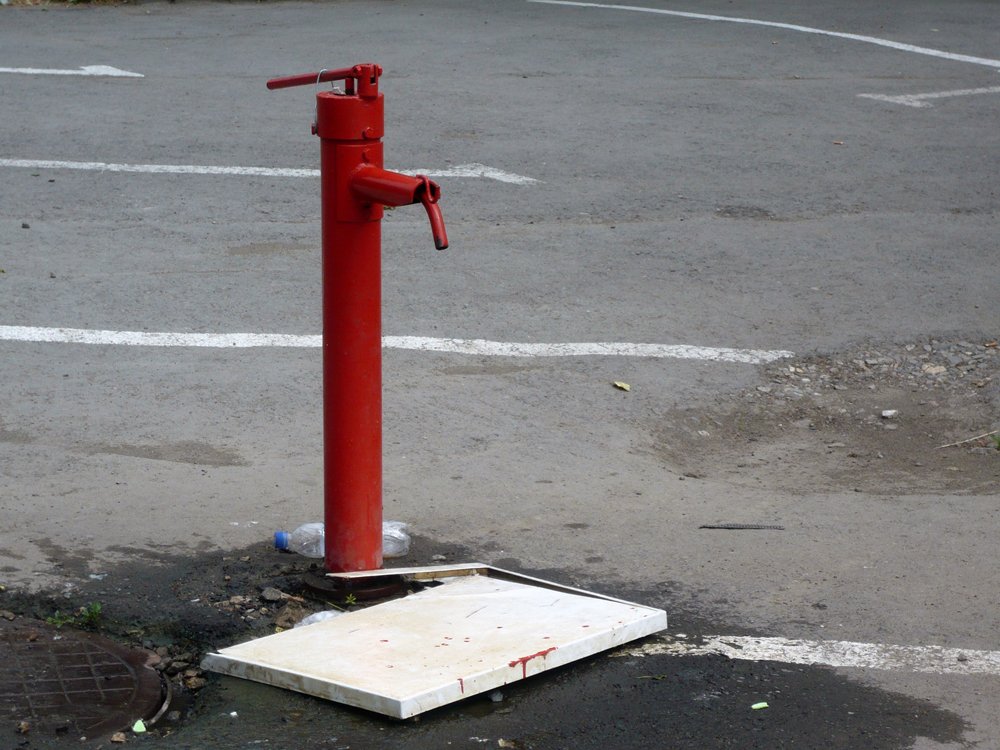
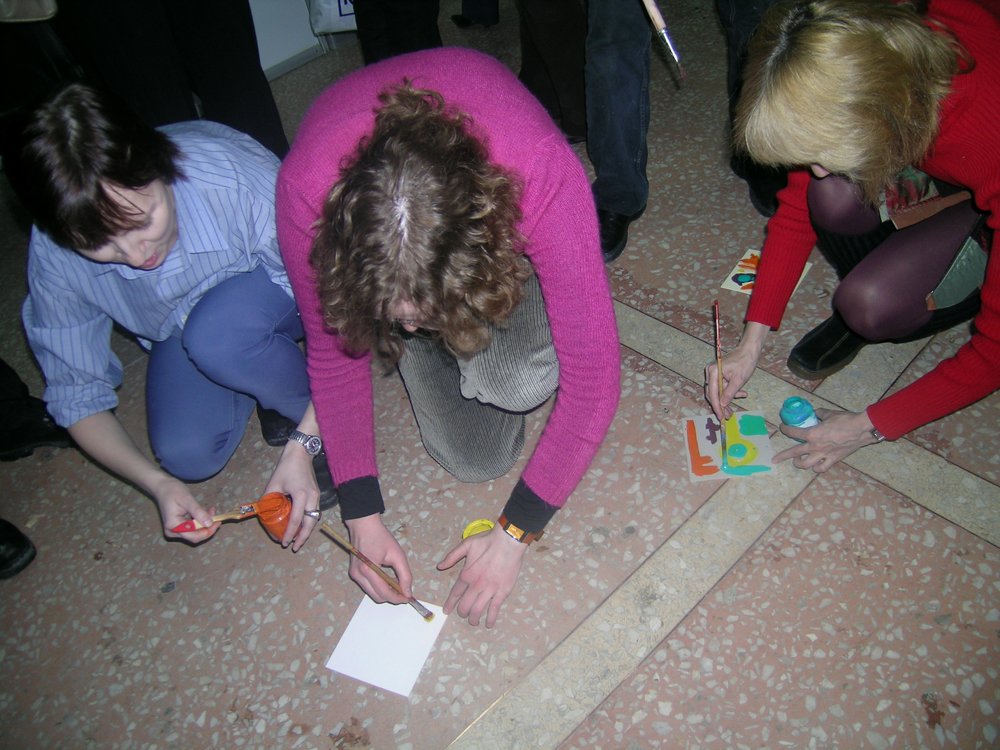
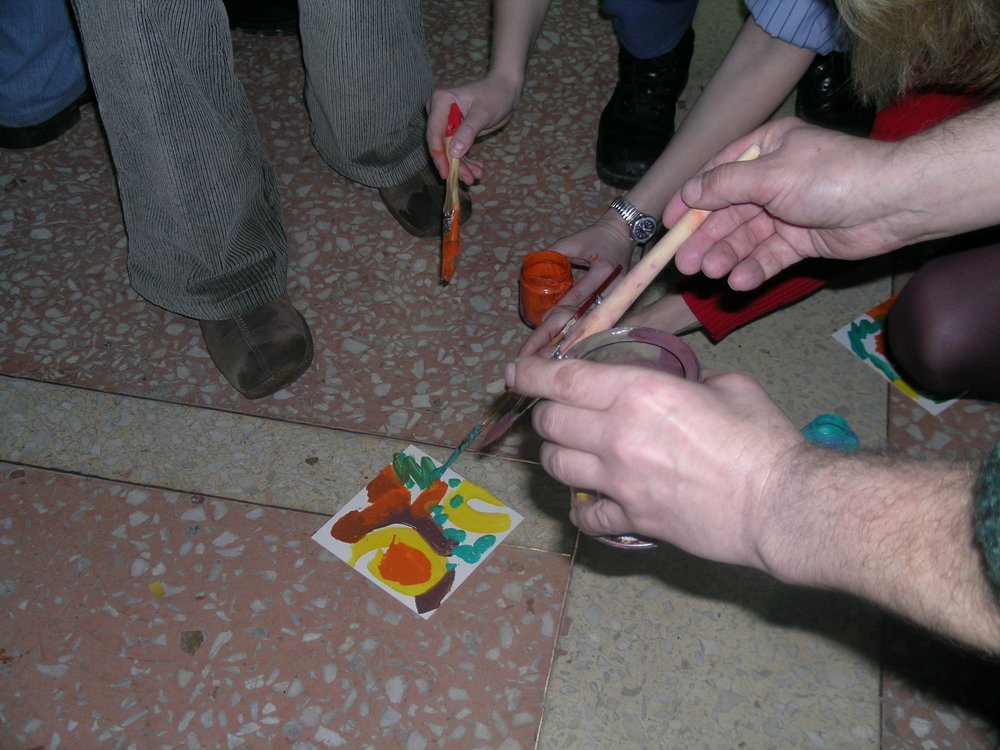
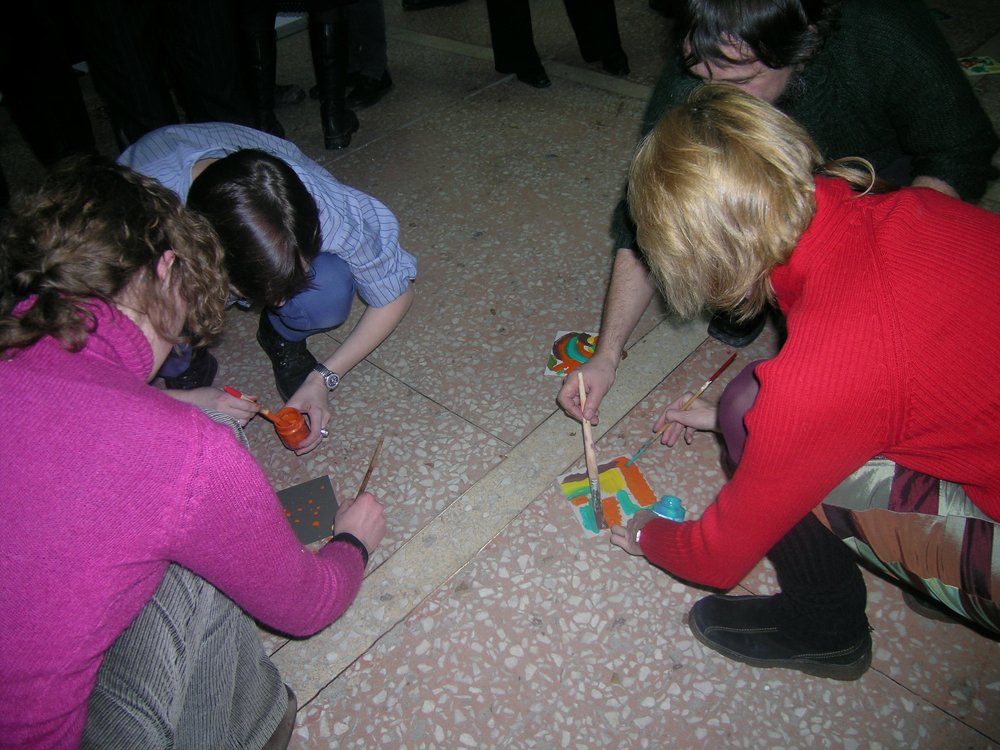
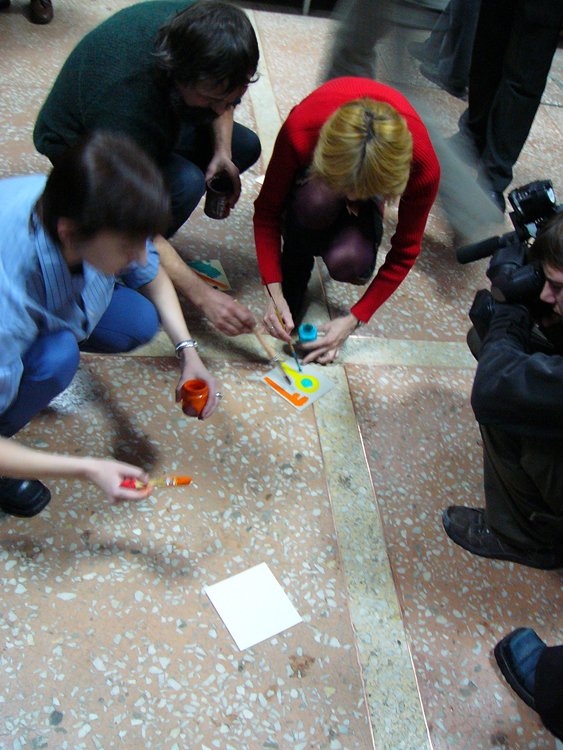
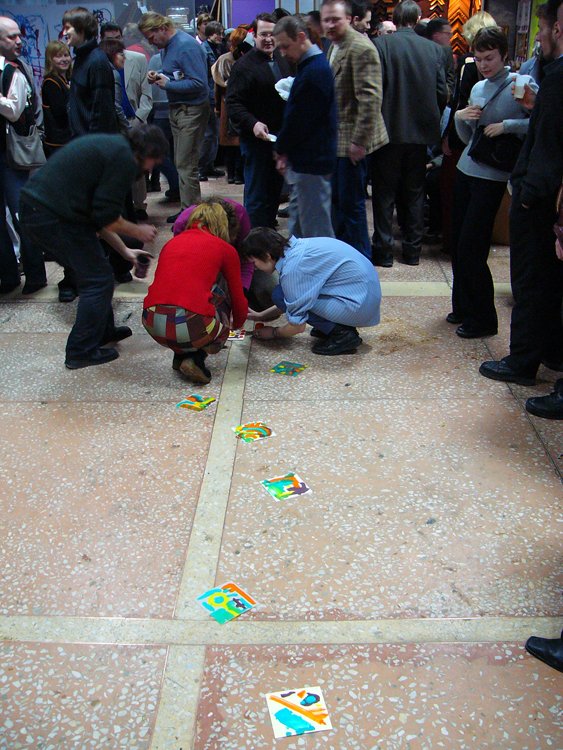
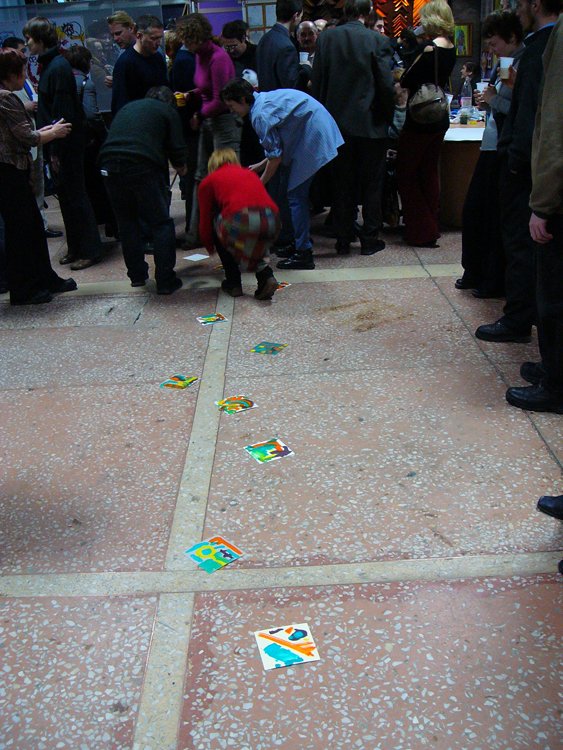
The Junior Group of Kazimir Malevich’s Malers’ Brigade presented Scrap Metal Yard — an interactive game built around collecting metal scrap.

Scrap Metal Yard

The action began with a familiar industrial command: “Everything unnecessary — to the scrap!”
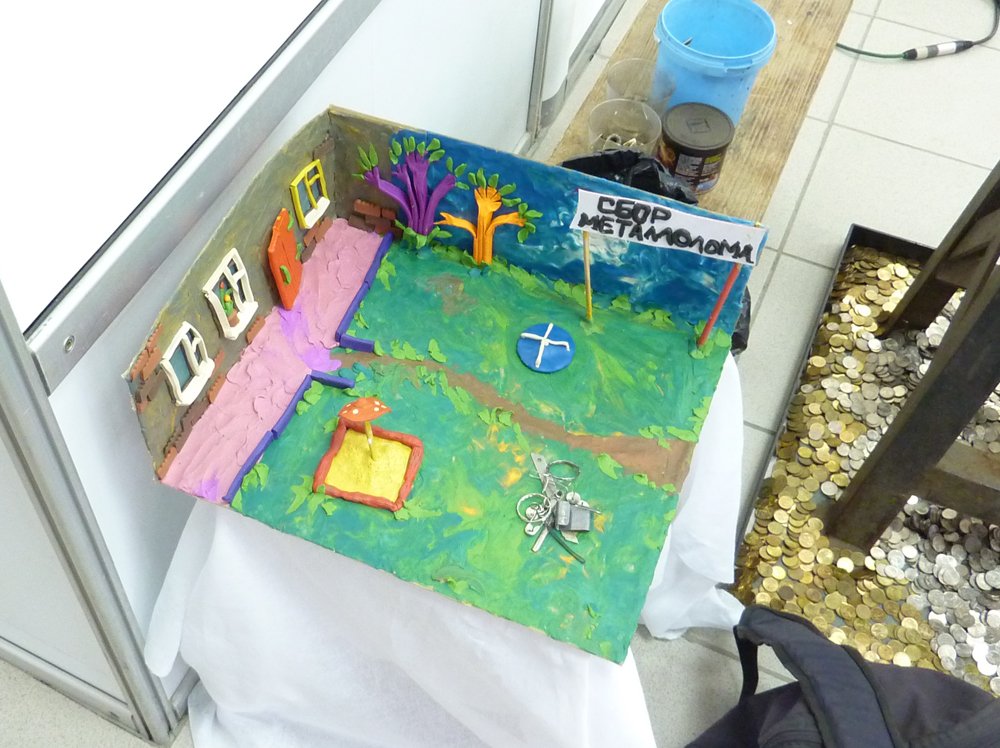
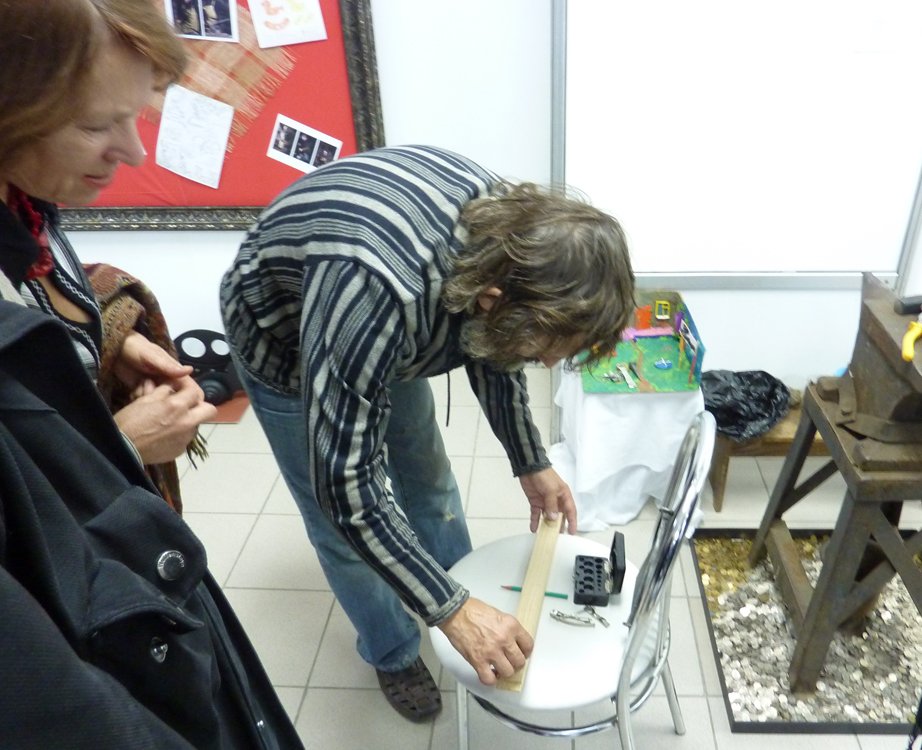
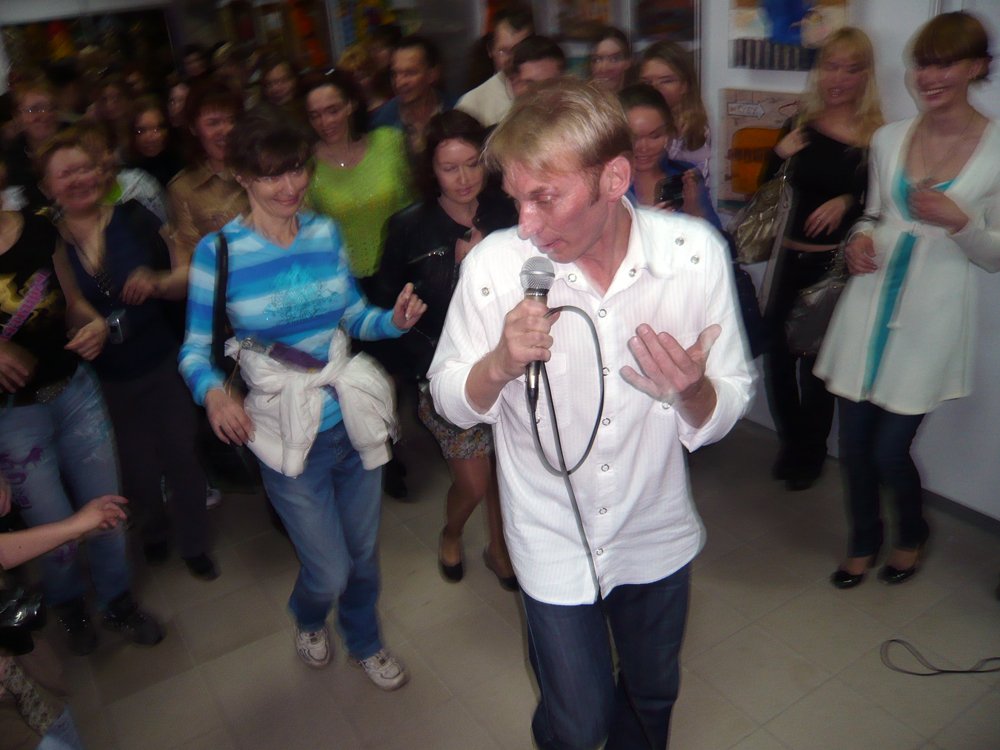
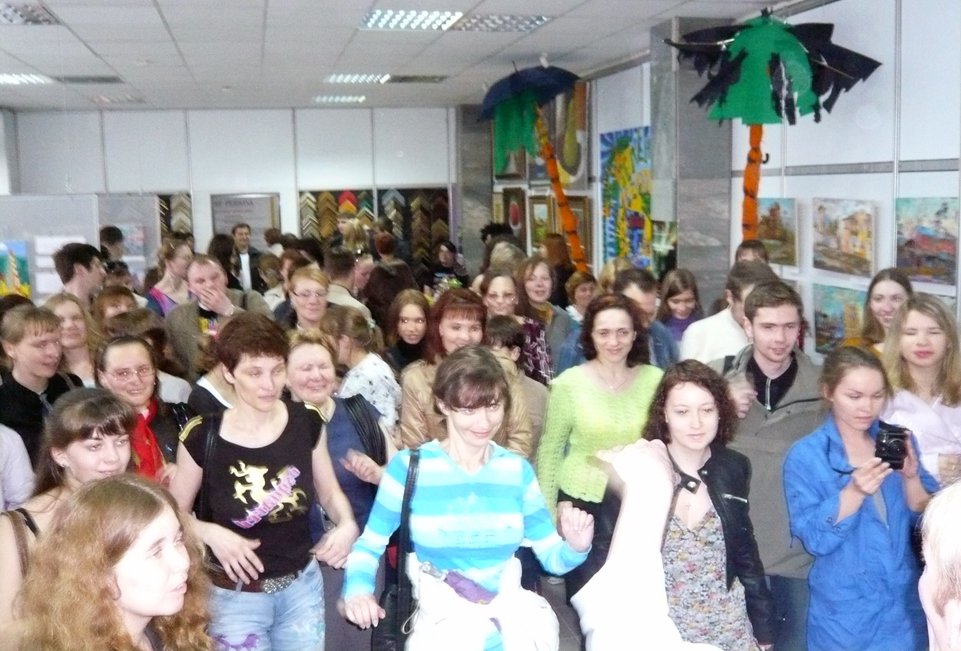
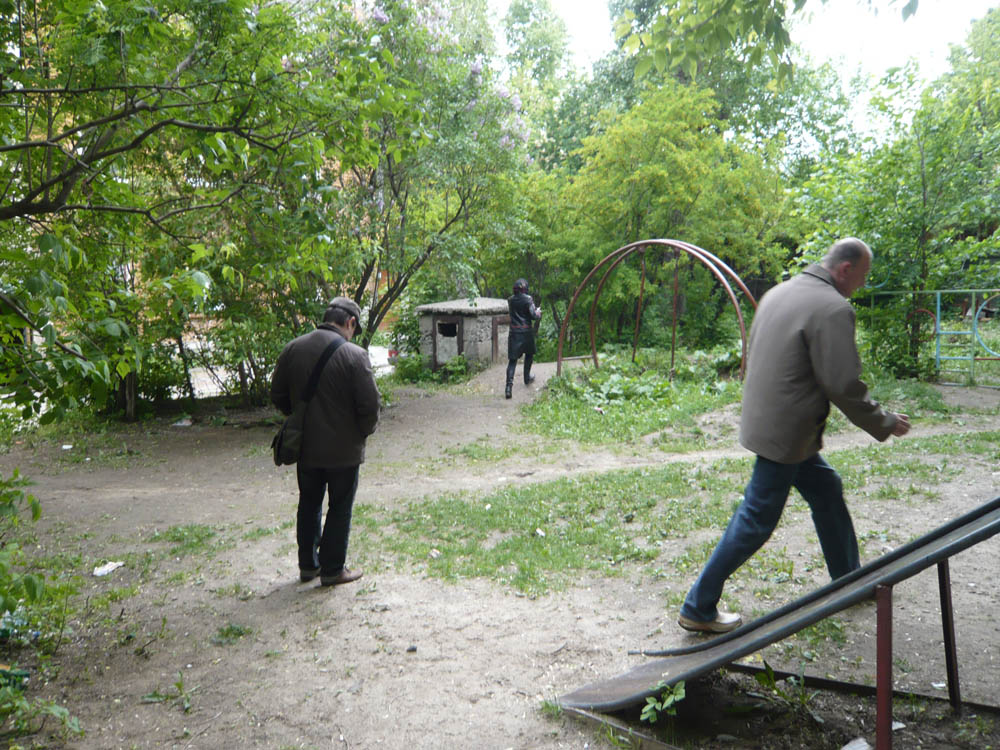
Visitors were invited to collect pieces of metal. The collected objects were then weighed, and the most active participants were honoured.

What began as a simple collection of scrap became a shared game. Visitors searched, collected, weighed and competed, entering the rules of a temporary situation created by the Brigade.

An everyday industrial procedure became a playful social event.

Exhibition Context
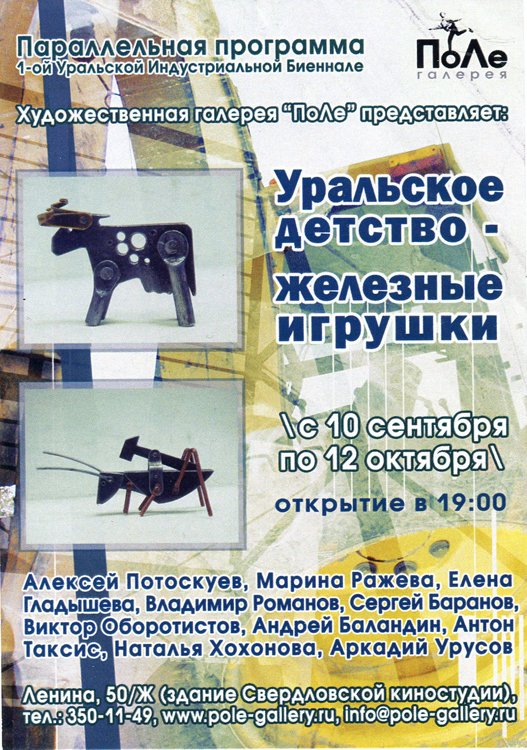
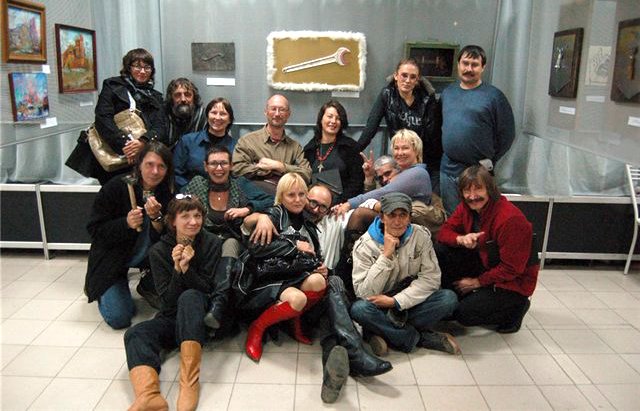
Ural Childhood — Iron Toys was curated by Vera Lebedeva, artistic director of PoLe Gallery, and presented as part of the parallel programme of the 1st Ural Industrial Biennial of Contemporary Art.

The project brought together paintings, objects, video, a happening and a blacksmithing workshop, exploring childhood memories shaped by the industrial environment of the Urals.

For the Brigade, this context became a space for remembering, inventing and playing.
Original project documentation →

Back to Malers’ Brigade

Island of Freedom

2009, Malevich's Brigade

2009 | Art project / exhibition

Exhibition: Island of Freedom
Venue: ParaRam Gallery, Yekaterinburg, Russia
Dates: 16–30 May 2009
Event: Night of Museums, 2009
Group: Kazimir Malevich’s Malers’ Brigade

The Island

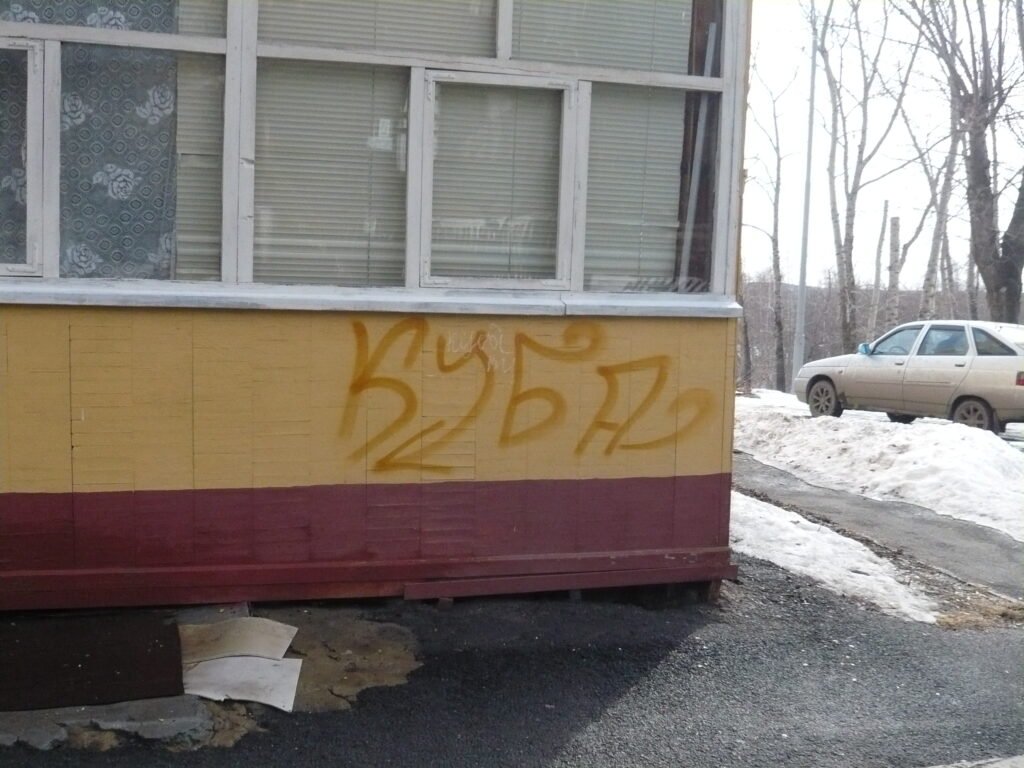
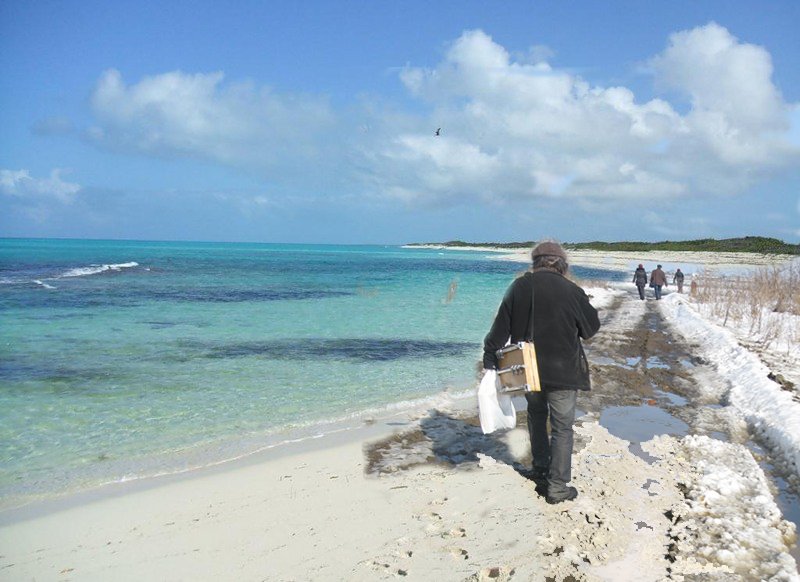
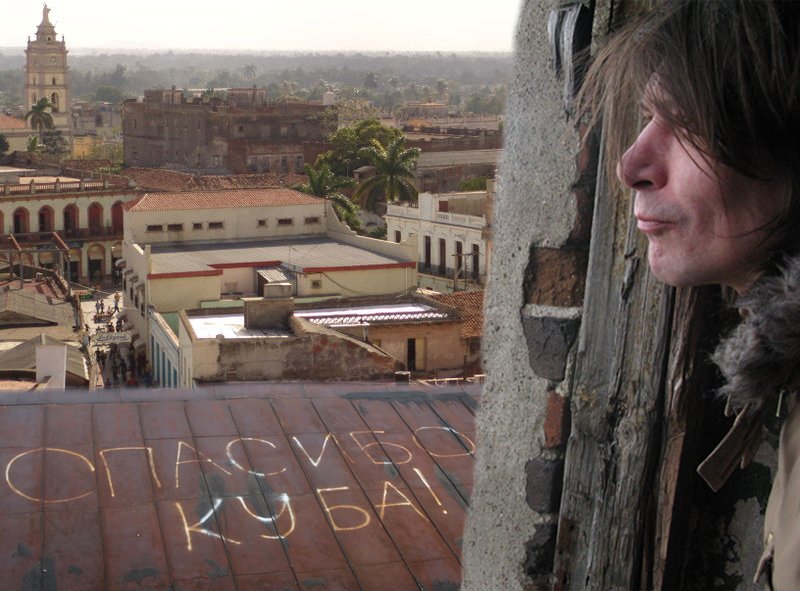
For Island of Freedom, the Brigade travelled to a place in Yekaterinburg known locally as “Cuba” — the Green (Bolshoy Konny) Island.

The journey became the starting point for an exhibition about a place that was both real and imagined.

The exhibition brought together paintings, photographs, travel notes and documentation of the Brigade’s journey. The material moved between the local “Cuba” and the distant Cuba suggested by its name.

The Brigade’s photographs recorded an actual place. Other images introduced another Cuba — the one known through photographs, media and imagination.

The two realities met in the exhibition.

Cuba / Cuba

A video collage by Marina and Dmitry Razhev ( ), Cuba–Cuba, brought these two versions of the island together.

The first part documented the Brigade’s journey to the Yekaterinburg island. The second combined photographs from that journey with images of Cuba found online.

The local landscape and the imagined one became difficult to separate.

Rather than simply documenting a journey, the project explored how a place acquires another identity through its name, images and associations.

The Opening

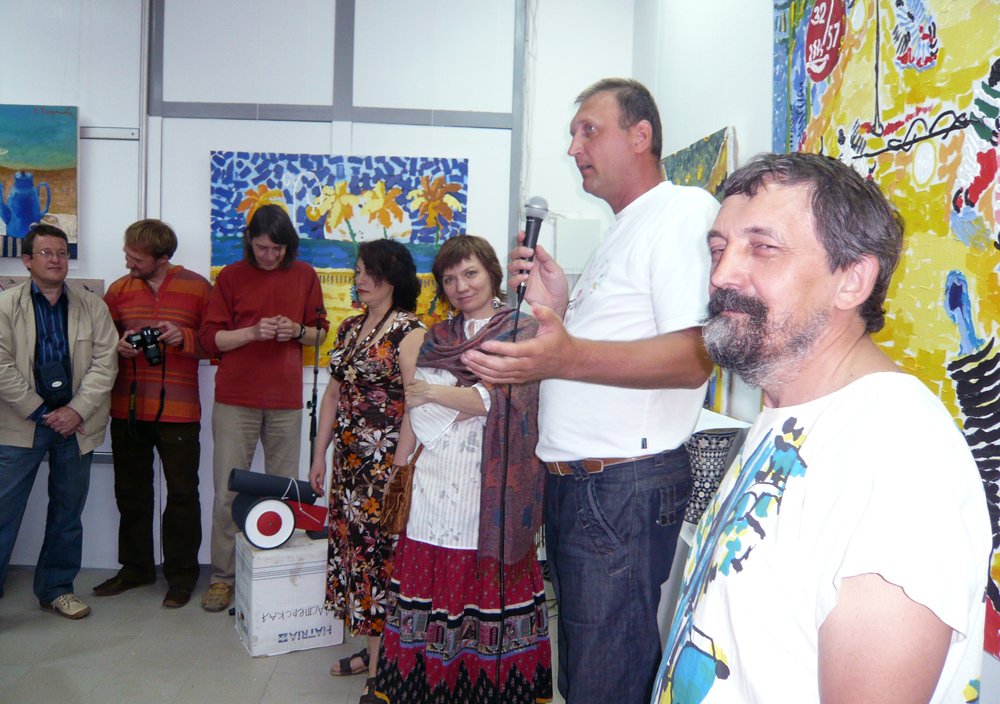
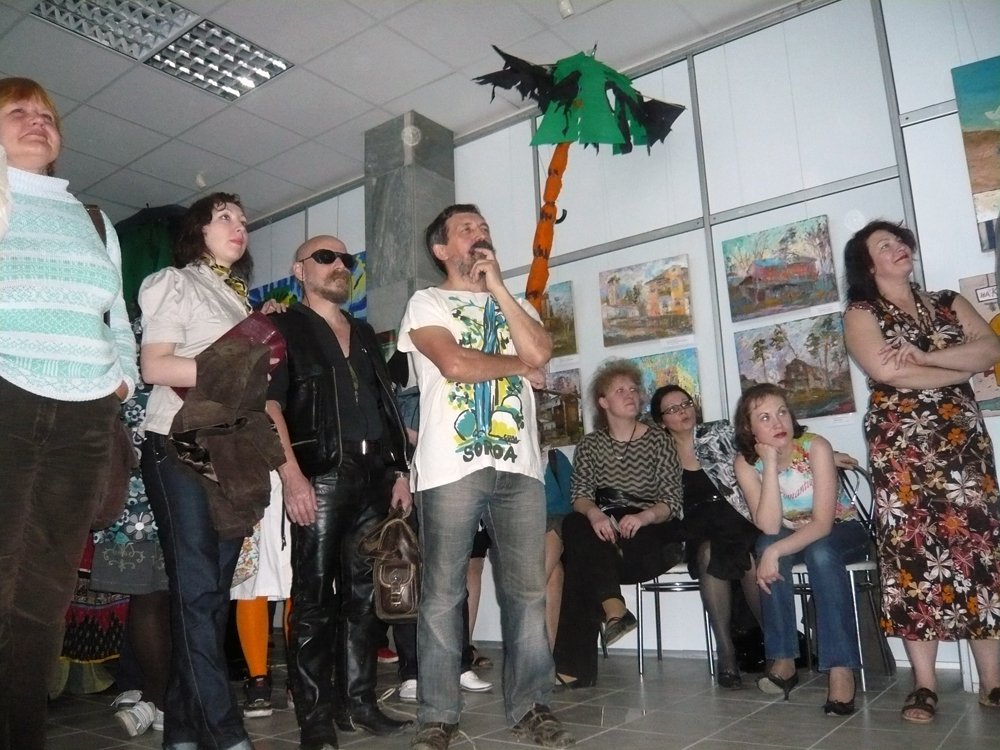
The exhibition opened during the 2009 Night of Museums.

The event included performances, music and dancing, a Cuban kiosk, the screening of Cuba–Cuba, and an interactive reading of Viktor Oborotistov’s travel notes.

The exhibition became another journey — from the local island to the Cuba that existed somewhere else, and back again.

Back to Malers’ Brigade

Shoot for Color. Colors of Yekaterinburg

2008, Anatomy of the city, Malevich's Brigade,

Back to Shoot for Color

Back to Malers’ Brigade

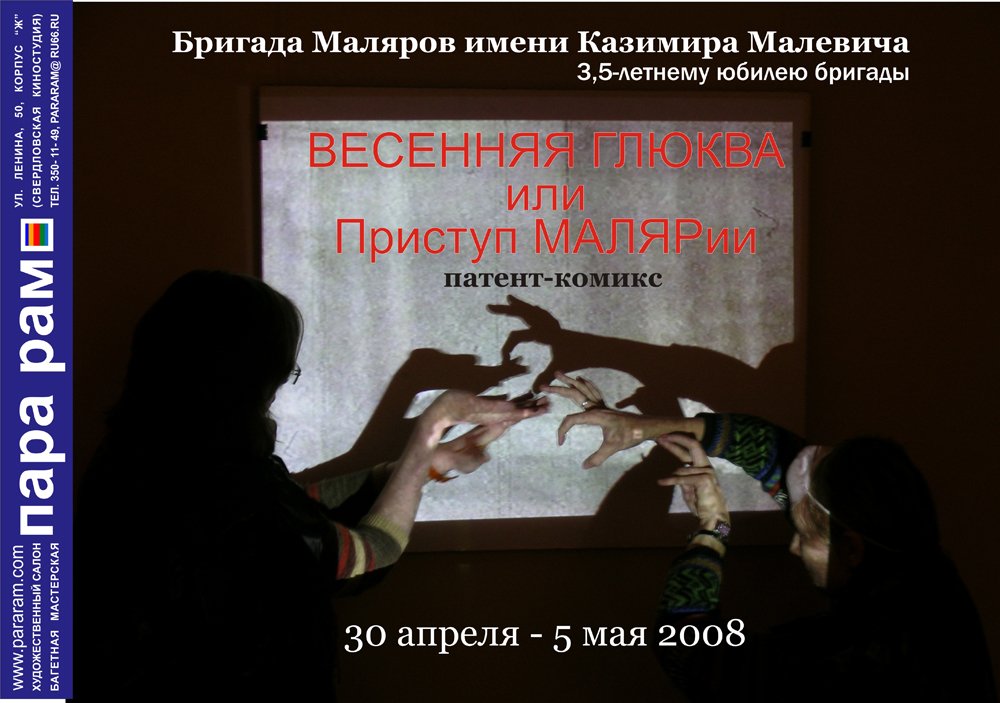
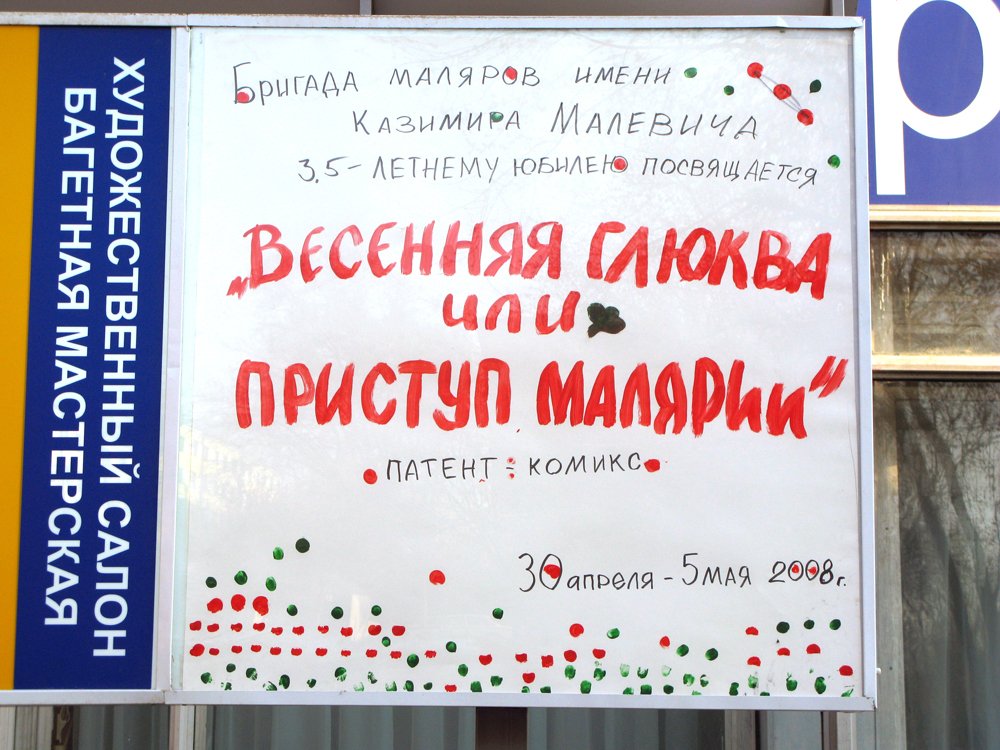
Spring Glitch, or an Attack of MALERia

2008, Malevich's Brigade

2008 | Exhibition / performance

Venue: ParaRam Gallery, Yekaterinburg, Russia
Dates: 30 April – 5 May 2008
Occasion: 3.5th anniversary of Kazimir Malevich’s Malers’ Brigade
Group: Kazimir Malevich’s Malers’ Brigade

The Anniversary

By spring 2008, the Brigade had been working together for three and a half years. To mark the occasion, the members turned their own history into an exhibition, performance and self-portrait of the group.

The title, Spring Glitch, or an Attack of MALERia, deliberately mixes several associations: glitch, cranberry, happiness, painter and malaria. The wordplay belongs to the Brigade’s own language, where ordinary words, borrowed meanings and accidental associations become material for action.

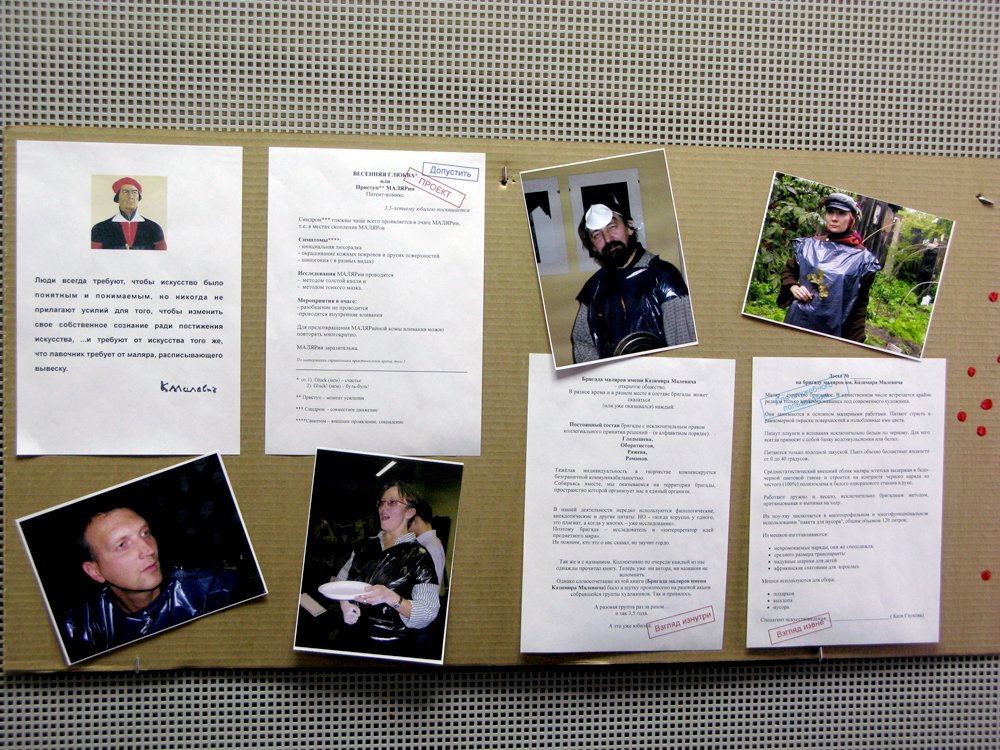
During the preparation, the Brigade produced its April Theses, a four-handed portrait of “Someone’s Name”, a slide film and photographic compilation of its previous actions, as well as a collection of apocrypha, jokes and popular sayings about painters and Malevich.

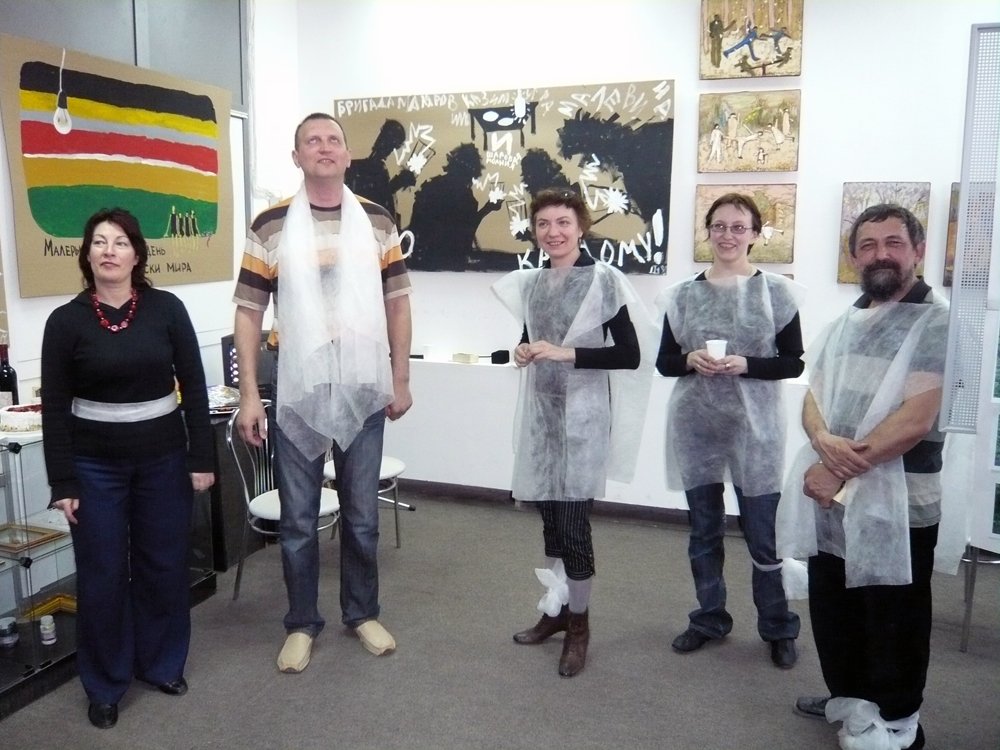
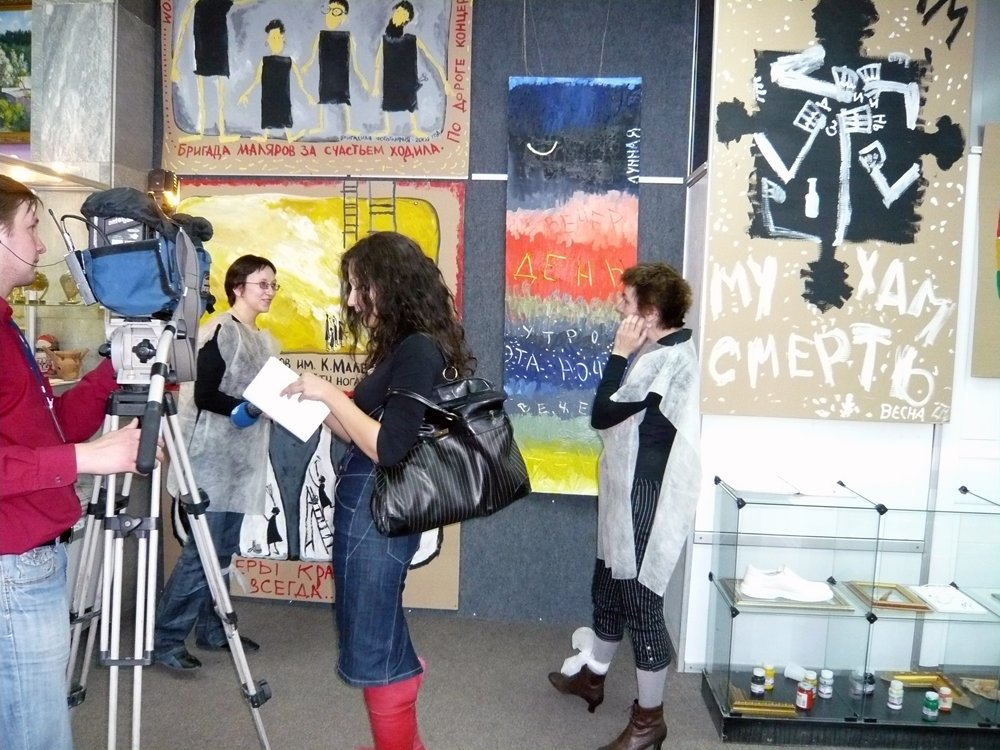
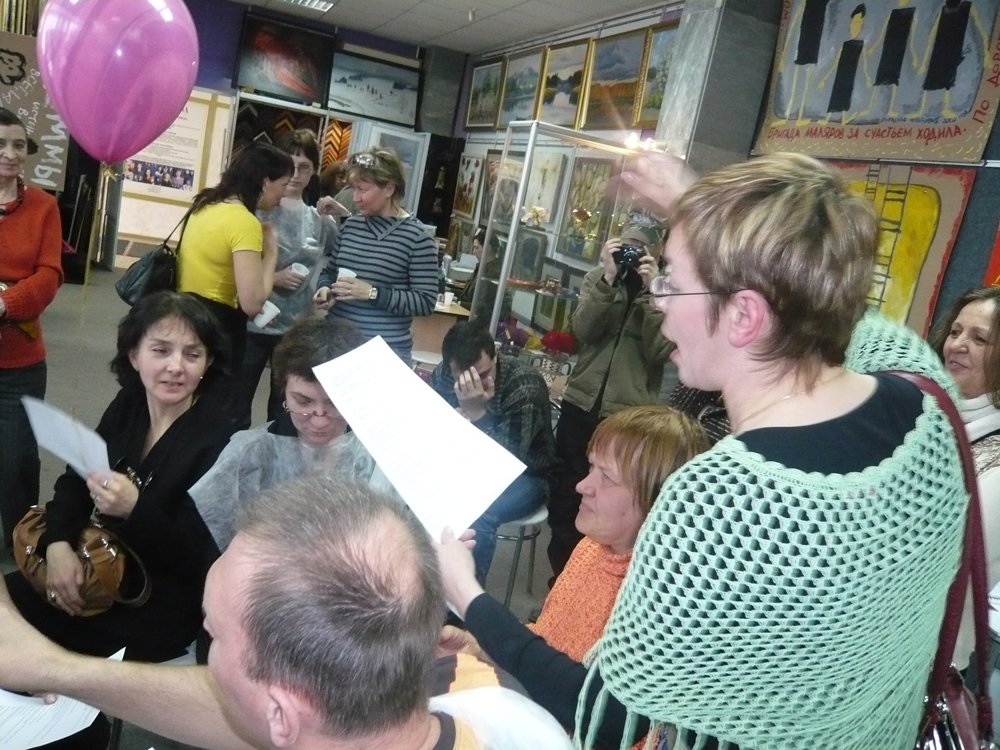
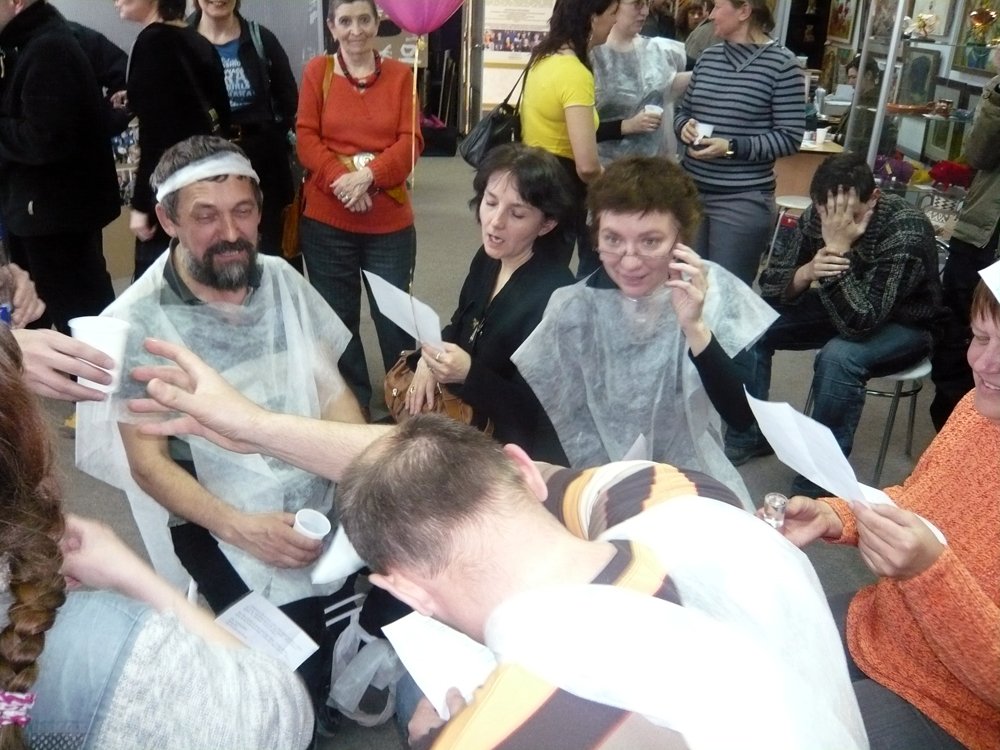
For the exhibition, the Brigade also changed its everyday uniform — black polyethylene bags — for white non-woven garments.

A Self-Portrait of the Brigade

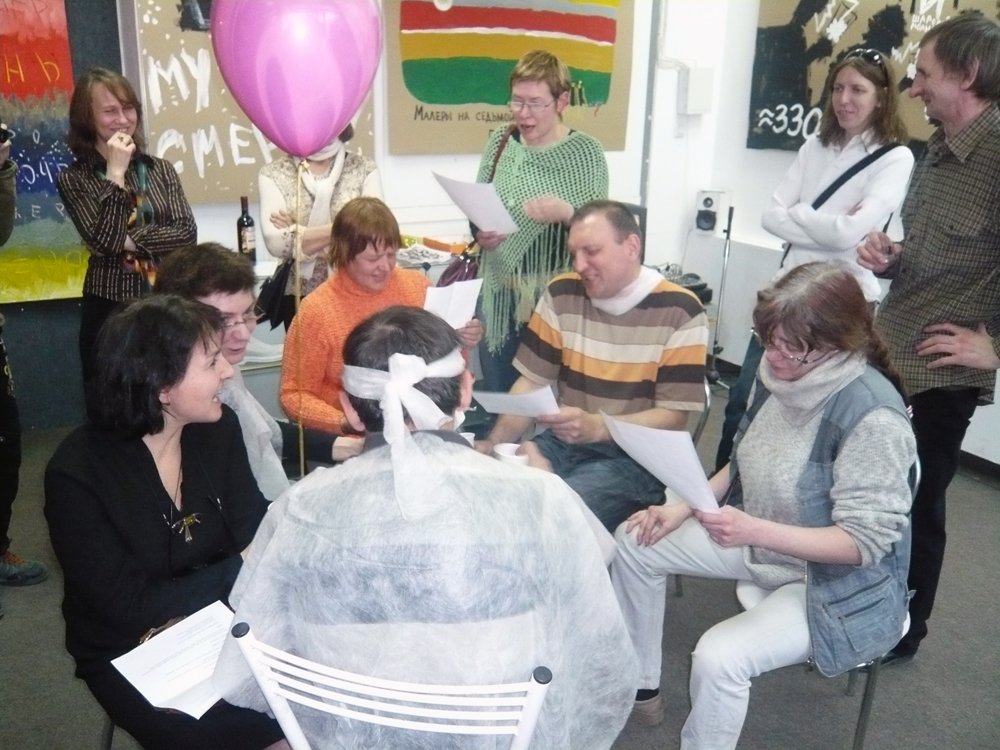
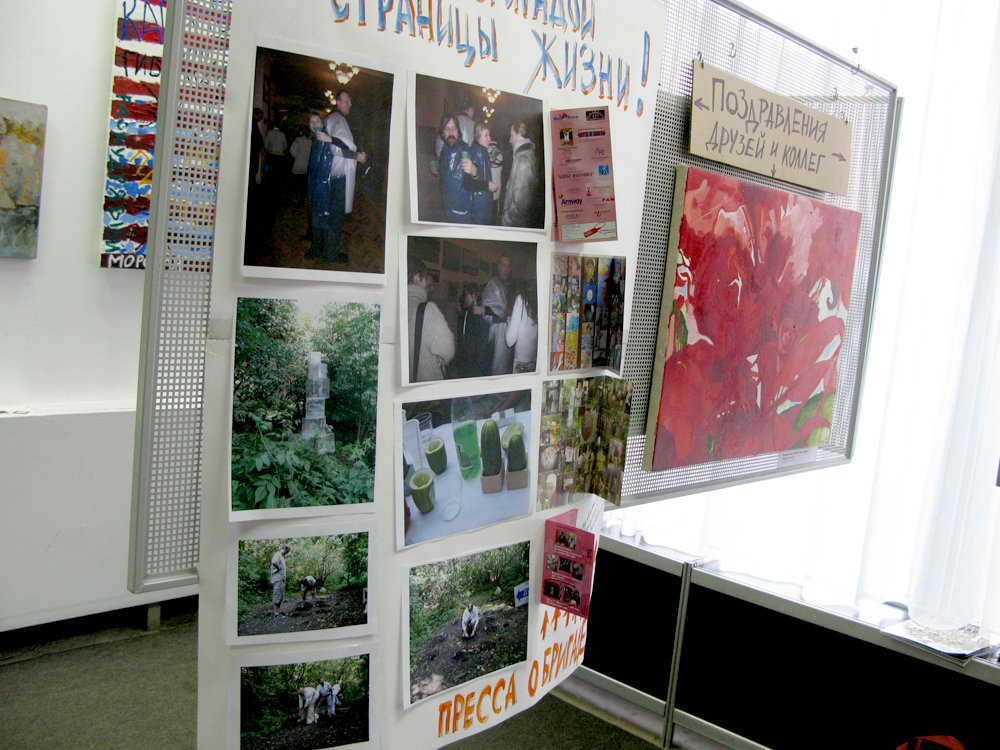
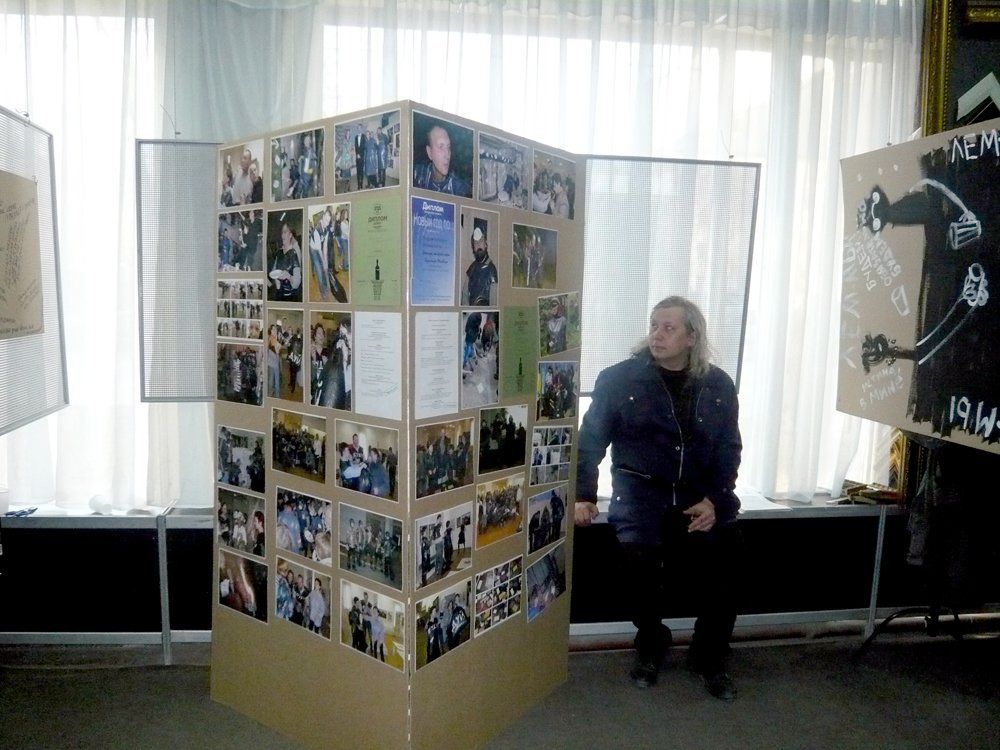
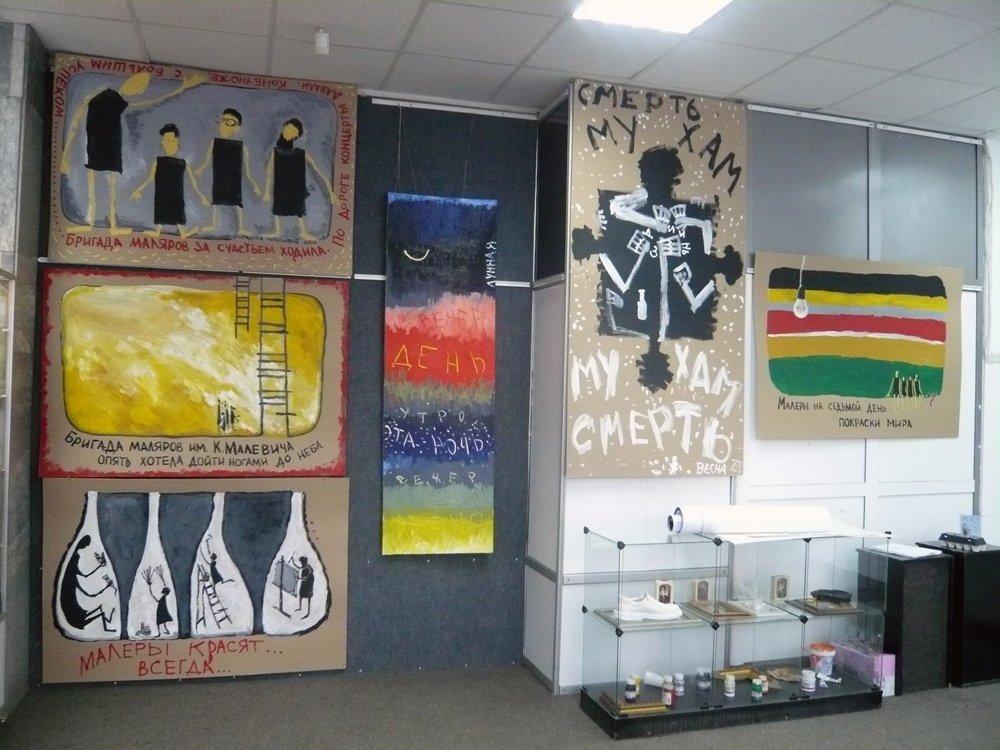
The exhibition presented different “themes from the life of the Brigade”: travel, photographs, paintings, seasons, memories and stories from its previous actions.

It also included a retrospective of the Brigade’s activity and a collective staging of Chekhov’s The Seagull, based on a libretto by Viktor Oborotistov.

The result was not simply an anniversary exhibition. The Brigade turned its own history into material for a new collective work.

It documented itself, invented its own mythology and performed its own identity.

The Brigade as an Open Formation

The project was created by an open group whose members maintained their individual artistic practices while working together as the Brigade.

The April Theses described this principle:

“Each of us is an individualist in our artistic practice. But within the Brigade, we become a single organism.”

By 2008, the Brigade had begun to treat not only objects and spaces, but its own collective existence as material for artistic action.

Documentation

The project was realised collectively by Elena Gladysheva, Viktor Oborotistov, Marina Razheva and Vladimir Romanov.

Original project documentation →

Back to Malers’ Brigade

Sower. Dispersion of White

Malevich's Brigade

2005 | Performance

Exhibition: Not-Portraits (Контур как повод)
Venue: ParaRam Gallery, Yekaterinburg, Russia
Date: 10 March 2005
Group: Kazimir Malevich’s Malers’ Brigade

The Performance

At the opening of the collective exhibition Not-Portraits, the Kazimir Malevich’s Malers’ Brigade presented Sower. Dispersion of White.

The action began with the Sower scattering white squares.

The Malers then “fertilised” them.

As the squares “ripened”, the visitors were invited to gather the harvest — what had begun as white.

The simple sequence turned a familiar act of painting into a small ritual of sowing, growth and gathering.
White was no longer just a colour or a surface. It became something that could be scattered, transformed and collected.
The Exhibition Context

The performance took place during the opening of Not-Portraits, a collective exhibition in which artists drew one another’s outlines and filled the resulting silhouettes with their own interpretations.

The Brigade’s action introduced another form of collective transformation into the opening: instead of producing a fixed image, it set a process in motion and allowed the visitors to complete it.

Documentation

Photos: Tatyana Sekacheva, Dmitry Razhev

Original project documentation →

Back to Malers’ Brigade

Harmonization of Space

Malevich's Brigade

2004 | Performance

Event: Founding of Kazimir Malevich’s Malers’ Brigade
Venue: Kolyada Theatre, Yekaterinburg, Russia
Date: 5 November 2004
Group: Kazimir Malevich’s Malers’ Brigade

The Action

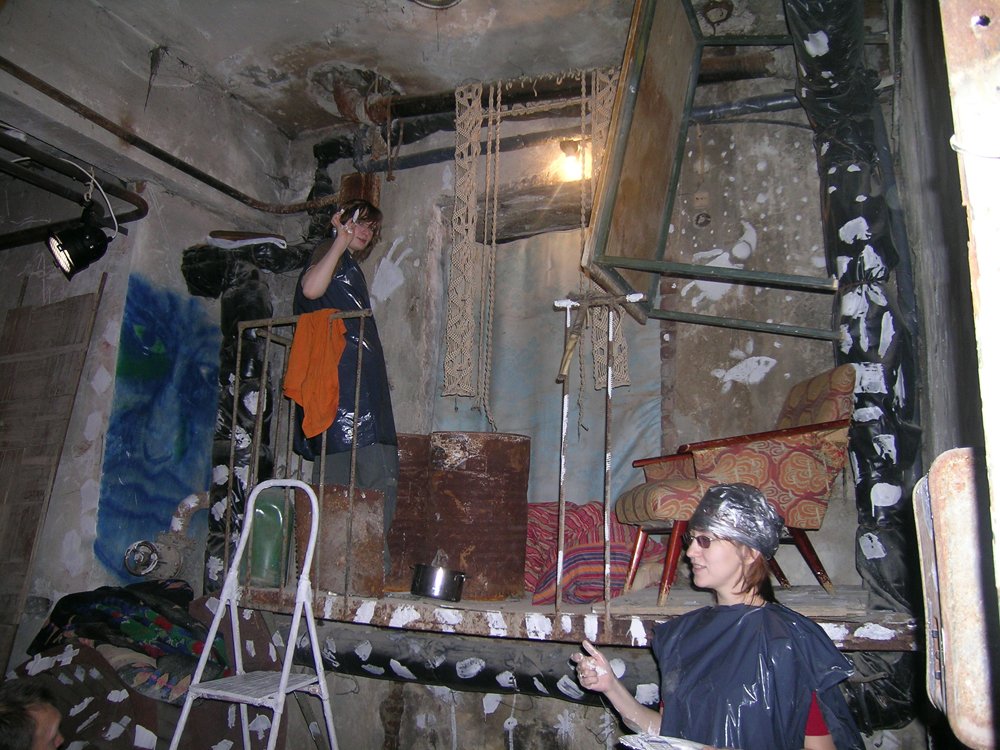
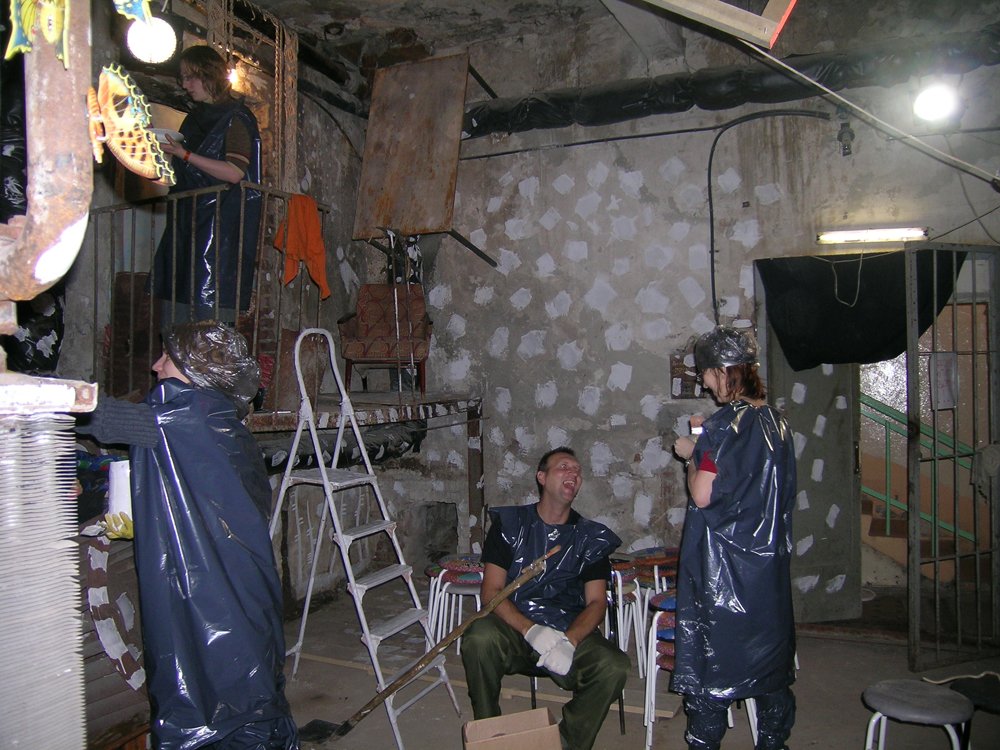
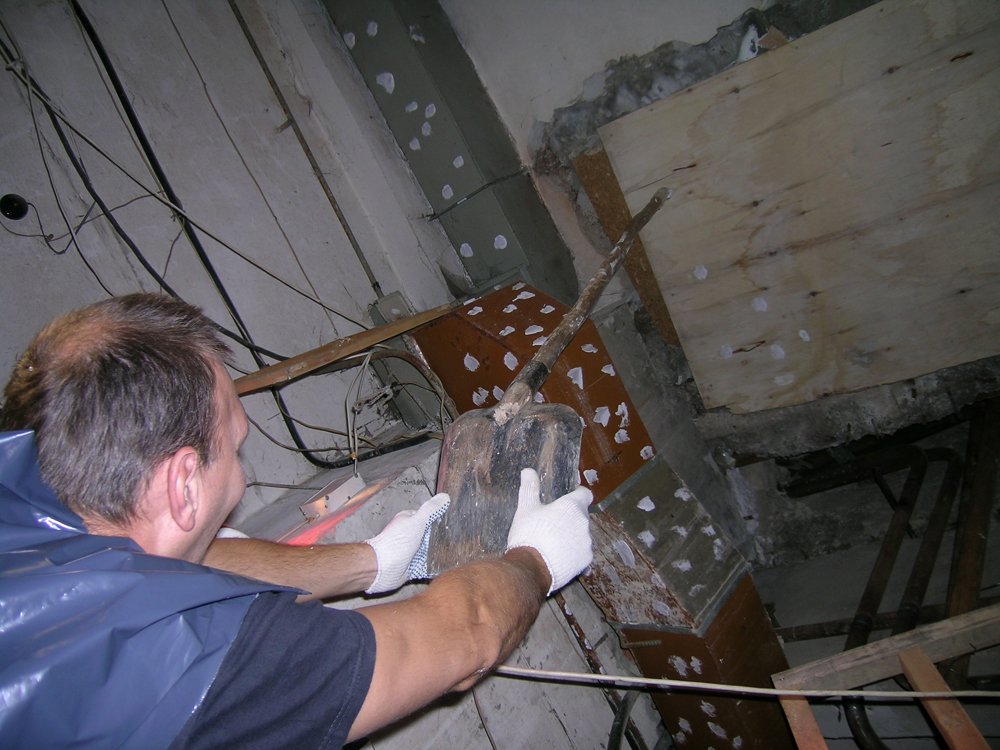
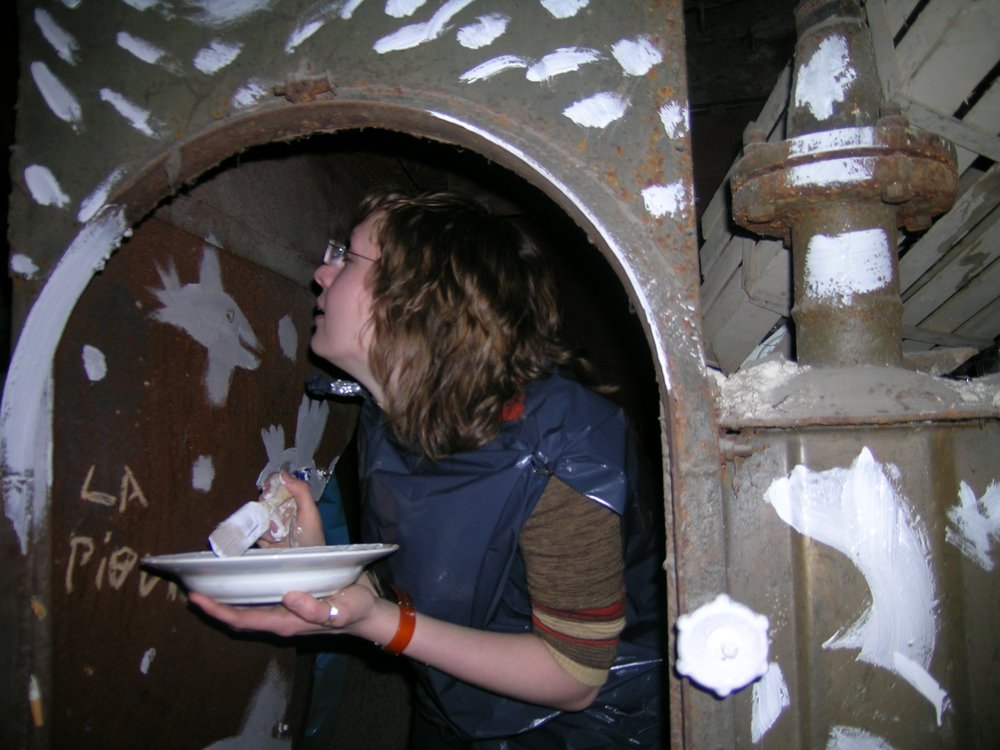
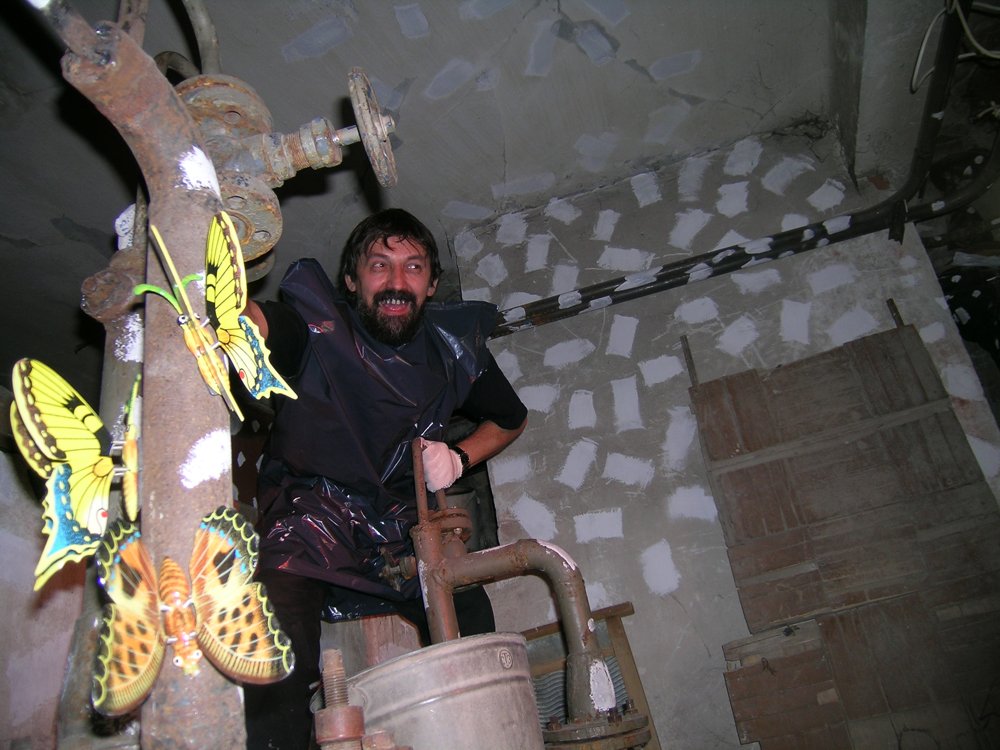
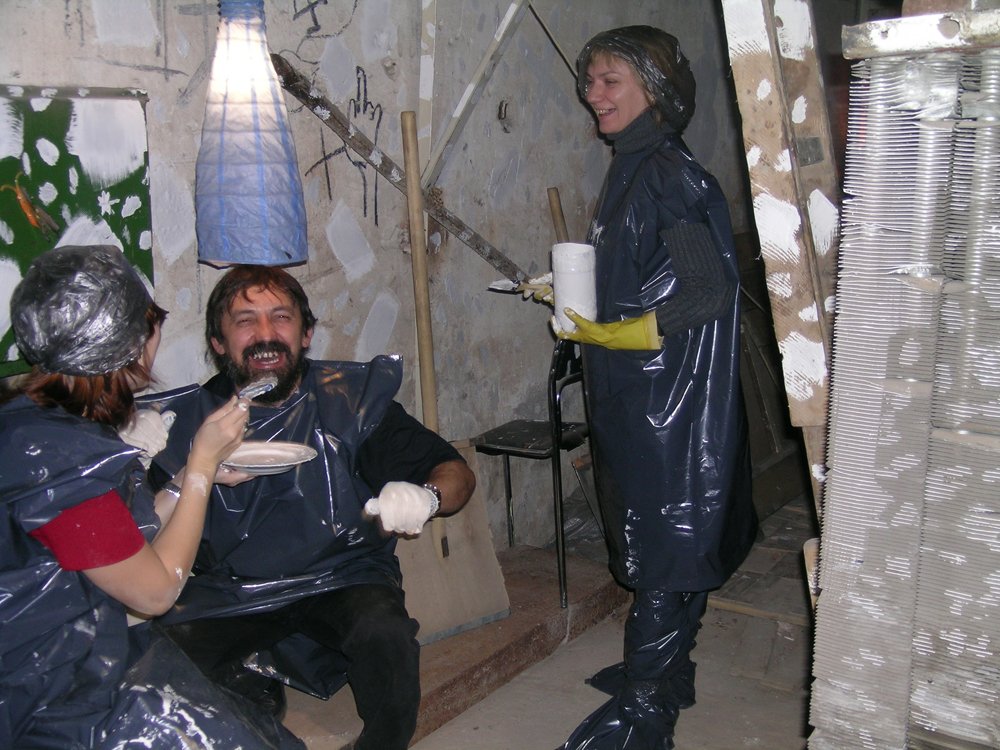
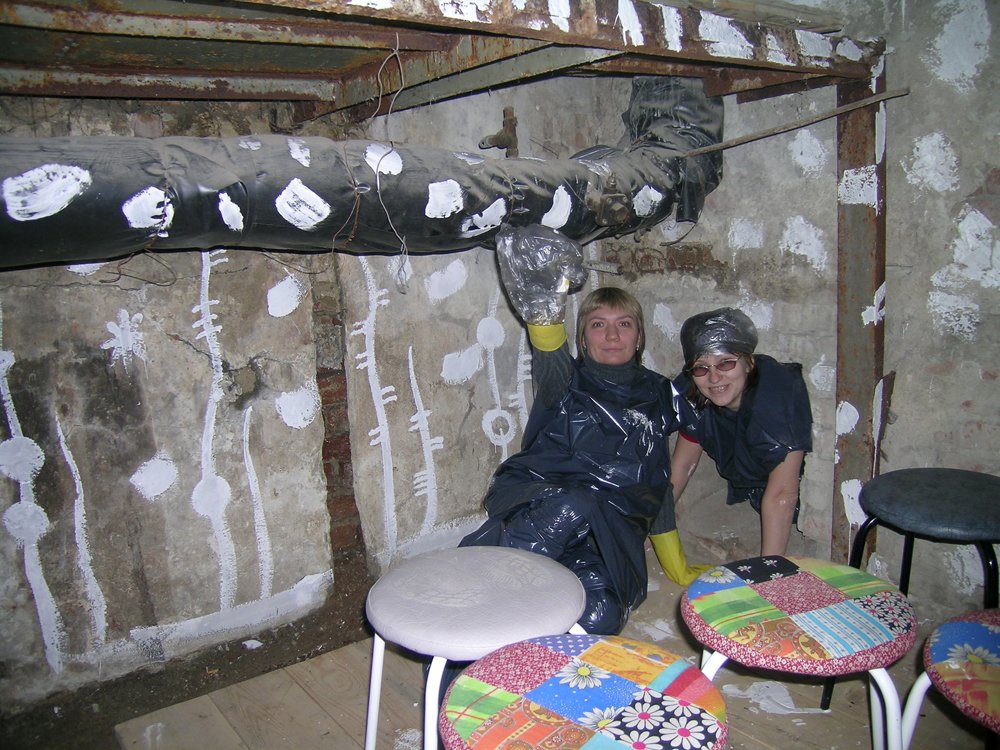
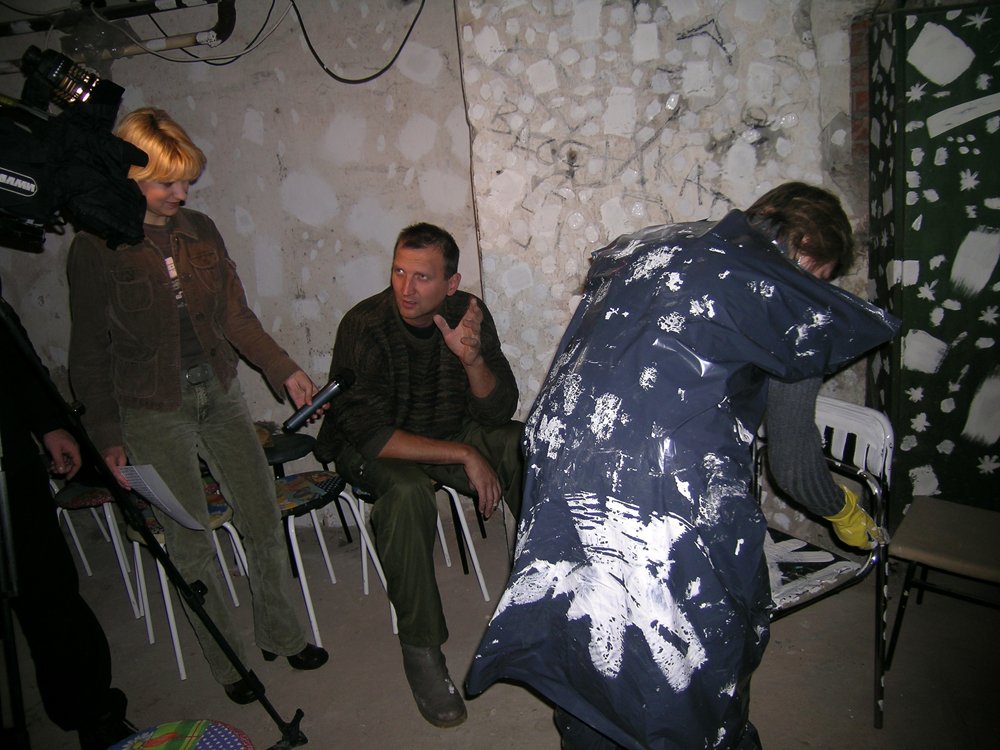
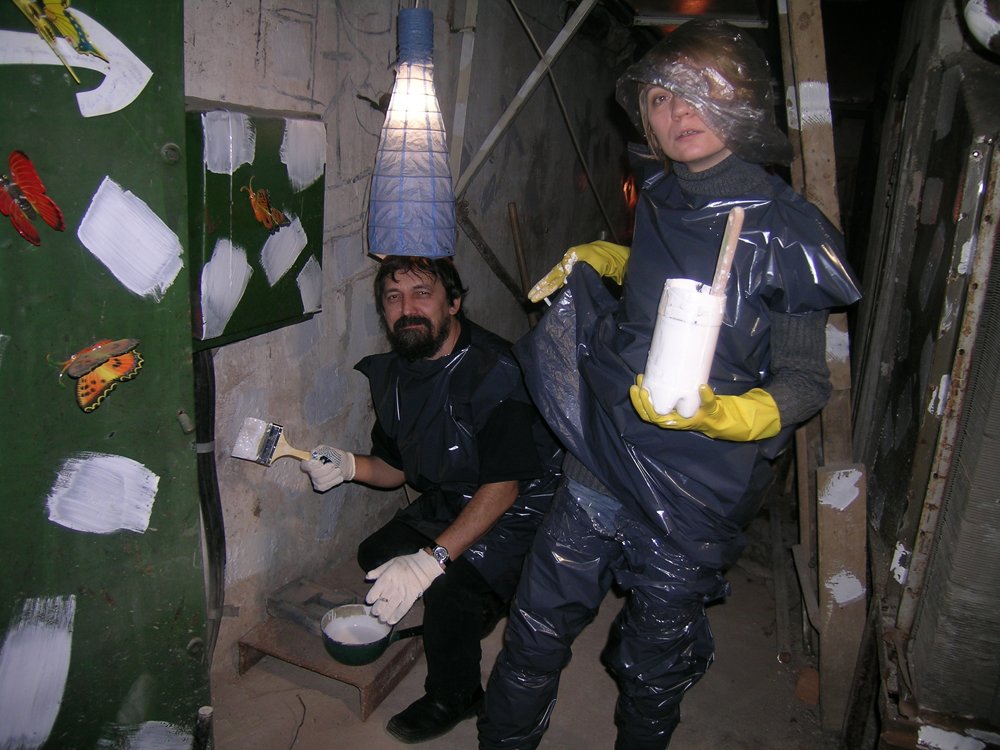
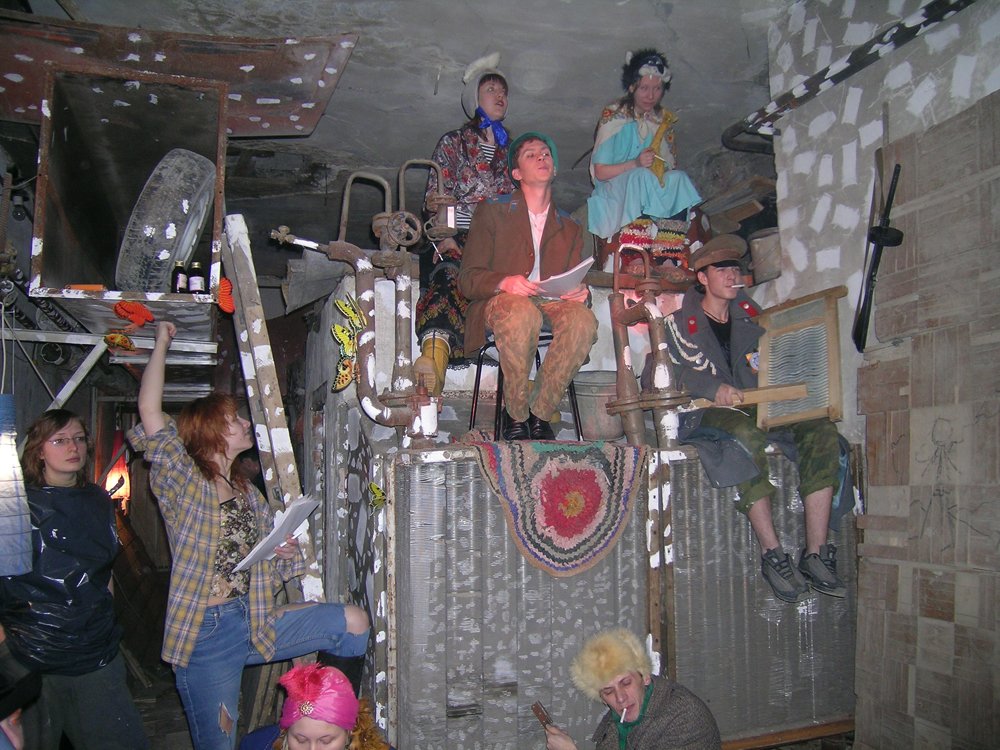
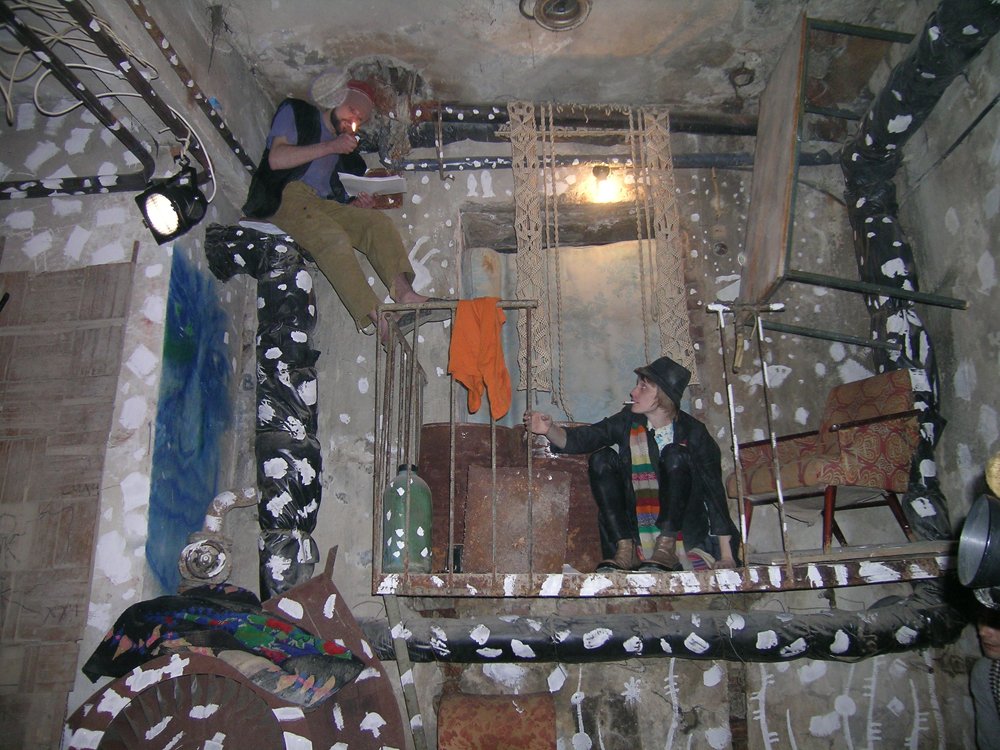
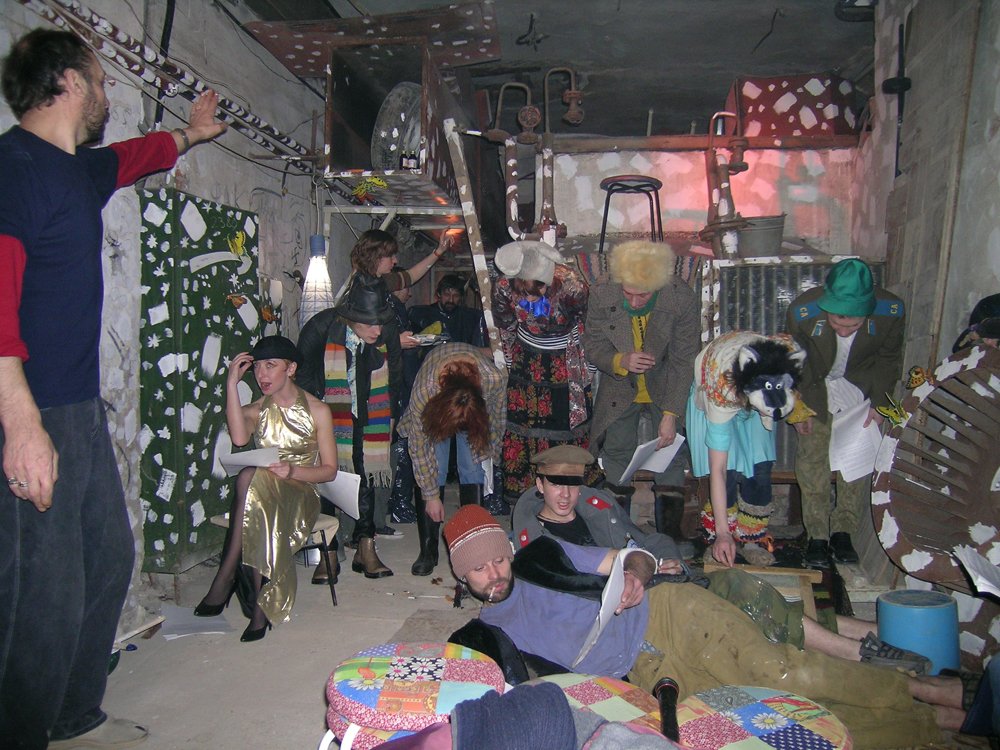
The artists were invited to transform the space of a boiler room at Kolyada Theatre. The work had to be done quickly and economically, while a play was being performed in the same space — without disturbing the actors or the audience.

The solution was Harmonization of Space.

“White over dark — the physical space disappears; the inside turns outside.”

White water-based emulsion paint was poured into plates and applied to the dark surfaces of the room. Each artist brought their own tool.

To protect their clothes, the artists wore black polyethylene garbage bags.

At the time, they did not know that the bags would become the Brigade’s working uniform and one of its most recognisable signs.

The Beginning of the Brigade

The action took place on 5 November 2004, now considered the founding date of Kazimir Malevich’s Malers’ Brigade.

After the action, the first snow of that winter began to fall. The artists jokingly recalled a phrase from a book they had recently read — about a “Brigade of painters named after Kazimir Malevich”.

The phrase stayed.

The temporary group became a name, and the name became a collective.

Elena Gladysheva, Alexandra Krivolutskaya, Viktor Oborotistov, Marina Razheva, Vladimir Romanov

Photo: Tatyana Sekacheva

Back to Malers’ Brigade