“Towns may be changed, but the well is not changed.
You may go and you may come, but the well remains the well.”
— I Ching (Book of Changes), translated from the Russian
Marina Razheva, 2005
Unrealized light installation
A well remains where it is.
The town around it may change. Its inhabitants may come and go. The place may acquire new functions, new names, new occupants. The well remains the well.
But what does it mean for something to remain unchanged?
Water can rise or fall. It may be present or absent; it may be fit to drink or not. Even when the well is full, something else is needed: a way to draw water from it.
The well is not only an image of permanence. It also holds the possibility of change, although this change does not necessarily alter its form.
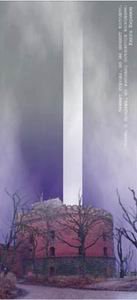
The proposal began with a particular place: the central atrium of the Kronprinz Tower in Kaliningrad, a vertical space extending through the building’s full height.
At the bottom of this architectural well, a system of projectors and a circular reflector would be installed. At a chosen moment, the electricity would be switched on.
A column of light would rise from the depths of the tower and burst into the sky.
The light would not fill the atrium with an image to be viewed from within. It would travel upward, transforming the tower into the source of a signal visible beyond its walls.
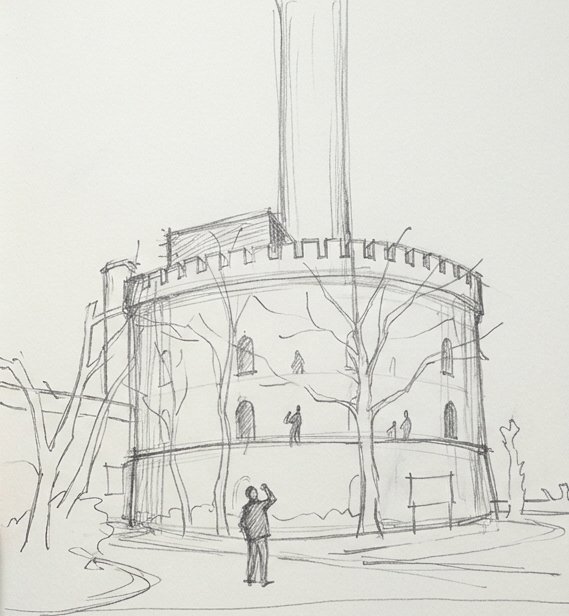
The Kronprinz barracks had changed their function more than fifteen times since their construction. Grenadier regiments, living quarters, police units, a military treasury, storehouses, schools and shops had occupied the complex at different times. The building had accumulated successive uses without becoming an entirely different building.
By the time of the competition, the tower had been transferred to the Kaliningrad branch of the National Centre for Contemporary Arts.
Could a new use become visible without erasing what came before it?
Could a building announce its presence without adding another fixed inscription to its walls?
The proposed light column might have served as a beacon for the Kaliningrad NCCA. Its intensity could be increased for particular occasions — an opening, an event, a moment when the institution wished to make itself visible.
The signal would not need to be constant. It could appear at a chosen moment and disappear again.
What remains when the light is switched off?
The Well was conceived in 2005 and submitted to the competition Kronprinz Tower: The Second Coming in 2006. The installation was never realized. The jury selected the project for publication in the set of postcards issued after the competition.
The work therefore exists as a proposal, through its sketches and through the record of its selection. Its projected column of light remained unrealized.
A drawing can describe an installation that never takes place. A postcard can carry its image elsewhere. A building can continue to change its function. And a well, whether full or empty, can remain the well.
What, then, is it that remains unchanged?
Related page:
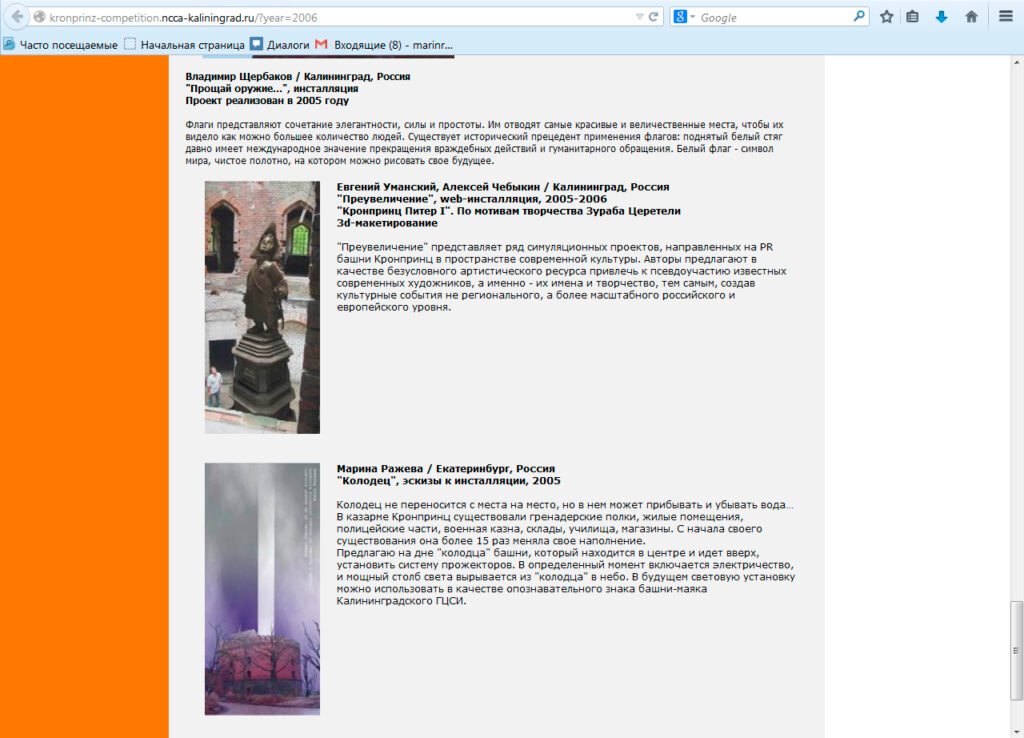
Kronprinz Tower: The Second Coming — competition results, 2006, web archive


