NEW YEAR’S SYNDROME
Жили-были… Новогодний синдром
2000
Installation, participatory project
Ural Museum of Youth, Yekaterinburg, Russia
11–29 December 2000
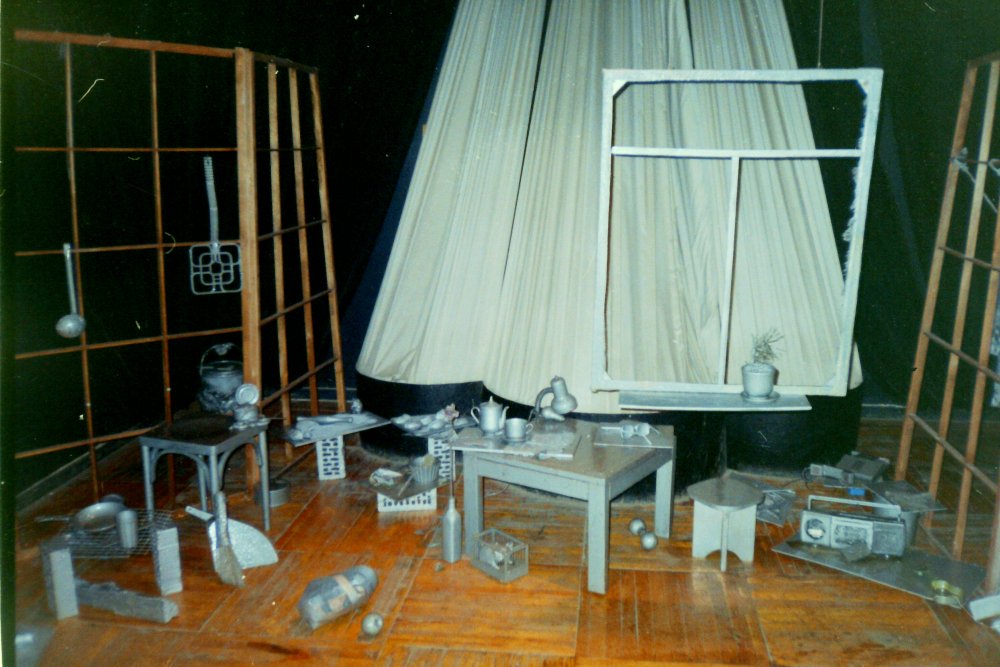
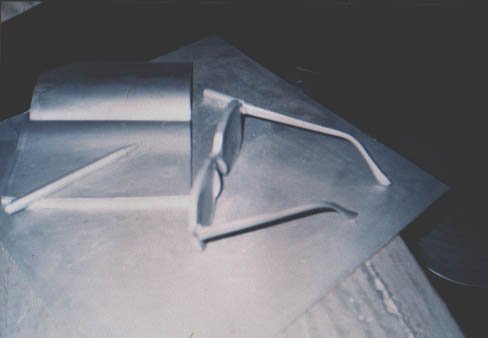
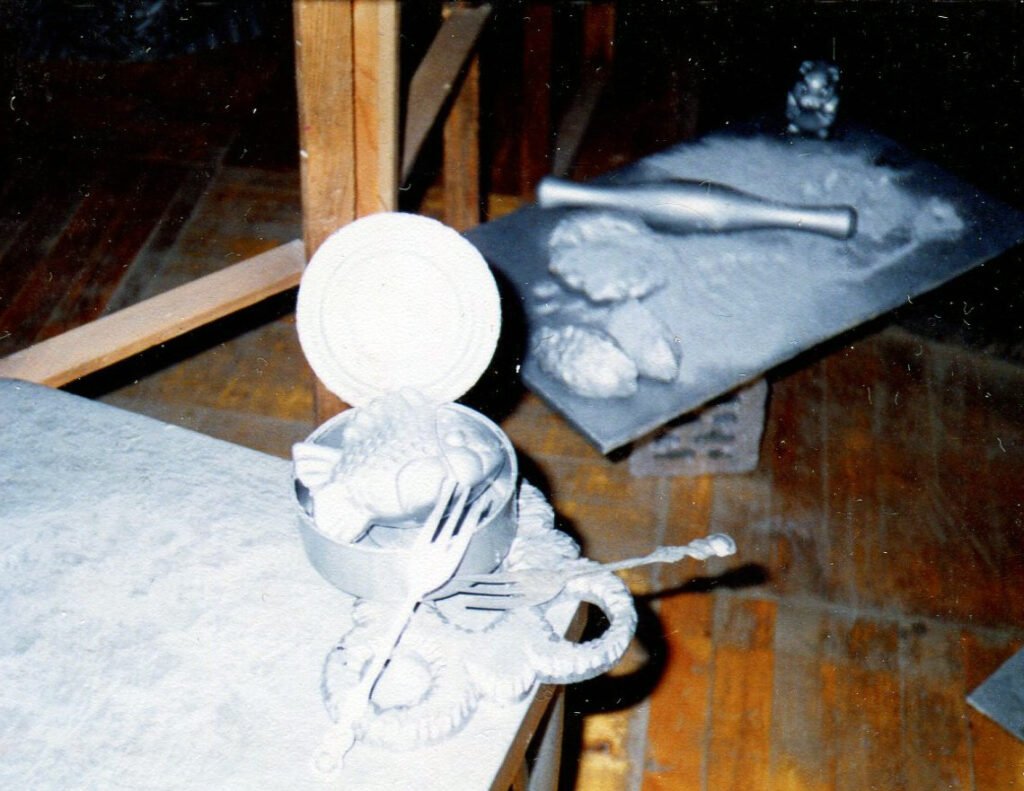
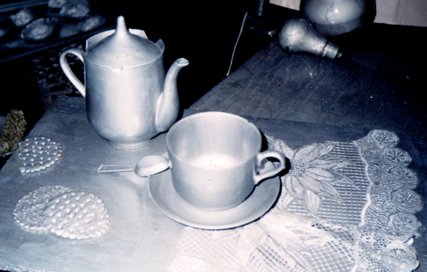
A room-sized installation in which every object, from a teapot to a window frame, was painted the same silver. Stripped of colour, familiar household things became an alphabet through which visitors were invited to imagine their own version of a home.
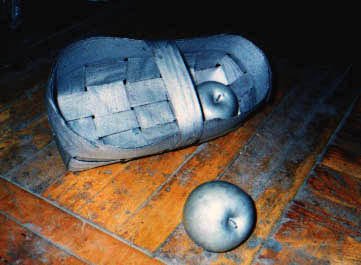
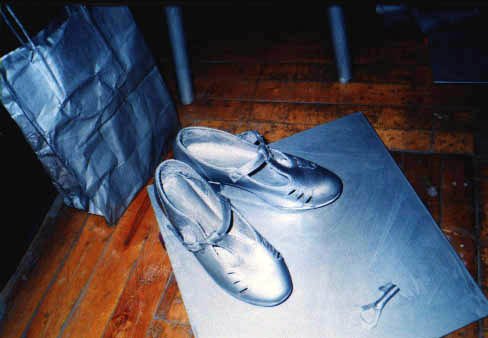
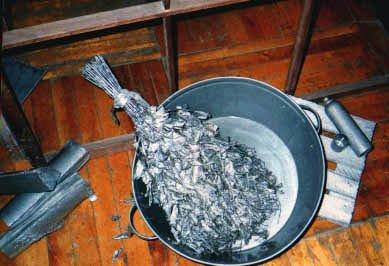
The installation brought together small “islands” of everyday life: a table laid for tea, children’s shoes, a birch broom, laundry, apples, toys and other domestic objects. A central structure of pleated fabric and a window frame, surrounded by dark drapery and wooden lattice screens, formed the room’s spatial focus.
The project was conceived as a playful investigation of “New Year’s syndrome”—the pause in everyday life, the expectation of a fairy tale and the feeling of approaching a threshold.
The guest book was intended to become the real exhibit. Visitors responded with memories, associations, jokes and imagined stories, making the work an open-ended exchange between objects and personal experience.
The silver house was completed by the memories of those who entered it.
Artist’s Note
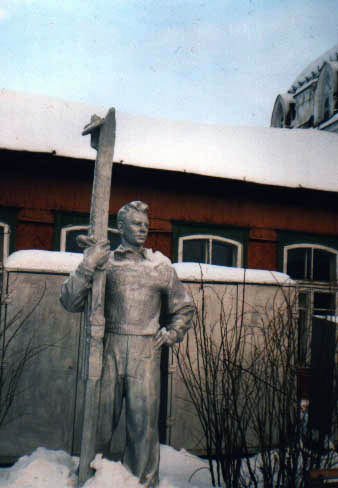
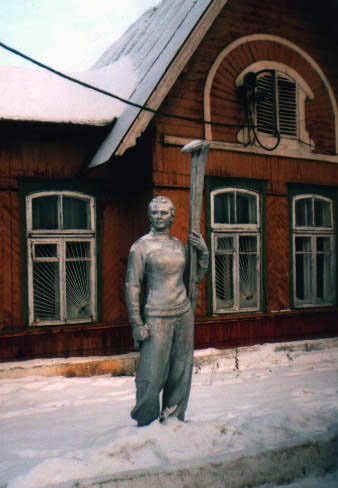
What mattered most to me was that people joined the game and began looking for the installation’s “residents”. Some told me about them; others wrote in the guest book. In 2001, a young courier from a dairy factory brought me photographs from Serov, a town in the Urals, showing silver-painted sculptures standing outdoors in front of wooden houses.
I was struck by the weathered wooden background of these figures. In the installation, the silver objects had stood against the similarly worn surface of the gallery floor and the wooden lattice screens. The photographs from Serov revealed an unexpected visual correspondence between the installation and the world beyond the museum.
Three small cubes, each bearing a letter on a brightly coloured ground, lay in the lower right corner of the exhibition space, like an ellipsis at the end of a sentence. Children rearranged them, and one visitor left a written response that appears to refer to them:
“I will forgive everything and eat it without flinching, because I noticed the key word to the paint syndrome. Colour is a different matter altogether!”
The entry, signed “D.” and dated 29 December 2000, is preserved in the guest book. The cubes themselves have not yet been found in the photographic documentation.